Welcome to WordPress! This is a sample post. Edit or delete it to take the first step in your blogging journey. To add more content here, click the small plus icon at the top left corner. There, you will find an existing selection of WordPress blocks and patterns, something to suit your every need for content creation. And don’t forget to check out the List View: click the icon a few spots to the right of the plus icon and you’ll get a tidy, easy-to-view list of the blocks and patterns in your post.
-

-
Welcome to WordPress! This is a sample post. Edit or delete it to take the first step in your blogging journey. To add more content here, click the small plus icon at the top left corner. There, you will find an existing selection of WordPress blocks and patterns, something to suit your every need for content creation. And don’t forget to check out the List View: click the icon a few spots to the right of the plus icon and you’ll get a tidy, easy-to-view list of the blocks and patterns in your post.
-

Welcome to WordPress! This is a sample post. Edit or delete it to take the first step in your blogging journey. To add more content here, click the small plus icon at the top left corner. There, you will find an existing selection of WordPress blocks and patterns, something to suit your every need for content creation. And don’t forget to check out the List View: click the icon a few spots to the right of the plus icon and you’ll get a tidy, easy-to-view list of the blocks and patterns in your post.
-

Welcome to WordPress! This is a sample post. Edit or delete it to take the first step in your blogging journey. To add more content here, click the small plus icon at the top left corner. There, you will find an existing selection of WordPress blocks and patterns, something to suit your every need for content creation. And don’t forget to check out the List View: click the icon a few spots to the right of the plus icon and you’ll get a tidy, easy-to-view list of the blocks and patterns in your post.
-

Welcome to WordPress! This is a sample post. Edit or delete it to take the first step in your blogging journey. To add more content here, click the small plus icon at the top left corner. There, you will find an existing selection of WordPress blocks and patterns, something to suit your every need for content creation. And don’t forget to check out the List View: click the icon a few spots to the right of the plus icon and you’ll get a tidy, easy-to-view list of the blocks and patterns in your post.
-
Welcome to WordPress! This is a sample post. Edit or delete it to take the first step in your blogging journey. To add more content here, click the small plus icon at the top left corner. There, you will find an existing selection of WordPress blocks and patterns, something to suit your every need for content creation. And don’t forget to check out the List View: click the icon a few spots to the right of the plus icon and you’ll get a tidy, easy-to-view list of the blocks and patterns in your post.
-
Roy F. Baunmeister
Consider the following questions as you read the selection below:
1. Can ordinary people commit evil acts, or does evil require an “evil” personality? Consider the idea of the “banality of evil” and how everyday individuals may participate in harmful systems.
2. Which of the four root causes of evil—material gain, threatened egotism, idealism, or sadism—do you think is most responsible for violence and injustice in society today? Why?
3. Can humanity ever eliminate evil, or is evil an unavoidable part of human existence?
Use philosophical, psychological, or sociological perspectives to support your answer.
Why, then, is there evil: crime, violence, oppression, cruelty, and the rest? As we have seen, there is no single or simple answer. Evil does not exist in terms of solitary actions by solitary individuals. Perpetrators and victims—and in many cases, bystanders or observers, too—are necessary to the vast majority of evil acts. Evil is socially enacted and constructed. It does not reside in our genes or in our soul, but in the way we relate to other people. Evil requires the deliberate actions of one person, the suffering of another, and the perception or judgment of either the second person or an observer. Very few people see their own actions as evil, and hardly any acts are regarded as evil if they do not bring harm, pain, or suffering to someone. Occasionally, masturbation, intoxication, or blasphemy may be considered evil even though no one is hurt, but victimless evil is a marginal, derivative category. Victimization is generally essential to evil. Victims are the first persons to spot evil. Because evil depends so heavily on the perceptions of the victim (along with those of observers who identify with the victim), it is disturbing to the social scientist to realize how many biases and distortions shape the victim’s perceptions. I have called these stereotypes collectively the myth of pure evil. Social scientists are fully prepared for whitewashing rationalizations on the part of perpetrators, but to recognize the extent to which everyone else’s perceptions are also biased discourages one about the prospects of seeing through to the essential nature of evil. People tend to adapt real events to their expectations, based on the myth of pure evil. The result is a scenario involving wholly innocent, well-meaning victims attacked for no valid reason by arrogant, sadistic, out-of-control evildoers who hate peace and beauty and get pleasure from making people suffer.
There are four major root causes of evil, or reasons that people act in ways that others will perceive as evil. Ordinary, well-intentioned people may perform evil acts when under the influence of these factors, singly or in combination. Combinations are harder to defeat.
The first root cause of evil is the simple desire for material gain, such as money or power. These ends are not universally regarded as wrong, although occasionally a religious group or other authority has condemned the desire itself. What distinguishes evil in these cases is not the ends, however, but the means. Everyone wants money, but only criminals use violence to get it. Violent or evil means are chosen because the individual does not think that more legitimate means will be successful. Violent and evil means often do furnish short-term, limited success, but in the long run they do not reliably furnish the material benefits they were intended to bring. At best, violence seems to be an effective tool for creating and sustaining power relationships.
The second root of evil is threatened egotism. Villains, bullies, criminals, killers, and other evildoers have high self-esteem, contrary to the comfortable fiction that has recently spread through American culture. Violence results when a person’s favorable image of self is questioned or impugned by someone else. Showing disrespect, attacking someone’s honor, insulting or humiliating someone, or in some other way causing a person to lose face will often elicit an aggressive response. The people (or groups or countries) most prone to violence are the ones who are most susceptible to ego threats, especially those who have inflated, exalted opinions of themselves or whose normally high self-esteem does occasionally take a nosedive. Moreover, violence is usually directed toward the source of the ego threat (or occasionally, a meaningful substitute). Such violence may often fall short of providing proof of the disputed self-worth, but it does intimidate, silence, and punish the critic, and it boosts the ego by establishing dominance over the critic.
The third root of evil is idealism. When people believe firmly that they are on the side of the good and are working to make the world a better place, they often feel justified in using strong measures against the seemingly evil forces that oppose them. Noble ends are often seen as justifying violent means. In reality, such means often discredit and contaminate the noble goals, but this outcome is rarely anticipated. Human nature inclines people to align themselves in groups that square off against each other, each group seeing itself as good and the other as bad. Group competition can evolve into brutal conflict in which each side sincerely sees itself as the good guys who need to take strong measures to defeat the forces of evil that oppose them. When the perpetrators are driven by idealism, the victims do not get much mercy.
The fourth root of evil is the pursuit of sadistic pleasure. This root is responsible for a much smaller proportion of the world’s evil than the others, and indeed most observations of killers, torturers, rapists, and similar evildoers indicate that only about 5 or 6 percent of perpetrators actually get enjoyment out of inflicting harm. Moreover, sadism appears to be an acquired taste. Possibly, it emerges from the body’s natural pattern of compensating for unpleasant emotional reactions with positive feelings, so that people might learn to enjoy torturing or killing in much the same way as they learn to enjoy skydiving despite the innate fear of falling. Still, most people do not seem to learn to enjoy hurting others (possibly because they refuse to let themselves do so, out of guilt or empathy). What looks to victims like sadism, such as when perpetrators laugh among themselves, may be simply insensitivity or camaraderie.
All told, the four root causes of evil are pervasive, which leads one to wonder why violence and oppression are not even more common than they are. The answer is that violent impulses are typically restrained by inner inhibitions; people exercise self-control to avoid lashing out at others every time they might feel like it. The four root causes of evil must therefore be augmented by an understanding of the proximal cause, which is the breakdown of these internal restraints. Self-control may fail because upbringing and socialization have not made it strong enough, because the capacity for self-control is depleted by stress, because being emotionally upset makes people cease to care, or because the culture tells people that it is appropriate to lose self-control under some circumstances. Many instances of profound evil begin with a small, ambiguous act that crosses a fuzzy line and then escalates gradually into ever greater levels of violence. In groups, especially, evil escalates as the group members bring out one another’s worst impulses, lose track of individual responsibility, and reinforce one another’s wavering faith in the broad justifications for what they are doing.
Harming another person typically makes one feel bad, although this feeling often takes the form of physical disgust rather than pangs of conscience. Many evildoers work out elaborate justifications by which they convince themselves that what they are doing is acceptable and that they should ignore their own unpleasant feelings. Victims and observers often find these justifications to be feeble and absurdly inadequate. But perpetrators make them work by building them around some palpable grains of truth and by refusing to subject them to critical scrutiny. When they want to believe that their actions are justified, they can often manage to do so. The justifications look weak to victims and outsiders because victims and outsiders are far less motivated to accept them.
The myth of pure evil may portray cohesive, dedicated groups of evildoers preying on homogeneous ranks of innocent victims, but in actual cases of evil there tends to be division on both sides. Some members of the victim group collaborate with and accept the perpetrators, and some members of the perpetrator group object to the violence and try to help the victims. In addition, there is often a large group of uninvolved bystanders who may have far more power than they realize.
These are the broad outlines of the structure of evil. It is important to acknowledge that there are many other factors that can make a difference by altering the odds of aggressive action or affecting the degree to which victims will suffer. Researchers on aggression, for example, have identified an impressive assortment of moderator variables, such as hot weather and aggressive cues, and although this book has not devoted much space to them,1 they are real and important. This book has emphasized the root causes and the subjective processes of evil. There is ample room in this theoretical framework for moderator variables, which are indeed often essential to the success of evil.
Magnitude and Banality
“He seemed like such a nice guy.” That line has become a cliché of interviews with neighbors of someone who has just been convicted of some monstrous crime. It means that the neighbors cannot bring themselves to change their perception of this person they have known, to see him as evil. They are surprised that someone who showed no outward sign of being evil—or even of being extraordinary in any way—could do such terrible things.
The neighbors’ surprise and their reluctance to believe the awful truth are indicative of the pervasive difficulty of understanding perpetrators of evil. To believe that an apparently normal and decent person from one’s own circle—a friend, a neighbor, a colleague—could commit violent atrocities seems to go against one’s basic understanding of the world. Some exceptional explanation must be required, because it seems that evil deeds should be done by evil people, and yet many such deeds are committed by people who do not conform to the stereotypes of evil.
Yet these stereotypes are one of the major obstacles to understanding evil. This is ironic, because the myth of pure evil was constructed to help us understand evil—but it ends up hampering that understanding. The myth is a victim’s myth, and there is often a wide, almost impassable gap between the viewpoints of victims and perpetrators. As long as our thinking about evil invokes the victim’s perspective, our chances of truly understanding the perpetrators are slim.
Nearly all writers about evil have been influenced by Hannah Arendt’s famous insight about “the banality of evil,” which was based on her observation of the famous Nazi Adolf Eichmann during his trial. Everyone expected a demon in human form, but he was an ordinary person. His ordinariness was profoundly disappointing. When coming into the presence of a high-ranking mass murderer of historical proportions, you expect to feel an electricity, a gut fear even to sit nearby or have his glance fall upon you. Instead, there was a man who looked and acted like just some guy who might have sat next to you on the bus a few times, someone you would scarcely notice or remember.
The essential shock of banality is the disproportion between the person and the crime. The mind reels with the enormity of what this person has done, and so the mind expects to reel with the force of the perpetrator’s presence and personality. When it does not, it is surprised. Yet the magnitude gap provides one explanation for the surprise and disappointment at evil’s banality. The enormity of the crime is apparent from the victim’s perspective, but often to the perpetrator it was far less enormous. It might seem quite fitting and appropriate to be a rather ordinary, banal person, if the crime is viewed from the perpetrator’s perspective.
Thus, readers are shocked to hear that “Monster” Kody Scott drove home to watch “The Benny Hill Show” just after he had killed a young acquaintance by shooting him several times in the chest at close range. One thinks he ought to be consumed with feelings of triumph, or guilt, or fear of being caught, or remorse, or sadistic and vengeful satisfaction, after ending someone’s life. But that expectation comes from viewing the act on the victim’s scale of life-and-death importance. At that point in Scott’s life, the killing was not a big deal, and indeed the point of that story was the end of his personal turmoil about his competing obligations and commitments.
Nature and Culture
Many centuries of human thought and religious dogma have explained evil as a supernatural phenomenon, but the present approach of treating evil as a human, interpersonal phenomenon raises the question of whether one should look to nature or culture to explain evil. Psychology has certainly witnessed strong and powerful statements on both sides, with some wise and profound observers proposing that human beings are naturally, instinctively aggressive, while laboratory researchers have scrupulously insisted that learning and socialization explain a great deal and perhaps all of aggression.
The deeper questions here are more than a matter of fashion and parsimony in scientific explanation. The deeper questions are ones that are familiar to most thoughtful people: Are human beings basically good or evil? Are certain human beings basically evil? Should parents blame their own mistakes when their children grow up to become killers, rapists, or swindlers? Do genes dictate violent, criminal behavior, and if so, is the liberal ideal of rehabilitation merely a foolish, idle fantasy? Can society be redesigned so that everyone will live together in peace and harmony? Not all these questions can be answered with total confidence based on the currently available research evidence, but the material covered in this book provides a basis for proposing some tentative answers.
We are past the point at which an explanation in terms of either innate nature or socializing culture can completely explain what is known about human aggression. Both extreme views are untenable. Violence and aggression cannot be fully explained by pointing simply to instincts or heredity. It is clear that much aggression is learned and that most is specific to particular situations. Nature does not program most mammals to kill one another, and the awesome carnage of the twentieth century suggests that the process of civilizing the human animal has, if anything, increased rather than decreased the violence.2 The cultural and historical variation in rates of violent crime and similar indices of evil also suggests that culture plays a powerful role.
A sobering look at some other facts also makes it implausible to chalk up all human violence up to culture and socialization. Social structures can increase or decrease violence and other evils within certain limits, but no one has come close to eliminating it. Contrary to some idealistic fantasies, children do not need to be taught hate and prejudice: They are all too ready to pick on the one kid who is different or to reject the children in the other group. Physiological processes such as testosterone levels have a significant effect on aggressive behavior. And all over the world, regardless of culture or background, the same biological group is responsible for the bulk of the violence: young males from puberty through the prime age of reproductive potency.
Some years ago, at a professional conference, I had the opportunity to speak to a prominent social psychologist whose work I had long admired, and he told me a story that has been for me a lasting image of the disappointment with theories about socialization and aggression. Like many progressive California academics, he and his wife had resolved to bring up their children surrounded only by healthy, socially desirable values, and this meant that their boys would receive no toy guns. The boys did not complain much about not having such playthings. They simply pretended that the toys they did have were guns. The turning point for the parents came when they found one of their boys chasing the other through the house, holding the remains of his peanut-butter-and-jelly sandwich, from which he had taken carefully planned bites to sculpt it into the shape of a pistol. He was pointing the gun-shaped remnant of sandwich at his brother and making loud shooting noises. At this point, his parents were more upset by the peanut butter and jelly that was dripping onto their expensive white carpet than about their dwindling faith in the chances of raising androgynous, pacifist sons by surrounding them with educational playthings, and so they gave in and bought the kids some toy guns.
Those parents were hardly alone in the disappointment they must have felt when they broke down and bought their sons a shooting toy. Human nature has not generally proved as pliable as the tabula rasa theorists have hoped. Hundreds of experimental utopian communes have broken down amid undone chores and minor bickering or, in some cases, have led to large-scale mass murder. America’s ideological shift from the melting pot to multicultural diversity has not eliminated rancor between groups. Shifting control over upbringing from fathers to mothers has not resulted in a more sensitive and pacifist generation of young males; if anything, the statistics say they are worse than ever. Periodic policy changes in the violent content of television programs have not made a noticeable dent in the crime wave.
A satisfactory understanding of human aggression is likely to invoke both culture and nature. It is unlikely that researchers will ever be able to trace specific violent actions directly to specific genes or other inherited physiological properties, but it is clear that nature has programmed people with some tendencies that can lead toward aggressive responses. Rage appears very early in life and is expressed in lashing out at the source of frustration. The tendency to align with one’s fellows and feel hostile toward potential opponents and rivals seems almost ineradicable. Yet culture can exert a great deal of influence in teaching people how to express and control their aggressive impulses. Culture also shapes the situations that form the context for those impulses, including the opportunities for response, the importance of proper response, and the norms of what is proper. And culture articulates the beliefs and myths about evil.
The causes of evil have roots that are deep in human nature as well as in human culture, and it does not seem likely that culture can be changed to eliminate them. Culture can make them better or worse, however. Equalizing opportunity can perhaps reduce the tendency to resort to violent means as a way of achieving material gain, although there is no very convincing proof of this. Decreasing the emphasis on pride, self-esteem, and public respect, or providing multiple and clear criteria for proving oneself, may work against the tendency to use violence to maintain one’s face. A strong cultural belief in the rights of individuals and in the inability of noble ends to justify violent means can help prevent idealism from fostering brutality. Individuals have far less control over broad cultural patterns than over one another, however.
Individuals can do far less about the root causes of evil than about the immediate causes. The internal restraints that prevent violent impulses from turning into action are probably the most important and promising place for people to make a difference. The question of whether parents should blame themselves because their child grew up to kill someone has a two-part answer. They should probably not blame themselves for the fact that their child had such murderous or violent impulses. But they may blame themselves for failing to teach their child enough self-control to stifle those urges. In some cases, however, they probably had no chance.
The Future of Evil
Is the world getting better or worse? The enlightened intellectuals of the nineteenth century understood history as a gradual evolution toward more perfect societies filled with more perfect individuals. The twentieth century, in contrast, was marked by pessimism about history and a growing sense that the future might be a nasty, evil place. The century’s wars and massacres far outclassed anything the less civilized past came up with. By one careful count, the four decades after the end of World War II saw 150 wars and only 26 days of world peace—and that’s not even counting internal wars and police actions.3 The Nazis set the historical standard for efficient mass killing, yet even their records have been broken. Their body count has been surpassed by the Chinese Cultural Revolution of the 1960s. The Cambodians of the 1970s destroyed a larger percentage of the population. The Rwandese genocide of the 1990s killed people at five times the rate of the Nazi death camps, even though the country was much smaller.4 Meanwhile, even in peaceful countries like the United States, rates of violent crime continue to rise.
Yet toward the end of the century, the totalitarian regimes that kept much of the world’s population enslaved changed or were overthrown. Eastern Europe and South America have shifted almost completely to democratic governments in place of the Fascist and Communist ones that ruled for decades. Even Asia and Africa have made huge steps toward freedom and human rights. The progress of democracy is especially welcome because historical surveys suggest that democracies hardly ever choose to go to war against one another. If the world’s governments continue to become more democratic, and democracies remain nonviolent toward one another, the world might actually be able to sustain peace.
Thus, both optimists and pessimists can find plenty of current trends to support their predictions of humanity’s future. Let us consider the issue from the perspective of what has been covered in this book as the major sources of human evil.
The perceived need to use violence as a means of securing material gain is probably going to diminish, although slowly. The spread of opportunity and freedom gives people more access to legitimate, nonviolent means of getting what they want, and in the long run these work far better than violent ones. On the other hand, the planet’s population may be approaching the limit of what the resources can support, in which case wars over arable land or drinking water may arise.
Egotism is unfortunately on the rise, especially now that modern morality has abandoned its religious commitment to humility and the condemnation of selfishness. At the international level, one has to worry about Russia, whose rapid loss of global prominence and prestige is reminiscent of the humiliations that pushed Germany toward World War II. The rising appeal of strong nationalist and Communist parties in Russia does not bode well for international harmony.
In the United States, the push to raise everyone’s self-esteem seems ill-advised. Pacifist virtue is found among people such as nuns who cultivate self-control and condemn self-esteem (as pride). The national trend is now in the opposite direction, toward pursuing self-esteem and relaxing self-control. As long as this trend predominates, it seems safe to expect that individual crime and violence in the United States will be high.
Idealistic violence is difficult to forecast. Christianity no longer seems to have the force to set off holy wars, but Islam does. The Soviet Union is no longer actively committed to fostering world socialist revolution, and indeed there is no longer any Soviet Union as such. On the other hand, the main reason that the United States never seriously flirted with Communist revolution was that social reforms improved the lot of the poor and narrowed the gap between the haves and the have-nots, and recent economic commentators seem to agree that this gap is widening again. Extreme differences between wealth and poverty increase the potential for violent political movements that promise leveling in the name of fairness. It is difficult to imagine that the United States would actually have an internal war based on political idealism, but the possibility of such conflicts (especially if one extends the argument to include all countries with vast inequalities of wealth) cannot be dismissed.
I have hardly mentioned China, which is ironic because in my own lifetime China has certainly done more evil than any other country in the world. China’s record is remarkable. The body count of the Cultural Revolution, as already mentioned, is currently estimated at around 20 million, which is unsurpassed in world history. China also played a major role in helping the Khmer Rouge, whose mass murder campaign in Cambodia nearly destroyed the country in a few years and showed a ferocity that has rarely been matched. In 1989, when other Communist countries abandoned their repressive ways and let freedom begin, the Chinese brutally put down demonstrators, most famously in the massacre at Tiananmen Square. China has consistently been one of the most unscrupulous members of the international community: They have abused human rights without even pretending remorse, they violate international copyright laws and flagrantly steal the property of other nations, and they show minimal concern for the environment. Worst of all, they destroyed the Tibetan culture, with its priceless knowledge of the human mind and spirituality. China marches on unreformed and unrepentant, and any attempt to make optimistic forecasts about the twenty-first century must reckon with it.
Future generations are likely to look back on people living now as evil, because of the profligate use of the planet’s limited and dwindling resources. When future centuries say that the twentieth was the age of supreme evil, they will be referring not only to death camps and world wars, but also to the selfish, reckless consumption of energy and the destructive pollution of the air and water. Projections vary as to how long the planet’s precious resources will last, but inevitably they will start to become scarce. Technological advances will probably postpone the crisis—but not forever.
Citizens of the future will look back on us much the way people today look back on the slave traders or warmongers of past eras, with one twist: Future populations will be our victims, whereas relatively little of today’s suffering is directly caused by the actions of our nefarious ancestors. When the oil really runs out, or when the water supply is fatally contaminated, or even when the national debt forces a major drop in everyone’s standard of living, people will look back on our era as the culprits responsible for their suffering. Moreover, as we have seen, victims’ perceptions tend to be especially stark and unforgiving. The future will have its own version of Satan, and it is likely to be you and me (and our governments). But, like most perpetrators, we do not see ourselves as doing evil.
After Understanding, What?
It is customary for psychology or social-science books on evil to insist that understanding does not mean forgiving. Unfortunately, there is ample reason to fear that understanding can promote forgiving. Seeing deeds from the perpetrator’s point of view does change things in many ways. To perpetrators, their apparently voluntary acts appear to be driven or mitigated by external circumstances. To perpetrators, starkly evil motives lie in moral gray areas. To perpetrators, the scope and power of events seem much less extensive than to victims. Even when perpetrators recognize that what they did was wrong, it seems much smaller to them than to the victims. This book has tried to understand violent, cruel, and oppressive actions as an extraordinary human phenomenon. The effort to understand has required some suppression of moral judgment. Few social scientists today really believe that their work can be totally value-free, but still the ideal of being value-free is important because values prevent one from seeing the facts. For students of torture, of rape, of the Holocaust, and of countless other forms of cruelty, the dilemma is unavoidable, because the interest in these topics is driven by values. Mass murder is not just another interesting human phenomenon comparable to wearing blue jeans or forgetting someone’s name.
Yet one can learn about evil most effectively by studying it as if it were. It is difficult and perhaps impossible to understand any human phenomenon at the same time that one is condemning it. Setting aside one’s moral values, however risky that may be, is helpful when one attempts to understand the perpetrators of evil. Yet, after making a long and strenuous effort to set aside one’s values and look objectively and dispassionately at the causes of human violence—a look that itself requires a complex understanding of a daunting mass of information—it is all too easy to stop with that understanding. It is too easy to forget that we had to take a one-sided view of things in order to understand them, and to escape the intuitive tyranny of the victim’s view. Understanding how people commit evil acts is one important key to appreciating the human condition, and it may even hold some helpful clues on how to control human violence. But knowledge about evil ultimately can be fully useful only if it is used with the moral sense that had to be silenced for the sake of gaining that knowledge.
-
Audrey Osler

We know that Britain’s social scientists are world leaders in their fields, but why do we need them? And
if they weren’t around to analyse what’s going on, would you miss them? Audrey Osler suggests 10
reasons why you need social science:Social scientists help us imagine alternative futures.
Social science can open up debate and give us a say in shaping our collective future. The social sciences
developed as a field of study during the nineteenth century. Social science helped people understand the
consequences and application of the new technologies of the age, such as steam power.The growth of railways and factories not only transformed the economy and the world of work, but also
changed forever the way people organised their family lives and leisure. Today nanotechnology and
advances in medical research will have a significant impact on the way we live.They present us with a bewildering range of ethical, legal and social issues. But it isn’t enough to rely on
the scientists. We also need social scientists to analyse and critique what’s going on. That way we will
make informed choices that shape the future.Social science can help us make sense of our finances.
Social science is not just important for the future but for what’s happening now. We all resent paying to
withdraw our money from cash machines. Charges can amount to £120 per year. Social scientists working
on behalf of the Runnymede Trust found that this doesn’t just this depend on where we live, but that
black and minority ethnic people are more likely to live in areas where they’re forced to pay.This put pressure on banks to ensure we all have access to machines that don’t charge. A range of social
scientists – not just economists but also psychologists, sociologists and political scientists, for example ‐
can help us understand the economic crisis and weigh up decisions we make for ourselves and those
which governments make on our behalf. Without this kind of analysis we may feel like pawns in a global
game of chess.With the knowledge and understanding that social science offers us, we will feel empowered to act for
ourselves, and to influence decisions being made on our behalf.
Unequal Ageing in Europe: explores the gender pension gap across the 28 member states of the European
Union, plus Iceland and NorwaySocial scientists contribute to our health and well‐being.
From sports sociologists to public health experts, from those interpreting medical statistics to those
evaluating policies for our care in old age, social scientists are working hard to make sure that our health,
leisure and social care services work to best effect.Social geographers at the University of Sheffield, for example, have shown that those of us who don’t
follow eating advice are not simply weak‐willed or ignorant. Our eating habits are influenced by a whole
range of circumstances. Some apparently unhealthy choices may seem rational: if the person doing the
shopping knows that others will simply not eat the healthy option and it will just go to waste, they may
simply not buy it.Social science might save your life.
Psychologists at the University of Liverpool spent time in a steel factory to work out what needs doing to
create a safer environment. Accidents at work happen even in the best regulated companies that provide
staff training and take all necessary precautions.A top‐down imposed safety regime simply doesn’t work. It’s when people see unsafe work practices as
unacceptable and take decisions as teams that workplaces become safer. Employers need to see people as individuals who take their lead from those with whom they identify. These principles have also been
shown to work in crowd control.When those responsible for crowd management at football matches are trained in techniques which take
this into account, there’s virtually no trouble.Social science can make your neighbourhood safer.
One common myth is that if you take measures to reduce crime in one neighbourhood the criminals
simply move on, leading to increased crime in another area. Sociologists at Nottingham Trent University
worked closely with police to reduce crime through a method involving scanning for crime patterns.They were able to identify patterns that regular police work had not picked up, so avoiding guess work
and lost time. A technique called situational crime prevention developed by the same team is now
regularly used by the police, working with the public and private sectors to prevent crime. Together they
make things more difficult for would‐be criminals.For example, in one area there was a serious problem of lead being stolen from community building
roofs. By working with dealers in the scrap metal market, and persuading them to keep records, it then
became too risky to buy what might be stolen lead.We need social scientists as public intellectuals.
British society is sometimes said to be anti‐intellectual. Yet in our fast changing world, there is a place for
the social scientist as public intellectual. This doesn’t have to be a succession of boring grey talking
heads, such as you can find on French TV any night. That’s enough to cause anyone to start channel
surfing. Social scientists have a duty to make their work interesting and engaging to the rest of us.They need to explain not only why social science is relevant but do it in a compelling way. Then we will
want to listen, read and find out more. Perhaps more social scientists will have to become active listeners,
talking more often to the public, each other and to scientists.Then we can get all the disciplines around the table together. In a knowledge‐based world, we need
people who can integrate a variety of different types of knowledge, and that come from different
intellectual roots and from a range of institutions to work together.Social science can improve our children’s lives and education.
All societies and all governments want to show they are dong the best for children. Yet too often
education reform seems to take place without regard for the best interests of the learners. Education
research shows that many parents, particularly parents of younger children, are more concerned that their
children enjoy school, than that they are academic stars.By working with students of all ages to understand their perspectives on schooling, researchers at the
universities of Cambridge and Leeds have discovered new insights into what makes effective schools, and
what makes for effective school leadership.We just need to listen to children, provide structured opportunities for them to give their views, and
prepare adults to really listen. Today even OFSTED, the school inspection service, has to listen to
children’s viewpoints.Social science can change the world for the better.
We can generally agree that world needs to be a safer place where all people can enjoy basic dignity and
human rights. This is the case even when we can’t always agree on what we should do to make this
happen. Social scientists working in interdisciplinary teams have made their mark in the area of human
welfare and development.They are concerned with the social and economic advancement of humanity at large. They work with
government institutions, UN organisations, social services, funding agencies, and with the media.
They are influencing the work of strategists, planners, teachers and programme officers in developing and
growing economies, like India, to influence development so that it impacts on the lives of the poorest
members of society. For example, social scientists from the Delhi School of Economics are cooperating
with colleagues at SOAS, University of London to explore the impact of legislation in India to guarantee
minimum wages for rural unskilled manual labourers on the loves of women.They found the new law provided opportunities for some women to become wage earners where none had
existed before, reducing the risk of hunger and the chances of avoiding hazardous work. But they also
identified barriers to women benefitting from the changes, including harassment at the worksite.
Those working in development studies are then able to support women’s ability to benefit by looking for
creative solutions to such problems.Social science can broaden your horizons.
For debates about feminism, peace, ecology, social movements, and much more, social science offers
each of us new perspectives and new ways of understanding. Whether your idea of relaxation is visiting a museum, watching soaps, or chatting online, social science encourages a fresh look at our everyday
activities and culture.Social scientists at the University of Leicester are making an impact on museums across the world, with
the goal of making them more inclusive, abler to challenge prejudices, inspire learning and be more
relevant in contemporary society.One example is their work with the Gallery of Modern Art in Glasgow to involve local communities and
international visitors alike in engaging with exhibitions on a range of social justice issues from
sectarianism to gay rights, through programmes including arts workshops and residencies.We need social science to guarantee our democracy.
Social science offers multiple perspectives on society, informs social policy and supports us in holding
our politicians and our media to account.The Centre for the Study of Global Media and Democracy at Goldsmith’s College, London is monitoring
how transformation from traditional to digital media is examining the move away from traditional
journalism and politics to where we as citizens try to be community journalists, presenting our own
accounts on‐line. The work brings together specialists in media and communications, sociology and
politics.Individual citizens may feel empowered by this but there are risks in turning away from traditional
journalism, including fewer opportunities for in‐depth analysis and critique of powerful interests. This
work by social scientists is critical in protecting a modern and transparent democracy. Just think what
might happen without it! -
Claude Steele
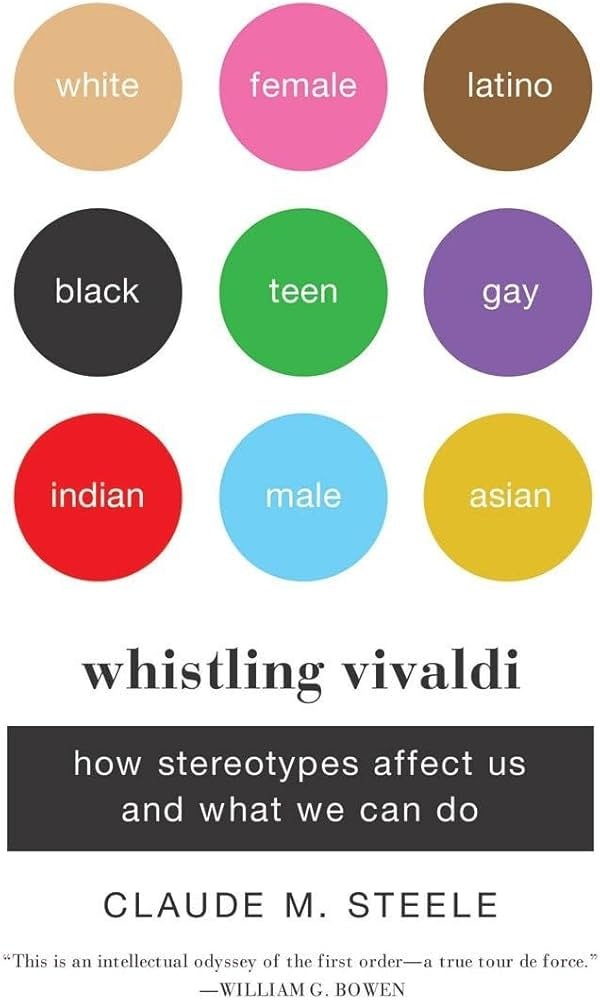
An Introduction: At the Root of Identity
I have a memory of the first time I realized I was black. It was when, at seven or eight, I was walking
home from school with neighborhood kids on the last day of the school year—the whole summer in front
of us—and I learned that we “black” kids couldn’t swim at the pool in our area park, except on
Wednesday afternoons. And then on those summer Wednesdays, with our swimming suits wrapped
tightly in our towels, we filed, caravan-style, out of our neighborhood toward the hallowed pool in the
adjoining white neighborhood. It was a strange weekly pilgrimage. It marked the racial order of the time
and place—Chicagoland, the 1950s and early 1960s. For me it was what the psychologist William Cross
calls an “encounter”—with the very fact that there was a racial order. The implications of this order for
my life seemed massive—a life of swimming only on Wednesday afternoons? Why? Moreover, it turned
out to be a portent of things to come. I next found out that we black kids—who, by the way, lived in my
neighborhood and who had been, until these encounters, just kids—couldn’t go to the roller rink, except
on Thursday nights. We could be regular people but only in the middle of the week? These segregations
were hard to ignore. And mistakes were costly, as when, at thirteen, after arriving at six in the morning, I
waited all day to be hired as a caddy at an area golf course, only to be told at the end of the day that they
didn’t hire Negroes. This is how I became aware I was black. I didn’t know what being black meant, but I
was getting the idea that it was a big deal.With decades of hindsight, I now think I know what was going on. I was recognizing nothing less than a
condition of life—most important, a condition of life tied to my race, to my being black in that time and
place. The condition was simple enough: if I joined the caravan and went to the pool on Wednesday
afternoons then I got in; if I went to the pool any other time, then I didn’t get in. To my seven-or eight
year-old self, this was a bad condition of life. But the condition itself wasn’t the worst of it. For example,
had my parents imposed it on me for not taking out the garbage, I wouldn’t have been so upset. What got
me was that it was imposed on me because I was black. There was nothing I could do about that, and if
being black was reason enough to restrict my swimming, then what else would happen because of it?In an interview many years later, a college student, whom you will meet later in this book, would describe
for me an experience that took a similar form. He was one of only two whites in an African American
political science class composed of mostly black and other minority students. He, too, described a
condition of life: if he said something that revealed an ignorance of African American experience, or a
confusion about how to think about it, then he could well be seen as racially insensitive, or…worse; if he
said nothing in class, then he could largely escape the suspicion of his fellow students. His condition, like my swimming pool condition, made him feel his racial identity, his whiteness, in that time and place—
something he hadn’t thought much about before.From experiences like these, troubling questions arise. Will there be other conditions? How many? In
how many areas of life? Will they be about important things? Can you avoid them? Do you have to stay
on the lookout for them?When I encountered my swimming pool restriction, it mystified me. Where did it come from? Conditions
of life tied to identity like that still mystify me. But now I have a working idea about where they come
from. They come from the way a society, at a given time, is organized around an identity like race. That
organization reflects the history of a place, as well as the ongoing individual and group competition for
opportunity and the good life. The way Chicagoland was organized around race in the late 1950s and
early 1960s—the rigid housing segregation, the de facto school segregation, the employment
discrimination, and so on—meant that black people in that time and place had many restrictive conditions
of life tied to their identity, perhaps the least of which was the Wednesday afternoon swimming
restriction that so worried my seven-or eight-year-old self.This book is about what my colleagues and I call identity contingencies—the things you have to deal with
in a situation because you have a given social identity, because you are old, young, gay, a white male, a
woman, black, Latino, politically conservative or liberal, diagnosed with bipolar disorder, a cancer
patient, and so on. Generally speaking, contingencies are circumstances you have to deal with in order to
get what you want or need in a situation. In the Chicagoland of my youth, in order to go swimming I had
to restrict my pool going to Wednesday afternoons. That’s a contingency. In his African American
political science class, my interviewee had the added pressure that his ignorance could cause him serious
disapproval. That, too, is a contingency. What makes both of these contingencies identity contingencies is
that the people involved had to deal with them because they had a particular social identity in the
situation. Other people in the situation didn’t have to deal with them, just the people who had the same
identity he had. This book examines the role these identity contingencies play in our lives, in the broader
society, and in some of society’s most tenacious problems.Now, of course, ours is an individualistic society. We don’t like to think that conditions tied to our social
identities have much say in our lives, especially if we don’t want them to. We have a creed. When barriers
arise, we’re supposed to march through the storm, picking ourselves up by our bootstraps. I have to count
myself a subscriber to this creed. But this book offers an important qualification to this creed: that by
imposing on us certain conditions of life, our social identities can strongly affect things as important as
our performances in the classroom and on standardized tests, our memory capacity, our athletic
performance, the pressure we feel to prove ourselves, even the comfort level we have with people of different groups—all things we typically think of as being determined by individual talents, motivations,
and preferences.The purpose of this book is nothing less than to bring this poorly understood part of social reality into
view. I hope to convince you that ignoring it—allowing our creed of individualism, for example, to push
it into the shadows—is costly, to our own personal success and development, to the quality of life in an
identity-diverse society and world, and to our ability to fix some of the bad ways that identity still
influences the distribution of outcomes in society.How do identity contingencies influence us? Some constrain our behavior down on the ground, like
restricted access to a public swimming pool. Others, just as powerful, influence us more subtly, not by
constraining behavior on the ground but by putting a threat in the air.At the center of this book is a particular kind of identity contingency, that of stereotype threat. I believe
stereotype threat is a standard predicament of life. It springs from our human powers of
intersubjectivity—the fact that as members of society we have a pretty good idea of what other members
of our society think about lots of things, including the major groups and identities in society. We could all
take out a piece of paper, write down the major stereotypes of these identities, and show a high degree of
agreement in what we wrote. This means that whenever we’re in a situation where a bad stereotype about
one of our own identities could be applied to us—such as those about being old, poor, rich, or female—
we know it. We know what “people could think.” We know that anything we do that fits the stereotype
could be taken as confirming it. And we know that, for that reason, we could be judged and treated
accordingly. That’s why I think it’s a standard human predicament. In one form or another—be it through
the threat of a stereotype about having lost memory capacity or being cold in relations with others—it
happens to us all, perhaps several times a day.It is also a threat that, like the swimming pool restriction, is tied to an identity. It is present in any
situation to which the stereotype is relevant. And this means that it follows members of the stereotyped
group into these situations like a balloon over their heads. It can be very hard to shake.
Consider the experience of Brent Staples, now a columnist for the New York Times, but then a
psychology graduate student at the University of Chicago, a young African American male dressed in
informal student clothing walking down the streets of Chicago’s Hyde Park neighborhood. In his own
words:I became an expert in the language of fear. Couples locked arms or reached for each other’s hand
when they saw me. Some crossed to the other side of the street. People who were carrying on conversations went mute and stared straight ahead, as though avoiding my eyes would save them….I’d been a fool. I’d been walking the streets grinning good evening at people who were frightened to
death of me. I did violence to them by just being. How had I missed this…I tried to be innocuous but didn’t know how…. I began to avoid people. I turned out of my way into side
streets to spare them the sense that they were being stalked…. Out of nervousness I began to whistle and
discovered I was good at it. My whistle was pure and sweet—and also in tune. On the street at night I
whistled popular tunes from the Beatles and Vivaldi’s Four Seasons. The tension drained from people’s
bodies when they heard me. A few even smiled as they passed me in the dark.Staples was dealing with a phantom, a bad stereotype about his race that was in the air on the streets of
Hyde Park—the stereotype that young African American males in this neighborhood are violence prone.
People from other groups in other situations might face very different stereotypes—about lacking math
ability rather than being violence prone for example—but their predicaments would be the same. When
they were in situations where those stereotypes could apply to them, they understood that one false move
could cause them to be reduced to that stereotype, to be seen and treated in terms of it. That’s stereotype
threat, a contingency of their identity in these situations.Unless, as Staples discovered, they devised a way to deflect it. Staples whistled Vivaldi, by his own
account a very good version of it. What would that do for him? Would it improve his attitude toward
others on the street, make him more understanding? Probably not. What it did for sure was change the
situation he was dealing with. And how it did this illustrates nicely the nature of stereotype threat. In a
single stroke, he made the stereotype about violence-prone African American males less applicable to him
personally. He displayed knowledge of white culture, even “high white culture.” People on the street may
not have recognized the Vivaldi he was whistling, but they could tell he was whistling classical music.
This caused him to be seen differently, as an educated, refined person, not as a violence-prone African
American youth. Such youths don’t typically walk down the street whistling classical music. While
hardly being aware of it, people drop the stereotype of violence-proneness as the lens through which they
see him. He seems less threatening. People don’t know who he is; but they know he isn’t someone to fear.
Fear fades from their demeanor. Staples himself relaxes. The stereotype in the air that threatened him is
fended off. And the change in the behavior of those on the street, and in his own behavior, reveals the
power that a mere stereotype—floating in the air like a cloud gathering the nation’s history—was having
on everyone all along.Whistling Vivaldi is about the experience of living under such a cloud—an experience we all have—and
the role such clouds play in shaping our lives and society.Suppose you are invited into a psychology laboratory and asked to play ten holes of golf on a miniature
course that has been set up in a small room. Suppose also that you are a white college student, reasonably
athletically inclined. Now suppose that just as you are getting the feel of the golf clubs, you are told that
the golf task is part of a standardized sports psychology measure called the Michigan Athletic Aptitude
Test (MAAT), which measures “natural athletic ability.” How well do you think you’d do? Would being
told that the golf task measures natural athletic ability make a difference?A group of social psychologists at Princeton University led by Jeff Stone did exactly this experiment
several years ago. They found something very interesting: white students who were told the golf task
measured natural athletic ability golfed a lot worse than white students who were told nothing about the
task. They tried just as hard. But it took them, on average, three strokes more to get through the course.What was it about thinking of the task as a measure of natural athletic ability that so strikingly
undermined their performance?Jeff and his colleagues reasoned that it had something to do with their being white. In the terms I have
been using, it had to do with a contingency of white identity that comes to bear in situations where natural
athletic ability is being evaluated. This contingency comes from a broadly known stereotype in this
society that, compared with blacks at least, whites may have less natural athletic ability. Participants in
Jeff’s experiment would know this stereotype simply by being members of this society. They might not
believe it. But being told that the golfing task measured the very trait their group was stereotyped as
lacking, just before they began the task, could put them in a quandary: their frustration on the task could
be seen as confirming the stereotype, as a characterization both of themselves and of their group. And
this, in turn, might be upsetting and distracting enough to add an average of three strokes to their scores.The stereotype about their group, and the threatening interpretation of their golf frustration that it posed,
is not a contingency like the swimming pool restriction of my youth that directly affected behavior. It
imposed no extra restrictions on their golfing, or any material impediments. But it was nonetheless a
contingency of their identity during the golf task. If they experienced frustration at golf, then they could
be confirming, or be seen to be confirming, the unsavory stereotype. If they didn’t experience frustration
at golf, then they didn’t confirm the racial stereotype. This was an extra pressure they had to deal with
during the golfing task, for no other reason than that they were white. It hung over them as a threat in the
air, implying that one false move could get them judged and treated as a white kid with no natural athletic
ability. (You will learn later in the book how my colleagues and I came to call this kind of threat in the air
simply stereotype threat.)With this reasoning in tow, Jeff and colleagues started asking more questions.
If the mere act of telling white Princeton students that their golfing measured natural athletic ability had
caused them to golf poorly by distracting them with the risk of being stereotyped, then telling black
Princeton students the same thing should have no effect on their golfing, since their group isn’t
stereotyped in that way. And it didn’t. Jeff and his colleagues had put a group of black Princeton students
through the same procedure they’d put the white students through. And, lo and behold, their golfing was
unaffected. They golfed the same whether or not they’d been told the task measured natural athletic
ability.Here was more evidence that what had interfered with white students’ golfing, when it was seen to
measure natural athletic ability, was a distracting sense of threat arising from how whites are stereotyped
in the larger society.But Jeff and his research team weren’t satisfied. They devised a still cleverer way to make their argument.
They reasoned that if group stereotypes can really set up threats in the air that are capable of interfering
with actions as concrete as golfing for entire groups of people—like the stereotype threat Staples had to
contend with on the streets of Hyde Park—then it should be possible to set up a stereotype threat that
would interfere with black students’ golfing as well. All they’d have to do was represent the golfing task
as measuring something related to a bad stereotype of blacks. Then, as black participants golfed, they’d
have to fend off, like whites in the earlier experiment, the bad stereotype about their group. This added
pressure might hurt their golfing.They tested this idea in a simple way. They told new groups of black and white Princeton students that
the golf task they were about to begin was a measure of “sports strategic intelligence.” This simple
change of phrase had a powerful effect. It now put black students at risk, through their golfing, of
confirming or being seen to confirm the ancient and very bad stereotype of blacks as less intelligent.
Now, as they tried to sink their putts, any mistake could make them feel vulnerable to being judged and
treated like a less intelligent black kid. That was a heavy contingency of identity in this situation indeed,
which might well cause enough distraction to interfere with their golfing. Importantly, this same
instruction freed white students of stereotype threat in this situation, since whites aren’t stereotyped as
less intelligent.The results were dramatic. Now the black students, suffering their form of stereotype threat during the
golfing task, golfed dramatically worse than the white students, for whom this instruction had lifted
stereotype threat. They took, on average, four strokes more to get through the course.Neither whites, when the golfing task was represented as a test of natural athletic ability, nor blacks,
when it was represented as a test of sports strategic intelligence, confronted a directly interfering
contingency of identity in these experiments—nothing that directly affected their behavior like a
swimming pool restriction. The contingencies they faced were threats in the air—the threat that their
golfing could confirm or be seen to confirm a bad group stereotype as a characterization of their group
and of themselves. Still, it was a threat with a big effect. On a course that typically took between twenty
two and twenty-four strokes to complete, it led whites to take three more strokes to complete it, and
blacks to take five more strokes to complete it.At first glance, one might dismiss the importance of something “in the air” like stereotype threat. At
second glance, however, it’s clear that this threat can be a tenacious force in our lives. Staples had to
contend with it every time he walked down the streets of his own neighborhood. neighborhood. White
athletes have to contend with it in each competition, especially against black athletes. Think of the white
athlete in a sport with heavy black competition. To reach a high level of performance, say, to make it into
the National Basketball Association, which is dominated by black players, the white athlete would have to
survive and prosper against a lifelong gauntlet of performance situations loaded with this extra race
linked threat. No single good athletic performance would put the stereotype to rest. The effort to disprove
it would be Sisyphean, reemergent at each important new performance. The aim of this book is not to
show that stereotype threat is so powerful and persistent that it can’t be overcome. Quite the contrary. Its
goal is to show how, as an unrecognized factor in our lives, it can contribute to some of our most vexing
personal and societal problems, but that doing quite feasible things to reduce this threat can lead to
dramatic improvements in these problems.Now suppose it wasn’t miniature golf that you were asked to perform when you arrived at a psychology
experiment, and suppose it wasn’t your group’s athletic ability that was negatively stereotyped in the
larger society. Suppose it was difficult math problems that you were asked to solve on a timed
standardized test, and suppose that it was your group’s math ability that was negatively stereotyped in the
larger society. In other words, suppose you were an American woman showing up for an experiment
involving difficult math.Would the stereotype threat that is a contingency of your gender identity in math-related settings be
enough to interfere with your performance on the test? Would you be able to just push through this threat
of being seen stereotypically and perform well anyway? Or would the very effort to push hard on a timed
test be distracting enough to impair your performance despite the extra effort? Would you experience this
threat, this contingency of identity, every time you tried difficult math in settings with males around?
Would this contingency of identity in math settings become frustrating enough to make you avoid math
related college majors and careers? Would women living in a society where women’s math ability is not
negatively stereotyped experience this threat? Would their scores be better?Or suppose the test you were asked to take wasn’t the Michigan Athletic Aptitude Test but was the SAT,
and suppose the negative stereotype about your group wasn’t about athletic ability, or even about math
ability, alone, but about scholastic ability in general. Again, would the stereotype threat you experience as
a contingency of your identity in scholastic settings be enough to interfere with your performance on this
test? Does the threat cause this interference by diverting mental resources away from the test and onto
your worries? Would the stereotype threat you experience in scholastic settings affect other experiences
as well, such as your classroom performance and your comfort interacting with teachers, professors,
teaching assistants, and even other students not in your group? Would this contingency of identity make
these settings so frustrating for you that you might try to avoid them in choosing a walk of life?The purpose of this book is to describe the journey that my colleagues and I have taken in formulating
these and related questions and then in systematically trying to answer them over the past twenty years.
The experience has been like trying to solve a mystery. And the approach of the book is to give you an
over-the-shoulder view of how that mystery has unfolded, of the progression of ideas and revelations,
often from the research itself, about the surprising ways that stereotypes affect us—our intellectual
functioning, our stress reactions, the tension that can exist between people from different groups, and the
sometimes very surprising strategies that alleviate these effects and thereby help solve some of society’s
worst problems. And because science is rarely a solitary activity anymore—something long true for me—
the story also describes many of the people who have done this research, as well as how they work. You
will also meet many interesting people who have experienced this threat—including a famous journalist,
an African American expatriate in Paris, a person who rose from sharecropping to wealth in rural North
Carolina, students at some of America’s most elite universities, and students in some of America’s most
wanting K through 12 schools.Although the book deals with issues that can have a political charge, neither it nor the work it reports is
propelled by an ideological orientation—to the best of my and my colleagues’ ability. One of the first
things one learns as a social psychologist is that everyone is capable of bias. We simply are not, and
cannot be, all knowing and completely objective. Our understandings and views of the world are partial,
and reflect the circumstances of our particular lives. This is where a discipline like science comes in. It
doesn’t purge us of bias. But it extends what we can see and understand, while constraining bias. That is
where I would stake my claim, at any rate. The constant back-and-forth between ideas and research
results hammers away at bias and, just as important, often reveals aspects of reality that surpass our original ideas and insights. When that has happened—and it has—that is the direction our research goes
in. I would like to see my strongest convictions as arising from that kind of revelation, not from prior
belief, and I hope you will get a view of that experience as you read along.Arising this way, several general patterns of findings have persistently emerged in this research. Seeing
these patterns, more than any ideas or hunches I began this research with, has convinced me of the
importance of identity contingencies and identity threat in our lives.The first pattern is that despite the strong sense we have of ourselves as autonomous individuals, evidence
consistently shows that contingencies tied to our social identities do make a difference in shaping our
lives, from the way we perform in certain situations to the careers and friends we choose. As the white
world-class sprinter takes the starting blocks in the 100-meter dash at the Olympic trials, he is as
autonomous an individual as the black sprinters next to him. And they all face precisely the same 100
meters of free and open track. Nonetheless, in order to do well in that situation, research suggests that he
may have to surmount a pressure tied to his racial identity that the black sprinters don’t face.The second dimension of reality, long evident in our research, is that identity threats—and the damage
they can do to our functioning—play an important role in some of society’s most important social
problems. These range from the racial, social class, and gender achievement gaps that persistently plague
and distort our society to the equally persistent intergroup tensions that often trouble our social relations.Third, also coming to light in this research is a general process—involving the allocation of mental
resources and even a precise pattern of brain activation—by which these threats impair a broad range of
human functioning. Something like a unifying understanding of how these threats have their effect is
emerging.Finally, a set of things we can do as individuals to reduce the impact of these threats in our own lives, as
well as what we as a society can do to reduce their impact in important places like schools and
workplaces, has come to light. There is truly inspirational news here: evidence that often small, feasible
things done to reduce these threats in schools and classrooms can dramatically reduce the racial and
gender achievement gaps that so discouragingly characterize our society.These findings have convinced me of the importance of understanding identity threat to our personal
progress, in areas of great concern like achievement and better group relations, and to societal progress, in
achieving the identity-integrated civil life and equal opportunity that is a founding dream of this society.
This book presents the journey that my colleagues and I have taken in getting to this conviction.Let’s begin the journey where it began—Ann Arbor, Michigan, 1987.
-
RJ Starr
1
The Hidden Structures of Human Experience
Human beings live inside a continuous flow of psychological experience. Thoughts arise in response to events. Emotions shift as circumstances change. Memories return, sometimes with startling force. Expectations about the future form almost automatically. Interpretations appear so quickly that they often feel less like interpretations than like reality itself. From the inside, this movement of thought and feeling seems natural. It feels like life simply unfolding.
Because this process is so constant, most people rarely stop to examine it. They notice what they are thinking, what they are feeling, what they are worried about, what they hope will happen, what they regret, what they want. They notice the content of experience. Much less often do they pause to ask what organizes that content in the first place.
That question matters more than it first appears.
The patterns that define a human life are not simply random collections of thoughts, emotions, and reactions. They are not isolated mental events floating freely through consciousness. Human experience takes shape through an underlying organization. There is a structure to the way perception becomes interpretation, the way interpretation becomes emotional significance, the way repeated experiences become part of identity, and the way identity becomes linked to larger questions of purpose, direction, and meaning.
Most of the time, this structure remains hidden. People feel the consequences of it without seeing it directly. They know what it is like to become anxious before a difficult conversation, to replay a moment of embarrassment long after it has ended, to feel destabilized by failure, to wonder whether they are becoming someone different from the person they thought they were, or to find themselves asking what any of it means after a loss or major transition. These experiences are familiar. Yet they are often encountered as isolated episodes rather than as expressions of a larger system.
This book begins from the idea that human beings live inside such a system whether they recognize it or not.
The thoughts people have, the emotions they struggle to regulate, the identities they construct, and the meanings they pursue are not separate psychological curiosities. They are interacting dimensions of a broader architecture. What appears on the surface as a passing thought or a momentary emotional reaction may reflect deeper patterns within the structure of the mind. What looks like confusion in one area of life may actually involve tensions distributed across several domains at once.
To see this clearly requires a change in perspective. Instead of asking only what a person feels, thinks, or does in a given moment, it becomes necessary to ask how the system itself is organized. What kind of structure produces these recurring experiences? How do perception, feeling, self-understanding, and purpose become woven together into a recognizable human life? Why do some experiences destabilize the whole system while others are absorbed and integrated without lasting disruption?
These are structural questions. They move beneath the immediate contents of consciousness and toward the organization that makes those contents possible.
This does not mean reducing psychological life to something mechanical. Human beings are not machines, and the architecture described in this book is not a rigid blueprint imposed on experience from the outside. It is a living structure, one that develops across time, responds to relationships and circumstance, and remains shaped by history, culture, memory, and vulnerability. But precisely because human experience is so complex, it cannot be understood well through fragments alone. A more integrated perspective is needed.
That perspective begins with a simple but easily overlooked recognition: human beings are always living inside systems they do not fully see.
Living Inside Systems We Rarely See
In ordinary life, people move through complex systems without much awareness of the structures supporting them. A person can live in a city for decades without understanding how its water is routed, how its electrical grid functions, or how transportation networks shape the movement of daily life. Most of the time, those systems remain invisible because they are working. Only when something fails does the hidden infrastructure become visible. A blackout reveals the grid. A transit breakdown reveals the network. An interruption exposes the structure that was quietly organizing life all along.
Something similar is true of psychological experience.
Human beings live within systems of interpretation, emotional regulation, identity organization, and meaning-making that shape their experience continuously. These systems determine what gets noticed, what feels threatening, what seems possible, what becomes memorable, what fits into the story of the self, and what appears worthwhile or empty. Yet because these processes operate continuously and often beneath awareness, they rarely present themselves as systems. They appear instead as life itself.
A person notices that they feel tense in certain conversations but may not notice the interpretive expectations already active before the conversation begins. Another person finds themselves repeatedly drawn to approval, success, or reassurance without seeing the deeper identity structure that gives these experiences such significance. Someone else feels lost after a divorce, a career collapse, or the death of a parent and experiences that loss not only as pain but as a disruption in orientation, as though the very map of life has changed. In each case, the visible experience is real. But the visible experience is not the whole story. Something deeper is organizing it.
One reason this deeper organization is hard to see is that psychological systems are lived from the inside. A person does not stand outside their own mind and observe it objectively the way an engineer might examine a bridge. They are immersed in it. Their interpretations are already shaping what they see. Their emotions are already directing attention. Their framework of meaning is already influencing whether a setback appears tolerable, devastating, instructive, unfair, or absurd.
Because of this, individuals often misrecognize structural patterns as isolated episodes.
They think they have a problem with overthinking, with sensitivity, with confidence, with motivation, with attachment, with anger, with emptiness. Sometimes those descriptions capture part of what is happening. But often they are surface-level labels placed on deeper structural dynamics. Consider a simple social example. Two people leave the same conversation with entirely different impressions of what just occurred. One feels dismissed and unsettled. The other feels the discussion was neutral and brief. The difference may not lie only in what was said. It may also lie in how each person’s interpretive habits, emotional sensitivities, identity concerns, and prior expectations organized the experience. The external event was shared, but the psychological event was not. Each person inhabited a different version of its significance.
Or consider the experience of waiting for a text message that never arrives. On the surface, this may seem trivial. But psychologically it can activate an entire system. One person shrugs and assumes the other is busy. Another becomes preoccupied, then anxious, then self-critical, then resentful. What changed was not simply the absence of a message. What changed was the interaction between interpretation, emotional regulation, identity narrative, and meaning. The event became structurally amplified.
Most people have had some version of this experience. A moment that appears small on the outside acquires disproportionate weight on the inside. A remark, a silence, a missed opportunity, an expression on someone’s face, a shift in tone. These moments are not psychologically powerful only because of what they are. They are powerful because of the system into which they enter.
This is one reason structural understanding matters. Without it, human experience can appear strangely chaotic. People seem inconsistent even to themselves. They may understand one part of what is happening while remaining confused about the rest. They may know that their reaction is larger than the moment seems to justify, yet still feel unable to regulate it. They may recognize that a certain pattern keeps recurring but not understand what sustains it. They feel the outcome without seeing the architecture that produces it.
A structural perspective changes the level of analysis. It asks not only what happened, but what kind of system made that event matter in this way. It asks not only what a person felt, but how that feeling was organized by interpretation, by prior learning, by self-structure, and by larger frameworks of significance. It does not deny the immediate reality of thought and emotion. It places them in context.
This shift is subtle but profound. Once people begin to understand themselves structurally, many experiences that once felt arbitrary begin to reveal pattern. Reactions become more intelligible. Repetition becomes easier to see. The psychological landscape begins to look less like a series of disconnected moments and more like an organized environment through which a person is moving. That environment is not static. It develops. It absorbs experience. It becomes strained. It reorganizes under pressure. But it is not random. It has discernible forms, recurring tensions, and identifiable domains. The challenge is that modern life does not naturally teach people to see this level of structure. It teaches them to respond to symptoms, episodes, traits, and visible behaviors. It gives names to parts. It does not always show how the parts belong to a system.
This helps explain why even sophisticated psychological language can leave people feeling only partially understood. They may acquire a label for what they feel without gaining a clearer map of why those feelings interact with identity, thought, and meaning in the way they do. They gain vocabulary, but not architecture. To move beyond that limitation, it is necessary to examine a broader problem in modern psychological understanding: fragmentation. The Limits of Fragmented Psychology Modern psychology has produced enormous insight into the workings of the human mind. It has studied attention, memory, cognition, attachment, affect, development, motivation, trauma, personality, social influence, and many other dimensions of human functioning. This body of knowledge is significant and indispensable. No serious effort to understand human beings can ignore it. At the same time, the growth of psychological knowledge has often come through specialization. Different domains of inquiry developed their own methods, vocabularies, assumptions, and preferred problems. Cognitive psychology focused on mental processes. Affective science investigated emotion. Developmental psychology examined change across the lifespan. Social psychology studied group influence and interpersonal behavior. Personality theory pursued stable individual differences. Existential psychology engaged questions of freedom, mortality, anxiety, meaning, and responsibility. Clinical models focused on distress, dysfunction, diagnosis, and treatment. Each of these domains has contributed something important. But when taken separately, they can produce an understanding of psychological life that feels partitioned. Thought is studied here, emotion there, identity somewhere else, meaning elsewhere still. Valuable insights emerge, yet the lived reality of human experience does not arrive in these compartments. In actual life, a person does not first have a cognitive event, then an emotional event, then an identity event, then a meaning event, each in clean sequence. They experience all of these dimensions at once. A breakup is not merely emotional pain. It is interpretation, attachment, self-understanding, memory, anticipated future, and often a crisis of meaning. Career failure is not simply disappointment. It may also destabilize identity, distort interpretation, alter emotional regulation, and change a person’s sense of purpose. Grief is never just sadness. It is also altered structure. The world no longer means what it meant before. Fragmented psychology can describe pieces of these processes well, yet still miss the form of the whole. This becomes especially clear in the way psychological language is used publicly. A person may be told they are struggling with anxiety, cognitive distortions, low self-esteem, emotional dysregulation, poor boundaries, insecure attachment, or an identity crisis. Each of these descriptions may contain truth. Yet in many cases they remain conceptually adjacent rather than structurally integrated. They describe important features of experience without fully clarifying how those features are interacting inside a single system. The result is a common kind of psychological partial understanding. People know a great deal about isolated concepts while still feeling uncertain about their own overall organization. They understand traits without structure. They understand symptoms without system. They understand episodes without architecture.
This helps explain why even sophisticated psychological language can leave people feeling only partially understood. They may acquire a label for what they feel without gaining a clearer map of why those feelings interact with identity, thought, and meaning in the way they do. They gain vocabulary, but not architecture. To move beyond that limitation, it is necessary to examine a broader problem in modern psychological understanding: fragmentation.The Limits of Fragmented Psychology
Modern psychology has produced enormous insight into the workings of the human mind. It has studied attention, memory, cognition, attachment, affect, development, motivation, trauma, personality, social influence, and many other dimensions of human functioning. This body of knowledge is significant and indispensable. No serious effort to understand human beings can ignore it.
At the same time, the growth of psychological knowledge has often come through specialization. Different domains of inquiry developed their own methods, vocabularies, assumptions, and preferred problems. Cognitive psychology focused on mental processes. Affective science investigated emotion. Developmental psychology examined change across the lifespan. Social psychology studied group influence and interpersonal behavior. Personality theory pursued stable individual differences. Existential psychology engaged questions of freedom, mortality, anxiety, meaning, and responsibility. Clinical models focused on distress, dysfunction, diagnosis, and treatment.
Each of these domains has contributed something important. But when taken separately, they can produce an understanding of psychological life that feels partitioned. Thought is studied here, emotion there, identity somewhere else, meaning elsewhere still. Valuable insights emerge, yet the lived reality of human experience does not arrive in these compartments.
In actual life, a person does not first have a cognitive event, then an emotional event, then an identity event, then a meaning event, each in clean sequence. They experience all of these dimensions at once. A breakup is not merely emotional pain. It is interpretation, attachment, self-understanding, memory, anticipated future, and often a crisis of meaning. Career failure is not simply disappointment. It may also destabilize identity, distort interpretation, alter emotional regulation, and change a person’s sense of purpose. Grief is never just sadness. It is also altered structure. The world no longer means what it meant before.
Fragmented psychology can describe pieces of these processes well, yet still miss the form of the whole.
This becomes especially clear in the way psychological language is used publicly. A person may be told they are struggling with anxiety, cognitive distortions, low self-esteem, emotional dysregulation, poor boundaries, insecure attachment, or an identity crisis. Each of these descriptions may contain truth. Yet in many cases they remain conceptually adjacent rather than structurally integrated. They describe important features of experience without fully clarifying how those features are interacting inside a single system. The result is a common kind of psychological partial understanding. People know a great deal about isolated concepts while still feeling uncertain about their own overall organization. They understand traits without structure. They understand symptoms without system. They understand episodes without architecture.
The Architecture of Human Experience
The framework developed in this book refers to the structural organization of psychological life as Psychological Architecture.
Psychological Architecture proposes that human experience is organized through four interacting domains: mind, emotion, identity, and meaning. These domains do not simply sit beside one another as separate topics. They function together as an architecture through which experience becomes organized, interpreted, regulated, narrated, and integrated across time.
The mind is the interpretive engine. It does not merely record reality as though it were a camera. It filters, selects, predicts, organizes, compares, and explains. It constructs a usable version of the world from incomplete information. Through the mind, events acquire shape and significance.
Emotion is the regulatory system. It signals what matters. It alerts, mobilizes, warns, attaches, grieves, and responds. Emotion is not merely something a person feels after interpretation has occurred. It operates in constant interaction with interpretation, helping determine what becomes salient, urgent, memorable, or difficult to ignore.
Identity is the organizing narrative. It gives continuity to experience by linking past, present, and anticipated future into a sense of self. Identity holds together roles, values, memories, loyalties, wounds, aspirations, and self-understandings. It answers, however imperfectly, the question of who a person takes themselves to be.
Meaning is the integrative structure. It situates personal life within broader frameworks of purpose, significance, value, responsibility, or existential orientation. Meaning is what allows suffering to be interpreted as bearable or unbearable, sacrifice as justified or futile, and life itself as coherent or fractured.
These four domains are analytically distinct, but lived experience rarely separates them cleanly. They are always interacting.
A thought is rarely just a thought. It carries emotional significance, fits or disrupts identity, and often draws its weight from a larger horizon of meaning. A feeling is rarely just a feeling. It emerges in relation to interpretation, to self-narrative, and to what the event appears to mean. A crisis of identity is never only a problem of self-definition. It also involves altered interpretation, emotional instability, and a disruption in meaning. A collapse of meaning does not remain philosophical for long. It changes emotion, thought, and self-organization alike.
This is why the metaphor of architecture is useful. In a building, a visible crack in one area may indicate stress distributed through the structure. In human experience, what appears as a difficulty in one domain may reflect tension across several at once. Rumination may not be only a thought problem. It may be thought under emotional strain in service of identity protection amid uncertainty of meaning. Emotional volatility may not be merely a matter of feeling too much. It may be the regulatory expression of deeper interpretive threat and identity instability. Emptiness may not be simple depression alone, but a broader reduction in meaningful integration across the whole architecture.
Once readers begin to see experience in this way, the framework becomes practical almost immediately. It changes what they notice. Instead of asking only, “Why do I feel this?” they may ask, “What interpretation is active here?” “What in my identity feels threatened?” “Why does this matter so much?” “What larger meaning is attached to this event?” A social injury, a professional failure, a family conflict, or a private fear begins to look different when viewed structurally. The person is no longer examining one symptom in isolation. They are learning to perceive the architecture through which the experience is being generated.
That does not mean they are stepping outside of human vulnerability. On the contrary, one of the values of structural understanding is that it often deepens compassion. When people understand how many forces are interacting inside a moment of distress, they are less likely to reduce themselves or others to simplistic judgments. A defensive reaction, an episode of collapse, a recurring avoidance, or a sudden crisis can be seen not only as behavior but as architecture under strain.
This chapter has been concerned with preparing the ground for that way of seeing. It has argued that human beings live within systems they rarely perceive directly, that fragmented psychology often leaves the whole person insufficiently understood, and that a structural perspective offers a more integrated way of making sense of human experience. The chapters that follow will examine each of the four domains in turn, beginning with the mind.
That sequence matters. Human beings first encounter the world through interpretation. They do not merely receive reality. They organize it. They construct patterns, assign significance, anticipate consequences, and build internal models of what is happening. The mind is therefore not only one domain among others. It is the interpretive engine through which the rest of the architecture is continuously engaged.
To understand the architecture of being human, it is necessary to begin there.

