LEARNING OBJECTIVES
By the time you complete this topic you should be able to do the following:
| Explain the factors that gave rise to a second wave of liberalism. Identify how different regions of Latin America sought to achieve modernization. Explain how the banana export economy developed in Central America. |
During the mid-1800s, Latin America experienced a resurgence of liberalism, often referred to as a “second coming.” The direction established by caudillos and conservative elements was increasingly challenged by a new generation of liberals who sought to rebuild Latin America based on the very principles that had fueled its independence. To understand this shift, it’s helpful to review the timeline of political ideologies in Latin American history.
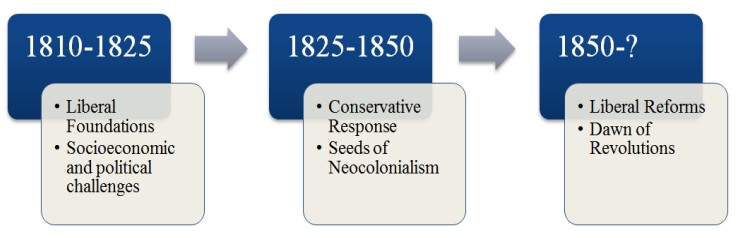
So far, we have examined the factors that led to independence and how those ideals failed to take root, paving the way for authoritarian rule and economic systems that rendered Latin America subservient to foreign powers. In response to these political and economic failures, many nations turned once again to liberalism, drawn to its promise of modernization and progress. Notably, the latter part of the 1800s laid the foundation for a new era in Latin American politics, one that would eventually lead to the revolutionary movements of the 20th century. This topic will explore this liberal resurgence through three key case studies: Mexico, Argentina, and Costa Rica.
MEXICO
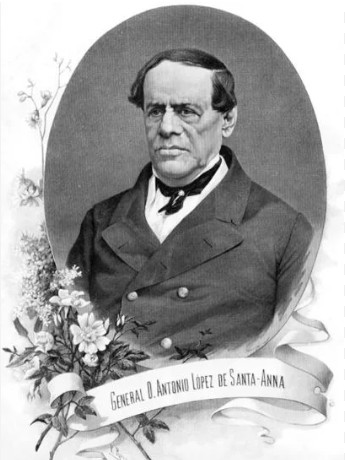
Antonio López de Santa Anna’s downfall in Mexico was closely tied to the loss of Mexico’s northern territory, Texas. Like the Spanish before them, Mexico struggled to effectively control and occupy its vast northern regions. During the 1820s, Texas saw a significant influx of U.S. settlers crossing the Mississippi River. These settlers refused to assimilate into Mexican society: they evaded paying taxes, introduced slavery (which had been abolished in Mexico), and rejected the practice of Roman Catholicism. General Manuel de Mier y Terán warned of the growing threat this unchecked immigration posed to Mexico’s hold on Texas.
By 1830, Texas had a population of 28,700 residents, of which only 4,000 were Mexicans. The loss of the Texas territory to the United States seemed inevitable unless immediate action was taken to stem the tide of immigration. In response, Mexico enacted the Law of Colonization of 1830, which prohibited further immigration into Texas. However, tensions continued to escalate, and by 1835, Texas—led primarily by American settlers—declared its independence from Mexico.
Santa Anna responded to the Texas independence movement by leading a military expedition into the region. He initially achieved success at the Battle of the Alamo. However, his victory there was short-lived. At the Battle of San Jacinto, Santa Anna was captured and forced to withdraw his troops, effectively ending Mexico’s efforts to retain Texas. In 1836, Texas declared itself an independent “nation,” a status it maintained until it was annexed by the United States in 1845. Santa Anna’s failures in Texas led to his disgrace and removal from power.
Mexico’s political instability and chronic lack of funding made it nearly impossible to negotiate a compromise with the United States over Texas. For instance, between 1844 and 1848, Mexico saw twelve different governments rise and fall, further undermining its ability to manage the growing crisis. Tensions escalated when Texas was formally annexed by the United States in 1845. Adding to Mexico’s difficulties was the increasing presence of American settlers in California, which signaled further encroachment on Mexican territory.
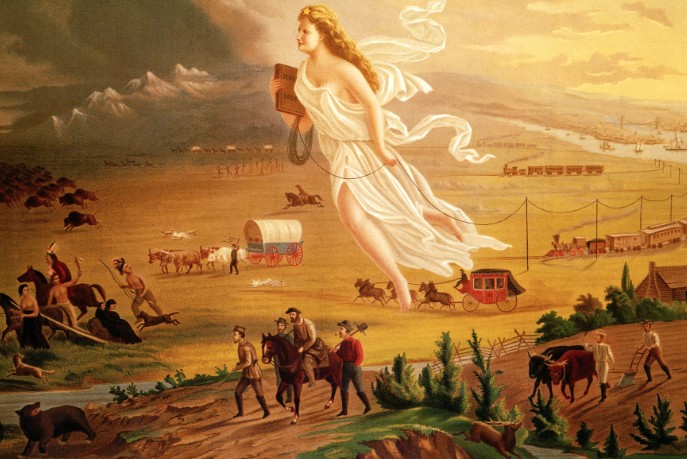
American designs on California and New Mexico were motivated by a series of economic and political factors. Aiding in this expansionist program was the concept of Manifest Destiny. Manifest Destiny was a term coined in 1845 by John L. O’ Sullivan (1813-95), editor of the Democratic Review. Using these terms, Sullivan advocated America’s “manifest destiny to overspread the continent allotted by Providence for the free development of our yearly multiplying millions.” This meant even at the cost of waging war against Mexico.
President James K. Polk (1845–1849) initiated the Mexican-American War by sending General Zachary Taylor on a probing expedition into the disputed territory between Texas and Mexico. The United States initially focused its war efforts on northern Mexican territories, including California, Chihuahua, and New Mexico. The goal of this strategy was to pressure Mexico into suing for peace.
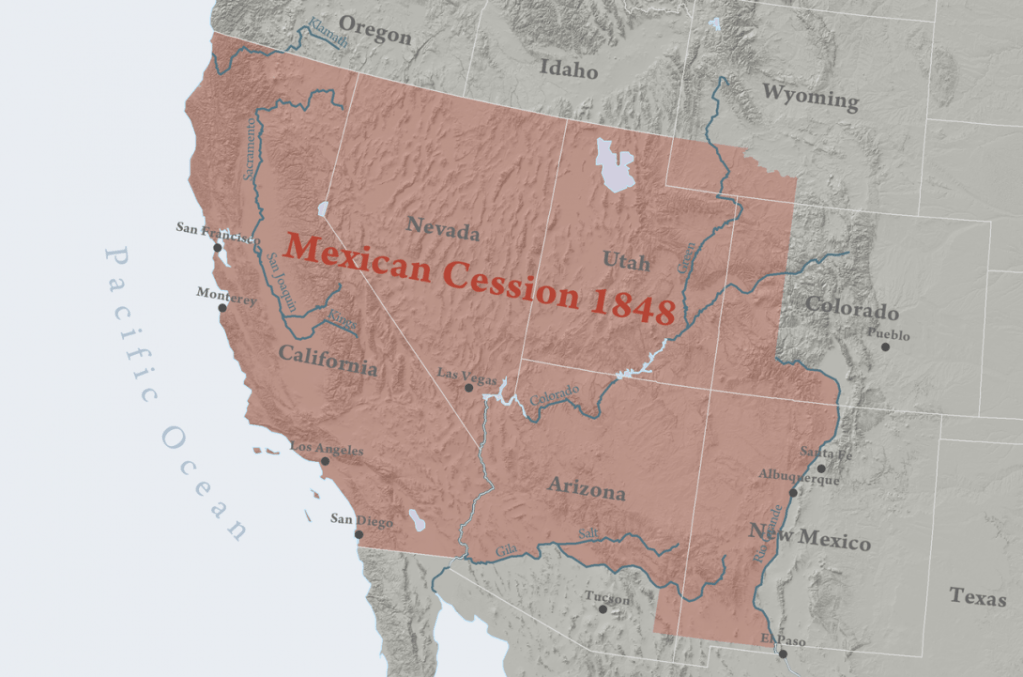
Although U.S. forces faced initial challenges, the tide of the war turned decisively in their favor with the capture of Veracruz. The Mexican-American War ultimately ended with the signing of the Treaty of Guadalupe Hidalgo in 1848. Under the terms of the treaty, Mexico ceded all territories north of the Rio Grande, the Gila River, and San Diego Bay to the United States. In return, the U.S. paid Mexico $15 million as compensation for the land.
The disastrous war against the United States forced Mexico to reexamine its political direction and reimagine its national identity. A group of young writers and intellectuals, including Melchor Ocampo (governor of Michoacán and congressman in the national legislature), Santos Degollado (governor of Michoacán), Guillermo Prieto (chief editor of Siglo XIX), and Benito Juárez (delegate in the Congress of Mexico), began to critically assess Mexico’s post-war challenges while serving in public office. These liberals attracted widespread popular support as they sought to reshape Mexico into a fully functioning federal republic. They opposed military dominance, rejected the power of the Catholic Church, and fought to dismantle the remnants of colonial privilege.
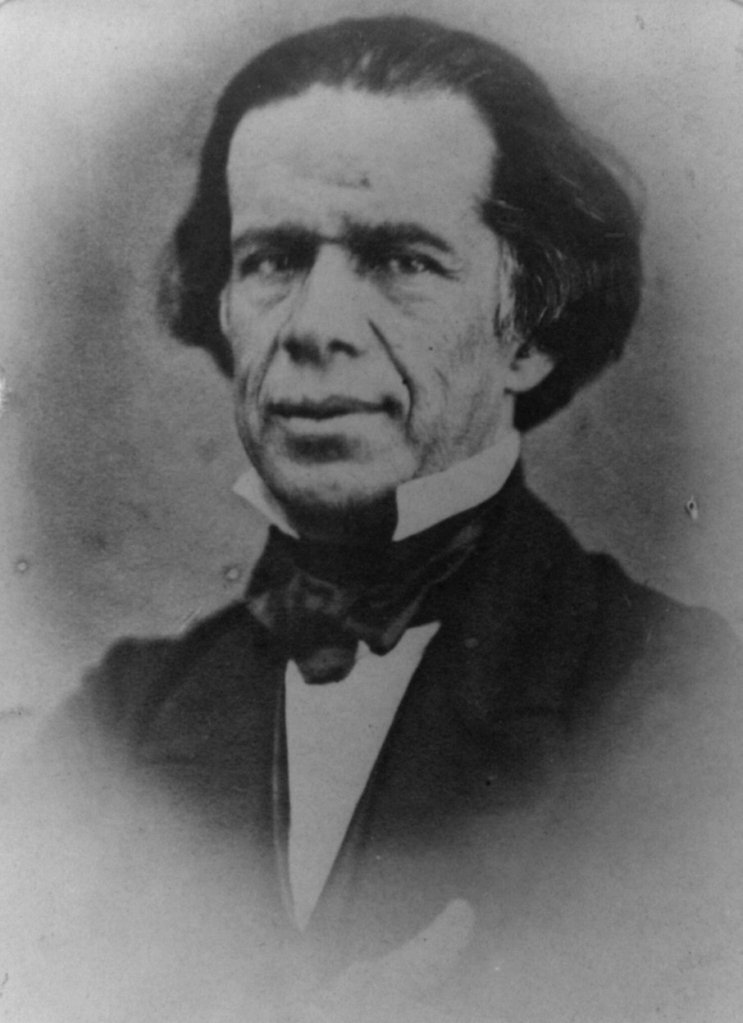
In stark opposition stood the conservatives, who sought to preserve the old social and political order. The conservative bloc, made up primarily of the clergy, senior military officers, and the urban elite, defended the status quo and resisted the sweeping changes proposed by the liberals. This clash of ideologies eventually erupted into the War of the Reform (1857–1860), a civil war that would determine the future direction of Mexico’s government and bring liberalism to the forefront.

In 1857, Mexico adopted a new constitution that embodied the principles of 19th-century liberalism. This constitution was “noteworthy for its introduction of major reform laws restricting military and clerical fueros (privileges) and clerical property rights . . . [and] . . . also introduced a bill of rights and reestablished a strong national congress as a unicameral body.” Leading this new era in Mexican history was Benito Juárez, one of the most influential figures in the country’s liberal movement. Born on March 21, 1806, in San Pablo Guelatao, Oaxaca, Juárez was of Zapotec indigenous heritage. He served as Mexico’s president from 1861 to 1872. Prior to his presidency, Juárez led Mexico’s Liberales to victory over the conservative forces of General Félix Zuloaga during the War of Reform (1857–1860).
Nineteenth-century liberalism was rooted in “the principles of capitalism and utilitarianism, advocated free trade, decentralized government, individual rights, and separation of church and state.” Once in office, Juárez set out to sever Mexico’s remaining ties to Spanish conservative traditions. However, some of his actions contradicted the very ideals his party claimed to champion, creating tensions between liberal doctrine and its implementation under his leadership.
Juárez’s economic policies often contradicted the free-market principles his liberal party espoused. By offering foreign investors government support, Juárez facilitated an unprecedented influx of foreign capital and technology into Mexico. However, this came at a steep cost: over time, many of Mexico’s economic sectors fell under the control of American and European interests. In later years, Juárez’s increasingly autocratic tendencies, including electoral victories achieved through ballot stuffing, drew widespread criticism of his administration. Ironically, while internal dissent was growing, Mexico’s next major challenge came not from within but from Europe.
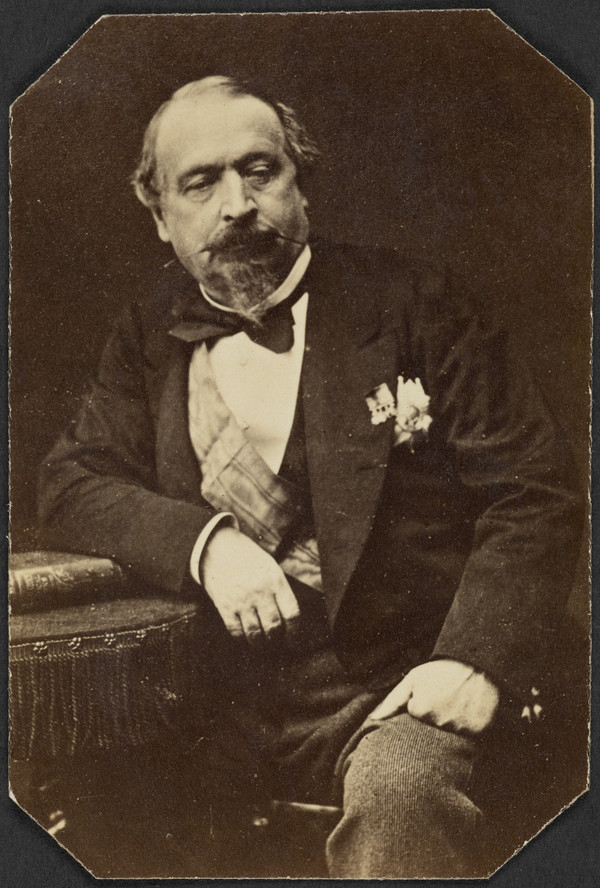
Since the rise of Charles Louis Napoleon Bonaparte (Napoleon III) to power in France, the French government had pursued a steadily expansionist foreign policy. This ambition brought France into Mexico during a moment of vulnerability, as the United States was preoccupied with its own Civil War. With the support of Mexico’s conservative elites, Napoleon III sought to establish a pro-French monarchy in Mexico. After carefully evaluating candidates, he selected Ferdinand Maximilian Joseph Maria, Habsburg Archduke of Austria, to rule as Emperor Maximilian I (r. 1864–1867).
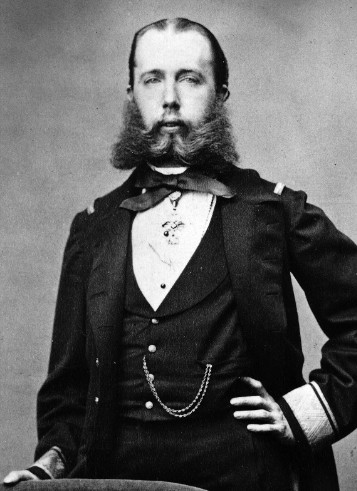
The French intervention in Mexico was short-lived, largely due to the conclusion of the American Civil War. With the United States no longer distracted by internal conflict, it pressured France to abandon its ambitions in Mexico. Recognizing the shifting geopolitical landscape, France withdrew its forces, leaving Emperor Maximilian without support. In 1867, Benito Juárez and the Liberals restored the Mexican Republic by defeating the conservative forces and executing Maximilian.

Following Juárez’s presidency, leadership eventually passed to José de la Cruz Porfirio Díaz Mori, who established an authoritarian regime known as the Porfiriato. Díaz’s government maintained control over Mexico until the outbreak of the Mexican Revolution in 1910. For many, the authoritarianism of the Díaz regime seemed like a practical solution to the chaos and disorder that had plagued Mexico during the first two-thirds of the 19th century. This perspective was particularly embraced by the Científicos, a group of technocratic advisors to Díaz. They championed the idea that “the sacrifice of individual liberty on the altar of political stability” was necessary to modernize and stabilize the nation.
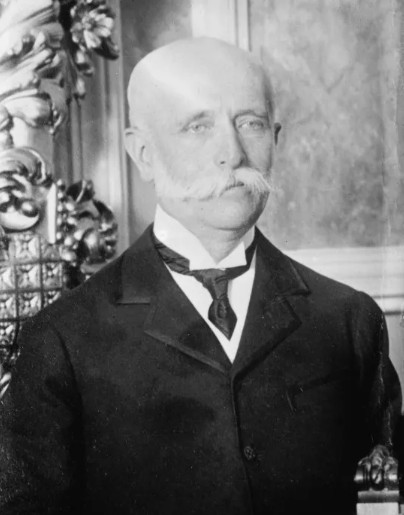
Porfirio Díaz believed that Mexico’s development and modernization required not only foreign capital but also the creation of a robust communication network, particularly through the expansion of railroads. To improve foreign relations and attract investment, Díaz prioritized paying off Mexico’s foreign debt, signaling fiscal stability to potential investors.
Díaz also invited foreign mining companies to operate in Mexico, offering them generous concessions to encourage investment. These concessions included exemptions from federal and state taxes for 20 years and from export taxes and customs duties for 50 years.
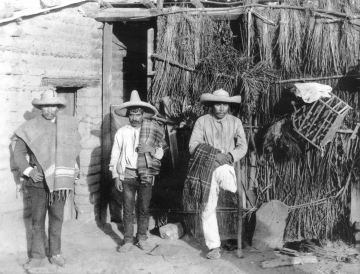
As part of Mexico’s modernization program, agriculture became increasingly commercialized, with land consolidation becoming a key priority. Idle public lands that had once been accessible to peasants were sold at auction. Between 1878 and 1908, a total of 45 million hectares of public land were transferred into private ownership. This process displaced countless campesinos (peasant farmers), leaving them without access to the land they had relied on for generations. Communal village landholding systems were also dismantled, further displacing rural farmers. While Mexico experienced significant economic progress during Díaz’s rule, the rural poor were left behind, reaping no benefits from the modernization efforts.
Under the Díaz regime, Mexico’s economy experienced unprecedented growth, driven primarily by the expansion of its export economy. This growth was fueled by strong international demand for minerals, cotton, and other commodities extracted or produced throughout Mexico’s territories.
However, by the early 1900s, global demand for Mexico’s exports began to decline, dealing a devastating blow to the economy. Compounding these economic troubles was the falling price of silver, one of Mexico’s key exports. The devaluation of the peso, coupled with the dominance of commercialized agriculture, hit peasants and workers particularly hard. Rising food prices added to their struggles, as Mexico, despite its agricultural focus, was forced to import food to sustain its population. This dependency stemmed from the shift in agriculture toward producing cash crops for export rather than food for domestic consumption.
The economic downturn created widespread hardship, as rising food prices, declining wages, and layoffs fueled tensions in workplaces and rural communities. These growing frustrations among Mexico’s working and peasant classes set the stage for the unrest that would ultimately lead to the Mexican Revolution.
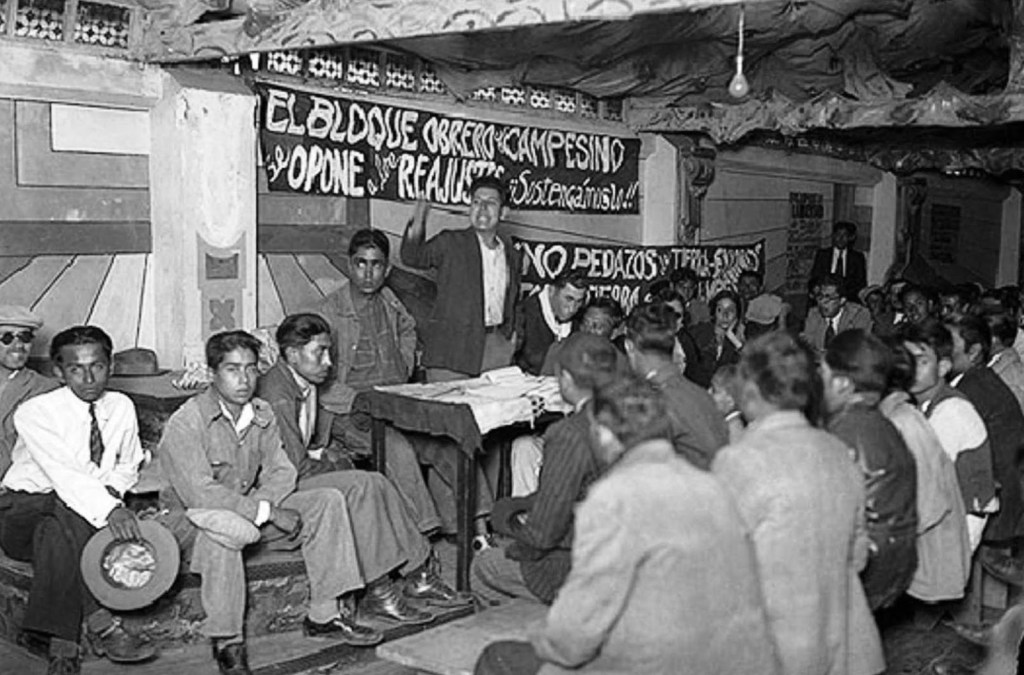
The creation of labor organizations and unions was an immediate response to Mexico’s worsening economic conditions. In 1905, for example, textile workers in Orizaba formed the Gran Círculo de Obreros Libres (GOCL) and demanded a 5% wage increase. The following year, textile workers at the Río Blanco factory joined the GOCL in going on strike. President Díaz responded with brutal military force: 70 workers were killed, and six union leaders were executed. This violent suppression only fueled further unrest, sparking a wave of strikes—65 in total—between 1907 and 1909.
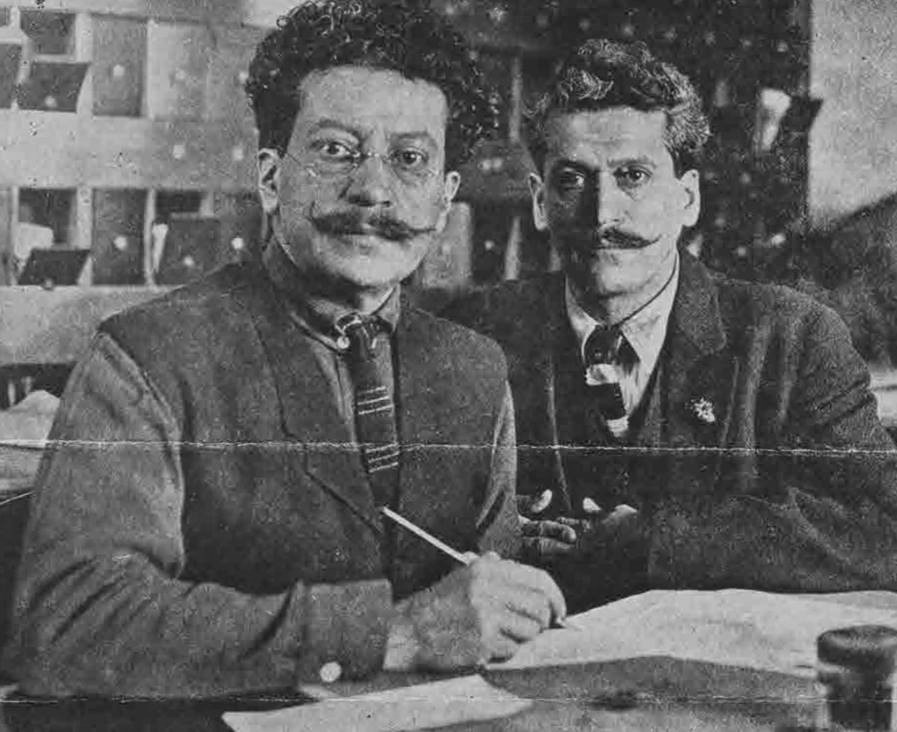
In 1906, the Partido Liberal de México (PLM) was established under the leadership of Ricardo Flores Magón and Antonio Díaz Soto y Gama. Magón, a journalist and politician from Oaxaca, was an outspoken critic of the Díaz regime. Forced to flee to the United States, Magón and his followers continued their activism by publishing a politically charged newspaper called Regeneración. From exile, the PLM issued a reform manifesto advocating for key labor reforms, including “a four-year presidential term, a minimum wage, an eight-hour workday, and the end of child labor.”
The PLM’s pro-labor ideology helped foster solidarity among workers and miners. Along with the support of the Western Federation of Miners, the PLM played a key role in organizing the Cananea strike of 1906, which became a pivotal moment in the labor movement. These efforts not only exposed the injustices of Díaz’s regime but also helped lay the groundwork for the revolutionary uprisings that would soon follow.
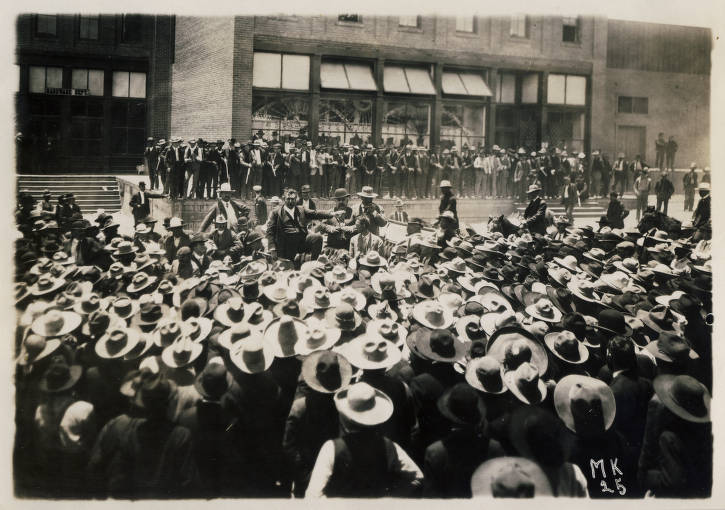
The Cananea strike became a political scandal for President Díaz and a symbol of growing unrest in Mexico. As tensions at the mine escalated into violence, Colonel William C. Greene, the American owner of the mine, requested the intervention of the Arizona Rangers. With the combined forces of the Arizona Rangers, Mexico’s rural police, and Mexican troops, the strike was violently suppressed. This heavy-handed response, which involved foreign forces operating on Mexican soil, sparked widespread public outcry across the country and intensified solidarity with the workers.
One observer paying close attention to these events was Francisco Madero, the son of a wealthy landowner from Coahuila. Madero would soon play a pivotal role in Mexico’s history, as you will learn in our next topic.
ARGENTINA
Between 1811 and 1829, a series of presidents, triumvirates, juntas, congresses, and shifting political alignments hindered Buenos Aires’ efforts to dominate Argentine politics. This prolonged period of chaos finally came to an end in 1829, when Juan Manuel de Rosas assumed power as a caudillo, consolidating control. However, with Rosas’s downfall, Argentina took a significant step toward stability by adopting its first constitution in 1853. By 1910, Argentina had transformed into a global leader in food production, a prime destination for capital investment, and a nation boasting one of the largest railway networks in the world. How did this transformation occur?
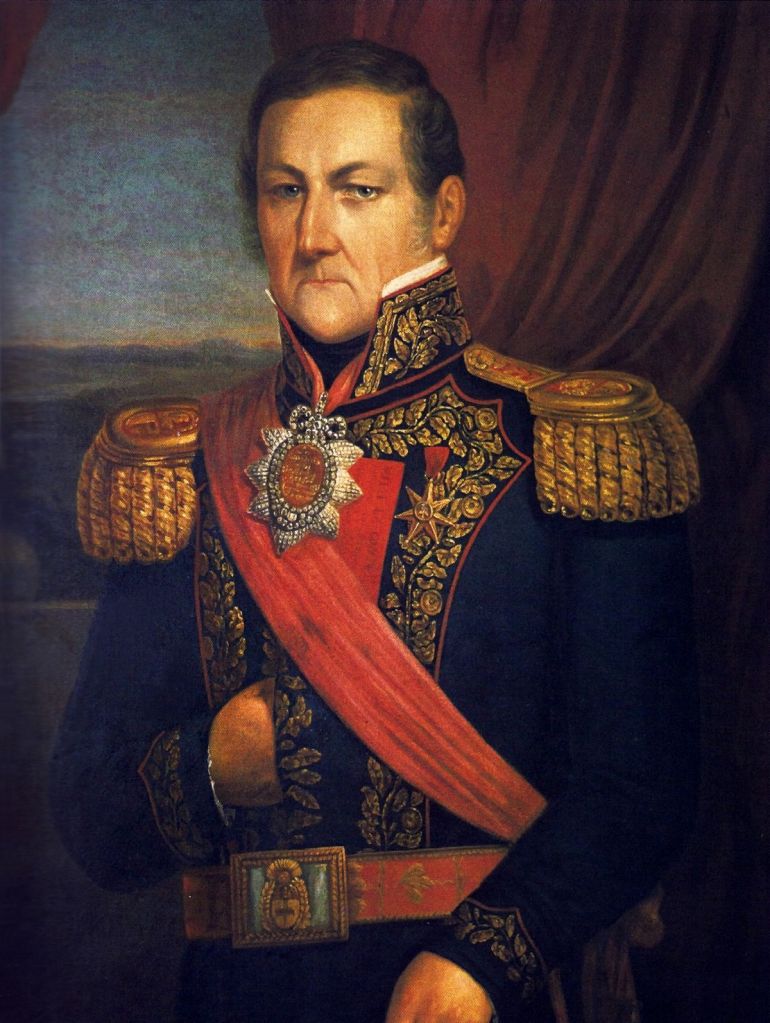
Argentina’s remarkable economic growth “resulted from a simple trinity: foreign investment, foreign trade, and immigration.” This development was driven by a new wave of liberalism, which established its political dominance through a succession of leaders committed to modernizing the nation.
Argentine liberal leaders have been described as the most European-oriented and literarily gifted reformers in 19th-century Latin American politics. Three figures who epitomize Argentine liberalism are Juan Bautista Alberdi (1810–1884), Bartolomé Mitre (1821–1906), and Domingo Faustino Sarmiento (1811–1888). All three spent years in exile between 1830 and 1840 during the conservative rule of Juan Manuel de Rosas. During this period, Argentina’s liberal intellectuals emigrated primarily to Uruguay and Chile, where they immersed themselves in European ideas and liberal philosophies.
These intellectuals extensively studied themes related to Europe and liberalism, focusing on education, written culture, books, and newspapers. This dedication to written expression shaped their ability to articulate their ideas effectively through writing. They shared a deep faith in progress and were committed to transforming and modernizing Argentine society on multiple fronts. Two areas where their impact stands out are in the cultural realm, through the transformation of education, and in the physical realm, through their promotion of European immigration to Argentina.
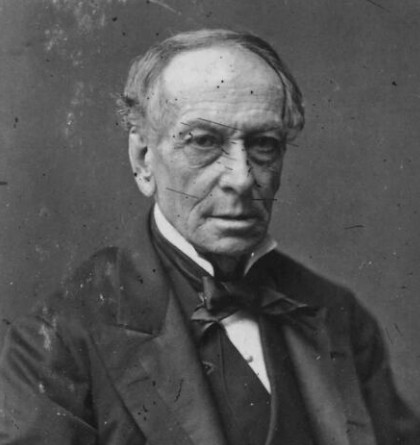
Juan Bautista Alberdi (1810–1884), a political theorist, was perhaps the most influential figure in shaping Argentine liberalism through his writings. Having studied law in Buenos Aires, Alberdi became a literary advocate and “missionary” for liberalism. In 1852, following the ousting of Rosas, Alberdi published his landmark treatise, Bases and Points of Departure for the Political Organization of the Argentine Republic. This work aimed to guide the political reorganization of Argentina and became foundational to the country’s liberal reforms.

Regarding the impact of modernization, Alberdi argued:
The railroad offers the means of righting the topsy-turvy order that Spain established on this continent. She placed the heads of our states where the feet should be. For the ends of isolation and monopoly this was a wise system; for our aims of commercial expansion and freedom it is disastrous. It will forge the unity of the Argentine Republic better than all our congresses. Without the railroad you will not have political unity in lands where distance nullifies the action of the central government.

Juan Bautista Alberdi urged the Argentine government to encourage European immigration, believing Europeans to be superior in both virtue and skills. This belief became encapsulated in the liberal slogan “To govern is to populate” (gobernar es poblar), which reflected the liberals’ vision of building a modern and prosperous Argentina through the introduction of European settlers. In fact, the new constitution of 1853 directly supported this objective. Article 25 explicitly states:
The Federal Government will encourage European immigration, and it will not restrict, limit or burden with any taxes the entrance into Argentine territory of foreigners who come with the goal of working the land, improving the industries and teach the sciences and the arts.
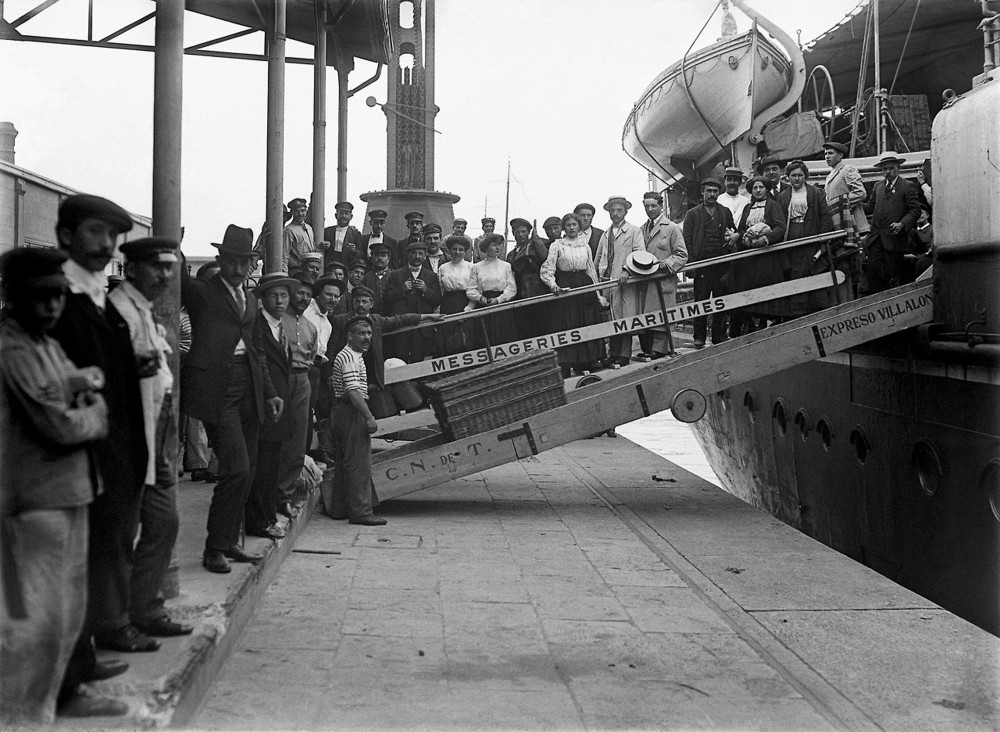
Alberdi also advocated for the modernization of education as a key method for transforming Argentine culture. He emphasized adopting curricula inspired by European models, arguing that Argentina should focus on modern subjects such as English, technology, and commerce. Alberdi believed that clinging to antiquated writings and outdated ideas would hinder progress, urging Argentines to instead embrace the innovations and practical knowledge that had driven European advancements. He explained:
Our youth should be trained for industrial life, and therefore should be educated in the arts and sciences that would prepare them for industry. The South American type of man should be one formed for the conquest of the great and oppressive enemies of our progress: the desert, material backwardness; the brutal and primitive nature of this continent.
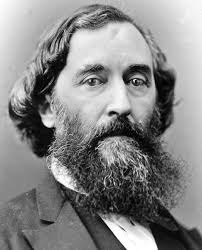
Bartolomé Mitre (1821–1906) served as president of Argentina from 1861 to 1868 and was known for his eloquence in both writing and public speaking. Like Alberdi, Mitre believed that European immigration and public education were essential to Argentina’s progress and modernization. By 1895, approximately 52% of Buenos Aires’ population was composed of immigrants, reflecting the success of this liberal initiative.
In 1870, Mitre founded the influential newspaper La Nación, which became a platform for promoting liberal ideas and modernizing policies. For Argentina’s liberal leadership, relying on the local population to gradually acquire the skills and knowledge necessary for modernization was seen as too slow a process. Instead, they viewed immigration as a more immediate solution, encouraging the arrival of Europeans who already possessed the expertise and education needed to drive Argentina’s transformation. He noted:
By studying the action of these human currents that obey natural forces, it will become clear that without their assistance we would be lagging far behind on the road to prosperity and that we owe more to this spontaneous force than to the cogitations of our sages or the intelligence and foresight of our legislators. Let us run over the benefits this immigration has brought: it has, to a considerable degree, multiplied the reproductive power of the species and considerably contributed to the growth of the population; it has raised the production that is the basis of our wealth from its dejection; it has improved agriculture; it has nourished shipping; it has lent greater value to landed property; it is the nerve of commerce as an agent of production and consumption; its deposits form the basis of our great credit establishments; it promotes immigration and spontaneous settlement of its own steam, without burdening the treasury.
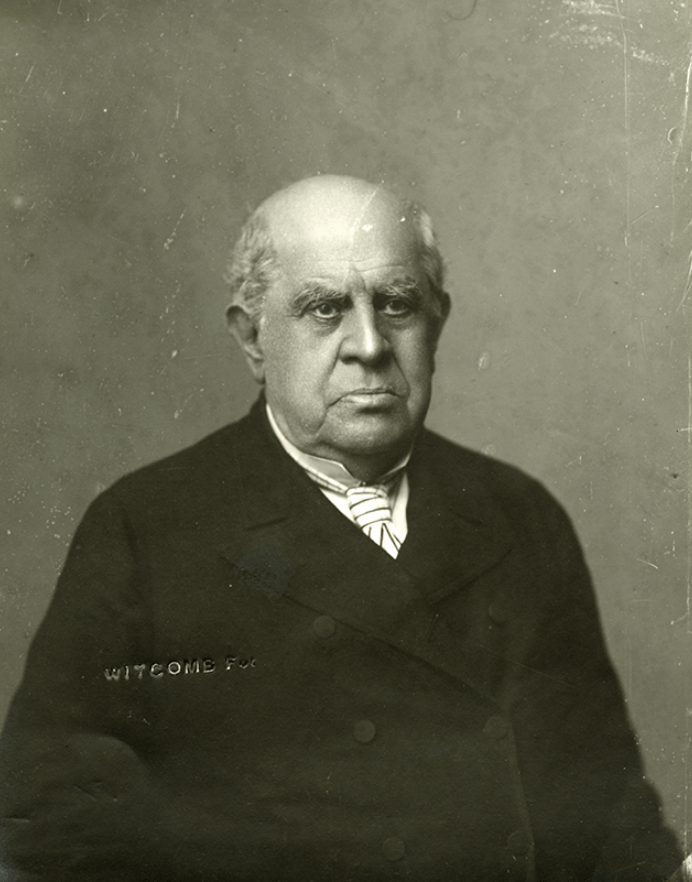
Domingo Faustino Sarmiento (1811–1888) served as president of Argentina from 1868 to 1874 and is often regarded as the most influential of the Argentine liberals. His most famous work, Civilization and Barbarism: The Life of Facundo Quiroga and the Geography and Customs of the Argentine Republic (1845), was a scathing denunciation of caudillo rule in Latin America. In this influential text, Sarmiento framed the struggle for progress as a conflict between “civilization” as represented by urban, European-influenced values and “barbarism,” which he equated with Argentina’s rural culture and traditions.
Like his liberal predecessors, Sarmiento rejected traditional Argentine culture, particularly rural customs, as unbearably “barbaric.” However, his views extended further into deeply troubling territory. He opposed Argentina’s non-European racial heritage and disapproved of racial mixing, drawing on the pseudo-scientific theories of social Darwinism to support his arguments. Social scientists of the late 19th and early 20th centuries often used social Darwinism to justify policies like laissez-faire economics, imperialism, racial segregation, and immigration restrictions—policies that exacerbated rather than alleviated social inequalities.
As one historian has observed, “Sarmiento, the great educator, also embodies the darker side of Latin American liberalism in his thinking on race.” This paradox highlights the complexity of Sarmiento’s legacy. While he championed education, progress, and modernization, his racial ideologies reveal the biases and inequities embedded within 19th-century liberalism.
COSTA RICA
By 1822, relative stability had been achieved in Central America when the region was annexed to the Mexican Empire. However, in 1823, the provinces that today make up the countries of Costa Rica, Guatemala, El Salvador, Nicaragua, and Honduras broke away to form the United Provinces of Central America, a federation organized to function as a federal republic with its capital in Guatemala City. Delegates from each province, under the leadership of José Cecilio del Valle of Honduras, drafted a new constitution, which was promulgated in 1824. Despite its initial promise, the federation eventually faltered, leading to Costa Rica’s complete independence in 1838.

Following independence, Costa Rica faced the urgent need to develop an income-generating export industry. Influenced by liberal political and economic ideals, merchants in the 1830s began exporting small amounts of coffee, initially to South America and later to European markets. The cultivation of coffee expanded rapidly, fueled by liberal government policies that incentivized its production and export. By 1850, coffee exports had come to dominate Costa Rica’s economy, giving rise to a system of power brokerage between the coffee elites and the peasant class.
By the 1840s, liberalism had emerged as the dominant political and economic ideology among Costa Rica’s cafetaleros (coffee growers). This shift was reflected in the Constitution of 1844, enacted during the administration of José María Alfaro Zamora. While the constitution allowed for direct popular elections, it imposed strict limitations on the electorate, restricting voting rights based on literacy, property ownership, and gender.
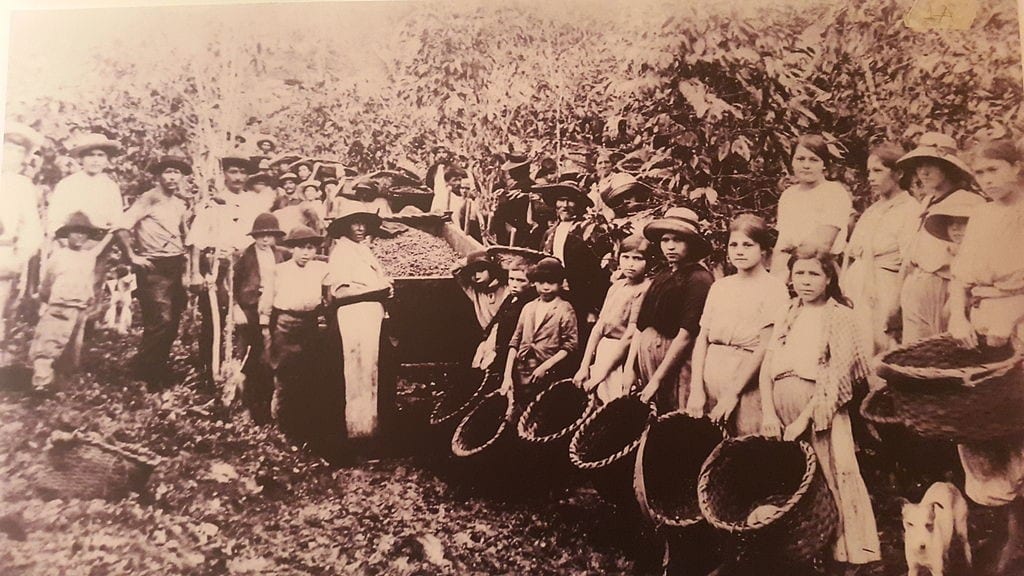
As Costa Rica’s coffee economy grew, the country became increasingly entangled in global politics. The region’s resources and its strategic location as a transit point between the Atlantic and Pacific Oceans attracted the attention of merchants, filibusters, and national leaders from Western Europe and the United States. To avoid escalating tensions in the region, U.S. and British leaders signed the Clayton-Bulwer Treaty in 1850, agreeing to neutrality in Central America. Eventually, the Hay–Bunau-Varilla Treaty of November 18, 1903, between the United States and Panama, granted the U.S. exclusive rights to build and control a canal across the Isthmus of Panama, solidifying the region’s strategic importance on the global stage.
A more serious global incursion into Costa Rica emerged in 1855 with the filibustering expeditions of William Walker. The term “filibuster” originates from the Dutch word vrijbuiter, which translates to “freebooter.” The Spanish adapted the term into filibustero, and from there, it entered the English language, where it came to mean “plunderer” or “pirate.”Walker, a lawyer and journalist from the United States, had previously led missions for territorial conquest in northern Mexico and Central America. In Nicaragua, ongoing political infighting between conservative and liberal factions had created a crisis. Desperate for military support, the liberals invited Walker to assist them in their struggle against the conservatives.

Arriving in Central America with about 300 armed men, Walker helped the liberals secure victory over the conservatives—but at a significant cost. Once in power, Walker began to expand his influence over Nicaragua’s internal affairs, ultimately declaring himself president of Nicaragua in 1856. His ambitions did not stop there, as he set his sights on neighboring Costa Rica, threatening its sovereignty.
Walker’s actions marked one of the earliest instances of U.S. intervention in Central America, foreshadowing a pattern of foreign involvement that would deeply shape the region’s political and social history in the decades to come.
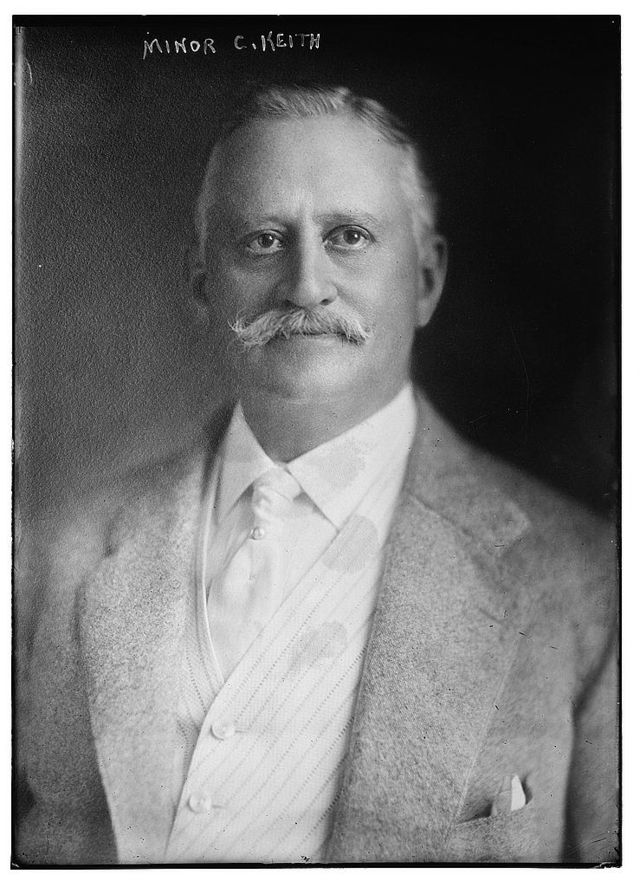
In the late nineteenth and early twentieth centuries, bananas and railroads became powerful symbols of modernity, economic growth, and progress in Costa Rica. The rise of the banana industry, in particular, went hand in hand with the expansion of the country’s railway system. A key figure in this transformation was Minor Cooper Keith (1848–1929), a railroad entrepreneur whose work not only connected Central America but also changed the region’s economic and social landscape.
While constructing the railroad, Keith began investing in various export ventures, including bananas. In 1883, the Costa Rican government granted him 800,000 acres of fertile land as part of his contract to complete the railway project he had started. Seeing the potential of this land, Keith expanded his network of plantations and devoted much of it to banana cultivation, laying the foundation for what would become a dominant export industry in Costa Rica.

Minor Cooper Keith formed the Tropical Trading and Transport Company to coordinate the harvesting and shipping of bananas. Through his economic ventures, Keith quickly became one of the most influential figures in Costa Rica. He further solidified his position by building a powerful network of political allies through his marriage to Cristina María Fernández, the daughter of former president José María Castro Madriz (1847–1849 and 1866–1868). Cristina Fernández was also the niece of President Próspero Fernández Oreamuno (1882–1885) and the cousin of President Bernardo Soto Alfaro (1885–1889).
It was President Soto who had brokered the 1883 land deal that granted Keith 800,000 acres as part of his railroad contract, a decision that would profoundly shape Costa Rica’s economic and political future.
Minor Cooper Keith later expanded his activities into Colombia, where he founded the Colombian Land Company, and in 1897, he acquired a 50 percent stake in the Snyder Banana Company, which focused on operations in Panama. By this point, Keith had established himself as the dominant force in banana cultivation and shipping across Central America.
In 1899, Keith successfully merged his Tropical Trading and Transport Company with the Boston Fruit Company, founded in 1885 by Andrew Preston and Lorenzo Baker. The Boston Fruit Company controlled much of the banana industry in the Caribbean. This merger resulted in the formation of the United Fruit Company (UFC), which quickly became one of the largest landowners in Latin America. The UFC not only dominated the region’s banana production but also exerted significant influence over U.S. foreign policy in Latin America.
The United Fruit Company came to symbolize the exploitative nature of the capitalist agricultural export economy that shaped Costa Rica and much of Latin America during this period. Its practices fueled labor reform movements in the early 20th century, as workers sought to address the widespread social and economic inequities created by the dominance of the export-driven agricultural sector.
BRAZIL
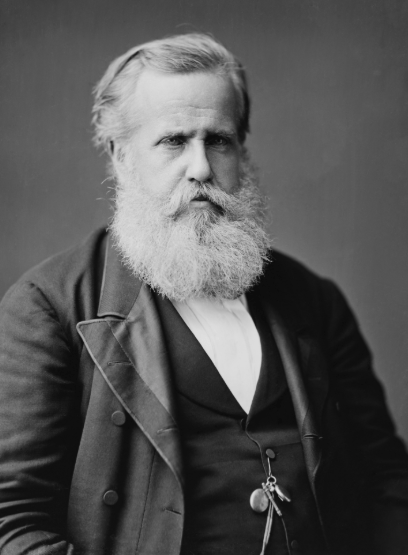
Between 1840 and 1889, Brazil’s Second Empire, under Emperor Pedro II, consolidated centralized authority while preserving an overtly undemocratic political system. The emperor wielded a distinctive “moderating power,” which enabled him to override elected institutions and manipulate electoral processes to benefit conservative elites. Legislative reforms like the Land Law of 1850 curtailed land access by mandating purchases instead of granting plots, thereby reinforcing the dominance of established landowners. Concurrently, international pressure compelled Brazil to abolish the transatlantic slave trade in 1850. This marked both a shift in global diplomatic influence and a conflicted yet emerging interest in modernization. The end of the slave trade also redirected investment toward railways and industrial development, accelerating the country’s economic transformation.
The Paraguayan War (1864–1870) became a pivotal event, reshaping Brazil’s military and political landscape. The alliance with Argentina and Uruguay to defeat Paraguay affirmed Brazil’s regional dominance but came at a steep cost. The war exposed critical weaknesses in military readiness, heightened tensions between military officers and the political elite, and initiated the politicization of the armed forces. Domestically, republican sentiments gained momentum, fueled by disillusionment with imperial centralization, international comparisons, and a growing abolitionist movement. The downfall of the Mexican monarchy and the economic ascendance of republican Argentina further swayed Brazilian opinion against monarchy. As key institutions like the military and the church grew increasingly estranged from imperial authority, so too did provincial elites and the general public.
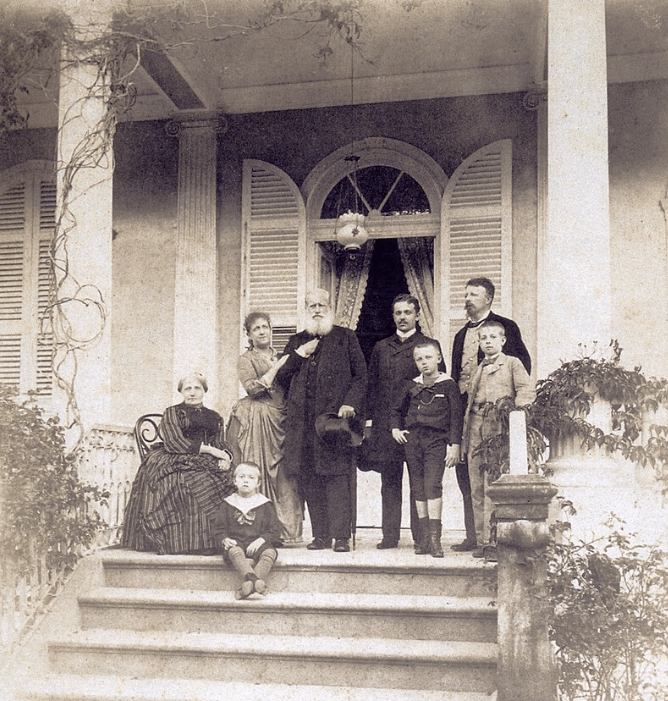
Liberalism during the Second Empire had a contradictory impact. While liberal principles such as constitutionalism, modernization, and abolition inspired various reforms, these changes primarily served elite interests rather than fostering democratic inclusivity. Liberal ideology underpinned the abolition of the slave trade, infrastructure expansion, and encouragement of European immigration, yet these initiatives often reinforced social and economic hierarchies. For instance, the Land Law of 1850 and the shift toward wage labor were consistent with liberal economic thought, but they simultaneously limited land ownership and upheld rural oligarchic power. Politically, liberal factions championed constitutional governance, but their rivalry with conservatives rarely translated into expanded suffrage or civil rights. Ultimately, liberalism functioned less as a vehicle for democratic reform and more as an instrument for controlled modernization that protected the status quo.
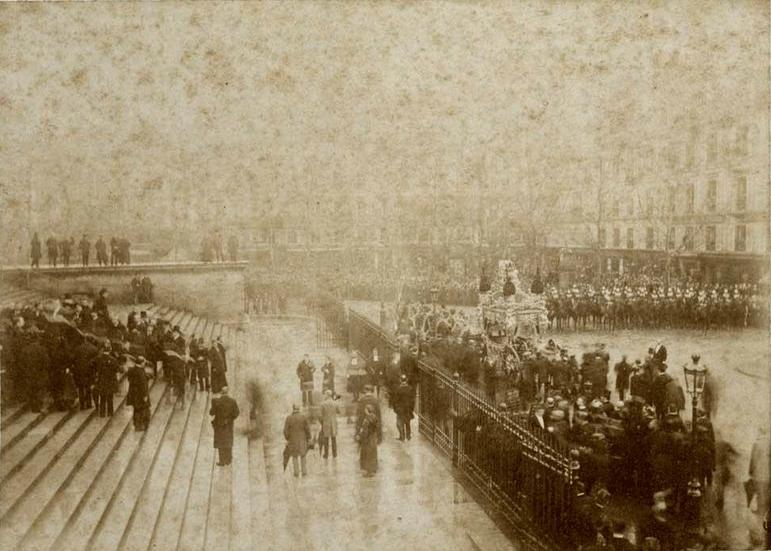
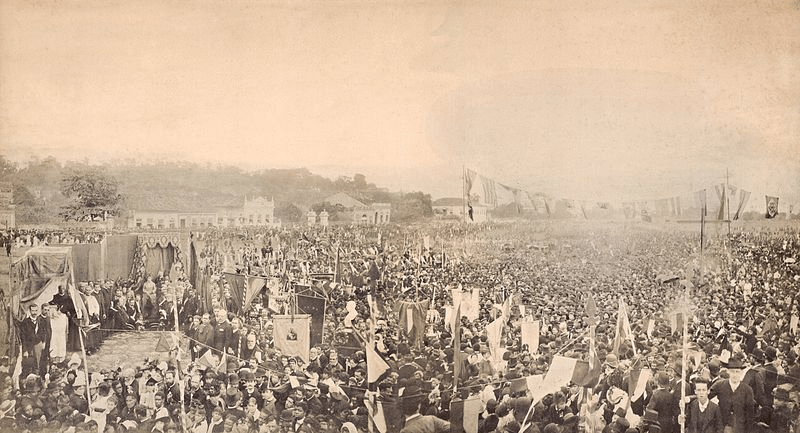
The monarchy’s collapse stemmed largely from internal fractures. Its failure to resolve the slavery issue or adapt to emerging political demands generated mounting instability. Abolition was finally achieved in 1888 through the Golden Law, driven more by political expediency than moral conviction. However, emancipated individuals received no substantive support, and Brazil’s rigid social hierarchy remained intact. Meanwhile, discontent grew within the military, especially among younger officers frustrated with imperial leadership. With the monarchy losing favor among the landed elite and unable to navigate mounting crises, a military-led coup in 1889 deposed Pedro II and proclaimed a republic. Though described as a revolution, it was largely an elite-orchestrated shift that maintained many of the empire’s entrenched power structures under a republican guise.
IN CLOSING
In the mid-1800s, Latin America experienced a resurgence of liberalism, often termed the “second coming,” as new liberal leaders sought to modernize their nations by revisiting the principles that had inspired independence. This shift was a response to the political and economic challenges that had led to authoritarian rule and economic dependence on foreign powers. The period set the stage for future revolutionary movements in the 20th century. Key examples of this liberal resurgence include Mexico’s efforts to redefine its national identity following territorial losses, Argentina’s pursuit of economic modernization, and Costa Rica’s development of a banana export economy.
Our next topic will delve into the causes of the 20th century’s first major revolution. What impact did the socioeconomic and political world of the late 19th century have on this wave of revolutions that struck the early 20th century?
As always, feel free to reach out to me or visit during office hours if you have any questions about the material we’ve covered or the assignments you need to complete.
 World History Portal