LEARNING OBJECTIVES
By the time you complete this topic you should be able to do the following:
| Analyze the causes and context of the Cuban Revolution. Evaluate the Achievements and Criticisms of the Cuban Revolution. Assess the Broader Impact of the Cuban Revolution on Latin America and Beyond. |
THE SUGAR BACKGROUND
Cuba’s climate and fertile soil made it ideal for sugar cultivation—a crop that would become central to its economy. Although sugar planting began under Spanish colonial rule, it wasn’t until the late 18th century that the island emerged as a major exporter. By 1850, Cuba produced one-third of the world’s sugar. Despite remaining a Spanish colony, its economy grew increasingly dependent on the United States, which accounted for 70% of its trade, three-quarters of it in sugar. The drive for efficiency favored large plantations over smaller farms, leading to a more centralized industry. Sugar production demanded substantial capital, a small class of skilled managers, and a vast supply of unskilled labor. This demand fueled the transatlantic slave trade, prolonging slavery in Cuba until 1886, more than twenty years after its abolition in the United States.
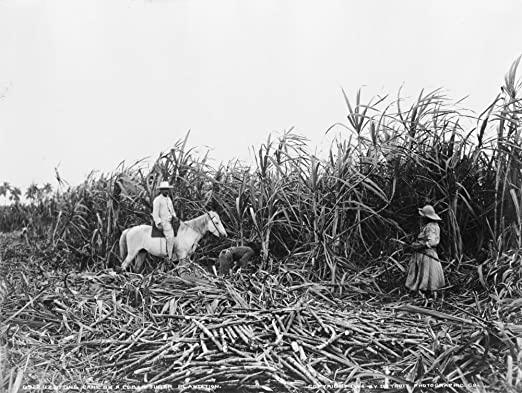
Cuban sugar export trends from 1850 to 1950 were shaped by a mix of economic, political, technological, and environmental factors. Economically, global demand for sugar surged during the Industrial Revolution, and U.S. investments in Cuban plantations further boosted production. However, sugar prices on the international market fluctuated, with downturns like the Great Depression reducing exports. Politically, Spanish colonial policies initially limited trade, but Cuba’s independence in 1898 and subsequent U.S. influence, created new trade opportunities, especially with the United States as its largest market.

In addition to economic and political factors, technological advancements played a significant role in increasing sugar exports. Improvements in milling technology and the development of railroads and port infrastructure enhanced production and transportation efficiency. Labor dynamics also influenced trends; the abolition of slavery in 1886 led to temporary disruptions, but mechanization and migrant labor stabilized production in the following decades. Global events, such as World Wars I and II, disrupted supply chains while creating periods of heightened demand, whereas the Great Depression caused significant declines due to reduced global consumption.
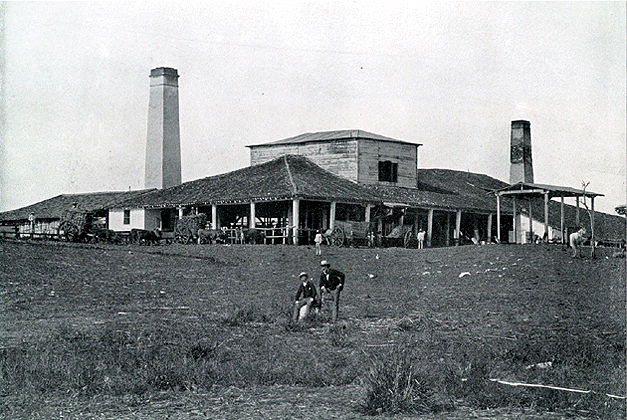
Environmental factors also affected production levels. Continuous sugarcane cultivation contributed to soil depletion, which reduced yields over time, while periodic hurricanes destroyed crops and infrastructure, creating additional challenges for planters. U.S.-Cuba relations were another critical factor, with trade agreements granting preferential access to the U.S. market. However, this dependence made Cuba vulnerable to American economic policies and competition from other sugar-producing countries, such as Brazil.
Together, these diverse factors combined to create a complex and fluctuating pattern of Cuban sugar exports over the century. This interplay of global markets, geopolitical forces, and environmental pressures left a lasting impact on Cuba’s economy and its position in the global sugar industry.
THE QUEST FOR INDEPENCE
Cuba’s independence from Spain was a protracted and turbulent process that culminated in the island’s liberation in 1898. The struggle stemmed from centuries of exploitation, slavery, and economic inequality under Spanish rule. Dissatisfaction mounted during the 19th century as Cubans sought greater autonomy and the abolition of slavery.
The first major revolt, the Ten Years’ War (1868-1878), was led by Cuban landowners demanding independence and social reform. Although it ended in a truce with limited concessions, the war failed to secure freedom. Resentment persisted, sparking the Cuban War of Independence (1895-1898), led by figures like José Martí, Máximo Gómez, and Antonio Maceo. Martí, a revered nationalist and intellectual, became the movement’s ideological beacon, though he died early in the conflict.

José Martí emerged as a leading figure in Cuba’s fight for independence, advocating for freedom not only from Spanish colonial rule but also from economic domination by the United States. However, Martí’s vision of a politically and economically sovereign Cuba was ultimately derailed when the United States intervened in 1898, securing its own influence over the island instead of allowing full independence.
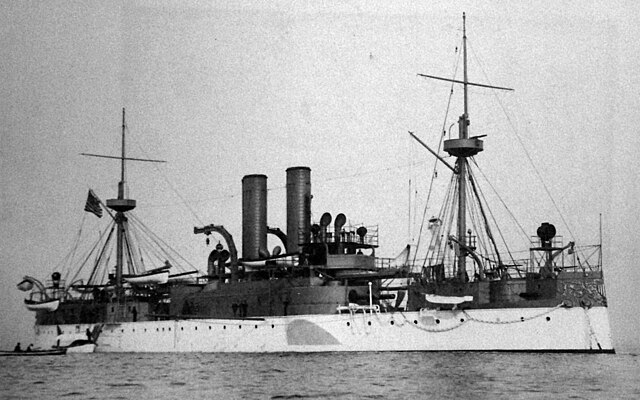
Spain’s brutal military campaigns devastated the Cuban countryside, causing widespread suffering. International attention grew, particularly in the United States, where economic interests and public sympathy for Cuba’s plight pushed the issue to prominence. The sinking of the USS Maine in Havana harbor in 1898 became a flashpoint for U.S. intervention, resulting in the Spanish-American War.
The war ended with the Treaty of Paris (1898), which saw Spain cede control of Cuba, Puerto Rico, the Philippines, and Guam to the United States. While Cuba formally gained independence in 1902, U.S. influence persisted through the Platt Amendment, which curtailed Cuban sovereignty by granting the U.S. rights to intervene in Cuban affairs and maintain a naval base at Guantánamo Bay. This arrangement, which lasted until the amendment’s repeal in 1934, left Cuba’s struggle for full political and economic independence unresolved.
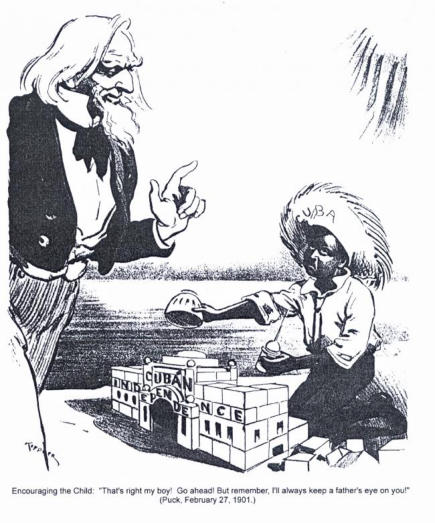
The legacy of Cuba’s fight for independence profoundly shaped its national identity and set the stage for the country’s ongoing quest for self-determination, culminating in the Cuban Revolution of 1959.
FULGENCIO BATISTA
Fulgencio Batista (1901–1973) was a Cuban military officer and politician who served as the de facto leader of Cuba from 1933 to 1940 and later as its elected president from 1940 to 1944. He returned to power through a 1952 coup, ruling as a dictator until his overthrow during the Cuban Revolution in 1959.
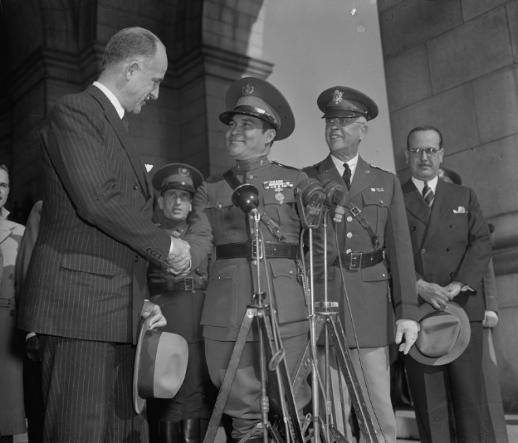
Batista initially rose to prominence during the “Sergeants’ Revolt” in 1933, a military uprising that toppled the existing government and positioned him as a dominant figure in Cuban politics. Backed by the U.S. government, Batista ruled indirectly through puppet presidents before serving as Cuba’s elected leader from 1940 to 1944. During his presidency, he oversaw a period of constitutional governance and economic development, including infrastructure projects and labor reforms. However, after stepping away from power, Batista returned in 1952, staging a coup to preempt the growing momentum of the Partido Ortodoxo, a populist reform movement that campaigned against the corruption of previous administrations.
Batista’s second tenure marked a shift toward authoritarianism. He suspended constitutional freedoms, censored the media, and brutally repressed opposition, executing thousands of political dissidents. While urban areas experienced uneven modernization, including investments in Havana’s infrastructure and tourism, rural communities remained neglected creating stark social and economic inequalities that fueled widespread resentment. Cuba’s economy, dominated by sugar exports, was plagued by structural issues such as chronic unemployment and reliance on volatile U.S. markets. The sugar industry’s four-month harvest left rural workers without income for much of the year, deepening inequality and fueling resentment. Batista’s alliances with U.S. corporations and organized crime further alienated the Cuban public, who viewed his regime as corrupt and self-serving.
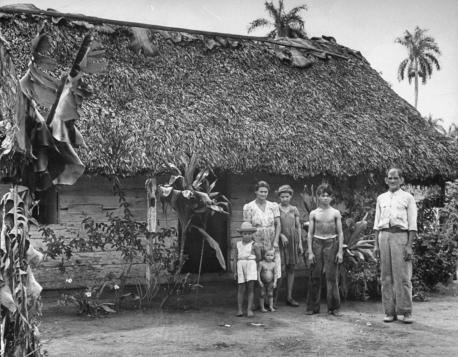
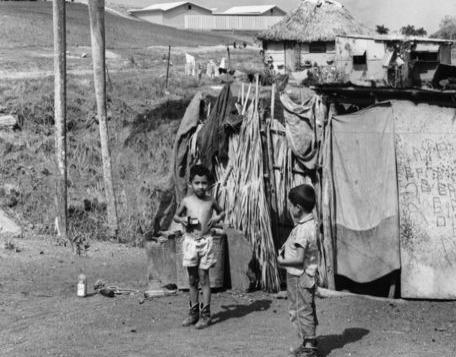

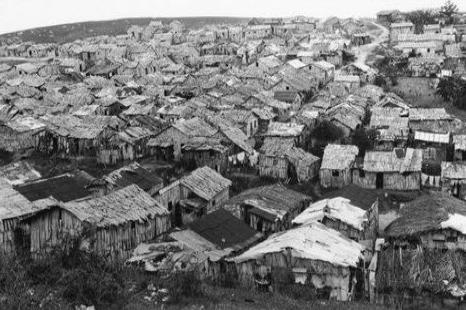
Adding to this unrest was the overwhelming dominance of U.S. corporations in the Cuban economy. Foreign entities controlled more than 80% of Cuba’s utilities, mines, cattle ranches, and oil refineries, along with half of its highways and 40% of the sugar industry. By 1958, U.S. investment in Cuba had reached one billion dollars, mirroring the conditions seen in Mexico before its revolution. These extreme disparities and foreign domination created a volatile situation, primed for upheaval.
CUBA IN THE 1950s

Cuba in the 1950s faced challenges common to other small nations Latin America, such as sharp income inequality and limited political freedoms. Rural workers made up 34% of the national population but received just 10% of the nation’s income. Nearly 70% of their earnings were spent on food, leaving little for other necessities. Illiteracy was also rampant. This correlated with the fact that 44% of rural workers had never received and education.
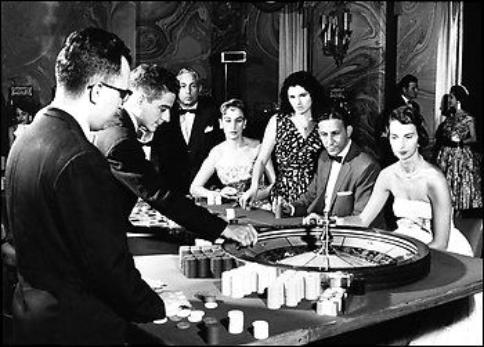
Nearly 64% of rural inhabitants had no access to indoor or outdoor plumbing, 88.5% relied on wells for water, and only 7.26% of rural homes had electricity. Economically, rural small farmers faced tremendous hardship, with 85% paying rent to foreign-owned corporations, including giants like the United Fruit Company and the West India Company. Despite their critical role in producing Cuba’s wealth, rural workers were largely denied basic services and opportunities. The extreme inequalities mirrored conditions in Mexico before its revolution, with U.S. investment in Cuba reaching one billion dollars by 1958. The social and economic pressures were building toward a breaking point, setting the stage for revolutionary change.
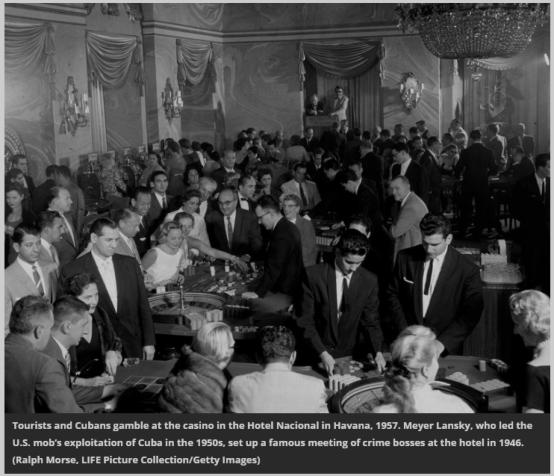
In addition to socioeconomic woes, Cuba’s political system was plagued by corruption and a structure that heavily favored foreign companies and investors. Inspired by earlier populist revolutionaries in Latin America, Fidel Castro, a young lawyer from a well-off planter family, emerged as a determined anti-imperialist activist. His revolutionary fervor was shaped, in part, by his arrest in Colombia in 1948 while attending an anti-imperialist conference organized by the populist leader Jorge Gaitán. On July 26, 1953, Castro led a small band of revolutionaries in an audacious but ultimately unsuccessful attack on the Moncada military barracks in Santiago de Cuba, located in the island’s southeast. Though he and his group initially managed to escape to the nearby mountains, they were soon captured, arrested, and put on trial.

At his trial on October 16, 1953, Castro delivered a fiery defense that would later be immortalized in revolutionary history. His speech, now one of the most iconic delivered by a Latin American political figure, culminated in the defiant proclamation: “Sentence me. I don’t mind. History will absolve me.” From this moment, Castro’s 26th of July Movement, named after the failed Moncada assault, became the rallying cry for his revolutionary vision and marked the beginning of a new chapter in Cuba’s fight for radical change.
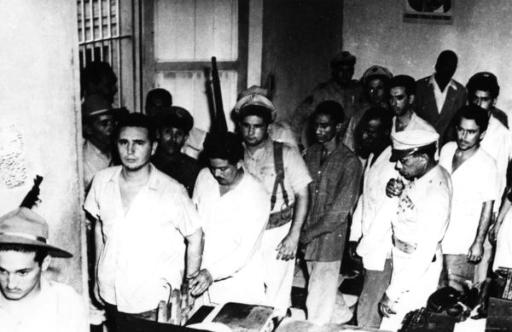
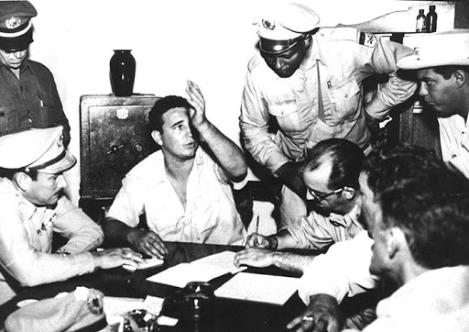
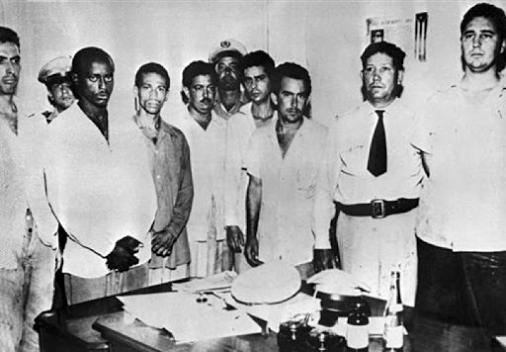
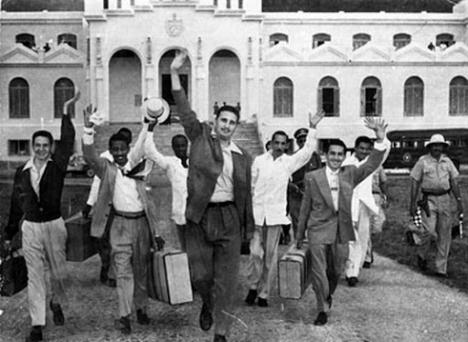
Fidel Castro and his coconspirators were sentenced to lengthy prison terms by the Cuban government following the failed attack on the Moncada Barracks. However, a vigorous international campaign for Castro’s release ultimately succeeded, and he, along with his fellow revolutionaries, was freed on May 15, 1955. Soon after, Castro went into exile in Mexico, where he continued to refine his plans to overthrow the Batista regime.
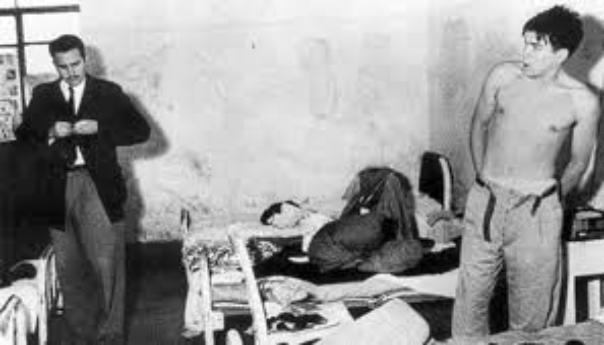
In Mexico, Castro joined forces with his brother Raúl and Argentine revolutionary Ernesto “Che” Guevara to formally establish the Movimiento 26 de Julio (M-26, or 26th of July Movement), named in honor of the Moncada attack. Together, the rebels began training and organizing for an armed insurrection, setting the stage for a revolution that would reshape Cuba’s future.
THE FALL OF BATISTA
In December 1956, Fidel Castro returned to Cuba with 82 revolutionaries aboard the yacht Granma. Their arrival was meant to coincide with an urban uprising in Santiago de Cuba, led by Frank País, but delays caused by rough seas and the crew’s inexperience disrupted the plan. Without coordination, Batista’s forces quickly suppressed País’s rebellion. When the Granma finally landed, the guerrillas were ambushed and nearly wiped out. Only 18 survived, retreating into the remote Sierra Maestra mountains, where they regrouped and gained support from local peasants.
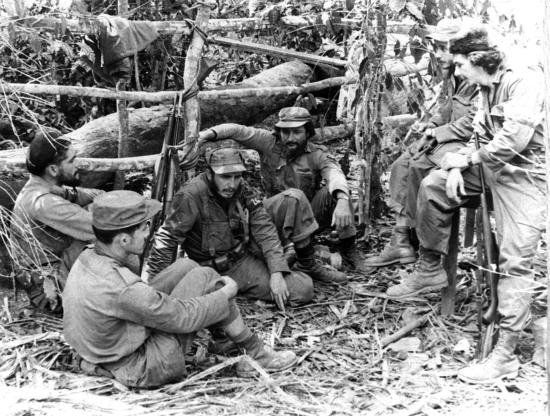
Meanwhile, urban resistance grew in the form of the llano (plains), an underground network of students and middle-class activists working alongside the rural guerrillas of the sierra (mountains). On March 13, 1957, the Directorio Revolucionario launched a daring but unsuccessful attack on the presidential palace in Havana, hoping to assassinate Batista. This failure, combined with Batista’s intensified repression, led to the death of Frank País on July 30, 1957—a devastating blow to the 26th of July Movement. A general strike in April 1958 also failed, shifting the revolution’s momentum toward the Sierra Maestra fighters.

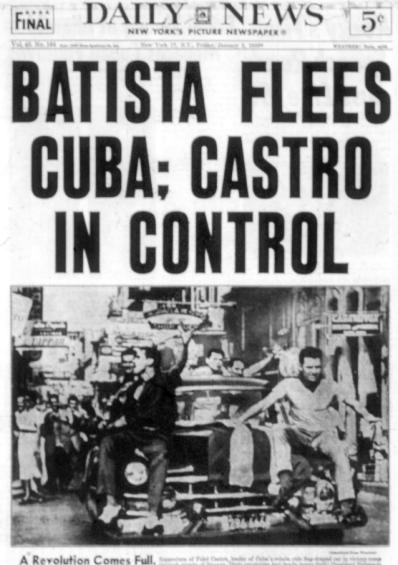
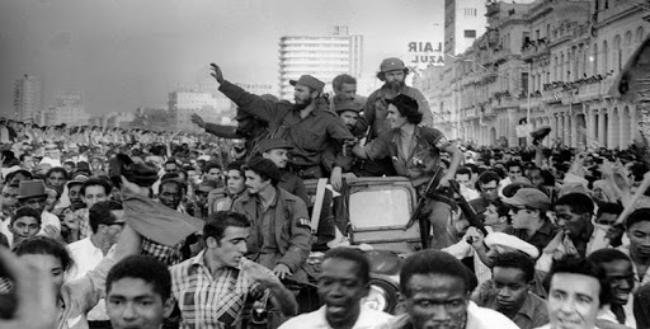
As the guerrilla forces gained strength, they began a westward march to divide the island. By December 1958, Che Guevara delivered a decisive victory at the Battle of Santa Clara. In one of the revolution’s most celebrated moments, the rebels derailed and captured an armored train carrying reinforcements and weapons meant for Batista’s troops. This victory secured control of the city and signaled the regime’s collapse. On January 1, 1959, Batista fled to exile, and a week later, Castro’s forces entered Havana, marking the revolution’s triumph.
Women played a pivotal role throughout the Cuban Revolution, both in urban underground movements and in the guerrilla campaign. Before the 1953 Moncada Barracks attack, women were already organizing against Batista. In September 1958, the rebel army formally recognized their contributions by creating the all-female Grajales Platoon, named after Mariana Grajales, a heroine of Cuba’s independence struggle.
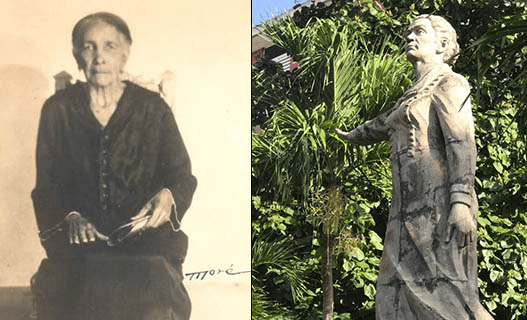
Like Grajales, who managed field hospitals and supplied soldiers during the Ten Years’ War, these women moved beyond traditional support roles to engage in active combat. Revolutionaries such as Haydée Santamaría and Melba Hernández not only participated in the Moncada assault but also helped organize key uprisings, including the November 30 rebellion in Santiago.
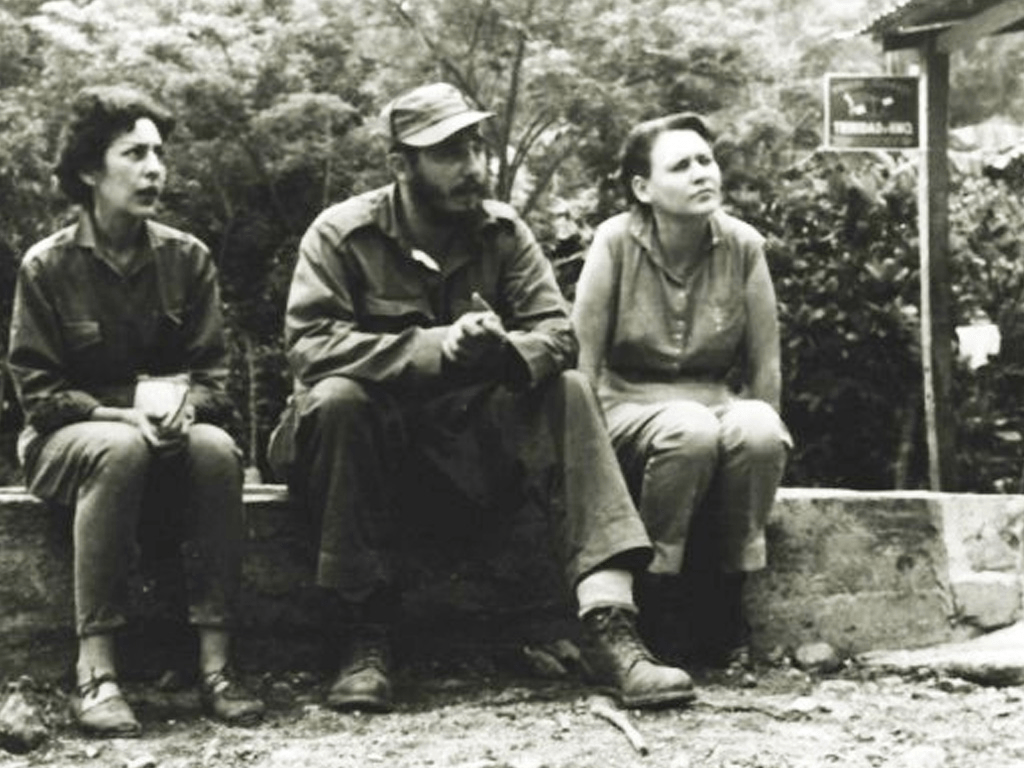
Through their courage and dedication, women became integral to the Cuban Revolution, fighting side by side with men to topple Batista’s regime.
REVOLUTIONARY IMPACT
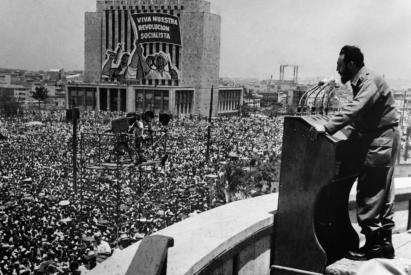
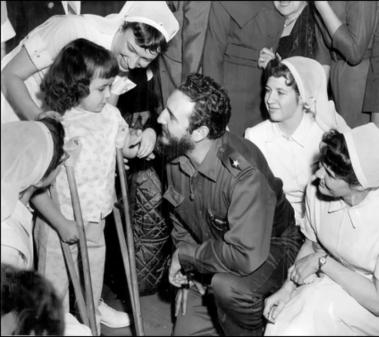
One of the Cuban revolutionary government’s first major policy goals was to socialize the economy, with agrarian reform as its cornerstone. In May 1959, the government passed a decree limiting the size of estates, addressing the extreme concentration of landownership. This law impacted 85% of farms on the island, redistributing land into small plots for subsistence farming and establishing agricultural cooperatives for commercial production. Some large estates were converted into state-run farms. Beyond land reform, the revolutionary government sought to transform Cuban society by converting military barracks into schools and hospitals, opening private beaches and social clubs to the public, and dramatically expanding access to healthcare. The healthcare budget increased tenfold, allowing the government to provide free medical services to all citizens. Similarly, by mid-1961, all Cuban schools had been made public and tuition-free, ensuring universal access to education.
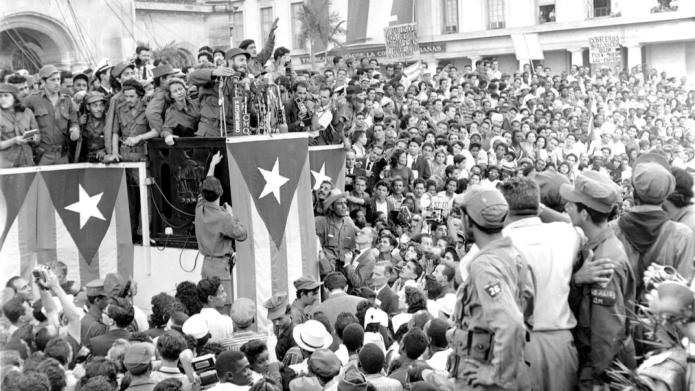
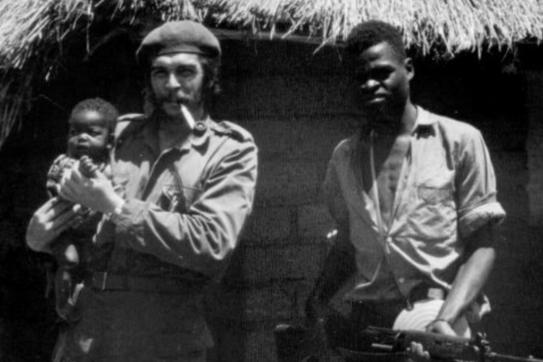
The revolution also redefined Cuba’s foreign relations, aligning with the Soviet Union to counter the inevitable conflict with the United States. Cuba reestablished diplomatic ties with the USSR, which in turn agreed to purchase Cuban sugar despite the challenges of long-distance trade. Cuba’s foreign policy also embraced internationalism, providing military and medical support to liberation movements across Latin America, Africa, and beyond. In 1960, Cuba sent aid to the Algerian National Liberation Front in its fight against French colonialism, followed by military instructors to Ghana in 1961 to assist guerrillas in Upper Volta. In 1965, Che Guevara personally led a contingent of 200 Cuban fighters in support of revolutionary efforts in the Congo. Most notably, in the 1970s, Cuba played a key role in the Angolan War of Independence, providing crucial military assistance against apartheid South Africa.
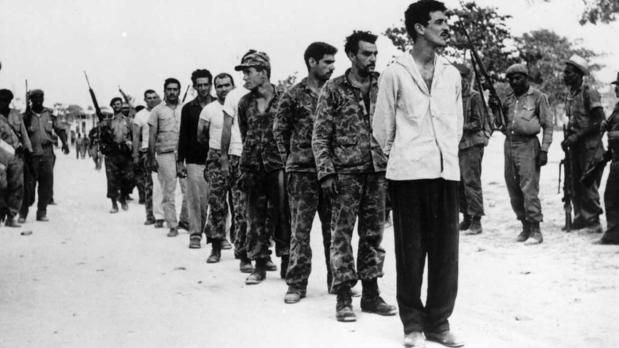
Meanwhile, the revolutionary government faced persistent hostility from the United States. Soon after Batista’s departure, the CIA began funding exile groups to overthrow Castro. In the summer of 1960, the CIA established training camps in Guatemala, culminating in the ill-fated Bay of Pigs invasion in April 1961. Poorly planned and executed, the invasion quickly turned into a rout, with Cuban forces, anticipating the attack, defeating the mercenaries at Playa Girón. The failed invasion strengthened Castro’s position domestically and pushed Cuba further into the Soviet orbit.
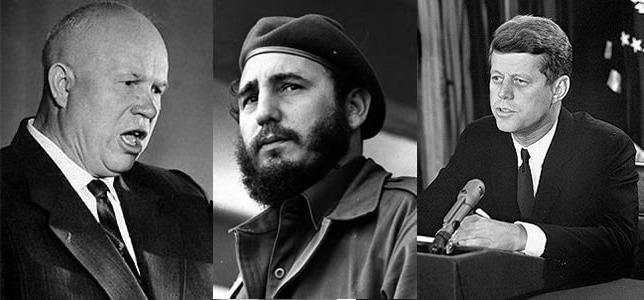
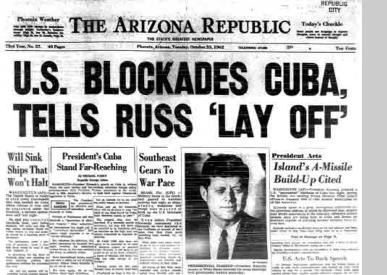
Tensions escalated further during the Cuban Missile Crisis of October 1962, when the United States discovered Soviet missiles on the island. Over thirteen tense days, the world teetered on the brink of nuclear war before the two superpowers reached a deal: the USSR would remove its missiles from Cuba in exchange for a U.S. pledge not to invade the island and the removal of U.S. missiles from Turkey.
IN CLOSING
The Cuban Revolution like the Mexican Revolution remains a landmark event in 20th-century Latin America, setting a standard by which other revolutionary movements have been judged. It was not only the most transformative but also the most enduring, surviving over half a century despite immense pressure from the United States. The revolution’s socioeconomic achievements of universal healthcare, free education, and land reform are widely praised, but it has also faced criticism for its authoritarian governance and lack of individual freedoms. These debates often center on the competing priorities of national sovereignty, access to social guarantees, and democratic rights, leaving the legacy of the Cuban Revolution as both a model of success and a subject of contention.

 World History Portal