LEARNING OBJECTIVES
By the time you complete this topic you should be able to do the following:
| Explain the impact that the move from hunting and foraging to agriculture had an indigenous culture in Latin America. Identify some of the characteristics that defined the Taíno, Tupínamba, Inca, and Maya. Identity the composition of Mesoamerican writing systems and how the Maya writing system functioned. |
Oxford History Timelines: Mexico | South America
In this topic I would like to explore with you the development of human societies in Mesoamerica and South America and set them within their historical and geographical context. The archeological and historical record shows us that this region of the world sustained a wide range of indigenous cultures. Because of the vast diversity of cultures that came into existence, historians have created four categories under which to group these societies to better understand their development and socioeconomic and political composition.
- Concentrated Sedentary: Characterized by villages, towns, and cities. Practiced intensive agriculture. Sustained social stratification. State structure included empires. Examples: Empire of the Triple Alliance and Empire of the Inca
- Segmented Sedentary: Characterized by villages, towns, and cities. Practiced intensive agriculture. Sustained social stratification. State structures did not include empires or large polities. Examples: Muisca, Zapotec, Mixtec
- Semi-Sedentary: Characterized by partial dedication to agriculture and supplementing this will hunting and foraging. The population was less dense than those of concentrated and segmented sedentary typologies. Examples: Taíno in the Caribbean and Tupí in Brazil
- Non-Sedentary: Practice systematic movement as they hunted and foraged. Example: Tehuelche of Argentina
Using this typology historians can better understand how indigenous cultures adapted to different ecological regions of the Americas. It also allows historians to see how these cultures and their specific lifeways reacted to colonization. There is a third thing that I would like you to consider as well. This typology will help us also understand the migration pattern of Europeans and why certain areas of Latin America have a stronger African influence than others. It is not possible to do justice to all the cultures of this region so we will look at four different societies to get a sense of the diversity that existed in this part of the world.
THE CONSEQUENCE OF AGRICULTURE
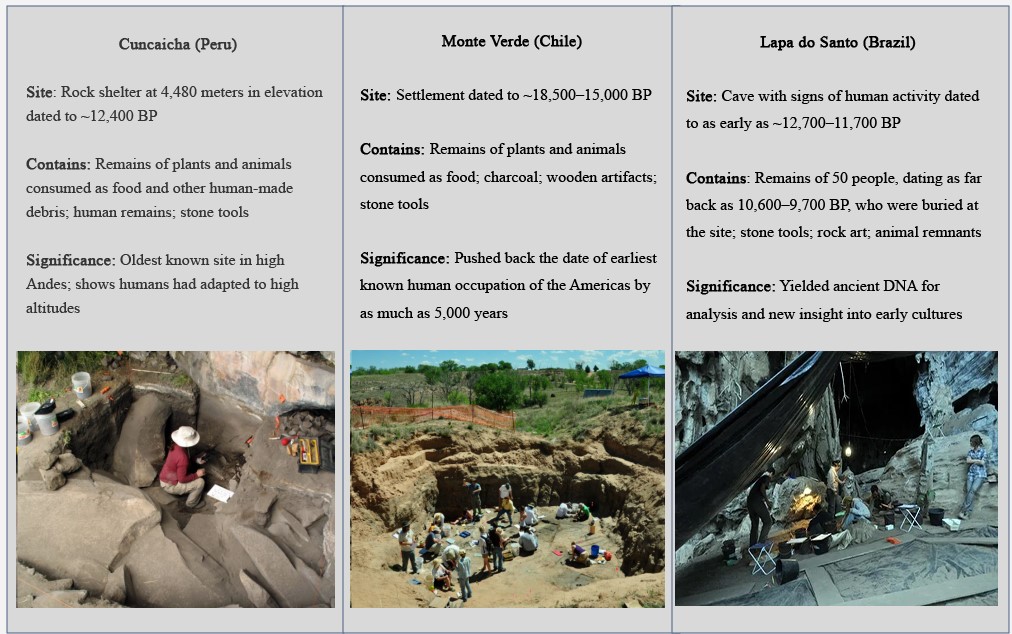
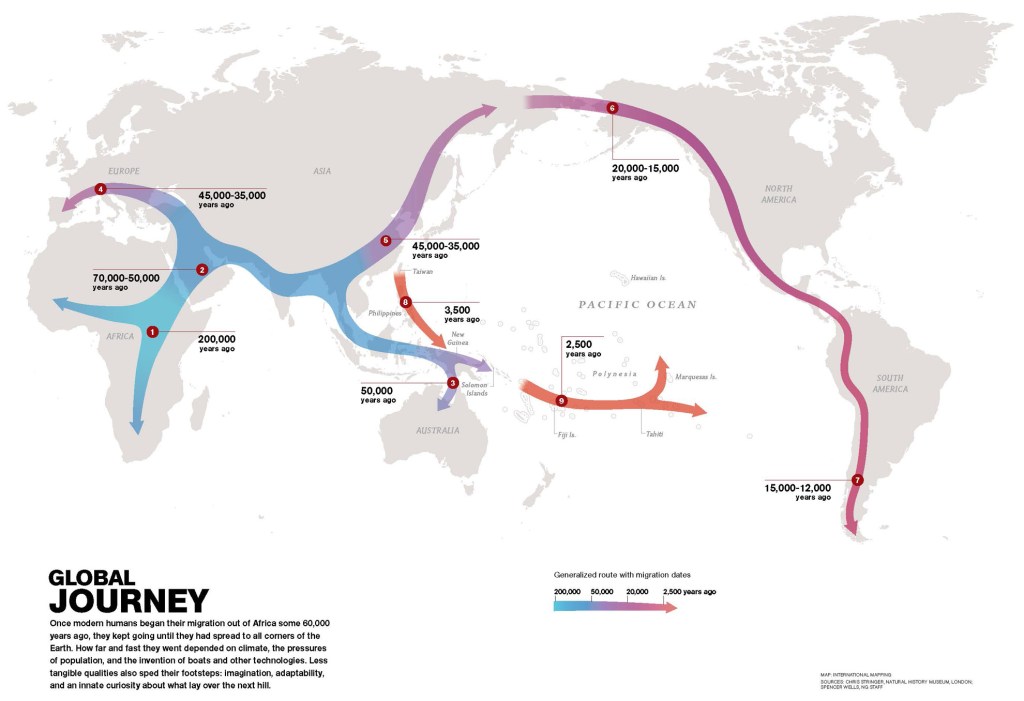
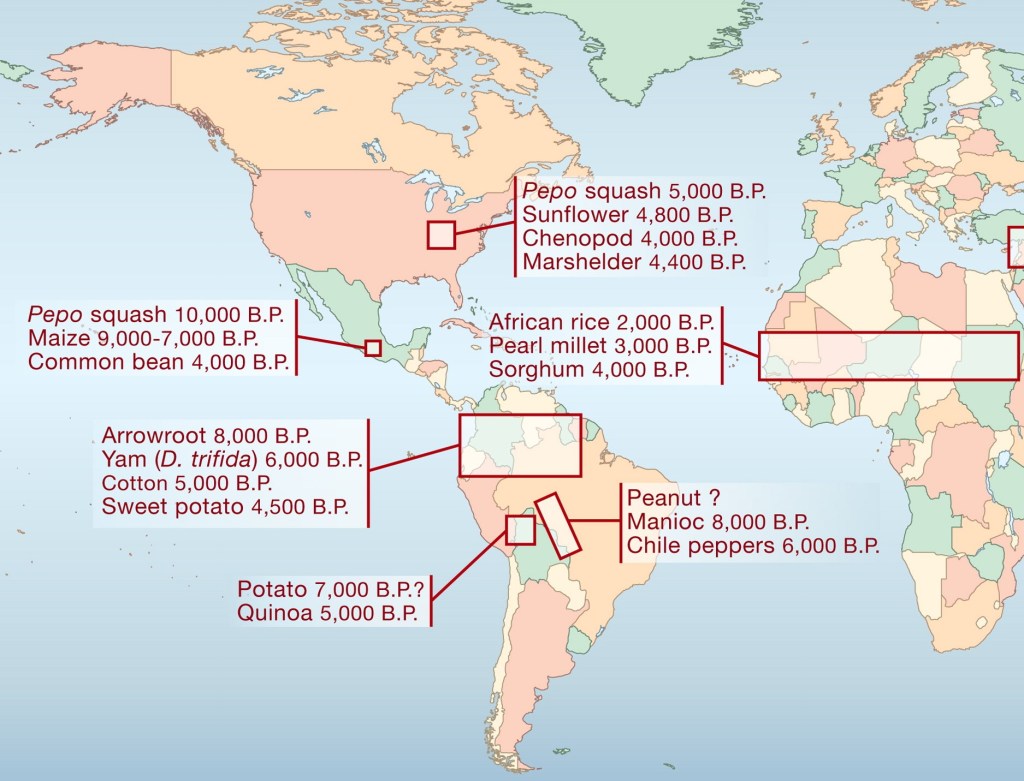
Ancient genomics combined with artifacts extracted from recent archaeological discoveries suggest that human migration into South America could have occurred as early as c. 18,500 B.C.E. These early populations in South America sustain themselves through hunting and foraging lifeways. Perhaps dating to about c. 8000 B.C.E. we see evidence of certain populations moving from a hunting and foraging lifeway to one focused on horticulture and eventually agriculture.
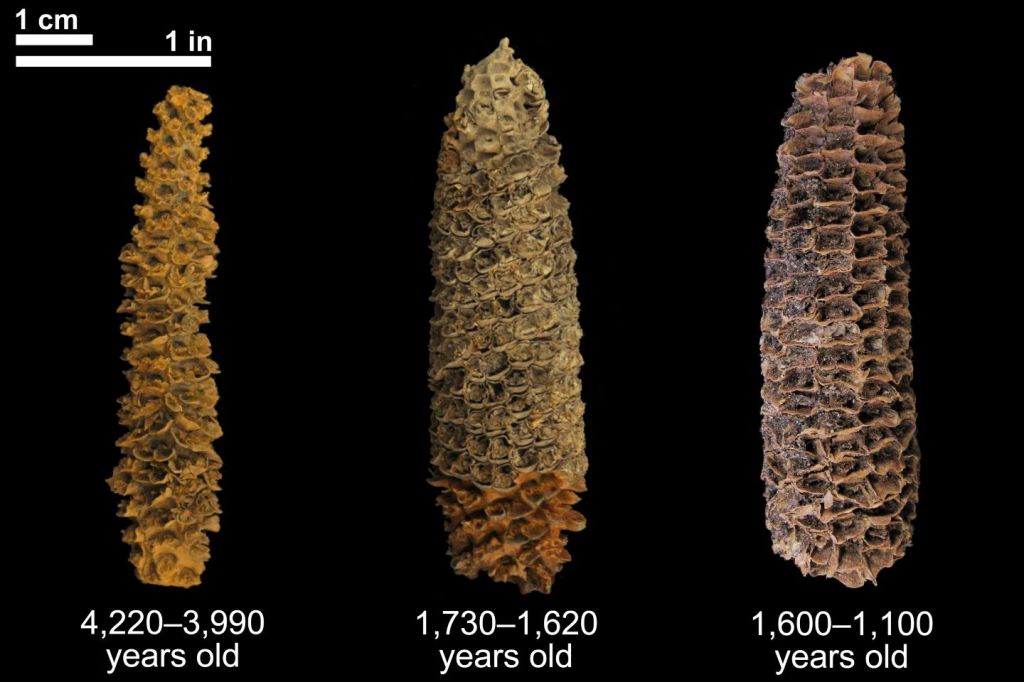
The transition agriculture suddenly gave humans in this part of the world access to more food and more resources. Agriculture allowed humans to extract more food and energy from a given area of land. An increase in available resources and energy enabled humans to form communities that were more complex than those that focused on hunting and foraging.
As a consequence of agriculture, humans created new types of communities that reached scales and complexities never seen before at a social, economic, political, and cultural level. Humans in this period also created anthropogenic landscapes (alteration of ecological patterns and processes) as community effort was centered on the extraction of resources from the environment.
This move to a sedentary life way would serve as a foundation for the rise of civilization (a form of socioeconomic and political organization) in Mesoamerica and in the Andes. These civilizations sustained urbanism and had monumental architecture, specialized markets, a form of recording information, state religion, and were class-based. What I would like to do next after this introduction is to briefly look at some of the cultures that developed in this region of the world. I would like to finish this topic by having you learn about the writing systems that developed in Mesoamerica. This will prepare you for you discussion on Maya glyph block decipherment.
THE TAINO
The Taíno were the first Indigenous people of the Americas to encounter Europeans, beginning with Christopher Columbus’s arrival in 1492. They were part of the larger Arawakan language family and inhabited the Greater Antilles, including present-day Hispaniola (Dominican Republic and Haiti), Cuba, Jamaica, and Puerto Rico. The Taíno were not a monolithic group but rather a collection of interconnected tribes and chiefdoms. Closely related yet culturally distinct peripheral groups included the Island-Carib and the Guanahatabey, particularly in the western regions of Cuba.
The Taíno did not develop a formal writing system, so much of what we know about them comes from early European chroniclers and archaeological findings. Among the most significant written sources is Fray Ramón Pané’s “Account of the Antiquities of the Indians”, the earliest ethnographic work about the Americas, written around 1498. Another important chronicler, Gonzalo Fernández de Oviedo y Valdés (1478–1557), authored the “Historia General y Natural de las Indias”, which provides detailed descriptions of Taíno society, customs, and environment. However, these accounts must be approached critically, as they reflect European biases and misunderstandings.
In addition to textual sources, archaeological evidence offers vital insights into Taíno life. One of the most important sites is En Bas Saline, located in northern Haiti, near what is believed to be the site of Columbus’s first settlement, La Navidad. Excavations there have revealed substantial information about Taíno village structure, trade, and interactions with Europeans.

The Taíno lived in permanent agricultural villages, typically organized around a central plaza and composed of two primary types of communal structures:
- Caneys – round houses usually occupied by caciques (chiefs) or elite families
- Bohíos – rectangular houses for commoners
Villages could vary in size, with larger settlements averaging between 1,000 to 2,000 inhabitants. Taíno society was matrilineal, meaning descent and inheritance were traced through the female line. Politically, the Taíno were organized into five major chiefdoms, or cacicazgos, each governed by a cacique (chief). These cacicazgos were complex sociopolitical entities that could include up to seventy villages or communities. The society had a clear social hierarchy:
- Nitaínos: the noble class, including warriors and administrators
- Behíques: spiritual leaders or shamans, often drawn from the nitaíno class
- Naborías: the general populace, who formed the laboring and farming class
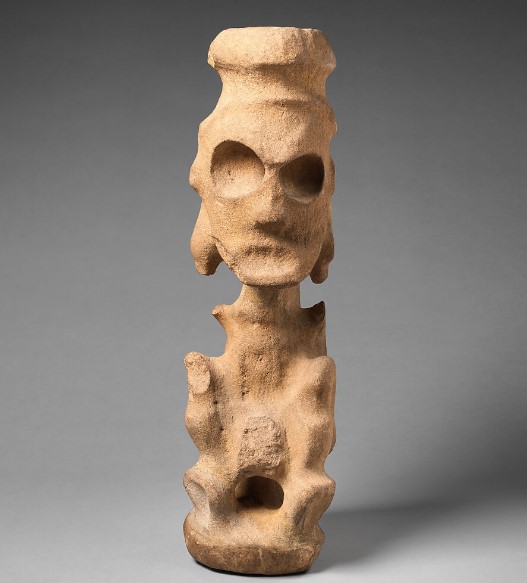
The Taíno practiced a rich animistic religion centered around zemís, or deity figures, often carved from wood, stone, or bone. These zemís represented ancestral spirits or natural forces and were central to spiritual and political life. Rituals often included areytos (ceremonial dances).
The Taíno were skilled horticulturalists, practicing a form of raised-bed farming in mounds known as conucos. This technique helped maintain soil fertility and prevent erosion. Their staple crop was manioc (cassava), which they processed to remove its natural toxins and used to make bread (casabe). Other important cultivated crops included sweet potatoes, beans, peanuts, peppers, and maize (corn). Fishing, hunting, and gathering also supplemented their diet, and the Taíno made extensive use of dugout canoes for maritime activities and inter-island trade.
The Taíno population was most concentrated on the island of Hispaniola, where early Spanish accounts estimated a population ranging from 100,000 to over one million. While these figures vary and are debated by scholars, there is consensus that the Taíno experienced a catastrophic demographic collapse after European contact. By 1530, Taíno numbers had plummeted due to epidemic diseases (particularly smallpox and influenza) brought by Europeans, forced labor under the encomienda system, and enslavement and disruption of social structures. This crisis is documented by various European figures, including Nikolaus Federmann (1506–1542), a German explorer who witnessed the effects of depopulation and exploitation during his travels in the Americas.
TUPINAMBA
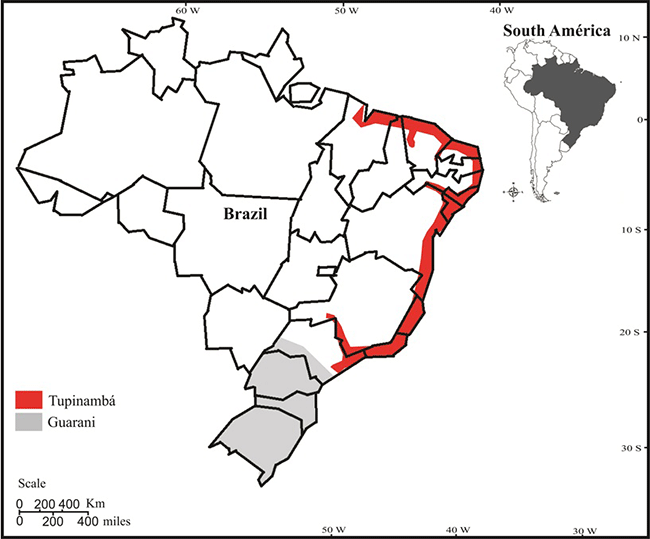
The Tupí-Guaraní language family was one of the most widespread in pre-Columbian South America, with its speakers primarily located in present-day Brazil, and extending into parts of Paraguay, Bolivia, and Argentina. Among the many groups that spoke languages in this family, the most prominent along the Brazilian Atlantic coast were the Tupinambá.
As the Tupinambá had no written tradition, much of what is known about them comes from European eyewitnesses—a fact that complicates our understanding due to cultural biases and potential misinterpretations. One of the most famous accounts is Hans Staden’s “True History and Description of a Country of Wild, Naked, Grim, Man-eating People in the New World”, first published in Marburg in 1557. Staden, a German mercenary, was serving as a gunner in a Portuguese fort in Brazil when he was captured by the Tupinambá in 1552. He spent nine months in captivity and later wrote a detailed account of his experiences, including vivid descriptions of cannibalistic rituals. Although his text is an invaluable source for ethnographic details, modern historians approach it critically. Some scholars argue that Staden’s account may have exaggerated elements of Tupinambá life to appeal to readers or reinforce Christian worldviews.
The Tupinambá were a sedentary, village-based society who practiced horticulture as their primary means of subsistence. Their villages generally ranged in size from 400 to 800 inhabitants, although larger settlements may have existed. Villages were often strategically located near rivers or coastal areas to facilitate access to freshwater and fish. The Tupinambá cultivated several important crops including manioc (cassava) – their staple crop, used to make flatbread and porridge. Alos cultivated were beans, maize and squash. Their agriculture was supplemented by hunting, fishing, and gathering wild fruits, nuts, and other resources, creating a diversified and sustainable subsistence system well-adapted to the tropical rainforest and coastal ecosystems.
The Tupinambá economic system was based on auto-consumption (subsistence production for local use), rather than on accumulation of wealth or production for exchange. Goods were shared within kin-based communities, emphasizing reciprocity and collective well-being over individual profit. This mode of economy stood in contrast to European mercantile ideologies that prioritized exchange, wealth accumulation, and market economies.
The Tupinambá were deeply involved in intertribal warfare, which played a central role in their social and ritual life. One of the most controversial aspects of Tupinambá culture, as reported by European observers, was the practice of ritual cannibalism. It is essential to contextualize these practices. Ritual cannibalism was not unique to the Americas—similar customs have been documented historically in cultures across Oceania, Africa, and even parts of Europe. Nonetheless, European chroniclers often sensationalized and exoticized Indigenous practices, reinforcing stereotypes that persist to this day.
EMPIRE OF THE INCA
The Inca Empire (1438–1532), known in Quechua as Tawantinsuyu—“The Four Parts Together”—was the largest and most complex Indigenous state in the Americas prior to European conquest. At its height, it stretched over 2,500 miles along the Andes, encompassing parts of present-day Peru, Ecuador, Bolivia, Chile, Argentina, and Colombia. The political and ceremonial center of the empire was the city of Cuzco, considered the “navel of the world” by the Inca.
Our understanding of the Inca Empire is shaped largely by post-conquest sources, as Indigenous oral traditions were disrupted or suppressed following the Spanish conquest. One of the most important colonial-era accounts is Felipe Guamán Poma de Ayala’s “El Primer Nueva Corónica y Buen Gobierno” (The First New Chronicle and Good Government, 1613). A native Quechua nobleman, Guamán Poma wrote a deeply detailed critique of Spanish colonial rule and a historical chronicle of Inca society, accompanied by hundreds of illustrations. His work provides a rare Indigenous perspective on both pre-Columbian and early colonial life. Other essential chroniclers include Pedro Cieza de León, Garcilaso de la Vega “El Inca”, and Juan de Betanzos, each offering distinct views shaped by their backgrounds and allegiances.
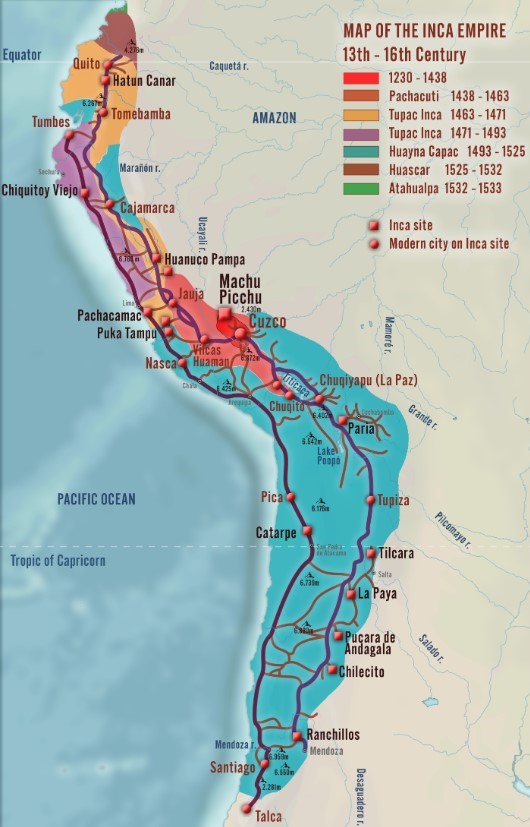
Inca society was highly hierarchical and centralized, with a meticulously organized system of governance. At the top stood the Sapa Inca, the divine emperor considered a direct descendant of Inti, the sun god. The elite class included royal family members, nobles, and high-ranking lords who played key roles in the imperial administration and served as the ideological foundation of Inca authority. Below them were various classes of administrators and bureaucrats, such as the Inca Rantin—regional inspectors responsible for overseeing local governance, the maintenance of infrastructure (including roads and bridges), and the management of tambos (state-run rest stops and supply depots along the road network). The commoner class was divided into specialized labor groups. Artisans, including weavers, silversmiths, potters, and builders, often worked under state supervision. The Hatun Runa, or peasant farmers, formed the base of the economic pyramid and were responsible for most of the agricultural production.
The Inca economy was not based on money or markets but rather on labor tribute, organized through the mita system—a form of rotational conscripted labor. Every able-bodied member of society was expected to provide service to the state for a portion of the year, working on public infrastructure, agriculture, mining, or military campaigns. In exchange, the state provided security, food during times of famine, and religious festivals. The redistribution economy of the Inca was centrally managed and supported by massive state storehouses stocked with food, textiles, and tools.
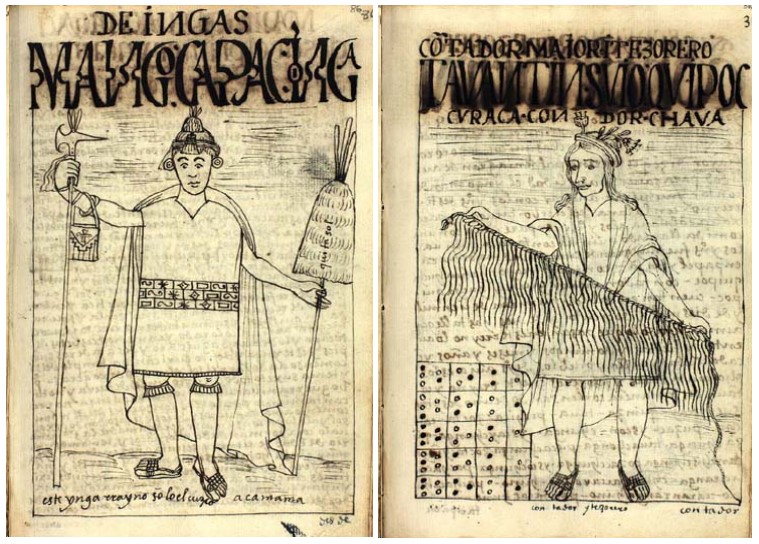
The Inca did not develop a written language. However, they employed a sophisticated system of knotted cords known as quipus (or khipus) to record numerical and possibly narrative information. These devices used a base-10 decimal system, and different colored threads and knots represented quantities, categories, or timeframes. While it is universally accepted that quipus recorded statistical data—such as census numbers, tribute, and production—some scholars argue that quipus may have also encoded historical or mythological narratives, though this interpretation remains debated.
MESOAMERICA
The emergence of socioeconomic and political complexity began in Mesoamerica during the Archaic or Incipient Period (c. 1800–700 B.C.E.). This transformative era was marked by a transition from mobile, foraging lifestyles to sedentary village life supported by agricultural intensification. The surplus food generated by the domestication and cultivation of crops—especially maize, beans, squash, and chili peppers—enabled population growth, labor specialization, and the formation of complex political institutions.
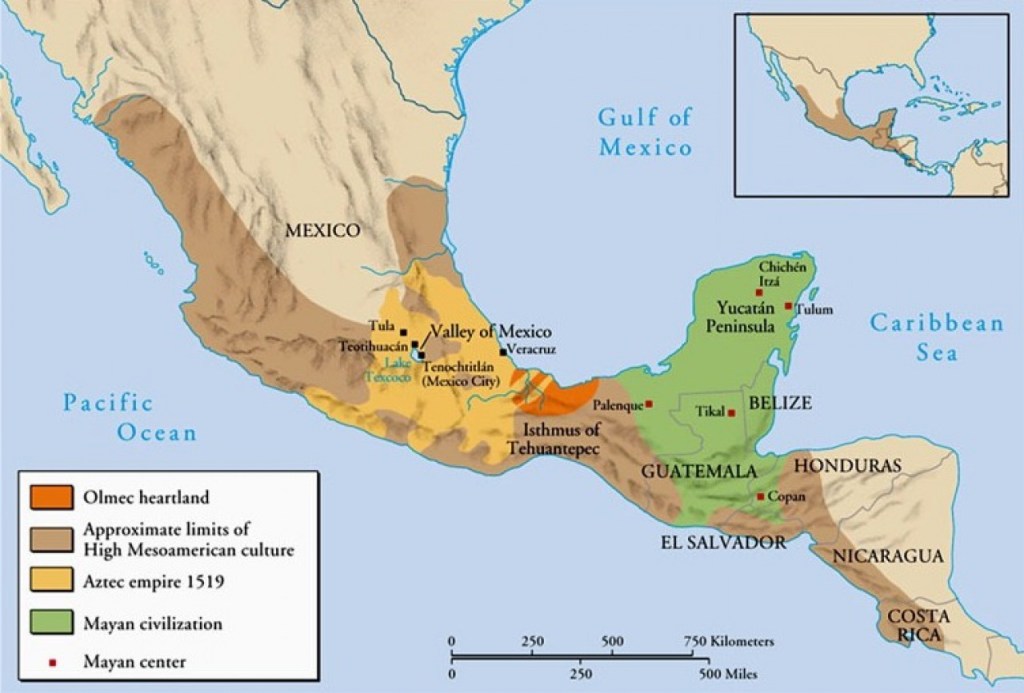
Among the first civilizations to flourish during the Preclassic (or Formative) Period (c. 1200–300 B.C.E.) were the Olmec (also known in Nahuatl as Olmecatl), centered in the Gulf Coast region of present-day Veracruz and Tabasco, Mexico. The Olmec laid the ideological, political, and artistic foundations for many later civilizations. Most of what is known about the Olmec comes from archaeological remains, including monumental architecture, colossal stone heads, and intricately carved stelae (upright stone slabs). Their two major urban centers were San Lorenzo (flourishing c. 1200–900 B.C.E.) and La Venta (flourishing c. 900–400 B.C.E.).
While the internal organization of the Olmec state remains somewhat elusive, archaeologists suggest that Olmec society was ruled by elite dynasties, possibly supported by divine kingship. This theory is based on iconographic and epigraphic analyses of stelae, which depict powerful individuals possibly engaged in ritual or celestial acts. The Olmec are also credited with developing one of the earliest known writing systems in the Americas, commonly referred to as Epi-Olmec or Isthmian script. Though still only partially deciphered, the Mojarra Stela and the Tuxtla Statuette provide evidence of a sophisticated glyphic system combining logograms and phonetic symbols—perhaps a precursor to later scripts used by the Maya.
Beyond the Olmec, other important civilizations emerged during the Preclassic period. The Zapotec, located in the Oaxaca Valley, developed their own writing system and calendrical practices. Their greatest urban center was Monte Albán, which became a prominent cultural and political hub around 500 B.C.E., complete with monumental platforms, tombs, and ballcourts. The Izapan civilization, centered in the Soconusco region of modern-day Chiapas and Guatemala, is noted for its elaborate stelae and role as a cultural intermediary between the Olmec and later Maya.
The Classic Period marked the height of urban development and statecraft in Mesoamerica. This era saw the full maturation of monumental cities, complex bureaucracy, cosmology-based rulership, and long-distance trade networks. One of the most impressive civilizations of the Classic period was Teotihuacan, located in the central Mexican highlands. Flourishing between c. 150–650 C.E., it was the largest Mesoamerican city of its time, with an estimated population exceeding 100,000—possibly reaching up to 200,000. Teotihuacan featured a highly planned urban grid, monumental structures such as the Pyramid of the Sun, the Pyramid of the Moon, and the Avenue of the Dead, as well as vast apartment compounds. The city’s economic and religious influence extended across Mesoamerica, with artifacts and iconography found as far away as Guatemala and Honduras. Despite its power, the city’s core appears to have been mysteriously destroyed around the 8th century C.E., although peripheral areas continued to be inhabited for some time. Even centuries later, the Mexica (Aztecs) revered Teotihuacan as sacred, naming it “Teotihuacan,” or the “Place of the Gods”, believing it to be the site of the world’s creation.
Parallel to Teotihuacan’s rise, the Maya civilization flourished in the lowland tropical forests of Guatemala, Belize, western Honduras, and southern Mexico. The reconstruction of Maya history relies on a rich and multidisciplinary array of sources, including archaeology, epigraphy, colonial texts, and oral traditions. Archaeological excavations at major sites such as Tikal, Palenque, Calakmul, and Copán have revealed monumental architecture, ceremonial plazas, tombs, and artifacts that shed light on Maya political structures, economy, and daily life. One of the most crucial breakthroughs in understanding Maya civilization has come through the decipherment of their hieroglyphic writing system, which appears on stelae, altars, ceramics, and other surfaces. These inscriptions provide detailed accounts of royal dynasties, warfare, rituals, and astronomical observations. In addition to inscriptions, four surviving Maya codices—the Dresden, Madrid, Paris, and Grolier Codices—contain astronomical and ritual knowledge, though they lack political history. Post-conquest Indigenous-authored texts, such as the Popol Vuh and the Books of Chilam Balam, preserve mythological and historical narratives in Latin script, written by Maya authors under Spanish colonial rule. Spanish chroniclers like Diego de Landa, despite his role in the destruction of Maya texts, also documented aspects of Maya religion, language, and culture. Finally, linguistic studies of contemporary Maya languages continue to aid in the interpretation of ancient glyphs and demonstrate the deep continuity between past and present Maya communities. Together, these diverse sources provide a complex but increasingly coherent picture of one of the most sophisticated civilizations of the ancient world.
Maya civilization developed a highly sophisticated and interconnected system of economy, society, and politics, especially during the Classic Period (c. 250–900 C.E.). Economically, the Maya relied on intensive agriculture, cultivating staple crops like maize, beans, squash, and chili peppers through techniques such as raised fields, terracing, and slash-and-burn. Their economy also included craft production, long-distance trade, and the use of cacao beans as a form of currency. Important goods such as obsidian, jade, feathers, salt, and ceramics circulated through vast trade networks that connected cities across Mesoamerica.
Maya society was hierarchically structured, with a noble elite at the top, including kings (k’uhul ajawob), priests, and scribes, followed by artisans, merchants, and the commoner class, primarily composed of farmers and laborers. Slaves, often war captives, occupied the lowest social tier. Religion permeated social life, and the elite played key roles in rituals, ceremonies, and astronomical observations to maintain cosmic order.
Politically, the Maya world was organized into city-states, each ruled by a divine king who claimed lineage from the gods. These city-states, such as Tikal, Calakmul, Palenque, and Copán, were often in competition, forming alliances, engaging in warfare, and asserting dominance through monumental architecture and historical inscriptions. Political power was legitimized through dynastic succession, military conquest, and religious authority, making the Maya system both theocratic and aristocratic in nature.
IMPLICATIONS OF EUROPEAN ARRIVAL
The arrival of the Spanish in the early 16th century had catastrophic consequences for the Taíno, Inca, and Maya civilizations. For the Taíno, the first Indigenous people to encounter Columbus in 1492, the impact was immediate and devastating. Within a few decades, disease, forced labor under the encomienda system, and violent conquest caused a massive demographic collapse—reducing populations on islands like Hispaniola by over 90% by the 1530s. The Inca Empire was conquered by Francisco Pizarro in the 1530s. Although the Inca had a vast and organized state, they were weakened by civil war, European diseases, and technological disadvantages. The Spanish dismantled the Inca political system, seized control of resources like silver, and imposed colonial rule, leading to the destruction of temples, suppression of native religion, and widespread social disruption. For the Maya, the Spanish conquest was more gradual and fragmented, lasting from the early 16th to the late 17th century. While no single Maya empire existed, the Spanish defeated city-states through military campaigns, alliances, and religious conversion. Maya society experienced population loss, destruction of texts and temples, and the imposition of colonial administration, though elements of Maya culture, language, and identity endured into the present.
The arrival of the Portuguese in the early 16th century had a profound impact on the Tupinambá, a major Tupí-speaking Indigenous group along Brazil’s Atlantic coast. Initial contact involved trade and mutual exchange, but relations quickly turned exploitative as the Portuguese began enslaving the Tupinambá for labor in plantations and settlements. Missionary efforts, particularly by the Jesuits, aimed to suppress Tupinambá cultural and spiritual practices. The Tupinambá resisted colonization through warfare and alliances, including with the French during the France Antarctique episode. Despite devastating population loss, displacement, and cultural suppression, elements of Tupinambá language and traditions persist in Brazilian culture today, and some communities continue to fight for land and recognition.
IN CLOSING
In the second part of this topic, A New Technology, you will have the opportunity to learn about the writing systems that developed in Mesoamerica. More specifically, you will learn about the Maya writing system to prepare you for this week activity on Maya writing decipherment.
As always, be sure to contact me or visit me during office hours should you have any questions about the content we have covered or the assignments that you need to complete.
 World History Portal