LEARNING OBJECTIVES
By the time you complete this topic you should be able to do the following:
| Explain the impact Islam had on Iberia. Explain how the crusades prepared the foundations in Iberia for conquest, colonization, and conversion. Identify the medieval sources Iberians would turn to for justifying the conquest of indigenous cultures in the Americas. |
Oxford History Timelines: Spain | Portugal
The focus of this topic will be Iberia before its expansion into the Atlantic. My aim is to connect for you how this region’s medieval experience prepared Spain and Portugal to begin creating its maritime empires. Also, so that you may understand how some of these experiences shaped the characteristics of colonial society in regions of the America’s conquered by Portugal and Spain. I should note that most of the generalizations I am making in this section are primarily related to Spain. Unlike Spain, Portugal was able to centralize exceedingly early in its post-Roman history. This was in part due to the primary focus of Islamic expansion into the regions of Iberia that mostly comprised what we know as Spain today.
THE FALL OF ROME AND THE ARRIVAL OF ISLAM
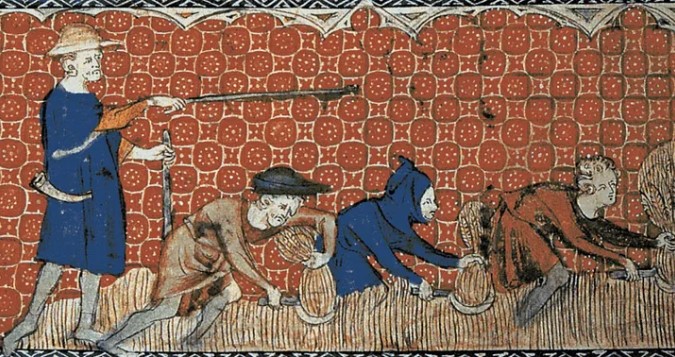
From the third century B.C.E. to 476 C.E., the Mediterranean world was centralized under the Roman Empire. Plagued by overextension, economic decay, political chaos, and Germanic invasions, the western part of the Roman Empire finally collapsed in 476 C.E. With the Roman Empire being a thing of past, feudalism eventually took hold of Europe. Under feudalism, Europe became politically decentralized, distant trade networks collapsed, and knowledge was lost or retreated to monasteries as the Roman education system disintegrated. What emerged in the place of Rome was a series of kingdoms that fused Roman culture, Germanic culture, and Christianity.
In Iberia, the Visigoths had established one such kingdom. King Leovigild (568-586 C.E.) made Toledo the center of Visigoth power and sought to bring unification to Iberia. By 672, the Visigoth kingdom had reached its apex. Early details about the Visigoths come from sources such as Isidore of Seville’s (early 7th century C.E.) History of the Kings of the Goths and John Biclaro’s (late 6th century C.E.) Chronicle.

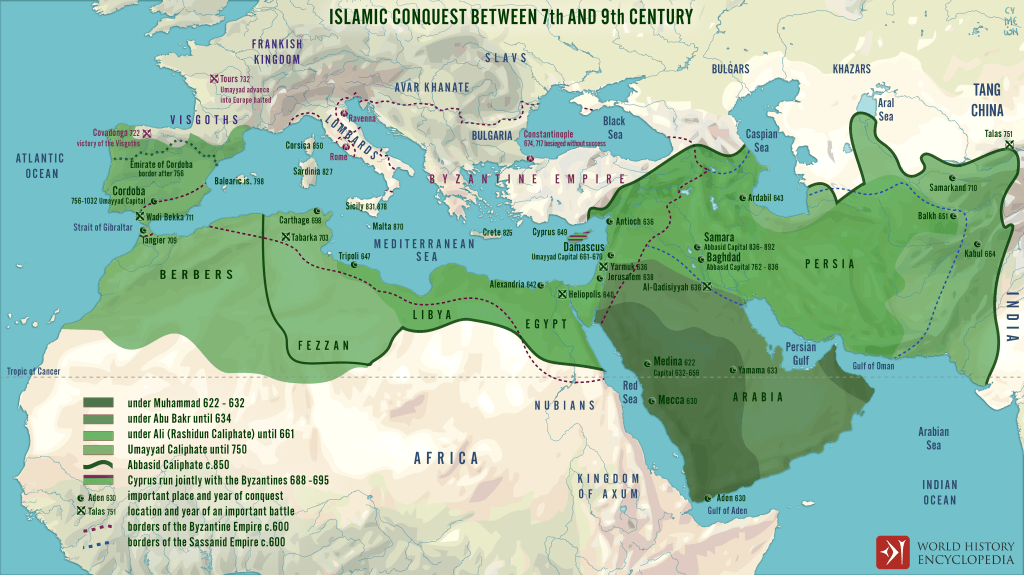
The year 711 was a pivotal point in Iberian history as it marked the ascendancy of Islam and the collapse of Visigoth dominion in Spain. With the arrival of Islam to this part of the world, the Visigoths were forced into northern Spain. From the Visigoth remnants in northern Spain evolved a series of Christian kingdoms that eventually would lead the reconquest of Iberia. The region of Iberia under Muslim control was referred to as al-Andalus and became a cultural and intellectual center. In part, this was due to the environment of coexistence that was established between Muslims, Christians, and the Jewish community under Islamic leadership. Equally important to the fruition of knowledge in this region was Islam’s role as a conduit for the infusion of ideas from the East into the West. For example, the Hindu-Arabic numbering system that we still use today and made the rise of modern science possible.
The early history of Muslim Spain ushered in a period historians refer to as convivencia, or coexistence, among Muslim, Jewish, and Christian cultures. In fact, many historians stress that the Jewish communities residing in Spain since Roman times welcomed the arrival of the Muslim’s as liberators from anti-Jewish legislation initiated by the Visigoths. These laws originated in Visigoth Spain after king Reccared I (r. 586-601) converted from Arian Christianity to Catholicism in 589. His successors, now also Catholic, enacted legislation that was aimed at isolating and suppressing the Jewish community in Spain. For example, Canon III of the Sixth Council of Toledo convened in 638, recorded that King Khintila (r. 636-40) “inflamed by the ardor of the Faith and in union with the bishops of his kingdom, has chosen to obliterate the very foundations of the superstitious prevarication [of the Jews], and does not permit anyone who is not Catholic to reside in his kingdom.” Article X of Book XII in the Lex Visigothorum (653) legislated that “Jews, whether baptized or not baptized, are forbidden to give testimony in court.”
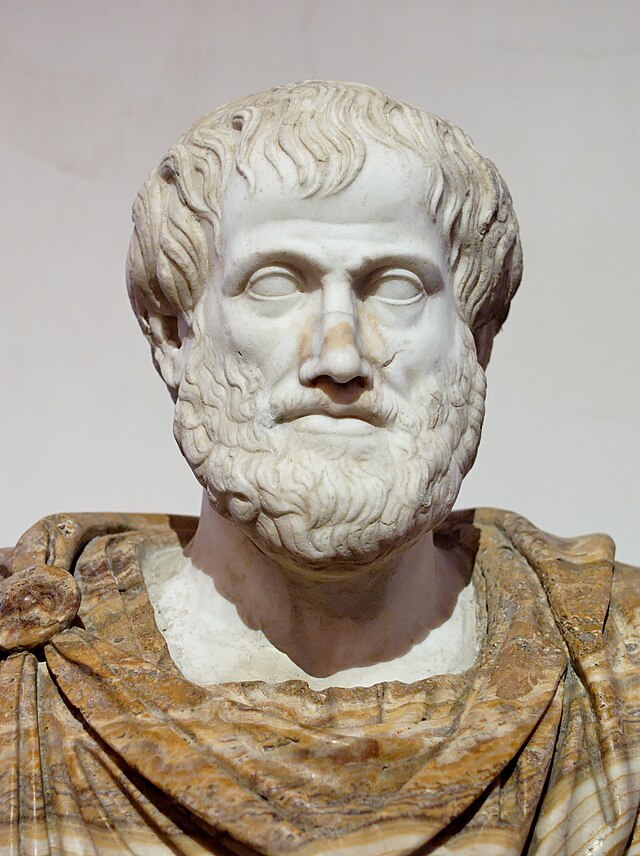
The intellectual importance of al-Andalus was measured by accessibility to knowledge, in many cases knowledge that was new or lost to Europe. For example, the city of Córdoba alone housed over 400,000 books in its libraries, a figure that was unheard of throughout the rest of Europe. Many of the books included Greek and Arab works on natural philosophy (science). By the year 1200, an entire corpus of Greek and Arabic works on natural philosophy and philosophy had been made available to Europe. Many of these works would influence the worldview of the Iberians. For example, Aristotle’s writings. In the case of Spain, Aristotelian philosophy would dominate its intellectual world even into the 16th century. On more than one occasion the Spanish turned to his Politics (c. 350 BCE) to justify the subjugation of indigenous populations in the Americas.
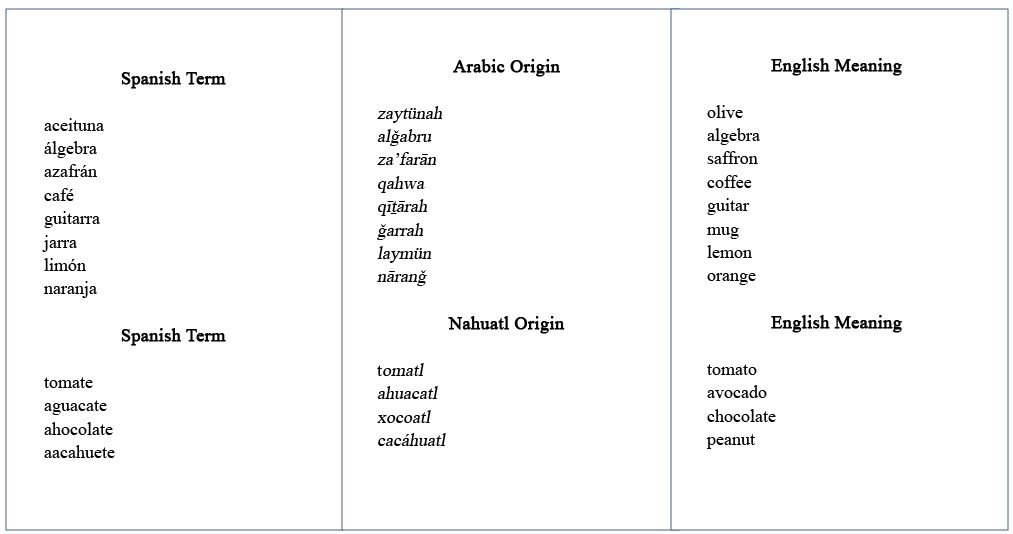
Below are few examples of how the Spanish language has been influenced by Arabic and Nahuatl. Nahuatl is the language spoken by the Mexica (Aztecs).
THE PAPACY TAKES THE LEAD
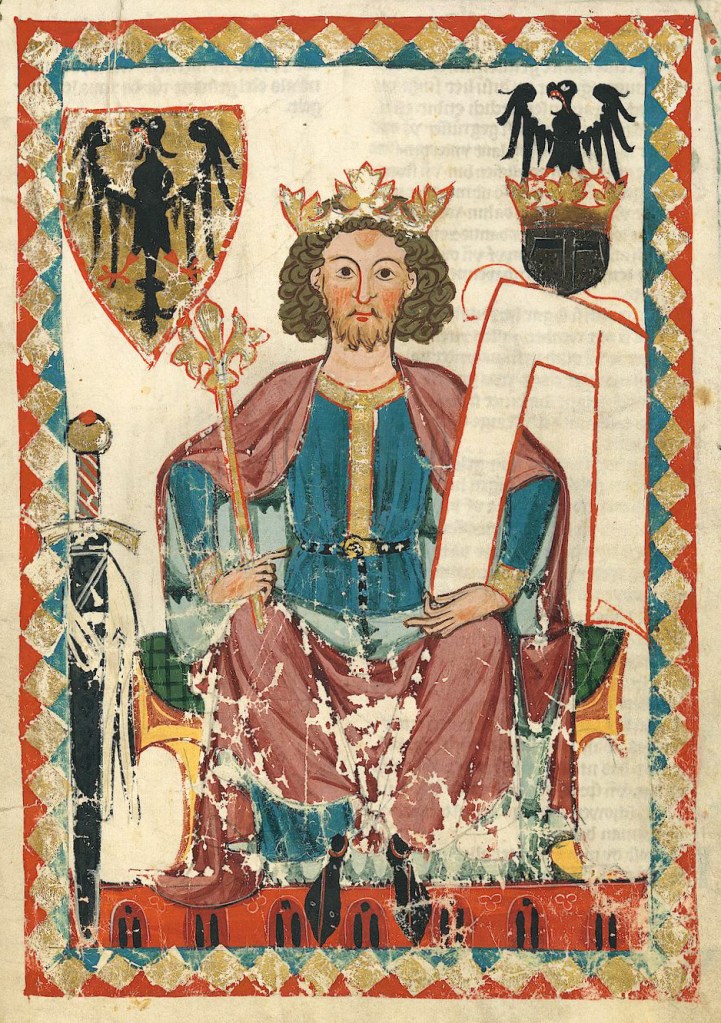
Throughout the early Middle Ages, the Papacy (spiritual authority) and secular rulers struggled over who should lead Europe. In particular, it was the Papacy and Holy Roman Emperors who clashed over the leadership of this region of the world. This struggle was in part resolved by the Investiture Controversy, a battle that pitted Pope Gregory VII (r. 1073-85) against Henry IV (r. 1056-1106), the Holy Roman Emperor. What was at stake? First, who had the right to appoint and invest bishops, an important and powerful member of the Church’s hierarchy. Investment itself was a ceremony in which the bishop was given a staff and ring. The staff symbolized he was the shepherd of the flock and the ring that he was married to the church. Second, who was the rightful leader of Christendom (Christian Europe). Henry IV’s struggle with Gregory VII resulted in his ex-communication forcing the king to ask for Gregory VII’s forgiveness at Canossa in 1077. For now, the Papacy was on top. In response to his success, Gregory VII issued the Dictatus Papae (1085), a Papal Bull that outlined the authority of the church over all matters. The Papacy’s new position of power was further demonstrated in 1095 when it directed Europe’s foreign policy through the Crusades. This would impact al-Andalus and would be one of the main factors that set the tone for the conquest of America with its fusion of militarism and Christianity.
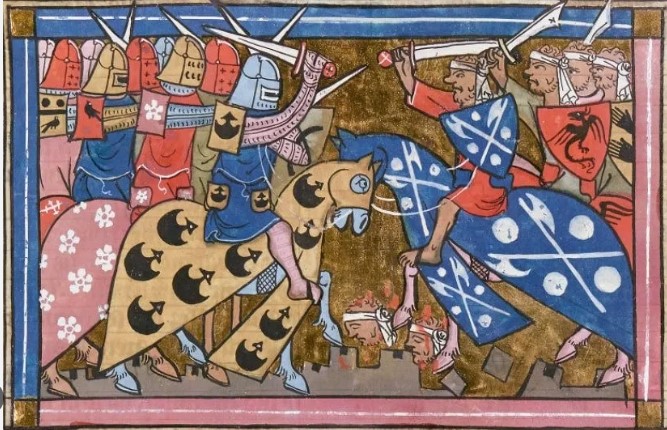
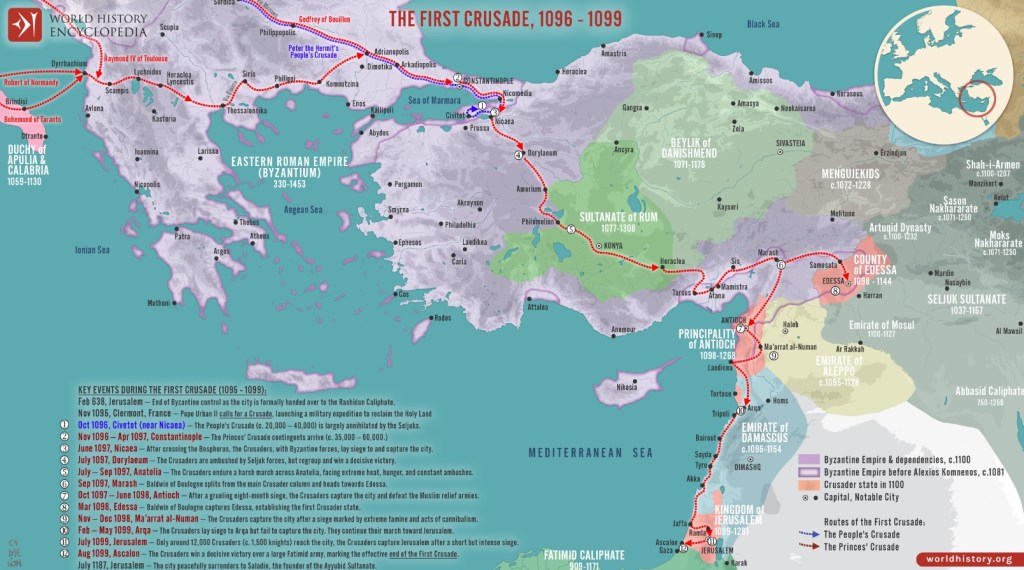
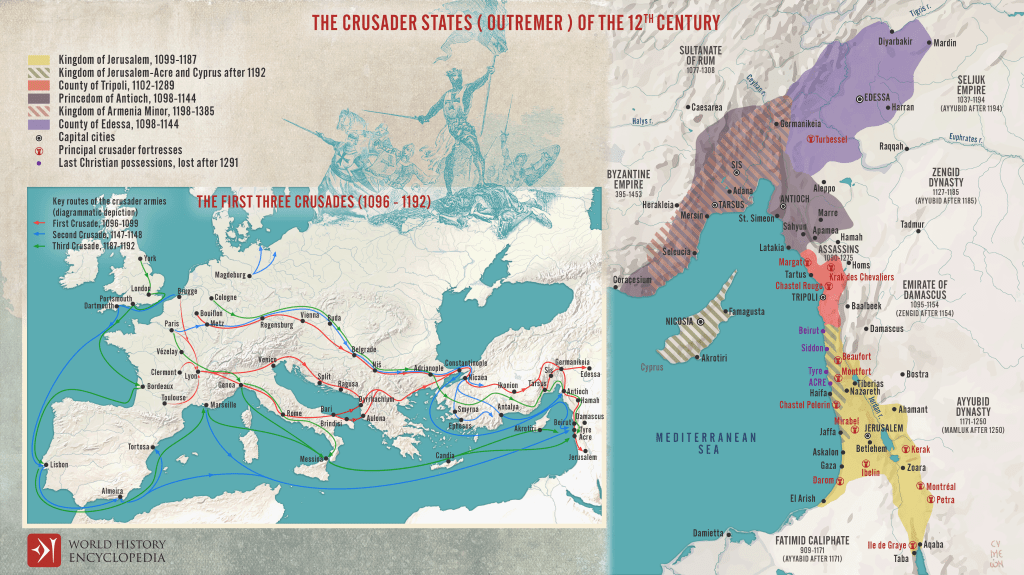
In 1095, Pope Urban II (r. 1088-1099) called for a crusade against the Seljuk Turks (Islam) at the Council of Clermont (France). In response to his call, Christian forces left Europe and conquered parts of the “Holy Land” (Levant). What caused the call for this crusade? What is truly the fear of Islam making its way to Europe? Was it Europe wanting to access the trade routes originating in the Asia and ending in Muslim held territory?
The bottom line is that the early military success of the crusades re-introduced Europe to “exotic” goods and international trade routes originating in the East. What type of goods were making their way from the east? An answer to this question can be found in a document describing the Christian capture of a trade caravan. See a source fragment to the right. In 1192 a group of crusaders led by Richard I (r. 1189-1199) “the Lionheart” captured this caravan and noted the contents it carried.
The crusades and the revival of Europe’s economy stimulated the quest for ways to circumnavigate the Islamic world and find a new way to reach Asia. Two waves would be initiated. One attempted to go circumnavigate Africa and the other sought to reach Asia by heading in a westerly direction.
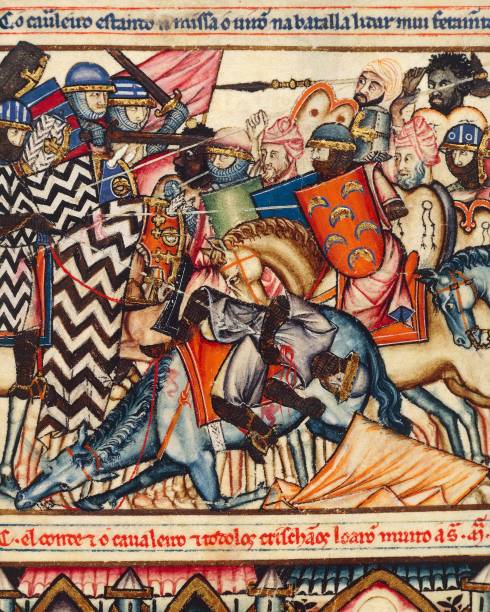
The crusades also successfully fused Christianity and militarism thus laying the foundations for the concept of just war. For example, Saint Bernard of Clairvaux’s (1090-1153) In Praise of the New Knighthood argued that the, “. . . the knights of Christ may safely fight the battles of their Lord, fearing neither sin if they smite the enemy, nor danger at their own death; since to inflict death or to die for Christ is no sin, but rather, an abundant claim to glory.” This notion that war could be justified even made its way into Iberian medieval law. Las Siete Partidas was the most important law code of thirteenth-century Spain. It was compiled by Alfonso X (1221-1284) the Learned of Castile in c. 1265 and covered a wide range of topics including military affairs. Of special interest to us is the section on how a just war can be declared. Consider the following as you read the selection from the Siete Partidas below: Can this medieval precedent for a just war be applied to justify the conquest, colonization and conversion of indigenous cultures of the Americas?
The inauguration of war, is something which those who wish to, make it should carefully consider before they begin, in order that it may be carried on with reason and justice, for, by doing this, three great advantages are obtained; first, God will afford greater assistance to those who institute it in this manner; second, they will exert themselves more strongly on account of their being in the right; third, those who hear of it, if they are friendly, will assist them with greater good will, and if they are hostile, will withdraw themselves more from them. The right to maintain a just war, is as the ancient sages explained, based upon three considerations; first, to expand the religion of the People, and to destroy those who wish to oppose it; second, for the sake of their lord, by desiring loyally to serve, honor, and defend him; third, in order to protect themselves and aggrandize and honor the country in which they dwell.
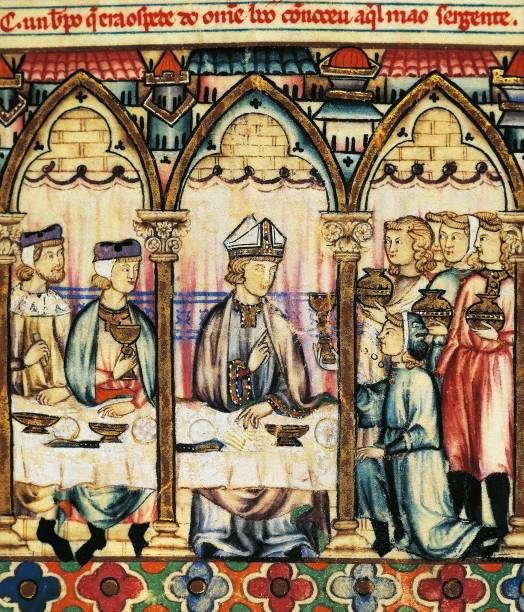
This crusading spirit was not just limited to fighting Islam in the East. It also found its way to Spain where a Muslim presence had existed since 711. The crusading spirit that reached Spain put an end to co-existence between the Muslim, Christian, and Jewish communities as Iberia’s Christian rulers began to conquer and colonize Muslim territories. This offensive enterprise was known as the Reconquista or Reconquest. Certain institutions and the ideology of expansion used in the conquest, colonization, and conversion of the Americas had their origin in Iberia during the Reconquista. One could argue that Iberia’s medieval experience in waging war against Islam prepared it for the conquest of the Americas. The frontier would no longer be with Islamic Spain but instead would shift to the Americas and the indigenous world. In essence Iberia’s medieval experience made it a society prepared for conquest, colonization, and conversion.
GENOLOGICAL ACCOUNTING AND THE CASTA SYSTEM
The process of recovering Spain specifically from Muslim dominance was a gradual one that formally came to an end in 1492 with the surrender of Muhammad XII (Boabdil) and the fall of the Kingdom of Granada. Papal encouragement, through religious-political backing and from subsidies, did much to help ensure Christian success in waging war against the Muslims in Spain. When the Reconquista was nearing its end, Spanish monarchs, Isabel of Castile and Ferdinand of Aragon, moved to create a unified state in Spain, and in the process, also channeled their energies into developing a national identity. In order to distance themselves from Jewish and Muslim communities, Christians in Spain invoked a series of rituals of separation that included genealogical accounting. Through these rituals of separation, it was possible for Christians to distinguish themselves from recent converts to Christianity, or from families who had Converso (Jewish community member converted to Christianity) or Morisco (Muslim converted to Christianity) heritage.
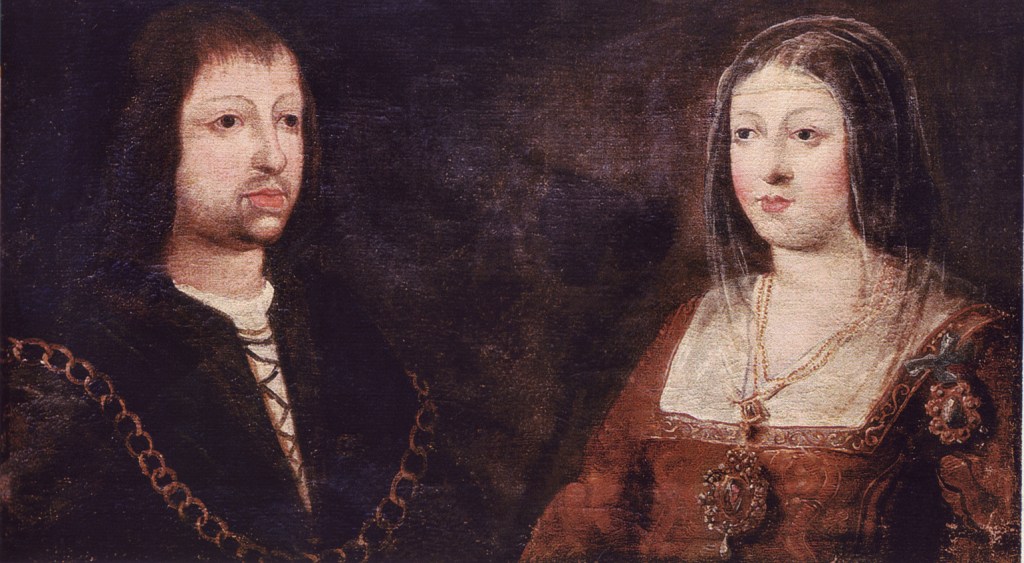
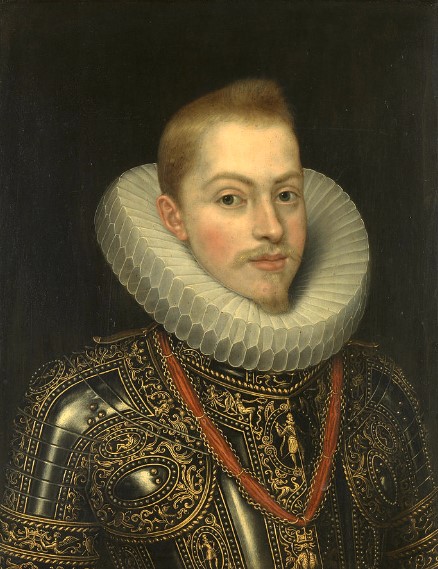
Genealogical accounting thus became an important part of the Spanish world after 1492 as it mirrored the proliferation of statutes of purity-of-blood as a measure for justifying exclusion and defining social boundaries. More extreme measures of separation adopted in Spain came in the form of expulsion. For Spain’s Jewish community, this form of separation was invoked in 1492 when Isabel of Castile and Ferdinand of Aragón issued a charter commanding, “the said Jew and Jewesses of our kingdom to depart and never to return or come back to them or to any of them.” Over one hundred years later, in 1609, Philip III followed the precedent set by Isabel and Ferdinand by issuing a decree declaring, “I have resolved that all of the Moriscos of that kingdom [Valencia] be expelled and sent to the land of the Berbers.”
The emphasis placed on blood as a measure of exclusion was not just limited to distinguishing old Christians from new Christians in the Spanish world, or those who had pure blood as opposed to those whose blood was tainted. This emphasis on blood also played an important part in defining hidalguía itself, the basis of all nobility in Spain. Early codification of this concept can be found in the Siete Partidas which records that “hidalguia is nobility that comes to men through lineage.” This emphasis placed on lineage as a means of identifying hidalguía is also found in works such as a sixteenth century manuscript on nobility, which like the Siete Partidas, declared that hidalguía “comes from lineage.” In a society where so much stress was placed on hidalgía de sangre and limpieza de sangre as measures of exclusion, these values would make their way to the Americas and evolve into the casta system, a “racialized” system where privilege, power, and status was defined by your heritage.
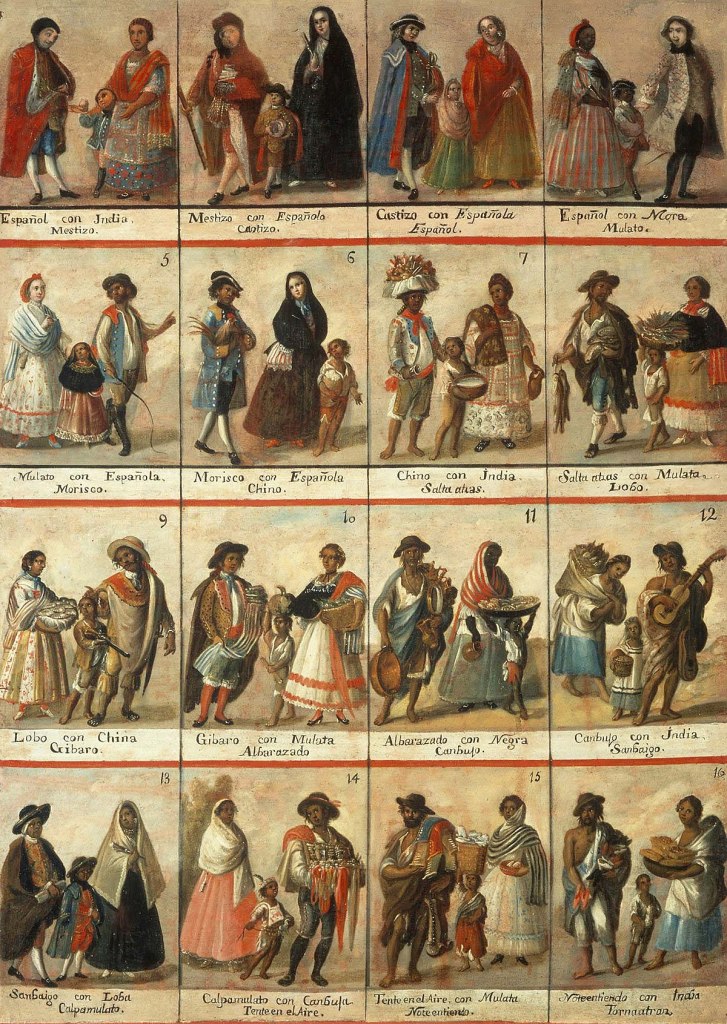
When transplanted to the Americas, these ideas evolved into the casta system, a complex and highly stratified racial hierarchy that attempted to categorize the diverse populations resulting from the mixing of Europeans, Indigenous peoples, and Africans. While rooted in Spanish concerns about lineage and purity, the casta system became more visibly racialized, reflecting the colonial state’s efforts to maintain social order and control over a multi-ethnic society. At the top of this hierarchy were the peninsulares (Spaniards born in Spain) and criollos (Spaniards born in the Americas), followed by various mixed-race groups such as mestizos (Spanish and Indigenous) each with specific legal and social implications. The further one was from Spanish blood, the more restricted one’s access to land, education, official posts, and even clothing and religious participation became. In this way, ideas of blood purity, originally tied to religious and noble identity in Spain, were reimagined through a colonial lens to justify racial inequality and preserve Spanish dominance in the New World.
ENCOMIENDA
In addition to this social criterion, medieval institutions would also make their way to colonial Latin America and profoundly shape the evolving relationship between Spanish settlers and indigenous populations. One of the most significant of these institutions was the encomienda—a grant system with deep roots in medieval Spanish society. Originally, encomiendas in Spain were not primarily about land ownership but rather about the right to collect tribute or receive services from a group of people in a designated territory. These grants often served as compensation to nobles and soldiers for their service during the Reconquista, the centuries-long Christian reclamation of the Iberian Peninsula from Muslim rule. In this context, the encomendero (the grant holder) was expected to provide military protection and uphold the Christian faith, particularly by defending the population from Islamic forces, while receiving rents or labor in return.
When transplanted to the Americas in the early phases of Spanish colonization, the encomienda system was adapted to new imperial and colonial needs, yet its underlying hierarchical and paternalistic structure remained intact. In this new context, land was not granted outright to encomenderos; rather, what was bestowed upon them was the right to extract labor and tribute from a specific indigenous community. In theory, this arrangement came with reciprocal obligations: encomenderos were to offer protection and, crucially, to oversee the Christian instruction and “civilization” of the indigenous people. However, in practice, these noble intentions were often neglected, and the encomienda quickly devolved into a system of forced labor and social domination.
Through the encomienda, indigenous labor became a cornerstone of the colonial economy, particularly in agriculture, mining, and infrastructure development. Indigenous peoples were often subjected to harsh working conditions, physical punishment, and cultural suppression. The system facilitated a massive transfer of wealth and power to Spanish elites, while simultaneously contributing to the demographic collapse and cultural erosion of indigenous societies.
Furthermore, the encomienda reveals how feudal traditions from medieval Spain were repurposed in a colonial setting, evolving from a military-religious tool of reconquest to an economic mechanism for imperial expansion and control. It institutionalized a racialized hierarchy, where indigenous populations were seen as both spiritually inferior and economically exploitable. Over time, critiques from reformers like Bartolomé de las Casas led to attempts at reforming the system, most notably through the New Laws of 1542, which aimed to curb abuses. Nevertheless, the legacy of encomienda and similar coercive systems endured for centuries and set the precedent for other exploitative labor practices like the repartimiento and hacendado systems.
In essence, the transformation of the encomienda from a medieval Iberian institution into a colonial tool of labor control exemplifies the broader patterns of cultural transplantation, adaptation, and domination that characterized the Spanish colonization of the Americas.
THE SPIRITUAL CONQUEST AND THE MENDICANT ORDERS
One of the most significant developments in Christian history was the rise of monasticism, a religious movement that encouraged individuals to withdraw from worldly distractions in order to pursue a life of spiritual discipline and devotion. In the early 6th century, Benedict of Nursia (480–543 C.E.) established a monastic community at Monte Cassino in Italy. His Rule of St. Benedict became the foundation for Western monastic life, emphasizing prayer, manual labor, community living, and obedience. The Benedictines, as his followers came to be known, would influence Christian religious practice for centuries.
By the 13th century, a new kind of religious order emerged in response to growing cities and social change in Europe: the mendicant orders. These groups—unlike traditional monks—did not live in isolation but moved among the people, preaching, serving the poor, and promoting Christian values through example. The Franciscans were the first of these, followed by the Dominicans, Augustinians, and later the Jesuits. Their commitment to poverty, education, and missionary work made them central figures in what would become known as the spiritual conquest of the Americas.
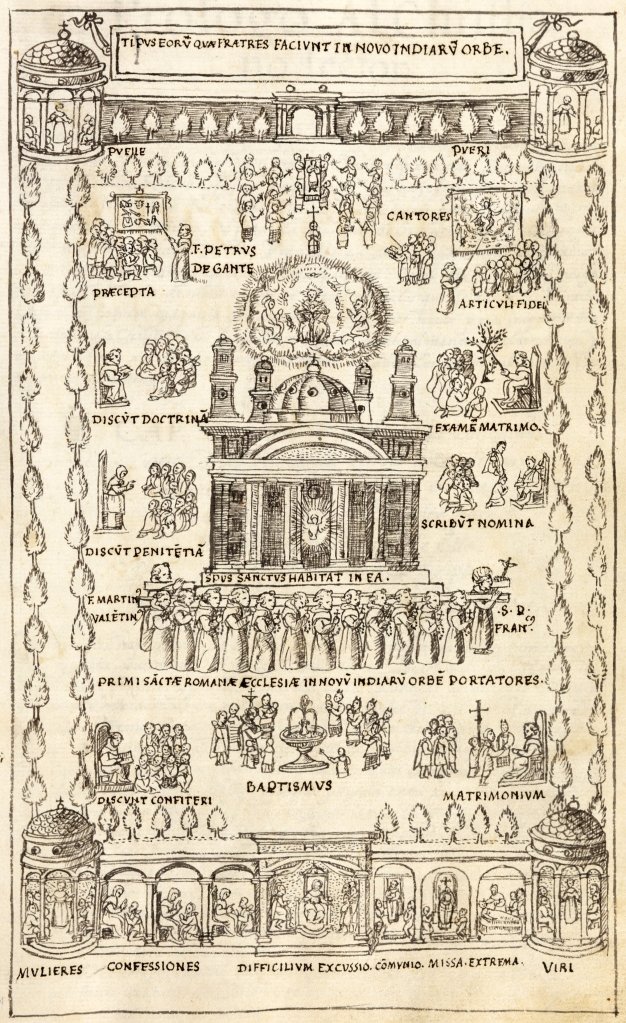
Following the Spanish conquest of the New World, these religious orders played a critical role in the Christianization of indigenous populations. The Franciscans were among the first to arrive in the early 16th century, establishing missions where they lived among native communities. Their goal was not only to convert indigenous peoples to Christianity but also to reshape their cultural and spiritual lives to reflect European Catholic norms. This often involved the suppression of native religious practices and the destruction of temples and sacred symbols.
The spiritual conquest was not merely a religious endeavor; it was also a tool of cultural transformation and colonial control. Missionaries introduced European customs, languages, and values while often disregarding or devaluing indigenous worldviews. However, indigenous communities did not passively accept these changes. Through processes of syncretism, many blended Christian beliefs with their own traditions, resulting in unique religious practices that persist in parts of Latin America today.
IN CLOSING
By the 13th century, Europe had entered a period of economic revival that laid the groundwork for its expansion into the Atlantic world. This resurgence, partly spurred by the Crusades, revitalized commerce and industry, empowering monarchs to assert greater authority through taxation. With new revenue streams, rulers could fund standing armies and develop bureaucracies, transforming feudal territories into increasingly centralized states—entities that would soon challenge even the authority of the Papacy. In England, this shift culminated in the rise of the Tudor Dynasty (1485–1603). In France, the Valois Dynasty (1328–1589) helped strengthen royal control. Spain saw the transition from the Trastámara Dynasty (1369–1516) to the powerful Habsburgs (1516–1700), while Portugal found stability under the Avis Dynasty (1385–1578). What had once been theoretical claims to absolute power began to manifest in practical governance. With their authority consolidated, these monarchs turned their attention outward. Exploration and the pursuit of overseas resources became strategic priorities, offering both wealth and geopolitical influence. Thus began the age of European expansion—an era that would culminate in the rise of maritime empires and the colonization of the Americas.
As always, be sure to contact me or visit me during office hours should you have any questions about the content we have covered or the assignments that you need to complete.
 World History Portal


