The Opening of the Atlantic World
| Learning Objectives 1. Describe the key features and significance of the Modern Revolution. 2. Analyze how maritime innovations enabled European exploration and expansion across the Atlantic Ocean. 3. Explain the origins of the plantation complex and evaluate its social, economic, and demographic impacts on Africa. |
Oxford History Timelines: Western Africa | Europe
The focus of this topic will be Iberian expansion into the Atlantic. My aim is to connect some of the concepts your learned in the previous topic to the Portuguese and Spanish activities in the Atlantic. I would also like to delve into the impact that Africa had in commerce and how this region became a conduit for slave labor. Before we begin looking at the details, let me give you a brief overview of where Iberia at this time.
THE MODERN REVOLUTION
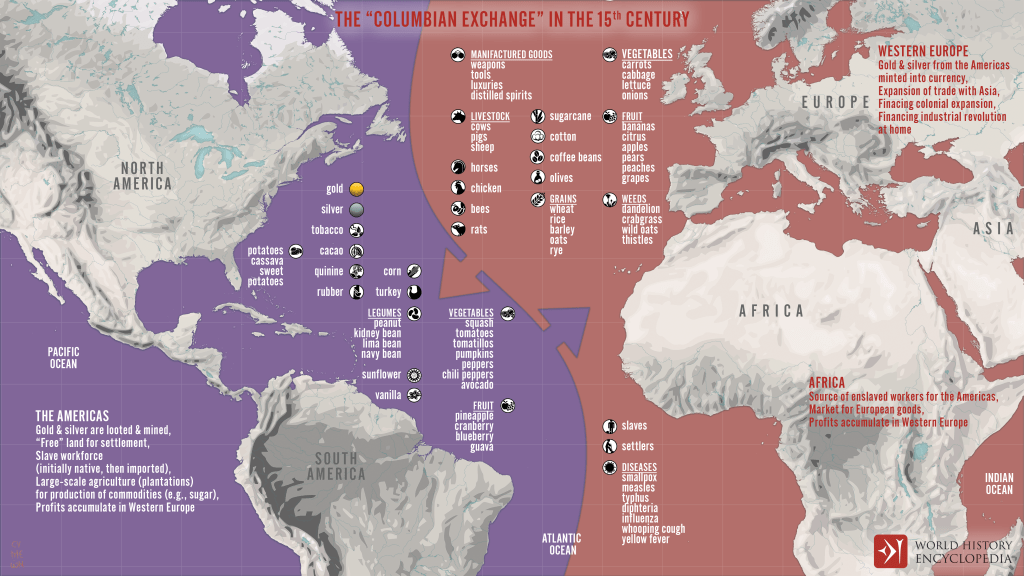
With the closing of the Middle Ages certain regions of the world moved toward what has been referred to as the Modern Revolution, a period that witnessed increasing commercialization and the emergence of capitalistic social and economic structures. One major outcome of this period was the integration of the “entire world” into a single network of exchange, a true world system. In fact, for the first time in human history, economic networks were linked throughout the world, although at a cost as some regions of the experienced catastrophic demographic collapse due to conquest and colonization or labor exploitation. This is particularly true of the indigenous cultures of the Americas.
The foundations for the Modern Revolution can be traced to the Middle Ages. Some of the most important stimulants for this movement occurred between 1350-1700. In the case of Europe, it is during this time frame that it witnessed the following:
- The formation of centralized states with commercially minded governments.
- The quest for commerce and the seeds of capitalism
- The expansion of world markets and the creation of global networks
- The Scientific Revolution
- The Enlightenment
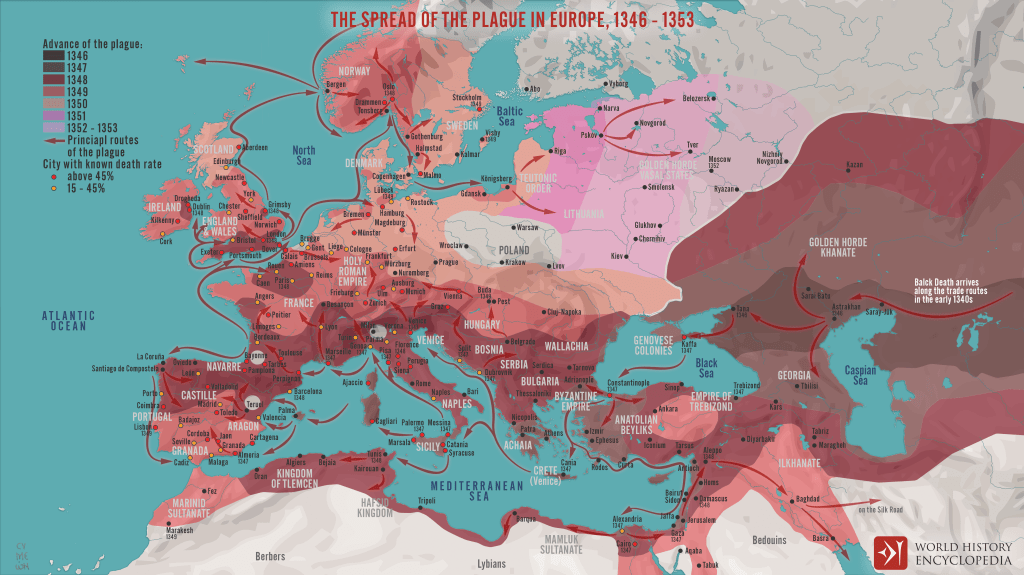
For the most part, the world in the 15th century was predominantly rural in nature. Human population size is believed to have been about 350 million in number and the increase or decrease of this population was primarily impacted by the availability of land and its exposure to epidemic disease. For example, the bubonic plague (c. 1347), a disease that new no boundaries, greatly affected the populations of both Europe and China.
The most densely populated regions in the world at this time were located in Japan, Korea, Indonesia, Indochina, India, the Islamic West, Asia, Europe, and Mesoamerica. Of the 350 million people that lived in the 15th century, only about 1% resided in urban centers.
Trade routes during this period connected Africa, Asia and Europe. However, the Americas at this point was excluded from this network. In this polycentric trading system, the crossroad for global exchanges (goods, ideas, and technology) was the Indian Ocean. It was in the Indian Ocean where China, India and the Islamic Near and Middle East met. Europe at this time held a peripheral relation to this crossroad, a position that would change in the near future with its ventures into the Indian Ocean, and of course, the conquest of the Americas.
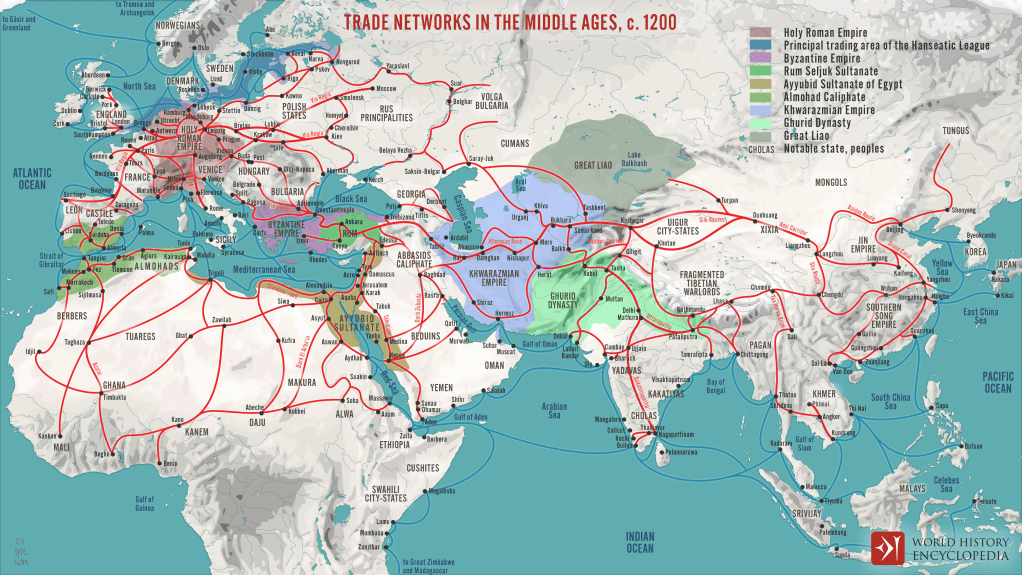
By the 13th century, Europe too had experienced an economic revival that would eventually facilitate its expansion into the Atlantic world. As already noted in your previous topic, this in part could be attributed to the Crusades (c. 1095-1291) and the re-introduction of goods coming from the East and India to Europe. What facilitated Europe’s economic revival were innovations in agriculture, the political stability brought to Europe by the medieval Church and secular rulers, and Europe’s re-establishment of international trade routes such as those reaching the Levant. Because Europe, unlike for example India and China, had little to sell or exchange that was in demand in other parts of the world, the acquisition of resources through conquest and colonization became one driving force behind the creation of European merchant empires.
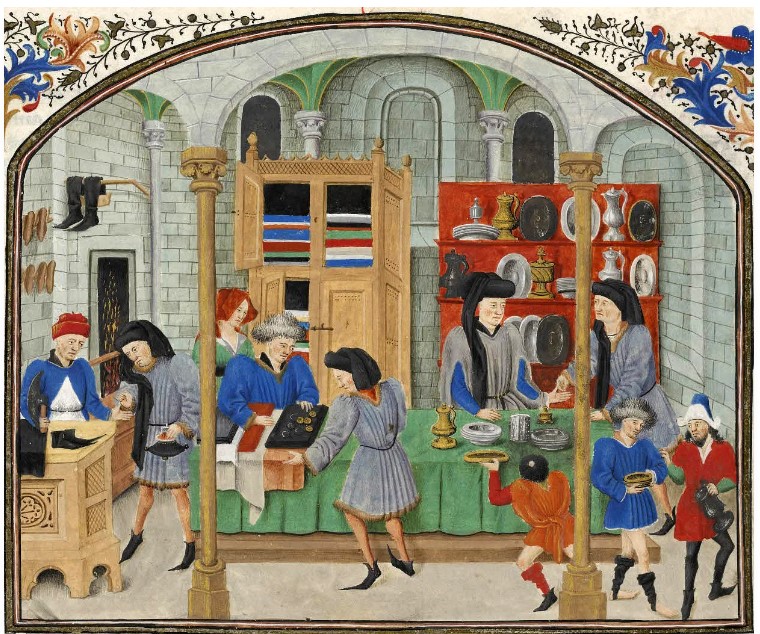
There was a major cost associated with subsidizing these newly centralized states, warfare. The Military Revolution, which introduced a series of innovations associated with warfare, came with a high cost. These innovations included:
- “Mass production of bronze artillery in the late 15th century, enabling a shift from labor-intensive to capital-intensive warfare . . . .”
- “Sailing vessels capable of making long-distance voyages and delivering lethal broadsides . . . .”
“Artillery fortresses, perfected in the 1520s and spread from Italy to Europe and European possessions overseas” - “Volley fire and drill for infantry, introduced by the Dutch Army in the 1590s . . . .”
As a result of these changes in warfare, many historians believe that the symbiotic relationship between the cost of military sustainment and the pursuit for profitable resources ultimately fueled the creation of merchant empires that would come to dominate the Atlantic world.
AN INTELLECTUAL REVOLUTION
Europe also experienced an “intellectual revolution” that would have profound effects on the move toward overseas exploration and establishing a more secular worldview. Recall that through Spain was introduced a large corpus of Arabic and Greek works on science, medicine, geography, mathematics, philosophy, and astronomy. This shift on how to look at the world (from the divine to the human) continued under a cultural/educational movement called the Renaissance. The Renaissance originated in Italy and lasted from about 1350 to 1650 C.E. The focus of this movement would not be God or a life of contemplation, but rather humankind participating in an active life. Preparation for this active life came in the form of the Studia Humanitatis. It was a program of studies similar to your general education requirements that prepared students to lead a participatory life in society as opposed to a life of meditation. It too opened the door for innovation and facilitation for ventures into the Atlantic.
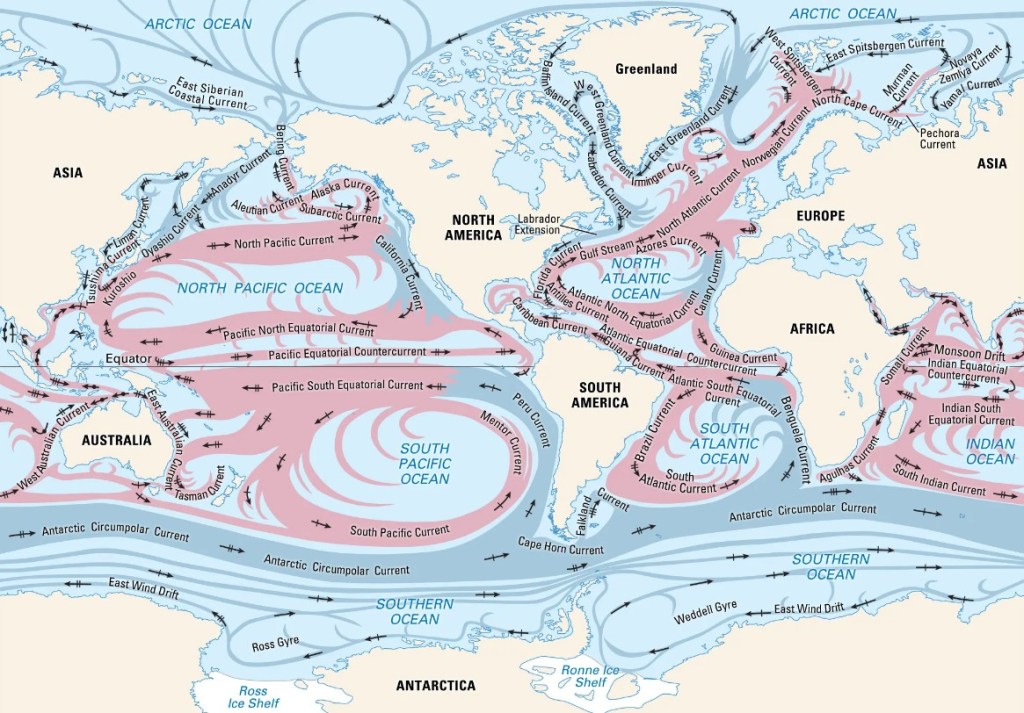
The greatest challenge early mariners had to deal with was understanding the shifts and changes in water and wind currents. In the Atlantic, currents were unidirectional. For example, the Canary Current and the Gulf Stream Current. Thus, getting to certain destinations was as complicated as attempting to return to the point of origin.
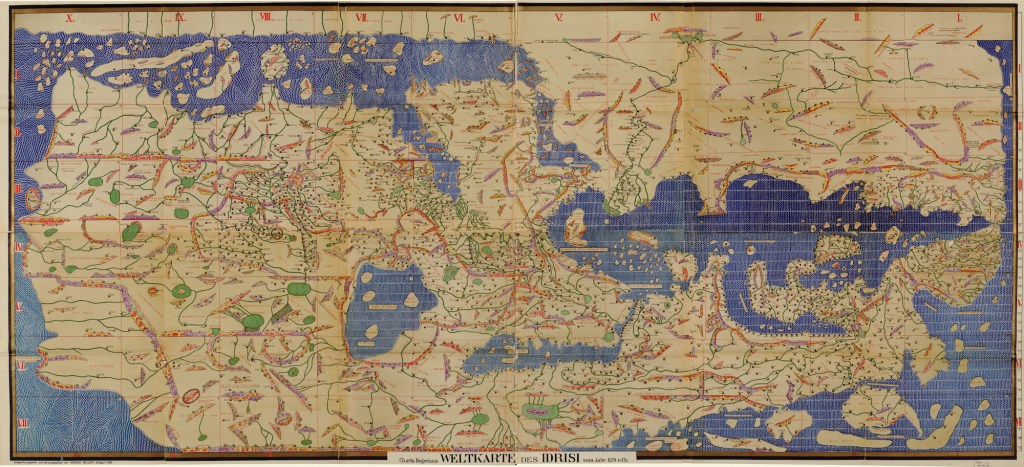
Voyages documented by contemporaries, such as the Muslim geographer al-Idrisi (c. 1099-1166), highlight the difficulty of these early ventures. Interestingly enough, the grain trade stimulated the European exploration of the Atlantic in the late thirteenth century. The economic revival Mediterranean cities experienced stimulated growth and expansion. Pressure on grain supplied in Europe moved some to search for new sources of grain in the Atlantic. The first accidental contact in the Atlantic came in 1312 when the Genoese merchant Lanzarotto Malocello, sailing towards northern Europe, was blown off course and landed on the Atlantic Canary Islands.
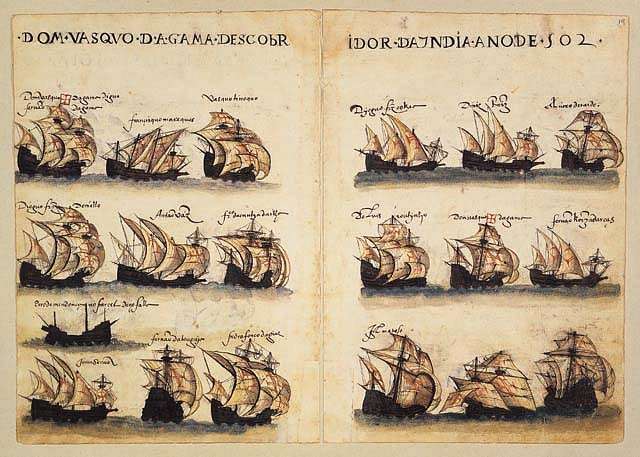
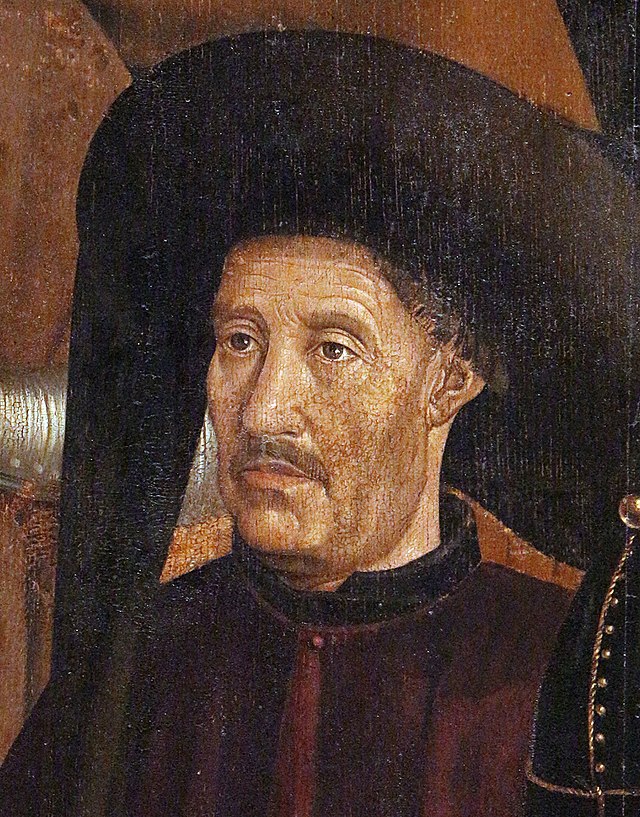
What also facilitated exploration of the Atlantic was the promotion of new maritime knowledge and innovations in ship technology. For example, Prince Henry the Navigator (1394-1460) of Portugal established a maritime academy at Sagres Point (Algarve) that promoted the study of geography, cartography, and maritime technology.
Portolan maps, the astrolabe, and the quadrant were also being used by this time. In 1480, Europe’s first manual on navigation, Regimento do astrolabio e do quadrante, was published. Ship technology combined the northern cog with Arab sail technology. This produced a hybrid vessel (3 mast ships that included square sails and the Arab lateen sail) that eventually gave way to the caravel.
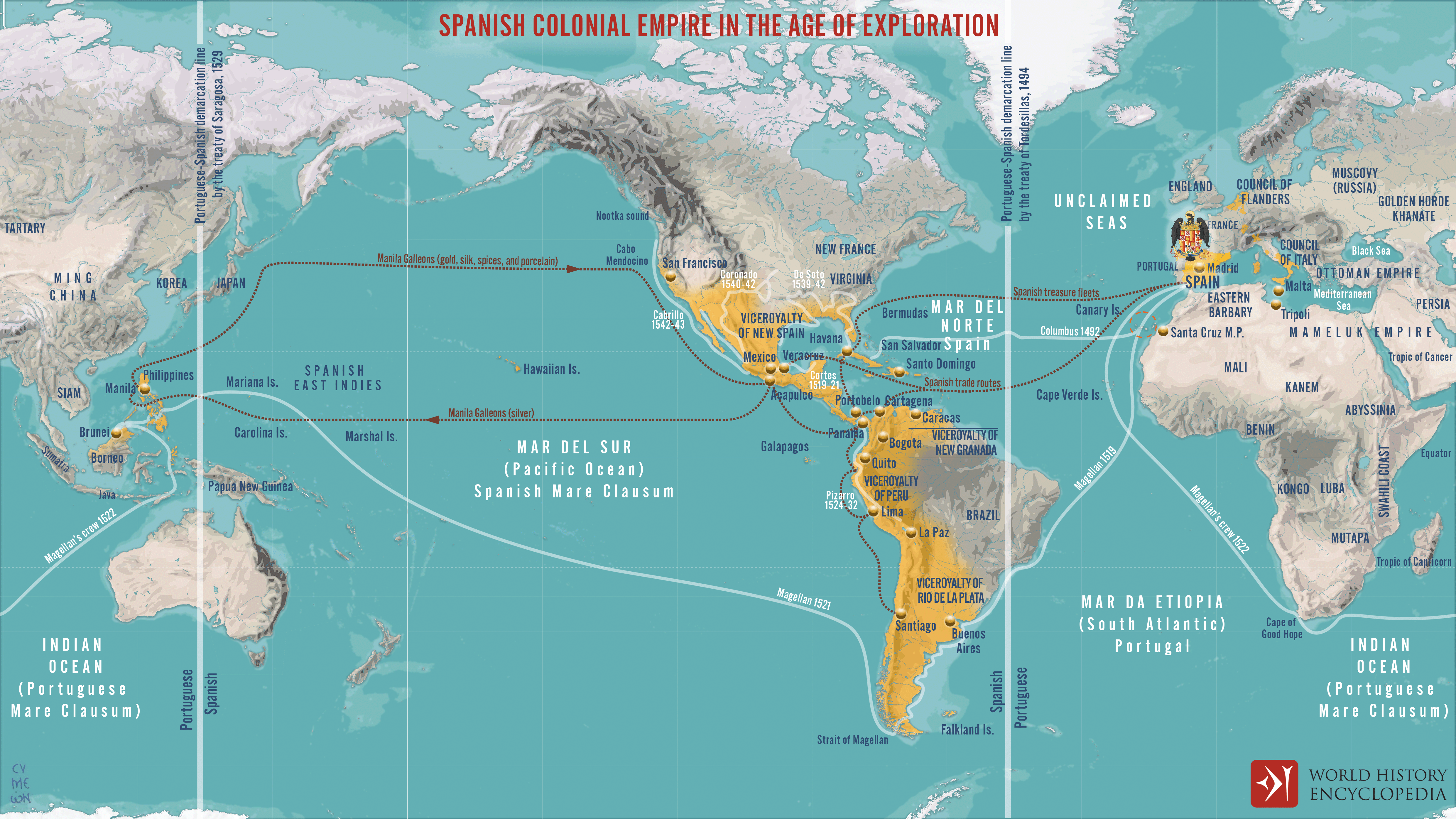
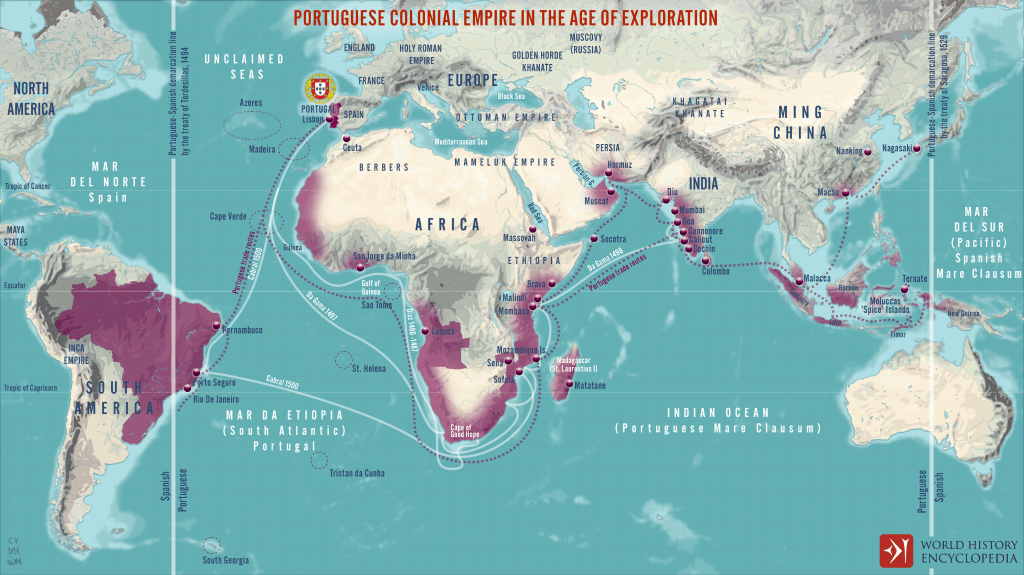
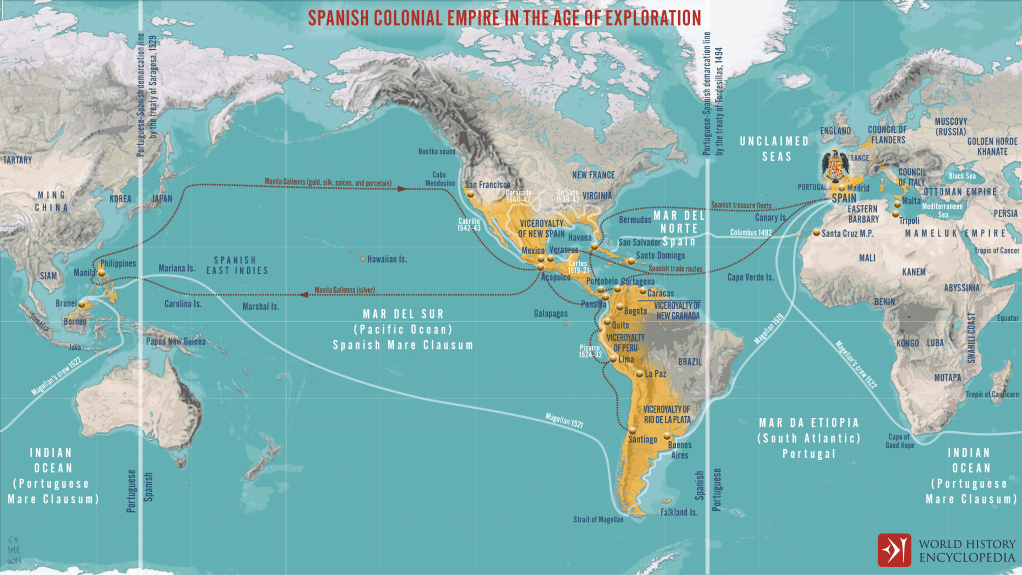
Facilitated by this new maritime knowledge and technology, and the quest for resources, Europeans charted two wings of exploration. One wing led southward down the coast of Africa. This was made possible when an understanding of the winds and currents around the Canary islands came about. The second wing led westward into the Atlantic, contacting first the islands of Madeira and the Azores, and later reaching the Caribbean and the Americas.
AFRICA AND THE OPENNING OF THE ATLANTIC WORLD
I would like to continue our discussion by having you read and contemplate this quote by John Thorton:
In the Atlantic, disenclavement meant much more than it did elsewhere in the world; it was not just increased communication but a reshaping of whole societies and the literal creation of a “New World.” Moreover, it was a reshaping that involved Africa quite directly, for by 1650 in any case, Africans were the majority of new settlers in the new Atlantic world.
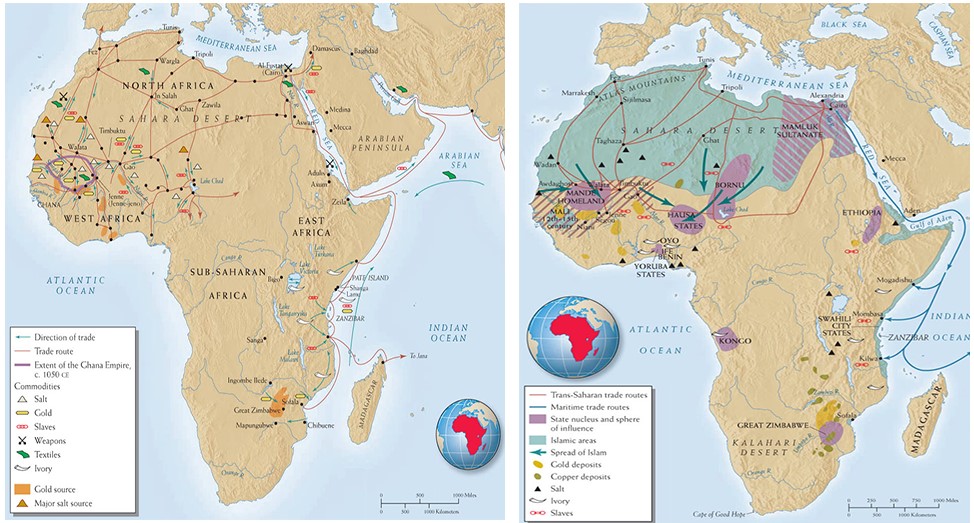
Africa historically has been conduit for trade. In ancient times, the Kingdom of Meroë and the Kingdom of Axum dominated trade in eastern Africa. However, by the Middle Ages the focus of trade in Africa shifted from the east to sub-Sahara Africa. Three principal features influenced the development of Africa between the twelfth through the sixteenth centuries.
- First, the spread of Islam.
- Second, the expansion of trade relations between the Islamic world and sub-Sahara Africa.
- Third, the development of trading kingdoms/empires throughout this region of Africa.
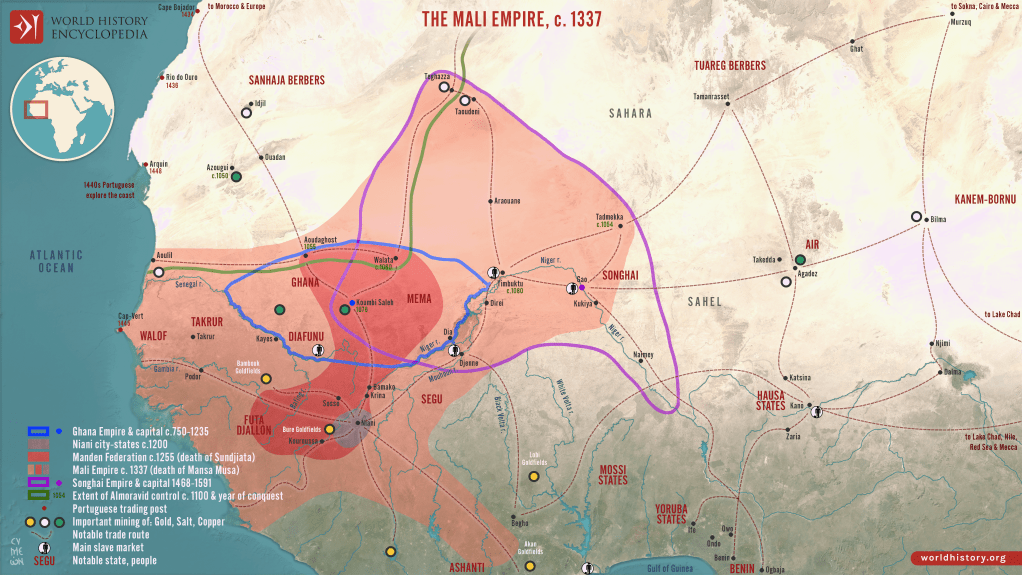
One the most important and extensive trading empires to develop in this region was Mali (also see Ghana and Songhai). It was strategically positioned to take advantage of the trans-Saharan trade route. What was primarily moved in the trans-Saharan trade routes was gold and slaves.
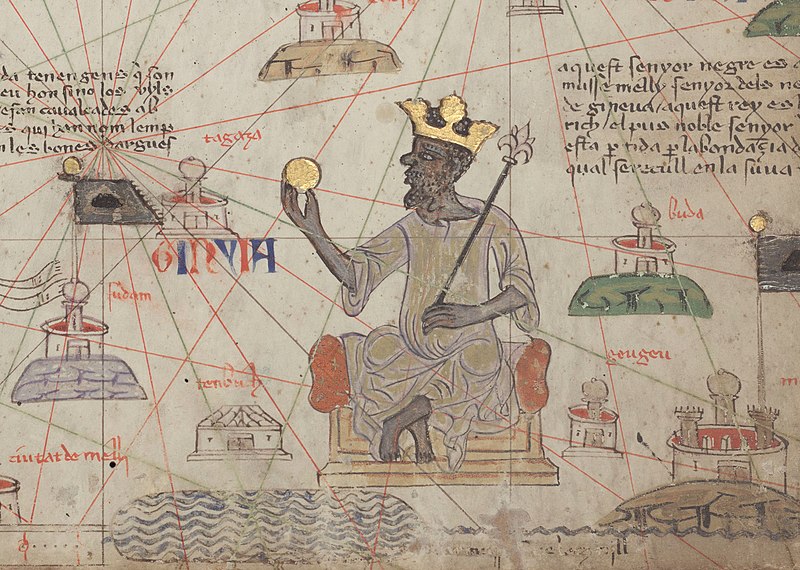
Oral traditions preserved by griots (court retainers) record that Sundiata (r. 1245-1260 C.E.) was the founder of the Empire of Mali (c. 1230-1464 C.E.). However, Mali’s most recognized ruler was Mansa Musa (r. 1312-1337 C.E.). Throughout the Middle Ages Muslim merchants had a monopoly of trade leaving this region as Islam had made its way into north Africa.
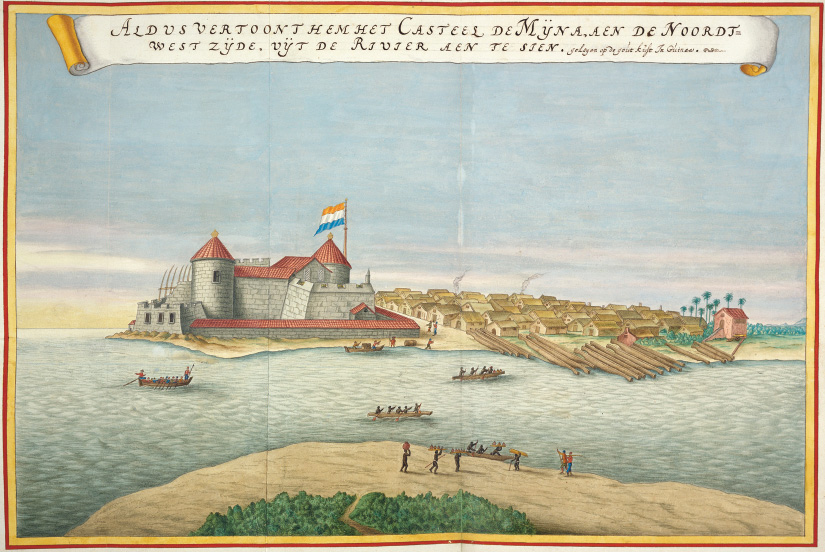
Between the years 1340 through 1470, European expansion proceeded slowly along the African coast and was represented by the Portuguese. The naval encounters between Portuguese and Africans dictated the type of relations that were to be established in this region of world. The 1446 expedition of Nuno Tristão attempting to land an armed force in Senegambia and the 1441 expedition of Valarte on the island of Goree both met the same fate as they were defeated by African naval forces. The failure of the Portuguese to effectively dominate these encounters meant that trade relations, and not conquest and colonization, were pursued in this part of the world. These encounters moved the Portuguese to establish trading forts (feitorias) along the west coast of Africa. The Portuguese would use this very same model, trading forts, in the early history of its conquest and occupation of coastal Brazil.
THE PLANTATION COMPLEX
I would like to finish our discussion before we return to the Americas in our next topic by trying to unravel the early history of the plantation complex. The plantation complex is defined as an “economic and political order centering on slave plantations.” It dominated the Caribbean, Brazil, and parts of North America. The origins of the plantation complex can be traced to the Middle Ages. The plantations that evolved from the fledgling sugarcane industry in the Middle Ages served as precedent for plantations established in the Americas. Muslim merchants were the first to introduce sugarcane from Southeast Asia into the Mediterranean world. Attempts to grow sugarcane were made in Palestine in the 12th century, and in Cyprus and in Malaga by the 14th century. However, it was in the Atlantic islands where sugarcane would have its greatest impact before reaching the Americas.
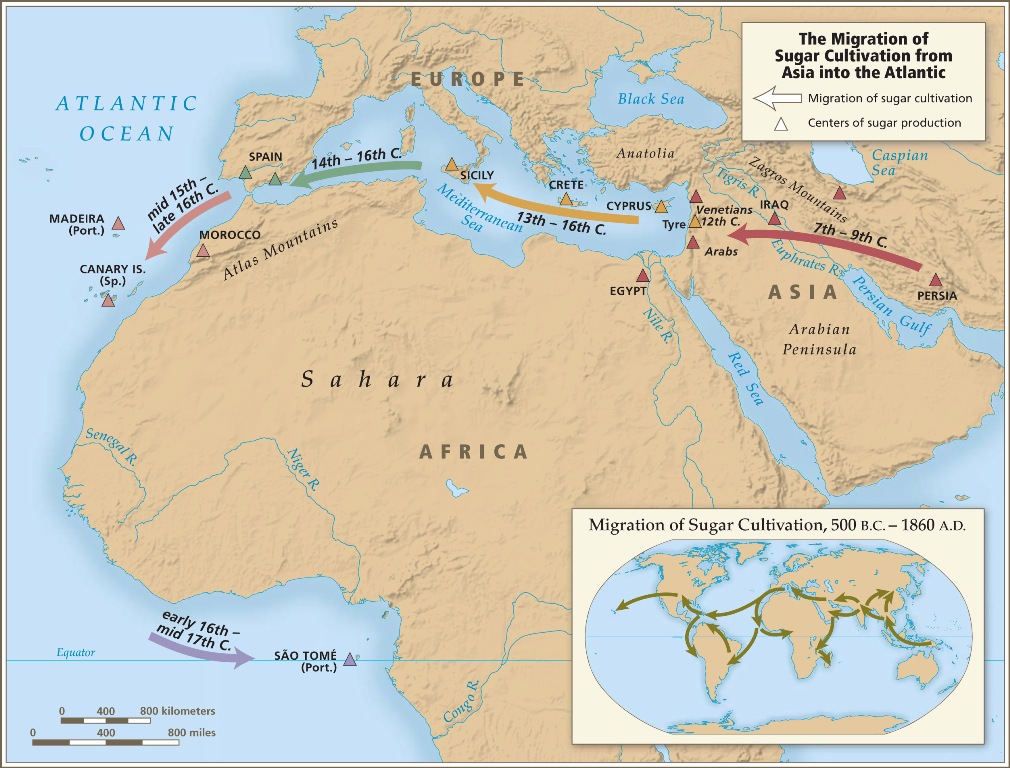
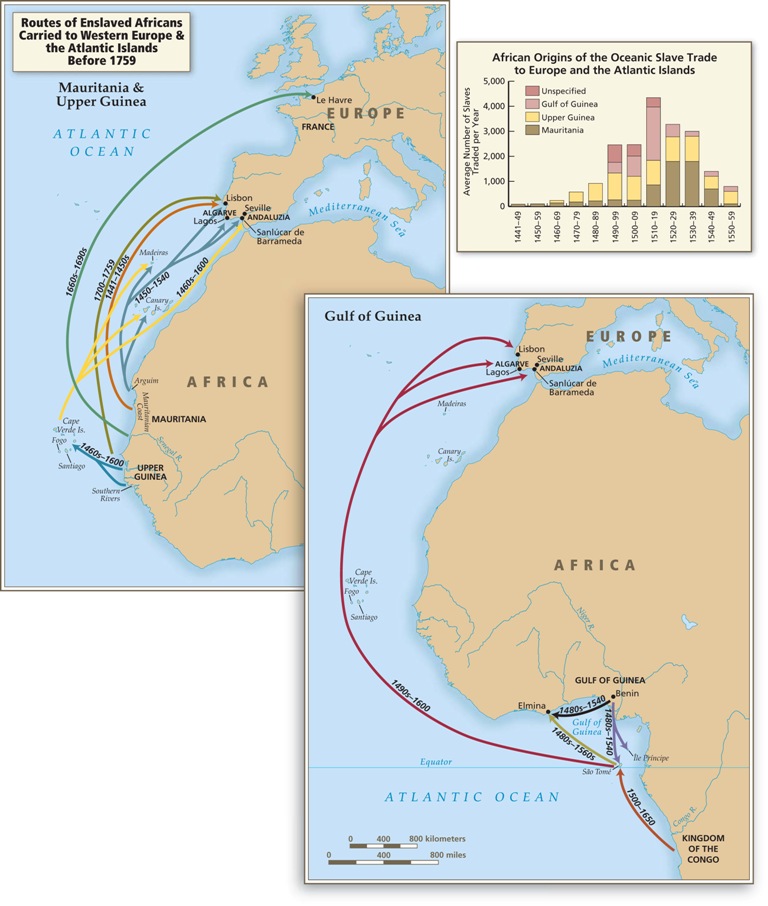
First contact with the Madeira and the Azore islands occurred in 1341 through a Portuguese led expedition. At first, the Atlantic islands seemed to provide little hope of economic worth beyond the tall hardwoods that grew there which were used in shipbuilding. Early settlement of these islands was led by colonists who not only focused on wood extraction, but also gathered wax, honey, and wild dyestuffs. However, the eventual success of wheat farming led to further colonization and settlements. By the 1450s, it was discovered that sugarcane could easily be grown in Madeira because of the favorable soil and climate. A second set of islands administered by the Portuguese served as a testing ground for the union of sugarcane production and African slavery. Keep in mind that sugarcane production was labor intensive. The Portuguese had the land; however, they did not have the labor. Portugal was a small state with a limited population. Tapping into the trading forts of coastal West Africa, African slaves would be the colonist’s source for labor. The island of Sao Tomé located off the coast of West Africa in particular served as testing ground for the union of sugar and African slave labor. In 1516, 4,000 enslaved Africans were brought to Sao Tomé to work on plantations. By 1550, it is estimated that 50,000 enslaved Africans had been brought to this island.
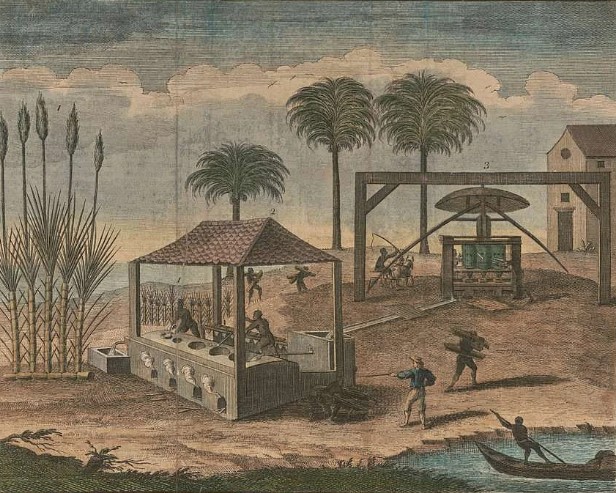
The Portuguese were able to tap into the existing African slave market to secure the labor needed for sugar planting and production in the Atlantic Islands. This move intensified the existing slave trade. Thorton explains that “Slaves from central Africa were so numerous that they soon exceeded the capacity of São Tomé and the Mina trade to absorb them, and so they began the long journey to European markets.” With the establishment of the plantation complex in Brazil and in the Caribbean, a new economic demand would further drive the demand for enslaved African labor.
IN CLOSING
By 1492, Europe had gone through some major political, economic, and intellectual transformations. These transformations placed Europe in a position to begin the initiative of expanding into the Atlantic and to begin creating merchant empires. In closing, let us review three critical factors before moving on the early colonizing efforts in the Americas.
- Politically, Europe witnessed the rise of sovereign states. Rulers who headed these states encouraged the search for resources. These rulers created merchant empires.
- Economically, Europe experienced a commercial revolution that monetized it. In this economic environment, trade and the search for markets were crucial.
- Intellectually, Europe inherited Greek and Arabic knowledge that encouraged observation of the world, which provided the foundations for science, and that opened the door for exploration through technological innovation.
Our next topic will explore the early colonial efforts by the Portuguese and the Spanish and the impact it had on indigenous and African populations.
As always, be sure to contact me or visit me during office hours should you have any questions about the content we have covered or the assignments that you need to complete.
 World History Portal