LEARNING OBJECTIVES
By the time you complete this topic you should be able to do the following:
| Explain the role and function of the colonial Church. Explain the economic philosophy known as mercantilism and its relationship to colonial Latin America. Identify the characteristics that defined Brazil’s sugar and gold cycles. |
THE COLONIAL CHURCH
Initially, Charles I/V hoped to establish an episcopal hierarchy (religious hierarchy under the control of a bishop) in the Americas. However, the ineptitude of the secular clergy (clergy under the authority of a bishop) demonstrated during the Reformation made them a poor choice. What was the Reformation? The Reformation was a major religious movement in the 1500s that changed the way people practiced Christianity in Europe. It began when a German monk named Martin Luther challenged the Catholic Church by posting his 95 Theses, criticizing the sale of indulgences and church corruption. This led to the creation of new Christian groups, like Protestants, who broke away from the Catholic Church. The Reformation encouraged people to read the Bible for themselves, promoted education, and led to many changes in religion, politics, and society across Europe.
The Reformation in Europe had demonstrated how unprepared secular clergy were for such a challenge. Many members of the secular clergy could not even read Latin (the language of the Church) let alone defend the Church’s doctrine against those seeking to reform it.
Spain’s regular clergy (mendicant orders organized under a religious rule) were a different story. They had a history of conducting missionary activities and providing their members with a sound education as in the case of the Jesuits. Other regular clergy included the Franciscans, the Dominicans, and the Augustinians. It would be the regular clergy that led the Spiritual Conquest in the Spanish colonies.
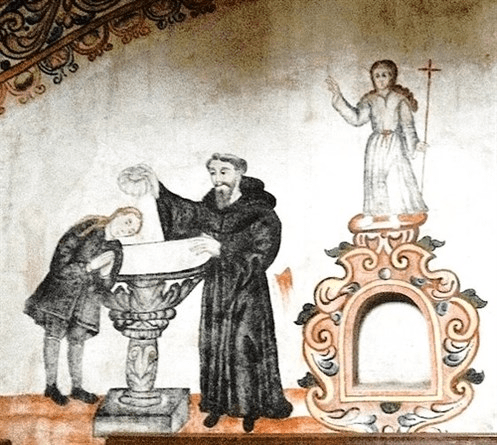
The Spiritual Conquest was the effort by Spanish missionaries to convert indigenous populations of the Americas to Christianity. While the military took control of the land, the missionaries, the regular clergy tried to change the beliefs and religious practices of indigenous communities.

The Spiritual Conquest was a powerful tool for Spanish control and deeply shaped the culture of Latin America establishing Roman Catholicism as the dominant religion in the Americas. While the regular clergy led the spiritual conquest, eventually an episcopal hierarchy was established in Spanish America whose presence would be felt in all facets of colonial society.
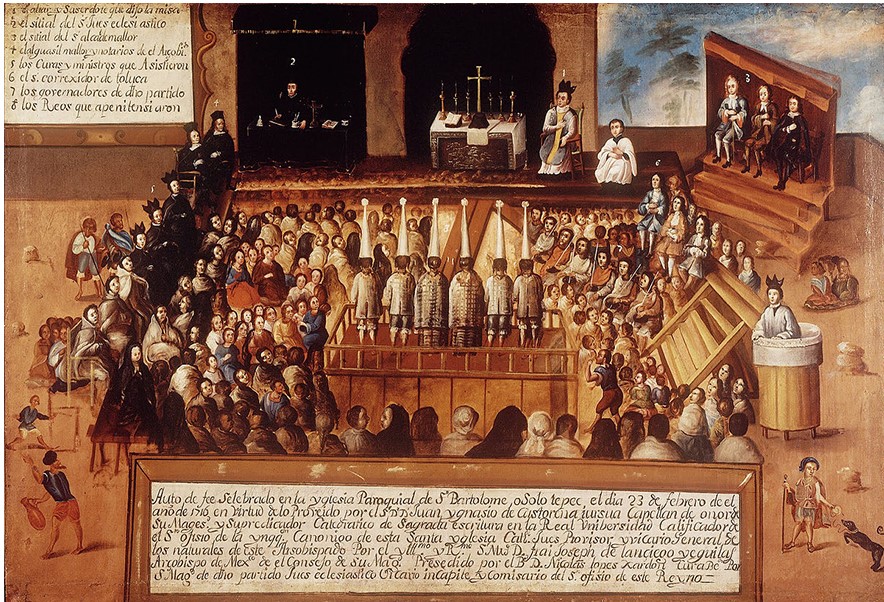
In 1571, the Holy Office of the Inquisition made its way to Spanish America. The Inquisition was a medieval institution established by the Papacy to combat heresy in Europe. Ferdinand and Isabel revived this institution in Spain in 1478. Emigrants to Latin America were rigorously screened to ensure that only Roman Catholics made their way to the Americas. However, by 1650 the Inquisition throughout Spanish America began to persecute other infractions of what was viewed as deviations from religious standards. For example, the Inquisition heard cases of bigamy, sorcery, and solicitation of sexual favors.
One of the main sources of finance in colonial society was the Roman Catholic Church. Over time, the colonial Church became one of the major landholders. In particular, the Jesuits established some of the most productive haciendas (landed estates) in this part of the Americas. Elite colonial families established close connections with the secular clergy by having family members pursue a clerical career. In the end, the Church became a powerful economic entity and primary banking entity. Below is a list of sources used by the colonial Church to amass its wealth.
- Diezmos: tithe/tax of one-tenth of agricultural production
- Primicias: tax on first harvest and first-born farm animals
- Fees for religious sacraments (baptism, marriage, funeral masses)
- Private and public donations
MERCANTILISM AND THE SPANISH COLONIAL ECONOMY
The organization of the colonial economy in Latin America focused on the principles of an economic philosophy called mercantilism. Mercantilism stressed that “a nation’s prosperity was linked to the accumulation of capital – and capital was often identified with precious metals.” This focus on precious metals is referred to as bullionism. In the early economic history of Latin America, the mining industry and its quest for bullionism determined the fortunes where precious metals were located. In others, it was crops such as sugar. In addition, mercantilist thought promoted the belief that every state should achieve economic independence. Goods imported into a home state should be raw materials where then they would be turned into finished products. Colonies served the purpose of providing raw materials and being a captive market. As on historian has notes, mercantilism “demanded that Latin America purchase all of its commodity imports from Spain and Portugal and that it sell its commodity exports (excluding specie) in the same market.” Spain and Portugal therefore imposed a trading monopoly and monopsony, a situation where there is one buyer, on their colonies. The vestiges of this model would have dire consequences on the economic development of post-independence Latin America.
Because of the emphasis placed on mining, areas of Spanish America that had large deposits of gold and silver immediately received the attention of the Spanish crown. These areas included New Spain, Upper Peru, Chile, and New Granada. These mines relied on “wage labor, but others continued to depend on the mita a form of forced labor that was designed to guarantee mine owners an adequate supply of (usually) indigenous labor.” Mining practices dramatically impacted the well-being of indigenous communities. The patio system (soil containing silver was piled in patios) required that mercury be mixed with dirt containing silver. The silver fused to the mercury and thus was extracted from the dirt. Laborers mixed the mercury with the dirt using their bare feet. Consequently, mercury poisoning, along with labor conditions, reduced the size of indigenous populations where silver mining was practiced. In addition, mercury used in mining contaminated water supplies and land.
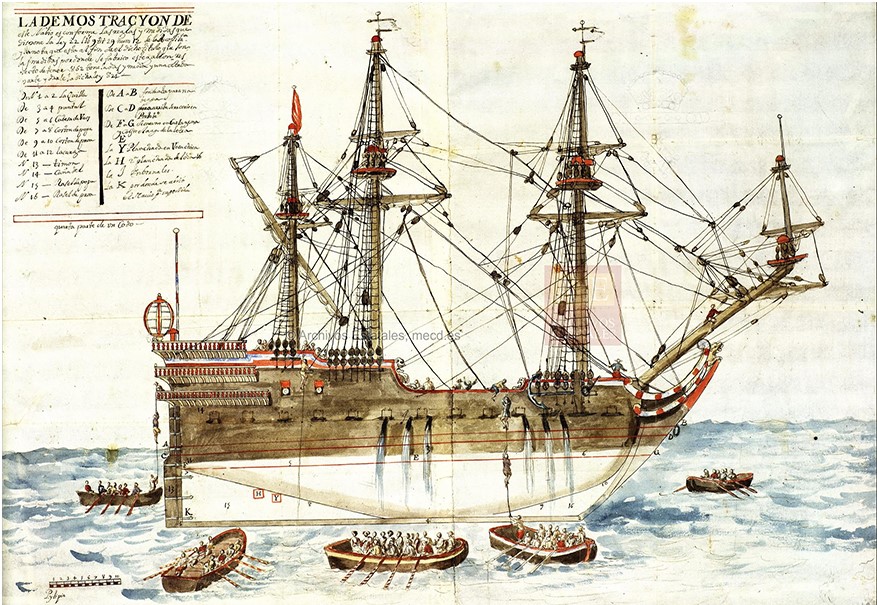
1691. Galleons such as this one carried trade between Spain and its colonies.
With time, commodity exports from Spanish America increased in importance and became more diversified. For example, we see agricultural exports expanding and linked to intraregional (trade within Spanish America) and extraregional trade (trade with Spain). The vast majority of production activities was controlled by the colonial private sector although there were some state monopolies as in the case of tobacco production and export.
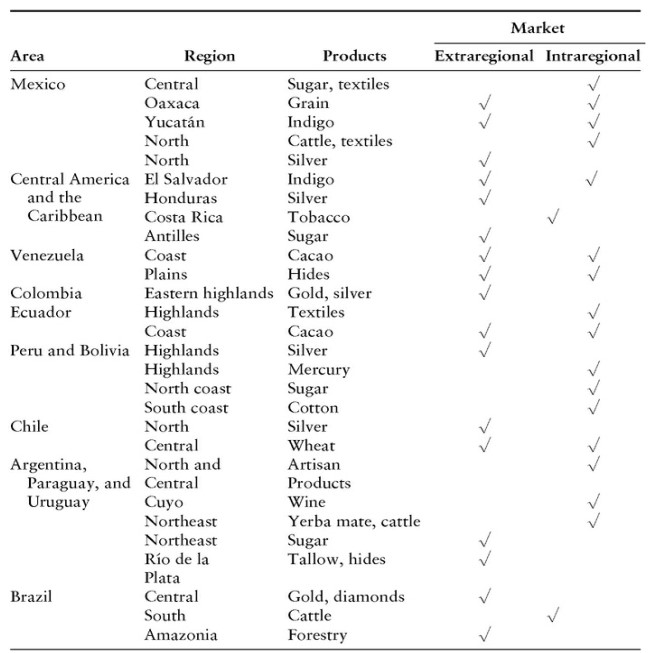
Early Spanish-indigenous labor relations was established through encomienda. In addition to encomienda, the Spanish also implemented repartimiento, a form of labor draft primarily focused on Mexico. In South America, mita, another form of labor draft that originated in the Empire of the Inca, replaced encomienda in this part of Spanish America. As already noted, in plantations slave labor was dominant. Over time the labor market would include free wage labor. However, the reality was that labor practices continued to use coercion. In plantations slave labor was retained and in areas where free wage labor could grow, it was halted with debt peonage.
THE COLUMBIAN EXCHANGE
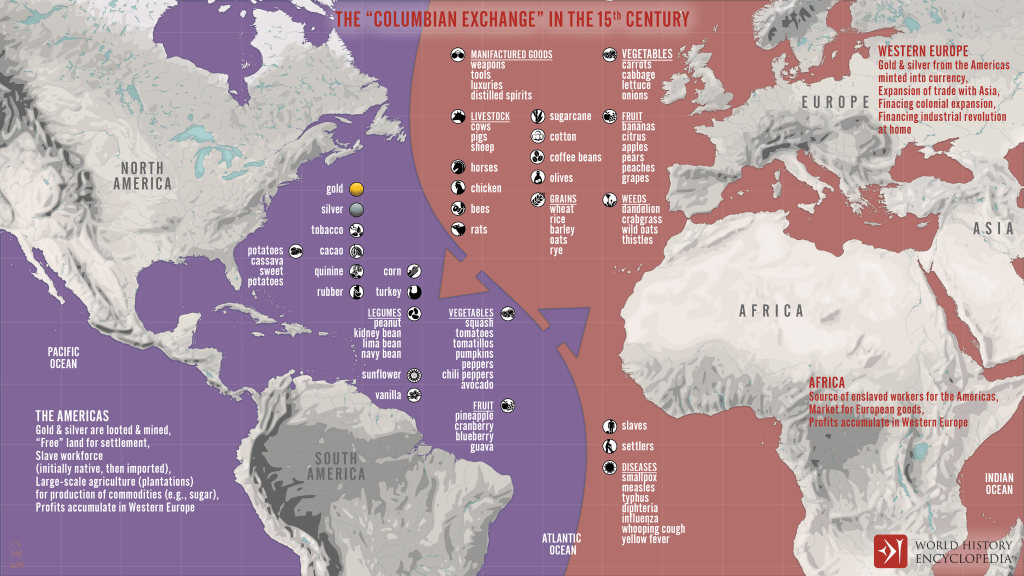
The Columbian Exchange refers to the “exchange of diseases, ideas, food e Columbian Exchange refers to the exchange of diseases, ideas, food crops, and populations between the New World and the Old World.” Old World diseases would have a dramatic impact on the populations of the Americas. Smallpox, beginning in the Caribbean and later spreading to Mexico, was one disease that greatly reduced the indigenous population.

The introduction of domesticated animals to Mexico and mining practices also had an ecological impact on the land. The grazing pattern of sheep, for example, turned grassland into dust bowls.
A food exchange was established between Mexico and Europe. The Spanish introduced to Mexico sugarcane, wheat, and citrus fruits. Europeans, in return, were introduced to corn, tomatoes, squashes, turkey, avocados, etc . . .
THE SUGAR CYCLE IN BRAZIL
As previously noted, sugar was the nucleus of colonial society in Portuguese America. It replaced brazilwood harvesting as the economic focus of Brazil between 1530-1540. Pernambuco and Bahia in this new sugar focused economy became the primary centers of sugar production. This is attributed primarily to two reasons:
- High-quality topsoil and an adequate supply of rain in both of these captaincies
- Both were close to European importing centers
In this world of sugar production plantation owners exerted economic, social, and political power in world that was divided into two extremes, masters and slaves. Colonial Brazil’s second most important export would be tobacco. The growth and harvesting of this commodity focused in the Bahian Recôncavo. In addition, the cattle industry would also be established, particularly in the mining regions.

The upper stratum of colonial society in Brazil was dominated by plantation owners. Father Antonil’s Cultura e opuléncia do Brasil por suas drogas e minas, wrote the following about abut the prestige associated with being a plantation owner in the 18th century:
. . . plantation owner is the title to which many aspire because it brings with it the idea of being served and respected by many people. And…being a plantation owner in Brazil is as esteemed as the titles of nobility are esteemed in Portugal.
As with Spanish America, purity of blood was also used in colonial Brazil as a criterion for the ordering of society. Those who were labeled as having impure blood were “New Christians, free blacks, and, to an extent, Indians and different types of racially mixed people.” Like in Spanish America, this division of society also created “a special nomenclature for racial mixtures. For example, mulattos were of European and African mixture, mamelucos were mixtures of indigenous and European and cafusos were mixtures of indigenous and African.

The presence of African slaves and their descendants has been highlighted by historians through quantitative analysis of social and economic records. The data has shown the following for the four largest provinces in colonial Brazil:
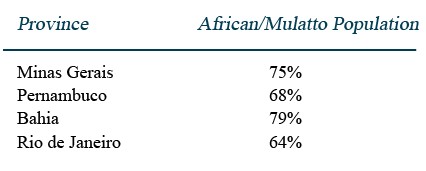
African slaves also experienced different gradations depending on their occupation. For example, slaves who worked in the plantation owner’s home were usually ladinos and held a higher status than slaves that worked the sugar fields. The data also shows that there was a high percentage of manumitted Africans and their descendants. Historians have calculated that by the end of the 18th century close to 42% of Africans and mulattos were free. However, this should be qualified. Why? As one historian has observed, “their freedom was ambiguous . . . while they were formally considered free, in practice they ended up being arbitrarily enslaved, especially when their color or their features identified them as black . . . . [and] . . . They could not be members of town councils or of prestigious lay brotherhoods like the Ordem Terceira de São Francisco.” Also, at any point an ex-slave’s liberty could be rescinded if they were caught in any acts or behaviors deemed disrespectful or dangerous.
The social dynamics of the periphery in Brazil differed from the center. In the interior of Brazil indigenous people were enslaved with the intent being transported and sold intraregionally. Many of the slave raids in the interior were led by the Paulistas (inhabitants of São Paulo) who through a system called the bandeira or flag expeditions. Paulistas spent months and sometimes years enslaving indigenous people and/or searching for precious metals. French in this region around 1612 was the impetus to begin colonization into the interior of Brazil by the Portuguese monarchy. However, it was the discovery of gold in the interior that would promote the settlement of this region of colonial Brazil. In 1695, gold was discovered in the Velhas River in Minas Gerais.
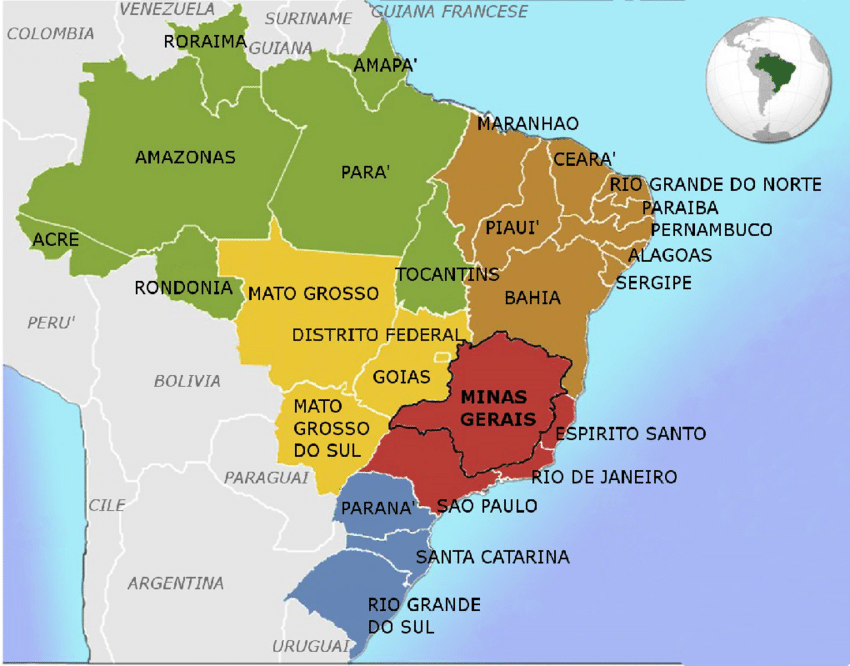
Gold would also be uncovered in Bahia, Goiás, and Mato Grosso. This initiated what is known as the Gold Cycle in colonial Brazil and it would supplant the Sugar Cycle as the key export. The implications of the gold cycle for colonization would be dramatic. Mining of precious metals had important effects in both in Lisbon and in Brazil. During the first half of the 18th century close to 600,000 immigrants arrived in Brazil from Portugal as a result of the discovery of gold.
IN CLOSING
Our next topic will explore the factors that moved colonial Spanish America and colonial Brazil to seek independence.
As always, be sure to contact me or visit me during office hours should you have any questions about the content we have covered or the assignments that you need to complete.
 World History Portal
