LEARNING OBJECTIVES
By the time you complete this topic you should be able to do the following:
| Explain the impact the 17th Century Crisis and the rise of the Bourbons had on the Spanish Empire. Explain the factors that drove Spanish America towards the quest for independence. Explain how Brazil’s quest for independence differed than that of Spanish America. |
THE AGE OF DEMOCRATIC REVOLUTIONS
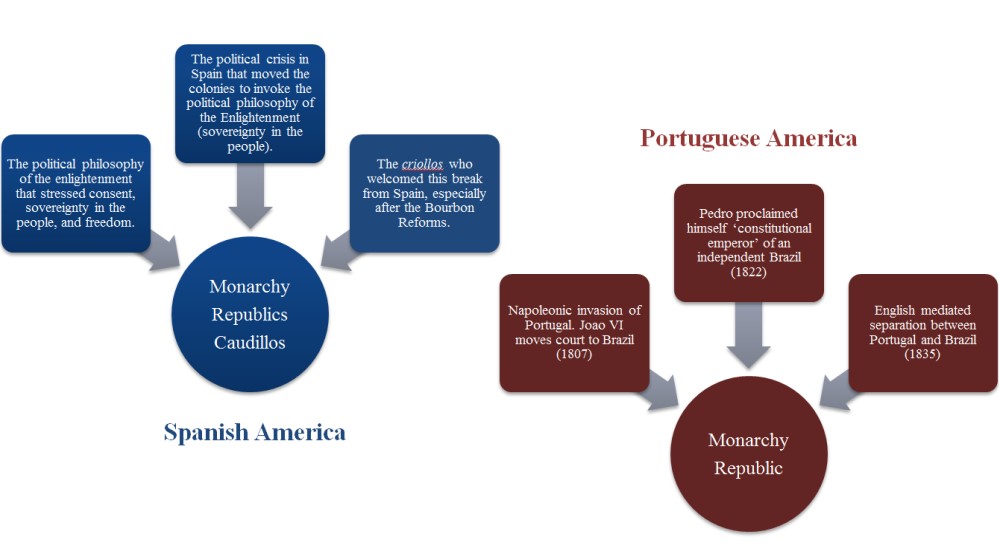
In 1959, R.R. Palmer published The Age of Democratic Revolution, a groundbreaking work in which he argued that from 1760 to 1800, the Western world experienced what he called a “great revolutionary era.” Palmer contended that many Western countries shared similar political ideas, which led to comparable conflicts and upheavals. Latin America was no exception. This raises an important question: what factors during this period fueled these revolutions, and, specifically in Latin America, the quest for independence?
For the Americas, two pivotal independence movements stand out as examples for the region: the American Revolution and, even earlier, the Haitian Revolution. In this discussion, we will explore some of the key causes behind Latin America’s independence movements and examine how independence diverged between Spanish-controlled and Portuguese-controlled territories. Before we proceed, take a moment to review the chart below for an overview of the causes and outcomes of these movements.
THE 17TH CENTURY CRISIS
What fueled the search for independence in Spanish America? According to 18th-century economist Manuel Belgrano, it was tyrants who “would restrain a man, wherever he might be, from enjoying the rights with which God and nature had endowed him.” To understand what Belgrano was referencing, we must first examine 17th-century Europe. During this time, the Habsburg monarchy loosened its grip on its American empire, a change driven by the instability sweeping across Europe. This instability, known as the 17th Century Crisis, manifested itself through widespread rebellions and economic decline.
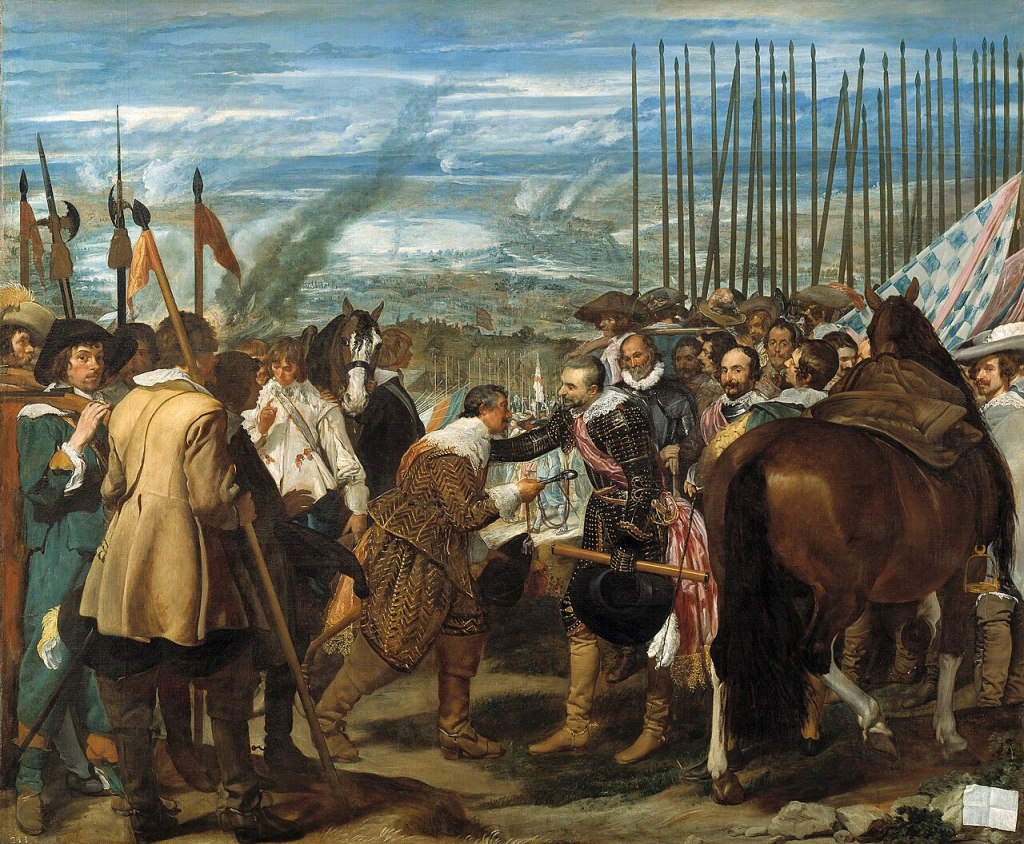
In Spain, the crisis took the form of a series of wars and uprisings, such as conflicts with the United Provinces of the Netherlands and Portugal. These events forced the Spanish monarchy to redirect its attention from its colonies to the chaos unfolding in Europe. As a result, the Spanish colonies were left with minimal oversight and no centralized economic policies. This neglect effectively allowed the colonies a degree of autonomy, enabling them to govern themselves and operate with an unusual level of freedom—a precursor to the growing desire for independence.
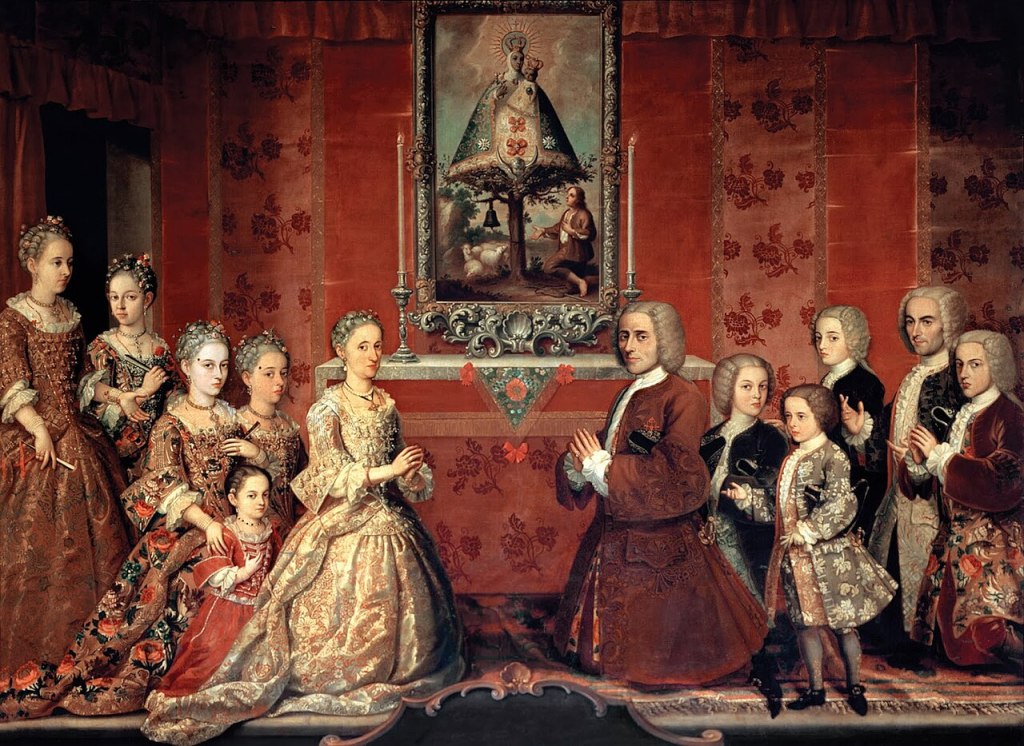
This period of distress also coincided with the rise of the criollos (American-born Spaniards) in Spanish America. By 1646, for example, New Spain (modern-day Mexico) had a population of 13,800 peninsulares (Spain-born Spaniards) compared to 169,000 criollos. Taking advantage of the Spanish monarchy’s struggles in Europe, criollos began advancing in colonial office-holding by purchasing these positions. Desperately in need of funds to address its crises, the Spanish monarchy broke its long-standing policy of reserving colonial offices for peninsulares and instead sold these posts to the highest bidders—including criollos.
Historically, the Habsburg dynasty ruling Spain had excluded criollos from important offices in the Americas to ensure loyalty to the crown. However, the monarchy’s financial difficulties during the 17th Century Crisis forced it to prioritize funding over loyalty. By 1687, criollos had even infiltrated the legal system, purchasing positions in audiencias (colonial courts). This shift in power marked a significant weakening of Spain’s traditional hold over its colonies and planted seeds for the eventual push for independence.
THE BOURBON DYNASTY
Political matters continued to worsen for Spain as the 18th century began. In 1700, Charles II (r. 1665–1700) died without a natural heir to succeed him on the Spanish throne, plunging Europe into a conflict known as the War of the Spanish Succession (1701–1714). Rival claimants vied for control of the vast Spanish Empire, sparking a struggle that involved much of the continent. Among the leading contenders was Philip V of France, the grandson of Louis XIV of France and Maria Teresa, daughter of Philip IV (r. 1621–1665) of Spain.
The war, which pitted France and its allies against a coalition of European powers, ended with the Treaty of Utrecht in 1713. This treaty not only resolved the succession dispute but also marked a turning point for Spain’s empire and its influence in Europe.
- It recognized Philip V (1714-1746) as king of Spain.
- It required the separation of the Spanish and French crowns.
- Finally, it initiates the Bourbon rule in Spain.
After Spain came under the control of the Bourbon dynasty, a series of reforms were introduced to centralize and strengthen the Spanish colonial system. Known as the Bourbon Reforms, these measures aimed to protect the Spanish Empire from foreign powers and to revitalize trade between Spain and its American colonies. By tightening administrative control and reorganizing economic policies, the Bourbons sought to restore Spain’s dominance and profitability in the face of growing global competition.
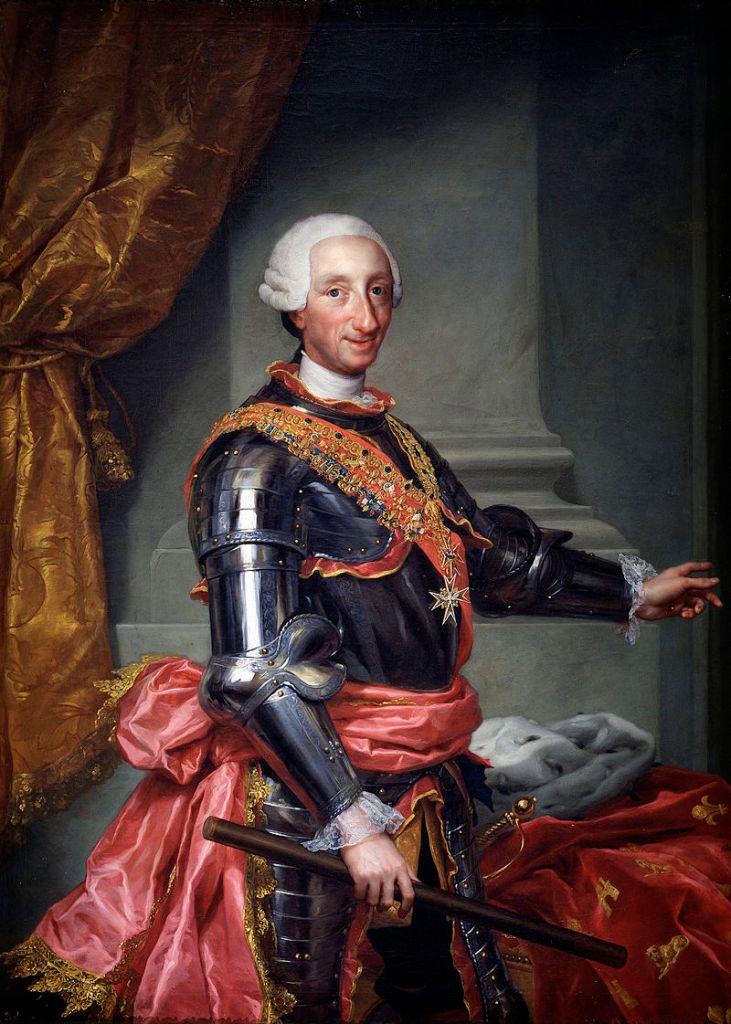
It was Charles III (r. 1759–1788) who spearheaded a sweeping socio-economic and political reform agenda commonly known as the Bourbon Reforms. At this time, Spain’s colonies were critically important to the Spanish Empire, a point emphasized by Montesquieu in The Spirit of the Laws (1748). He observed, “The Indies and Spain are two powers under the same master; but the Indies are principal, while Spain is only secondary.” This sentiment reflected the colonies’ immense economic and strategic value to Spain.
José de Gálvez, who served as Minister of the Indies from 1776 to 1787, became the key architect and executor of Charles III’s reform program. Gálvez warned the Spanish Crown about the growing threats to its American possessions, writing, “Spanish America each day is more exposed to the insatiable ambition of certain European powers . . . England especially aspires to dominate the entire commerce of both hemispheres.” His mission was to counter these threats and preserve Spain’s colonial dominance at all costs.
However, the Bourbon Reforms were not universally welcomed. Critics argued that the changes disrupted colonial society and governance. An anonymous letter bitterly noted, “Gálvez has destroyed more than he has built,” and ominously warned that his policies were laying the groundwork for “the greatest revolution in the American Empire.”
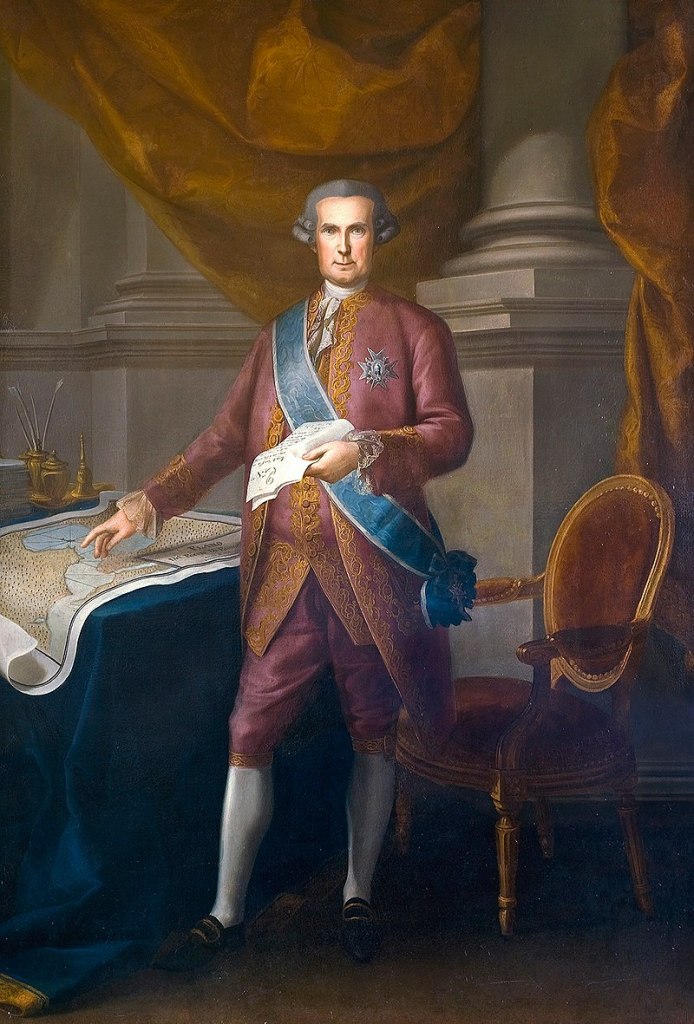
The Intendancy System, one of the key Bourbon reforms, was introduced to strengthen defense and improve revenue collection in the Spanish colonies. Intendancies were administrative sub-units overseen by salaried bureaucrats sent from Spain (peninsulares), who held authority over justice, administration, finance, and defense. This system aimed to reverse the long-standing practice of selling colonial offices to criollos and to reassert control by replacing criollo leadership with peninsulares.
Another significant reform was Comercio Libre, designed to stimulate colonial trade. In practice, however, it angered the local population. Comercio Libre introduced a limited liberalization of colonial trade by breaking the monopoly of Cadiz, the Spanish port city that had historically controlled commerce with the Americas. This reform allowed other Spanish ports to trade directly with the colonies, effectively undermining the old trade networks and monopolies dominated by wealthy criollo families. Additionally, it opened colonial markets to cheaper goods from Spain, further disrupting established economic systems and sparking resentment among local elites who had previously benefited from the old order.
THE ENLIGHTENMENT
Enlightenment ideas began to permeate the colonial system as books were circulated and ideas debated in societies and universities across Spanish America. The Enlightenment not only provided an intellectual foundation for the independence movements against Spain but also profoundly shaped the political trajectory of Latin America in the 19th century, as liberals and conservatives vied for control of the region’s future.
What was the Enlightenment? It was an intellectual movement that began in England and flourished in France, profoundly influenced by the Scientific Revolution. The Enlightenment sought to contrast the “irrationality” of the Middle Ages with reason, promoting critical thinking, individual rights, and the rejection of absolute authority—whether political or religious. These ideas resonated deeply with colonial elites, helping to inspire revolutionary aspirations and a vision of governance rooted in liberty and progress.
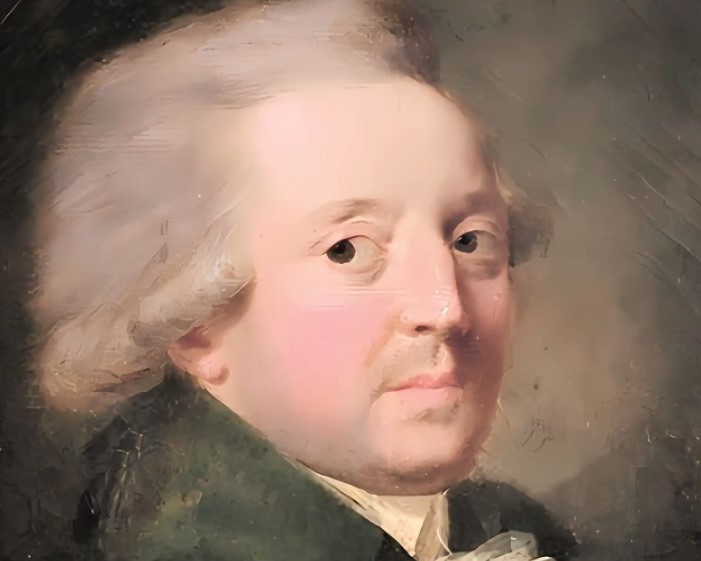
Marie-Jean-Antoine-Nicolas Caritat, Marquis de Condorcet, captured key Enlightenment doctrines in his work The Progress of the Human Mind. He wrote, “Our hopes for the future condition of the human race can be subsumed under three important heads: the abolition of inequality between nations, the progress of equality within each nation, and the true perfection of mankind.” These ideas reflected the core values of the Enlightenment, emphasizing human progress, reason, and equality as guiding principles for the betterment of society.
In addition to Condorcet’s vision, other key doctrines of the Enlightenment included:
- “Man” is by nature rational, and reason enables “man” to behave correctly.
- “Man” can progress thus questioning the view that “this is the best of all possible worlds.”
- “Men” are equal and therefore should have individual liberty and should be equal before the law.
- “Beliefs are to be accepted on the basis of reason.”
Many Enlightenment philosophers were profoundly influenced by the writings of John Locke (1632–1704), often regarded as the founding thinker of liberalism, particularly with regard to civil and political rights. Locke argued that humans in a “state of nature”—a pre-political condition—were reasonable beings who lived in a state of perfect freedom. In this state, humans possessed certain inherent natural rights. According to Locke, the reason humans left the state of nature and formed governments was to create a system that could better protect and enforce these rights.
However, Locke also insisted that when a government failed to safeguard these natural rights, it became not only the right but the duty of the people to remove or overthrow it. This radical argument directly challenged the prevailing patriarchal and divine right theories, which justified the rule of monarchs as being ordained by God.
So, what were these natural rights according to Locke? His Two Treatises of Government (1690) provides the answer. Locke wrote: “The state of Nature has a law of Nature to govern it, which obliges every one, and reason, which is that law, teaches all mankind who will but consult it, that being all equal and independent, no one ought to harm another in his life, health, liberty or possessions . . . .” This concept of life, liberty, and property became foundational to Enlightenment thought and would later inspire revolutionary movements across the globe.
With the implementation of the Bourbon Reforms, many criollos argued that the regulations imposed by these political and economic initiatives violated their natural rights. In Spanish America, the Sociedades Económicas de Amigos del País (c. 1780s–1812) strongly denounced these policies, often invoking Lockean and Enlightenment thought in their critiques. For instance, Juan Pablo Viscardo y Guzmán (1748–1798), in his Carta Dirigida a los Españoles Americanos, used Lockean political language to challenge the legitimacy of the Bourbon monarchy and its reforms. For many, the monarchy’s governance was seen as ignoring “the unalienable rights of man.”
Through the writings of John Locke and the principles of the Enlightenment, criollos gained the intellectual tools to undermine the prevailing political philosophy of the time: the divine right of kings. They now had a framework to question whether this doctrine truly held legitimate authority over the people it governed. This is an important point to consider when reconnecting to the broader Age of Democratic Revolution. These revolutions occurred during this specific moment across the Atlantic world because Enlightenment ideas were being adapted to the unique needs and circumstances of each region. The political philosophy of the Enlightenment reached its apex during this era, inspiring transformative events such as the American Revolution, the Haitian Revolution, the French Revolution, and the independence movements in Latin America.
Antonio Joaquín de Rivadeneira y Barrientos (1710–1777), born in Mexico City, was one of the most eloquent critics of the policies imposed by the Bourbon monarchy. In 1771, Rivadeneira defended criollo talent and their right to hold high office after the Spanish Crown received an unsigned letter disparaging the capabilities of American-born Spaniards. The letter claimed, “The spirit of the Americans is submissive and compliant, because it relates well to their humbleness. But if they are raised to power or office, they are exposed to the greatest errors, so that it is best to keep them subject, albeit with places of the middle rank. Neither humanity nor my heart proposes that they should be seen as deprived of favour, but experience teaches me that it is best that our Europeans be placed at the head . . . .”
In contrast, Rivadeneira passionately argued for the rights of criollos to govern, stating, “. . . the appointment of natives to the exclusion of foreigners is a maxim derived from the natural reason which governs the hearts. If we cannot class it as a natural right, it is beyond doubt common to all nations and because of this warrants the most sacred observance . . . . they come to govern a people they do not know, to administer laws they have not studied, to encounter customs with which they are not familiar, and to deal with people they have never seen before.”
Rivadeneira’s writings embodied many of the principles espoused by Enlightenment thinkers, particularly in their emphasis on reason, justice, and the natural rights of individuals. His arguments highlighted the disconnect between the Spanish monarchy’s policies and the realities of colonial governance, advocating for the inclusion of criollos in leadership as both logical and just.
THE FRENCH INCURSION
Throughout the 18th century, France faced relentless challenges, including constant wars, widespread crop failures, and growing tensions within its estate system. The financial burden of the nation fell almost entirely on the shoulders of the Third Estate (the common people), while the First Estate (clergy) and the Second Estate (nobility) enjoyed privileges, including exemption from paying taxes. This glaring inequality created widespread resentment and highlighted the structural flaws in French society.
King Louis XVI’s inability to address these mounting crises and implement meaningful reforms ultimately led to the outbreak of the French Revolution. What began as a demand for economic relief and political representation escalated into a radical transformation of French society. By 1793, the revolution had reached its most extreme phase with the execution of Louis XVI, marking the overthrow of absolute monarchy and the dawn of a turbulent new era.

One year after the execution of King Louis XVI, the newly established French Republic abolished slavery in its colonies, a radical move that deeply unsettled the existing social and political order. The language and ideas of the Revolution—centered on liberty, equality, and fraternity—posed a direct challenge to the status quo, inspiring both hope and fear across France and its territories. However, the Revolution’s increasingly violent turn of events, marked by the Reign of Terror, destabilized the nation and created the conditions for a new leader to rise.
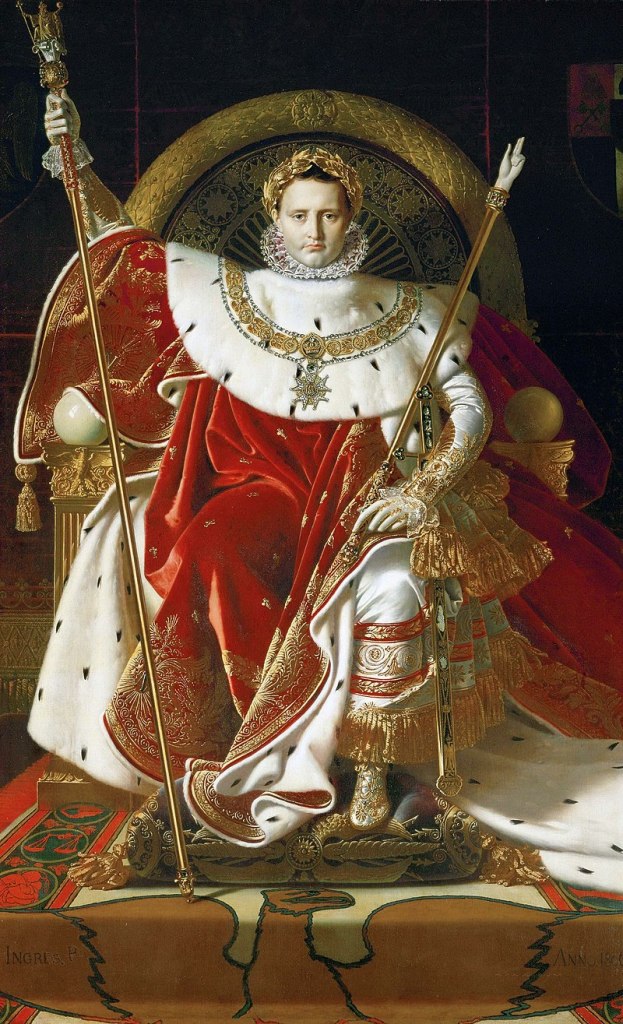
In 1799, Napoleon Bonaparte capitalized on the chaos, establishing himself as the head of the French state through a coup d’état. By 1804, he consolidated his power further and was crowned emperor, signaling both the end of the revolutionary republic and the beginning of a new imperial era.
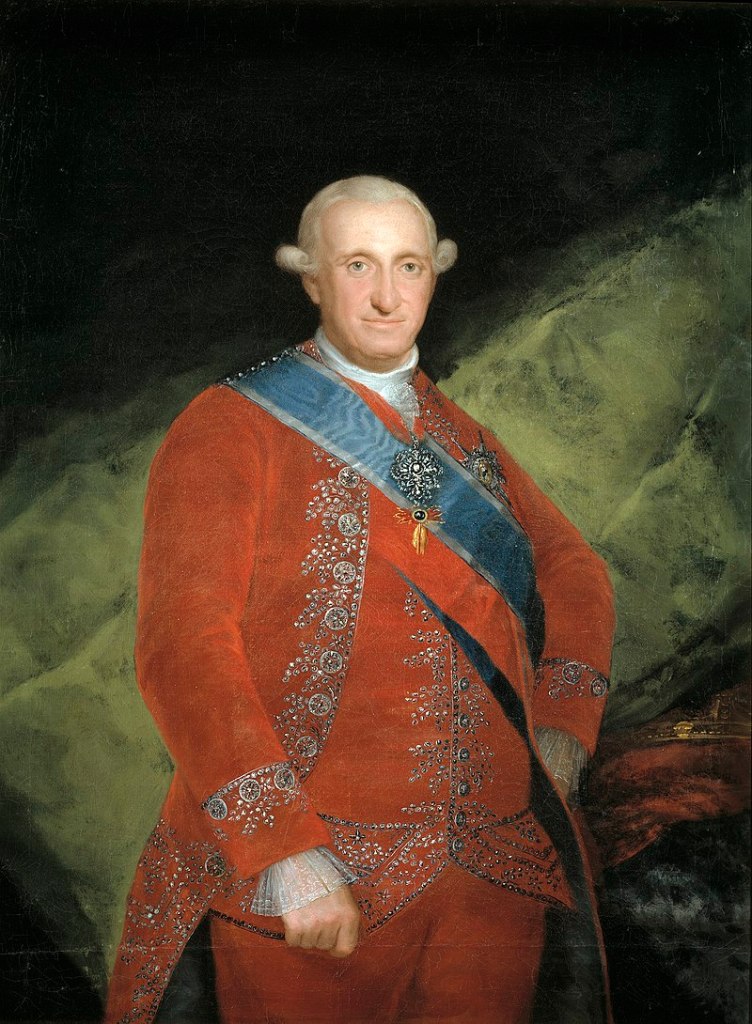
During the turbulence of the French Revolution, Spain was ruled by Charles IV (1788–1808), a notoriously ineffective monarch. In 1808, he was forced to abdicate in favor of his son, Ferdinand VII (1808–1833). Facing financial pressures from ongoing wars with France, Charles IV issued the Law of Consolidation in 1798 to raise additional revenue. This law, which was extended to Spanish America in 1804, became particularly impactful after Spain’s defeat in its war against France and its reluctant alliance with Napoleon.
The Law of Consolidation disrupted the economic foundation of Spanish America by targeting the Church, the largest banking institution in the region. The law allowed authorities to seize Church lands and assets, selling them to raise funds for the Spanish Crown. Since the Church played a central role in providing loans and credit, this policy undermined the colonial economy. Many individuals, including criollos, who had financed land purchases with loans from the Church, were left financially devastated. The widespread loss of land and economic security caused by the law fueled resentment among criollos, further deepening the divide between them and the Spanish Crown.
Political matters continued to deteriorate for Spain and its empire. In 1808, Napoleon forced the abdication of the Bourbon monarchy, installing his brother, Joseph Bonaparte (1768–1844), as the new king of Spain. This move created a political crisis that rippled across the Spanish Empire, as questions of legitimacy and governance arose. In the Americas, this crisis accelerated the search for autonomy.
For example, Mexico’s City Council invoked the doctrine of natural law to address the political vacuum created by Napoleon’s actions. In a resolution approved in 1808, the Council asserted, “. . . in the absence during the impediment [of the king], sovereignty lies represented in all the kingdom and classes that form it; and more particularly in those superior tribunals that govern and administer justice . . .” This declaration reflected a growing sense of local sovereignty and challenged the traditional authority of the Spanish Crown, setting the stage for the independence movements to come.
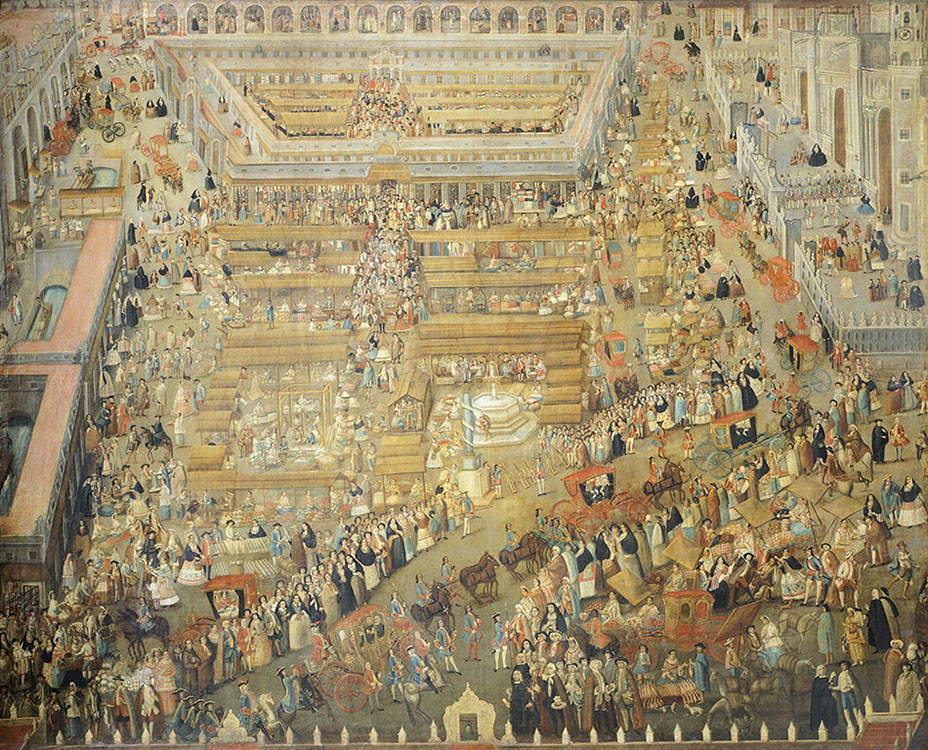
It was now only a matter of time before a full-fledged independence movement emerged in Spanish America. Revolution, you might say, was already in the air. It had ignited in North America with the American Revolution in 1776, swept through France in 1789, and roared to life in Haiti in 1791. The ideas and momentum of these transformative events were now poised to take hold in Spanish America, where the seeds of revolution had already been planted and were waiting to erupt.
A DIFFERENT ROAD: THE INDEPENDENCE OF BRAZIL
Brazil, like Spanish America, was deeply influenced by the ideas and events of Europe, particularly during the Age of Revolutions. While Enlightenment ideals inspired many in Brazil, the dominant class—the sugar planters—had little reason to challenge their colonial status. Economically and politically, they were largely satisfied with their circumstances under Portuguese rule. This contentment stemmed from two key factors:
- The colonial upper echelon was allowed access to local political power as they dominated the câmaras, or municipal county councils
- The Portuguese monarchy did not restrict commerce as severely as did the Spanish monarch since European continent was the major market for sugar
Brazil’s independence “was not to come from a revolutionary break with the motherland, but from a process which occasioned a few changes from and much continuity with the colonial period.” The path to Brazilian independence began with the dramatic transfer of the Portuguese royal family to Brazil. Why did this occur? Napoleon’s export of revolution encountered significant resistance from Britain, whose naval power remained a major obstacle. In response, Napoleon imposed a commercial blockade—known as the Continental System—to cut Britain off from European markets. Portugal, however, remained a weak link in this blockade due to its historically strong trading relationship with Britain, a relationship Napoleon was determined to sever.
Using Spain as a launching point, French troops invaded Portugal in 1807, forcing Prince Regent Dom João VI (r. 1816–1825) to flee. To safeguard the monarchy and its governance, João transferred the entire Portuguese royal court to Brazil. Escorted by a British fleet, approximately 10,000 to 15,000 people, including Portugal’s bureaucratic apparatus—ministers, counselors, Supreme Court justices, Treasury officials, military officers, and high-ranking clergy—set sail for Brazil. On this monumental journey, they carried with them the royal treasury, governmental archives, a printing press, and several libraries. These materials would later form the foundation of the National Library in Rio de Janeiro, symbolizing Brazil’s emerging prominence as the seat of the Portuguese Empire.
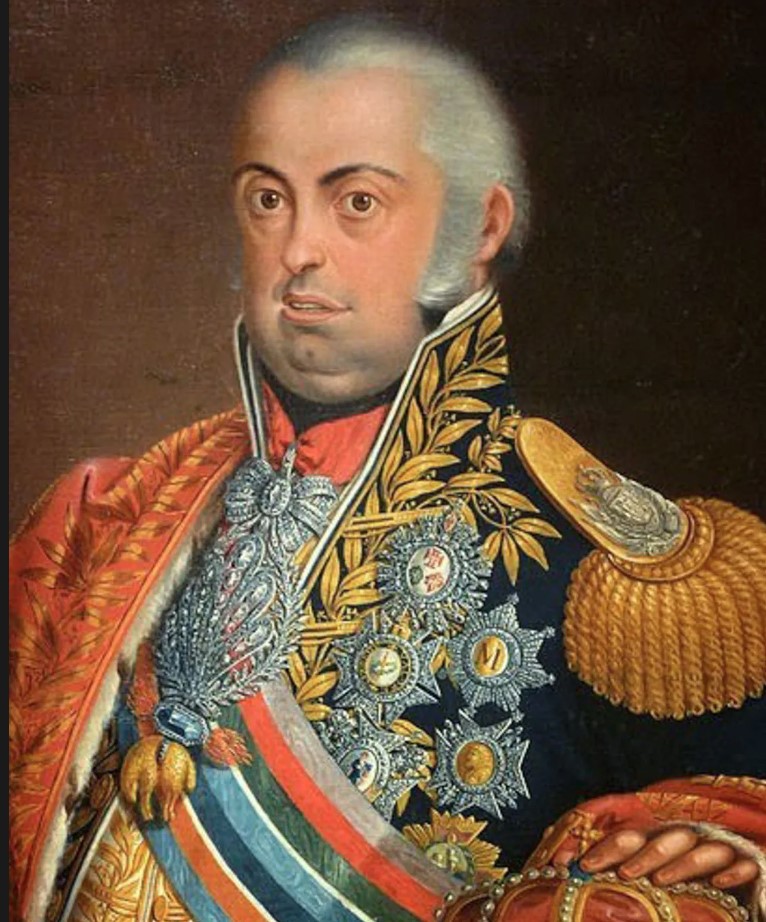
Shortly after he arrived in Brazil, Dom João instituted a series of changes that in essence put an end to Brazil as a colony:
- He opened Brazil’s ports to friendly nations – Great Britain
- He revoked decrees that prohibited setting up factories in Brazil
- He exempted from tariffs those raw materials imported for industrial purposes
- He offered subsidies to the wool, silk, and iron industries
- He encouraged the invention and introduction of new machinery.
Great Britain emerged as the chief beneficiary of Brazil’s changed status during this period, as it became “the port of entry for British manufactured products—not only for Brazil, but also for the River Plate region and the Pacific coast of South America.” The opening of Brazilian ports to foreign trade, a policy implemented after the arrival of Dom João VI, significantly altered Brazil’s economic landscape. As one historian explains, “the opening of the ports also favored rural landowners growing export crops, mainly sugar and cotton . . . [it] freed them from the metropolis’s commercial monopoly; they would be able to sell to whomever they pleased, with no more restrictions imposed on them by the colonial system.” This shift not only benefited British traders but also empowered Brazilian landowners by granting them greater economic independence.
The relocation of Dom João and the Portuguese royal court to Brazil further transformed the colony’s identity. Historians argue that this move, which made Brazil the seat of imperial rule, “eroded the localistic loyalties within each province, creating for the first time a sense among many of their Brazilianness.” This growing sense of national identity marked a crucial step toward eventual independence.
However, with the end of the Napoleonic Wars, Dom João returned to Portugal in 1821, fearing he might lose his crown if he remained in Brazil. His departure left a power vacuum and set the stage for the subsequent struggles that would culminate in Brazil’s independence.
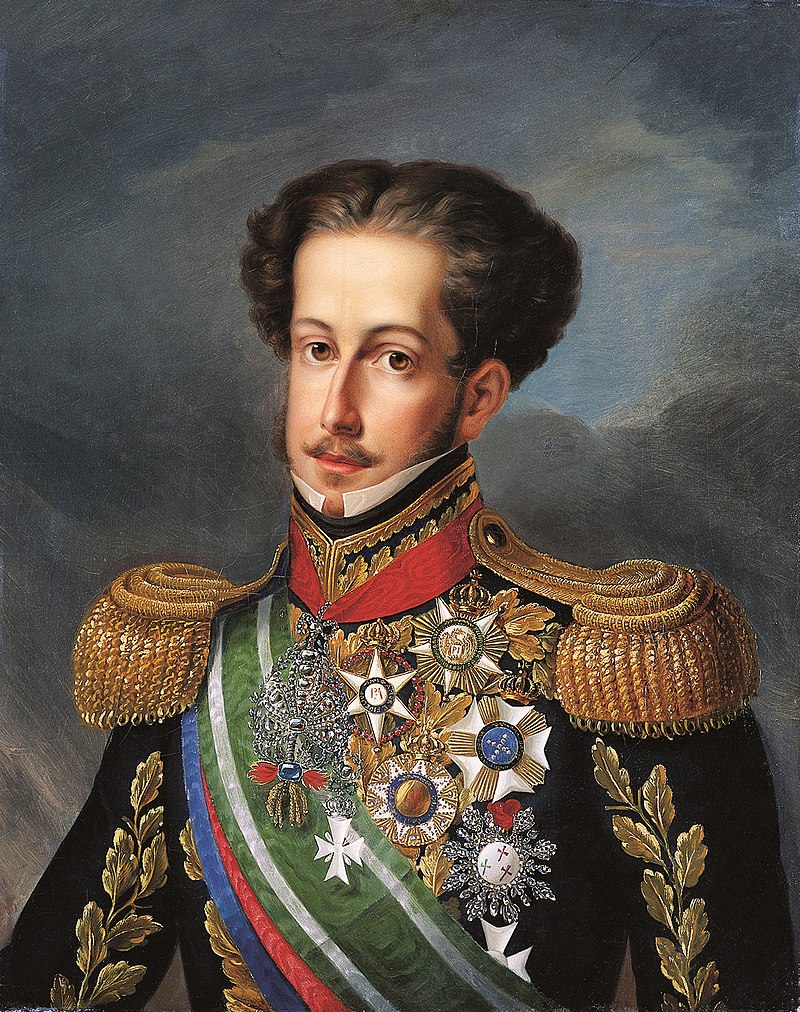
In 1821, Dom João VI set sail for Portugal but left his son, Pedro, as prince regent in Brazil. This decision would prove pivotal for Brazil’s future. Dom Pedro would eventually become Dom Pedro I, the first emperor of Brazil. After Dom João’s return to Portugal, the Cortes (the Portuguese parliament) sought to reinstate Brazil’s colonial status, undoing the autonomy it had enjoyed during the royal court’s stay. The Cortes repeatedly summoned Dom Pedro to return to Portugal, but the prince regent steadfastly refused.
Finally, in 1822, Dom Pedro I made his decision permanent, declaring his refusal to return to Portugal. Father Belchior Pinheira de Oliveira, a close confidant of Dom Pedro, described the momentous decision:
Father Belchior, they asked for it and they will get it. The Côrtes is persecuting me and calling me an adolescent and a Brazilian. Well, now let them see their adolescent in action. From today on our relations with them are finished. I want nothing more from the Portuguese government, and I proclaim Brazil forevermore separated from Portugal.
IN CLOSING
The quest for independence in Latin America was influenced by several factors, including the 17th Century Crisis, which saw the Spanish Habsburg monarchy’s weakened control over its colonies due to European conflicts and economic decline. This period allowed criollos (American-born Spaniards) to purchase colonial offices, increasing their influence. The rise of the Bourbon Dynasty in the 18th century led to reforms aimed at strengthening imperial control, which, combined with Enlightenment ideas and the examples of the American and Haitian revolutions, fueled the drive for independence. Notably, Brazil’s path to independence differed from Spanish America, as it was achieved with less conflict, largely due to the Portuguese royal family’s relocation to Brazil and the subsequent establishment of the Empire of Brazil under Dom Pedro I.
In out next topic we will explore the course independence took in different parts of Latin America.
 World History Portal