LEARNING OBJECTIVES
By the time you complete this topic you should be able to do the following:
| Trace the independence movements in Mexico and Venezuela. Explain the rise of caudillos in Latin America. Identify the impact of independence of enslaved African and indigenous populations. |
Many historians have argued that the colonial past is an unclosed chapter in the history of Latin American. Why? There was a certain amount of continuity between colonial socioeconomic and political structures and the structures of post-independence Latin America. Many contemporaries viewed this continuity as an impediment to progress and modernization. For example, class structures continued to interact within the boundaries of ethnic and racial criteria created during the colonial period. The Roman Catholic church continued to function as an institutional hub for education, social work, and politics. Women continued to negated rights in a patriarchal world. Today’s discussion will explore the independence of Latin America. Before we explore this facet of history, I first want to introduce you to some of the principles subscribed to by the two ideologies that would dominate post-independence Latin America politics, liberalism and conservatism. We will reference these ideologies throughout the remainder of the course.
Liberalism
- Ideas of citizenship was shaped by the social contract, constitutional government, and the will of the majority.
- In economic terms, individual initiative was promoted (capitalist spirit of entrepreneurship) and governments were facilitating free enterprise.
- In social terms, the drive was to establish an ordering of society to be founded on the legal equality of all individuals.
- Liberals strongly distrusted the Roman Catholic Church, which they thought infested by “superstition, ignorance, and empty ritual.”
Conservatism
- Conservatives supported a strong centralized executive, such as monarchy. They believed it was necessary to impose order.
- Conservatives sought to maintain the colonial status quo. Anything else was viewed as a social revolution.
- Conservatives allied themselves with the Church. The Church would serve in many cases and as extension of conservative ideals.
Given the magnitude and scope of independence movements, I will trace the course of independence in two regions of Latin America: Mexico and Venezuela.

INDEPENDENCE IN MEXICO
Recall that Spain’s political crisis under the rule of Joseph Bonaparte prompted New Spain to seek greater autonomy in the Americas. Amid these turbulent conditions, a revolt was initiated by Miguel Hidalgo y Costilla (1773–1811), the parish priest of Dolores, a town in the El Bajío region. Hidalgo had a distinguished academic background, having studied at the College of San Nicolás in Valladolid (modern-day Morelia). He was well-versed in Enlightenment thought, dedicating time to translating French texts and subscribing to Enlightenment ideals. Beyond his intellectual pursuits, Hidalgo was deeply engaged in various agricultural and industrial ventures, including the cultivation of vineyards, the production of tableware and bricks, and the raising of silkworms.
As a member of the provincial criollo elite, Hidalgo was aware of the political dominance exercised by peninsulares. He also experienced personal economic losses due to the Law of Consolidation, which seized church properties to support Spain’s finances. It is important to note, however, that not all members of the criollo elite supported Hidalgo’s movement. While many advocated for criollo dominance in New Spain, they feared that the mobilization of the masses could lead to social upheaval. What set Hidalgo’s movement apart was his innovative strategy of rallying support from mestizo and indigenous communities, forging a broader base for the cause of independence.
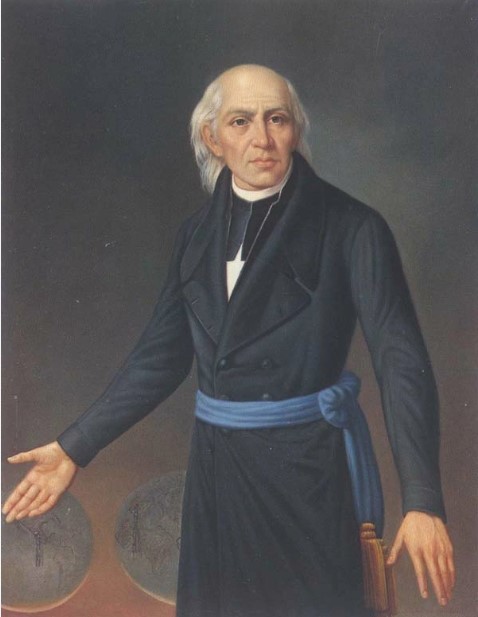
Alongside Captain Ignacio Allende and Councilman Juan de Aldama, Miguel Hidalgo y Costilla conspired to launch a rebellion aimed at establishing a criollo-led government in the absence of Ferdinand VII. Like many in New Spain, Hidalgo questioned the legitimacy of Joseph Bonaparte’s regime in Spain, which had been imposed following Napoleon’s intervention. For Hidalgo and his followers, securing independence from Spain entailed three key objectives:
- Increased home government which placed Mexican needs first having tax money stay in Mexico.
- Replacing Spanish condescension by celebrating of Mexico as a state rather than a colony.
- Greater criollo opportunity and promotion by removing peninsular economic, political and social preferment.
On September 16, 1810, after deliberating the night before with his followers, Hidalgo y Costilla decided to call for independence.
Although Miguel Hidalgo y Costilla achieved early success in leading the independence revolt, he was eventually captured in Monclova in 1811 by Governor Manuel Salcedo and subsequently executed. However, the quest for independence did not end with Hidalgo’s death. Leadership of the movement passed to José María Morelos y Pavón (1765–1815), another parish priest. While Morelos carried forward the cause, internal divisions continued to fracture the movement. Many criollos supported the idea of expelling Spanish rule but remained wary of the social transformations that might follow, particularly the empowerment of lower social classes. This tension persisted under Morelos’s leadership.
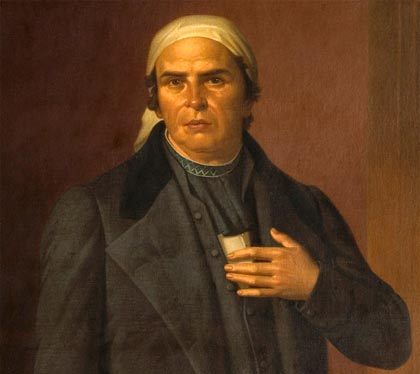
In 1813, Morelos laid siege to Mexico City and convened a constitutional convention in Chilpancingo, where he issued the “Sentiments of the Nation” (Sentimientos de la Nación), a declaration comprising twenty-three points. This document integrated liberal Enlightenment ideals—such as sovereignty of the people and equality before the law—with traditional religious and cultural values, marking a significant step in the ideological development of the Mexican independence movement. Below is a selection of these points:
- That America is free and independent of Spain, and of any other nation, government or monarchy . . .
- That the Catholic religion shall be the only one without tolerance of any other.
- That all ministers of the Church shall be supported entirely and only by tithes and primacias . . .
- That sovereignty springs directly from the people . . .
- That the legislative, executive, and judicial powers shall be divided into compatible bodies to exercise their respective powers.
- That only Americans, that is, those born in the Americas can hold public office.
- That the general laws apply to all, without an exception for privileged bodies [such as the clergy and the army], and that these shall exist only in so far as they are useful.
- That slavery be prohibited forever as well as any [legal] distinctions between classes, leaving everyone equal, and Americans shall be distinguished from one another only by their vice or virtue.
- That an end be put to the infinity of burdensome tributes, taxes, and fees, and that each individual be directed to pay five percent of his seeds or other earnings, or another similarly light charge .
General Calleja eventually broke Morelos y Pavón’s siege of Mexico City. In 1815, Morelos y Pavón was captured and executed.
The defeat of Napoleon at Waterloo in 1815 and the restoration of Ferdinand VII to the Spanish throne did little to alter the political landscape in New Spain, which had been fundamentally disrupted by the earlier collapse of the Spanish monarchy. Nor did these events bring cohesion to a region increasingly shaped by decentralized power, where local authorities and military units often acted independently and without coordination. This fragmentation became a defining feature of governance during the chaotic years of the independence movement.
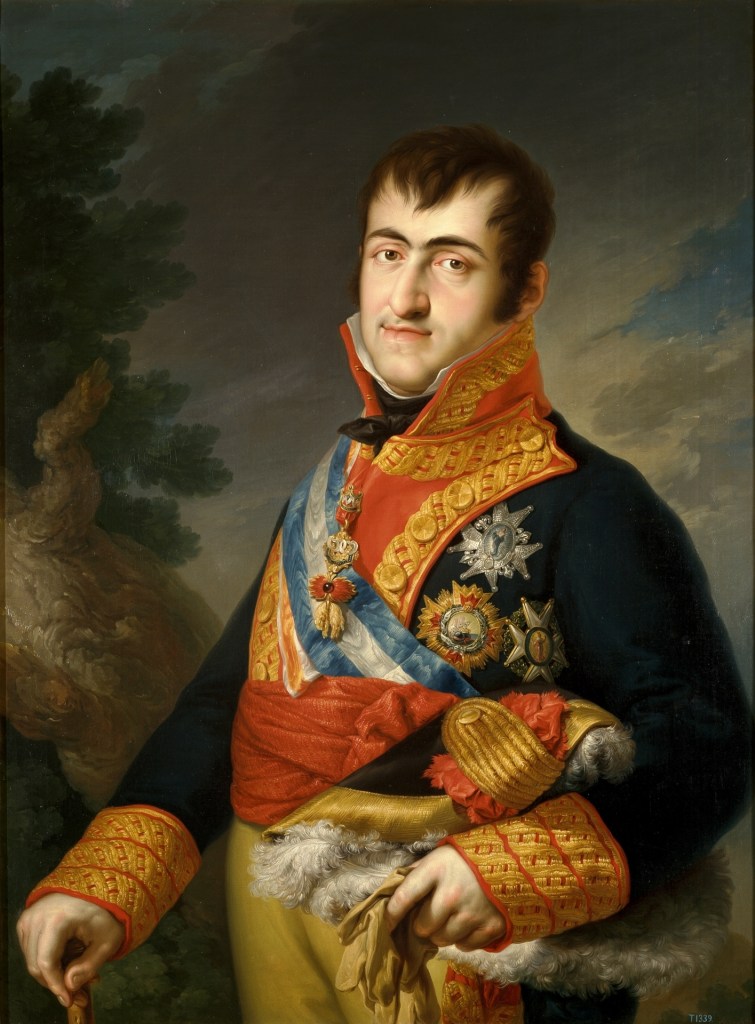
Amid this disorder, Agustín Cosme Damián de Iturbide y Aramburu (1783–1824), a native of Valladolid, initially supported the Spanish Crown and fought against the insurgents. However, by 1820, in the wake of political changes in Spain, that included a liberal revolution and the reinstatement of the 1812 Constitution of Cádiz, Iturbide reconsidered his position. He began negotiations with various independence leaders, ultimately maneuvering to place himself at the forefront of the independence movement. These efforts would culminate in his leading role in the final phase of Mexico’s path to independence. From these negotiations was produced the Plan de Iguala, a form of declaration of independence against Spain by Mexico:
- Article 1. The Mexican nation is independent of the Spanish nation, and of every other, even on its own Continent.
- Article 2. Its religion shall be the Catholic, which all its inhabitants profess.
- Article 3. They shall be all united, without any distinction between Americans and Europeans.
- Article 4. The government shall be a constitutional monarchy.
- Article 8. His Majesty Ferdinand VII shall be invited to the throne of the empire, and in case of his refusal, the Infantes Don Carlos and Don Francisco de Paula.
- Article 9. Should his Majesty Ferdinand VII. and his august brothers decline the invitation, the nation is at liberty to invite to the imperial throne any member of reigning families whom it may select.
- Article 11. The distinction of castes is abolished, which was made by the Spanish law, excluding them from the rights of citizenship. All the inhabitants of the country are citizens, and equal, and the door of advancement is open to virtue and merit.
- Article 12. An army shall be formed for the support of religion, independence, and union, guaranteeing these three principles, and therefore it shall be called the army of the three guarantees.
- Article 20. All the public functionaries, civil, ecclesiastical, political, and military, who adhere to the cause of independence, shall be continued in their offices, without any distinction between Americans and Europeans.
Like the constitution proposed by José María Morelos y Pavón, the Plan de Iguala blended liberal Enlightenment ideals with traditional monarchical and religious values. Through this strategic synthesis, Agustín de Iturbide succeeded in building a broad-based consensus across the social and political spectrum in Mexico—a feat that had eluded both Hidalgo and Morelos.

The Plan de Iguala articulated the foundational principles of Mexico’s independence through what became known as the “Three Guarantees.” These guarantees were:
- Roman Catholicism would be the official and exclusive religion of the nation,
- Equality between criollos (American-born Spaniards) and peninsulares (Spain-born Spaniards) would be legally upheld, and
- The establishment of a constitutional monarchy as the form of government.
These promises appealed to a wide range of political and social groups including royalist conservatives, moderate reformers, and former insurgents. Thus it fostered for the first time a rare moment of revolutionary consensus in Mexico. Recognizing the futility of resisting this united movement, Juan de O’Donojú, the last viceroy of New Spain, chose negotiation over confrontation. On August 24, 1821, he signed the Treaty of Córdoba with Agustín de Iturbide, who held the title of First Chief of the Imperial Mexican Army of the Three Guarantees. The treaty recognized the terms of the Plan de Iguala and effectively granted Mexico independence from Spain. Though not formally ratified by the Spanish Crown, the treaty marked the de facto end of Spanish colonial rule in Mexico. Ironically, the very man who had once fought for the Spanish Crown would become Emperor Agustín I of Mexico in 1821, symbolizing the complex and often contradictory nature of the independence movement’s final phase.
INDEPENDENCE IN VENEZUELA
Simón Bolívar (1783–1830) emerged as one of the most iconic figures of Spanish American independence. A native of Caracas, Venezuela, Bolívar was born into a wealthy criollo family and received a classical education that exposed him to the republican traditions of ancient Rome and Enlightenment Europe. Deeply influenced by these ideals, Bolívar became committed to the cultivation of civic virtue, the promotion of collective liberty, the creation of balanced forms of government, and the pursuit of territorial unification across Latin America.
Bolívar’s opposition to Spanish colonial rule stemmed from its systematic denial of criollo participation in the governance of colonial affairs. He envisioned an independent Venezuela governed as a republic, but one with innovative features including the establishment of a “fourth branch of government” known as the “Poder Moral” or “Moral Power.” This branch was designed to promote civic education, ethical conduct, and national unity, reflecting his belief that political freedom required moral development. While Bolívar advocated for equality, he emphasized that such equality had to be deliberately structured and responsibly practiced, avoiding the dangers of unregulated populism. His vision blended liberal ideals with authoritarian safeguards, making his political thought both ambitious and pragmatic.
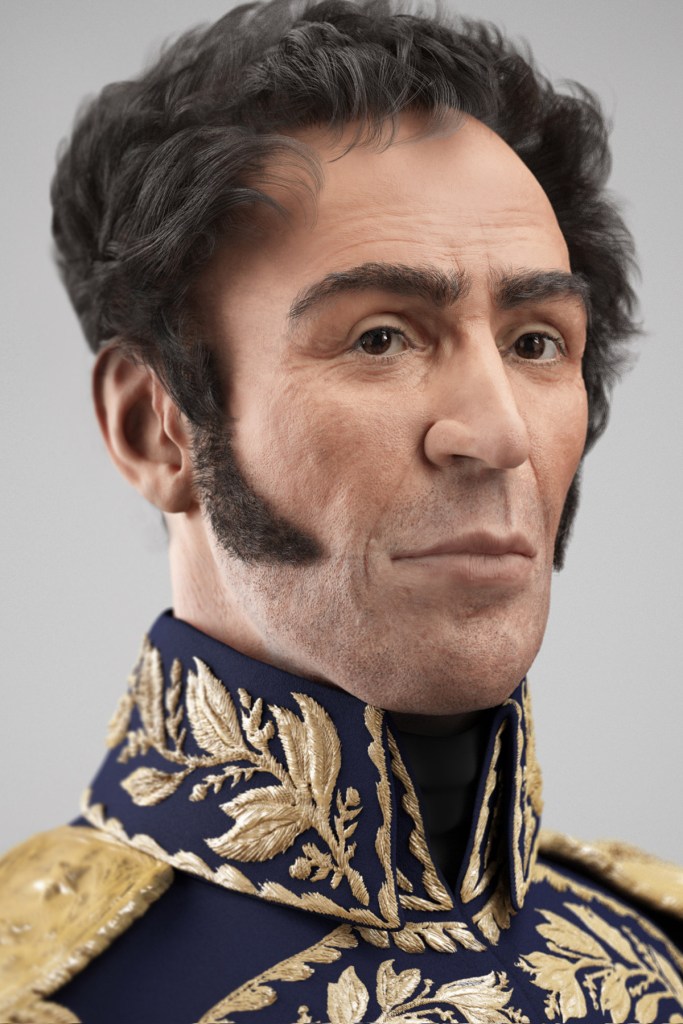
As a result of Napoleon’s intervention in Spain and the subsequent weakening of the Spanish monarchy, a ruling council (junta) was established in Venezuela to act as the legitimate governing authority in the absence of the deposed king. This First Venezuelan Republic, declared in 1810, immediately sought to accomplish the following objectives:
- Assert political autonomy from the Spanish Crown by establishing local governance rooted in popular sovereignty.
- Implement liberal reforms, including the promotion of free trade and reduced restrictions on criollo political participation.
- Mobilize support among the local population and military for the defense of Venezuelan interests.
- Lay the groundwork for a republican form of government based on Enlightenment principles.
These early moves signaled a shift from mere political reform to the eventual push for full independence, setting the stage for leaders like Simón Bolívar to rise in prominence.
Simón Bolívar was specifically tasked with traveling to London to secure the support of the exiled revolutionary Francisco de Miranda (1750–1816), a prominent advocate for Latin American independence with international experience in revolutionary movements. Under pressure from both Bolívar and Miranda, the ruling council in Venezuela convened a congress that formally declared independence from Spain in March 1811.
This led to the creation of the American Confederation of Venezuela on July 7, 1811, accompanied by the promulgation of a new constitution—the first of its kind in Spanish America. With this constitution, Venezuela took its first concrete steps toward establishing a republican government, enshrining principles such as popular sovereignty, the separation of powers, and civil liberties. Though still fragile and beset by internal divisions and external threats, Venezuela had now formally entered the path of nationhood as a fledgling independent state—a bold move that would inspire similar efforts across Latin America.
Unlike Mexico, where one can argue that independence was sparked from below, the Venezuelan independence movement was primarily led by colonial elites. This top-down approach created deep discontent among enslaved and free Africans, who were alarmed that criollo slaveholders were now asserting control over Venezuela’s future. This distrust was validated when Venezuela’s first constitution was promulgated in 1811. The constitution not only retained slavery but also imposed property qualifications for voting, effectively excluding the majority of the population from political participation. These exclusions provoked a series of slave uprisings, as the hopes of marginalized groups were crushed under a new elite-led political order. Slavery would not be abolished in Venezuela until the passage of the Law of Abolition of Slavery in 1854, decades after the initial call for independence.
Amid this constitutional and social turmoil, royalist forces exploited the situation by enlisting support from African populations, many of whom saw little reason to support a revolution dominated by the very class that oppressed them. At the same time, the revolutionary army—composed largely of draftees of color and enslaved individuals—suffered from desertions and low morale. Meanwhile, poor criollos harbored little sympathy for the cause led by the upper-class elite. Compounding these challenges was a strategic oversight. The revolutionaries underestimated Venezuela’s proximity to powerful Spanish strongholds in the Caribbean, which allowed royalist reinforcements to be deployed rapidly. As a result, the early years of the independence movement were marked by military defeats, social fragmentation, and waning revolutionary momentum.
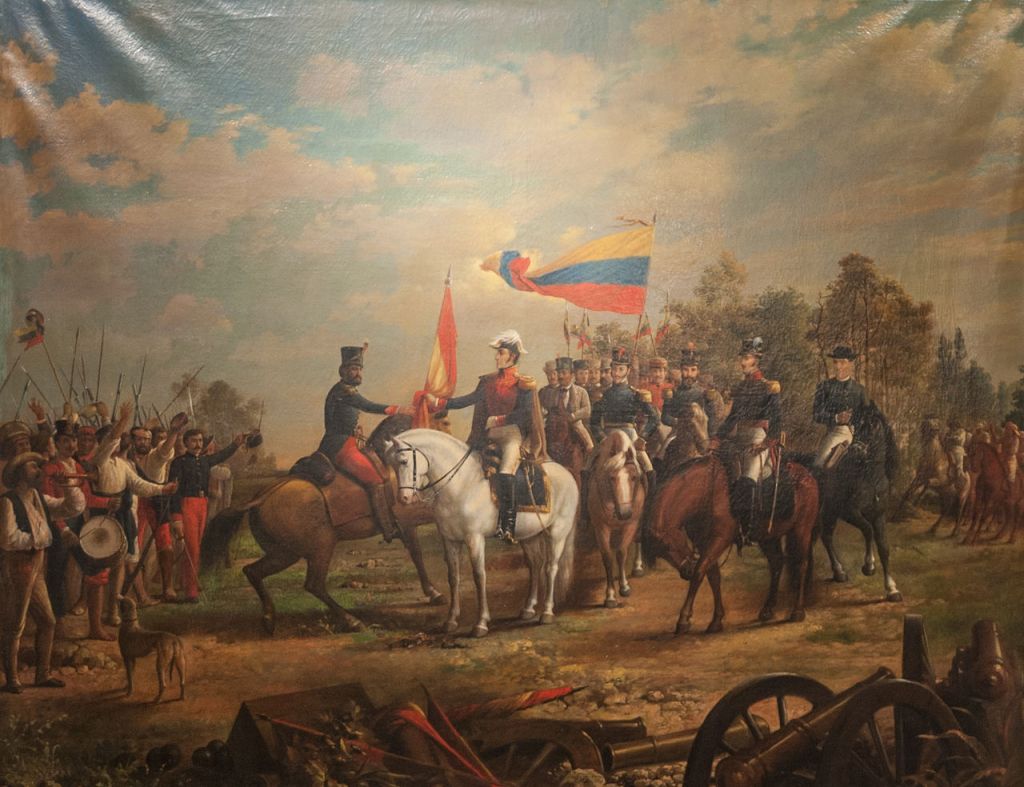
Venezuela’s fledgling republican government was swiftly crushed by Spanish forces from Puerto Rico in 1812, forcing Simón Bolívar to flee first to the Caribbean and then to Nueva Granada (present-day Colombia). In the aftermath of this defeat, Bolívar authored the Cartagena Manifesto (1812), a critical political essay in which he analyzed the reasons for the republic’s collapse. For Simón Bolívar, the chief reasons were internal disunity, the inexperience of its leaders, and the failure to gain widespread popular support.
In 1813, Bolívar launched a renewed campaign by reentering Caracas from Nueva Granada, initiating what became known as the “Admirable Campaign.” During this campaign, Bolívar issued his infamous declaration of “war to the death” (guerra a muerte) against all Spaniards who opposed independence, aiming to galvanize support among the local population. However, this second effort was once again defeated by royalist forces led by José Tomás Boves, a brutal llanero (plainsman) commander who mobilized lower-class and Afro-Venezuelan resentment against the criollo elite. Forced into exile once again, Bolívar fled to Jamaica, where he composed La Carta de Jamaica (The Letter from Jamaica) in 1815. This letter would have a profound and far-reaching vision for Latin American independence, republican governance, and continental unity.
In 1816, Bolívar returned to Venezuela and gradually consolidated his leadership through military campaigns and strategic alliances. His revolutionary thought culminated in the delivery of the Angostura Address in 1819, a seminal speech in which he articulated his core political principles, including the need for strong central authority, civic virtue, and the establishment of institutions tailored to Latin America’s unique historical and social realities.
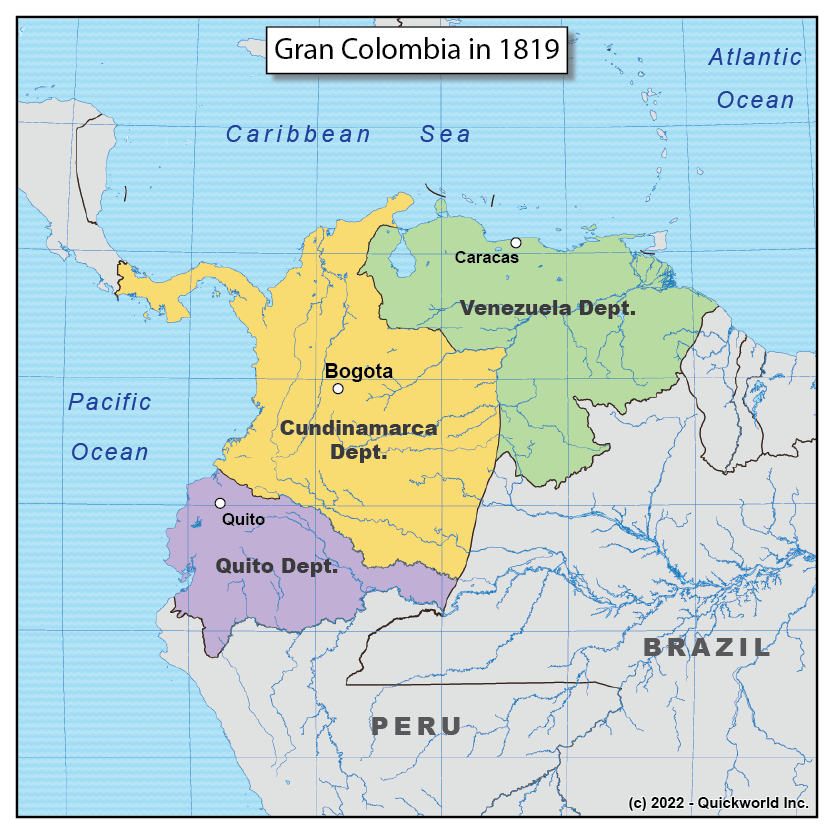
In 1821, following a series of decisive military victories, Caracas fell to Simón Bolívar, marking the final liberation of Venezuela from Spanish colonial rule. Bolívar’s successful campaigns not only secured independence for Venezuela but also led to his appointment as President of Gran Colombia—a vast republic encompassing the territories of modern-day Colombia, Venezuela, Ecuador, and Panama. However, Bolívar’s grand vision of a federated Latin American republic, modeled after the United States, soon unraveled. Deep ideological divisions, regional rivalries, and conflicting interests led to civil wars and political fragmentation under competing liberal factions. Bolívar, disillusioned by the collapse of unity and growing opposition to his leadership, resigned the presidency in 1830 and prepared to go into exile in Europe. Before he could leave, he died on December 17, 1830, in Santa Marta, Colombia, reportedly of tuberculosis.
Bolívar left behind a significant corpus of political writings in which he reflected on the Spanish imperial system, the justification for independence, and the forms of government best suited for Latin America. In his thought, Bolívar repeatedly warned of the danger posed by long-term servitude and political dependency, which he believed produced habits of corruption, passivity, and submission among populations accustomed to authoritarian rule. He argued that Spanish Americans, having been denied meaningful participation in public life under colonialism, lacked the political experience and civic virtues necessary for sustaining a stable democracy. For this reason, Bolívar concluded that a strong central government, led by a powerful executive, was essential to prevent anarchy and political collapse in the fragile, newly independent republics.
THE RISE OF CAUDILLOS
Independence in Latin America came at a profound cost, ushering in a period marked by economic dislocation, political instability, and widespread social disruption. As newly sovereign states began the difficult task of nation-building, the standard of living declined, and long-standing colonial economic structures collapsed without immediate replacements. Trade networks were disrupted, agricultural productivity fell, and fiscal systems were strained by the costs of war and the absence of stable governance.
In the wake of independence, Latin America also faced a wave of territorial disputes, as new national boundaries had to be negotiated and defined. These conflicts were intensified by the region’s low population density, which left vast territories vulnerable to both internal contestation and foreign intervention. Competing claims over poorly defined frontiers led to prolonged boundary conflicts, some of which persisted for decades. Moreover, post-independence disputes were not confined to geography alone. Many regions were engulfed in civil wars, as emerging political factions clashed over the nature of government, the distribution of power, and the direction of national development. These internal struggles were fueled by deep social divisions, unresolved racial and class inequalities, and the absence of inclusive political institutions. As a result, the early decades of independence in Latin America were often tumultuous and violent.
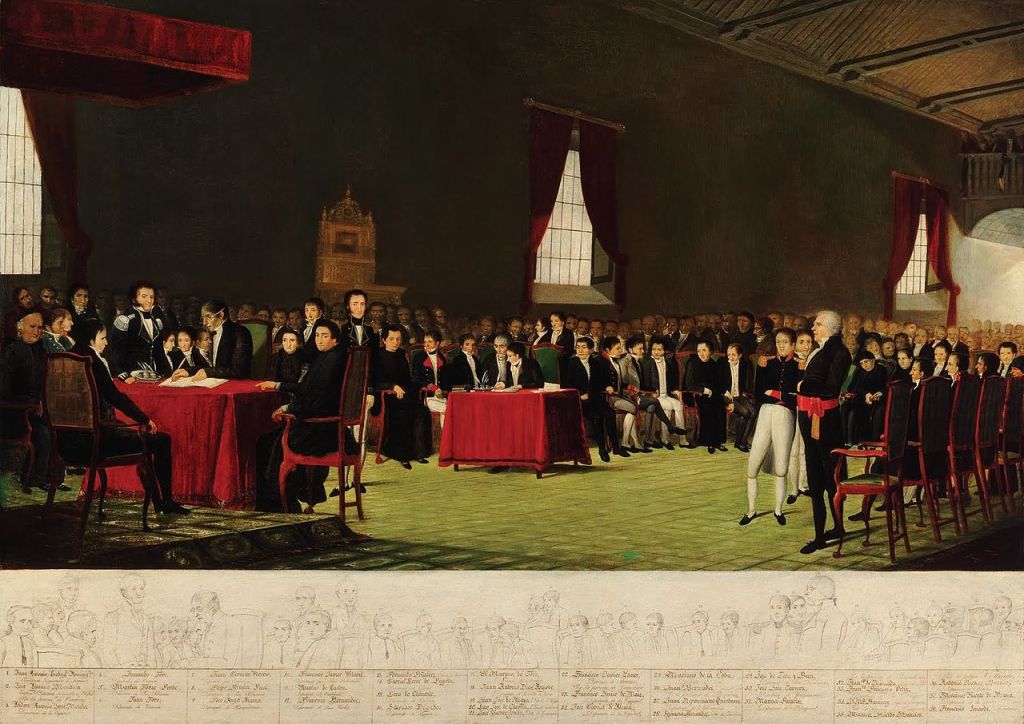
The wars of independence that swept across Latin America were grounded in the ideals of liberalism, republicanism, and nationalism. Revolutionary leaders envisioned a new political order rooted in popular sovereignty, legal equality, and self-determination. However, these liberal aspirations were soon confronted by the enduring legacies of colonialism, which deeply challenged their implementation. For instance, the principle of legal equality failed to eliminate racial hierarchies and social exclusion. Despite rhetorical commitments to democracy, political participation remained restricted to property-owning, literate adult males, excluding large segments of society—including women, Indigenous peoples, Afro-descendants, and the rural poor. Additionally, sharp divides between urban and rural populations, as well as entrenched class differences, impeded the development of inclusive national identities and equitable governance.
The economic instability of the post-independence period further undermined liberal state-building. Newly independent republics lacked the institutional capacity to ensure stability, which in turn discouraged foreign investment and hindered economic recovery. One of the most significant barriers to liberal consolidation was the inability to establish lasting, stable governments. Political power was often contested through military uprisings, and many states experienced frequent regime changes and constitutional rewrites. For example:
- Between 1821 and 1845, Peru experienced 24 changes in government.
- Between 1812 and 1833, Chile adopted eight different constitutions.
- Ecuador, within its first 22 years of independence, produced six constitutions.
This chronic institutional volatility reflected the fragile nature of early liberal republics, where military caudillos, class tensions, and weak administrative frameworks often replaced the constitutional order envisioned during the independence movements.
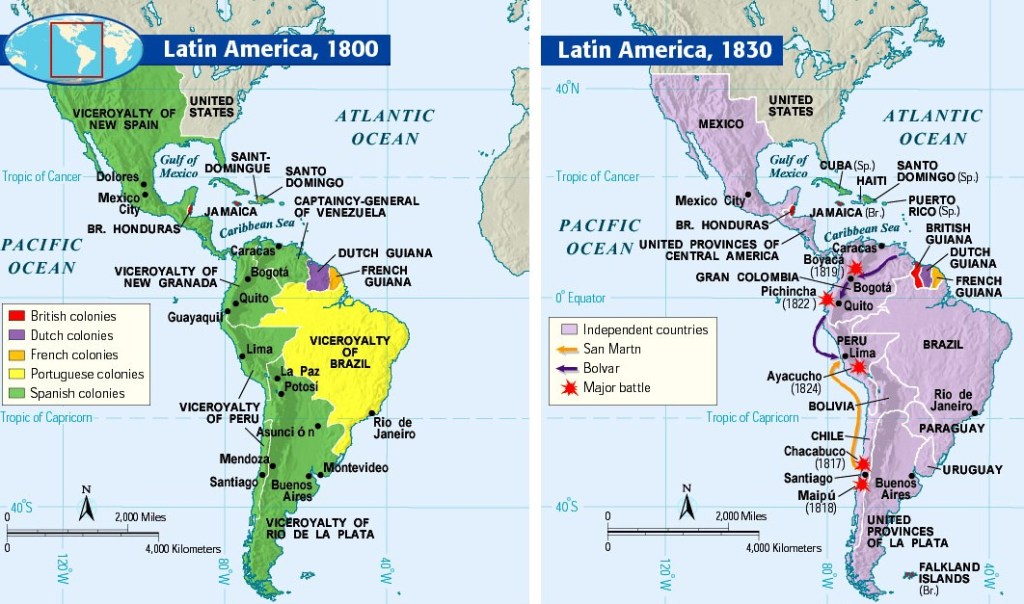
The failure of early liberal experiments to establish order and stability in post-independence Latin America created a power vacuum that allowed caudillos—strongmen leaders—to rise to prominence. Their ascent was largely driven by persistent economic stagnation, the breakdown of central authority, and the inability of fragile republics to construct durable and functional political institutions. Caudillos typically shared a common set of characteristics: they often emerged from military backgrounds, governed with an authoritarian style, and operated more through personal loyalty and patronage networks than through formal institutions. Importantly, they were not committed to a consistent ideology; instead, they exercised power pragmatically, often shifting allegiances or policies in response to the demands of specific moments or constituencies.
Two prominent examples of caudillo leadership can be seen in the careers Juan Manuel de Rosas in Argentina and Antonio López de Santa Anna in Mexico. These figures exemplified the personalist rule and military dominance that defined much of Latin American politics in the decades following independence—reflecting the challenges of state-building in a region still grappling with the legacies of colonialism, social fragmentation, and economic underdevelopment.
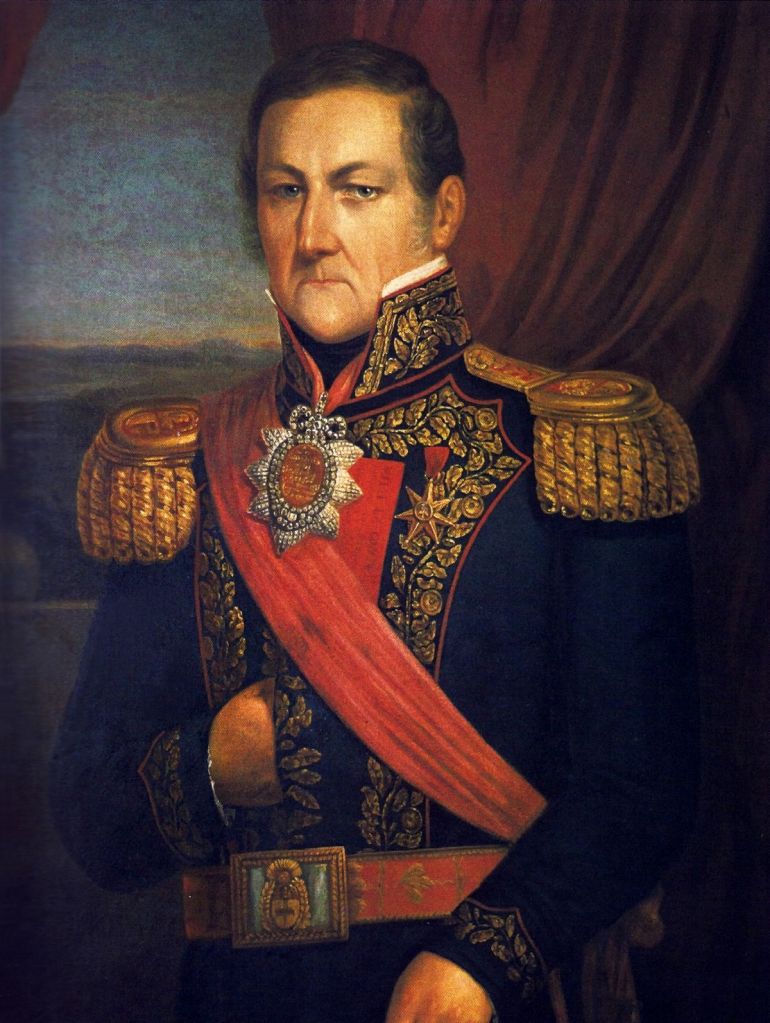
Between 1822 and 1852, caudillos played a dominant role in Argentinian politics, filling the power vacuum left by weak central institutions. These regional strongmen seized control of provincial governments, with three major caudillos, Facundo Quiroga, Martín Güemes, and Estanislao López, exerting influence over Argentina’s interior provinces. However, Juan Manuel de Rosas, a wealthy landowner, consolidated his power in Buenos Aires and through a combination of military victories and the deaths or defeats of rival caudillos, Rosas emerged as the sole political authority in Argentina. He cultivated a public image that portrayed himself as the savior of the nation and the restorer of order amid political chaos. To maintain his dominance, Rosas relied heavily on the Mazorca (La Sociedad Popular Restauradora), a paramilitary and political organization that enforced loyalty and suppressed opposition, often through intimidation and violence.
Rosas’s rule drew sharp criticism from intellectuals and reformers, most notably Domingo Faustino Sarmiento, whose seminal work Facundo: Civilization and Barbarism (Facundo o civilización y barbarie, 1845) used the life of Facundo Quiroga as an allegorical lens to critique Rosas’s authoritarianism. In this work, Sarmiento contrasts civilization, associated with education, European influence, and liberalism, with barbarism, symbolized by caudillo rule, rural violence, and anti-modern tendencies. Rosas, in Sarmiento’s view, epitomized the barbaric forces hindering Argentina’s progress toward modern nationhood.

Between 1833 and 1855, Mexican politics was dominated by the complex and often contradictory figure of Antonio López de Santa Anna, a criollo military officer who played a pivotal role in shaping the early republic. Initially a supporter of the Plan de Iguala, Santa Anna also contributed to the liberal overthrow of Emperor Agustín de Iturbide, presenting himself at the time as a champion of republicanism. Although he did begin his political career aligned with liberal principles, he later embraced conservative positions, eventually overturning the liberal Constitution of 1824. His rule reflected a pattern of authoritarian leadership, personalism, and frequent shifts in allegiance depending on political expediency.
Santa Anna served as Mexico’s president on eleven separate occasions, often returning to power amid crises, military coups, or national emergencies. He cultivated an image of himself as a reluctant national savior, famously portraying his leadership as a response to the call of the people, rather than personal ambition. This narrative allowed him to sway between retreat and resurgence, as he was repeatedly “called to service” during Mexico’s most turbulent years. Santa Anna’s career epitomizes the instability of early Mexican republicanism, as well as the broader pattern of caudillo rule in Latin America, where political authority often hinged on military reputation and populist appeal rather than institutional legitimacy or consistent ideology. He makes this very clear in his autobiography entitled The Eagle. In this work Santa Ana notes:
Sixty-two days after my foot had been amputated, general Guadalupe Victoria called on me at the instigation of the government. He informed me that the revolution was threatening, and the government desired me to take Bustamante’s place as temporary president in this time of trial. How well the people knew me! They knew I would never desert principles and would always be on hand when my country needed me!
POST INDEPENDENCE SOCIETY
The political and social processes of post-independence Latin America were deeply shaped by the colonial legacy of hierarchical social structures. At the top of the social pyramid remained the criollo elite who assumed dominant positions in politics, the economy, and the military, especially after most peninsulares either left the colonies or lost their privileged positions in both government and church institutions. At the bottom of the social hierarchy, little changed for enslaved Africans, their descendants, and Indigenous peoples, whose conditions remained structurally marginalized. One of the most telling indicators of this continuity is the question of slavery. Despite the revolutionary rhetoric of liberty and equality, many newly independent states failed to abolish slavery immediately. In most cases, only partial reforms were implemented such as the prohibition of the Atlantic slave trade and laws which granted freedom to children born to enslaved women. However, these measures were limited in scope and slow in enforcement. Most Latin American countries would not fully abolish slavery until the mid-19th century:
- Colombia in 1851
- Ecuador in 1852
- Venezuela in 1854
- Uruguay in 1842
- Argentina in 1853
- Peru in 1854
Even after formal abolition, conditions for marginalized changed very little. Formerly enslaved individuals were often trapped in exploitative labor arrangements, receiving minimal wages and subjected to debt peonage, which effectively reproduced the coercive labor systems of the colonial period under a new guise. Meanwhile, Indigenous populations initially experienced relative protection from direct displacement in some regions—not due to a genuine commitment to their welfare, but rather because their lands did not immediately intersect with elite economic interests. However, this changed dramatically with the growth of export-oriented economies in the late 19th century. As the value of land increased, Indigenous communities came under pressure as liberal reforms sought to dismantle communal landholding structures in favor of individual property rights. These reforms often resulted in the loss of land, further marginalization, and the erosion of traditional community structures. Thus the promises of independence and liberal reform largely failed to deliver meaningful social or economic justice, revealing the enduring power of colonial inequalities in the postcolonial Latin American republics.
In the early post-independence era of Latin America, women remained largely excluded from formal political and legal rights, despite their critical involvement in the independence movements. While some women gained recognition as patriots, spies, messengers, or fundraisers during the wars, their contributions were quickly sidelined once nation-states were established. The new republics upheld patriarchal legal codes that limited women’s roles to the domestic sphere, with no access to voting rights, property ownership (in most cases), or education on equal terms. Nonetheless, women continued to play essential roles in community life, informal politics, and the preservation of cultural traditions, laying the groundwork for future demands for gender equality in Latin America.
IN CLOSING
The independence movements in Mexico and Venezuela as case examples reveal the complex interplay between social hierarchy, political ideology, and military power in shaping postcolonial Latin America. In Mexico, the struggle began as a popular uprising led by priests like Miguel Hidalgo, drawing support from mestizos and Indigenous peoples, but ultimately became a criollo-led project that prioritized order over radical reform. In contrast, Venezuela’s movement was spearheaded by elite criollos like Simón Bolívar, who initially excluded the lower classes, resulting in deep social divisions and early military failures. Both cases show how liberal ideals clashed with entrenched colonial structures, and how independence did not immediately bring equality or stability, but rather ushered in a new phase of internal conflict, caudillo leadership, and incomplete social transformation. Our next topic will explore how liberalism makes a return to Latin America, but with a cost to the masses.
 World History Portal