



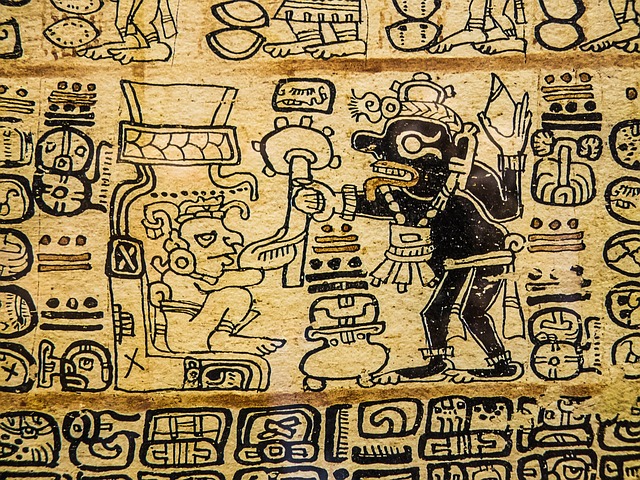
Welcome to History 140!
Hello, my name is Jason Suárez, and I am thrilled to be your instructor this semester for History 140 Online: Early World Civilizations. Communication is incredibly important to me, and I will do my best to respond to your inquiries within 24 hours.
This semester, you have three ways to contact me if you have any questions or concerns about the course:
- First, you contact me via email (jsuarez@elcamino.edu) or Canvas.
- Second, you can visit me during my virtual office hours which are an online synchronous (live and real time) conference. This link will be made available on Canvas along with the day and time.
- Third, you can schedule an appointment via email to schedule a virtual office meeting via Zoom.

Course Description
This course is a survey of the political, economic, social, and cultural development of World Civilizations from the origins of these complex cultures in the Neolithic era to the emergence of the West in the fifteenth century. Topics include the early civilizations of the Near East, Egypt, India, China, the Americas, Greece, and Rome.
Course Structure
This fully online course lasts 5 weeks. There are no live meetings; instead, all learning is conducted asynchronously on Canvas. While the course follows a weekly schedule with set due dates, you’ll have the flexibility to complete assignments on your own time. No textbooks or additional materials need to be purchased—everything you need, including required readings, will be provided directly in the Canvas course modules.
Student Learning Outcomes
Student Learning Outcomes are “the goals that describe how a student will be different because of a learning experience.” History 140 has two student learning outcomes. Upon completion of History 140 Online:
- Students will be able to develop and persuasively argue a historical thesis in a written assignment.
- Students will be able to identify and explain major social, economic, political and/or cultural historical themes or patterns in World history and apply appropriate historical methods to analyze and use primary and/or secondary sources as evidence to support the thesis.
What to Expect from Me
- I am committed to creating a course that facilitates your learning through content that is informative, meaningful, and relevant. This course will foster a learning environment that encourages dialogue and the exchange of ideas between you and your peers.
- To ensure course objectives and student learning outcomes are being met, I will use a variety of assessments to gauge your progress.
- I will also be consistently available to support you and will actively collaborate with you throughout the course to help you achieve success.
What I Expect from You
- As an active learner in this course, you will complete assigned materials in a timely manner and engage regularly with your colleagues to discuss and explore the course content.
- If you have questions about the material, need clarification on assignments, or face any challenges during the course, I encourage you to actively reach out for my support.
- Should you encounter circumstances that prevent you from meeting an established assignment or assessment due date, please contact me as soon as possible so we can discuss alternatives.
How to succeed . . .
Success in an online course requires self-motivation, effective time management, and the ability to work both independently and collaboratively with minimal supervision. Staying on track with your coursework is essential, which means logging into Canvas frequently (at least 3–4 times a week) to complete all required activities, assignments, and readings.
Remember, I’m here to support you. If you have any questions about the course or its content, don’t hesitate to reach out. My goal is to help you succeed this semester.

How many hours a week should you commit to this course? On average, plan for a minimum of 16–20 hours per week. Keep in mind that this is a condensed version of a 16-week course, so staying on top of your schedule is crucial.
Procrastination—delaying or postponing tasks until the last minute—is one of the most common obstacles to success in online courses, as many students have shared with me. In truth, we’ve all fallen into this habit at some point (myself included!). I learned this lesson the hard way during my time as a student at UCSB.
I encourage you to stay proactive and avoid procrastination as much as possible. Doing so will not only enhance the quality of your work but also make your learning experience more rewarding and less stressful. Because this is a 5 week course granting extensions for assignments will not be possible.
When Can I Access the Course?
Your Canvas course shell will be activated at 8:00 a.m. on the first day of the Winter session. In the meantime, I’ve provided some links to the right for you to preview and explore the course content.
Your success is my top priority, so please don’t hesitate to reach out with any questions about the course, its content, or anything related to your academic and college journey. I’m here to support you.
To help me get to know you better and understand how I can best assist you, please take a moment to fill out the following survey (link below). I look forward to helping you succeed this semester at El Camino College!.
Again, welcome to History 140. I am very excited about working with you this semester and getting to know you as well.
 World History Portal