LEARNING OBJECTIVES
- Explain what gave rise to the Agrarian Age and what characteristics defined it.
- Explain the impact the transition to a sedentary lifeway founded on horticulture/agriculture had on social structure.
- Identify some of the characteristics associated with Neolithic settlements through what has been uncovered at Çatalhöyük.
View Timeline: Neolithic
THE AGRARIAN AGE
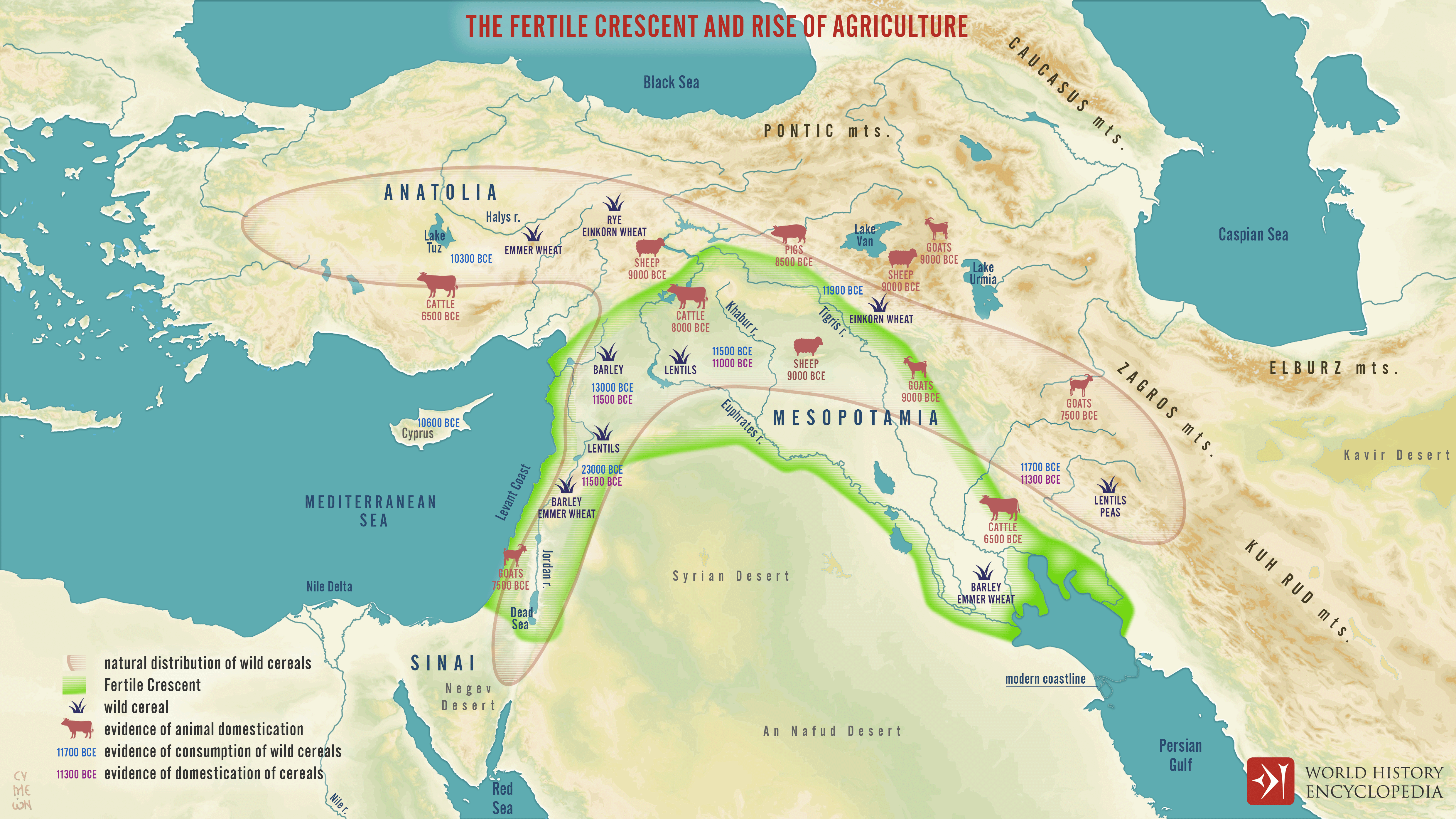
Around 10,000 B.C.E., some hunting and foraging communities began transitioning to horticulture, a form of small-scale cultivation relying on human labor to sustain families, and later to agriculture, which produced surplus food capable of supporting large populations. This transformation, known as the Neolithic Revolution, provided humans with significantly greater access to food and resources. Agriculture, being more intensive, allowed humans to extract more energy and sustenance from a given area of land.
The resulting increase in resources and energy enabled the formation of communities far more complex than those of the Paleolithic era. Within these communities, collective learning accelerated, driving innovation and cultural development. This transition marked the beginning of the agrarian age, a dominant way of life in human history that lasted until the advent of industrialization. Agriculture not only supported larger populations but also gave rise to new types of communities that achieved unprecedented levels of social, economic, political, and cultural complexity. During this period, humans began reshaping their environments, creating anthropogenic landscapes by altering ecological patterns and processes to focus community efforts on resource extraction.
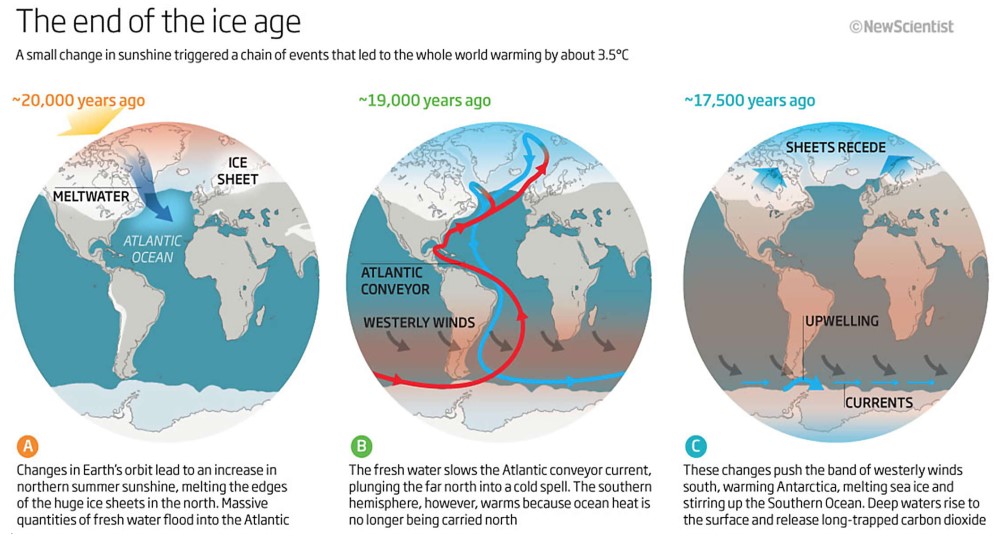
What drove the shift from a hunting and foraging economy to one based on horticulture and agriculture? The answer may lie in the significant climatic changes that occurred between 18,000 B.C.E. and 16,000 B.C.E. This period marked the end of the Ice Age and the onset of global warming. As the climate warmed, new environments emerged where plant life flourished, creating opportunities for humans to adapt. In these environments, many traditional foragers became affluent foragers—humans who were able to extract greater resources from a given area than their predecessors.
This climate shift may also explain why agriculture developed independently and simultaneously in multiple regions of the world. But how do we define agriculture? Historian David Christian describes it as “a symbiotic relationship between humans and the species we call domesticates [that] benefit because they receive protection from humans, which is why their populations are so large.” In this relationship, humans transitioned from being food collectors to becoming food producers, fundamentally altering their relationship with the environment and paving the way for the rise of complex societies.
Over time, affluent foragers in resource-rich areas may have adopted a semi-sedentary lifestyle, staying in one place for most of the year. The process of intensification—developing technologies and practices to extract more resources from the land—eventually enabled agriculture to become the primary means of securing food for some of these communities. The introduction of new tools and, later, the use of draft animals for plowing allowed humans to exploit the soil more efficiently, significantly increasing the amount of food that could be planted and harvested.
This shift had profound implications for population density. While hunting and foraging communities required approximately ten square miles of territory to sustain a single band, early agriculturalists could support a population of fifty people on just one square mile of cultivated land. This dramatic increase in productivity allowed human populations to grow and settle in larger, more permanent communities, laying the foundation for the development of complex societies.
The transition from hunting and foraging to agriculture brought profound changes to human lifeways. Agricultural productivity improved significantly due to innovations such as irrigation and what Andrew Sherratt has termed the “secondary-products revolution.” This revolution involved the intensified use of animals for secondary products, such as milk, wool, and labor, rather than focusing exclusively on primary products like meat, bones, and hides.
Arkadiusz Marciniak notes that these secondary products “became a significant commodity long after their introduction,” marking an important shift in the economic practices of Neolithic farmers. This development increased agricultural productivity and mobility, enabling humans to exploit a wider range of environments. These advancements not only enhanced the efficiency of farming but also allowed early agricultural communities to expand into diverse and previously less hospitable regions, further accelerating the growth of settled societies.
As humans transitioned to agriculture and became dependent on a limited number of cultivated plants and the success of seasonal harvests, their protein intake declined significantly due to a reduced reliance on wild game. This dietary shift had important consequences, one of which was the increasing importance of salt as a commodity. While hunters and foragers met their salt needs through meat consumption, early agriculturalists, with their vastly reduced intake of meat, needed to supplement their diets with additional sources of salt to replenish what was lost through perspiration.
These dietary changes also had noticeable physical effects on humans, as highlighted in Clark Spencer Larsen’s article. The shift to an agricultural lifestyle not only altered human nutrition but also contributed to changes in stature, health, and overall physical well-being, reflecting the profound impact of diet on human biology and development.
CHANGING SOCIAL STRUCTURE
Before you proceed, take a moment and review the chart below.
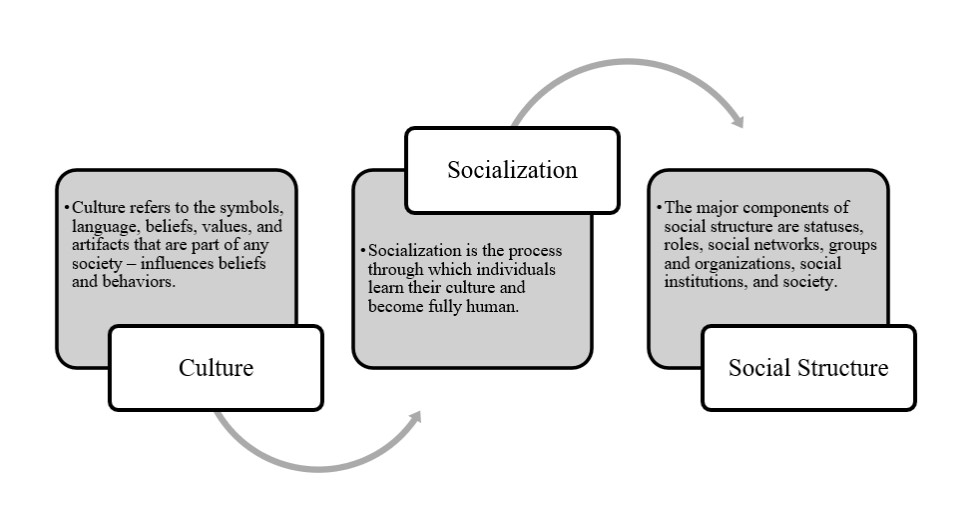
Farming households, organized into village communities, became the primary living arrangement for early agricultural societies. To protect their resources, many of these villages began constructing barriers or walls around their settlements. As agricultural productivity increased and surpluses grew, these communities experienced significant population growth. It is estimated that during the agrarian era, approximately 10,000 years ago, the global population may have reached six million.
However, these early settlements brought unintended consequences. The close concentration of humans created ideal conditions for the spread of pathogens and epidemic diseases. Zoonotic diseases, which are transmitted from animals to humans, became a common part of life in these communities. Population density also introduced new challenges in managing daily life. As villages grew, the complexities of organizing activities and resolving conflicts became more pressing. Unlike nomadic foragers who could move to new areas, sedentary agricultural communities were tied to their land, making effective leadership and conflict resolution essential for survival. Scholars believe this necessity may have driven the selection of leaders to manage disputes and coordinate communal efforts, highlighting the importance of strong organization and management in ensuring the sustainability of Neolithic settlements.
“Hunter-gatherers have a relatively low zoonotic pathogen disease burden, but the domestic origins hypothesis proposes that agriculturalists living in close proximity to livestock (which form disease reservoirs) would have been at higher risk of zoonotic pathogens. Examples of this include the transmission of measles and whooping cough from cattle and pigs, respectively, to humans, while Mycobacterium tuberculosis (TB) may have been transmitted back and forth between humans, cattle and seals (though the latter are not domesticated species, hunting them for food may have led to the transmission).”
Source: Nature
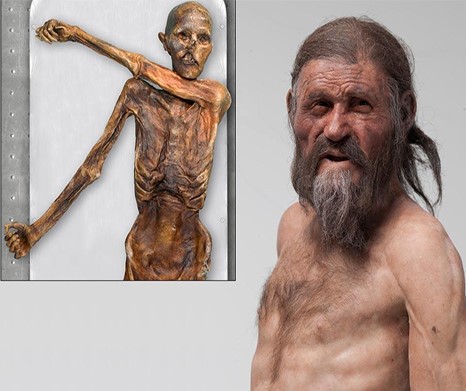
Ötzi, a Neolithic glacier mummy discovered in the South Tyrol region of the Alps, has offered invaluable insights into the lifeways of early agricultural societies. His remarkably well-preserved remains have shed light on various aspects of his life, including his diet, clothing, tools, and daily activities. Additionally, studies of Ötzi have provided significant information about his health, revealing evidence of ailments such as arthritis and parasitic infections, as well as his likely cause of death—a violent encounter in which he sustained fatal injuries. Through Ötzi, researchers have gained a unique window into the challenges and conditions of Neolithic life.
“The unusual find of a very well-preserved human adult male mummy in an Alpine glacier in 1991 was the starting point for a unique series of scientific analyses that resulted in a concise reconstruction of life, diseases, and death of the Neolithic individual (dating to c. 3350–3100 BCE). Not only his basic anthropological information, genetic origin, nutritional supply, and physical activity pattern were investigated, but also numerous diseases, possible therapeutic treatment, and a sequence of traumatic injuries have been identified. The c. 45-year-old man was highly mobile, well-nourished with a balanced animal-faunal diet, suffered from intestinal parasitic infections (Trichuris trichiura) and gastric bacteria (Helicobacter pylori), gallbladder stones, pulmonary anthracosis, mild to moderate arteriosclerosis (of the media-type), mild focal osteoarthrosis, and cervical/lumbar spondylosis. Besides old-healed rib fractures, he had acquired a deep hand wound from stabbing several days before his death; lastly, a lethal arrow strike to the back of his chest wall led, most probably, to laceration of the subclavian artery with extensive bleeding. Whether he also suffered from severe brain trauma by falling on his head, and systemic infectious disease (Lyme’s disease; Borrelia burgdorferi) is not yet clear. The extensive analysis of his belongings, found nearby, add significant further information to the Iceman’s life. It remains to be seen what further information can be obtained on this unique mummy.”
Source: Andreas G. Nerlich, Angelika Fleckinger, and Oliver Peschel
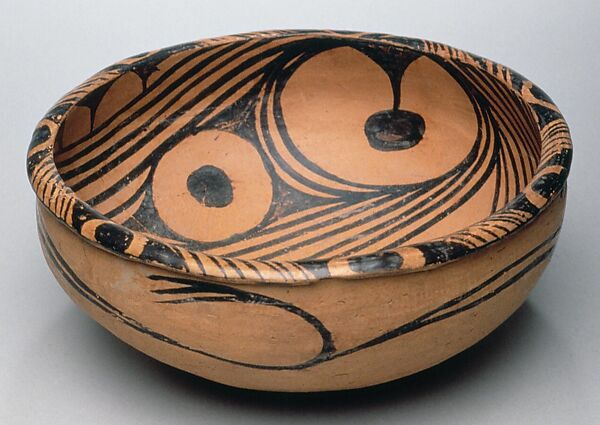
The production of surplus food and the increasing needs of early agricultural communities encouraged the specialization of labor. For instance, the demand for bowls and storage containers led to the specialization of pottery production. This was soon followed by advancements in metallurgy and textiles, as communities sought new tools, materials, and clothing to support their growing populations.
The development of surplus, labor specialization, and the acquisition of private property profoundly influenced social structures during the Neolithic period. These changes began to reshape how societies were organized, introducing new roles, hierarchies, and inequalities as communities became more complex and interconnected.
While Paleolithic communities are often described as egalitarian, the shift to a sedentary lifestyle during the Neolithic period marked the beginning of social differentiation. In these early agricultural societies, people began to be categorized based on their social characteristics, such as differences in roles, identities, and access to resources. This structural shift laid the foundation for social inequality, defined as the unequal distribution of valued resources, rewards, and positions within a society.
Over time, this inequality became institutionalized, resulting in social stratification—an organized system of social hierarchy. The seeds for these changes were sown during the Neolithic period, as surplus production, labor specialization, and private property began to reshape social organization. With the rise of civilizations, social inequality and stratification would become more pronounced, creating rigid hierarchies that defined the structure of complex societies.
The transition to a sedentary lifestyle during the Neolithic period also transformed gender relations, leading to the rise of patriarchy. Gerda Lerner, a prominent historian of women’s history, defines patriarchy as “a historic creation formed by men and women in a process that took nearly 2,500 years to its completion.” She describes patriarchy as “the manifestation and the institutionalization of male dominance over women and children in the family and the extension of male dominance over women in society in general.”
David Christian offers an explanation for the origins of patriarchy, pointing to the “demographic rules of peasant societies.” In such communities, having large families was crucial for economic success, which tied women to roles focused on reproduction and child-rearing. Meanwhile, men were more often able to take on specialized tasks, including those involving leadership and power. Christian notes that this pattern of men assuming public power roles fostered the belief that males were naturally suited for leadership, even though power dynamics within individual households were often more flexible. Over time, these social patterns became institutionalized, solidifying patriarchy as a dominant framework in many early societies.
Let us revisit a some key points Christian has made:
- A shift in the economy to agriculture placed a demand for physical labor. Children as a labor source were vital to a household’s success
- Women were the producers of labor. The demand placed on women as reproducers and child rearers of future labor tied women to this specific role.
- Women thus became a commodity in this new life way/economy. Men, in contrast, take specialist roles – power roles.
The establishment of patriarchy during the Neolithic era and beyond was a significant step in reorganizing the socioeconomic and political structures of human societies. However, patriarchy was only one aspect of this transformation. Historians broadly agree that “the emergence of settled agricultural societies, the concept of privately owned land, and surplus wealth” played a central role in fostering institutionalized patterns of social inequality. These developments, together with the shift to a sedentary lifestyle, created new hierarchies and power dynamics that reshaped human relationships, both within families and across broader social and political systems.
ÇATALHOYUK
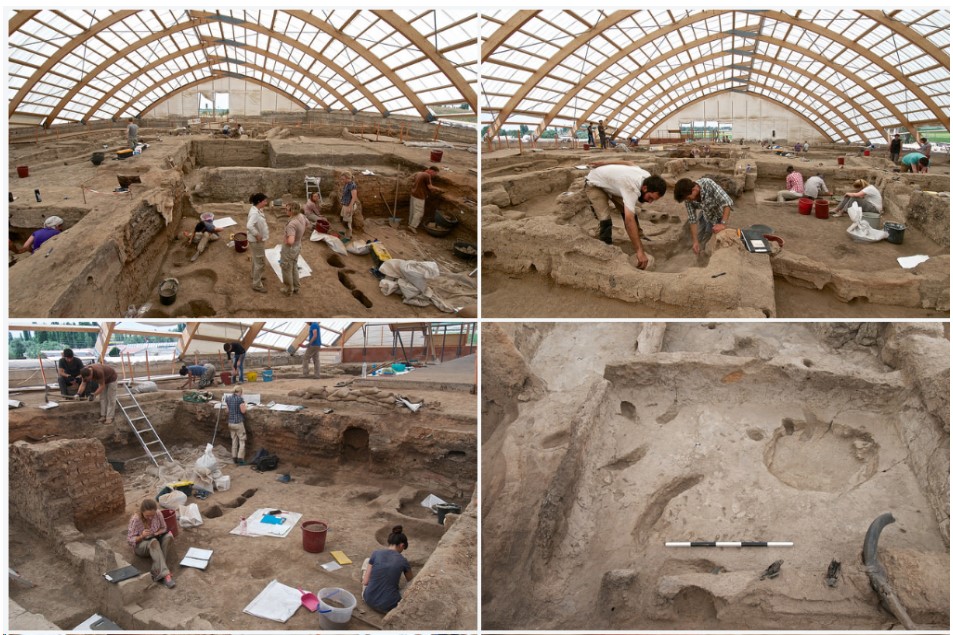
Çatalhöyük (c. 7000 B.C.E.), located in southern Turkey, is a remarkable example of a Neolithic settlement that has provided valuable insights into early agricultural societies. First excavated in the 1950s, this site has revealed extensive information about the lives of its inhabitants. The settlement is believed to have covered approximately thirty-two acres and was surrounded by marshland and wooded areas, which provided resources for its people.
Between 7000 and 4500 B.C.E., Çatalhöyük was rebuilt at least seven times, reflecting its long-term occupation and adaptability. The primary food sources for this community included domesticated crops such as wheat, barley, and peas. Domesticated animals like sheep, goats, and pigs were also integral to their diet. In addition to farming and herding, hunting played an important role in supplementing their food supply, with wild boar, deer, and onager among the wild game consumed by the inhabitants. These findings highlight the complexity and diversity of subsistence strategies in one of the earliest known agricultural settlements.
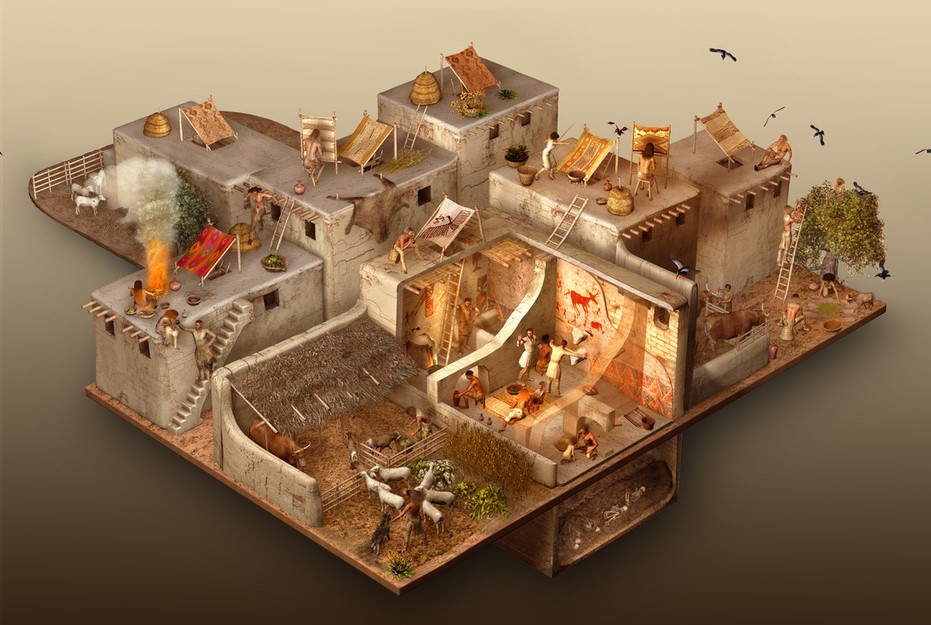
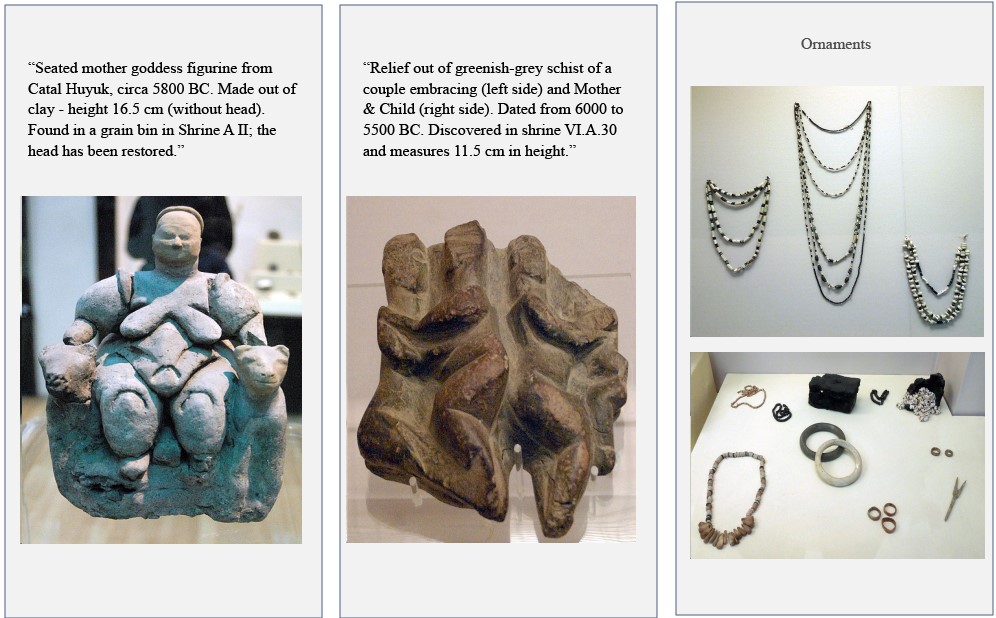
The average height of the residents of Çatalhöyük ranged from about 5’2” to 5’7”, with an average lifespan of approximately 30 to 34 years. By 5800 B.C.E., the population of the settlement is estimated to have reached around 6,000 people. In addition to practicing agriculture, the community was involved in the obsidian trade, suggesting economic connections with other regions. The pottery found at the site was coil-based, indicating that the pottery wheel had not yet been invented.
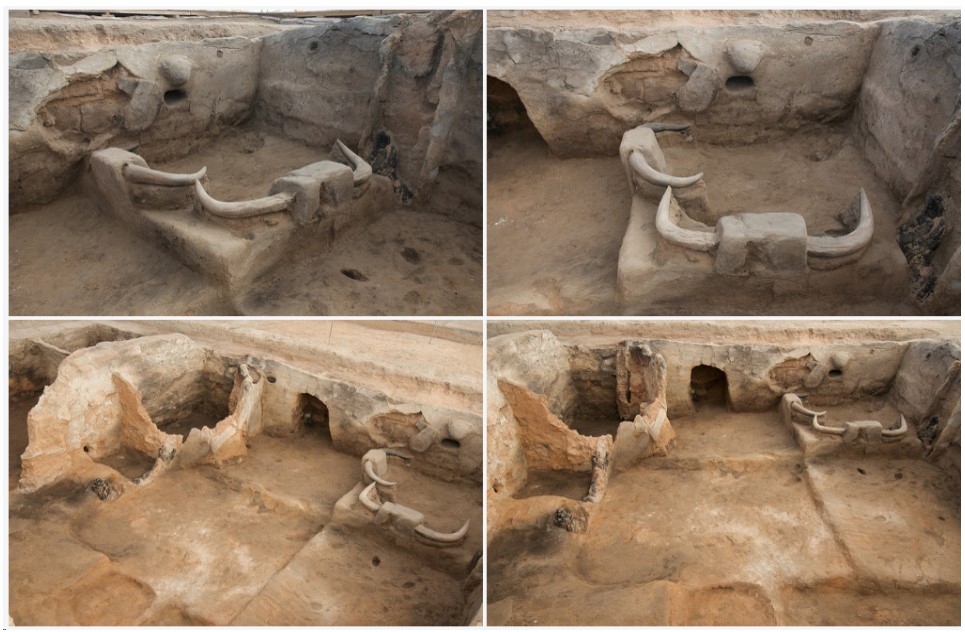
Representational art was a prominent feature of Çatalhöyük, appearing in various forms. Excavations have revealed relief models of bulls and rams, as well as figurines that appear to depict female goddesses, hinting at the symbolic or religious significance of these animals and figures.
Evidence suggests that the residents of Çatalhöyük believed in an afterlife. This conclusion is based on the discovery of foodstuffs placed with human remains at burial sites, a practice often associated with preparation for life after death. Women were sometimes buried in special rooms within households, leading scholars to speculate that they may have held significant roles in rituals or possibly served as priestesses. This suggests that women played an important part in the spiritual or religious life of the community, further emphasizing the complexity of social and cultural practices at Çatalhöyük.
As patriarchy became a defining feature of societies after the Neolithic Revolution, it also influenced the development of religious practices and beliefs. The veneration of fertility goddesses and animal life, common in earlier times, gave way to the worship of supernatural guardians that mirrored the leadership roles emerging in Neolithic communities. Connections between humans and the animal world, once central to religious practices, were gradually replaced by a focus on solidarity between humans and vegetation. This shift reflected the growing dependence on agriculture, with religious creativity often inspired by the mysteries of birth, death, and rebirth observed in the cycles of plant life.
Religious activity during this period also centered on the periodical renewal of the world, as seen in the prevalence of flood stories across various early human cultures. The religious significance of space became increasingly evident, shaped by the sedentary lifestyle of agricultural communities. Unlike the more transient worldview of hunting and gathering societies, sedentary communities placed great importance on the home, the village, and cultivated fields. These spaces were often consecrated through rituals and prayers, emphasizing their sacred nature.
The archaeological record provides further insights into Neolithic religious practices, revealing that settlements constructed altars and sanctuaries either within homes or in communal spaces. These sacred spaces served as focal points for rituals, reflecting the deep integration of spiritual beliefs into the daily lives of Neolithic people and their evolving relationship with the land, the community, and the cycles of nature.
One of the earliest known examples of human-created monumental architecture is located at the site of Göbekli Tepe in Turkey. Excavations have uncovered a series of circular stone enclosures featuring massive T-shaped pillars, leading many researchers to hypothesize that the site served as a center of worship. Among the discoveries are intricate carvings that have puzzled archaeologists, as the lack of cultural context makes it difficult to interpret their exact meaning. These carvings depict a wide variety of animals, including vultures, scorpions, lions, bulls, boars, foxes, gazelles, donkeys, snakes, and other birds and reptiles. In addition to these animal figures, there are stylized anthropomorphic carvings that include depictions of arms, legs, and clothing.
What makes Göbekli Tepe particularly fascinating is its dating, which suggests it predates the advent of agriculture in the region. This challenges the long-held assumption that organized religion arose only after the transition to agriculture and a sedentary lifestyle. Instead, the evidence at Göbekli Tepe suggests that the creation of monumental structures by hunter-gatherer societies may have been a driving force behind the shift to agriculture. If Göbekli Tepe was indeed used as a religious center, it implies that the desire to build and maintain such structures might have necessitated the development of agriculture to support a more permanent and organized way of life in proximity to these monuments. This perspective reshapes our understanding of the relationship between religion, architecture, and the origins of agriculture.
IN CLOSING
The Neolithic Revolution had a profound impact on human history, leading not only to a significant rise in population but also to increasing complexity in human lifeways. Advances in agricultural intensification enabled the development of complex societies, or civilizations, with new levels of social, economic, and political organization. However, it is important to recognize that agriculture was not the only way of life to emerge during this transformative period. A third lifestyle, known as pastoralism, developed alongside agriculture and offered an alternative means of subsistence.
Pastoralism emerged in grasslands and steppes, where herding domesticated and semi-domesticated animals became the primary way of life. Pastoralists were nomadic, moving systematically in search of grazing lands for their herds. This constant mobility distinguished them from sedentary agricultural communities.
The relationship between early pastoralists and agriculturalists has been the subject of scholarly inquiry. Many scholars suggest that trading relationships existed between the two groups, as pastoralists provided livestock products such as meat, milk, and hides, while agriculturalists offered grains and other crops in return. However, these interactions were not always peaceful, as competition for resources, such as land and water, likely led to periods of conflict. The coexistence of these two lifeways highlights the diverse strategies humans developed to adapt to their environments during the Neolithic period and beyond.
 World History Portal