LEARNING OBJECTIVES
- Explain the factors that gave rise to complex societies and the characteristics that defined them.
- Provide some examples of complex socities in different parts of the world.
- Identify some of the differences between religion practiced by complex socities and religions that came before.
View Timeline: 3,100-1,000 B.C.E.
The Rise of Complex Societies
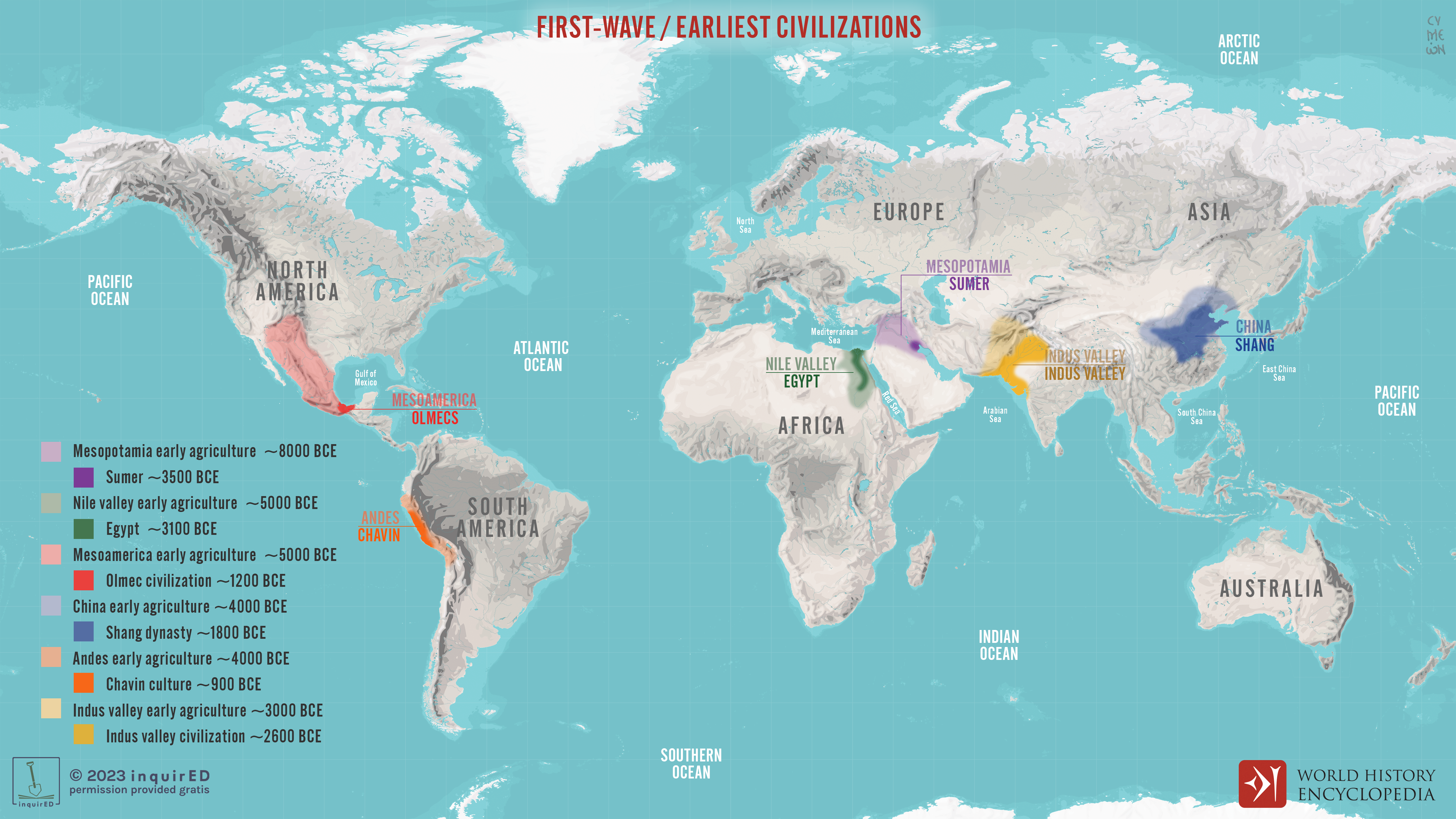
As we begin this topic, it is important to note that the earliest agrarian civilizations emerged in river valleys, where fertile land and access to water supported large-scale agriculture. Dating to approximately 3,500 B.C.E., evidence suggests that the first complex societies arose in regions such as southern Iraq (Mesopotamia), the Nile Valley (Egypt), the Indus Valley (South Asia), and the Yellow (Huang) River Valley (China). In the Americas, civilizations would emerge around 1,500 years later, reflecting the independent yet varied timing of agrarian development across the globe.
Despite arising in different times and places, these early agrarian civilizations shared several common characteristics. These include the use of surplus agricultural production to sustain large populations, the development of centralized governments, the emergence of specialized labor, monumental architecture, systems of recording information, organized religion, and hierarchical social structures. These shared traits highlight the parallel pathways that human societies followed in their transition from simple agricultural communities to complex civilizations.
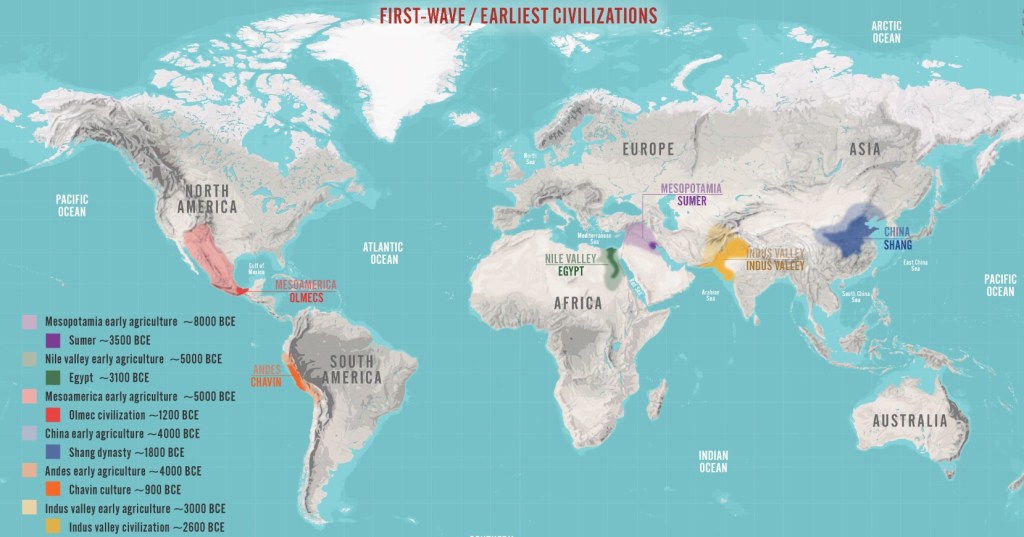
The transition to this new level of human complexity was driven by the interplay of a stable water source, such as rivers, and the adoption of three distinct methods of intensification.
- Shifting/Swidden Cultivation: This method made more land accessible for agriculture by using controlled fire to clear forested areas, preparing them for planting.
- Secondary Products Revolution: Enabled the development of plow agriculture, which relied on domesticated animals as draft animals to perform heavy labor.
- Irrigation: Expanded farmland by diverting the flow of small rivers or creating extensive, planned networks of canals.
When discussing the nature of complex societies, key aspects referenced include their size, the number and distinctiveness of their components, the diversity of specialized social roles they encompass, the variety of individual personalities present, and the mechanisms that organize these elements into a coherent, functioning whole. Understanding the characteristics and functionality of complex societies does not require exclusive focus on the past; we live in one today—Los Angeles.
Simpler societies, such as those from the Neolithic period, were organized primarily through kinship, with leadership existing in its most basic forms. Hierarchical structures of control were not yet formally institutionalized (e.g., through codified laws). Consequently, with some exceptions—such as patriarchal systems—these less complex societies are often regarded as semi-egalitarian.
In contrast, complex societies sustain a ruling authority that monopolizes sovereignty and power. They are characterized by a ruling class that frequently participates in decision-making. With larger populations, complex societies foster “social categorization, stratification, and specialization.” Leadership in such societies is often legitimized through explicit connections to the supernatural, typically in the form of a state religion.
Traditionally, scholars have developed trait lists to distinguish complex societies from Neolithic ones. Among these, the social archaeologist Vere Gordon Childe (1892–1957) provided a particularly influential framework. In a seminal article published in the Town Planning Review during the 1950s, Childe identified ten specific criteria that he argued were shared by complex societies, or civilizations. He referred to this new level of complexity as the ‘Urban Revolution.’ His criteria outlined a ‘series of interrelated social, economic, political, and cultural changes that led to the development of the earliest states and cities.’ Let us briefly examine this influential list.
- Size: The first cities were significantly larger and more densely populated than any earlier settlements.
- Population Composition and Function: Urban populations were distinct from those of villages, including full-time specialist craftsmen, transport workers, merchants, officials, and priests.
- Surplus and Taxation: Primary producers contributed their small surplus, produced with limited technology, as tithe or tax to an imagined deity or divine ruler, who centralized this surplus.
- Monumental Architecture: Truly monumental public buildings distinguished cities from villages and symbolized the concentration of social surplus.
- Ruling Class: Priests, civil and military leaders, and officials absorbed much of the centralized surplus, forming a dominant ruling class.
- Writing: The invention and use of writing emerged as a critical feature of early cities.
- Exact and Predictive Sciences: Cities saw the development of advanced sciences, including arithmetic, geometry, and astronomy.
- Sophisticated Art: Conceptualized and refined artistic styles were created and flourished.
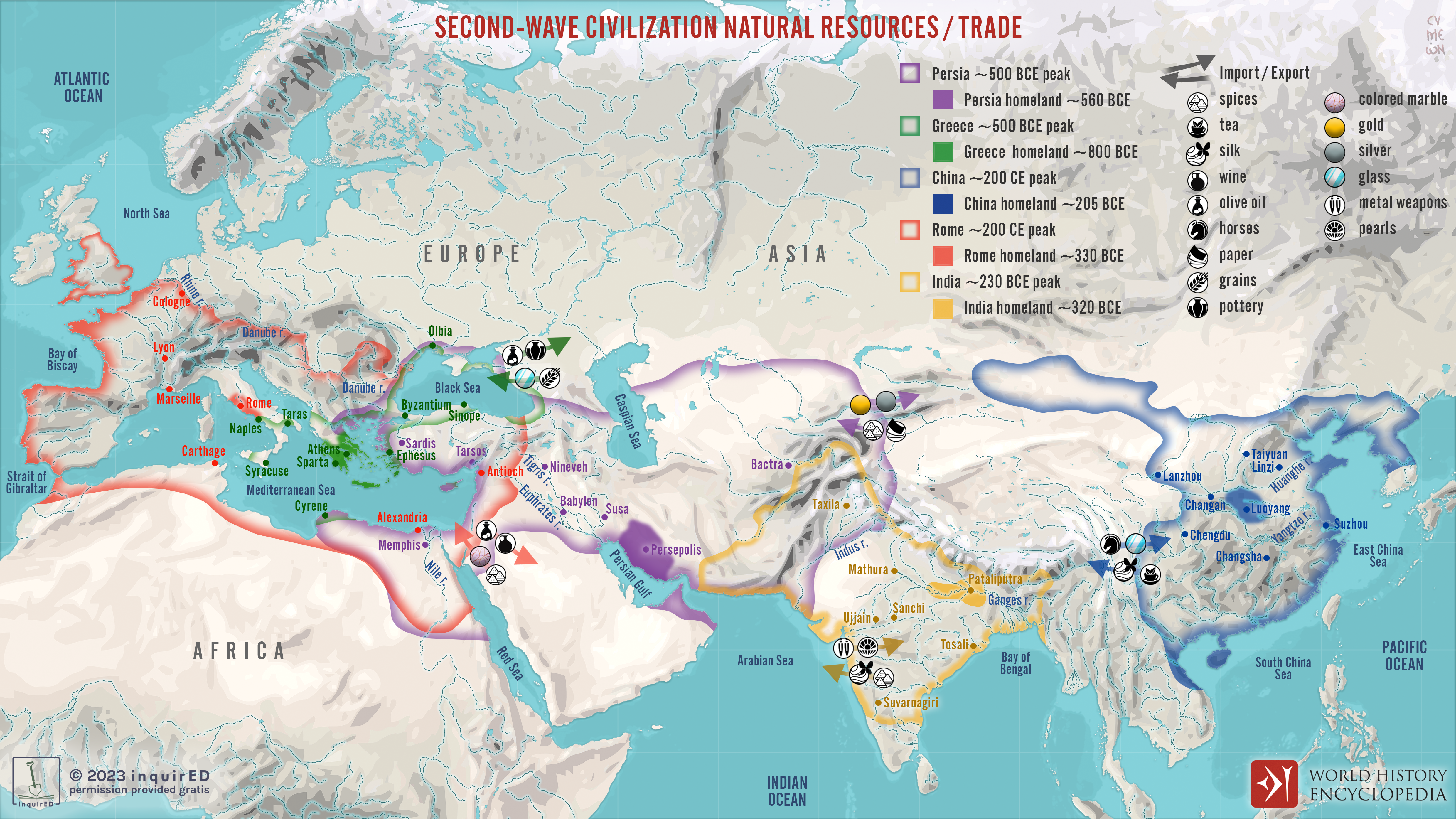
- Long-Distance Trade: Regular foreign trade extended over substantial distances.
- State Organization: Governance shifted from being based on kinship to being based on residence.
Since Childe’s time, advances in conceptual frameworks and archaeological methods have encouraged scholars to investigate a broader range of potential causes for the emergence of complex societies.
- The role of irrigation.
- The need for organization and coordination.
- The interaction between humans and the environment.
More specifically, four schools of thought offer insights into the factors that may have driven the rise of complex societies and states. Scholars propose that complex societies function as problem-solving organizations, adapting to address emerging challenges. Below, we outline these schools of thought, each emphasizing a different aspect of problem-solving in response to specific circumstances.
- Managerial: This framework suggests that as societies face increasing stress or population growth, integrative challenges arise. These challenges are addressed through the development of managerial hierarchies, which help coordinate and resolve emerging organizational needs.
- Internal Conflict: This perspective argues that class conflict is the driving force behind social complexity. Societies become more complex to protect the privileges of a select few who hold preferential access to critical resources, thereby institutionalizing inequality.
- External Conflict: This framework posits that environmental constraints and resulting conflicts drive social evolution. In particular, the pressures of circumscribed environments lead to conflict, while success in warfare necessitates the establishment of institutions to manage and control conquered populations.
- Synthetic: This approach views complexity as the product of multiple, interrelated processes. For example, the rise of agriculture fundamentally reshaped social organizations, driving the development of state institutions and increasing societal complexity.
A Class-Based Society
More recently, scholars have worked to define complex societies as ‘the earliest and simplest form of class-based society.’ What does this mean? During the Paleolithic Age, kinship served as the fundamental principle governing human social relationships. However, in early complex societies, kinship was displaced by class (from the Latin classis) as the primary organizing principle.
For this course, we define class as a ‘hierarchical division defined by the amount of wealth, power, and prestige its members possess.’ This definition stands apart from Childe’s criteria and applies universally to civilizations across the globe, including those in the Americas.
Why specifically highlight the Americas? Societies such as the Inca Empire (Peru) and Teotihuacan (Mexico) illustrate this point. These were highly complex societies that never developed a formal writing system. The Inca, however, employed an alternative form of record-keeping through knotted cords called the quipu. This challenges Childe’s identification of writing as a defining characteristic of complex societies.
Agrarian complex societies required extensive mobilization of resources and subjects to sustain their socioeconomic and political infrastructures. To achieve this, new power networks emerged, taking shape in ideological, economic, military, and political organizations.
Social power—the mastery exercised over others—was essential in these societies. It was reinforced through social stratification, which, when institutionalized, became a cornerstone of the system. Institutionalized stratification enabled these societies to maintain order and purpose, ensuring the efficient functioning of their structures and the consolidation of power.
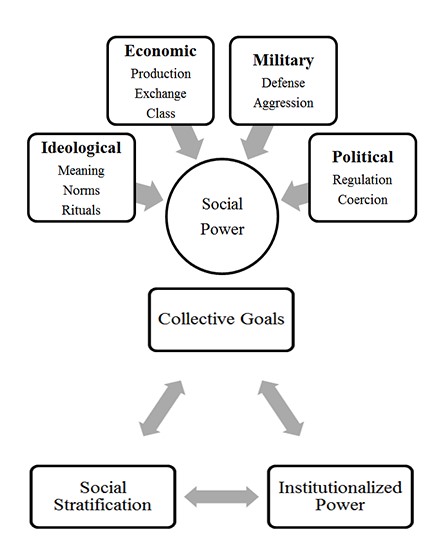
One significant outcome of this system was the establishment of persistent institutionalized inequality. This is defined as ‘differential access to power or resources, characterized by the institutionalization of status hierarchies through hereditary privileges or positions, such as social classes, castes, hereditary titles, or inherited disparities in wealth.’ Social mobility—the movement between or within social classes—was limited, as the majority of the population was required to remain engaged in labor and farming to sustain the socioeconomic system.
Early State Formation
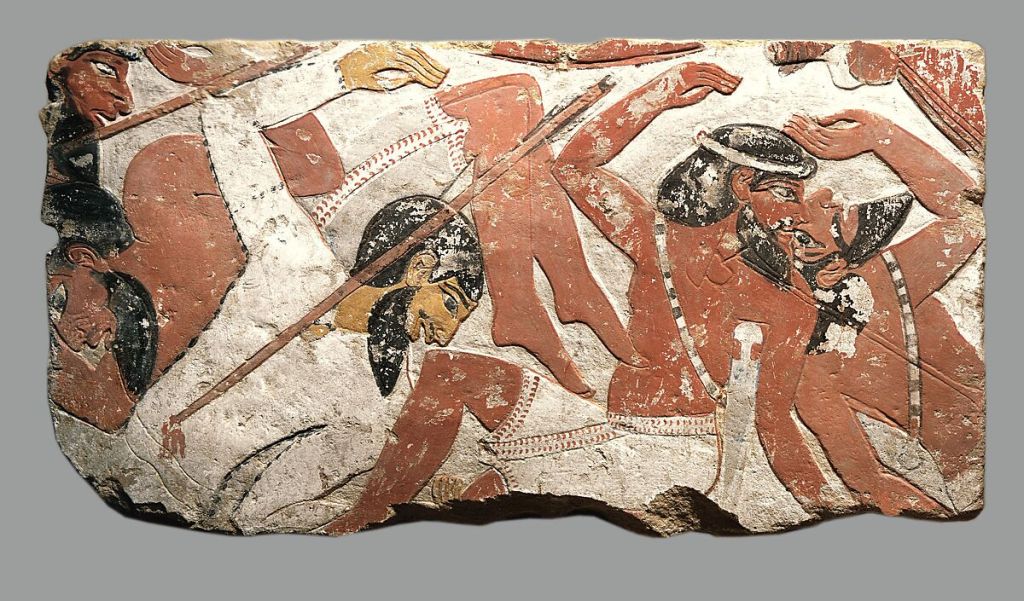
What exactly is a state? One specialist defines it as ‘a politically organized society regarded by its inhabitants as sovereign or politically independent, with leaders who control its social, political, legal, economic, and cultural activities.’
The earliest states to emerge in ancient times took the form of city-states and territorial states. City-states were independent urban centers that exercised control over their surrounding agricultural hinterlands. In contrast, territorial states encompassed a large area unified under a centralized political authority, governed through a hierarchical administrative system at the national, provincial, and local levels, typically with a single capital city. Territorial states often manifested as kingdoms or empires, extending their influence across regions.
Historians observe that most early complex societies were ruled by some form of kingship. Kingship refers to the embodiment of sovereignty or supreme authority in an individual rather than a collective entity. Although the degree of power held by rulers varied across states, there were universal elements to their authority, such as symbolic and administrative centralization.
- Male rulers were generally preferred over female rulers. The stability of kingship was both safeguarded and symbolized through dynastic succession.
- Kings were seen as responsible for the overall welfare of their realms, with key duties that included maintaining order and prosperity, providing defense, and acting as intermediaries between humans and the gods.
- Rituals and ceremonies played a critical role in connecting rulers with their citizens and the divine. As one historian observed, they “displayed and justified the supremacy and legitimacy of kings and reaffirmed command over the social order.”
- The development of writing further emphasized and reinforced this authority.
Mesopotamia – List of Rulers
One of the earliest examples of a complex society emerged in Mesopotamia, a term of Greek origin meaning ‘land between two rivers.’ The name Sumerian comes from the Babylonian designation for Lower Mesopotamia (Sumer). The two rivers that shaped Mesopotamia’s landscape and sustained its civilizations were the Tigris and the Euphrates. Geographically, this region corresponds largely to modern-day Iraq.
According to specialists, the Sumerians began transitioning to a sedentary lifestyle during the Uruk Culture phase (c. 4000–2900 BCE). This transition marked significant developments in agriculture, urbanization, and social organization, ultimately culminating in the rise of the Early Dynastic or Sumerian Period.
Scholars also believe that the Sumerians migrated into Mesopotamia, where they encountered and interacted with indigenous agricultural cultures of the region. Linguistic studies of the Sumerian language suggest that the Sumerians acquired agricultural knowledge from these indigenous groups. Evidence for this is found in the adoption of non-native terms into the Sumerian language, including words related to farming
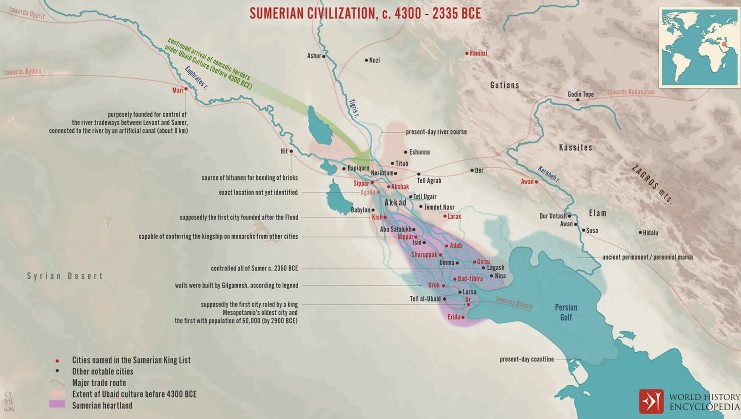
The Ubaid culture serves as an example of one of these indigenous agricultural cultures in Mesopotamia. Linguistic studies reveal that many non-Sumerian words in the Sumerian language are linked to agricultural specializations, such as farming techniques and tools. This evidence supports the conclusion that the Sumerians were initially a nomadic people who adopted agriculture after migrating into Mesopotamia and interacting with its established agricultural communities.
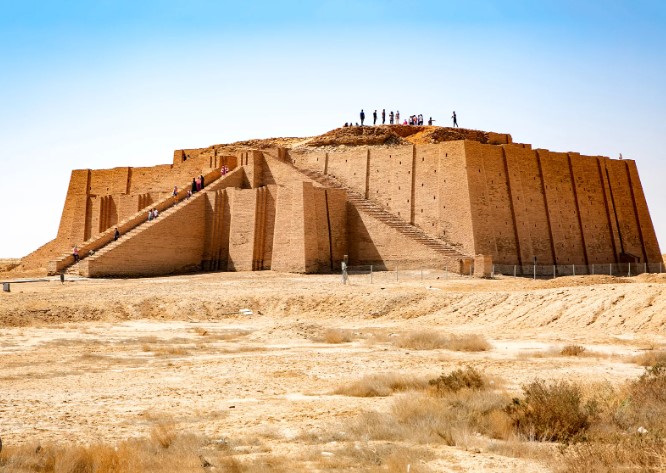
After settling in Mesopotamia, the Sumerians established some of the earliest city-states, including Lagash, Umma, and Ur. These urban centers were home to populations estimated to range from 25,000 to 50,000 inhabitants. To assert control over the socio-economic and political landscape, rulers relied on literate bureaucracies, taxation systems, and organized militaries.
The development of writing methods, initially for accounting purposes, became essential for managing the growing complexity of these societies. Urban markets flourished, creating a demand for specialists whose skills and talents contributed to the city’s economic vitality.
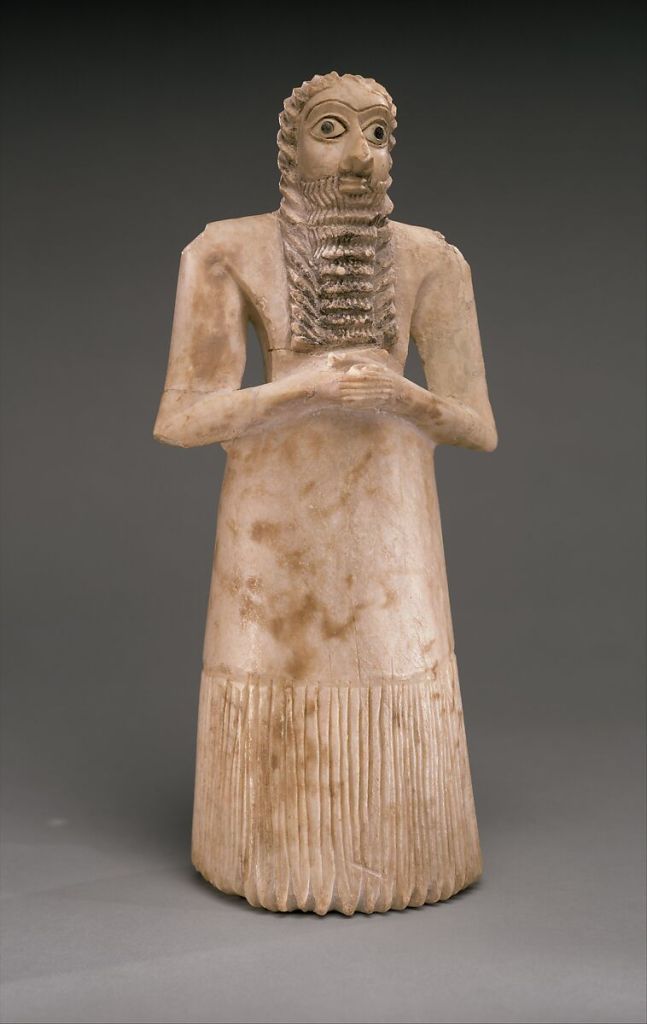
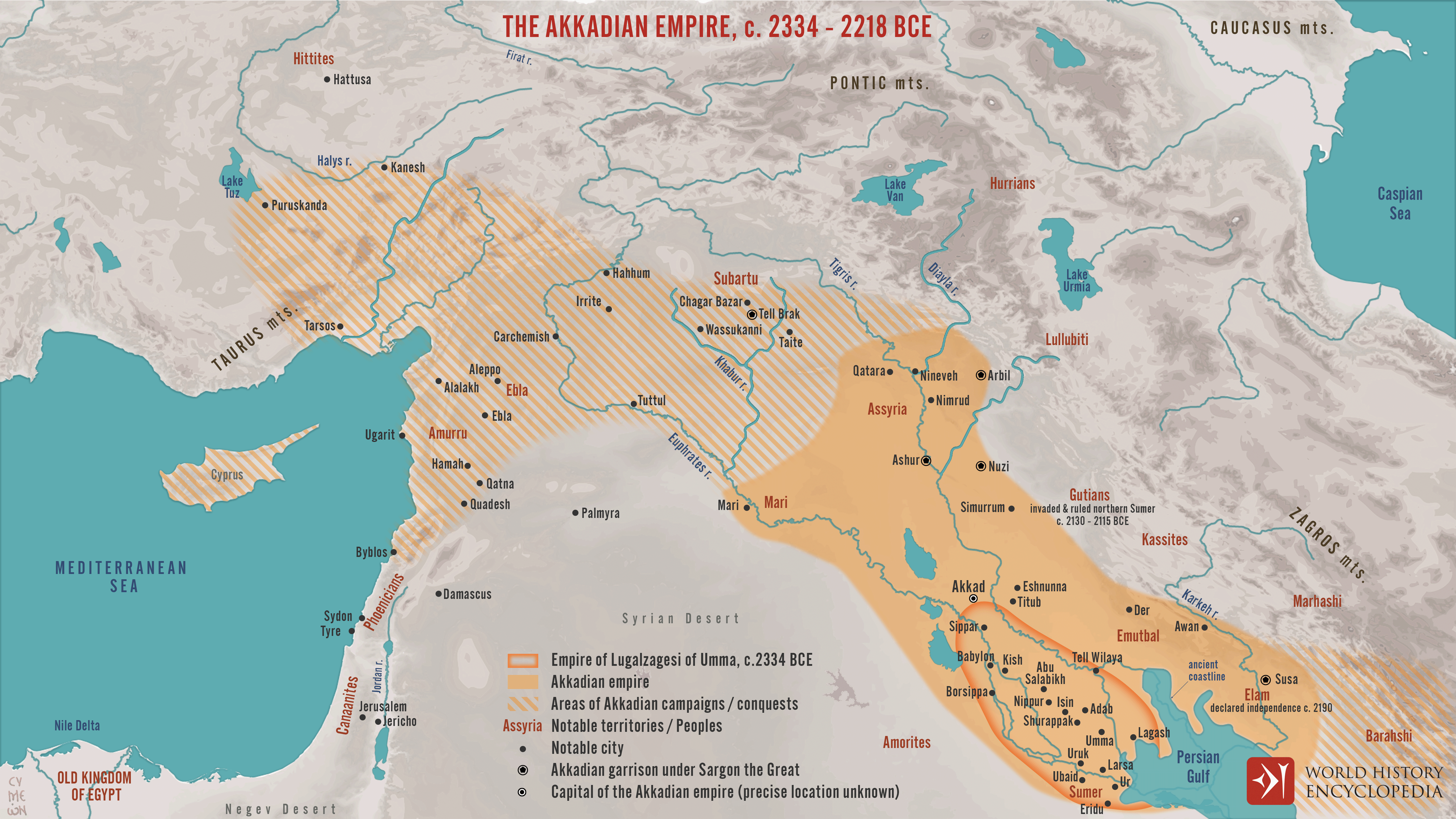
Alongside the Sumerians, Semitic-speaking peoples migrating from the Levant also settled in Mesopotamia. Among them were the Akkadians (c. 2334–2154 BCE), who were the first to attempt the political centralization of Mesopotamia. They established the region’s first territorial state, marking a significant milestone in the development of complex societies in the ancient world.
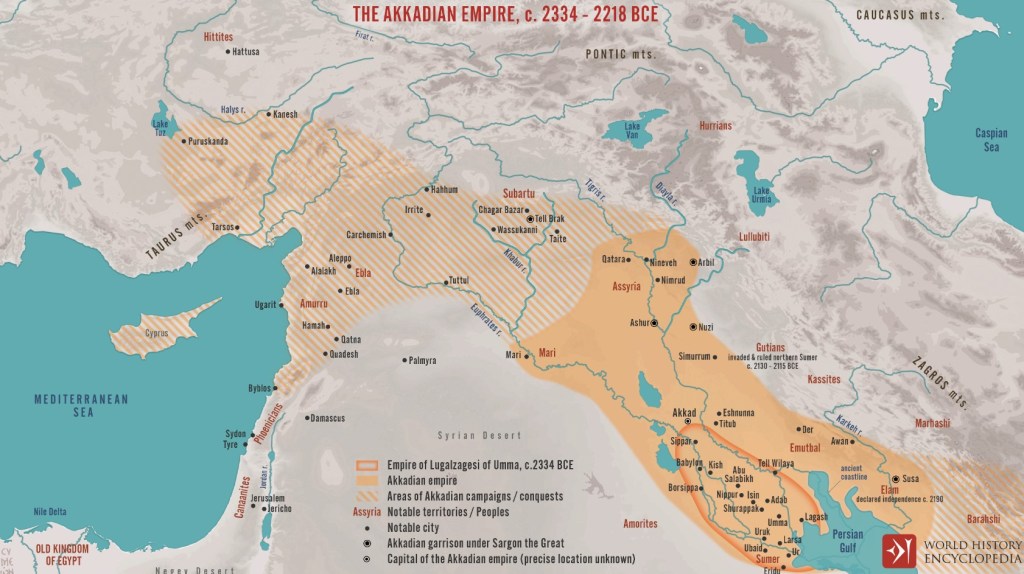
After conquering Mesopotamia, the Akkadians implemented key standardizations in writing, weights and measures, and archive keeping—hallmarks of the machinery of centralization. They also played a pivotal role in disseminating Sumerian culture throughout the region.
The Dynasty of Akkad (or Agade) was founded by Sargon (also known as Sargin, r. 2334–2279 BCE), who rose to power after leading a palace revolt in 2334 BCE against Ur-Zabba, the ruler of Kish. Despite Sargon’s monumental role in history, little is known about his family background. The Akkadian Empire reached its zenith under the rule of Naram-Sin (r. 2260–2223 BCE), Sargon’s grandson, who, according to royal titulary, was deified during his reign.
An Amorite dynasty, with its political center at Babylon, dominated Mesopotamia from approximately 1894 to 1595 BCE. Hammurabi (r. c. 1792–1750 BCE), Babylon’s most celebrated ruler, is remembered as the ‘Law Giver’ due to the survival of his extensive law code. Discovered in Susa (modern southwest Iran) in 1902, Hammurabi’s Code addresses a broad spectrum of legal themes, including false testimony, theft, tenure of royal fiefs, agricultural work, housing, commerce, deposits and debt, assault and battery, professions (both free and subordinate), and slavery.
These legal provisions offer historians invaluable insights into the complexities of Babylonian society, shedding light on its social hierarchies, economic practices, and daily life. Following the collapse of Babylon, Mesopotamia became a battleground for new empires and peoples vying for dominance.
Egypt – List of Rulers
Similar to Mesopotamia, Egypt developed alongside an abundant water supply: the Nile River. The annual inundation of the Nile was the lifeblood of Egyptian civilization. The fertile black silt deposited by the flooding inspired the Egyptians to refer to the Nile Valley as Kemet (‘the black land’). The Greek historian Herodotus (c. 490–430 BCE) famously remarked in his Histories that ‘Egypt is, as it were, the gift of the river.’
Cultivated strips of land flourished along both banks of the Nile, while its waterway served as a vital channel of communication, connecting settlements and facilitating trade and cultural exchange.
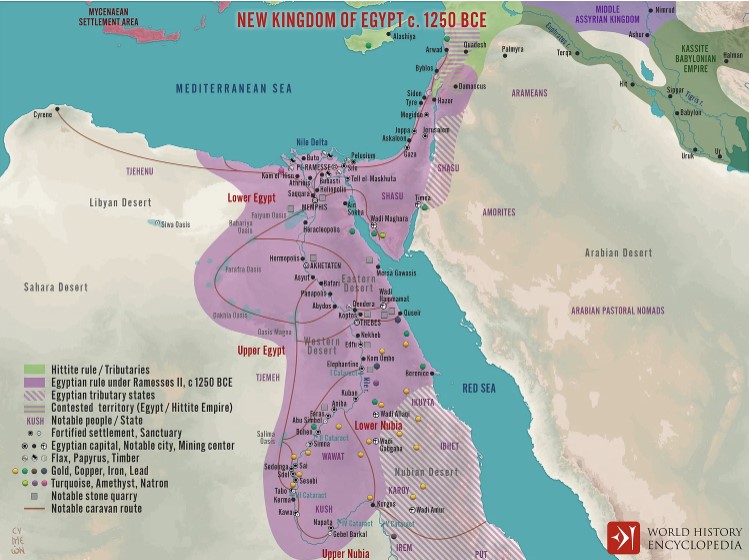
Some of the earliest cities to emerge in ancient Egypt include Hierakonpolis, Memphis, and Thebes. Unlike Mesopotamia, Egypt enjoyed relative political continuity for over 2,000 years. This stability was largely due to the natural barriers surrounding the Nile Valley—vast deserts on both sides—which provided protection from invasions. In contrast, Mesopotamia lacked such geographic defenses, leaving it vulnerable to repeated conquests by foreign powers.
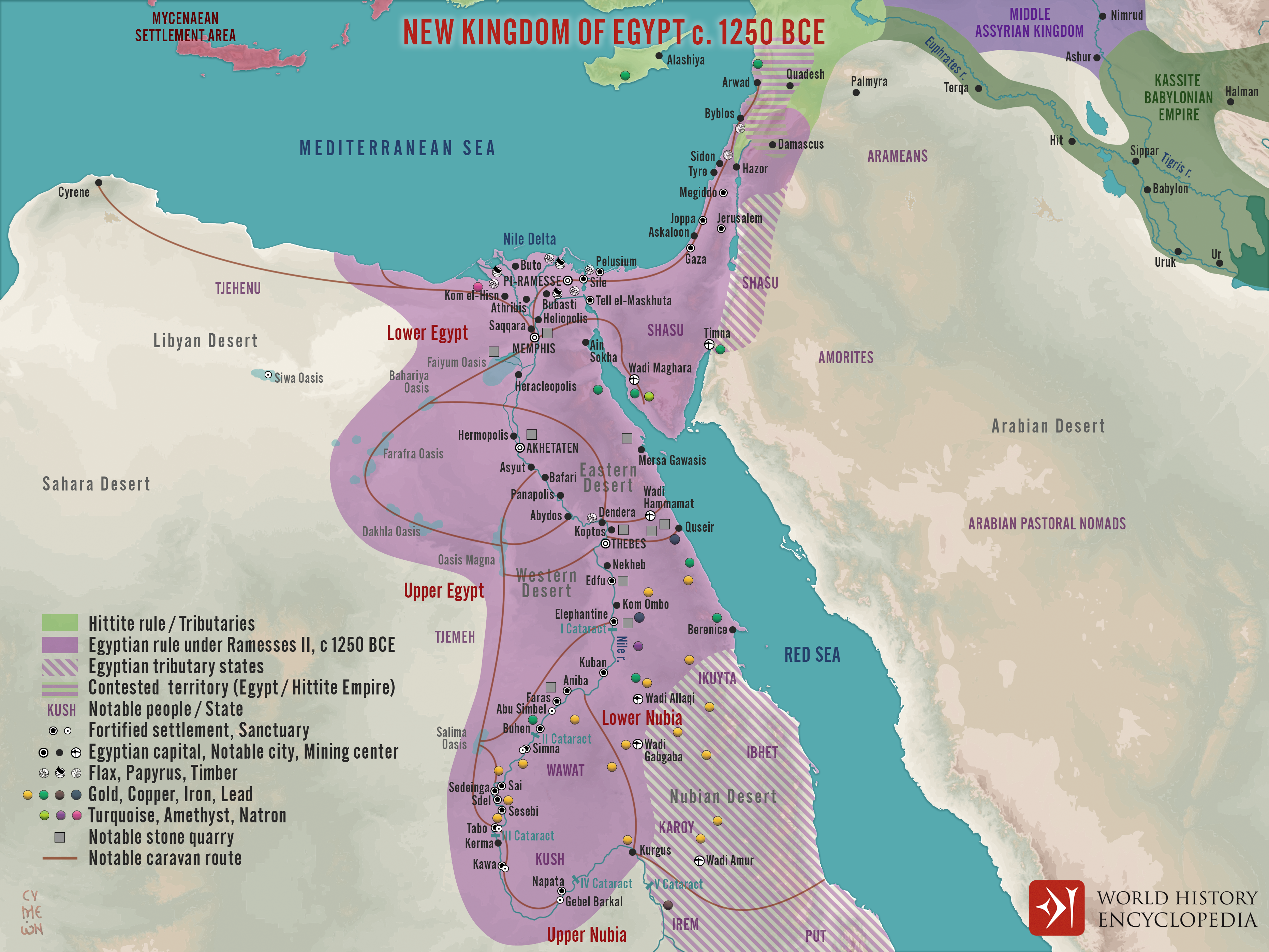
In contrast to Mesopotamia’s early political history under the Sumerians, Egypt rapidly evolved into a territorial state in the form of a kingdom. During the early Archaic Period, around c. 3100 BCE, Lower and Upper Egypt were unified by Menes (or Narmer), marking a significant milestone in the nation’s history. This unification occurred remarkably early in Egypt’s development as a complex society.
Below are the key periods of Egyptian history that chronicle its political and cultural evolution.
- Egypt Old Kingdom (c. 2649-2130 B.C.E.)
- Egypt Middle Kingdom (c. 2030-1650 B.C.E.)
- Egypt New Kingdom (c. 1550-1070 B.C.E.)
- Egypt Late Period (664-332 B.C.E.)
Egypt briefly established itself as an empire, extending its influence as far south as ancient Nubia. Driven by economic incentives, Egypt maintained control over this region until approximately 1050 BCE. Following Egypt’s withdrawal, a new territorial state emerged in Nubia, known as the Kingdom of Napata/Meroe.
Under the influence of their Egyptian neighbors to the north, the Meroites developed their own writing system, reflecting the cultural exchange between the two regions. The Kingdom of Meroe flourished until its decline around 300 CE, when power shifted to the rising Kingdom of Axum.
China – List of Rulers
Chinese sources suggest that one of the earliest examples of civilization in China was the Xia Dynasty (c. 2000–1500 BCE). Unfortunately, no written records from the Xia have survived to the present. Modern knowledge about this dynasty is derived primarily from the archaeological record and historical accounts, such as Records of the Grand Historian by Sima Qian (145–89 BCE). These sources offer valuable insights, though the Xia’s historical authenticity remains a topic of debate among scholars.
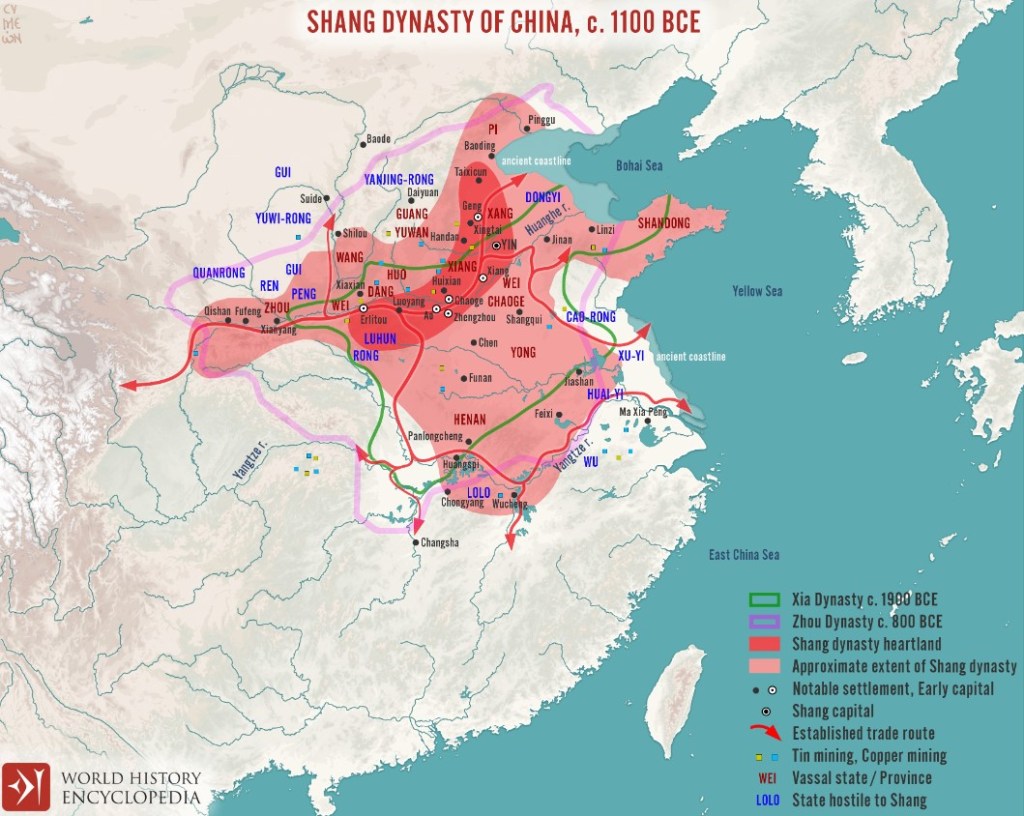
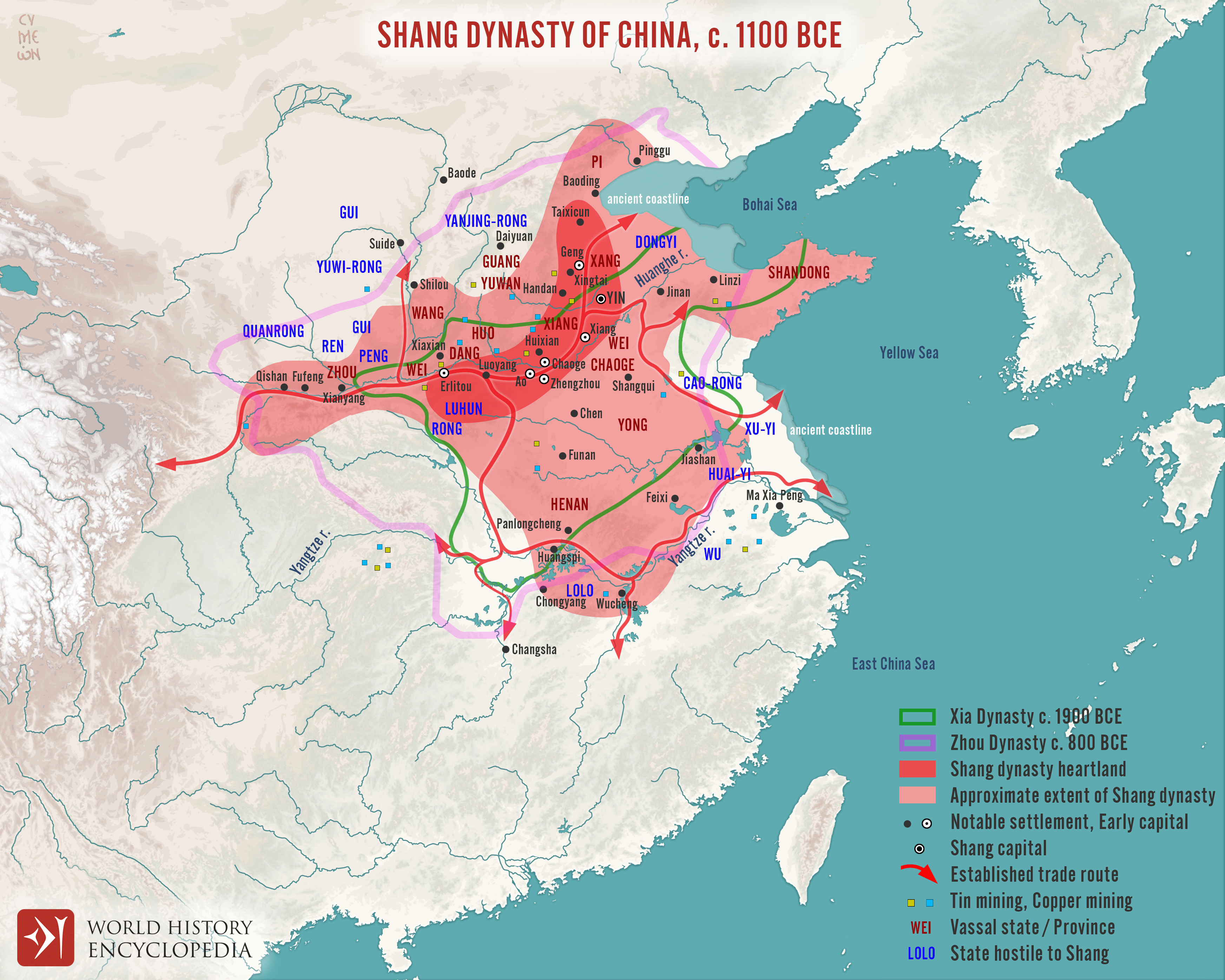
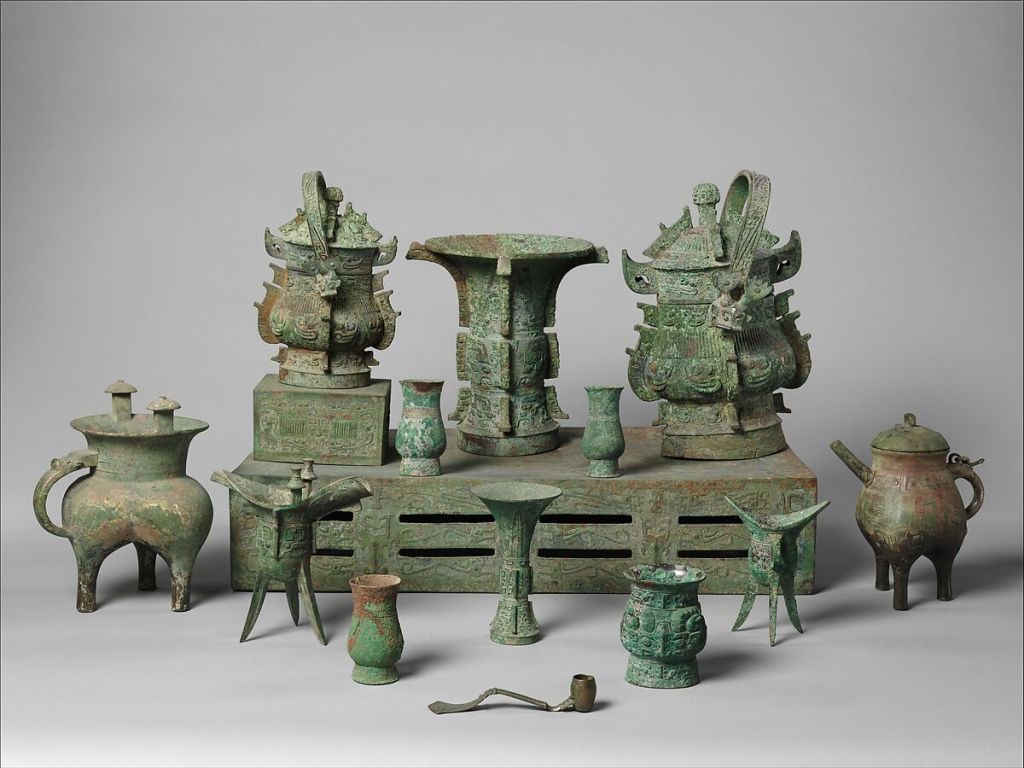
The Shang Dynasty (c. 1500–1045 BCE) is recognized as China’s first historical dynasty, so named because written records from this civilization have survived to the present. Scholars consider the Shang Dynasty a foundational model for the political and cultural frameworks of later Chinese dynasties.
The Shang state was organized as a network of hundreds of walled towns connected through a hierarchical structure. Economic resources flowed between these towns, reflecting a complex system of interdependence that underpinned the dynasty’s administrative and economic stability.
One of the most powerful regions and peoples outside the Shang sphere of influence was the Zhou. Over time, the Zhou supplanted the Shang and established a new dynasty in China. To legitimize their rule, the Zhou introduced the concept of the Mandate of Heaven, asserting that their authority was divinely sanctioned and dependent on virtuous governance.
A fundamental weakness of the Zhou political system lay in its tendency toward decentralization. The Zhou implemented a system of fiefs and principalities, granting political authority over domains to family members and prominent aristocratic families. These fiefs became hereditary, functioning as smaller replicas of the Zhou state. However, this structure inherently fostered instability, as it allowed the principalities to consolidate power and posed a continual threat of rebellion.
Over time, as principalities strengthened their power bases, the Zhou leadership faced increasing challenges to its authority, both from within its own territories and from external forces.
Indus Valley
The early history of the Indus Valley is marked by the rise of the Harappan civilization (c. 2500–1500 BCE), named after the ancient city of Harappa. Alongside Mohenjo-Daro, Harappa was one of the largest urban centers of this civilization. Many scholars suggest that the language spoken in this region may have been Dravidian.
Discussions of the socioeconomic and political characteristics of the Harappan state, however, remain inconclusive. This uncertainty is largely due to the fact that the Harappan writing system has not yet been deciphered, leaving many aspects of their society shrouded in mystery.
Archaeological evidence suggests that Harappa and Mohenjo-Daro exhibited advanced levels of surplus production, commerce, and division of labor. Based on this evidence, historians infer that hierarchical social distinctions in Harappan society were likely comparable to those observed in ancient Egypt and Mesopotamia. Similarly, many scholars propose that Harappan political organization may have paralleled the centralized structures seen in these other early civilizations, though the lack of deciphered written records limits our understanding.
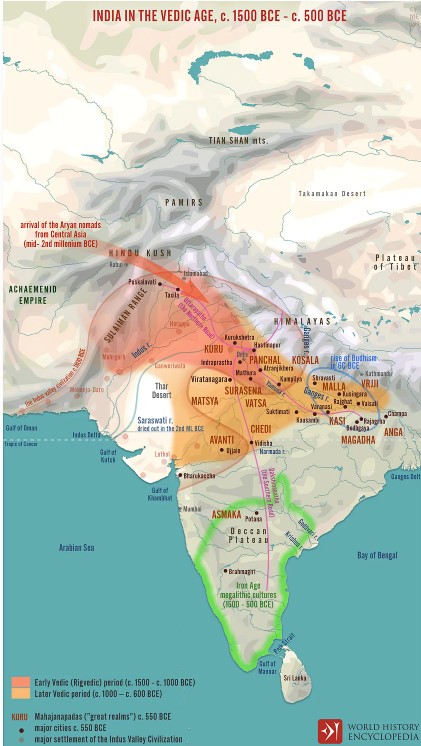
Between c. 4000 and 1500 BCE, Indo-European-speaking peoples, believed to have originated in the region of Ukraine and southern Russia, began migrating to various parts of Europe, Mesopotamia, India, and Central Asia. By 1500 BCE, a group of these Indo-European-speaking peoples, who referred to themselves as Aryans (‘noble people’), had begun migrating into the Indo-Pakistan subcontinent.
The arrival of the Aryans marked a transformative period in Indian history, often referred to by scholars as the Vedic Age (c. 1500–1000 BCE). This era laid the foundation for significant cultural, religious, and social developments that would shape the region’s history.
Mycenaean
The rise of civilization on mainland Greece is marked by the Mycenaean civilization (c. 1650–1100 BCE). Historians reconstruct the history of the Mycenaeans through a combination of archaeological evidence and written texts, such as Linear B tablets.
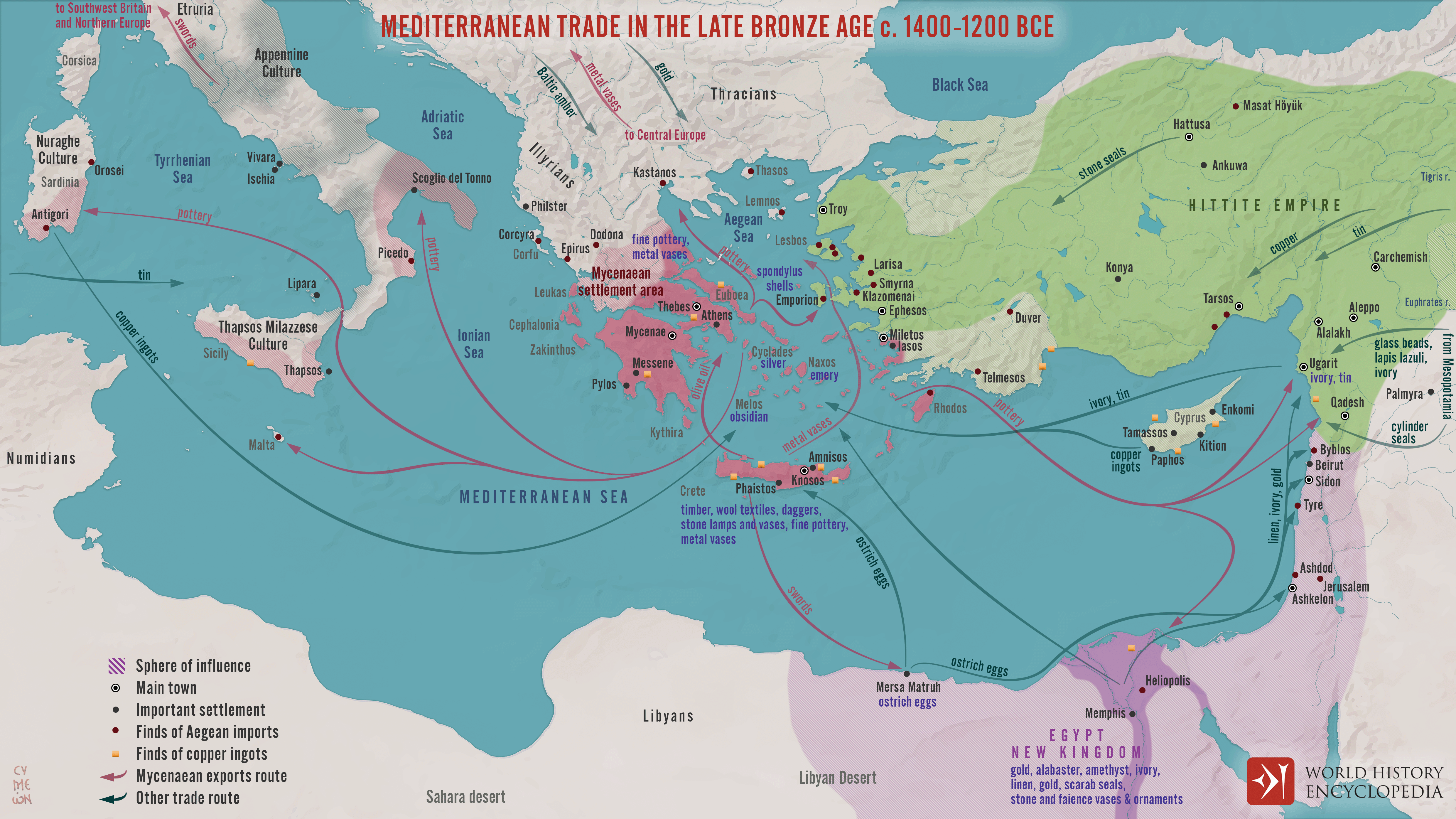
Scholars believe that the Mycenaeans engaged in extensive travel in search of resources. For example, they sought tin in Iberia, copper in Cyprus, silver in Attica, and gold in Thrace. Over time, the Mycenaeans developed into a dominant maritime power in the Aegean Sea, eventually supplanting the Minoan civilization, which had long held influence in the region.
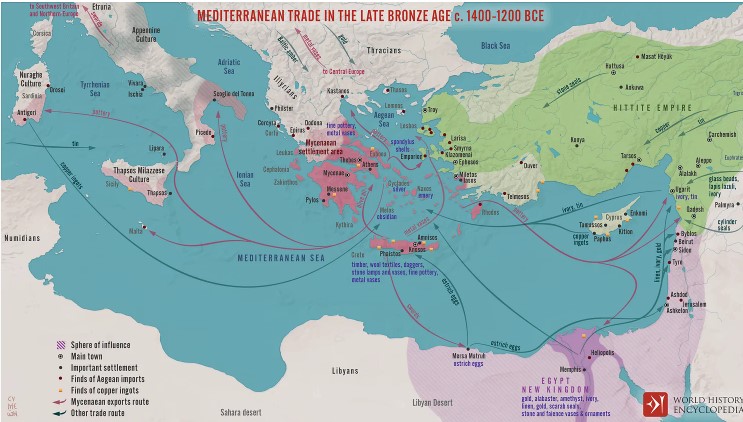
There is no consensus among scholars regarding the cause of the decline of Mycenaean civilization. Some propose that internal warfare and political instability may have led to its downfall. Others suggest that invasions by the Dorians (an Indo-European-speaking people, c. 1200–900 BCE) were a decisive factor in the collapse. Additionally, some scholars argue that natural phenomena, such as earthquakes or climate change, may have played a significant role in the decline of Mycenaean society
The collapse of Mycenaean civilization ushered in a period of depopulation and a significant decline in urbanism in ancient Greece. Scholars refer to this era as the Dark Ages. This period was also marked by the decline of writing, leaving little historical record to illuminate the events and developments on mainland Greece during this time. As a result, much about this era remains uncertain.
Religion
From the surviving sources, we see that many early civilizations quickly established what are termed state religions. These were religions supported by the state, which in turn provided ideological support for the state’s authority. This integration of religion and governance created a religiously centered culture that facilitated the following:
- A Sense of Collective Normative Identity: State religions provided a shared belief system that unified members of society, fostering a collective identity.
- An Ability to Cooperate: Shared religious values and rituals facilitated cooperation among individuals and groups, enabling societal cohesion.
- A Framework for Organizing Social Relations: State religions often dictated social hierarchies and relationships, influencing laws and customs.
- Satisfaction of Social Needs: By addressing questions about the genealogy and origins of society, state religions provided meaning and reinforced cultural continuity.
- Established Sources of Legitimate Authority: Religion conferred divine legitimacy on rulers and governance structures, strengthening their control and societal acceptance.”
Early religious systems were characterized by their strong focus on the collective and on ritual practices. These systems emphasized communal identity and shared ceremonial activities as central elements of religious life. However, this emphasis would shift significantly with the advent of the Axial Age, as we will explore in the next topic.
- Religious Life Linked to Social Life: Early religious systems emphasized the primacy of the social group over the individual, with collective well-being as the focus.
- Collaborative Ritual Action: Religious practices were controlled by agents (such as priests or elites) acting on behalf of the group rather than centered on individual spiritual experiences.
- Entrenchment of Inequality: These systems often reinforced social hierarchies, perpetuating inequality, exploitation, and domination within society.
- Focus on Human Flourishing: The primary goal of these religions was to ensure prosperity, health, longevity, and fertility for the community.
- Ritual-Based Practices: Early religions were predominantly centered on rituals, with less emphasis on personal belief or abstract theology.
Polytheism is a form of religion that recognizes and worships multiple deities, each distinguished and personalized by specific names, forms, and functions. Polytheistic systems often articulate a common semantic universe, meaning that the names and identities of gods can be translated across cultures, enabling the assimilation of deities from different traditions. This adaptability explains the cultural borrowing frequently observed in ancient polytheistic religions, such as those of Mesopotamia.
In most polytheistic societies, rulers acted as intermediaries between the gods and their people, although in some cases, such as ancient Egypt, rulers claimed divinity themselves. Additionally, these civilizations saw the rise of a priestly class responsible for maintaining temples, performing rituals, and communicating with the divine. Notably, the priestly class was among the earliest groups to master the technology of writing, using it to document religious practices and uphold their societal roles.
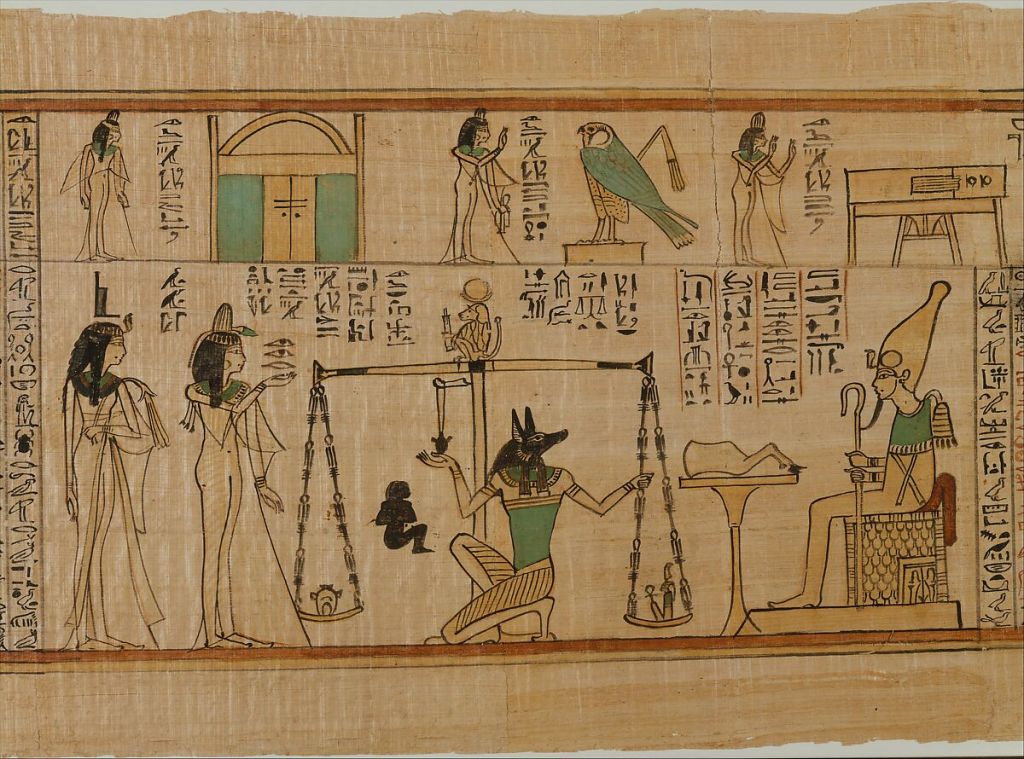
The rise of monotheism marks a radical departure in the early history of religion. Monotheism is defined as the belief in a single, all-encompassing deity. The classical explanation for the emergence of monotheism suggests that it represents a natural progression from polytheism, a theory known as evolutionary monotheism. This theory proposes that monotheism evolved from polytheism through the following stages:
- Polytheism (the belief in many gods who are usually personifications of natural forces)
- Henotheism or monolatry (the worship of one god as supreme over other gods)
- Monotheism (the belief in the reality of only one god)
In contrast to the evolutionary view, the scholar Yehezkel Kaufmann (1930s) argued that monotheism could not have evolved from polytheism due to their fundamentally divergent worldviews. Kaufmann proposed that monotheism was, and is, a counter-religion to polytheism. This perspective, termed Revolutionary Monotheism to distinguish it from Evolutionary Monotheism, is based on the central premise of one true God (monotheism) in opposition to the concept of false gods (polytheism).
Zoroastrianism, one of the world’s oldest continuously practiced religions, was founded by the prophet Zarathushtra (Zoroaster) sometime between c. 1400–1200 BCE. It became the state religion of three great Iranian empires: the Achaemenids (550–330 BCE), the Arsacids/Parthians (247 BCE–224 CE), and the Sasanians (224–650 CE).
The teachings of Zarathushtra are preserved in The Gathas, a collection of hymns written in the ancient language of Gathic/Avesta. The Gathas outline both a philosophy of life and a code of conduct. According to Zarathushtra, the world was created by Ahura Mazda (‘Wise Lord’), who appointed Zarathushtra as its protector and guide. Central to Zoroastrian belief is the cosmic conflict between two opposing moral spirits: Spenta Mainyu (the spirit of goodness) and Angre Mainyu (the spirit of evil).
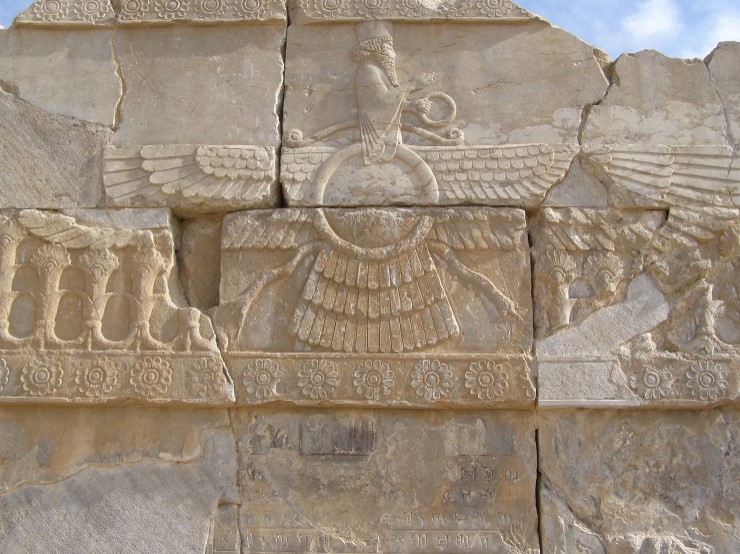
For Zarathushtra, the world is ‘an intrinsically good, divine creation, contaminated by evil, but capable of being perfected by the actions of humans because of their capacity for moral choice.’ This capacity entails that ‘humans must avoid lies, support the poor, and prepare for a Last Judgment.’ The central challenge for humanity, according to Zarathushtra, is to resist evil and live a life guided by truth and righteousness.
Many scholars suggest that Zoroastrianism influenced later religious systems, including Judaism and Christianity, as they share several notable characteristics:
- Divine Revelation: The belief in a God who reveals Himself through a prophet, as exemplified by Ahura Mazda’s communication with Zarathushtra.
- Duality of Good versus Evil: A central theme in Zoroastrianism, embodied by the cosmic struggle between Spenta Mainyu (the spirit of goodness) and Angre Mainyu (the spirit of evil), resonates with similar concepts in other faiths.
- Judgment Day: Zoroastrianism emphasizes a future moment of divine judgment, where individuals are assessed based on their actions in life.
- Human Agency in Salvation: Humans, through their moral choices and righteous actions, are seen as active participants in achieving their own salvation and contributing to the perfection of the world.
These shared elements highlight Zoroastrianism’s profound theological and ethical influence on later monotheistic traditions.
In Closing
Beginning around 1200 BCE, civilizations in Greece, Asia Minor, Syria, and Palestine experienced a period of violent collapse, often referred to as the Late Bronze Age Collapse. Scholars have proposed various theories to explain this widespread destruction of some of the earliest established civilizations.
Among these, Robert Drews offers a compelling argument, attributing the Catastrophe to significant changes in warfare. Drews contends that ‘a radical innovation in warfare suddenly gave “barbarians” the military advantage over the long-established and civilized kingdoms of the eastern Mediterranean.’ This shift disrupted the balance of power, leading to the downfall of these complex societies.
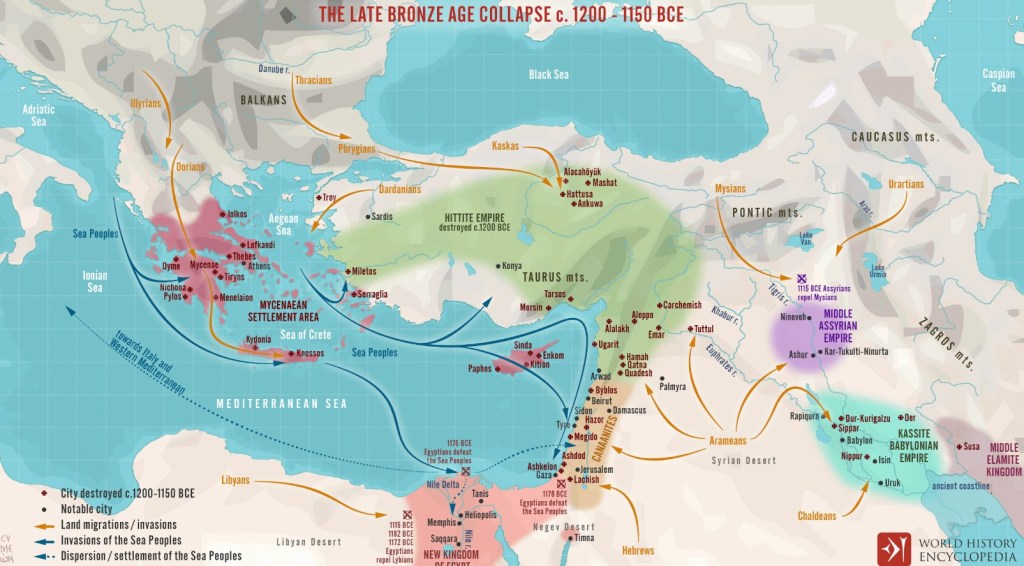
According to Robert Drews, the radical innovation that contributed to the Late Bronze Age Collapse was a shift in military strategy, with a newfound reliance on massed infantry armed with long javelins rather than chariot forces. Foot soldiers, who had previously served in supporting roles, became the central force in military campaigns. Drews argues that this transformation in military composition and tactics led to a dramatic power shift from the ‘Great Kingdoms’ to decentralized groups of infantry warriors.
This upheaval not only brought an end to many long-established civilizations but also paved the way for the rise of new societies. These emerging civilizations, building on the remnants of their predecessors, introduced innovative political structures, social organizations, trade networks, and worldviews, setting the stage for a new era of human history.
 World History Portal