INTRODUCTION
This topic covers significant developments in ancient Indian history, focusing on the Mauryan Empire and the evolution of major religious traditions. These developments highlight the dynamic interplay between political power and religious thought in ancient India, shaping its cultural and historical trajectory. This topic’s key points include:
Mauryan Empire:
- Formation and Expansion: Following the withdrawal of Persian and Macedonian influences, Chandragupta Maurya founded the Mauryan Empire around 320 B.C.E., establishing Pataliputra as its capital. He expanded the empire to encompass the entire Ganges basin and the Indus Valley.
- Governance: Chandragupta’s advisor, Kautilya, authored the Arthashastra, a treatise detailing statecraft, economic policies, and military strategies. This work provided guidance on fortifications, trade promotion, and espionage.
- Asoka’s Reign: Asoka, the third Mauryan ruler, initially engaged in a devastating war against Kalinga, resulting in significant loss of life. This event led him to adopt Buddhist principles, which influenced his administration and policies, promoting non-violence and moral governance.
Religious Developments:
- Brahmin Dominance: During the Vedic Age, Brahmins (the priestly class) became central figures in society by performing essential rituals and sacrifices to appease the gods, holding exclusive knowledge of these ceremonies.
- Jainism: Founded by Mahāvīra (599–527 B.C.E.), Jainism emphasizes non-violence (ahimsa), truthfulness, and asceticism. It teaches that liberation is achieved through strict ethical conduct and self-discipline.
- Buddhism: Established by Siddhartha Gautama, the Buddha (485–405 B.C.E.), Buddhism focuses on the Four Noble Truths and the Eightfold Path as means to attain enlightenment and liberation from the cycle of rebirth.
- Hinduism: Evolving from earlier Vedic traditions, Hinduism incorporates diverse beliefs and practices, including devotion to various deities, adherence to dharma (duty/righteousness), and the pursuit of moksha (liberation).
THE MAURYAN EMPIRE
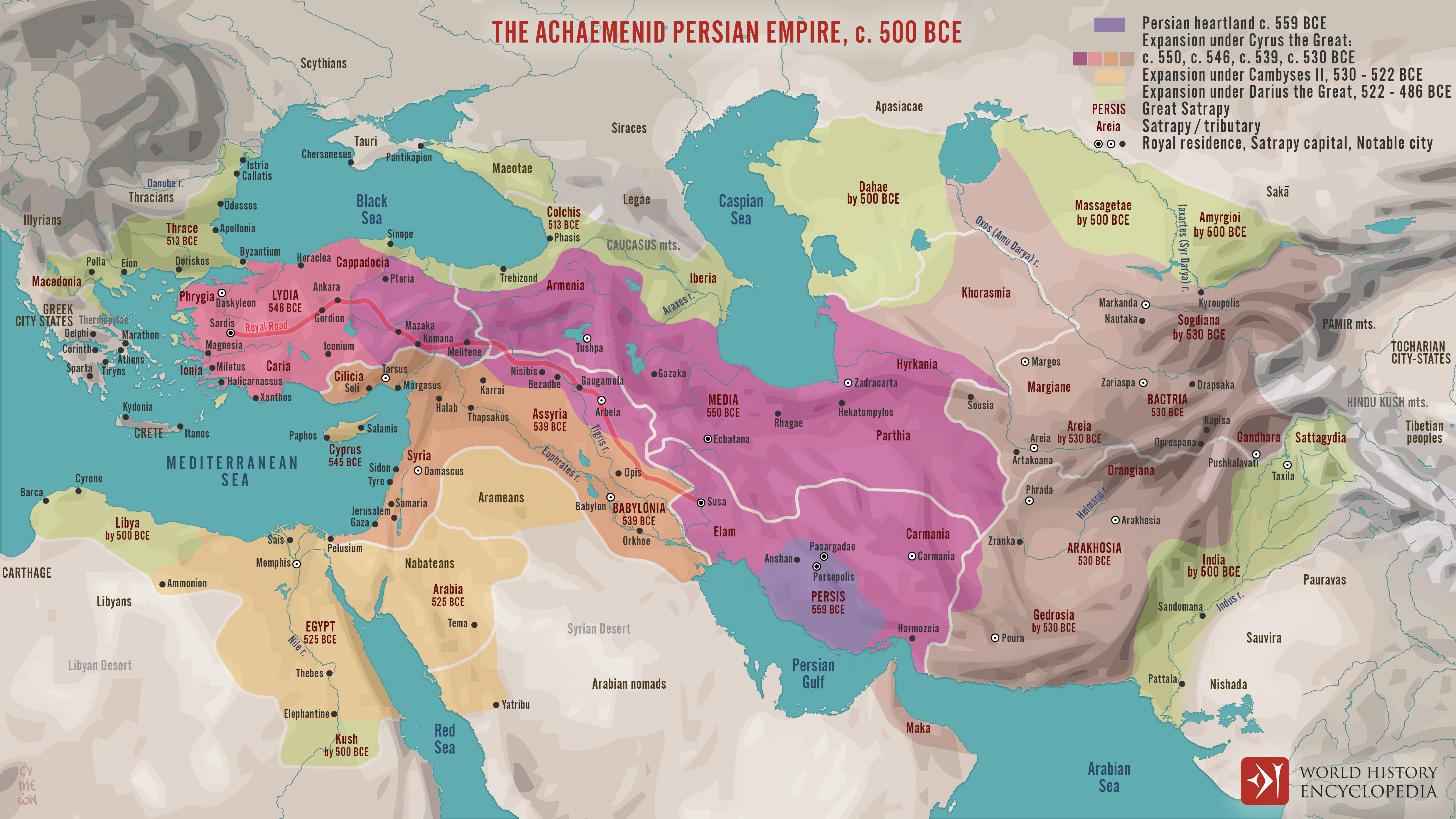
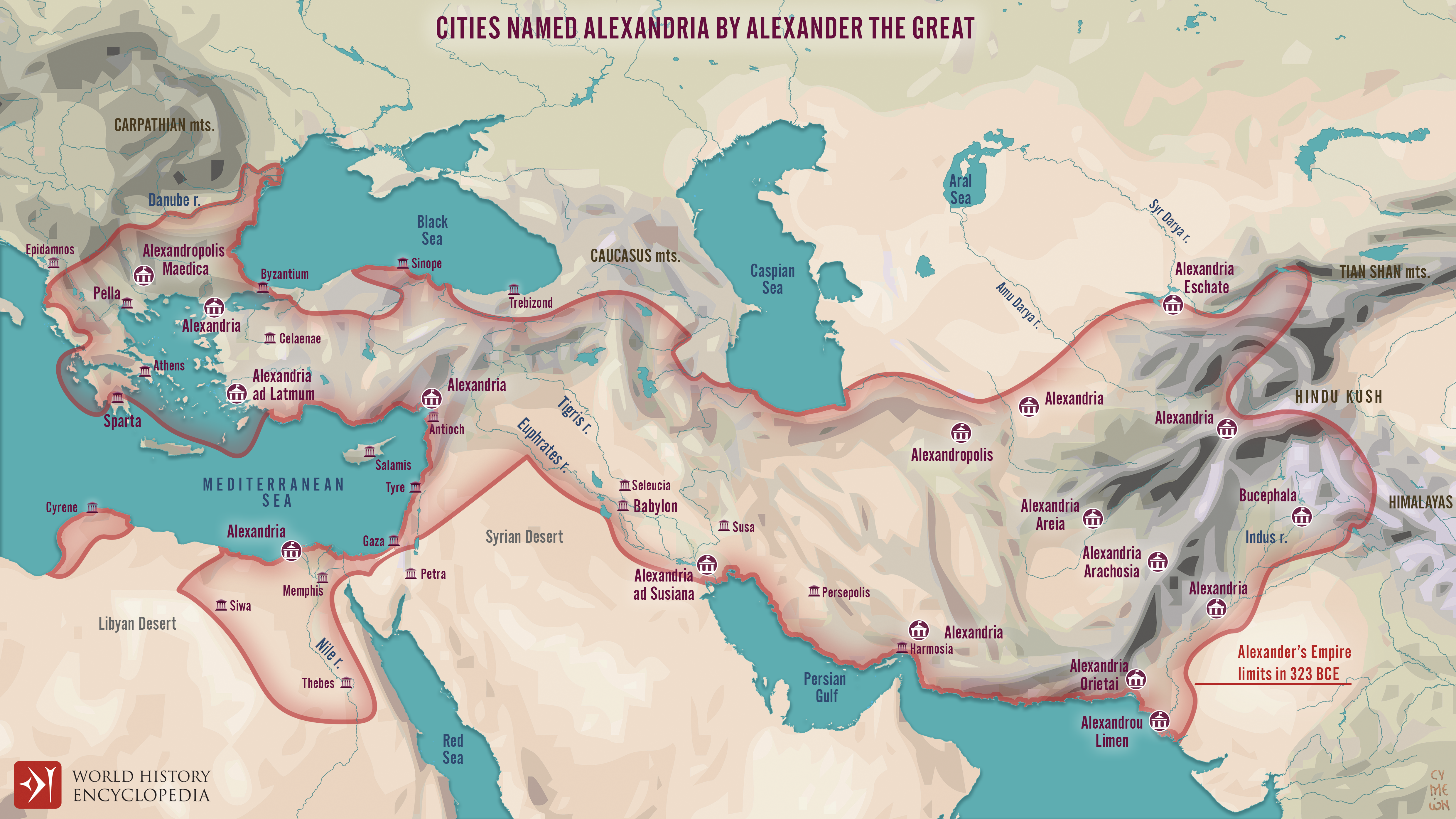
Since the collapse of the Harappan Civilization and the arrival of Indo-European-speaking peoples, the Indo-Pakistan subcontinent experienced significant historical changes, including the rise of small kingdoms and the impact of foreign invasions. Among the most notable invasions were those led by Darius I (522–486 B.C.E.) of the Achaemenid Empire and Alexander of Macedon (328–326 B.C.E.), both of whom left lasting influences on the region’s political and cultural landscape. These events marked a transformative period in the subcontinent’s history, setting the stage for further interaction between local and foreign powers.
The political void left by the withdrawal of Persian and Macedonian influence in the Indo-Pakistan region paved the way for the rise of the Maurya Empire (c. 323–185 B.C.E.). Its founder, Chandragupta Maurya (322–298 B.C.E.), began his ascent to power by targeting the Macedonian outposts left along the Indus River following Alexander’s withdrawal. Building on this momentum, Chandragupta seized control of Magadha, a region south of the lower Ganges, and steadily expanded his territory to encompass the entire Ganges basin. His military campaigns continued westward, culminating in the conquest of the Indus Valley. By 320 B.C.E., Chandragupta had established Pataliputra as the capital of India’s first centralized state, laying the foundations for one of the subcontinent’s most significant empires.
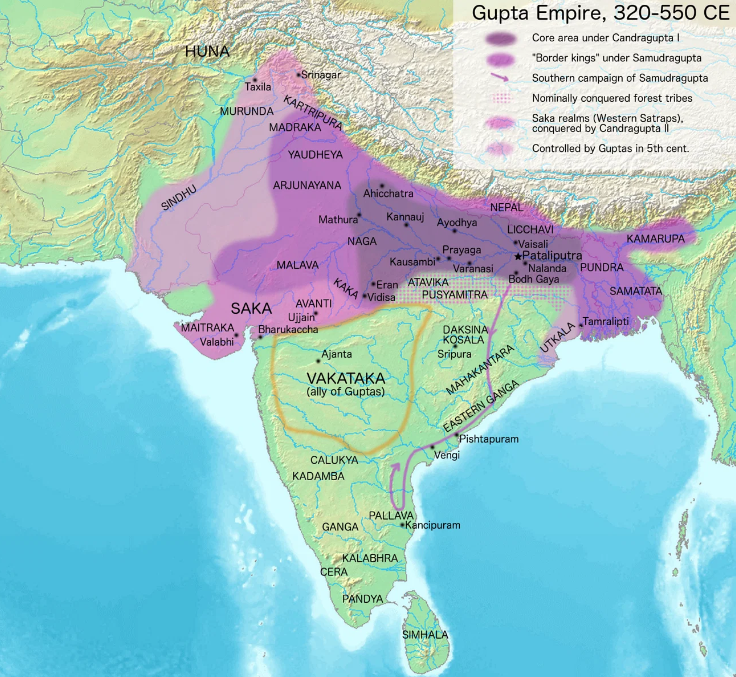
While Chandragupta Maurya established his empire through military conquest, its government was designed by his advisor Kautilya, whose treatise, the Arthashastra, remains a critical source for understanding the workings of the Maurya state. Written as an instruction manual for rulers, the Arthashastra outlines the qualities of an effective leader and offers guidance on managing ministers and the political, economic, and military affairs of the state. It advises rulers to strengthen fortifications, expand irrigation systems, promote trade, cultivate wasteland, develop mines, protect forests, and establish enclosures for elephants. Additionally, it includes strategies for espionage and dealing with subversive elements within the kingdom, reflecting the practical and strategic nature of governance during Chandragupta’s reign.
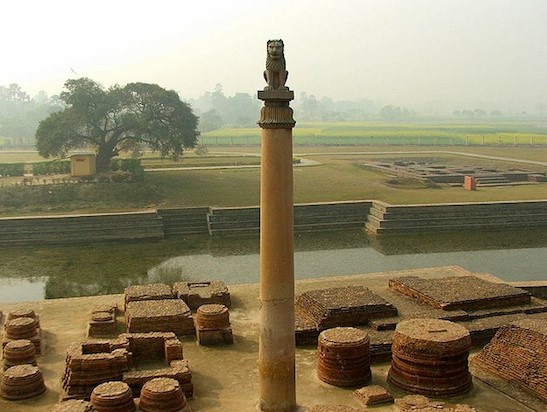
The third Maurya ruler, Asoka (304–232 B.C.E.), is one of the best-documented kings of the dynasty, thanks to his Pillar (Rock) Edicts, a series of inscriptions he left across the empire. Asoka adopted the title Devanampiya Piyadasi, meaning “Beloved-of-the-Gods, He Who Looks on with Affection.” Early in his reign, he waged a devastating war against the kingdom of Kalinga, where an estimated 100,000 people perished. The immense human suffering caused by this campaign profoundly impacted Asoka, leading him to embrace Buddhist principles in the administration of his empire. As a result, Asoka became a pivotal figure in the promotion and spread of Buddhism, both within India and beyond its borders, leaving a lasting legacy on the region’s religious and cultural history.
BRAHMINS AND ARCHETYPES
The arrival of the Indo-European-speaking people marked the beginning of the Vedic Age in India, a period characterized by the rise of the Brahmins (the priestly class) as a dominant force in society. Brahmins gained authority by performing essential rituals and sacrifices to appease the gods, ensuring well-being on earth. These ceremonies required strict adherence to protocol, and the Brahmins held a monopoly on this knowledge, becoming indispensable intermediaries between humans and the divine. When performed correctly, their rituals were believed to invoke divine intervention on behalf of individuals and communities. Beyond their religious roles, Brahmins also held significant political influence, often advising rulers and legitimizing their reigns. One ancient text warns against offending Brahmins, noting that “whenever a king, fancying himself mighty, seeks to devour a Brahman, [his] kingdom is broken up. Calamity smites that country in which its priest is wronged.”
However, the dominance of the Brahmins and their ritual-centered worldview would come under scrutiny during the Axial Age. As in other parts of the world, India witnessed a wave of reformers who challenged the established traditions. These thinkers questioned the authority of the Brahmins and moved away from the ritualistic practices that defined the Vedic Age. Instead, they focused on deeper questions about human existence, the nature of life, and the pursuit of liberation. This philosophical shift led to a reorientation of Indian religious practices, replacing external rituals with inward practices aimed at transcending the material world and achieving personal liberation.
This new focus on transcendence gave rise to diverse religious traditions in India. While these religions offered different paths to liberation, they shared several archetypes or common themes. Below are the three major archetypes that emerged from this transformative period.
Samsara
“The cycle of death and rebirth.”
- The origin of this doctrine is obscure.
- The Vedas only mention the concept of redeath.
- It becomes a general assumption for most of the religions and philosophies in India.
Karma
“The results of one’s actions accumulate over one’s life. Upon death, an individual’s karma determines whether one is reborn in a higher or lower status.”
- Every action has an effect that must be accounted for.
- One’s future incarnation is dependent on the ethical quality of one’s behavior in life.
Moksha
“Liberation or release from the cycle of death and rebirth, or samsara.”
- How to live in a way to achieve moksha.
- This quest stimulated many of the practices that are associated with the religious systems of India.
HINDUISM
Hinduism, often referred to as the “Hindu way of life,” is the dominant religious and cultural influence in India. The term “Hindu” is believed to derive from the Sanskrit name for the Indus River, Sindhu. One historian describes Hinduism as a religious system whose texts have a unique flexibility, explaining that “the nature of Hindu religious texts . . . made possible the endless interpretations, providing legitimization and sanction for a wide variety of beliefs and practices.” Unlike many other major religions, Hinduism does not have a single sacred text equivalent to the Qur’an or the Bible, nor does it trace its origins to a single historical founder or prophet. This lack of a centralized authority or definitive scripture allows for a vast diversity of beliefs, practices, and interpretations within the Hindu tradition, making it a dynamic and inclusive religious system.
Hinduism recognizes a vast corpus of sacred texts that have been developed over centuries, which are traditionally divided into two categories: sruti and smriti. Sruti (meaning “that which is heard”) refers to the revealed scriptures, including the Vedas, which are considered the most authoritative texts in Hinduism. These include the Rigveda, Samaveda, Yajurveda, and Atharvaveda, along with their associated commentaries such as the Upanishads, which delve into philosophical and metaphysical questions. In contrast, smriti (meaning “that which is remembered”) comprises texts that are secondary in authority but immensely influential in shaping Hindu practices and beliefs. These include law codes like the Manusmriti, as well as epic narratives such as the Mahabharata (which contains the Bhagavad Gita) and the Ramayana. Together, these texts form the foundation of Hindu religious, philosophical, and cultural traditions, offering guidance on everything from ritual practices to ethical conduct and spiritual liberation.
Vedas
The oldest sacred books of Hinduism are the Vedas. The Vedas are the basic source of the Hindu understanding of ritual/sacrifices, chants, and spells. They were composed between 1500-1000 B.C.E. and were originally transmitted orally. They would eventually be written down with the development of Sanskrit. There are four Vedas: the Rig Veda, the Samaveda, the Yajurveda, and the Atharva. The oldest of the Vedas is the Rig Veda.
Upanishads
Within the Upanishads (c. 9th century B.C.E.), one finds the early philosophical statements that became the basis for later Hindu philosophy and worldview.
Law of Manu
Within the Law of Manu, (c. 300 B.C.E. and 300 C.E.), one finds the ethical and social standards that were held as ideals and details of varna, or caste, system. Information about the understanding of rebirth can also be found in this work.
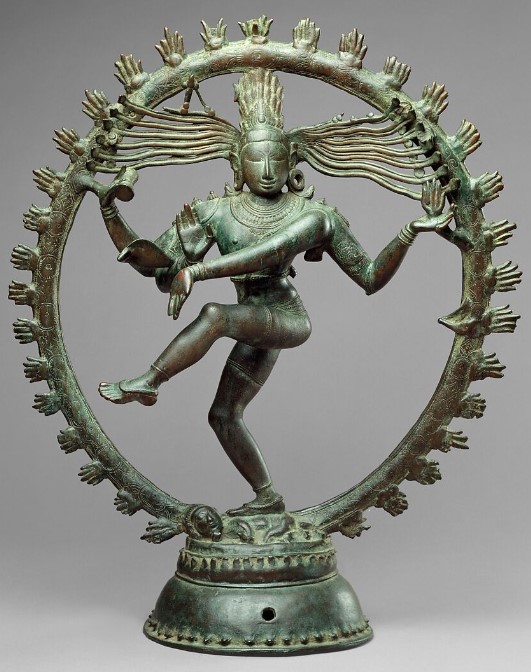
Hinduism offers its devotees a rich pantheon of deities, each of whom can receive full religious devotion. Individuals express this devotion by worshiping at temples, offering sacrifices, praying, and supporting the temple priests, among other practices.
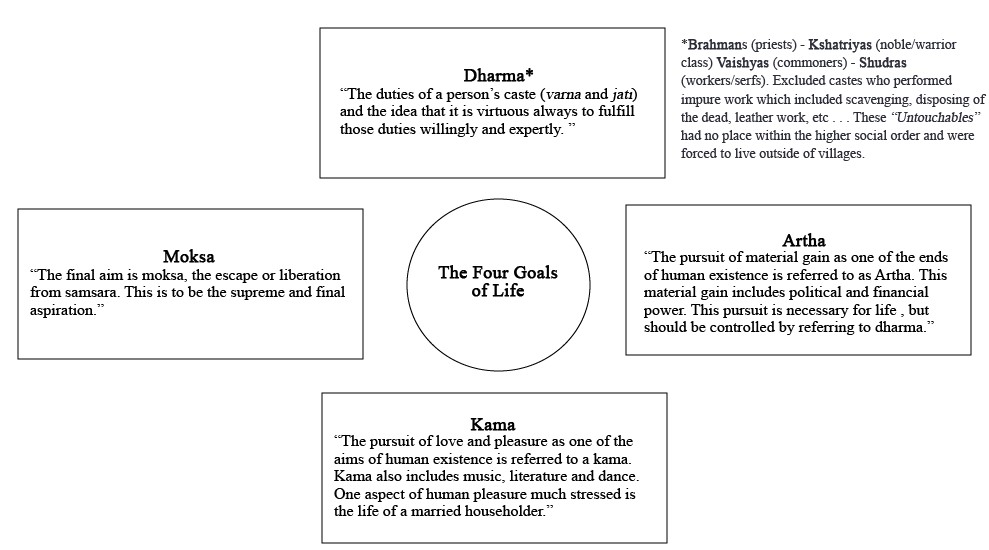
A fundamental concept in Hinduism that shapes daily life and conduct is the idea of the “four goals of life” or the “four ends of humans.” These goals are dharma (righteous duty), artha (material prosperity), kama (pleasure or desire), and moksha (liberation or spiritual freedom).
Perhaps the best-known system outside of India for facilitating liberation from samsara (the cycle of birth, death, and rebirth) is Yoga. Yoga encompasses a wide range of practices designed to discipline both the mind and body. Despite the diversity of these traditions, all forms of Yoga share an emphasis on meditation as a central means of achieving liberation. By turning one’s focus inward and detaching from the material world, an individual can transcend external attachments and ultimately attain liberation from samsara.
Over time, several distinct forms of Yoga developed, each offering different pathways toward liberation. The term “Yoga” itself refers broadly to any practice aimed at disciplining the mind and body.
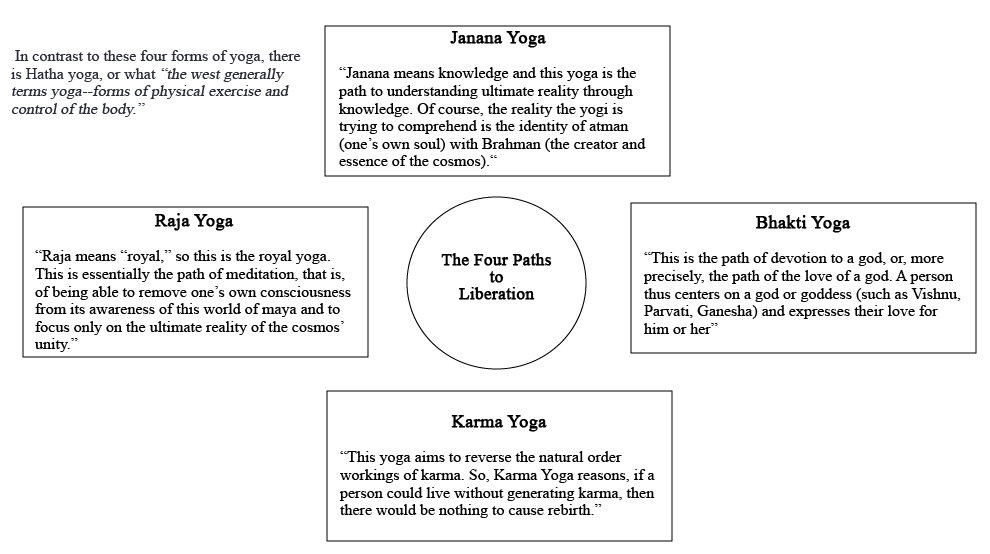
The significance of Yoga and its role in Hindu philosophy is reflected in one of the most revered texts of classical Hinduism, the Bhagavad Gita. Historians agree that the Gita, a part of the great Indian epic Mahabharata, serves as a foundational text for understanding Hindu culture and religion. Set against the backdrop of an impending battle, the Gita presents profound philosophical teachings, offering insights into Yoga, duty, and the nature of existence. For example:
- That individuals should perform the duty of their dharma.
- That individuals can achieve moksha through asceticism, meditation, devotions to and worship of the gods, or dharma.
- That Vishnu is a god who is concerned about humanity.
JAINISM
Jainism and Buddhism are two religions that challenged the traditions of the Brahmins. Jainism was founded by Mahavira (540–468 B.C.E.), the son of a chief of the Jnatrikas. It is said that at the age of 30, Mahavira renounced his worldly life in a quest for salvation. After wandering and practicing severe austerities for 12 years, he attained enlightenment at the age of 42, achieving the status of a “completed soul” and a “conqueror” (jina), from which Jainism takes its name. In its pure state, the soul is said to enjoy perfect perception, knowledge, happiness, and power.
For Jainism, liberation (moksha) involves renouncing material possessions and undertaking ascetic practices to purify the soul by cleansing it of karmic impurities. Mahavira believed that humans must find their own path to salvation, as gods cannot intervene in the process. According to Mahavira, most souls remain bound to the material world because they are weighed down by karma, the residue of actions that adhere to the soul over lifetimes. This karmic weight determines a person’s future births and keeps them trapped in the cycle of samsara.
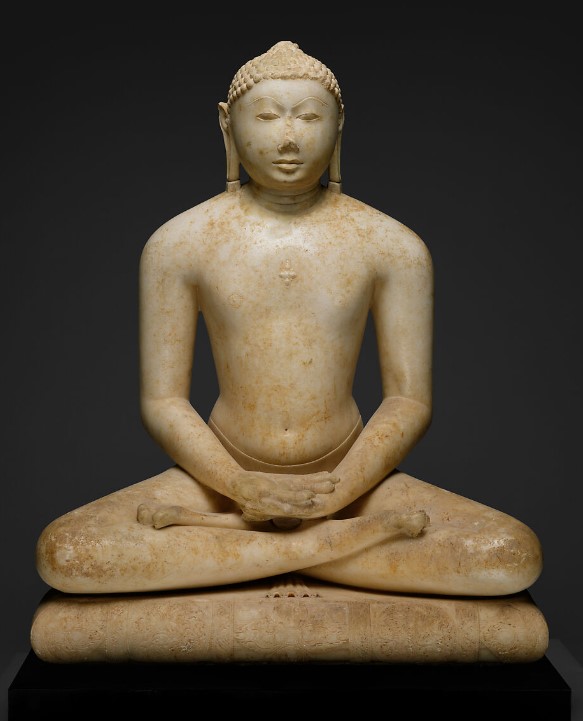
For Mahavira, most souls are not liberated because they are tainted by karma, “which adhere to the soul and weigh it down.” It is this karma, accumulated over a lifetime, that “determines a person’s future births and keeps them bound to the material world.” Jainism emphasized the importance of austerity and mendicant monasticism as the vehicles to liberation, or moksha. Jainism also emphasized non-violence and the sanctity of life. This universal rule of non-violence is emphasized in The Book of Good Conduct, one of the sacred texts of Jainism.
To break free, Mahavira emphasized the importance of austerity, mendicant monasticism, and the universal principle of non-violence (ahimsa), which lies at the heart of Jainism. The sacred text The Book of Good Conduct highlights this rule of non-violence as central to the faith. Liberation, according to Mahavira, is achieved when the soul is released from the constraints of the body, attaining salvation, self-mastery, transcendent peace, and ultimate enlightenment. He envisioned the final destination of liberated souls as the celestial realm, where they exist in a state of perfect freedom and bliss.
To guide his followers on this path to liberation, Mahavira prescribed the Five Vows, which form the ethical foundation of Jainism:
- Non-possession (aparigraha)
- Non-violence (ahimsa)
- Truthfulness (satya)
- Non-stealing (asteya)
- Celibacy or chastity (brahmacharya)
BUDDHISM
Buddhism, including its major traditions of Theravāda and Mahāyāna, was founded by Siddhartha Gautama (566–486 BCE), also known as the Enlightened One. The Buddhist challenge to the Brahmanical order was solidified over time, particularly through the patronage of the Maurya Empire and its ruler Ashoka, who famously converted to Buddhism and helped spread its teachings across India and beyond.
Siddhartha Gautama, the founder of Buddhism, was born into the Kshatriya caste as the son of a prince in a region that is now part of Nepal. His life took a transformative turn after encountering the realities of old age, sickness, and death. One source records, “Confronted by old age, sickness, and death, he left his family to lead a life of an ascetic (self-denial for spiritual improvement) and mendicant (begging/no property).” Witnessing the pervasive suffering of the world, he renounced his royal heritage to escape the cycle of birth, death, and rebirth (samsara), which he identified as the root cause of suffering, loss, and pain.
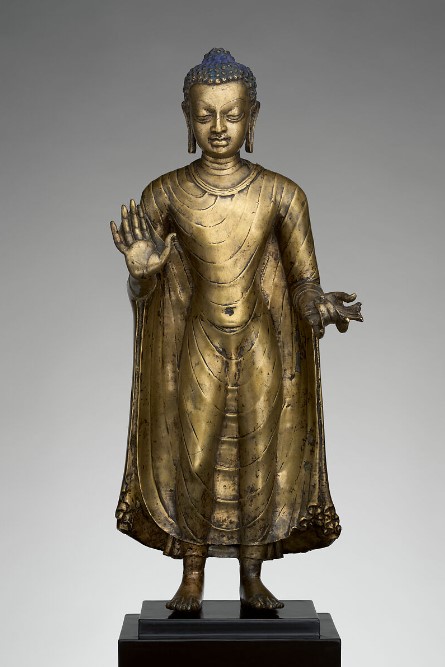
Through meditation and introspection, Gautama realized that ignorance of dependent arising—the principle that all things are interconnected and impermanent—leads to misunderstanding the true nature of reality and perpetuates suffering. He taught that the world is inherently impermanent (anitya), and that the things people often pursue for happiness, such as wealth, fame, power, and relationships, are in fact sources of suffering (duḥkha). The Buddha also believed that one’s life is shaped by the effects of their actions (karma), and that seeking happiness in an impermanent world is fundamentally misguided.
The core of the Buddha’s teachings is encapsulated in the Four Noble Truths, which he first presented in his Discourse on the Turning of the Wheel of the Dharma. These truths outline the nature of suffering, its origins, and the path to its cessation. To address the causes of suffering, the Buddha also introduced the Eightfold Path, a set of guiding principles for living a balanced and moderate life. This path serves as a practical roadmap for achieving enlightenment and ultimately reaching nirvana, the final cessation of suffering.
The Eightfold Path includes:
- Right Concentration (practicing meditation to achieve mental focus and clarity)
- Right View (understanding reality and the Four Noble Truths)
- Right Intention (commitment to ethical and mental self-improvement)
- Right Speech (speaking truthfully and avoiding harmful speech)
- Right Action (acting ethically and avoiding harm to others)
- Right Livelihood (earning a living in a way that does not cause harm)
- Right Effort (cultivating positive mental states and abandoning unwholesome ones)
- Right Mindfulness (developing awareness of the present moment)
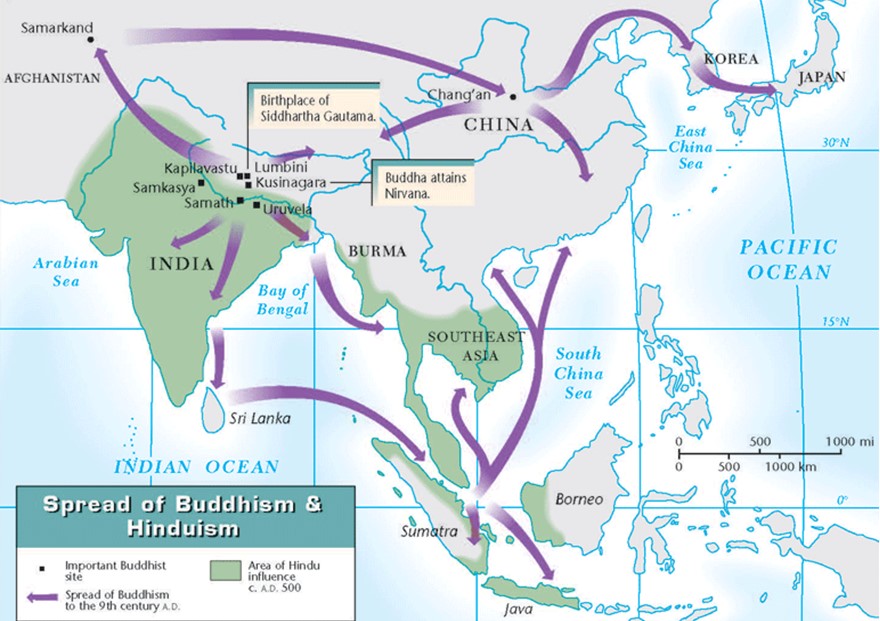
he Buddha taught that every being is responsible for their own destiny and that individuals become who they are through their past actions. For the Buddha, nirvana represented the ultimate liberation—a state of complete freedom from suffering and the cycle of samsara.
Shortly after the Buddha’s death, his teachings were compiled by his followers into what is known as the Three Baskets (Tripiṭaka; Pāli: Tipiṭaka), which became the foundational scriptures of early Buddhism:
- Vinaya: rules of conduct for the monastic order.
- Sūtras: discourses purportedly spoken by the Buddha.
- Abhidharma: scholastic treatises that codify and interpret the teachings of the Buddha.
Both Jainism, Buddhism rejected the authority of past texts and concepts such as the Vedas and the application of varna to society.
IN CLOSING
The Mauryan Empire, founded by Chandragupta Maurya in 320 B.C.E., marked a significant era in Indian history, establishing a centralized state with its capital at Pataliputra. Guided by the Arthashastra, written by his advisor Kautilya, the empire emphasized effective governance through economic policies, military strategy, and espionage. The reign of Asoka, Chandragupta’s grandson, was transformative; after the devastating Kalinga war, Asoka embraced Buddhism, promoting principles of non-violence and moral governance across his empire. Concurrently, ancient India saw the rise of major religious traditions. The Brahmins, central figures during the Vedic Age, dominated through exclusive ritual knowledge. Jainism, founded by Mahāvīra, advocated for non-violence and asceticism, while Buddhism, established by Siddhartha Gautama (the Buddha), emphasized the Four Noble Truths and the Eightfold Path to enlightenment. Meanwhile, Hinduism evolved from earlier Vedic practices, focusing on dharma, devotion, and the pursuit of moksha. These political and religious developments shaped ancient India’s cultural and historical landscape.
Glossary
“Greater Vehicle,” – the school of Buddhism that emphasizes the ideal of the bodhisattva.
Agni – God of fire in the Vedas, who transmutes sacrificial offerings into food for the gods.
Āryan – The people who composed the Vedas and whose religion became predominant on the subcontinent.
Ātman – “Soul,” the divine essence of every individual.
Bhagavad-gītā “Song of God,” – a section of the epic Mahābhārata that describes the ethical dilemma of Arjuna, who is torn between the demands of karma and dharma.
Bhakti – Selfless devotion to God. Brahman The ultimate reality described in the Upaniṣads.
Bodhisattva – A compassionate being who resolves to bring others to liberation.
Brahmin – The priestly caste of traditional Hinduism.
Buddha “Awakened One,” – epithet of those who successfully break the hold of ignorance, liberate
themselves from cyclic existence, and teach others the path to liberation.
Dharma – “Duty” or “Law,” the occupational, social, and religious roles required of individuals as a result of their place in society.
Dravidian – Term coined by Western scholars for the inhabitants of India who developed the Indus
Valley civilization, portrayed as the enemies of the Āryans in the Vedas.
Dharma – Buddhist doctrine and practice.
Duḥkha – “Suffering,” the first “noble truth” of Buddhism, which holds that cyclic existence is characterized by suffering.
Eightfold Noble Path Fourth of the “four noble truths,”- which involves cultivation of correct views, actions, and meditative practices in order to bring an end to suffering.
Four Noble Truths – Basic propositions attributed to the Buddha: (1) suffering, (2) the cause of suffering, (3) the cessation of suffering, (4) the eightfold noble path.
Hindu – An adherent of Hinduism.
Indra – King of the gods in the Vedic stories, and the paradigmatic warrior.
Jaina – “Follower of the Conqueror (Mahāvīra).”
Karma – “Actions,” which bring about concordant results.
Kṣatriya – The caste whose members traditionally were warriors and rulers.
Mahāvīra – “Great Hero,” title of the founder of Jainism.
Mokṣa – “Release” from the cycle of birth, death, and rebirth.
Nirvana – Liberation from cyclic existence.
Rāmāyaṇa – Epic story of the heroic deeds of Rāma, believed by tradition to be an incarnation of the god Viṣṇu.
Saṃsāra – “Cyclic Existence,” the beginningless cycle of birth, death, and rebirth in which ignorant beings are trapped.
Śūdra – The caste whose traditional duty was to serve the castes above them.
Sūtra – Discourses attributed to the historical Buddha.
Upaniṣads – Mystical texts that speculate on the nature of human existence and the ultimate reality.
Vaiśya – The caste whose members traditionally were merchants and skilled artisans.
Varṇa – The four main social groupings of traditional Indian society (brahmins, kṣatriyas, vaiśyas, and śūdras).
Veda – The four early sacred texts of Hinduism, which describe the gods and rituals connected with them.
Viṣṇu – God whose traditional role is to protect dharma. Yoga System of meditative cultivation involving physical and mental discipline.
Glossary compiled from Jame Fieser, Scriptures of the World’s Religions
 World History Portal