LEARNING OBJECTIVES
- Compare and contrast Confucianism and Daoism and explain how they fit within the scope of the Axial Age.
- Explain how Legalism and the Qin brought centralization to China.
- Explain why the Han Dynasty made Confucianism its state ideology.
View Timeline: Chinese Dynasties | Annotated Timeline of Chinese History
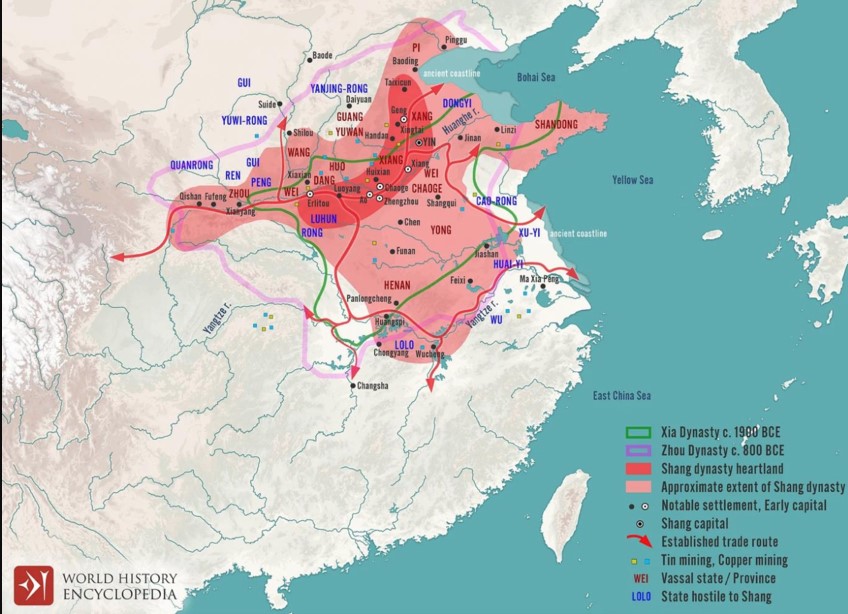
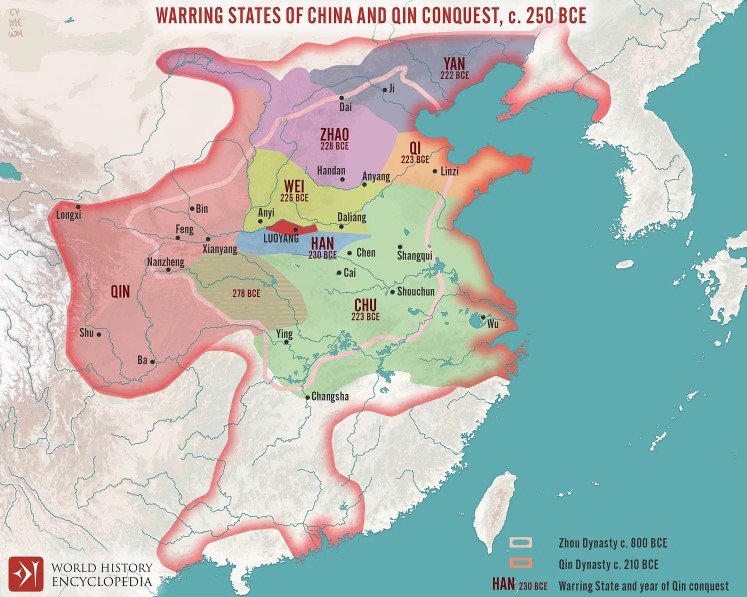
China experienced political, economic, and military upheaval during the decline of the Zhou Dynasty (1027–221 B.C.E.), a period that encompassed the Spring and Autumn Period (770–476 B.C.E.) and the Warring States Period (475–221 B.C.E.). As Zhou rulers saw their authority wane, the nation splintered into competing states. Yet, despite this disunity and civil strife, these eras also gave rise to an unprecedented cultural flourishing, often referred to as a golden age in Chinese history. Why? In their struggle for survival, regional lords fostered an intellectual climate that sought philosophical remedies to the prevailing chaos. This topic will explore three major schools of thought that emerged during this transformative period: Confucianism, Daoism, and Legalism.
One sage who responded to the crisis associated with Zhou decline was Confucius (Master Kung the Sage c. 551-479 B.C.E.). What do sources reveal of the life of this sage?
Sima Qian on the Early Life of Confucius
“Confucius was born in Zou, a village in the region of Zhangbing in the state of Lu. . . . As a child, Confucius liked to play with sacrificial implements, arranging them as if for a ceremony. . . . Confucius was poor and humble. Growing up and working as keeper of the granaries for the Ji clan he measured the grains fairly; when he was keeper of the livestock the animals flourished, and so he was made minister of works. Subsequently he left Lu, was dismissed from Ji, driven out of Song and Wei and ran into trouble between Zhen and Zai. Finally he returned to Lu.”
During his early career, Confucius sought audiences with various rulers, hoping to serve as an advisor. While his efforts to secure a political position were unsuccessful, his teachings eventually became “woven into the fabric of an entire culture as perhaps its most persistent pattern.” Despite these early setbacks, Confucius’s reputation as a teacher grew steadily, attracting pupils from across China. What was it about his teachings that made them so compelling?
Confucius believed that the Spring and Autumn Period had witnessed a profound decline in moral values, as well as the erosion of traditional forms of social, religious, and court behavior. His philosophy sought to restore order and harmony through a return to ethical principles, personal responsibility, and respect for hierarchical relationships.
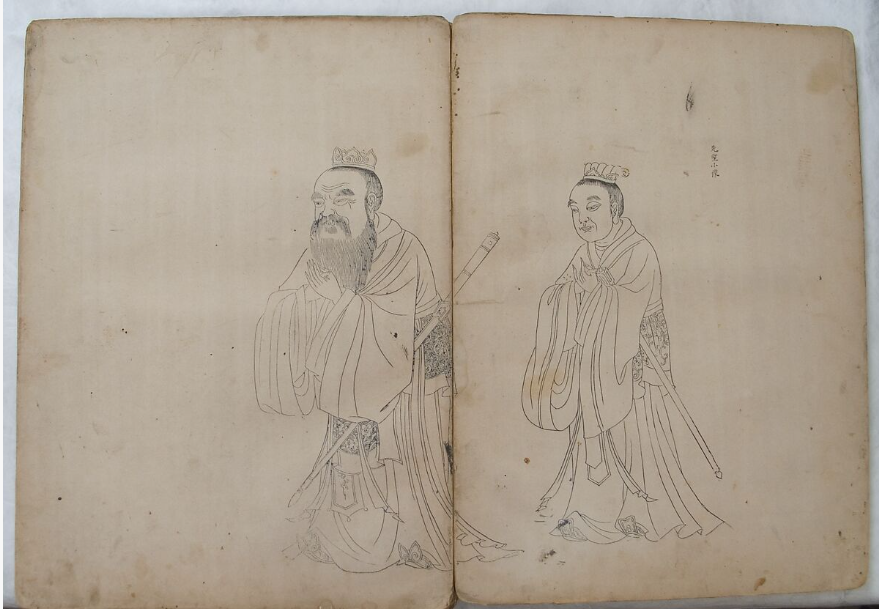
Confucius dedicated himself to restoring ethical and political order by emphasizing the importance of ritual propriety (li), self-cultivation, and personal morality (ren). To achieve this, he drew upon the foundational works of the Zhou Dynasty, which embodied these virtues, and sought to revive them through education. As the philosopher James Fieser summarizes, Confucius’s ultimate objective was to instill these lost principles into the fabric of society.
James Fieser on Confucius Addressing Chaos
“Confucius lamented this social disintegration and hoped to guide his country back to the norms and practices of the early days of the Zhou dynasty as reported in the Book of Poetry and the Book of History, both of which extolled the superior qualities of sage-emperors of the Shang and Zhou dynasties. Confucius hoped to find a position of political power that would allow him to help the rulers of his time rediscover the traditions of the past, which he believed would help China correct its problems and reestablish good government . . . Confucius taught his students to cultivate themselves and urged them to aspire to become “noble men.” The noble man, according to Confucius, possesses an unwavering moral compass and thus knows what is correct in all situations. He has the virtue of “human-heartedness” (ren), the coalescence of moral qualities that characterize those who are truly good. A noble man is honest, is courageous, stands in awe of Heaven and constantly seeks to perfect himself, is learned but does not boast of his learning, does not set his mind “for” or “against” anything, holds to no particular political philosophy, but rather seeks to follow what is right in every situation. He has no needs of his own and so is able to work selflessly for others. His unassuming manifestation of good qualities inspires others to become better. According to Confucius, society is perfected by such people, “who set a moral standard that subtly motivates others to correct themselves in order to emulate them. Although Confucius was unable to acquire.”
In addressing the chaos brought about by the decline of the Zhou Dynasty, Confucius believed that stability could be achieved through proper instruction, moral conduct, disciplined thought, and harmonious relationships.
Today, we have access to Confucius’s teachings and traditions through the Analects (from the Greek word analekta, meaning “selections” or “conversations”). Compiled by his followers, the Analects explore the conduct of the junzi—the gentleman, superior man, or nobleman—who embodies Confucian ideals. The junzi is characterized by personal commitment, developed moral power, and a dedication to continuous self-improvement through education. In addition to the virtues summarized by philosopher James Fieser, Confucius emphasized key principles such as filial devotion (xiao), ritual decorum (li), and humaneness (ren).
Confucius also linked these personal virtues to governance, asserting that rulers should lead by moral example and that the family, with its emphasis on filial piety, should serve as the model for political life. Through this interconnected framework, Confucianism offered a vision for restoring order to both society and government.
Confucius also believed that humans are inherently social beings and that social harmony could be achieved by following the path he outlined. Why? From his perspective, again, the chaos that accompanied the decline of the Zhou Dynasty stemmed from “a decline in the moral values of society and the forms of social, religious, and court behavior.” Confucius’s teachings, therefore, sought to recover what had been lost. Below are some general premises of Confucianism:
- Human beings are defined by their social relationships with others.
- Familial relationships are the foundation of a stable society.
- The righteousness of leaders is essential to social stability.
- Education is vital for shaping a person’s character.
As highlighted above, Confucianism emphasized filial piety, the belief that familial relationships form the bedrock of a harmonious society. Confucius extended this principle to the political realm, where subordinates were expected to show obedience to their superiors, and the emperor was regarded as a paternal figure. This emphasis on social relationships reflected Confucius’s broader focus on cultivating harmony through ethical conduct and mutual responsibility..
Daoism
Confucianism emphasized the interactions between people in a social context, outlining the customs and principles that promoted social harmony, along with the rituals and responsibilities that guided individuals to behave properly in the presence of others In contrast, Daoism focused on the relationship between humans and the natural world: how natural forces and processes influence human life, as well as how to anticipate their patterns and harness them to benefit both individuals and society.
Daoism is traditionally attributed to Laozi (5th–6th century B.C.E.?), who is believed to have founded the philosophy and authored its core text, the Daodejing (The Way and Its Power). Central to Daoism is the concept of the Dao. But what is the Dao?
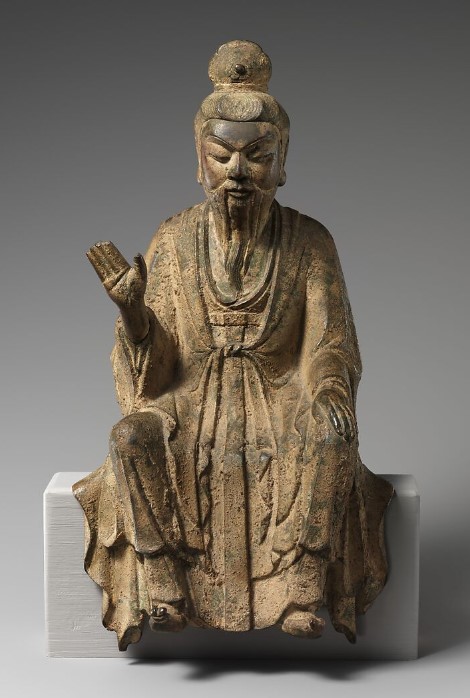
The Dao is described as “a universal force, subtle and omnipresent, that gives rise to all things and provides their sustenance. It is the vital energy that makes all life possible, and it pervades the entire universe, providing a pattern for the growth and development of living things.” This force is “comprised of two opposite but complementary polarities, yin and yang, and their interaction provides the creative and dynamic force behind the changes that occur in the natural world.”
What, then, is the greatest obstacle to being one with the Dao? According to Daoist thought, it is the human senses, “in combination with the intellect, which trick people into thinking that ordinary perceptions and cognitions provide a true picture of reality.”These false impressions are further reinforced by acculturation and human-made constructs, which shape individuals into “man-made molds and artificial conditions,” distancing them from their natural state of harmony with the Dao..
Consider the sources below to gain a further understanding of these ideas and their implications.
Selections from the Daodejing
Do not exalt heroes,
And people will not quarrel.
Do not value rare objects,
And people will not steal.
Don’t display things of desire,
And their hearts will not be troubled.
Therefore, the sage governs by emptying their hearts and filling their stomachs,
Discouraging their ambitions and strengthening their bones;
Leads people away from knowledge and desire; Keeps the learned from imposing on others;
Practices non-action, and the natural order is not disturbed.
Nothing in the world is softer and weaker than water
But nothing is superior to it in overcoming the hard and strong;
Weakness overcomes strength
And softness overcomes hardness.
Everyone knows this,
and no one practices it.
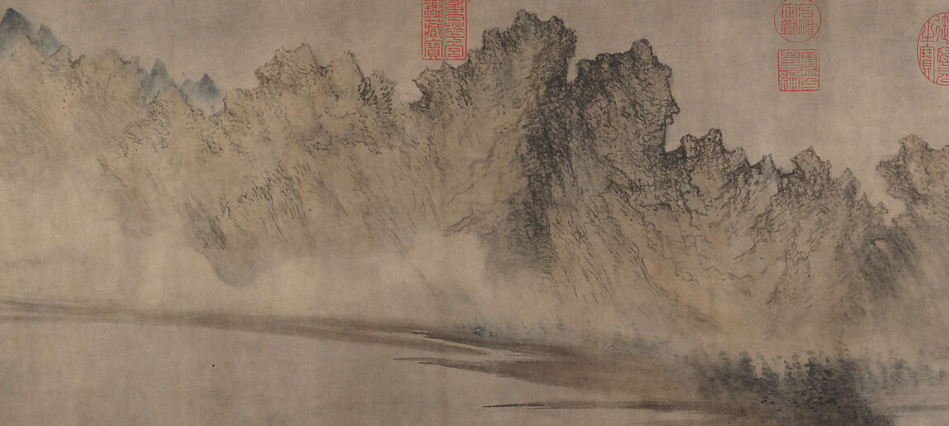
The teachings of Daoism offered more than just a philosophy for personal life; they also provided guidance for the conduct of government. Followers of Daoism emphasized that enduring social order could be achieved by “living a spiritual life based on the Dao and not on the power of the state or institutions constructed by humans.”
The Daodejing on How to Rule
With the best rulers
The people know that they exist.
The next best they see and praise.
The next they fear.
And the next they revile.
If you do not have basic trust
There will be no trust at all,
Be circumspect in the use of words.
When your work is done,
The people will say, “We have done it ourselves.”
The Legalist
A third school of thought to emerge during the Zhou decline was Legalism, which emphasized governance through strict laws as a means of creating a strong centralized state and ending the chaos of the era. Legalist advisors played a crucial role in guiding the Qin Dynasty (221–207 B.C.E.) to establish China’s first centralized state. The Qin, one of the seven states competing for dominance during the Zhou’s final years, rose to power through a combination of innovation and ruthless governance. In their pursuit of political and social order, the Qin adhered to Legalist principles.
The most notable Legalist thinkers were Shang Yang (c. 390–338 B.C.E.) and Han Feizi (c. 280–233 B.C.E.), both of whom served as advisors to the Qin state. Legalists believed that the foundation of a strong state rested on three pillars: clear and enforceable laws, a focus on agriculture, and the strength of the military. Shang Yang emphasized these principles in his work, The Book of Lord Shang.
Han Feizi also articulated his views on the administration of the Qin state, offering a detailed blueprint for governance based on Legalist principles. His writings reveal the stark contrasts between Legalism and Confucianism in their approaches to statecraft. While Confucianism emphasized moral leadership, education, and virtuous relationships as the foundation of a harmonious society, Legalism prioritized strict laws, centralized authority, and the use of rewards and punishments to maintain order and control. These conflicting philosophies are evident throughout Han Feizi’s works, where he critiques the idealism of Confucian thought and advocates for a pragmatic, law-driven approach to governance.
The Legalist Han Feizi against Confucians
“When Confucians of the present time consul rulers, they do not praise those measures that will bring order today, but talk only of the achievements of the men who brought order in the past. They do not investigate matters of bureaucratic system or law, or examine the realities of villainy and evil, but spend all their time telling tales of the distant past and praising the achievements of the former rulers . . . No ruler with proper standards will tolerate them. Therefore the enlightened ruler works with facts and discards useless theories. He does not talk about the deeds of humanness and rightness, and he does not listen to the words of scholars. . .”
Qin Shihuangdi (r. 221–210 B.C.E.) was China’s first emperor and the founder of the Qin Dynasty. Under his leadership, the process of centralization in China reached unprecedented levels. From his capital at Xianyang, Qin Shihuangdi implemented sweeping reforms that transformed the political, economic, and cultural landscape of China. These reforms included the following:
- The creation of 36 military districts – commandries
- The creation of a nationwide government consisting of civil and military bureaucrats, civil ministers and chamberlains
- The relocation of the patrician clans
- Economic standardization
- Legal standardization
- Writing reform
One of the most significant public works initiated by Qin Shihuangdi was the construction of the Great Wall. Rather than building it from scratch, his regime connected and expanded earlier regional walls into a unified defense system. Additionally, an extensive network of roads, 50 paces wide, and canals was built to facilitate the transportation of troops and goods. To further unify the empire, Qin Shihuangdi standardized the writing system, addressing the regional scripts that had developed since the fall of the Shang Dynasty.
In his push for administrative efficiency, bureaucratic positions were no longer hereditary; instead, they were assigned based on merit and qualifications. Beyond infrastructure and governance, Qin Shihuangdi sought to standardize thought. In 213 B.C.E., he ordered the infamous burning of books and the execution of Confucian scholars, aiming to suppress dissent and ensure the dominance of Legalist ideology.
Despite Qin Shihuangdi’s reforms, his dynasty was short-lived, collapsing soon after his death. However, its centralized administrative framework set the stage for the Han Dynasty (206 B.C.E.–220 C.E.), which adapted and refined many of his innovations while embracing Confucianism as its guiding philosophy.
The Han Dynasty
The heavy burden of Qin policies eventually took its toll, leading to the collapse of China’s first centralized state. According to the Han History (c. 32–92 C.E.), the Chinese population was left exhausted by the harsh reforms and labor demands of the Qin regime. As a result, the Qin Dynasty proved to be short-lived. Despite its demise, the Qin left behind a foundation of infrastructure and administrative practices that the Han Dynasty would inherit and build upon to promote further centralization.
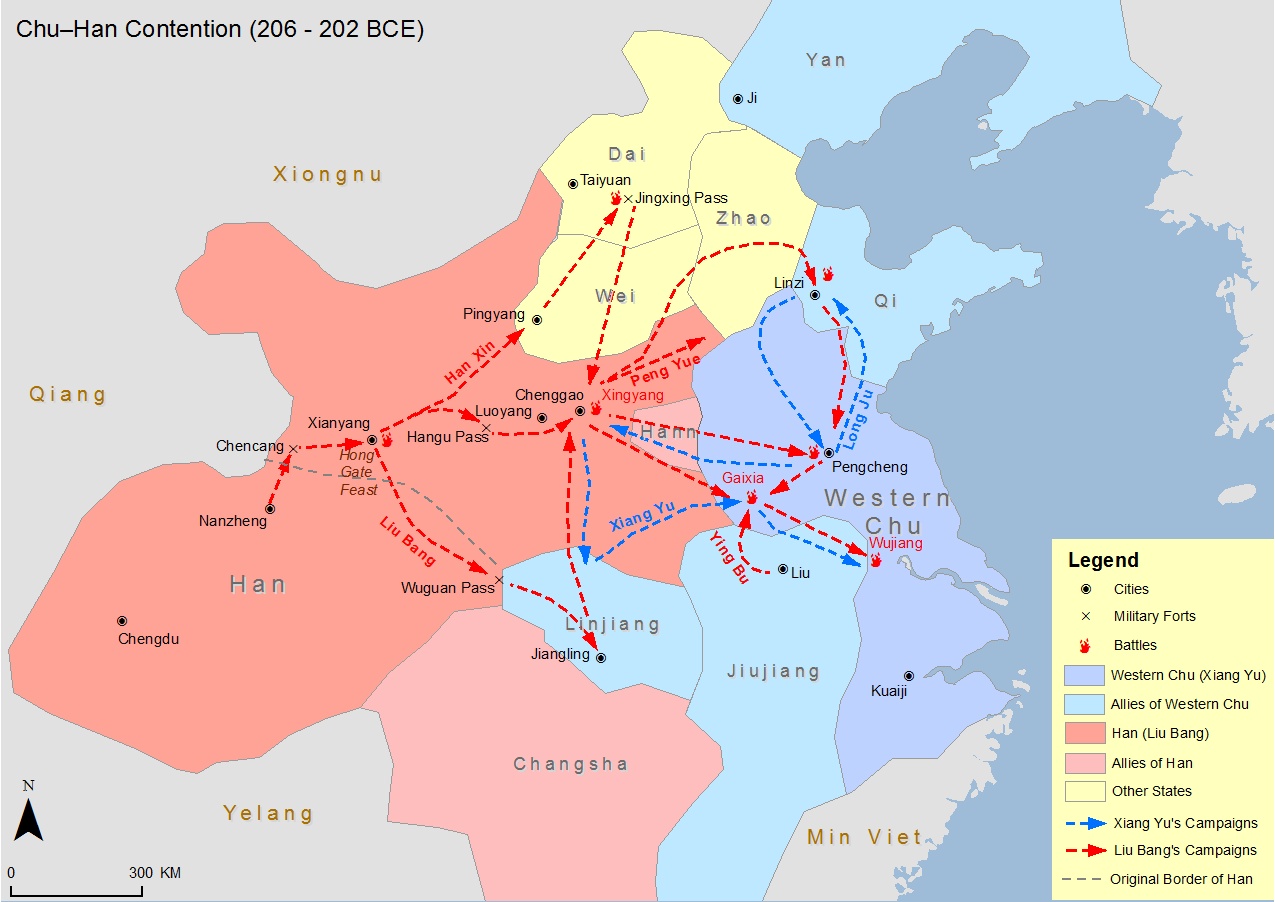
The Han Dynasty was founded by Liu Bang (c. 256–195 B.C.E.), a commoner-turned-rebel leader who rose to power after the fall of the Qin. His leadership marked the beginning of one of China’s most enduring and influential dynasties.
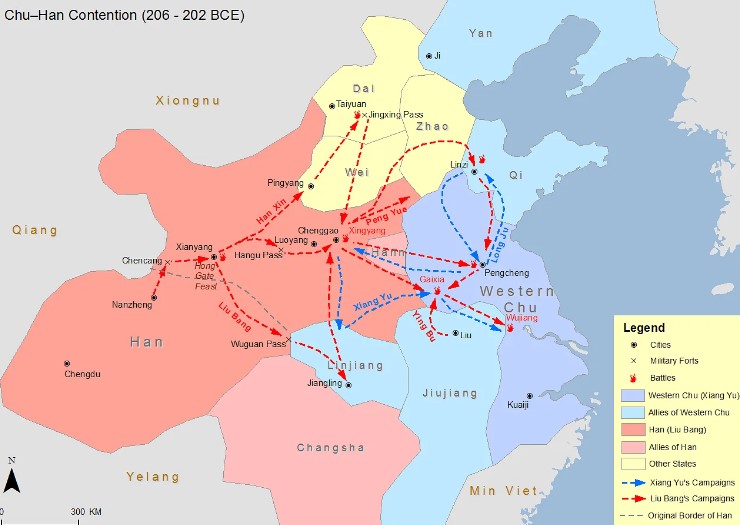
Although of humble origins, Liu Bang rose to become the first emperor of the Han Dynasty. His leadership not only established one of China’s longest-lasting dynasties but also marked a period of expansion that extended China’s influence far beyond what had been achieved under the Qin. By combining Qin centralization with a more humane and inclusive approach to governance, Liu Bang laid the foundation for a flourishing empire that would endure for over four centuries.
Liu Bang abolished many of the harsh restrictions imposed by the Qin, ushering in a more lenient and inclusive approach to governance. He removed controls on travel, education, and thought, and he reduced taxes to alleviate the burden on the population. However, it is important to note that Bang retained several key Qin policies that promoted centralization and efficiency. These included conscription for military service, forced labor for public works such as roads and canal construction, and the state-enforced standardization of weights and measures, currency, and script. By blending reform with continuity, Liu Bang maintained the infrastructure and administrative foundation necessary to unify and strengthen the Han Empire.
One historian described China’s transformation under the Han Dynasty as “not just an ordinary dynastic change, but a political and intellectual transition that involved a redefining of imperial and polity ideology, a settlement that lasted for two thousand years.” The Han achieved this transformation by adopting Confucianism as the official state ideology while retaining Legalist principles, particularly in the areas of punishment and rewards.
Early in his reign, Liu Bang established the precedent of consulting Confucian scholars as advisors, a tradition that would shape the intellectual foundation of the Han state. Among these advisors, Dong Zhongshu (c. 195–105 B.C.E.) played a pivotal role in promoting Confucian orthodoxy at the royal court. Dong proposed the creation of a government college to train bureaucrats in Confucian ideas and traditions, ensuring that governance aligned with Confucian values. This proposal was realized in 124 B.C.E. with the establishment of such a college. By the end of the Han Dynasty, the institution had grown to enroll up to 34,000 students, embedding Confucianism deeply into the structure of Chinese governance.
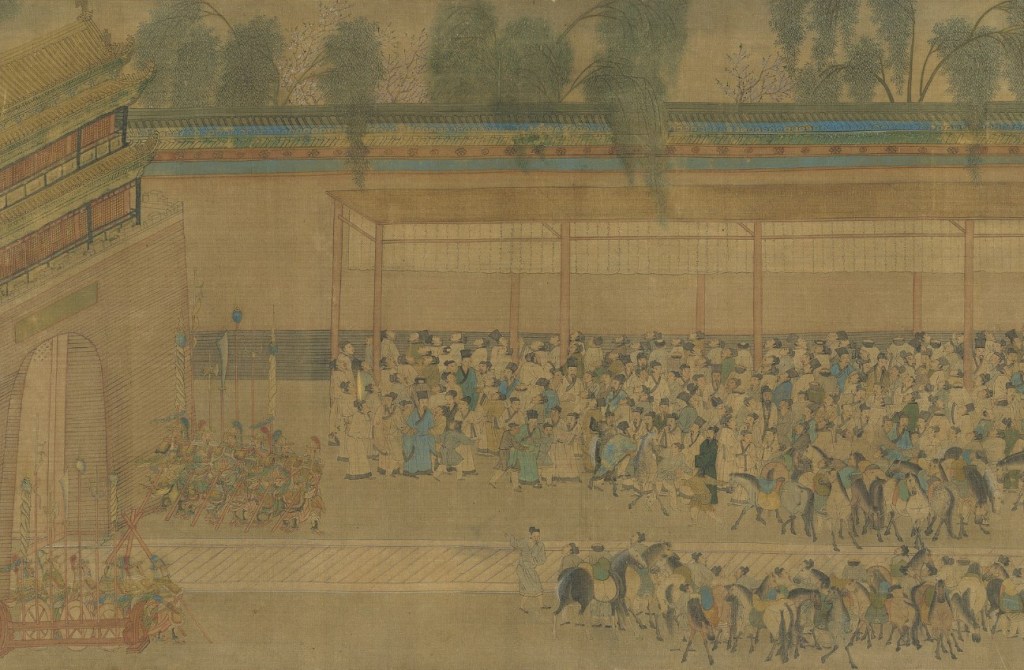
This educational system became the foundation for recruiting the Han bureaucracy. Aspiring officials were required to pass rigorous examinations before qualifying for positions in the civil service, marking the beginnings of a merit-based system that would influence Chinese governance for centuries. Under the Han, the Confucian Classics were recovered, preserved, and integrated into the curriculum of the state college. These texts formed the intellectual backbone of the training program, ensuring that future bureaucrats were not only skilled administrators but also steeped in Confucian values of morality, hierarchy, and social harmony.
- The Classic of Changes: This text explores the transformation of natural systems and has traditionally been viewed as a guide for divination. It includes sixty-four hexagrams, each accompanied by an explanation of its meaning, as well as the “ten wings” of commentary that provide guidance on their interpretation. While Confucian tradition attributes the ten wings to Confucius, most modern scholars have dismissed this claim.
- Classic of Documents or Classic of History: This text is a compilation of historical records and speeches believed to originate from China’s early dynasties. As the oldest known Chinese historical work, it spans seventeen centuries, reaching back to the era of the legendary sage emperors in the third millennium BCE. Tradition holds that Confucius compiled and edited the text, selecting passages for their historical and ethical significance. Each entry recounts a historical event and includes a colophon offering the author’s moral reflections.
- Classic of Odes or Classic of Poetry: This text is the oldest known collection of Chinese poetry, comprising 305 poems that span from ancient times to the late Zhou dynasty. According to Confucian tradition, Confucius curated these poems from an earlier collection of three thousand, selecting those distinguished by their exceptional style and profound moral insight.
- Book of Rites: This text outlines the tools used in state rituals, the protocols of the royal court, and includes moral guidance for women and children. It covers topics such as education, the correct conduct of funerals and ancestral sacrifices, and proper etiquette for scholars.
- Spring and Autumn Annals: These texts are historical chronicles from the state of Lu, covering the period between 722 and 481 BCE. They document the actions of rulers and are written in a manner that reflects the moral perspective of the compiler, traditionally believed to be Confucius.
Scholars believe that the Five Confucian Classics were compiled during the Zhou Dynasty, serving as foundational texts for Confucian thought and Chinese intellectual tradition. These works not only shaped the values and principles of Zhou-era governance but also became a lasting reference point for future Chinese writers and philosophers. During the Han Dynasty, scholar-officials (shi) studied these texts extensively as part of their training. In addition to the Five Classics, they also engaged with works like the Classic of Filiality, which emphasized the Confucian ideal of filial piety and its central role in maintaining social harmony and proper governance.
The Classic of Filiality on Serving Superiors
“As one serves one’s father, one serves one’s mother, drawing on the same love. As one serves one’s father, one serves one’s prince, drawing on the same reverence. The mother draws upon one’s love, the prince upon one’s reverence. Therefore if one serves one’s prince with the filiality one shows to one’s father, it becomes the virtue of fidelity (loyalty). If one serves one’s superiors with brotherly submission it becomes virtue of obedience. Never failing in fidelity and obedience, this is how one serves superiors.”
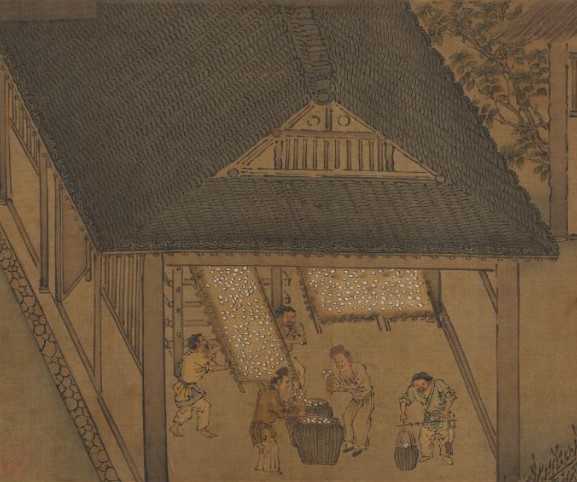
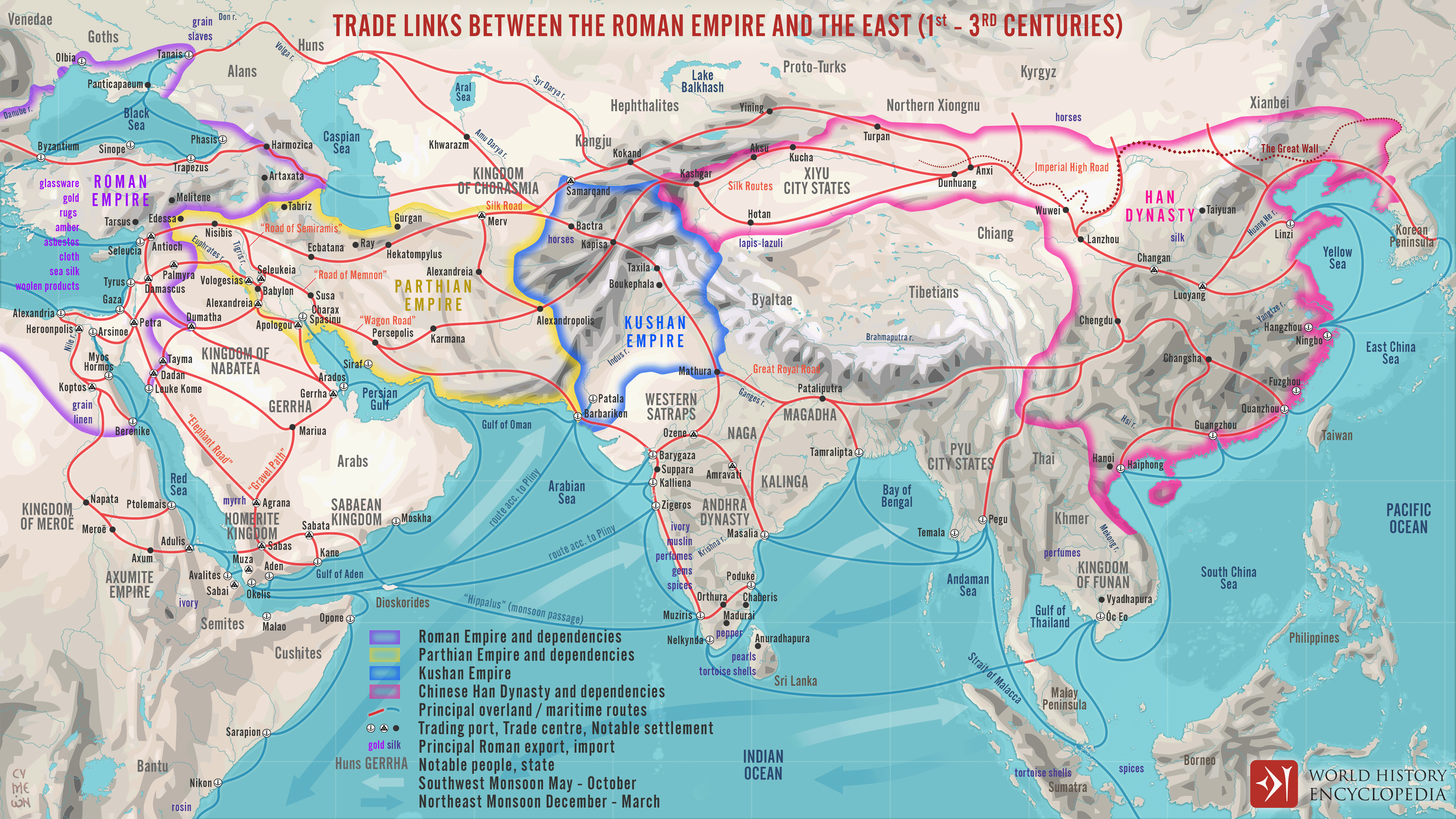
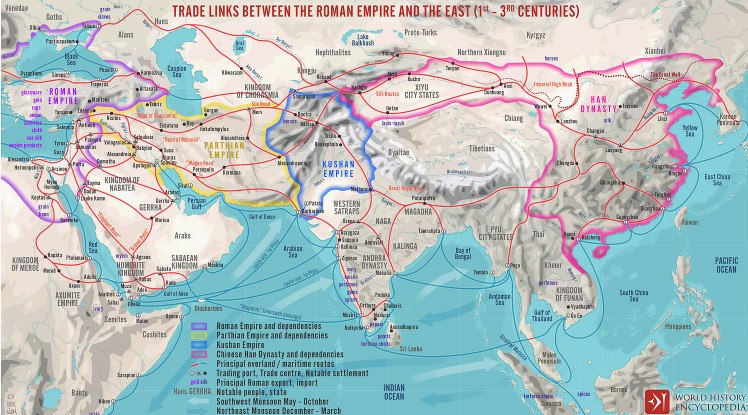
Wudi (r. 147–87 B.C.E.) was one of the most influential rulers of the Han Dynasty. Under his leadership, the dynasty expanded its sphere of influence into Central Asia, driven by both economic and military motivations. In 139 B.C.E., Wudi sent Zhang Qian on a mission to search for allies against the Xiongnu, a powerful nomadic people believed by some scholars to be connected to the Huns. Zhang Qian’s journey lasted 10 years, and upon his return, he reported detailed accounts of trade networks and goods circulating beyond the Han Empire’s reach. This revelation encouraged the Han to extend their control into Central Asia, not only to counter the Xiongnu threat but also to regulate and benefit from the lucrative trade routes, laying the groundwork for what would later become the Silk Road.
During the Han Dynasty, the Silk Road emerged as a major conduit for trade, connecting the East and the West and facilitating the exchange of goods, ideas, and cultures. The route began in Chang’an (the Han capital) and passed through regions such as Mongolia, Turkestan, the Taklamakan Desert (Tarim Basin), and Kashgar. From there, it extended further west to Bactria and Palmyra (in present-day Syria). One branch of the Silk Road forked southward toward Taxila, a major cultural and economic hub in ancient India. This sprawling network not only enabled the trade of Chinese silk, spices, and ceramics but also brought technologies, religions, and cultural influences from diverse civilizations into contact with one another.
In Closing
The collapse of the Han Dynasty ushered in a period of chaos and political decentralization, known as the Three Kingdoms period (220–280 C.E.) and later the era of disunity. This prolonged instability came to an end with the rise of the Sui Dynasty (581–618), which reunited China and laid the groundwork for future prosperity. However, the Sui was short-lived, and it was soon supplanted by the Tang Dynasty (618–907), a period marked by territorial expansion, cultural brilliance, and international trade.
China reached new heights of economic prosperity and cultural flourishing under the Song Dynasty (960–1279). Advances in technology, urbanization, and commerce, combined with achievements in art, literature, and philosophy, made this era one of the most dynamic and innovative periods in Chinese history.
Glossary
Confucius (c. 551–479 BCE – Chinese: Kong Fuzi): Founder of Confucianism and one of the great sages of China.
Dao “Way,” – the impersonal force that sustains all life and dictates patterns of growth and development/a pattern of action that applies to all human societies and to natural forces.
Daodejing Treatise on the Way and Power – a classic work of Daoism attributed to Laozi.
De – The power or virtue of Dao: which enables it to influence the movements of natural systems.
Junzi “Noble Man” – one who embodies the ideal qualities of a Confucian gentleman.
Laozi – the legendary founder of Daoism, said to have lived during the sixth century BCE.
Li “Propriety” – one of the primary Confucian virtues, involving proper social conduct and rituals.
Lunyu (Analects) – a collection of aphorisms attributed to Confucius.
Ren – “Human-heartedness” – one of the primary Confucian virtues, evidenced by proper attitudes and actions toward others.
Tian – “Heaven”: an impersonal force that watches over human affairs.
Wuwei – “Not Acting,” the attitude of the Daoist sage, which involves allowing events to happen naturally, in accordance with the movements of Dao.
Yang – the active and aggressive aspect of Dao.
Yin – the passive aspect of Dao.
Compiled from James Fieser, Scriptures of the World’s Religions
 World History Portal