Your success is extremely important to me. I’ve worked hard to design a course that is interesting, well-structured, and insightful, and I hope you’ll find it both enjoyable and rewarding. To make things easier, you don’t need to purchase any texts for this course—everything you need is available through Canvas, El Camino College’s course management system.
- A computer (PC with Windows and a Pentium processor or a Macintosh with at least system 9.0 recommended).
- A recent version of a web browser such as Microsoft Explorer, Opera, Firefox, or Chrome.
- An Internet Service Provider.
- An ECC email address provided by the college.
- PDF reader software.
- Access to a word processor that can convert text files to a PDF format.

- First, you contact me via email (jsuarez@elcamino.edu) or Canvas. Your communication is extremely important to me so I will do my best to reply within 24 hours. To ensure that I see your message among my emails, please use the class name and number HIST 140 in your subject line. Be sure to use your ECC email account when contacting me. I cannot address official course details with you if you use a personal email account.
- Second, you can visit me during my Zoom virtual office hours. My office hours are synchronous (live and real-time) and are posted on the Canvas home page and in the course syllabus. No password is needed. Zoom virtual office meeting link: https://cccconfer.zoom.us/j/142817206.
- Third, you can schedule an appointment via email for a virtual office meeting.
For those enrolled in this course outside of the state of California please be aware of time zone differences.
How Much Time Should You Be Spending?
Typically, a 3-credit course requires 9 hours of weekly study. However, since this course condenses 16 weeks into 8 (or fewer), you should plan to dedicate at least 20 hours per week to your coursework. This includes reading, completing assignments, and participating in discussions. Staying consistent with your efforts is the key to succeeding in this condensed format.
Procrastination—The Silent Killer of Success
Procrastination is one of the biggest obstacles in online courses, and it’s something I struggled with during my own time as a college student. I know how easy it is to put things off, but I also know how much better it feels to stay ahead of deadlines. A few strategies that can help include:
- Setting aside regular time each day or week for coursework.
- Breaking larger assignments into smaller, manageable tasks.
- Using a calendar to track due dates and plan ahead.
CLASS SEMINARS

SCHOLARLY ARTICLES
When I transferred to the University of California at Santa Barbara, one of the first things I noticed in my upper-division history courses was the requirement to read articles from scholarly journals. As a transfer student, I was new to the academic culture of research institutions like UCSB and found myself unsure of how to approach these types of readings. I didn’t have a clear methodology, which made the process overwhelming at first.
Scholarly journals, also called peer-reviewed journals, are an essential part of academic research. They house the latest findings and debates across disciplines such as history, mathematics, music, sociology, and psychology. Understanding how to engage with these articles is crucial because they represent the foundation of academic knowledge in each field.
When reading a scholarly article, I don’t expect you to master every technical term or detail. Instead, focus on the following key aspects:
- What is the author’s main question or problem?
- What sources does the author use to address the question or problem?
- What conclusions does the author reach?
- How is the article relevant to the topic we are studying?
Not everything in the article will be relevant, and that’s okay! The goal is to extract the most important information and connect it to the themes and topics of this course.
To help you organize your thoughts, I will provide you with article analysis forms. These forms are a tool to help you summarize the key points of each article and reflect on how the content fits into your assignments. While I won’t collect these forms, I strongly encourage you to use them, as they will make it much easier to integrate the article’s ideas into the essays you’ll be writing. Personally, I relied on tools like this throughout my undergraduate and graduate studies to manage the information I was responsible for, and I found them invaluable.
Remember, learning to engage with scholarly articles is a skill that will serve you well beyond this course. It may seem challenging at first, but with practice, it will become second nature. I’m here to support you, so don’t hesitate to ask if you have any questions or need guidance. You’ve got this!
PRIMARY SOURCE ANALYSIS
Throughout this semester, you will have the opportunity to practice one of the most fundamental skills of the historian’s craft: analyzing primary sources. As you’ve learned, a primary source is a piece of historical evidence—created during the period you are studying—that has survived to the present. These sources can include documents, letters, photographs, artifacts, newspapers, and more. Historians use primary sources to construct narratives about the past, but this process requires a specific methodology to interpret these materials effectively.
When you analyze a primary source, your goal is to go beyond simply understanding what it says. Instead, you’ll evaluate the source critically, asking questions that help uncover the context, purpose, and perspective behind it. To guide your analysis, strive to identify the following:
- Source Type: the type of primary source: artifact, document, image you are analyzing.
- Source Date: when the primary source you are analyzing was created/written.
- Content: the details the primary source you are analyzing records.
- Context: identifying why the primary source you are analyzing was created/written.
- Data Analysis: your discussion of content and context of the primary source after you have analyzed it.
- Discussion: the implications your analysis of the content and context of the primary source has identified for the study of history.
To help you organize your thoughts and prepare you to discuss this text, I provide you with primary analysis forms. This form can be filled out and printed and filed in your course records. Be sure to save your form regularly to avoid losing information. You are not required to submit this form to me. It is a tool to help you master the primary sources.
We’ll examine this concept—narrative versus the past—in more depth during your first topic. For now, it’s important to recognize that history is not simply a list of facts but rather a process of interpretation. Equally important to share with you is that this course, like any other, has a certain bias. What do I mean by that? As the instructor, I made decisions about what we’ll read, what topics we’ll study, and how I’ve designed your assessments. While this means that the course reflects my choices, it also gives you a foundation from which to develop your own perspectives and decide what historical truth means to you.

A STORY
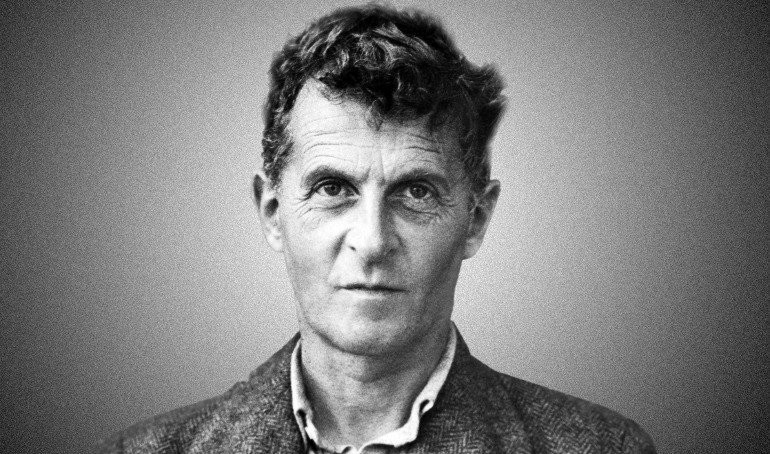
To this statement, Wittgenstein replied, “I agree, but I wonder what it would have looked like if the Sun had been going round the Earth.”
Tomorrow morning, just before the Sun rises, go outside and mark an “X” on the ground. Stand on the mark and face east. As the Sun begins to rise, point at it with your right-hand index finger and follow its movement across the sky throughout the day. Notice what happens: does your arm move as it traces the Sun’s path? Have you moved, or does it feel as though the Sun is moving around you? For most of human history, this everyday observation led people to conclude that the Sun revolved around the Earth. After all, it looks that way, doesn’t it?
From this story, James Burke concludes, “When we observe nature we see what we want to see, according to what we believe we know about it at the time.” This statement captures a central idea about how perspective and context shape our understanding of the world.
In the Middle Ages, Europe’s inhabitants had a geocentric view of the cosmos (Earth-centered), based on their observations and the knowledge available at the time. It wasn’t stupidity—it was a worldview grounded in their understanding of nature and the universe. Today, with the advantage of centuries of scientific discovery, we know that although it appears as though the Sun revolves around the Earth, it is actually the Earth that revolves around the Sun. This is what we call a heliocentric (Sun-centered) solar system.
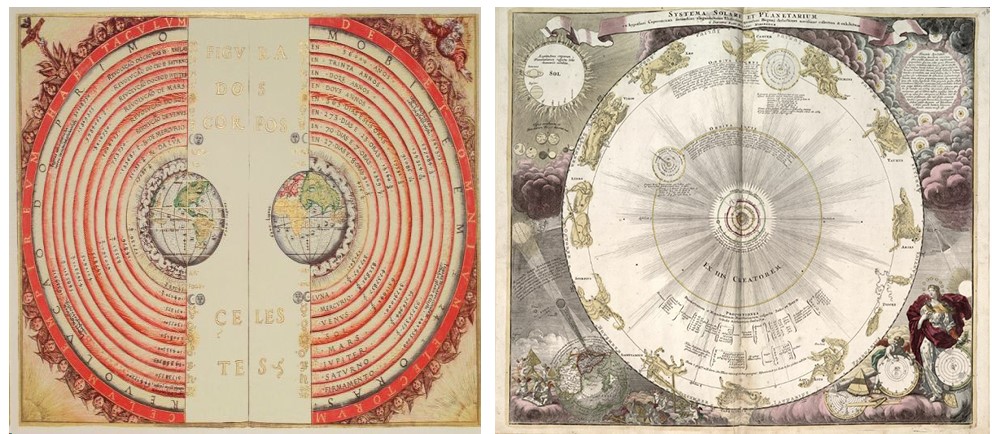
This story invites us to think deeply about the nature of perspective and context. For medieval Europeans, the belief that the Sun circled the Earth wasn’t stupidity—it was a reflection of the knowledge and worldview available to them at the time. In many ways, history works the same way. It requires us to examine past peoples, events, and ideas not from our own perspective, but within the context of their time. History asks us to set aside modern assumptions and strive to understand how and why people interpreted their world the way they did.
IN CLOSING
This course may help you begin to answer that question, as well as others you might have. Although it is officially titled The History of Early Civilizations, in many ways, this course is a history of you. What do I mean by this? Simply put, the content we’ll explore examines the developments—both biological and cultural—that have made it possible for you to be who and what you are today.
Before we embark on this journey of self-discovery, however, we need to first establish a foundation. In our first topic, The Nature of Historical Knowledge, we’ll examine some key concepts that will help you succeed in this course and better understand how history is constructed, interpreted, and applied.
 World History Portal