LEARNING OBJECTIVES
- Explain the key events leading to the rise of Islam how Islam expanded and preserved knowledge in the Middle Ages.
- Explain how Christianity gained control of Europe’s leadership.
- Explain the impact of Islamic knowledge on the course of Europe’s history.
Timeline: Isam | World General
THE RISE OF ISLAM
This topic will examine the impact of monotheism on two distinct regions: the Middle East and Europe. Islam and Christianity played pivotal roles in unifying these regions, creating the conditions for expansion and transformation. Many historians regard Islam as the first truly global civilization. Between the 7th and 8th centuries, Islam expanded rapidly, reaching Spain, North Africa, and as far east as India. Initially an Arab Empire, it gradually incorporated a diverse range of non-Arab peoples into its fold.
In the 7th century C.E., the arid steppes of Arabia were home to nomadic Bedouin peoples. Politically, the Bedouin organized themselves into decentralized tribal systems composed of clans, with loyalties deeply rooted in family lineage. Economically, caravan trade played a central role in the region’s history. Many Bedouins earned income by offering safe passage along Arabian trade routes or serving as guides for merchants. Two key trade centers along the Red Sea were the city of Mecca, founded by the Umayyad clan of the Quraysh tribe, and the city of Medina. Mecca was also home to the Ka’ba, a cubical shrine that housed various idols and held significant religious importance. This was the world into which Muhammad was born—a world he would ultimately transform forever.
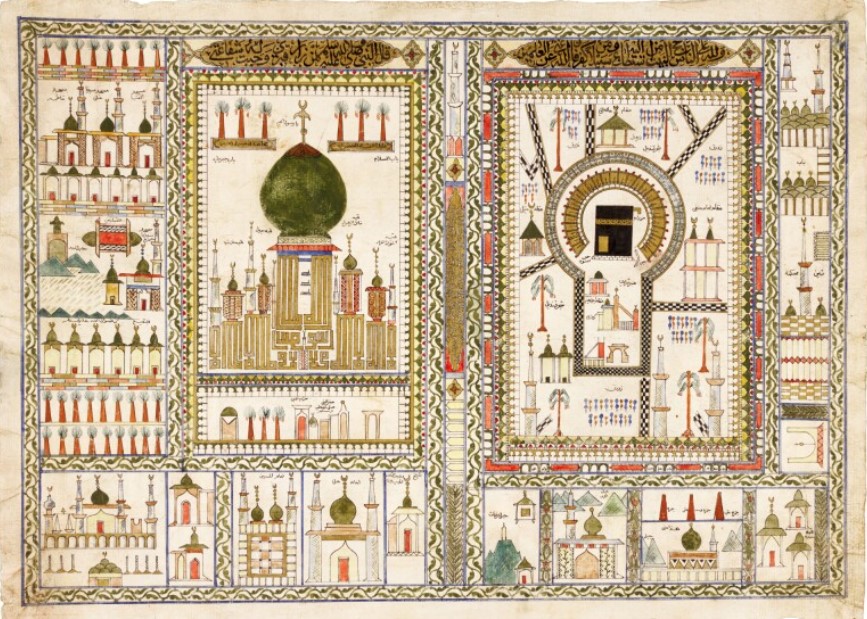
Historians estimate that Muhammad was born around 570 C.E. into the Banu Hashim, a prominent clan of the Quraysh tribe in Mecca. Orphaned at a young age, he was raised by his paternal uncle, a merchant, and became actively involved in trade. Through his work as a merchant, Muhammad came into contact with both Judaism and Christianity, which likely influenced his spiritual perspective. He later worked for Khadija, a wealthy Quraysh widow, and eventually married her. Around the age of 40, Muhammad began retreating to the hills surrounding Mecca to meditate during the night. It was at Mount Hira, many believe, that the angel Gabriel appeared to him, proclaiming that Muhammad was chosen to serve as the prophet of Allah (God in Arabic).

The revelations to Muhammad continued until his death, spanning approximately 20 years. These divine messages were eventually compiled into the Qur’an, meaning “recitation.” Muhammad preached Islam, meaning “submission,” and his followers became known as Muslims, or “those who submit to God’s laws.”
The Qur’an consists of 114 chapters, called suras, each divided into verses known as ayas. These verses include statements, proclamations, prayers, and sermons. While the central theme of the Qur’an is Allah, it also addresses topics such as divine law, the lives of previous prophets, and the final judgment. After Muhammad’s death, the Qur’an was officially compiled under the direction of the Caliph Uthman (r. 644–656 C.E.), who established the standardized version still in use today.
In 613 C.E., Muhammad received a revelation commanding him to “rise and warn.” His earliest teachings, shared with close friends and followers, emphasized monotheism—the belief in one God who created the universe—and declared Muhammad to be the final messenger of God. These revelations directly challenged the polytheistic traditions of Mecca, which included the worship of multiple gods, as well as belief in jinn (spirits) and shaitans (evil spirits). This opposition to the dominant religious beliefs of the time marked the beginning of significant social and spiritual upheaval in the region.
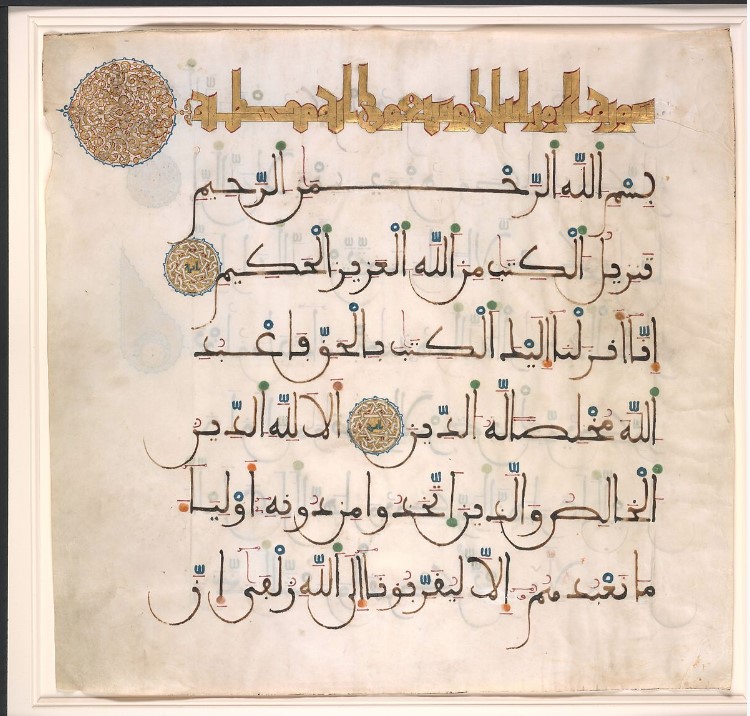
Before the rise of Islam, most of Arabia’s inhabitants practiced polytheism, a belief system in which the sacred was “diffused over a wide range of beings, places, objects, and human personnel.” Hisham Ibn Al-Kalbi (c. 747–821), a scholar who documented pre-Islamic Arabian religion in his Book of Idols, provides detailed accounts of the divine figures worshiped in the region. For example, he notes that “the Quraysh, as well as all the Arabs, were wont to venerate Allat [and] they also used to name their children after her, calling them Zayd-Allat and Taym-Allat.” Allat, an ancient mother and fertility goddess, was one of the central deities of pre-Islamic Arabia.
In contrast, Islam introduced a strictly monotheistic belief system in which the sacred was concentrated in one omnipotent and omniscient entity—Allah. From the outset, Islam prohibited idolatry, a prohibition made explicit in the Qur’an (the revealed word of Allah) and reinforced in hadith (narrations about the life and teachings of the Prophet Muhammad). This clear rejection of idols and polytheism marked a fundamental shift in the religious and cultural landscape of Arabia.
Muhammad’s message not only challenged the prevailing religious beliefs in Mecca but also disrupted tribal traditions and historical leadership roles by asserting that he was God’s messenger. Many saw his teachings as a call for social reform, as they criticized those who neglected the less fortunate and exploited the vulnerable. This challenge to the social and political status quo led to the persecution of Muhammad and his followers in Mecca.
In 622 C.E., a delegation of 75 Muslims from Medina offered Muhammad and his followers protection if they left Mecca. This pivotal event, known as the Hijrah (migration), marked their journey to Medina and became the starting point of the Muslim calendar. Medina, however, was plagued by internal feuds, and upon his arrival, Muhammad sought to address this unrest by issuing the Constitution of Medina. This document established a framework for governance and social order, stating, “The God-fearing believers shall be against the rebellious or him who seeks to spread injustice, or sin or enmity, or corruption between believers; the hand of every man shall be against him even if he be a son of one of them.”
In Medina, Muhammad introduced the concept of the umma—a community united not by tribal ties but by shared faith and acceptance of Islam and Muhammad as God’s messenger. The creation of the umma replaced traditional loyalties with a new sense of collective identity, providing the unity necessary to establish a foundation for the expansion of Islam.
The death of Muhammad in 632 C.E. presented one of the first significant challenges for the fledgling Islamic community. Since Muhammad had not appointed a successor, his followers decided that Abu Bakr, his close friend and the father of his wife A’isha, would assume leadership as the khalifa (successor), a term later anglicized as “caliph.” Under Abu Bakr’s leadership, Medina became the center of Muslim Arabia, and he also initiated the compilation of Muhammad’s revelations into a single volume, which would become the Qur’an.
The expansion of Islam gained significant momentum under Abu Bakr’s successors. Umar ibn al-Khattab (r. 634–644 C.E.), the second Caliph, oversaw the spread of Islam into key regions, including the Fertile Crescent, Egypt, and much of Persia. Umar’s leadership not only expanded Islamic territory but also established administrative frameworks for the growing empire.
The conquests continued under the third Caliph, Uthman ibn Affan (r. 644–656 C.E.), who brought Islam into direct contact with the Byzantine Empire. By 651 C.E., the Sassanian Empire, which had controlled Persia, was fully conquered, and the Byzantine Empire was forced into retreat. These early expansions under the first three Caliphs laid the foundation for Islam’s transformation into a powerful and rapidly growing global civilization.
The Four Rightly Guided Caliphs
These were Islam’s first four Caliphs who were also close followers of Muhammad.
Abu Bakr (632-634)
Umar (634-644)
Uthman (644-656)
Ali (656-661)
In 656 C.E., a major crisis struck the Islamic community when the third Caliph, Uthman, was assassinated. This event highlighted the lingering rivalries in Arabia, particularly those tied to tribal and clan loyalties. Uthman belonged to the Umayyad clan, which had been a notable enemy of Muhammad during the early years of Islam. Following his assassination, rebels nominated Ali ibn Abi Talib, Muhammad’s first cousin and son-in-law, as Uthman’s successor. However, this succession sparked the Fitnah (a term meaning “temptation” or “trial”), a civil war that divided the Islamic world. The conflict pitted Ali’s supporters against those loyal to Mu’awiya, the Umayyad governor of Syria and a claimant to the caliphate.
In 657 C.E., the two factions clashed at the Battle of Siffin. The conflict ended in a stalemate, and both sides agreed to resolve the dispute through a shura (council), which would determine the next Caliph. Ultimately, the division among the ruling Arab elite was settled in 661 C.E. when the shura formally recognized Mu’awiya (r. 661–680 C.E.) as the legitimate Caliph. Under his leadership, the Umayyads consolidated power and established Damascus as the new capital of the Caliphate, signaling a shift in political focus to Syria.
This conflict also created a lasting theological and political division within the Muslim community, leading to the emergence of the Sunni and Shi’ite sects. Sunnis, or “People of the Tradition and Community,” upheld the authority of the first three Caliphs and emphasized unity and communal consensus in leadership. Shi’ites, on the other hand, believed that Ali was the rightful successor to Muhammad and that leadership (the Imamate) should remain within Muhammad’s family, specifically through Ali’s descendants.
In the end, it was the military strength of the Umayyads that restored order. Under Mu’awiya, the Caliphate transitioned into a hereditary system, with succession by designation rather than consensus. To counteract tribal rivalries and maintain stability, the Umayyads emphasized jama’ah (the solidarity of the Muslim community) as a unifying principle, laying the groundwork for the continuation of their dynasty.
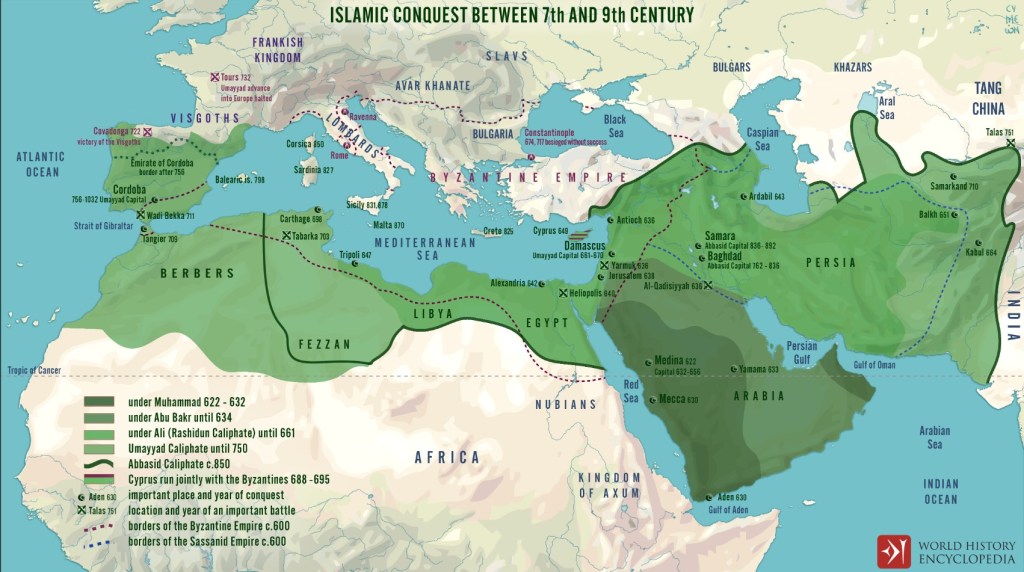
Under the Umayyad Caliphate, significant military advances were achieved in North Africa. The success of campaigns against the Berbers not only secured control over the region but also allowed for the establishment of a new base for further conquests in the Mediterranean. By 711 C.E., this strategic foothold served as the launching point for a joint Arab-Berber military expedition into Iberia.
At the time, Iberia was under the rule of the Visigoths, who had created a kingdom blending Germanic, Roman, and Christian traditions. The arrival of Islam in Iberia marked a dramatic shift in the region’s political and cultural landscape. The Visigoths, unable to resist the strength of the Muslim forces, were pushed into the northern mountainous regions, leaving much of the peninsula under Islamic rule. This conquest set the stage for the flourishing of Islamic civilization in Al-Andalus, a region that would become a center of learning, culture, and innovation for centuries.
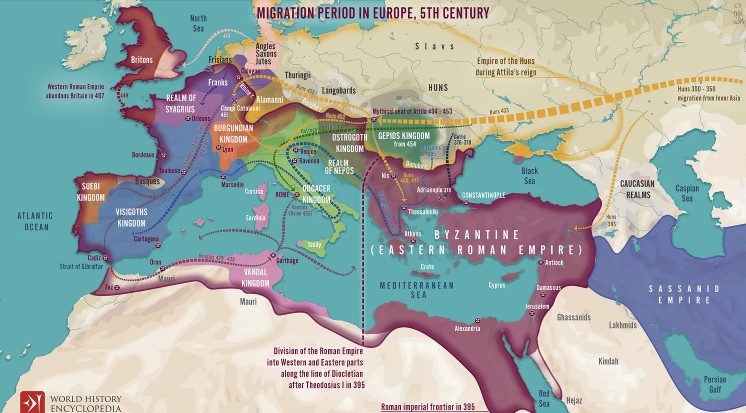
At the time of the Muslim conquest, Iberia was under the rule of the Visigoths, who had established a kingdom that blended Germanic, Roman, and Christian traditions. However, with the ascendancy of Islam in Iberia, the Visigoths were driven into the northern regions of the peninsula. The territory under Muslim control came to be known as al-Andalus, with Córdoba emerging as one of its major intellectual, cultural, and economic centers.
The early history of Muslim Spain marked the beginning of a period historians refer to as convivencia, or coexistence, in which Muslim, Jewish, and Christian communities interacted and contributed to a shared cultural and intellectual legacy. Many historians emphasize that Jewish communities, long marginalized under Visigothic rule, welcomed the arrival of Muslim rulers as liberators. Under the Visigoths, anti-Jewish laws, such as Article X of Book XII in the Lex Visigothorum (653), restricted Jewish rights. For instance, it declared that “Jews, whether baptized or not baptized, are forbidden to give testimony in court.”
In contrast, Muslim governance in al-Andalus fostered a more inclusive administration. Agreements like the Treaty of Tudmir illustrate how Muslims governed Christian and Jewish populations, allowing them to practice their faiths and maintain their communities in exchange for loyalty and taxes. This more tolerant approach contributed to the flourishing of al-Andalus as a center of cultural and religious diversity during the early centuries of Muslim rule.
In 750, the Umayyad Caliphate in Damascus was overthrown by the Abbasid Revolution, marking a major shift in Islamic history. The Abbasids, claiming descent from Muhammad’s uncle al-Abbas, rose to power from their base in Khurasan (northeastern Iran) and challenged Umayyad rule. The decisive confrontation occurred at the Battle on the River Zab, near the Tigris River, where the Abbasid forces decisively defeated the Umayyads, securing control over Syria, the heart of Umayyad power. Following their victory, the Abbasids established Baghdad as their capital, a city that would remain the center of their empire until 1258, when it was sacked by the Mongols, resulting in the death of the last Abbasid caliph.
While the Abbasids consolidated their power in the east, a dramatic chapter unfolded in Iberia. ‘Abd al-Rahman I (r. 756–788), the sole surviving member of the Umayyad dynasty, fled to Iberia after escaping the Abbasid purge. There, he established himself as the amir (ruler) of Córdoba and reestablished Umayyad rule in al-Andalus. From Córdoba, the Umayyads governed al-Andalus independently, transforming it into a thriving cultural and political center.
In 929, ‘Abd al-Rahman III (r. 912–961), a descendant of ‘Abd al-Rahman I, adopted the title of caliph, asserting his claim to leadership over the Islamic world. This bold move created a schism within the Muslim world, as the Abbasids in Baghdad had previously held the exclusive right to the caliphate. By declaring himself caliph, ‘Abd al-Rahman III not only enhanced the prestige of al-Andalus but also challenged the Abbasid dominance, establishing Córdoba as a rival center of Islamic power and culture.
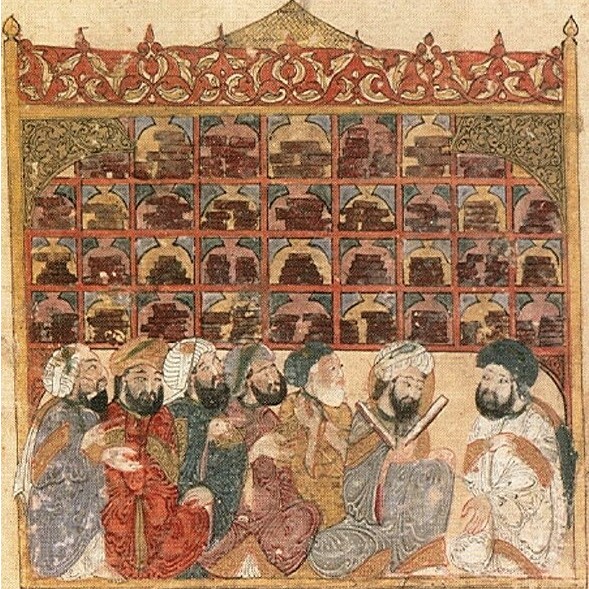
Illustration by Yahyá al-Wasiti from 1237 depicting scholars at an Abbasid library in Baghdad. Found in the Maqama of Hariri located at the Bibliotheque Nationale de France.
he expansion of Islam into Greek-speaking regions made a translation movement both inevitable and essential as Arab rulers and scholars gained access to Greek sources. Greek texts were acquired from Egypt and Byzantine territories conquered during Islam’s expansion. During this time, Greek functioned as an international language across the Eastern Mediterranean, facilitating the transmission of knowledge. Many historians argue that the flourishing of Islamic scientific culture was a direct outcome of this territorial expansion, as the Islamic world inherited and built upon the intellectual traditions of the regions it absorbed.
It was under the Abbasid Caliphate that the translation movement reached its height. The Abbasid Caliph al-Mansur (r. 754–775 C.E.) is credited with initiating formal translations of key works into Arabic. According to the historian al-Ahbari (writing in 945 C.E.), “He was the first Caliph to have books translated into Arabic . . . . There were also translated for him books by Aristotle . . . .” This marked the beginning of a concerted effort to integrate Greek philosophy, natural science, mathematics, and medicine into the Islamic intellectual tradition.
The translation movement gained even greater momentum during the reign of Caliph al-Ma’mun (r. 813–833 C.E.), who is often associated with the founding of the Bayt al-Hikma (House of Wisdom) in Baghdad. The House of Wisdom became a renowned center for translation, study, and innovation, attracting scholars from diverse backgrounds. Here, Greek texts were translated into Arabic, including works by Aristotle, Ptolemy, Galen, and Euclid. Over time, the Islamic world accumulated a vast corpus of knowledge from Greek sources, not merely preserving these texts but also advancing them through commentary, experimentation, and synthesis. This translation movement laid the foundation for significant contributions to science, mathematics, medicine, and philosophy during the Islamic Golden Age.
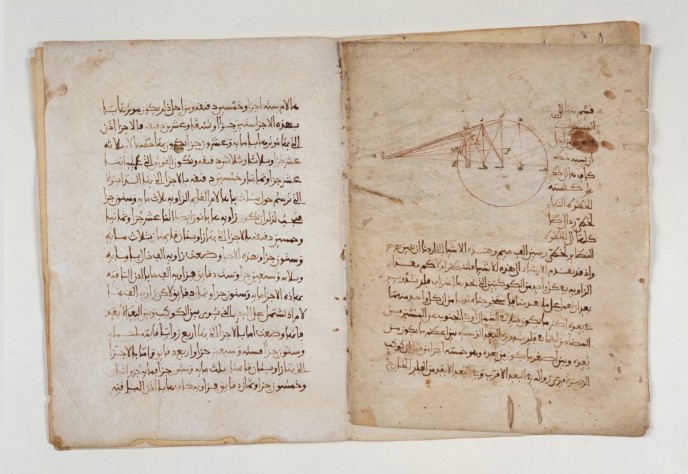
MSS 375 | 11th–12th century
Ptolemy of Alexandria’s (c. 150 C.E.) Almagest (Megalê Syntaxis, or The Great Compilation—known in the Islamic world as The Greatest) was a monumental work on mathematical astronomy. It offered a comprehensive study of spherical astronomy, solar, lunar, and planetary theories, eclipses, and the fixed stars. This influential text appeared in several Arabic translations in Baghdad during the early ninth century, at a time when no copies of it were available in Europe. Ptolemy also authored a significant work on geography, further demonstrating the breadth of his contributions to knowledge.
Muslim scholars, eager to expand their intellectual horizons, actively sought out Greek texts from across their territories, recognizing the value of these ancient works. The renowned polymath Ibn Sina (Avicenna, 980–1037 C.E.), while searching for Greek knowledge, provides historians with a vivid description of the treasures he encountered in the Royal Library of Bukhara. He recounts:
“I found there many rooms filled with books which were arranged in cases, row upon row. One room was allotted to works on Arabic philology and poetry, another to jurisprudence, and so forth, the books on each particular science having a room to themselves. I inspected the catalogue of ancient Greek authors and looked for the books which I required; I saw in this collection books of which few people have heard even the names, and which I myself have never seen either before or since.”
This account reflects the sophistication of Muslim libraries and their commitment to preserving and studying a wide range of knowledge. Such efforts were part of a broader intellectual tradition that sought to collect, translate, and expand upon the works of the ancient world, enabling the Islamic Golden Age to emerge as one of history’s most vibrant periods of scientific and cultural achievement.
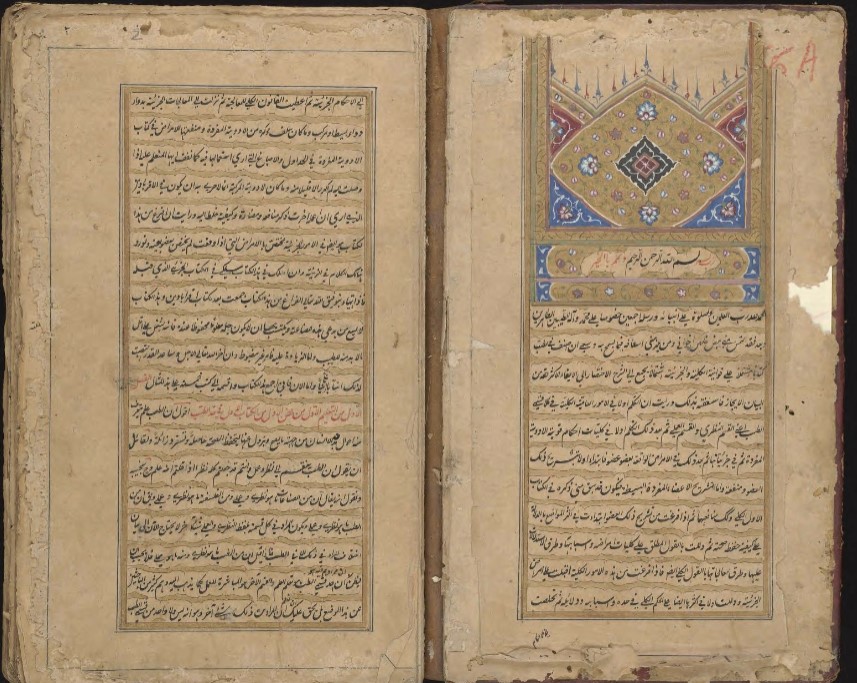
Who were some the great minds produced the Islamic Golden Age? Abu Ali al-Hussain Ibn Abdallah Ibn Sina (980–1037 C.E.), known in the West as Avicenna, has been referred to as the “Galen of the Islamic world” due to his monumental contributions to medicine. Among his many areas of expertise, it is his accomplishments as a physician that are most celebrated. Ibn Sina’s Al-Qanun fi al-Tibb (The Canon of Medicine) became a cornerstone of medical knowledge and practice, serving as an authoritative reference in both the Islamic world and medieval Europe for centuries. The Islamic world’s emphasis on medicine was reflected in the widespread establishment of hospitals, which were not only centers for patient care but also hubs for teaching and research, fostering advancements in medical science.
Mathematics was another field of great importance in the Islamic world. Mohammed Ibn Musa al-Khwarizmi (770–840 C.E.), one of the most prominent Muslim mathematicians, revolutionized the discipline with his development of a practical system of mathematics known as al-Jabr (algebra). His pioneering work laid the foundation for the modern study of algebra. Additionally, al-Khwarizmi wrote the first treatise on “Arabic numerals,” which had been adopted from Indian mathematicians. The Hindu invention of place-value numeration, dating back to as early as the sixth century C.E., provided the basis for these numerals. Today, the modern digits 1, 2, 3, and so on are often referred to as “Arabic numerals” in the West, as they were introduced to Europe through Arab scholars. This transmission of knowledge exemplifies the pivotal role of the Islamic world in preserving, developing, and disseminating scientific and mathematical advancements across cultures.
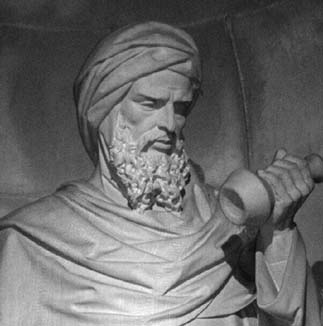
Like Christianity in the West, Islam grappled with the tension between revealed truth (revelation) and human reason (philosophy). One of the most influential figures in this intellectual struggle was Abul Waleed Muhammad Ibn Rushd (1128–1198 C.E.), known in the West as Averroes. Revered as “the Commentator” for his extensive glosses on Aristotle’s works, Ibn Rushd sought to reconcile Islamic theology with philosophy. His writings had a profound impact, not only on Islamic thought but also on Europe, where they were widely read by medieval philosophers and later became foundational texts in university curricula.
On the relationship between reason and revelation, Ibn Rushd argued for their compatibility. He maintained:
“. . . that the business of philosophy is nothing other than to look into creation and to ponder over it in order to be guided to the Creator — in other words, to look into the meaning of existence. For the knowledge of creation leads to the cognizance of the Creator, through the knowledge of the created. The more perfect becomes the knowledge of creation, the more perfect becomes the knowledge of the Creator.”
Ibn Rushd believed that philosophical inquiry and rational thought could complement and deepen one’s understanding of divine revelation. By examining the natural world and its intricacies, one could gain insight into the Creator’s wisdom and design. This perspective emphasized the harmony between faith and reason, a theme that resonated deeply with both Muslim and European intellectuals during the Middle Ages, shaping debates on theology, science, and philosophy for centuries.
THE RISE OF THE PAPACY IN THE WEST
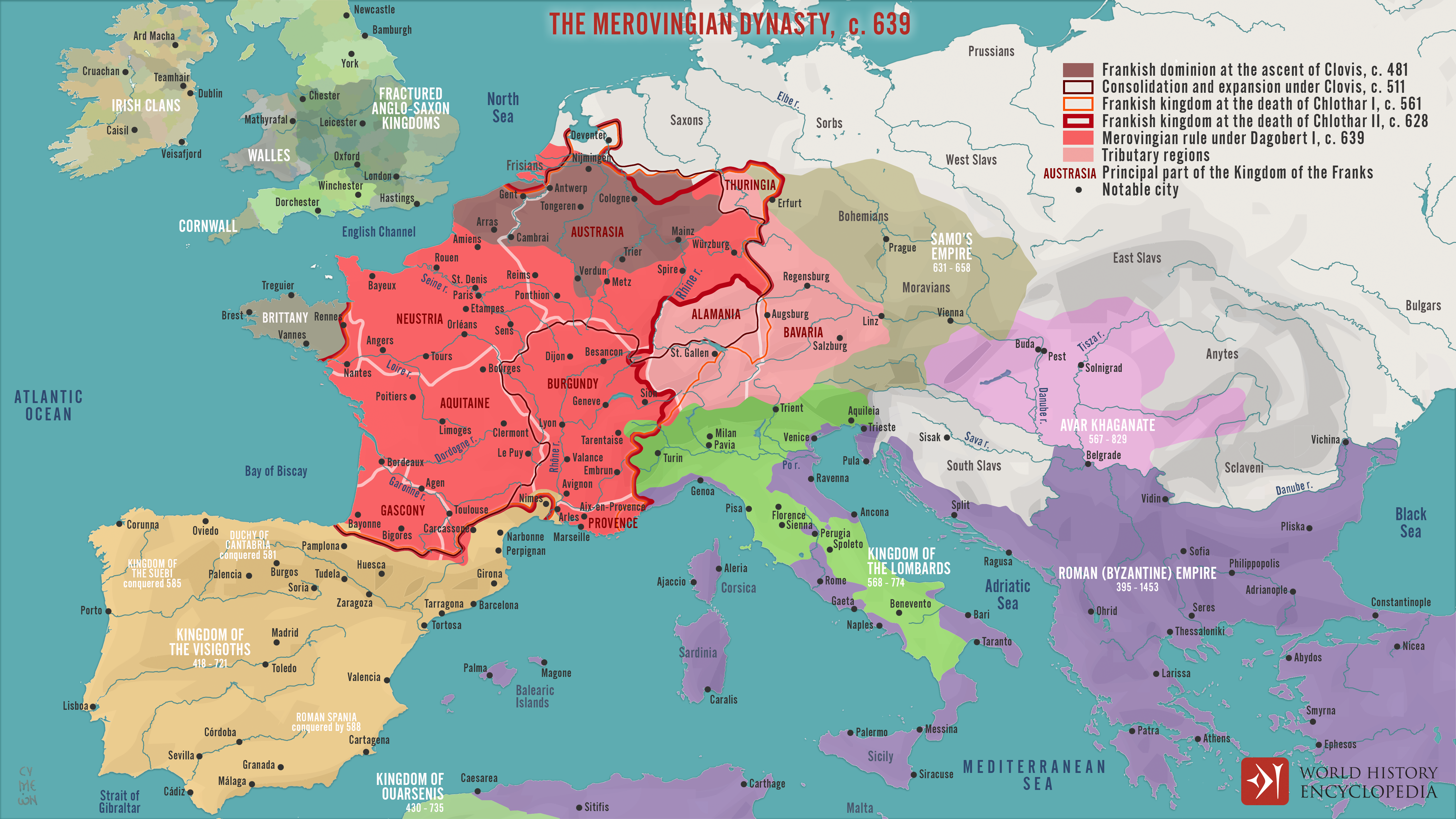
The collapse of the Western Roman Empire in 476 C.E. marked the end of Europe’s political unity and military security, giving rise to a patchwork of kingdoms that blended Roman, Germanic, and Christian traditions. Among these, the Franks emerged as the first significant kingdom in the West. Under the leadership of Clovis I (also known as Chlodovocar, r. 466–511), the Franks were unified, and Clovis established the Merovingian dynasty—the first ruling dynasty in the region.
One of Clovis’s most impactful decisions was his conversion to Roman Christianity. This move had profound consequences for the history of Christianity in the West. Prior to Clovis’s conversion, much of the Gothic population had adhered to Arian Christianity, a theological position deemed heretical by the Roman Church. Arianism argued that Jesus Christ was not consubstantial with God, challenging the orthodox doctrine of the Trinity. By embracing Roman Christianity, Clovis aligned himself with the Catholic Church, strengthening ties between the Frankish kingdom and the Roman papacy.
Clovis’s conversion not only legitimized his rule but also facilitated the spread of orthodox Christianity throughout his kingdom and beyond. His support for Roman Christianity played a key role in establishing it as the dominant faith in Western Europe, helping to lay the foundation for the medieval Christian order. This decision also set a precedent for future alliances between the Frankish rulers and the Catholic Church, alliances that would later culminate in the establishment of the Holy Roman Empire.
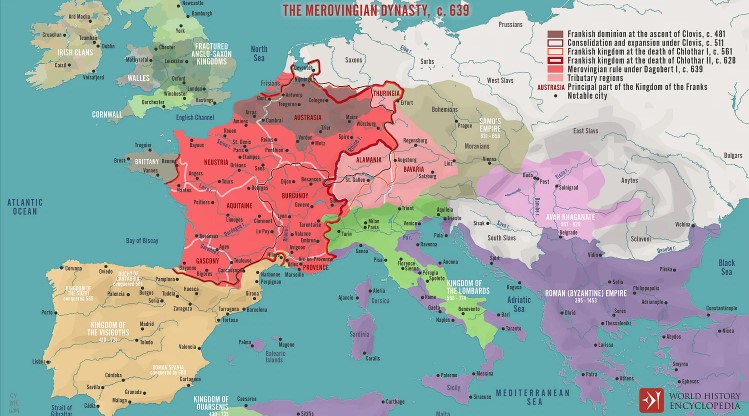
With the conversion of Clovis and the Franks to Roman Christianity, the influence of Arianism over the Goths began to wane, gradually eroding the dominance of this heretical doctrine in Western Europe. The Merovingian Dynasty founded by Clovis would endure for several centuries, but it was eventually supplanted by the Carolingian Dynasty.
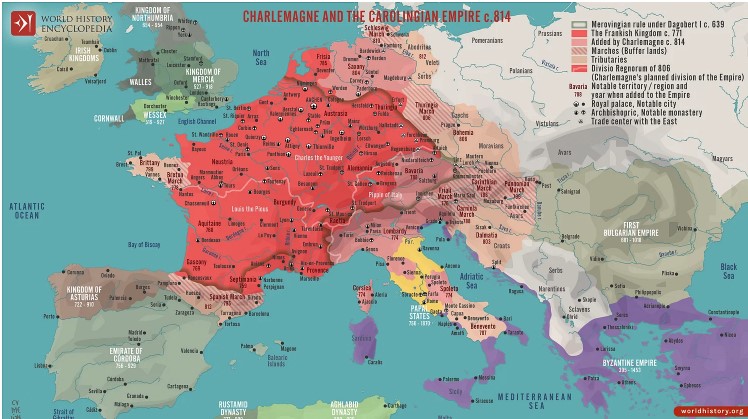
The most renowned figure of the Carolingian Dynasty was Charlemagne (r. 768–814), whose reign marked a transformative era in European history. Charlemagne expanded the Frankish kingdom into a vast empire that encompassed much of Western and Central Europe, reviving the idea of a unified Christian realm. His leadership extended beyond military conquests, as he also promoted cultural and educational reforms, often referred to as the Carolingian Renaissance.
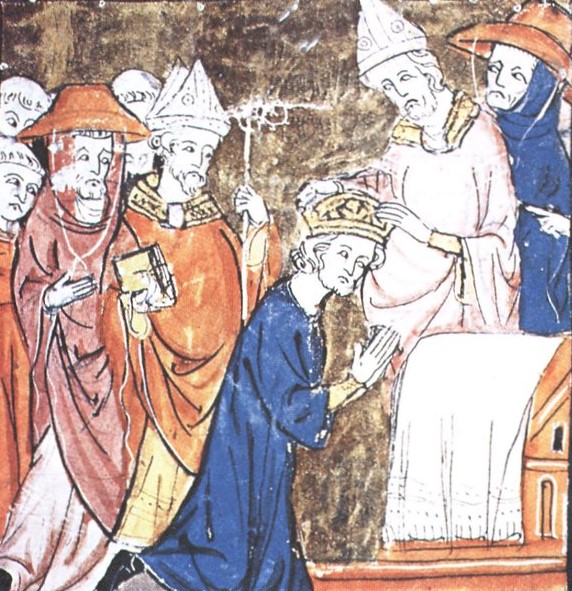
In the year 800, Charlemagne was crowned Emperor of the “New Rome” by Pope Leo III (r. 795–816) in a ceremony in St. Peter’s Basilica. This event symbolized the revival of imperial authority in the West and laid the foundation for what would later evolve into the title of Holy Roman Emperor. Charlemagne’s coronation represented a powerful alliance between the Frankish monarchy and the papacy, reinforcing the concept of a united Christendom under both secular and spiritual leadership. This fusion of Roman, Germanic, and Christian traditions would shape European political and cultural development for centuries.
In Iberia, the Visigoths had established a powerful kingdom, with King Leovigild (r. 568–586 C.E.) solidifying Toledo as the center of Visigothic authority. Leovigild worked to unify the region, both politically and religiously, seeking to strengthen the Visigothic kingdom. By 672 C.E., the Visigothic kingdom had reached its zenith, achieving a relatively stable and centralized rule in the Iberian Peninsula. Early historical details about the Visigoths are preserved in sources like The History of the Kings of the Goths by Isidore of Seville (early 7th century C.E.) and John of Biclaro’s Chronicle (late 6th century C.E.), which provide valuable insights into the politics and culture of the Visigothic period.
While the Visigoths had consolidated their power in Iberia, Europe as a whole faced a new wave of invasions during the 9th and 10th centuries. Scandinavian raiders (Swedes, Danes, and Norwegians), Saracens (North African Muslim raiders), and Magyars (nomadic peoples from Eastern Europe) brought widespread disruption to the continent. These invasions shattered central authority and necessitated new methods of defense and governance.
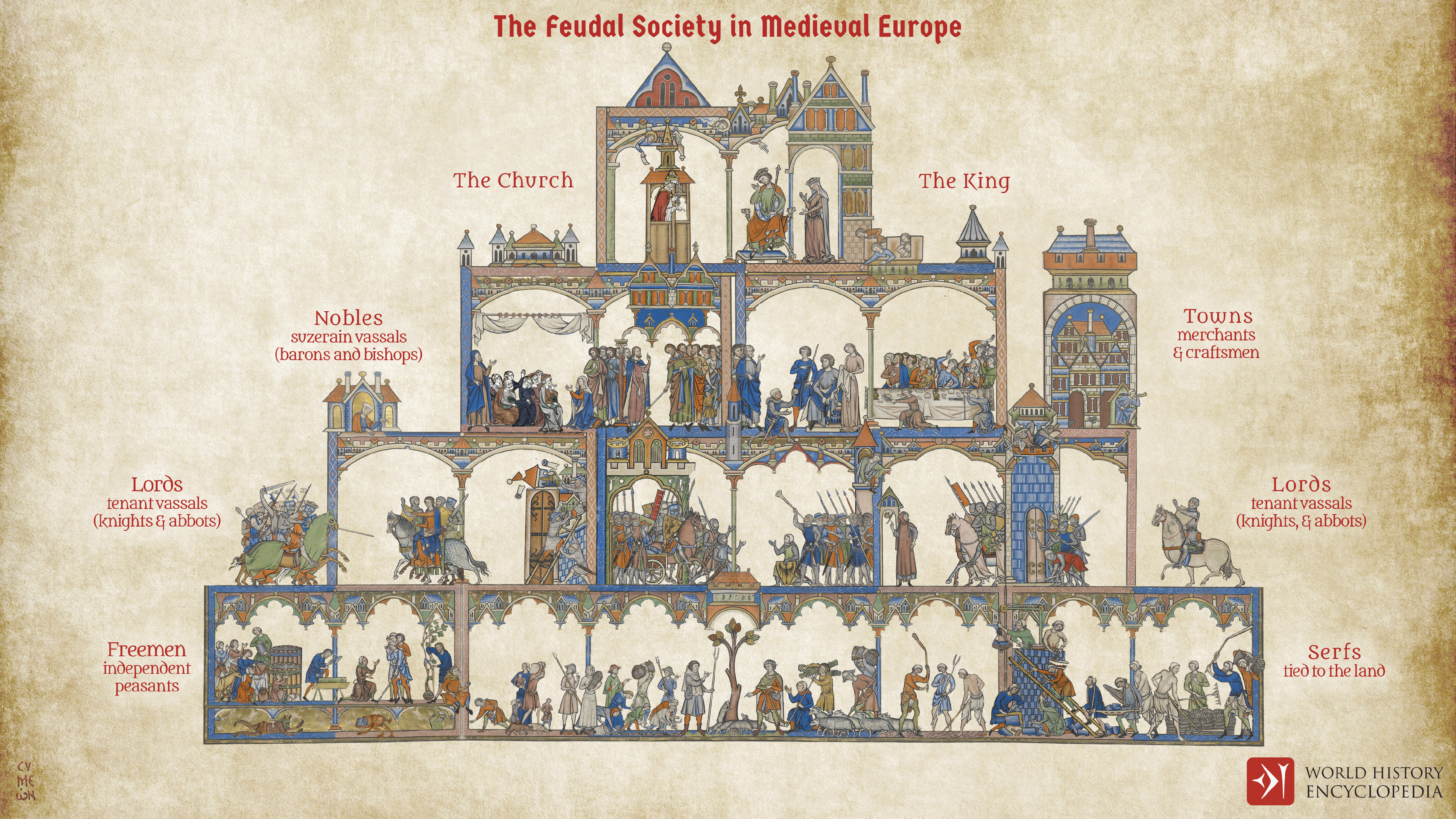
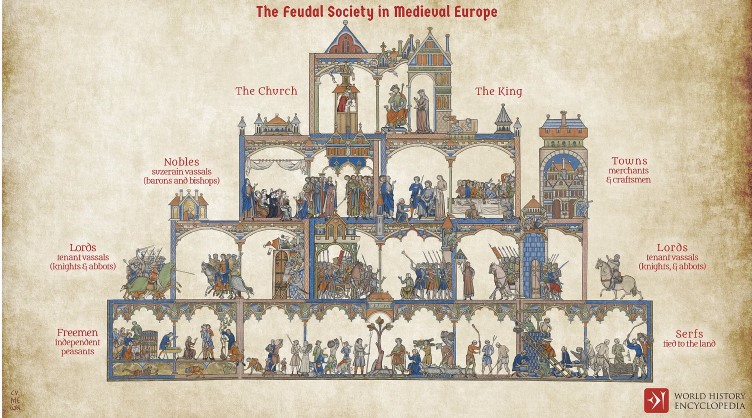
One of the ways Europe responded to these threats was through the implementation of feudalism. Feudalism was a decentralized system of governance in which power and security were localized. At its heart was manorialism, the economic system that supported feudal society. Under manorialism, estates known as manors became self-sufficient units, with the lord of the manor providing protection to the serfs (peasants bound to the land) in exchange for goods, labor, and services. This arrangement allowed for a measure of stability in a time of insecurity, but it also entrenched a rigid social hierarchy that defined medieval life for centuries. The combination of feudalism and manorialism provided a framework for Europe’s recovery and eventual development, even as it marked a shift toward localized and fragmented economies and politics.
Throughout the early Middle Ages, the struggle for leadership in Europe was defined by the conflict between the Papacy, which wielded spiritual authority, and secular rulers, particularly the Holy Roman Emperors, who sought to assert their dominance over Christendom. This power struggle reached its height during the Investiture Controversy, a dispute that fundamentally reshaped the relationship between church and state. The controversy pitted Pope Gregory VII (r. 1073–1085) against Holy Roman Emperor Henry IV (r. 1056–1106) and centered on two key issues.
First, the controversy revolved around the right to appoint and invest bishops, who held significant religious and political power within the Church hierarchy. The ceremony of investiture symbolized the bishop’s authority and responsibilities: the staff represented his role as shepherd of the flock, while the ring symbolized his spiritual “marriage” to the Church. Both the Papacy and the Emperor viewed the control of episcopal appointments as essential to consolidating their respective authority, making the question of investiture a critical battleground.
Second, the dispute raised the broader question of who was the rightful leader of Christendom. Henry IV’s defiance of Pope Gregory VII led to his excommunication, a severe blow to his authority, as it undermined his legitimacy in the eyes of his subjects. Forced to seek reconciliation, Henry famously traveled to Canossa in 1077, where he stood barefoot in the snow, publicly asking for Gregory’s forgiveness. This act of penance temporarily restored Henry’s position, but it also symbolized the Papacy’s dominance in this conflict.
In the wake of his victory, Pope Gregory VII issued the Dictatus Papae (1085), a declaration asserting the supremacy of papal authority over secular rulers. This marked a turning point, as the Papacy emerged as the primary power in Christendom, capable of influencing not only spiritual matters but also European politics. This newfound power was further demonstrated in 1095, when Pope Urban II, Gregory’s successor, directed Europe’s foreign policy by calling for the First Crusade, mobilizing Christian Europe in a collective military and religious endeavor. The Investiture Controversy thus exemplified the evolving tension between church and state, a dynamic that would continue to shape European history for centuries.
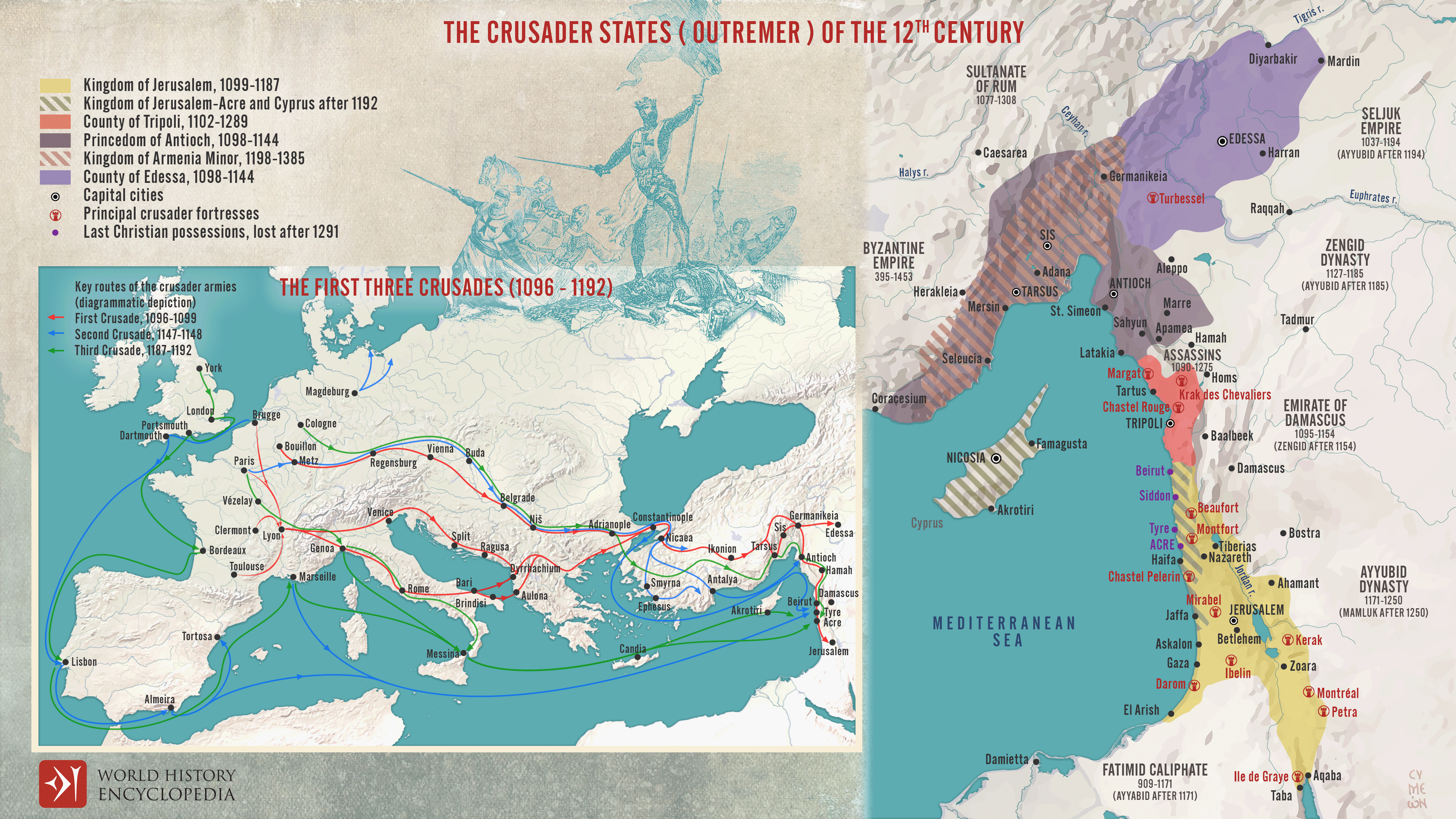
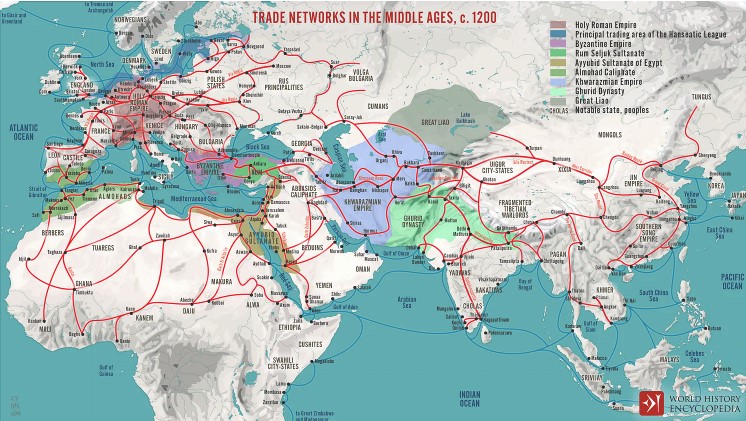
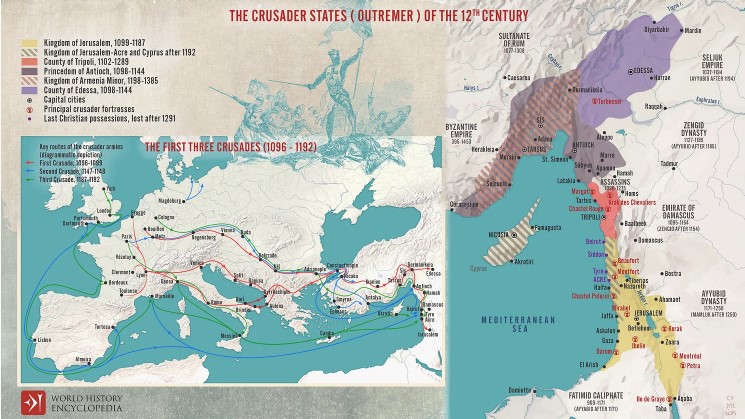
Recall that in Europe, the Roman Empire had once provided centralization and stability to the Mediterranean world. However, its collapse led to widespread instability, a decline in trade, and the retreat of knowledge into monasteries. While this period appeared bleak for Europe, the latter part of the Middle Ages saw significant recovery. This revival was driven in part by the leadership of the Papacy, as well as by an economic resurgence and the infusion of new knowledge. Many historians argue that a driving force behind the Papacy’s policy of expansion during the crusades was fueled by economic interests. Note in the map below where some of the most important trade routes from the east converge. It was in the Levant, termed the Holy Land. This would be a focus of crusading activity.
In 1095, Pope Urban II (r. 1088–1099) called for a crusade against the Seljuk Turks at the Council of Clermont in France, urging Christians to take up arms to reclaim the “Holy Land” (Levant) from Muslim control. The First Crusade, launched in response to this call, was a military success, with Christian forces capturing Jerusalem and establishing Crusader states in the region. This period not only had religious and military implications but also had a profound impact on European economic and cultural life, as it reintroduced Europe to “exotic” goods and international trade routes from the East.
The types of goods brought from the East included luxury items that were previously unfamiliar or rare in Europe. Spices like pepper, cinnamon, and cloves became highly sought-after for culinary and medicinal purposes. Fine textiles such as silks, along with precious stones, perfumes, and dyes, also found their way into European markets. Additionally, other commodities like sugar, glass, and ivory were imported, all of which were in high demand among European elites.
One notable example of the types of goods coming from the East can be found in a document from 1192, during the Third Crusade. A group of crusaders led by Richard I “the Lionheart” (r. 1189–1199) captured a trade caravan. The inventory of the caravan, recorded by the crusaders, revealed an array of valuable goods: spices, silks, gold, jewelry, and other treasures. This incident highlights not only the economic significance of the Crusades but also the integration of Eastern trade networks into European life.
These goods, transported along well-established trade routes such as the Silk Road and maritime connections through the Mediterranean, sparked a growing interest in international trade and luxury markets in Europe. This re-engagement with the wider world helped lay the groundwork for the eventual expansion of European commerce, exploration, and cultural exchange in later centuries.
“They led the yoked horses and camels by the halter, and offered them to our men, and they brought mules loaded with spices of different kinds, and of great value; gold and silver; cloaks of silk . . . medicines . . . chess-boards; silver dishes and candlesticks; pepper, cinnamon, sugar, and wax; and other valuables of choice and various kinds; an immense sum of money, and an incalculable quantity of goods, such as had never before (as we have said) been taken at one and the same time, in any former battle.”
Capture of Caravan
The Crusades not only had a significant impact on religion, politics, and economics but also fundamentally reshaped the relationship between Christianity and militarism. They successfully fused Christian ideals with the concept of holy warfare, laying the foundation for the medieval notion of just war. The idea that violence could be morally justified when carried out in service of God became central to the Crusading ethos and left a lasting legacy on Christian theology and European warfare.
One of the most influential proponents of this fusion of faith and militarism was Bernard of Clairvaux (1090–1153), a Cistercian monk and theologian. In his treatise In Praise of the New Knighthood, Bernard offered a theological justification for holy war and praised the Knights Templar, a military-religious order dedicated to defending Christian pilgrims and territories. He wrote:
“The knights of Christ may safely fight the battles of their Lord, fearing neither sin if they smite the enemy, nor danger at their own death; since to inflict death or to die for Christ is no sin, but rather, an abundant claim to glory.”
In Bernard’s view, a “knight of Christ” was not only a soldier but also a servant of God, engaging in battle as an act of piety. Killing the enemy in defense of the faith was not seen as a sin but rather as a righteous act, while dying in such a cause guaranteed eternal salvation. This blending of Christian ideals with the warrior ethos provided a moral framework for the Crusades and legitimized the use of violence in the name of religion.
This concept of just war would continue to evolve over the centuries, influencing both religious and secular thought. It provided a basis for later discussions about the moral and ethical limits of warfare, as well as the conditions under which violence could be justified. However, in the context of the Crusades, it also contributed to the zealous fervor with which Christian armies waged campaigns, leading to both moments of triumph and tragic excesses. Bernard’s writings reflect the spirit of the time, encapsulating the theological underpinnings of the Crusading movement and its enduring influence on the intersection of faith and warfare.
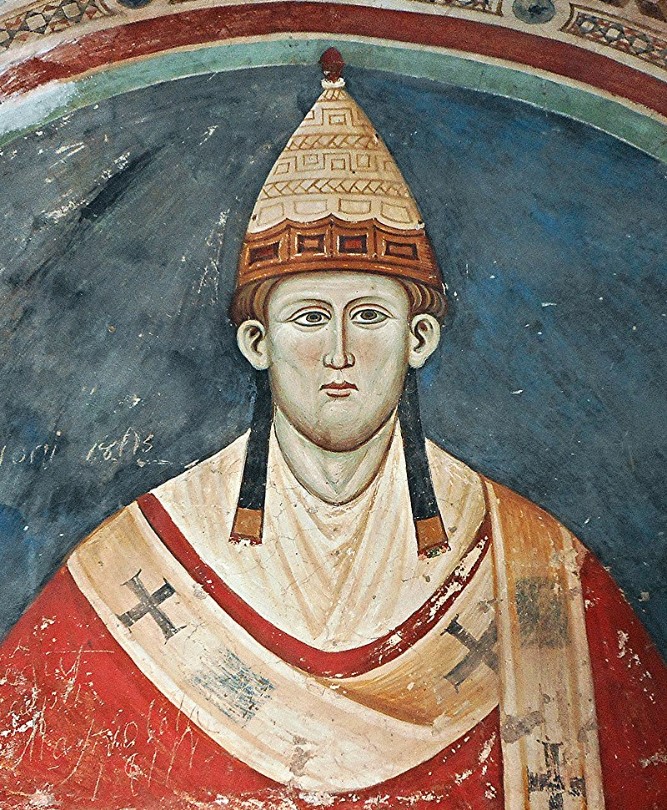
The Papacy reached the height of its power during the pontificate of Innocent III (r. 1198–1216), who asserted unparalleled authority over secular rulers and the broader Christian world. Innocent III exemplified the dominance of the medieval Church by forcing his will on monarchs, such as when he placed England under interdict to pressure King John into accepting his choice for the Archbishop of Canterbury. Additionally, Innocent III convened the Fourth Lateran Council (1215), a landmark Ecumenical Council that produced extensive ecclesiastical legislation aimed at reforming Church practices and strengthening its influence over Christian society.
However, by this period, growing dissatisfaction with the Church emerged among its followers, as many felt it was failing to meet the spiritual needs of its communities. Criticism of the Church reached new heights during two significant crises: the Avignon Papacy (1303–1378) and the Great Schism (1378–1417). During the Avignon Papacy, the seat of the papacy was moved from Rome to Avignon, where it came under the influence of the French crown, undermining its credibility as a universal spiritual authority. The Great Schism further eroded the Church’s authority when competing factions elected rival popes, at one point leading to three individuals simultaneously claiming to be the legitimate Pope. This internal disarray fractured the unity of Christendom and tarnished the papacy’s reputation.
Amid this growing discontent, a renewed emphasis was placed on the supremacy of the Bible over the hierarchical and institutional structures of the medieval Church. This shift in focus, combined with the Church’s chaotic state, laid the groundwork for reform movements that would challenge its authority in the centuries to come. Reformers such as John Wycliffe and Jan Hus began advocating for a return to scriptural authority, criticizing the excesses and corruption within the Church.
The weakening of papal authority also created opportunities for secular rulers to consolidate power and centralize their kingdoms or states. With the Church no longer able to exert the same level of control over political matters, monarchs began to assert greater autonomy, laying the foundation for the emergence of strong centralized states in late medieval Europe. These developments marked a turning point in European history, setting the stage for the Reformation, the decline of medieval Christendom, and the rise of modern nation-states.
One of the significant challenges the Church faced during the Middle Ages came from the rise of philosophy, particularly the rediscovery and study of Aristotelian works on science and natural philosophy. Aristotle’s writings often presented ideas that seemed to conflict with Christian doctrine, raising questions that threatened the Church’s authority. For example, in On the Heavens (Book 2:1), Aristotle argued that, “the heaven as a whole neither came into being nor admits of destruction, as some assert, but is one and eternal, with no end or beginning of its total duration, containing and embracing in itself the infinity of time . . .” This assertion contradicted the biblical creation story in Genesis, which described the universe as having a clear beginning, created by God. If the universe was eternal and without a beginning, it challenged the Church’s teachings on divine creation, potentially undermining foundational beliefs about God’s role as Creator.
By 1200, the majority of Aristotle’s works had been translated into Latin and were increasingly studied in European universities. This resurgence of Aristotelian philosophy posed a dilemma for Church leaders, as many of Aristotle’s ideas, particularly those concerning the natural world, eternity, and causality, raised philosophical and theological questions that conflicted with Church doctrine.
The availability of these texts in Europe was largely due to their preservation and study in the Islamic world. Beginning in the 10th century C.E., Islamic scholars translated Greek philosophical works into Arabic, often accompanied by extensive commentary and interpretation. Islamic intellectual centers, such as Baghdad and Córdoba, became repositories of Greek knowledge. Through cultural exchange and the reconquest of territories in Spain, these works were gradually introduced to Europe. They were then translated from Arabic into Latin, providing European scholars with access to Aristotle’s philosophy as well as the scientific and mathematical advancements made by Muslim scholars.
The introduction of Aristotelian philosophy into Europe forced the Church to respond. While some Church leaders saw these works as a threat, others sought to reconcile faith with reason. The result was the development of Scholasticism, a method of study that sought to harmonize Christian theology with classical philosophy. Thinkers like Thomas Aquinas (1225–1274) played a key role in this effort, using Aristotle’s philosophy as a framework to explore and explain Christian doctrine. Despite these reconciliatory efforts, the tension between faith and reason remained a defining feature of medieval intellectual life, setting the stage for later debates during the Renaissance and beyond.
The translation of Greek and Arabic philosophical and scientific works into Latin during the Middle Ages had a profound impact on the intellectual development of the West. The rediscovery of these texts, facilitated by translators like Gerard of Cremona, John of Seville, and William of Moerbeke, significantly expanded Europe’s access to ancient knowledge and the advancements made in the Islamic world. Gerard of Cremona, in particular, played a pivotal role, translating works such as Ptolemy’s Almagest, Euclid’s Elements, al-Khwarizmi’s Algebra, and key Aristotelian texts (Physics, On the Heavens, Generation and Corruption), alongside a wealth of Arabic medical treatises. Toledo, where Gerard worked, became a center of intellectual exchange, bridging the Islamic and Christian worlds.
The availability of this corpus of Greek-Arabic works revolutionized Western education and scholarship, particularly in the burgeoning universities. Aristotelian philosophy, in particular, deeply influenced the curriculum. Aristotle’s exploration of natural philosophy, metaphysics, ethics, and logic offered a systematic approach to understanding the natural world and human existence, which resonated with medieval scholars. However, the Church initially viewed these works with suspicion, as they often addressed themes central to Christian theology—creation, eternity, the nature of God, and the structure of the universe—in ways that sometimes appeared to conflict with Church teachings.
This tension between Aristotelian philosophy and Christian theology led to significant debates and even outright conflict. One prominent example was the ban on teaching certain Aristotelian works at the University of Paris in the early 13th century. Pope Gregory IX (r. 1227–1241) promulgated regulations in an effort to restrict the teaching of works that might contradict Church doctrine. His concern was that Aristotelian natural philosophy, especially its views on the eternity of the universe, could undermine the Church’s teachings on creation as described in Genesis. These restrictions reflected the broader struggle to integrate reason (philosophy) and faith (theology) within the framework of medieval Christianity.
Despite these initial conflicts, Aristotelian philosophy eventually found a place within the university curriculum. Thinkers like Thomas Aquinas worked to reconcile Aristotle’s ideas with Christian theology, laying the foundation for Scholasticism. Aquinas, for instance, argued that reason and revelation were not fundamentally in conflict but rather complementary paths to truth. This synthesis of Aristotelian philosophy and Christian theology not only shaped medieval intellectual life but also paved the way for the Scientific Revolution, as the methods of inquiry and critical thinking introduced through Aristotle continued to influence Western thought for centuries.
Thus, the translation and dissemination of Greek-Arabic works sparked a transformation in European intellectual culture. They reintroduced scientific and philosophical inquiry, expanded the scope of education, and created a platform for new ideas that would ultimately challenge and reshape medieval worldviews.
During the Middle Ages, reconciling different sources of authority was a recurring intellectual challenge, particularly in the case of theology and philosophy. Theology, grounded in articles of faith and divine revelation, often seemed to stand in opposition to philosophy, which relied on reason, observation, and logical inquiry. This tension raised profound questions: Could there be two ultimate sources of truth? What should be done if these sources appeared to conflict?
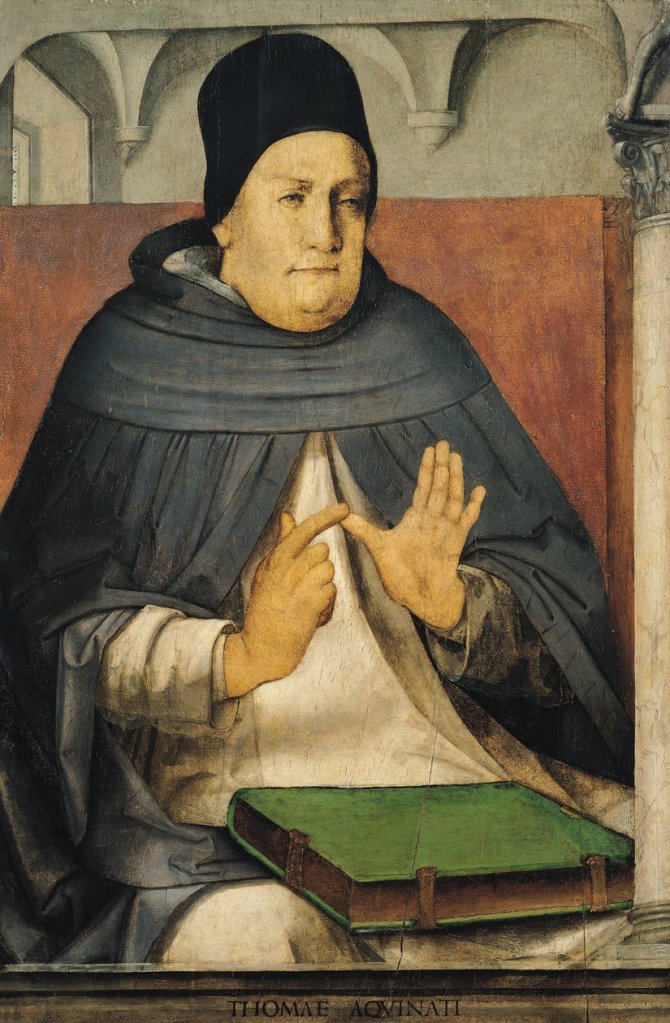
A significant resolution to this dilemma came through the writings of Thomas Aquinas (1225–1274), a Dominican monk and one of the most influential theologians of the medieval period. Aquinas sought to bridge the gap between faith and reason, arguing that these two approaches to truth were not mutually exclusive but complementary. He articulated this in his theological works, particularly in his Summa Theologica, where he addressed the relationship between reason and divine revelation.
Aquinas wrote, “There is a twofold truth in what we profess about God. Some truths about God exceed all ability of the human reason. Such is the truth that God is Triune. But there are some truths which natural reason is also able to reach.” According to Aquinas, truths about God could be divided into two categories: those accessible through human reason and observation (such as the existence of God, which could be inferred through studying the natural world), and those that surpassed human understanding and could only be known through divine revelation (such as the doctrine of the Trinity).
Aquinas believed that reason was a gift from God and could be used to know certain aspects of the divine. For example, by observing the natural order, humans could infer the existence of a Creator. However, reason had its limits and could not fully comprehend all of God’s mysteries. Some truths—such as the nature of the Trinity or the Incarnation—could only be accepted through faith.
This synthesis of faith and reason became a cornerstone of Scholasticism, the dominant intellectual movement in medieval universities. Aquinas’s approach allowed theology and philosophy to coexist as distinct but interrelated ways of understanding truth. Theology provided divine truths that reason could not access on its own, while philosophy offered tools for exploring and articulating those truths in a logical and systematic way.
Aquinas’s work not only helped to reconcile the apparent conflict between faith and reason but also provided a framework for intellectual inquiry that would influence Western thought for centuries. His writings allowed medieval scholars to engage with the rediscovered works of Aristotle and other ancient philosophers without undermining Christian doctrine. This balance between faith and reason continued to shape theological, philosophical, and scientific developments well into the Renaissance and early modern period.
IN CLOSING
It is in the writings of Thomas Aquinas that the reconciliation between revelation and reason reached its intellectual pinnacle during the Middle Ages. His two most influential works, Summa Contra Gentiles (a rational defense of Christian theology aimed at non-believers) and Summa Theologica (a comprehensive summary of his theological and philosophical thought), exemplify his ability to harmonize faith with reason. Aquinas is often referred to as a theologian-natural philosopher, a title reflecting his mastery not only of theology but also of natural philosophy (the precursor to modern science).
Aquinas and others like him played a pivotal role in laying the intellectual foundations for the eventual rise of science in the West. By integrating Aristotelian philosophy into Christian theology, Aquinas demonstrated that the study of the natural world could be a valid and even sacred pursuit, as understanding creation was seen as a way to know the Creator. His approach encouraged a systematic and rational inquiry into the natural order, planting the seeds for the scientific developments that would emerge in later centuries.
Historians studying the rise of science in Europe emphasize the importance of certain preconditions that facilitated its development. These include:
- The Availability of Translated Greco-Arabic Works on Science and Philosophy:
The translation movement of the 12th and 13th centuries introduced Europe to a vast corpus of Greco-Arabic knowledge. Ancient Greek texts, particularly those of Aristotle, as well as advancements made by Islamic scholars like Al-Khwarizmi, Ibn Sina (Avicenna), and Alhazen (Ibn al-Haytham), were translated into Latin. These works provided insights into natural philosophy, mathematics, astronomy, medicine, and optics, offering Europeans access to sophisticated intellectual traditions that had been preserved and expanded upon in the Islamic world. This influx of knowledge served as a catalyst for the intellectual and scientific developments of the later Middle Ages and beyond. - The Rise of Universities and the Incorporation of Greco-Arabic Works into Their Curricula:
The establishment of medieval universities during the 12th and 13th centuries created structured environments for higher learning, where scholars could systematically engage with new ideas. Universities like those in Paris, Bologna, and Oxford made natural philosophy (the study of nature) a central component of their curricula. The inclusion of translated Greco-Arabic works, particularly those of Aristotle, transformed the intellectual landscape. Students and scholars debated these texts, applied their methods, and began to refine and expand upon the ideas presented in them. This institutional framework ensured that the knowledge introduced through translations became widely disseminated and rigorously analyzed. - The Rise of Theologian-Natural Philosophers Who Found Use and Application for Two Truths:
Figures like Thomas Aquinas epitomized the blending of theology and natural philosophy. These theologian-natural philosophers argued that there were two complementary paths to truth: revelation (faith) and reason. While some truths about God and the divine (such as the Trinity) could only be known through faith, others (such as the existence of God) could be discovered through reason and observation of the natural world. This dual approach legitimized the study of the natural world as a means of understanding divine creation. By reconciling faith and reason, these scholars opened the door for systematic inquiry into natural phenomena, laying a foundation for the scientific method.
These three preconditions—access to translated Greco-Arabic knowledge, the institutional support of universities, and the intellectual framework provided by theologian-natural philosophers—worked together to create an environment in which the scientific study of the natural world could flourish. They represent the intellectual and cultural groundwork that would ultimately lead to the Scientific Revolution in Europe.
 World History Portal