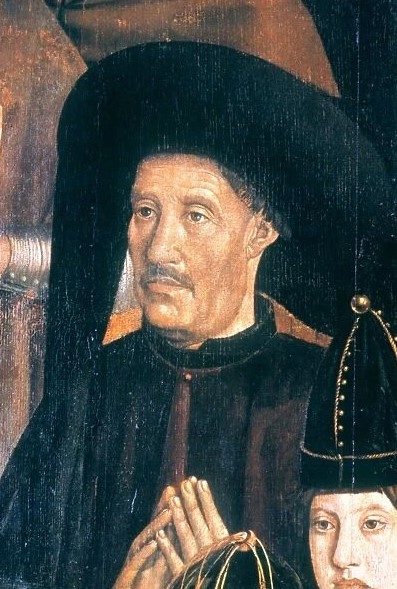
Gomes Eannes de Azurara (died 1474) was a prominent Portuguese historian, chronicler, and archivist, serving as the chief keeper of the royal archives and the official chronicler to King Afonso V of Portugal. His historical writings played a crucial role in documenting Portugal’s early maritime explorations during the Age of Discovery. Azurara was an ardent admirer of Prince Henry the Navigator (1394–1460), the driving force behind Portugal’s pioneering voyages along the West African coast. His most significant work, Chronicle of the Discovery and Conquest of Guinea (Crónica da Descoberta e Conquista da Guiné), provides a detailed and vivid account of the early Portuguese expeditions into the Atlantic Ocean and their systematic exploration of the western coast of Africa. This work not only records the voyages undertaken by Portuguese navigators but also highlights the broader geopolitical, economic, and religious motivations behind these expeditions. Consider the following questions as you read the selections below:
- What moved Prince Henry the Navigator to support Portuguese maritime expedition down the coast of Africa?
- What difficulties were encountered by those participating in these expeditions? Why did they fear going beyond Cape Bojador?
- How and when did the Portuguese venture around Cape of Bojador?
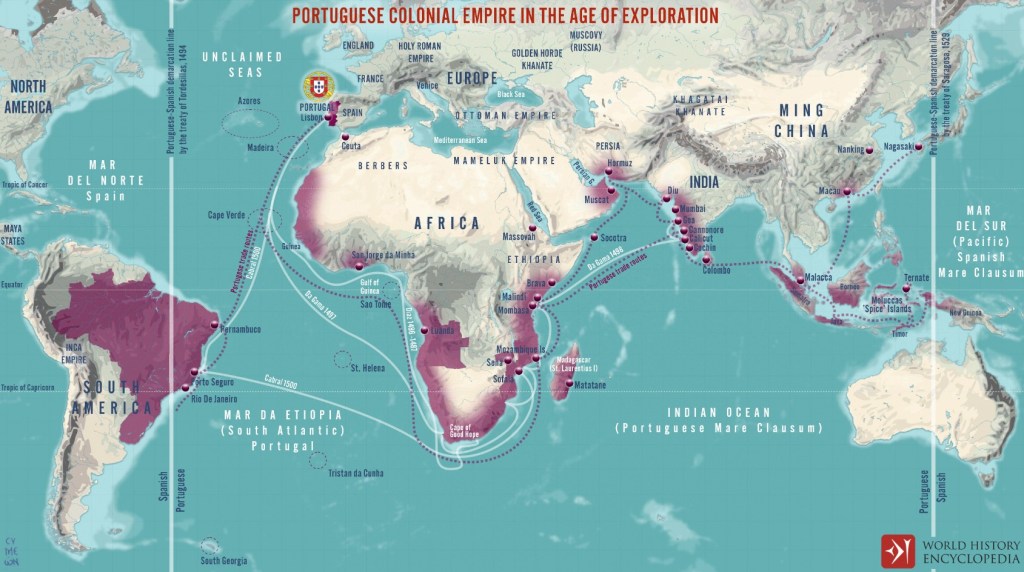
Complete the Primary Source Analysis Form when finished for your records.
Chapter VII: In which five reasons appear why the Lord Infant was moved to command the search for the lands of Guinea.
We imagine that we know a matter when we are acquainted with the doer of it and the end for which he did it. And since in former chapters we have set forth the Lord Infant as the chief actor in these things, giving as clear an understanding of him as we could, it is meet that in this present chapter we should know his purpose in doing them. And you should note well that the noble spirit of this Prince, by a sort of natural constraint, was ever urging him both to begin and to carry out very great deeds. For which reason, after the taking of Ceuta he always kept ships well armed against the Infidel, both for war, and because he had also a wish to know the land that lay beyond the isles of Canary and that Cape called Bojador, for that up to his time, neither by writings, nor by the memory of man, was known with any certainty the nature of the land beyond that Cape. Some said indeed that Saint Brandan had passed that way; and there was another tale of two galleys rounding the Cape, which never returned. But this doth not appear at all likely to be true, for it is not to be presumed that if the said galleys went there, some other ships would not have endeavoured to learn what voyage they had made. And because the said Lord Infant wished to know the truth of this,—since it seemed to him that if he or some other lord did not endeavour to gain that knowledge, no mariners or merchants would ever dare to attempt it—(for it is clear that none of them ever trouble themselves to sail to a place where there is not a sure and certain hope of profit)—and seeing also that no other prince took any pains in this matter, he sent out his own ships against those parts, to have manifest certainty of them all. And to this he was stirred up by his zeal for the service of God and of the King Edward his Lord and brother, who then reigned. And this was the first reason of his action.
The second reason was that if there chanced to be in those lands some population of Christians, or some havens, into which it would be possible to sail without peril, many kinds of merchandise might be brought to this realm, which would find a ready market, and reasonably so, because no other people of these parts traded with them, nor yet people of any other that were known; and also the products of this realm might be taken there, which traffic would bring great profit to our countrymen.
The third reason was that, as it was said that the power of the Moors in that land of Africa was very much greater than was commonly supposed, and that there were no Christians among them, nor any other race of men; and because every wise man is obliged by natural prudence to wish for a knowledge of the power of his enemy; therefore the said Lord Infant exerted himself to cause this to be fully discovered, and to make it known determinately how far the power of those infidels extended.
The fourth reason was because during the one and thirty years that he had warred against the Moors, he had never found a Christian king, nor a lord outside this land, who for the love of our Lord Jesus Christ would aid him in the said war. Therefore he sought to know if there were in those parts any Christian princes, in whom the charity and the love of Christ was so ingrained that they would aid him against those enemies of the faith.
The fifth reason was his great desire to make increase in the faith of our Lord Jesus Christ and to bring to him all the souls that should be saved,—understanding that all the mystery of the Incarnation, Death, and Passion of our Lord Jesus Christ was for this sole end—namely the salvation of lost souls—whom the said Lord Infant by his travail and spending would fain bring into the true path. For he perceived that no better offering could be made unto the Lord than this; for if God promised to return one hundred goods for one, we may justly believe that for such great benefits, that is to say for so many souls as were saved by the efforts of this Lord, he will have so many hundreds of guerdons in the kingdom of God, by which his spirit may be glorified after this life in the celestial realm. For I that wrote this history saw so many men and women of those parts turned to the holy faith, that even if the Infant had been a heathen, their prayers would have been enough to have obtained his salvation. And not only did I see the first captives, but their children and grandchildren as true Christians as if the Divine grace breathed in them and imparted to them a clear knowledge of itself
 World History Portal
