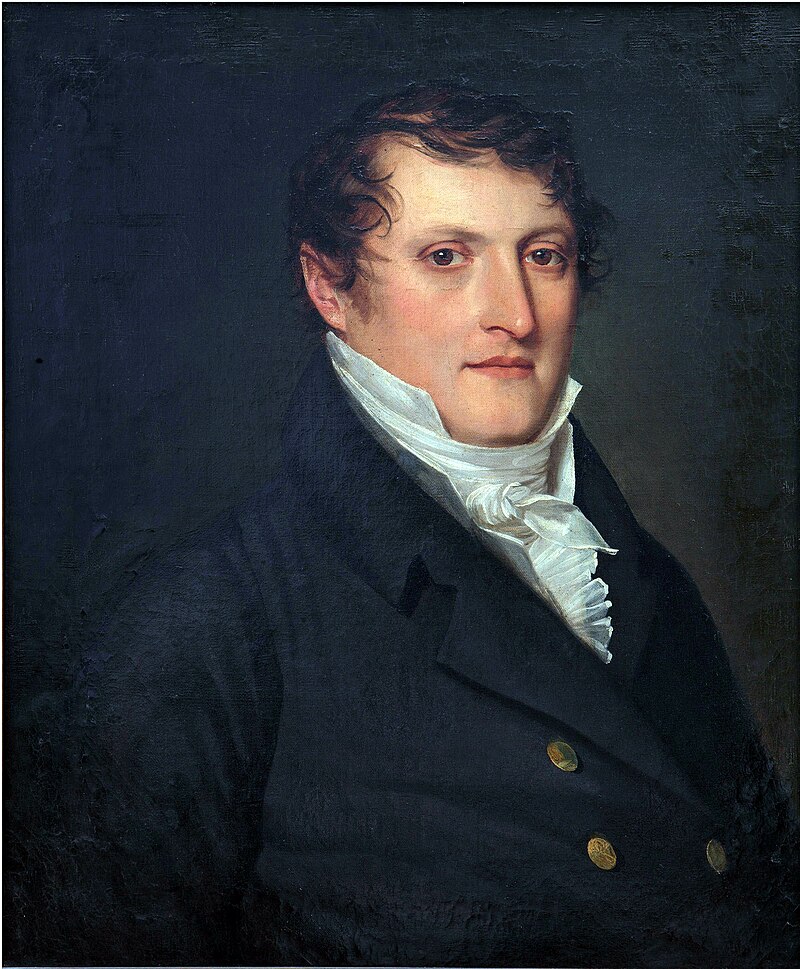
In this topic’s primary source, you will have the opportunity to once again read about Manuel Belgrano, but with more detail. Recall that Manuel Belgrano (1770– 1820) was born in Buenos Aires, Viceroyalty of Río de la Plata. During his lifetime, Belgrano served in a many of capacities which included being an economist, a lawyer and eventually a leader of the Argentine independence movement. In his autobiography, Belgrano provides insights into what “influences and events that transformed a young Creole of wealth and high social position into an ardent revolutionary.” Consider the following questions as you read the selections below:
- Why was Belgrano sent to Spain by his father?
- What influenced his political ideas while in Spain?
- Why did Belgrano’s spirits start to fall?
- How is Belgrano reflective of colonial dissatisfaction with Spanish rule?
Complete the Primary Source Analysis Form when finished for your records.
The place of my birth was Buenos Aires; my parents were Don Domingo Belgrano y Peri, known as Pérez, a native of Onella in Spain, and Doña María Josefa González Casero, a native of Buenos Aires. My father was a merchant, and since he lived in the days of monopoly he acquired sufficient wealth to live comfortably and to give his children the best education to be had in those days. I studied my first letters, Latin grammar, philosophy, and a smattering of theology in Buenos Aires. My father then sent me to Spain to study law, and I began my preparation at Salamanca; I was graduated at Valladolid, continued my training at Madrid, and was admitted to the bar at Valladolid. . . . Since I was in Spain in 1789, and the French Revolution was then causing a change in ideas, especially among the men of letters with whom I associated, the ideals of liberty, equality, security, and property took a firm hold on me, and I saw only tyrants in those who would restrain a man, wherever he might be, from enjoying the rights with which God and Nature had endowed him. . . . When I completed my studies in 1793 political economy enjoyed great popularity in Spain; I believe this was why I was appointed secretary of the consulado of Buenos Aires, established when Gardoqui was minister. The official of the department in charge of these matters even asked me to suggest some other well-informed persons who could be appointed to similar bodies to be established in the principal American ports. When I learned that these consulados were to be so many Economic Societies that would discuss the state of agriculture, industry, and commerce in their sessions, my imagination pictured a vast field of activity, for I was ignorant of Spanish colonial policy. I had heard some muffled murmuring among the Americans, but I attributed this to their failure to gain their ends, never to evil designs of the Spaniards that had been systematically pursued since the conquest.
On receiving my appointment I was infatuated with the brilliant prospects for America. I had
visions of myself writing memorials concerning the provinces so that the authorities might be informed and provide for their well-being. It may be that an enlightened minister like Gardoqui, who had resided in the United States, had the best of intentions in all this. . . . I finally departed from Spain for Buenos Aires; I cannot sufficiently express the surprise I felt when I met the men named by the king to the council that was to deal with agriculture, industry, and commerce and work for the happiness of the provinces composing the viceroyalty of Buenos Aires. All were Spanish merchants. With the exception of one or two they knew nothing but their monopolistic business, namely, to buy at four dollars and sell for eight. . . . My spirits fell, and I began to understand that the colonies could expect nothing from men who placed their private interests above those of the community. But since my position gave me an opportunity to write and speak about some useful topics, I decided at least to plant a few seeds that someday might bear fruit. . . . I wrote various memorials about the establishment of schools. The scarcity of pilots and the direct interest of the merchants in the project presented favorable circumstances for the establishment of a school of mathematics, which I obtained on condition of getting the approval of the Court. This, however, was never secured; in fact, the government was not satisfied until the school had been abolished, because although the peninsulars [European-born Spaniards] recognized the justice and utility of such establishments, they were opposed to them because of a mistaken view of how the colonies might best be retained. The same happened to a drawing school, which I managed to establish without spending even half a real for the teacher. The fact is that neither these nor other proposals to the government for the development of agriculture, industry, and commerce, the three important concerns of the consulado, won its official approval; the sole concern of the Court was with the revenue that it derived from each of these branches. They said that all the proposed establishments were luxuries, and that Buenos Aires was not yet in a condition to support them. I promoted various other useful and necessary projects, which had more or less the same fate, but it will be the business of the future historian of the consulado to give an account of them; I shall simply say that from the beginning of 1794 to July 1806, I passed my time in futile efforts to serve my country. They all foundered on the rock of the opposition of the government of Buenos Aires, or that of Madrid, or that of the merchants who composed the consulado, for whom there was no other reason, justice, utility, or necessity than their commercial interest. Anything that came into conflict with that interest encountered a veto, and there was nothing to be done about it.
Source: Robert M. Buffington and Lila Caimari, editors. Keen’s Latin American Civilization: Volume Two: The Modern Era. Routledge, 2018.
 World History Portal