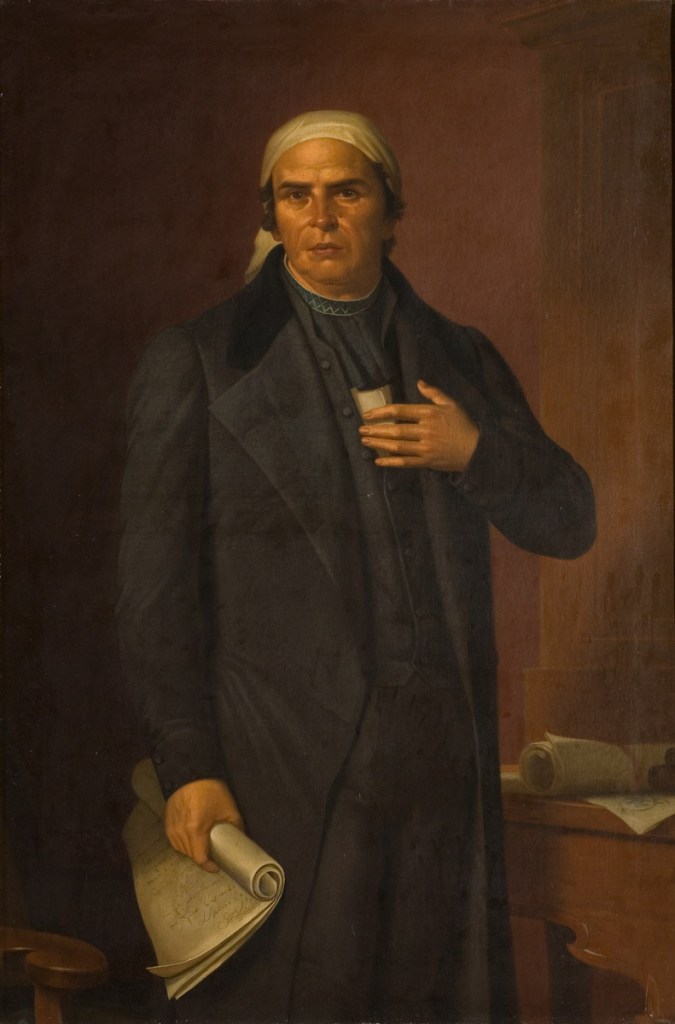
The political ideals of José María Morelos y Pavón are most clearly articulated in his seminal document, Sentiments of the Nation (Sentimientos de la Nación), delivered in 1813 during the Congress of Chilpancingo. Drawing inspiration from both the principles of the European Enlightenment and the socio-political realities of colonial Mexico, Morelos envisioned a sovereign nation rooted in justice, equality, and popular representation. His proposals included the abolition of slavery, the elimination of caste-based distinctions, and the redistribution of wealth—radical ideas for their time. Although Morelos was ultimately unable to unify the various factions within the independence movement or achieve political consensus, Sentiments of the Nation left a lasting imprint on Mexico’s legal and constitutional development. It laid the ideological groundwork for later liberal reforms and helped shape the national vision of a republic founded on civil liberties and social equity. Consider the following questions as your read the selections below:
- What kind of government did Morelos envision for Mexico?
- What role did the Roman Catholic Church have in the Mexico Morelos envisioned?
- How were citizenship, rights, and obligations to be determined in Mexico as stipulated in Sentiments of a Nations
- Did you find elements of liberalism and conservatism housed in Sentiments of a Nation?
Complete the Primary Source Analysis Form when finished for your records.
Sentiments of the Notion or
Points Outlined by Morelos for the Constitution
- That America is free and independent of Spain and of all other Nations, Governments, or Monarchies, and it should be so sanctioned, and the reasons explained to the world.
- That the Catholic Religion is the only one, without tolerance of any other.
- That all the ministers of the Church shall support themselves exclusively and entirely from tithes and first-fruits (primicias), and the people need make no offering other than their own devotions and oblations.
- That Catholic dogma shall be sustained by the Church hierarchy, which consists of the Pope, the Bishops and the Priests, for we must destroy every plant not planted by God: minis plantatisquam nom plantabir Pater meus Celestis Cradicabitur. Mat. Chapt. XV.
- That sovereignty springs directly from the People, who wish only to deposit it in their representatives, whose powers shall be divided into Legislative, Executive, and Judiciary branches, with each Province electing its representative. These representatives will elect all others, who must be wise and virtuous people . . .
- [Article 6 is missing from all reproductions of this document.]
- That representatives shall serve for four years, at which point the oldest ones will leave so that those newly elected may take their places.
- The salaries of the representatives will be sufficient for sustenance and no more, and for now they shall not exceed 8,000 pesos.
- Only Americans shall hold public office.
- Foreigners shall not be admitted, unless they are artisans capable of teaching [their crafts], and are free of all suspicion.
- That the fatherland shall never belong to us nor be completely free so long as the government is not reformed. [We must] overthrow all tyranny, substituting liberalism, and remove from our soil the Spanish enemy that has so forcefully declared itself against the Nation.
- That since good law is superior to all men, those laws dictated by our Congress must oblige constancy and patriotism, moderate opulence and indigence, and be of such nature that they raise the income of the poor, better their customs, and banish ignorance, rapine, and robbery.
- That the general laws apply to everyone, without excepting privileged bodies, and that such bodies shall exist within accordance with the usefulness of their ministry.
- That in order to dictate a law, Congress must debate it, and it must be decided by a plurality of votes.
- That slavery is proscribed forever, as well as the distinctions of caste, so that all shall be equal; and that the only distinction between one American and another shall be that between vice and virtue.
- That our ports shall be open to all friendly foreign nations, but no matter how friendly they may be, foreign ships shall not be based in the kingdom. There will be some ports specified for this purpose; in all others, disembarking shall be prohibited, and 10% or some other tax shall be levied upon their merchandise.
- That each person’s home shall be as a sacred asylum wherein to keep property and observances, and infractions shall be punished.
- That the new legislation shall forbid torture.
- That the Constitution shall establish that the 12th of December be celebrated in all the villages in honor of the patroness of our liberty, the Most Holy Mary of Guadalupe. All villages shall be required to pay her monthly devotion.
- That foreign troops or those of another kingdom shall not tread upon our soil unless it be to aid us, and if this is the case, they shall not be part of the Supreme Junta.
- That there shall be no expeditions outside the limits of the kingdom, especially seagoing ones. Expeditions shall only be undertaken to propagate the faith to our brothers in remote parts of the country.
- That the great abundance of highly oppressive tributes, taxes, and impositions should be ended, and each individual shall pay five percent of his earnings, or another equally
light charge, which will be less oppressive than the alcabala [sales tax], the estanco [crown monopoly], the tribute, and others. This small contribution, and the wise administration of the goods confiscated from the enemy, shall be sufficient to pay the costs of the war and the salaries of public employees. - That the 16th of September shall be celebrated each year as the anniversary of the cry of independence and the day our sacred liberty began, for on that day the lips of the Nation parted and the people proclaimed their rights, and they grasped the sword so that they would be heard, remembering always the merits of the great hero, señor don Miguel Hidalgo y Costilla, and his compañero, don Ignacio Allende.
Chilpancingo, 14 September 1813
 World History Portal