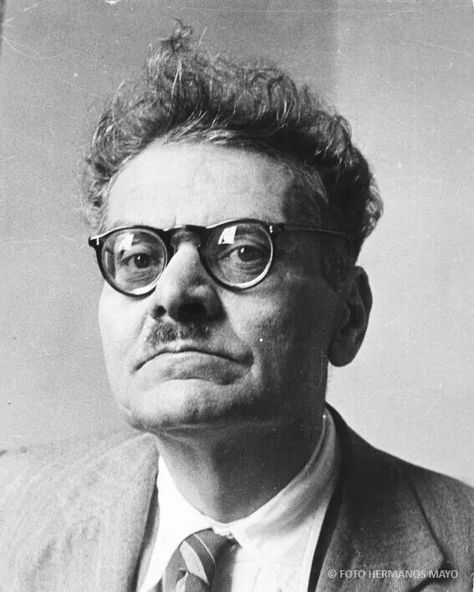
The prints of José Guadalupe Posada (1852–1913) remain among the most iconic and influential examples of how popular culture became a vehicle for political and social critique in late 19th- and early 20th-century Mexico. Through his distinctive engravings and illustrations—widely circulated in broadsheets, pamphlets, and newspapers—Posada gave visual expression to the frustrations and hopes of Mexico’s working class, who bore the weight of Porfirio Díaz’s authoritarian modernization. His art offered not just entertainment, but sharp satire, often skewering the excesses of the bourgeoisie and exposing the deep injustices of Díaz’s regime. Posada’s images struck a chord with the public, weaving together acerbic commentary with elements of folk tradition, religious symbolism, and the vivid iconography of Day of the Dead calaveras—motifs he helped bring into popular consciousness. Though he died in poverty and relative obscurity, Posada’s influence far outlived him. He is now hailed as the “printmaker of the Mexican people,” a tribute to his deep connection with the humor, struggles, and resilience of everyday Mexicans. His prints not only captured a turbulent era in Mexican history but also paved the way for future generations of politically engaged artists—including the Mexican Muralists, such as Diego Rivera, who saw Posada as a foundational figure in the evolution of modern Mexican art. Consider the following questions as your read the selections below:
- How does electricity represent progress or danger in this work?
- What might Posada be saying about the role of technology in relation to life and death? Is it liberating, dehumanizing, or both?
- How did political and social conditions during Porfirio Díaz’s regime influence Posada’s imagery in this piece?
- What do you think the “American mosquito” symbolizes in this piece? Is it just a pest, or does it represent something more — like imperialism, capitalism, or foreign intervention?
Complete the Primary Source Analysis Form when finished for your records.
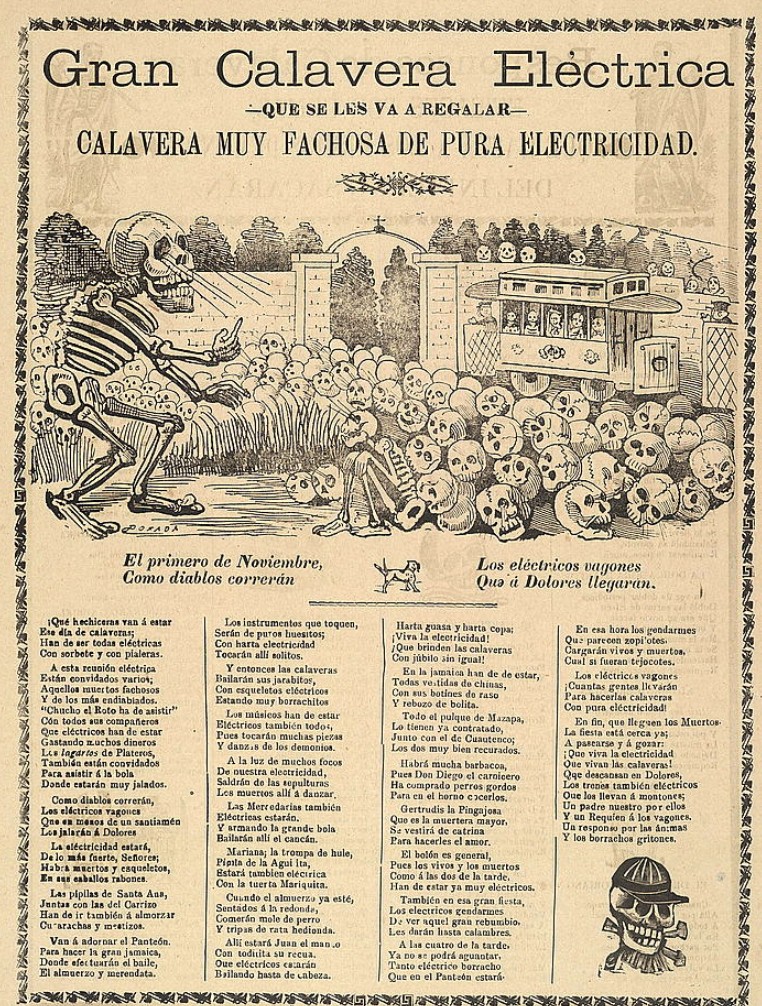
Great Electric Skeleton
Subheading: The first of November, Like devils will run The electric street cars That go out to Dolores[cemetery in Mexico City].
Verse 4: The electricity will be Of the strongest, señores, There will be dead folks and skeletons On their crop-tailed horses.
Verse 10: Into the light of many lamps Lit by our electricity The dead there [at Dolores Cemetery] will emerge, From their tombs to dance.
Verse 24: The electric street cars ¡So many people they’ll bringTo turn them into skeletons With pure electricity!
The American Mosquito
Subheading: The American Mosquito Has just now arrived; They say that it came to walk around On our Mexican soil.
Verse 1: They say it started on Sunday Over there in Laredo, Texas, Biting on the ears Of some old women at the Station. It made them run around Until it made them sweat This inhuman beast: The American Mosquito.
Verse 2: It proceeded on to Guanajuato, This is a laughable thing, It never made it to the center of town, But it was in Marfil. Now they suffer no more Such a rude and haughty thing, Why it bit an old soldier Right on his behind. Because it’s really very crude The American Mosquito.
Verse 3: It went off toward Irapuato And passed through Pénjamo; From there it returnedThrough the village of Uriagato, The hacienda of Villachato It left all in shambles; All the people frightened As their buddy Mariano found them, Grandma Emeteria shouted: The American Mosquito.
Verse 4: Through the ports of San Juan Piedra Gorda and la Sandía, An old woman said: “Jesus, what a ferocious beast!” Tell me Don Pascual Has the Mosquito arrived? They say it’s really tiny, And also very beastly; What does it say papa Pachito The American Mosquito?

 World History Portal