| Introduction Transferring from a community college to a four-year institution is a straightforward process when approached with proper planning and awareness. However, many students encounter obstacles that complicate their transition. These challenges often arise due to a lack of information, poor academic planning, or reliance on unreliable advice. Identifying and addressing these potential pitfalls can significantly improve a student’s chances of successfully transferring. To avoid these common pitfalls, students should take the following proactive steps: Research Transfer Requirements Early: Start researching potential four-year institutions as soon as possible to understand their specific transfer criteria, application deadlines, and credit transfer policies. Meet with a Career Counselor: Schedule a meeting with a career counselor to explore career options, set professional goals, and develop plans to achieve them. Also, to secure guidance on choosing majors, exploring job opportunities, and navigating the education-to-career transition. Meet with an Academic Counselor Regularly: Schedule regular meetings with an academic counselor to stay on track with coursework and ensure eligibility for transfer. Utilize Official Resources: Rely on official college websites, transfer offices, and articulation agreements to gather accurate information about transferring. Maintain a Strong GPA: Stay focused on academic performance, seek tutoring or academic support if needed, and prioritize coursework to meet the GPA requirements of target universities. By staying informed, planning ahead, and seeking appropriate guidance, students can navigate the transfer process with confidence and increase their chances of successfully transitioning to a four-year institution. The purpose of this activity is help you begin defining and planning your transfer plan. |
Identity and Career Decision Making
Before your begin tackling the content on this site take a moment to view this TED talk.
College or University? Public or Private ?
Do you plan to transfer to a college or university? A public or private? So what exactly is the difference between a college and a university. To help you answer this question take a moment to review the definitions below.
- College: “An institution of higher learning that offers undergraduate programs, usually of a four-year duration, that lead to the bachelor’s degree in the arts or sciences (B.A. or B.S.).”
- University: “An educational institution that usually maintains one or more four-year undergraduate colleges (or schools) with programs leading to a bachelor’s degree, a graduate school of arts and sciences awarding master’s degrees and doctorates (Ph.D.’s), and graduate professional schools.”
Here are some other things to consider:
- Public: “Public colleges and universities receive funding from tuition and endowments, but the larger part of their funding comes from state or local taxes. Most public postsecondary schools are state-run, which lowers the tuition for in-state students” For example the University of California Los Angeles and California State University Long Beach.
- Private/Non-Profit: “Private, non-profit colleges and universities receive funding primarily from student tuition and endowments. These institutions function as non-profit organizations that usually follow the leadership of a board of trustees. Private colleges and universities may receive some governmental support in the form of tax breaks and student loans, but operating mostly on private support allows them to develop their own institutional plan.” For example the University of Southern California and Loyola Marymount University
- Private/For Profit: “For-profit colleges are run by companies that operate under the demands of investors and stockholders. These institutions are privately run and exist, at least in part, to earn money for their owners. Nevertheless, for-profit colleges can receive up to 90 percent of their revenue from federal student aid.” For example the University of Phoenix.
Explore your Transfer Institution Options
Transfer Steps
What are the exact steps one should follow to start my journey on in the transfer process? First and foremost, work with an academic counselor as soon as possible to ensure your transfer success. Also, work towards completing the following steps:
- Be sure to submit your high school transcripts or college transcripts if you have attended other community colleges or four-year institutions to ECC’s admission office.
- Identify a major and career choice you wish to pursue both at ECC and at your four-year transfer target. Also identify possible transfer targets. Know the minimum eligibility and selection criteria for you transfer targets.
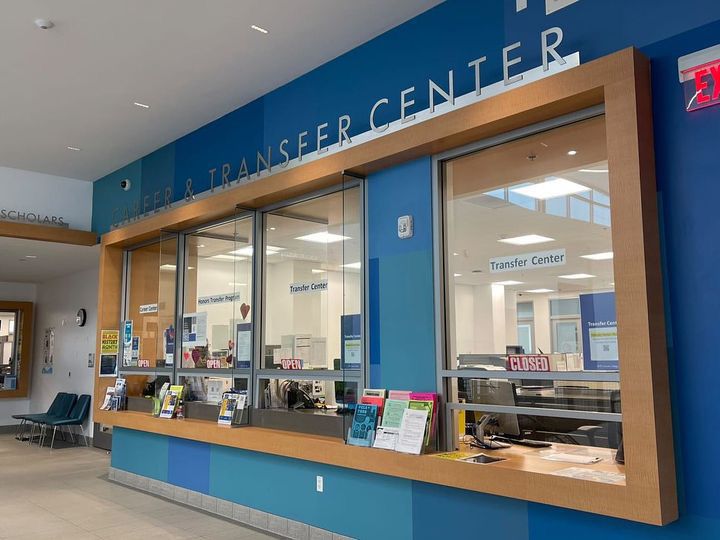
- Visit the Transfer Center and attend their workshops.
- Work with an academic counselor to develop a transfer plan. If you are STEM major (Science, Technology, Engineering, Math) it is critical that you work with a counselor as soon as possible!
- Visit Career Services for learning about career options.
- Become familiar with your General Education options and be familiar with articulation agreements for your major.
- Learn if you qualify for a Transfer Admission Guarantee from the University of California or a Associate Degree for Transfer from the California State University.
- Identify transfer application filing periods.
- Apply to be certified for General Education.

Transfer Requirements
Transfer admission requirements can vary from campus to campus. Some campuses have very strict outlined requirements, while others have more open ended criteria. This is why it is imperative that you work with a counselor to ensure your transfer success. Below are some terms you need to be familiar with. Most colleges and universities have three major types of requirements you will need to satisfy to gain admission: course requirements, GPA requirements, and unit requirements.
- Course Requirements: This refers to courses that you must take at a community college before you transfer to the receiving institution. For example: English, Math, major related courses and other general education courses.
- GPA Requirement: This refers to a minimum grade point average that you must achieve to be considered for admission.
- Unit Requirement: This refers to the amount of units that must be completed before you transfer
Two other things to consider:
- Minimum Eligibility: “Minimum eligibility means that you have completed the minimum requirements to apply, in short you are eligible. Just because you are eligible to apply to a university does not mean you will be admitted.” For example, the UC Transfer-Basic Admissions website states that student must have at least a 2.4 GPA in UC-transferable courses (2.8 if you’re a nonresident) for admission.
- Selection Criteria: “Selection Criteria refers to the set of criteria a university or college is looking for in the students they select. For example, if a student has the minimum GPA for eligibility but the campus selection GPA is higher, the student would most likely not be admitted.” In contrast, the average GPA selection criteria for admission to UCLA’s College of Letters and Science as a pre-History major in Fall 2020 was 3.93.
Transfer Units
A minimum of 60 transferable units must be completed to transfer to the UC or the CSU. California independent and private colleges or universities may require less units to transfer. So, how do you get these units? Read below to find out.
- Pre-Major Units: Most majors at four-year colleges and universities require completion of lower division major specific courses as preparation for the upper division. The number of pre-major courses may vary.
- General Education Units: G.E. is a group of courses in varied areas of the arts and sciences, designate as one of the requirements for a degree. G.E. can satisfied by completing IGETC for the UC and CSU or the CSU G.E. applicable only to the CSU.
- Elective Units: Courses not required for the major or general education but are acceptable for credit. An elective course may be in the student’s major area of study or any department of a college.
Identifying Pre-Major Units
All articulation agreements for pre-major requirements (units) for the UC and CSU can be found on ASSIST.org. What is ASSIST.org? ASSIST provides the most accurate and up-to-date information about student transfer in California; it is the official repository of articulation agreements for California’s public colleges and universities. Articulation shows how courses completed at one college or university can be used to satisfy requirements at another. ASSIST lists courses that fulfill university admission requirements, major and general education requirements, and university graduation requirements. It also lists transferable elective courses that can be used to reach the number of units needed to transfer to a university. ASSIST does not contain information about private, out-of-state, or international colleges or universities. ASSIST does not take the place of a counselor on your campus. It is intended to help students and counselors work together to establish an appropriate path toward transferring to a public California university.
General Education
If you are planning to transfer to a UC or CSU, there are two GE options you can pursue depending on your campus/system choice: the Intersegmental General Education Transfer Curriculum (IGETC) and the CSU GE Breadth pattern of courses.” General Education courses are graduation requirements not admission requirements. However, at some schools, completion of the G.E., or certain portions of it may be used as an admission screening criteria for transfer students. Most students follow IGETC because it is accepted by both the UC and CSU. CSU GE is only accepted by the CSU system. Again, your counselor will help you figure out which is the best GE for you to pursue. STEM majors should immediately consult a counselor about what their focus should be on. Below are the two options.
- IGETC: “The Intersegmental General Education Transfer Curriculum (IGETC) is a series of courses that satisfy the lower division general education requirements at the University of California (UC), the California State University (CSU), some private and out-of-state institutions.” IGETC must be certified at your community college. Students must request this certification, which is sent to the transfer institution.
- CSU General Education-Breadth: “Completion of the CSU General Education-Breadth pattern will permit a student to transfer from a community college to a campus in the California State University system without being held, after transfer, to additional lower-division general education courses to satisfy campus G.E. requirements.” CSU G.E. must be certified at your community college. Students must request this certification which is sent to the transfer institution.
UC TAG
Six UC campuses offer the Transfer Admission Guarantee (TAG) program for California community college students who meet specific requirements. By participating in TAG, students receive early review of their academic records, early admission notification and specific guidance about major. Your counselor will assist you in exploring and signing the TAG.
CSU ADT
The California Community Colleges and partnering institutions created the Associate Degree for Transfer to make it easier for students to start at a community college, transfer to a guaranteed saved spot at a participating four-year university and earn a bachelor’s degree. Your counselor will assist you in exploring and identifying an Associate Degree for Transfer.
Employment Outlook
What is the employment outlook and the salary outlook for the career option you are currently exploring? What is the work environment like for your career choice? What other careers are similar to the one you are pursuing? What are some important qualities one needs to have to be effective in the career you have chosen? To address these question use following resources:
 World History Portal