COURSE INTRODUCTION
Hello, my name is Jason Suárez, and I am excited to be your instructor this semester in History 135 Online: The History of Mexico. History 135 is an asynchronous course (fully online with no required meetings) that surveys the political, economic, social, and cultural development of Mexico. Your success in this course is extremely important to me. Consequently, I have tried to the best of my ability to author a course that hopefully is interesting, well structured, and insightful. You do not need to purchase any texts for this course. All the reading materials are available through Canvas, the course management system used at Santa Barbara City College.
Below are a few tidbits about me.
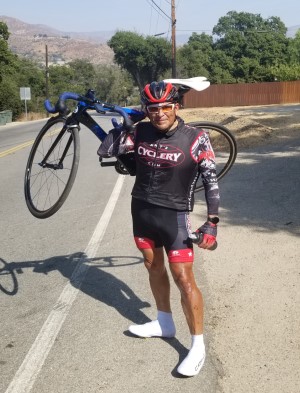
- I was born in Wichita Falls, Texas. I have lived in many places and countries since my father was in the U.S. Air Force.
- I attended Santa Barbara City College and transferred to the University of California, Santa Barbara (UCSB) where I majored in history. I also completed by graduate work at UCSB.
- My first teaching appointment was at Seattle Central College (1998-2001). I was hired by El Camino College in 2001. I am currently tenured at El Camino College and also serve as the Faculty Coordinator of Student Equity.
- I have been married since 1995 and my wife is a tenured Counselor/Articulation officer at Santa Barbara City College.
- I live in Carpinteria, California. Yes, I have been commuting back and forth to LA (El Camino College) since 2001. 100 miles to work and 100 miles home. Covid-19 temporarily put a stop to my commute, but I am back on the road again.
- Five months out of the year I live in Spain where my wife and I have second residence.
- And yes, as you can tell from the picture above, my passion outside of the classroom is cycling.
ABOUT THE COURSE
As I have noted, this course is conducted completely online. Online students must have at a minimum the following to be able to participate successfully History 135:
- A computer (PC with Windows and a Pentium processor or a Macintosh with at least system 9.0 recommended).
- A recent version of a web browser such as Microsoft Explorer, Opera, Firefox, or Chrome.
- An Internet Service Provider
- An SBCC email address provided by the college.
- PDF reader software such as Foxit
- Access to a word processor that can convert text files to a PDF format
If you should need any technical assistance visit the Distance Education website.
Also consider the following. When I was first hired by El Camino College in 2001 a student stopped by my office to ask me the following question: Do you teach the real history of the past or do you teach that other stuff? So that there are no misunderstandings about what we are exploring together this semester it is important for you to understand that the historical narrative we are studying in History 135 is interpretive. I cannot fully verify for you if this narrative is the past as it truly was. Equally important for me to share with you is that this course is biased. What do I mean by this? If you think about it for a second, I did not consult with you on what we were going to read, what we were going to study, or how I was going to prepare your assessments. However, you do need to start somewhere and gain some foundations before you can ultimately decide what historical truth is for yourself. For this reason, I want you to think about this course as the start of a journey and not its destination. The destination, once you feel you have reached it, will obviously vary from person to person.
CONTACT INFORMATION
There are three ways you can contact me this semester should you have any questions about the course or content. For those enrolled in this course outside of the state of California please be aware of time zone differences.
- First, you contact me via email (jrsuarez@pipeline.sbcc.edu) or through Canvas. Your communication is extremely important to me so I will do my best to reply within 24 hours. To ensure that I see your message among my other emails, please use the class name and number HIST 135 in your subject line.
- Second, you can visit me during my Zoom virtual office hours on Fridays from 8:00-9:00 a.m. My office hours are synchronous (live and real-time). No password is needed. Below is the Zoom virtual office hour link: https://elcamino-edu.zoom.us/j/4920339955
- Third, you can schedule an appointment via email for a virtual office meeting.
PROCRASTINATION
I know it’s early in the course, but I want to emphasize something important about succeeding in this fully online class. Please make sure you’re completing assignments on time and staying on top of the required readings. Procrastination is one of the biggest challenges in online learning, and I’ve seen it derail many students over the years. Speaking from personal experience, it’s a lesson I learned the hard way during my own time in college.
To succeed in an online course, organization and self-discipline are key. Set a schedule, stick to it, and dedicate the time needed to keep up with weekly tasks. Staying proactive is the best way to avoid hitting roadblocks later on!
DISCUSSION BOARD POSTS
Discussion boards are meant to allow you to engage in historical problem solving with your colleagues. A quality discussion board post requires that you dedicate thoughtful analysis and detailed academic expression. In a college-level history course, we can expect to do no less. You can always email me to ask for more details about discussion board assignments or if you wish to discuss your analysis before posting. I am here to help you. Be sure to post your analysis well before the deadline. If you post at the last minute, you will not produce a thoughtful and enlightening analysis. Also, you will impact your colleague’s opportunity to post a response. In the end, it will keep you from making the most of your online experience and that of your colleagues. Your discussion board posts will always be due on Thursdays. Your response to a colleague’s post will be due two days later on Saturday. Before hitting “submit” read over your post. Make sure you’re not going off subject and look for any spelling or grammatical errors. If you disagree with someone’s post, show that you appreciate their opinion, even if it’s different from your own. For example:
- I definitely see your point, however . . .
- Perhaps we might consider . . .
- Another approach or angle to this might be . . .
Below are examples of an acceptable discussion board post and response. My expectations are that you will submit well written and insightful posts that are drawing evidence from the course’s content as well as your thoughtful insights.
| Discussion Board Post Example: The second coming of liberalism tried to move Mexico toward modernization through the use of foreign capital, the establishment of a communication network (railroads and telegraphs), commercialized agriculture and the expansion of the export economy. Again, this was at the expense of the peasants / Native Americans. Mexico became an authoritarian government with cientificos, who were often elitist and racist, advising Porfirio Diaz. Diaz usurped traditional village autonomy, influenced congressional and judiciary candidates, posted rurales (rural police corp.) to control peasants. He also brought the Church back in as a powerful ally. When agriculture became commercialized, public lands used by peasants were sold at auction, with over 45 million hectares now in private hands. Campesinos and village farmers were displaced and did not reap any benefits under Diaz. After the demand for exports declined in the early 1900s, it was the campesinos that felt the effects – the devaluated peso meant a rise in food prices. The combination of high food prices, low salaries, and layoffs led to tensions in the workplace and eventually to labor organizations and unions. With all the foreign capital invested in Mexico, Mexico was largely an economic colony of the U.S. by the 1900s so their involvement in the Cananea Strikes was yet another example of the country keeping campesinos/peasants in their place at the bottom rung of society. |
| Discussion Board Response Example Great job __ in pointing out how Vitoria believed that Christianity must be embraced and not forced and that them not believing is a better alternative than feigning belief. I’d like to add that Sepulveda also used religion in his argument, just more as a passing thought when he mentions the following statement from the Book of Proverbs: “He who is stupid will serve the wise man.” He also brought up how Evangelical law was more gentle than Mosaic law which to me was once again trying to show superiority but this time it was Christianity over Judaism. Also, I don’t think he necessarily meant that masters had to be physically weak because a person could be both physically and mentally strong, I think he just meant that intellectual strength was more important. |
SCHOLARLY ARTICLES
One of the things I first noticed when I transferred to the University of California, Santa Barbara was that all my upper-division courses in the study of history required that I read articles from scholarly journals. As a transfer student, I was new to the academic culture of research institutions such as the University of California system. Consequently, I did not have a methodology or an approach for tackling articles assigned from scholarly journals. Scholarly journals, also called peer-reviewed journals, are important for students to know about because they house the latest research published for the different disciplines studied at colleges and universities. Whether it’s history, mathematics, music, sociology, psychology, and so forth all these disciplines have scholarly journals dedicated to these disciplines. We will be reading a series of scholarly articles which I think you will find interesting in order to prepare you for what the future holds academically.
Not everything written in an article is relevant. When you read a scholarly article, I don’t expect you to master all the technical jargon. What I do want you to know is what question or problem is the author tackling, what sources does the author use to address the question or problem, what conclusions does the author arrive at, and how is the article relevant to the topic we are studying. Again, I do not expect you to master everything in the article.
To assist you with summarizing the article, I will provide you with article analysis forms that you can fill in. I will not be collecting these forms as they are meant to be a tool to help you organize your thoughts about what you have learned from these specific readings. Completing these forms will facilitate the inclusion of the article’s content into the essays you will be writing for this course. I have used this tool throughout my undergraduate and graduate academic career as a way of successfully managing information I am responsible for. A key to student academic success is information management.

THE DAY THE UNIVERSE CHANGED
I would like end this introduction to History 135 by sharing with you a fascinating story delivered by James Burke in his work entitled The Day the Universe Changed. Burke writes in this work that somebody once approached the philosopher Ludwig Josef Johann Wittgenstein (1889-1951) and declared the following to him:
| How stupid medieval Europeans living before the time of Copernicus must have been that they could have looked at the sky and thought that the sun was circling the earth. Surely a modicum of astronomical good sense would have told them that the reverse was true. |
To this statement, Wittgenstein replied, “I agree, but I wonder what it would have looked like if the Sun had been going round the Earth.”
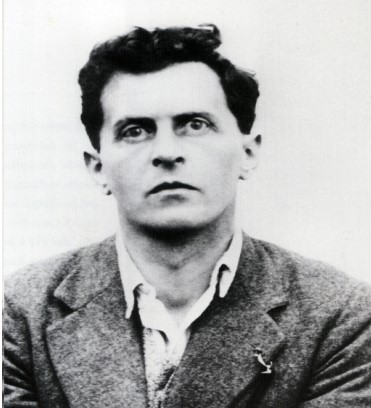
The point Wittgenstein was trying to make is that if the sun was in fact circling the earth it would have looked the same. How so you ask? Well, try this if you have nothing to do just before the sun rises tomorrow morning. Go outside and mark an X on the ground. Next, stand on the mark and face east. As the sun begins to rise point at it with your right-hand index finger. As the day progresses, does your arm move as it follows the sun? Have you moved? Does it seem like the sun is revolving around the earth? From this story, Burke concludes that “When we observe nature, we see what we want to see, according to what we believe we know about it at the time.”
Thus, unlike in the Middle Ages, a time when Europe’s inhabitants had a geocentric view of the heavens (earth-centered) as a result of simple observation, we know today that although it visually appears that the sun revolves around the earth, in reality, it is the earth that revolves around the sun. The heavenly mechanics I have just described is termed heliocentric (sun-centered).
I suppose that after this brief discussion about simple observation we can conclude that “we are what we know,” and when our body of knowledge changes, our society does as well both at an individual and collective level. So, here is the first question that needs to be asked as we prepare to embark in this course. What is the extent of the knowledge that you have about Mexico? This course can perhaps help you begin the process of answering this question. However, before we embark on this journey of discovery, we first need to explore a series of concepts that will serve as the foundation for your success in this course. So, with no further delay let’s get started.
DO YOU TEACH THE REAL HISTORY OF MEXICO?
Let us revisit this question again but with a little more philosophical detail. I venture to guess that my answer to this question leans more towards a no rather than a yes. Why? Because ultimately my knowledge of Mexico’s history is not derived from historical participation but from access to a limited number of primary sources and present-day narratives about the history of this region of the world. I suppose one might be able to make the case that the knowledge I have about Mexico’s past is relative knowledge and not true knowledge. What do I mean by this? Consider the following statement about knowledge by the philosopher Paul Boghossian:
| If a belief is to count as knowledge, it must not only be justified; it must also be true. |
I have beliefs about the past which I can justify or explain as to why I subscribe to them. However, there are limitations as to what I can verify as being true about those beliefs to you. For this reason, I cannot claim that this course will expose you to true knowledge of Mexico’s past. What I can claim is that this course is one of many biased interpretations of Mexico’s history.
Keith Lehrer, another philosopher by trade, makes a fascinating observation about knowledge when he explains that “all agree that knowledge is valuable, but agreement about knowledge tends to end there.” Lehrer’s observation about knowledge serves as a segue to what I believe is one of the main challenges students encounter when studying history and why I dedicated words in the previous paragraphs driving the point that this course is an interpretation. What exactly is this challenge? Whether we can ever know the past as it was!
To further address this point I would like to explore with you how theoretical frameworks in the construction of historical knowledge have changed in recent years. More specifically, let us examine the implications postmodern theoretical perspectives have had on the study of history.
POSTMODERNISM
The study of history and the construction of historical knowledge has come under the scrutiny of postmodern critical theory in recent decades, and while I am not a postmodernist theorist, their ideas about history are worth contemplating. Postmodernism, beginning in the mid-twentieth century, challenges the principles and ideals of the modern era, which according to English Professor Tom Drake, include the “role reason, or rationality, or scientific reasoning, play in guiding our understanding of the human condition and . . . nature itself.” When applied to the field of history, the historian Trygve R. Tholfsen, explains that postmodernists “have emphasized the intrinsic fictionality of historical writing, derided the factualist empiricism that purportedly governs the work of professional historians, dismissed the ideal of objectivity as a myth, and rejected the truth claims of traditional historiography.” Wow, the postmodernist approach, if you think about it, basically challenges all traditional methods of constructing historical knowledge.
I would like to pursue Tholfsen’s explanation in a little more depth through Alun Munslow’s classic work Deconstructing History. In this study, Munslow specifically explores the study of history and the construction of historical knowledge through a postmodernist lens. Through this approach, Munslow explains that “history cannot claim to be straightforwardly scientific in the sense that we understand the physical sciences to be because it does not share the protocol of hypothesis testing, does not employ deductive reasoning, and neither is it an experimental and objective process producing incontrovertible facts.” What historians do according to Munslow is “translate historical evidence into facts” through the narrative they construct. Munslow concludes that when we claim to study history what we are truly studying is not the past as it was but rather “a narrative about the past constructed by historians as they believe it was.” This is why Munslow takes great care to distinguish the past from history.
THRESHOLD CONCEPTS
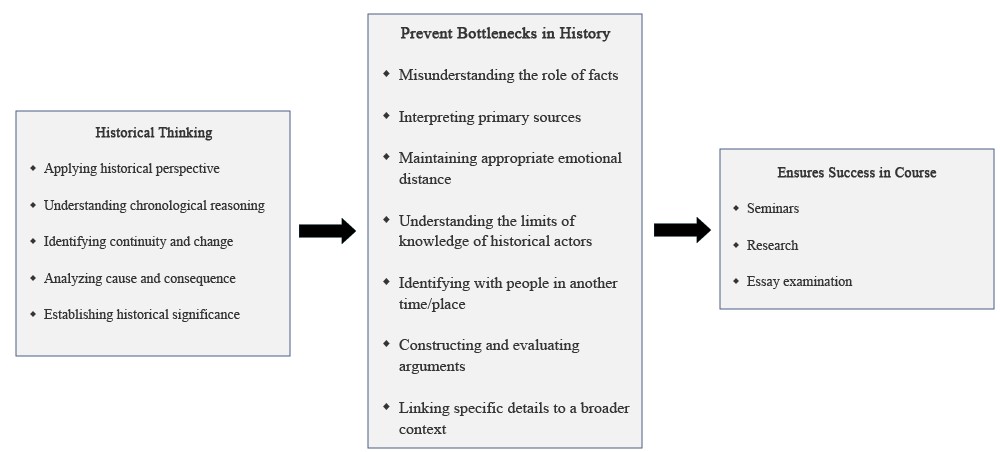
Before we end this first topic, I would also like to explore with you what threshold concepts are and how they relate to your study of Mexico’s past. Threshold concepts, a learning theory developed by Jan H.F. Meyer and Ray Land, “represent a transformed way of understanding, or interpreting, or viewing something without which the learner cannot progress.” Threshold concepts are not content knowledge or course objectives such as the ones I have listed in the syllabus, but instead are ways of thinking that are specific to disciplines and academic cultures. For example, historians have a particular method the use for thinking and constructing knowledge about the past. This method is called historical thinking.
Exposing students to threshold concepts allows instructors to remove barriers in their courses that can cause epistemological, procedural, and even emotional bottlenecks for learners. Equally important, student knowledge of threshold concepts allows them to understand how specialists in particular academic disciplines approach their fields of study. It is only logical that if you are to practice the craft of the historian this semester you should first master how historians think.
The study of history “represents an integrated way of thinking, defined by a system of ideas, leading to a distinctive and systematic way of questioning.” This way of thinking, or threshold concept, is referred to as historical thinking. Bottlenecks are obstacles that keep students from grasping historical thinking which in turn impacts assessment success.
Without decoding what historical thinking is, students cannot successfully complete assessments that require the use of way of a particular way of seeing and knowing. See the chart below for a schematic relationship between the characteristics if historical thinking, student bottlenecks, and course success.
CONSTRUCTING HISTORICAL KNOWLEDGE
In creating narratives about the past, historians first begin by analyzing and interpreting evidence that has survived from the past to the present. This evidence, termed primary sources, can take the form of written documents, artifacts, architecture, paintings, and much more. Some examples of primary sources we will analyze this semester in this course include artifacts, artwork, and written texts. The historical record for a given time period studied is composed of all the identified surviving primary sources. From this evidence, or historical record, historians infer meaning, create historical knowledge, and make it accessible to an audience in a narrative form. Here is something to consider. Is the content of a primary source still a primary source if it has been translated? Most would argue that it ceases to be primary source because of the limitations of language. In other words, content can be lost in translation. However, for the purposes of this course we will still refer to primary sources translated as primary sources.

In writing their historical narratives, historians also use “the findings of writers who were not participants in a historical episode but have investigated primary evidence of it.” These accounts are termed secondary sources. Secondary sources appear in a variety of forms and include, but or not limited to, specialized monographs and scholarly articles. Secondary sources, in many cases, are used by historians as foundations to more effectively analyze primary sources. Most students of history gain their understanding of the past from secondary source narratives.

HISTORIOGRAPHY
Due to the question as to whether a historian can reconstruct an objectively knowable past, the academic field of history regularly experiences interpretive debate and revisions of once held historical orthodoxies. The implication of this aspect of history is seen through the vast number of publications that exist for any given historical topic. The uncovering of new primary sources, or a reexamination of existing primary sources through new theoretical frameworks and methodologies, are examples of what drives the revision of existing historical scholarship. Because historical narratives are regularly revised, historians must also be familiar with historiography. What is it? I suppose to phrase it in the most simplistic way historiography can be defined as the history of the writing of history.
I would like to provide you with a brief example of how historiography changes over time. If we examine the historiography of indigenous histories of Mexico, we will find that early twentieth century works produced by historians primarily focused on “the Europeans’ role . . . and viewed indigenous peoples merely as an object of an economic, political or spiritual conquest.” This was greatly influenced by the reliance on Iberian primary sources by these early historians. However, beginning in the 1960s we can read a shift in the historiography from indigenous people being described as an object of conquest to how they experience conquest and colonization. Leading the way in this scholarship was Miguel Leon-Portilla’s Visión de los Vencidos (1959), who relying on indigenous primary sources rather than Iberian primary sources, was able to point out how previous histories produced biased narratives.

More recently, the cross-fertilization of academic fields has produced a new wave of narratives that focus on indigenous culture and how race, class, gender, and national identities are constructed and impact indigenous lifeways. What does an understanding of historiography tell you about the nature of historical knowledge? In the following quote Mark Brilliant makes a case as to why historiography is a core to understanding the study of past:
| Stated most baldly, history refers to what happened in the past, while historiography refers to what historians write about what happened in the past. Often, though, and confusingly so, the two terms – history and historiography – are used synonymously, as in “a work of history.” Works of historiography, to be more precise, are not simply chronologies of historical evidence (i.e., names, dates, places, events, etc. from the past). Rather they are arguments and interpretations about the past that emerge from an immersion in and are built upon a foundation of historical evidence – the echoes and fragments and shards from the past that historians cull from archival collections and other primary sources. The novelist William Faulkner once asserted that the past is not dead – it’s not even past. Historiography attests to this. Though the “facts” of the past do not necessarily change, the interpretive spins that historians give to the facts that they cobble together are constantly changing. Shifting historiographical postures sometimes owe to the discovery of new primary sources. More often, though, they owe to changing ideas, mores, attitudes, etc. in the present. Such changes not only reorient how we see/understand the here and now, but also the there and then. |
DESIGNATING ERAS
The Western tradition uses a civil calendar known as the Gregorian calendar. This calendar, named after Pope Gregory XIII (r. 1502-1586), was a reform of the Roman Julian calendar introduced by Julius Caesar in c. 46-45 B.C.E. The designations used for eras in the Gregorian calendar have traditionally been B.C. (before Christ) and A.D. (Anno Domini or in the year of our lord). Dionysius Exiguus (470-544), a monk, was the first to divide time using the life of Christ (Jesus of Nazareth). He designated the birth of Christ in A.D. 1. Other designations used for eras in the Gregorian calendar are C.E. (Common Era) and B.C.E. (Before the Common Era). These designations are more regularly used in history courses today because of their religious neutrality. However, the fact remains that the conception/birth of Jesus of Nazareth is still used as a dividing point between the two eras in the Western tradition. In other words, the only thing that has changed is the substitution of B.C./A.D. with B.C.E./C.E. In this course, we will use the era designations of B.C.E. and C.E.

CHRONOMETRY AND PERIODIZATION
Chronometry is the process of measuring time and dating. Before the 20th century, there was a reliance on the written record to help historians establish scales of time from which to order the course of history. This methodology had its limitation. It was the historian Leopold von Ranke (1795-1886) who once wrote that “History cannot discuss the origin of society, for the art of writing, which is the basis of historical knowledge, is a comparatively late invention.” More recently, David Christian notes that “When pushed to their limits, written records could take scholars back at most 5,000 years, for that was when writing first appeared.” This limitation ended with the advent of the 20th century for it was during this period chronometry witnessed a revolution. With advances made in the fields of biology, geology, and cosmology through scientific innovation, it is now possible to document human history beyond the boundaries of the written record. Radiometric dating, geological time, and genetic dating has allowed us to redefine history and facilitated the possibility of constructing a single historical continuum.
New chronometric methods have allowed us to better understand human extensification throughout the world and when humans first reached the American continent. This migration is best summarized by the Out-of-Africa model. This model argues that all modern humans have descended from a few common ancestors who lived about c. 250,00 years ago in Africa.
FRAMEWORKS AND THE PAST
Based on what we have discussed so far, it becomes clearer as to why Munslow believes that “the past is not discovered or found . . . [but rather] . . . is created and represented by the historian as text which in turn is consumed by the reader.” Even how historians decide to represent the scales of time can be interpretive. Here is one more thing to consider when studying the history of Mexico. Generally speaking, historians subscribe to particular approaches or methodologies when they write about the past, or better yet, when they create the past. These approaches influence how historians both analyze and interpret historical evidence and how they make it accessible to their readers. As noted in the last section, it is for these reasons and others that interpretation and revision are important concepts for any student of history to master when studying narratives of about the past. I would like to explore with you some schools of historical thought and the conceptual framework each uses to reconstruct the past and have been commonly used in the study of Latin American history. We will use all of these frameworks in studying Latin America’s past.
- World System Analysis: “This theory presumes the broad comparative approach to defining and spatially bounding world-systems . . . . World-systems are defined as interaction networks in which the larger interaction structures are important for reproducing or transforming local social structures. Spatially bounding these interaction networks requires the recognition that different kinds of important interactions in many instances have different spatial characteristics.” – Christopher Chase-Dunn and Thomas D. Hall, The Historical Evolution of World-Systems
- Cultural History: “Cultural history is thus the history of popular ideas, and therefore different from the classical history of ideas (e.g. that of Hobbes and Locke) because it concentrates on the ideas which influence everyday actions, such as work practices, ceremonies and rituals. Cultural history of this type tries to evaluate the mentalities of the past by explaining what were once considered to be unconventional matters, for example the history of lunacy, crime or magic. Peter Burke claimed that the history of mentalities grew up to fill a conscious gap between narrow definitions of the history of ideas and social history. Its development prevented historians from having to make a choice between ‘an intellectual history with the society left out and a social history with the thought left out’.” – Donald. M. MacRaild and Jeremey Black., Studying History
- Historical Materialism: “Marx’s theory of historical materialism seeks to explain human history and development on the basis of the material conditions underlying all human existence. For Marx, the most important of all human activities is the activity of production by means of labor. With his focus on production through labor, Marx argues that it is possible to provide a materialistic explanation of how human beings not only transform the world (by applying the “forces of production” to it) but also transform themselves in transforming the world (by entering into “relations of production” with one another). For Marx, the productive labor of human beings – and the resulting interplay between the forces and relations of production – function together as the engine which drives all historical change and development. By understanding how the productive activities of human beings give rise to the division of labor and class conflict, it becomes possible, according to Marx, to understand how different historical epochs succeed one another . . . .” – Michael Baur, Marx on Historical Materialism
IN CLOSING
Excellent work. We have just finished our introduction to the course and are ready to move forward with our next topic in this section, the Mesoamerican World.
As always, be sure to contact me or visit me during office hours should you have any questions about the content we have covered or the assignments that you need to complete.
 World History Portal