THE CODEX MENDOZA
| INTRODUCTION In the previous topic you explored the complexities and structure of the Maya writing system. This week the focus will be on the Mexica socioeconomic and political world. Recall that during the Postclassic period (1250–1519 C.E.), Mesoamerica underwent significant political, economic, and cultural transformations. This era saw the rise of numerous small polities, increased trade, and the commercialization of the economy. Among the various groups that migrated into central Mexico during this time were the Nahua, a people united by a common language and culture. The Mexica, the last of the Nahua migrants, arrived later than other groups and eventually established dominance in the region. According to historical sources, the Mexica traced their origins to Aztlán and were guided on their migration by the god Huitzilopochtli. Over time, they settled on an island in Lake Texcoco, where they founded Tenochtitlan, the heart of what would become the powerful Mexica (Aztec) Empire. Their rise to power, driven by military strength, political alliances, and strategic economic policies, laid the foundation for one of Mesoamerica’s most formidable civilizations. In this topic, you will explore the inner workings of this world. LEARNING OBJECTIVES *Describe the origins and migration of the Mexica and explain how their arrival in central Mexico contributed to the development of the Postclassic period. *Explain the foundations and function of the Empire of the Triple Alliance, including tribute collection, trade networks, and social hierarchy. *Compare interpretations of Mexica ritual human sacrifice, exploring religious, political, and economic explanations. |
ORIGIN OF THE MEXICA
The Postclassic period (1250-1519) of Mesoamerica experienced a series of changes that distinguished it from previous periods. These changes included the following:
- Proliferation of small polities
- Greater diversity of trade goods
- Commercialization of the economy
It was during the Postclassic Period that the Nahua began to infiltrate central Mexico. The Nahua were a people who were united by a shared culture and common language (Uto-Aztecan family). The Mexica were the last of the Nahua to migrate into central Mexico.
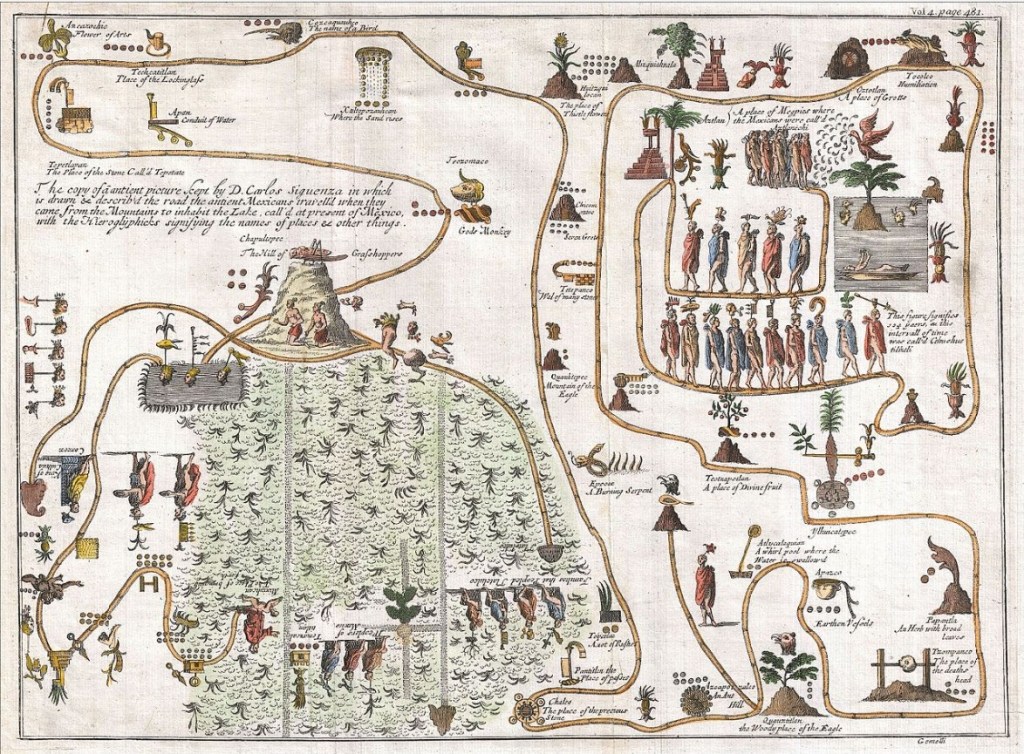
From surviving sources, we learn that the Mexica were the last of the Nahua to migrate into central Mexico. With regards to Mexica origins, Hernando de Alvarado Tezozomoc’s Cronica Mexicana (c. 1598) explains that “the Mexica came from a land called Chicomoztoc, which is called house of the seven caves, also called Aztlan.” From Juan de Tovar’s Origen de los Mexicanos we learn that the Mexica were “. . . led by a leader named Mexi, from which the name Mexicans is derived, because with Mexi with this particular ca, mexica is composed, which means the people of Mexico.”
Scholars generally agree that the first of the “Atzlan Migrants” reached central Mexico by c. 1200 CE or even earlier. With time, a common Nahua culture was established in central Mexico. As one historian has noted, “Central Mexico became the arena for a dynamic system of interacting city-states.” These city-states, or altepetl (“polities consisting of a single capital city and a surrounding territory of farmland and smaller settlements”), were ruled by tlatoani. During this early period of development, warfare was endemic among the various altepetl as there appeared to be no dominant power. With time, however, the Nahua absorbed most of the cultures indigenous to the Valley of Mexico and became to dominant culture in this region. From surviving sources, we also learn that the Mexica were the last of the Nahua to migrate into central Mexico.
Sources record that the god Huitzilopochtli guided the Mexica migration through many territories. The Annals of Cuauhtitlan (c. 1570), preserved in the Codex Chimalpopoca, is one source that documents these migrations. Tenochtitlan, the main Mexica urban center, was established on an island at Lake Tetzcoco and a few years later, an adjacent community named Tlatelolco would be founded. In 1372, the Mexica received their first tlatoani with the ascension of Acamapichtli (r. 1372-96).
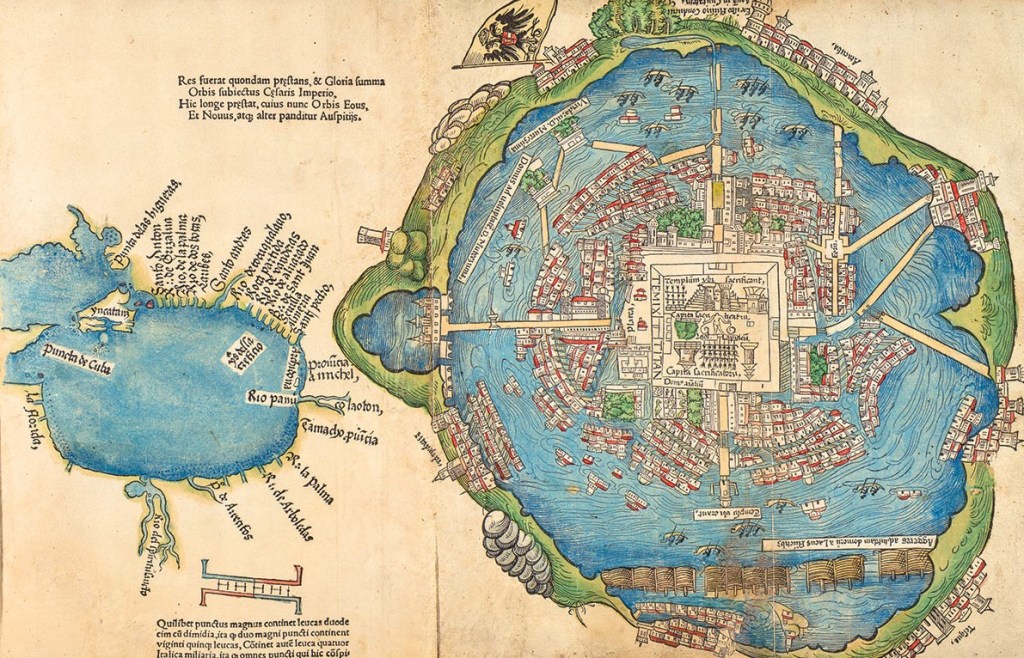
THE EMPIRE OF THE TRIPLE ALLIANCE
About c. 1371, Tezozomoc (Tezozomoctli) became ruler of the Tepaneca, an adjacent community to the Mexica. Written sources portray him as a pragmatic ruler who led Tepaneca expansion in central Mexico. His aggressive policy of expansion would initiate conflict in the region, a conflict that is documented in the Annals of Cuauhtitlan.

The threat posed by the Tepeneca prompted the altepetls of Tenochtitlan, Tlacopan, and Tetzcoco to form an alliance in 1427. The defeat of the Tepaneca laid the foundations for what we refer to as the Aztec Empire (Empire of the Triple Alliance), a confederation composed of these three altepetls.
The military success of the Triple Alliance against the Tepaneca opened the way for further conquests in central Mexico. In 1458, the Triple Alliance led by Moctecuhzoma Ilhuicamina (1440-1468) expanded beyond its immediate region into areas that would provide the Empire with access to valuable resources.

SHAPING AN EMPIRE
As the empire expanded, it pursued various strategies to ensure its survival. Politically, each province created by the Empire was headed by the most prominent altepetl. Tlatoani were replaced by nobles sympathetic to the Empire of the Triple Alliance. Administrative positions were created or eliminated. To promote further integration, wealth acquired from conquests was shared.
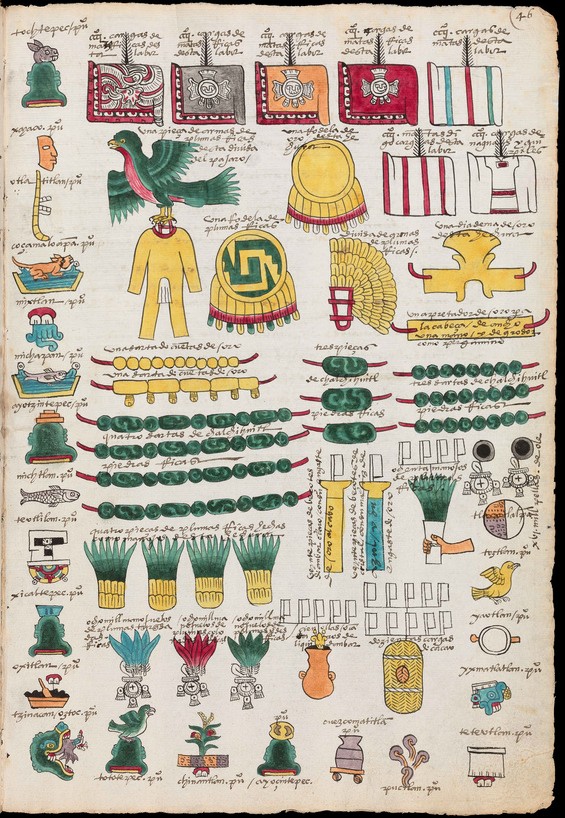
Economically, conquered altepetl were organized into tributary provinces to more effectively impose tribute administration, tribute collection, and record-keeping. A tribute quota was established for each province. Tribute was provided annually, semi-annually, or quarterly. Calpixque were responsible for collecting tribute. The Empire also promoted commerce through state-sponsored long-distance trade and by ensuring that tianquiz (marketplaces) were held weekly.
The Empire of the Triple Alliance also established strategic provinces in the outer fringes of the empire. These provinces were made up of altepetl that were treated more like allies. They were not assessed a tribute quota. Their responsibility was to provide military defense against enemies of the Empire of the Triple Alliance such as the Tlaxcalans and Tarascans.
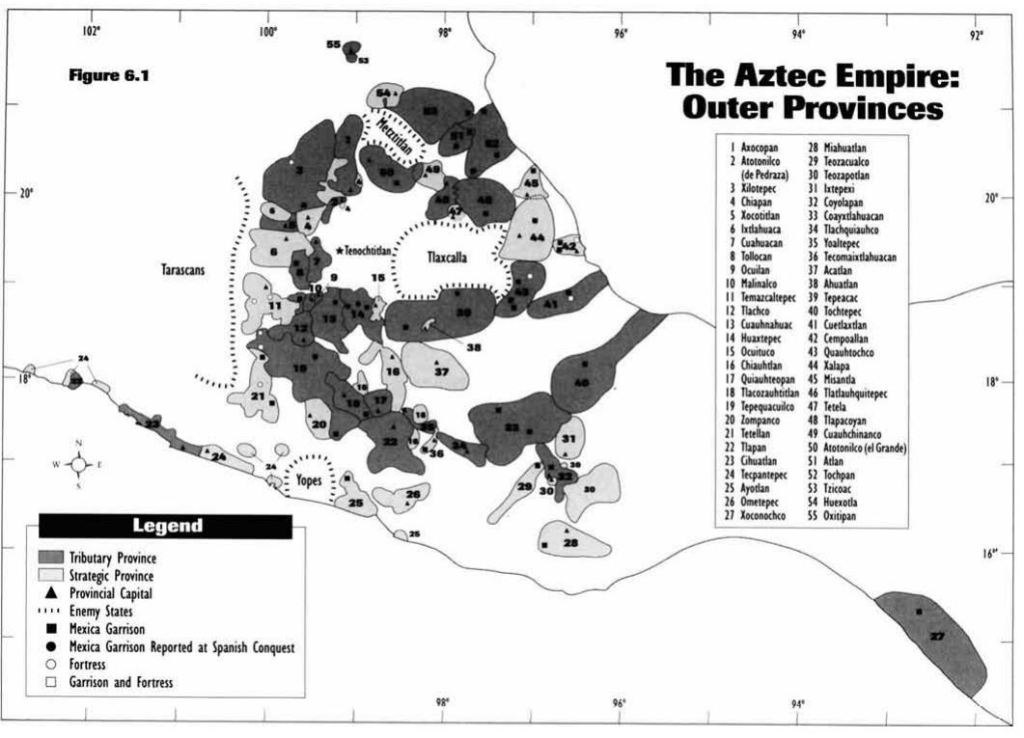
While efforts were made to create a formidable empire, the reality was that the empire created by the Triple Alliance was fragile. In part, this was due to altepetl maintaining a high degree of internal integrity.
Also the Empire did not garrison troops in conquered altepetl. Efforts to maintain loyalty and alliances were accomplished through elite marriage arrangements.
THE SOCIOECONOMIC WORLD OF THE MEXICA
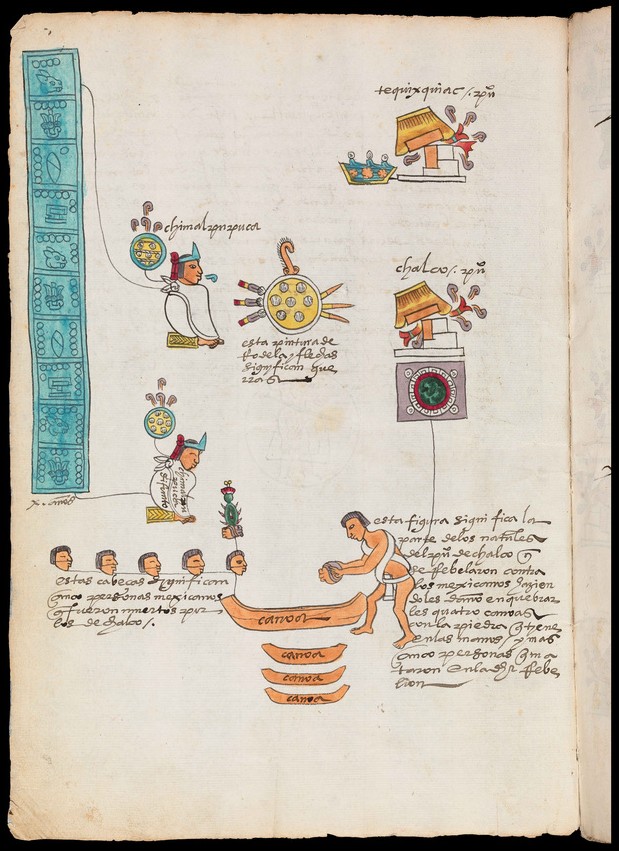
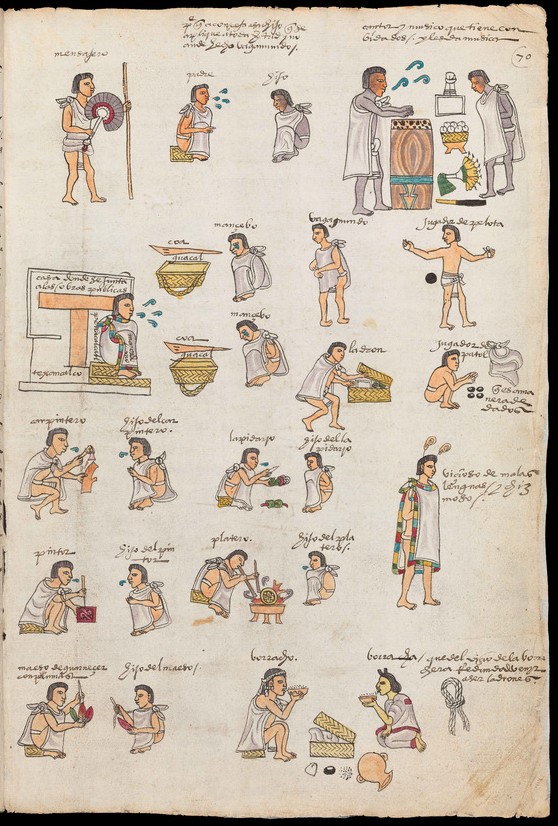
To attain the type of urbanism that characterized central Mexico before the arrival of the Spanish, specialization and social stratification would need to be a key part of the Mexica world. The Mexica social hierarchy was rigid and defined by law and blood (status was hereditary). Scholars believe that the nobility made up 5% to 10% of the entire population. The Mexica nobility was granted control of land, labor, and tribute. The nobility were exempt from paying tribute, they were not required to work on the land, and they were permitted to hold public positions. At the base of the Mexica social hierarchy were the free commoners who made up the largest sector of the population. These free commoners were organized into calpolli (groups of peasants under the control of one lord) and were required to pay tribute in the form of crops or woven cotton. Community labor/service was also required in this sector of the population. Below is a detailed breakdown of the different layers of Mexica society.
| Nobility *Tlatoani/Tlatoque: Supreme rulers of city-states, conquest states, and empires. *Tecuhtli/Tetecuhtin: Nobles who led distinguished households; titled lords often holding high-ranking governmental and military roles. *Pilli/Pipiltin: The noble-born children of rulers and lords, typically serving in governmental, military, and religious positions. Intermediate Positions *Teixhuiuh/Teixhuihuan: Distant relatives of a noble or noble house, serving in subordinate roles. *Quauhpilli/Quauhpipiltin: Commoners who attained quasi-noble status through exceptional military achievements. *Pochtecatl/Pochteca: Elite merchants organized into guilds, specializing in long-distance trade of luxury goods and often acting as state agents. *Tolteccatl/Toltecca: Skilled artisans crafting fine works from gold, precious stones, and feathers; some were attached to palaces, while others likely operated within guilds. Commoners *Macehualli/Macehualtin: Commoners and primary producers, typically organized into calpolli (clan-based communities). *Maye/Mayeque – Tlalmaitl/Tlalmaitec: Laborers who worked on nobles’ private lands, providing agricultural and other essential services. *Tlacohtli/Tlacohtin: Slaves who performed much of the urban labor for nobles; slavery was often the result of economic hardship, gambling losses, or criminal offenses (especially theft). |
The Mexica had an education system in place in which both males and females participated. The telpochcalli, or young men’s house, was attended primarily by male children of commoners where they received instruction in warfare. The nobility attended the calmecac (temple school) where they were prepared for leadership roles. Both male and females attended the calmecac but in different facilities. Both the nobility and commoners were required to attend the cuicacali (house of song) where they received instruction of ritual dancing and singing. Home education that defined gender roles was also provided.

Men in Nahua society married in their late teens or early twenties while women married as early as twelve years of age. It appears that marriages were arranged through matchmakers. The first part of a wedding ceremony took place at the bride’s home where an all-day feast took place until the bride was carried to the groom’s home. Evidence suggests that nobles were permitted to have more than one wife (polygamy).
What were the most common Nahuatl names given to Mexica males and females? Bob McCaa of the University of Minnesota has analyzed the names documented in a 1540 census from Morelos. He counted 427 unique names for males while only 57 unique names for females. To the right is a list of the top ten names mentioned in the documents for both males and females.
| FEMALE NAMES | MALE NAMES |
| Teyacapan – First Born Tlaco – Middle-born Teicuih – Younger sister Necahual – Survivor, Left-Behind Xoco – Youngest sister Centehua – Only one Xocoyotl – Youngest child Tlacoehua – Middle one Tepin – Little one Cihuaton – Little woman | Yaotl – War Matlalihuitl – Blue-green Feather Nochehuatl – Consistent Coatl – Snake Tototl – Bird Quauhtli – Eagle Tochtli – Rabbit Zolin – Quail Matlal – Dark Green, or Net Xochitl – Flower |
FARMING AND ARTISANS
The Nahua diet was composed of a variety of food sources. Maize, however, was their most important staple. It was eaten in the form of tortillas, tamales, and atole (a form of porridge). Along with maize, beans were also an extremely important food source as was squash and chile. These are the four basics of the Mesoamerican diet. It is estimated that 80% of the caloric intake was derived from maize.
Contrary to popular belief, the Nahua diet did meet adequate levels of protein. This was accomplished by combining lime-soaked maize (high in most amino acids except lysine) with beans (high in lysine). Iron, riboflavin, niacin, and vitamins A and C were derived from chili. Other foods included in the Nahua diet were tomatoes, avocado, nopal, maguey plant, dog, turkey, Muscovy duck, and spirulina algae.
The Nahua adopted various farming techniques to grow food. For example, they created stone terraced walls that enabled them to make use of land on hilltops. Irrigation was harnessed by constructing small-scale dams during rainy seasons. Finally, chinampas were constructed making swamp and available for farming. Canals were dug to remove water. This exposed land on which a variety of food sources were planted. This technique was very important to the Mexica in particular because Tenochtitlan was founded on an island surrounded by swampland.
Like other Mesoamerican civilizations, the Nahuas made use of a wide variety of artisans. Some artisans were very effective in creating obsidian tools. Obsidian is a black volcanic rock that is considered to be one of the sharpest natural materials on earth. This volcanic material was also used in a variety of weapons. Scholars believe that metallurgy (bronze) was introduced into Mesoamerica from Andean South America by 1200 C.E. Axes, chisels, and needles were some of the tools produced. However, metallurgy was not worked to the extent that it was in Europe because of the availability of other natural materials that produced the same effect. For example, obsidian for cutting tools. Mexica artisans also produced pottery vessels, jars to hold water, plates, cooking pots, and tortilla griddles called comalli. The Mexica made extensive use of cotton cloth in the form of quachtli (folded cape), which was used as a form of currency.
The pochteca were guild- merchants who traded on an “international” level. In other words, they traded in markets outside the boundaries of the Empire of the Triple alliance. It was the pochteca who moved luxury items such as gold items, tropical bird feathers, herbs, jade, etc . . . The tlanecuilo were regional merchants who traded in foodstuffs and utilitarian items. These included maize, chili, turkeys, sandals, and baskets. Some historians argue that Nahua merchants may have also served in a reconnaissance role for the state. Scholars believe the Mexica bartered in marketplaces. However, the Mexica also had a form of currency based on cacao beans and cotton textiles. Cacao beans were used for small purchases. Quachtli, cotton capes of standardized sizes with an attached cacao bean value (65, 80, or 100), were used for larger purchases.
The Mexica wrote on a wide variety of mediums that included paper, stone sculptures, and ceramic vessels. As previously noted, the codices (painted books) produced by the Mexica were composed of a paper (amatl in Nahuatl) made from the inner bark of Ficus cotinifolia, Ficus padifolia and Ficus petiolaris ( Amate Tree). The area of Morelos was a major supplier of “paper” to the Mexica. Deerskin was also used to write on. Mexica writing was semasiographic based and used signs used non-phonetic signs to produce meaning. This tradition of writing allowed for Mexica scribes to easily adopt European forms of writing and record-keeping.
TRACKING TIME
The Nahua, like other Mesoamerican civilizations, used a variety of calendrical systems. There was the 260-day ritual calendar composed of two repeating cycles of twenty-day names with thirteen numbers with 260 unique combinations were used to keep track of rituals and practice divination. The annual Calendar had 365 days grouped into eighteen months of twenty days with five unlucky days. This calendar was used to track seasons, monthly events, and religious ceremonies. Each week consisted of five days.
The calendar round combined the 260-day calendar with the annual calendar. A unique combination of both of these calendars appeared every 52 years. Finally, the year count was a calendar consisting of four-day names with thirteen numbers. Their unique combination produced a cycle of 52 years.
RELIGION
It is generally believed by scholars that the Mexica adopted some of the religious beliefs of indigenous cultures to central Mexico (agricultural fertility and sun worship). However, the Mexica would also bring their own gods and rituals with them which fused with those already existing in the region they settled. A key concept subscribed to by the Mexica was the belief that the gods had sacrificed themselves for humankind. You will explore this concept in more in depth when exploring ritual human sacrifice.
| MEXICA GODS |
| Ometeotl: Two-god – Original creator of the gods Tezcatlipoca: Smoking mirror – Omnipotent power – patron of kings Xiuhtecuhtli: Turquoise lord – Heat and fire Tlaloc: Rain, water, agricutlrual fertility Centeotl: Maize god Maize Huitzilopochtli: Hummingbird of left or south Patron of the Mexica, war, sun Mixcoaltl: Cloud-serpent – War, sacrifice and hunting |
For the Mexica, the beginning of creation was brought about when Ometeotl (Two Deity – male) and Ometecuhtli (Two Lord – female) produced four sons (Tezcatlipoca, Xipe, Totec, Quetzalcoatl, and Huitzilopochtli). With this birth also came a cycle of creation and destruction that is still with us today.
The Fifth Sun was populated by the maize-eaters through the efforts of Quetzalcoatl, who proceeded to the underworld (Mictlan = place of the dead) and retrieved the bones of the people from the previous Sun. These bones were grounded and the gods shed their blood on them thus creating the maize-eaters.
An examination of sources has revealed that the Mexica had up to 200 gods and goddesses. Each had certain characteristics and roles assigned to them. It appears that the gods associated with rain and agricultural fertility were the most highly worshipped by the Mexica.
The Nahua belief system was constructed around Mesoamerican traditions and beliefs. Some of the more important deities in the Nahua belief system included Huitzilopochtli (Hummingbird on the left – god of the sun and war), Tlaloc (god of rain), and Quetzalcoatl (feather serpent). Most mainstream historians argue that ritual human sacrifice played an important role in the Nahua belief system.
RITUAL HUMAN SACRIFICE
In 1979, a conference was held at the Dumbarton Oaks Research Library ( Washington D.C.) on ritual human sacrifice in Mesoamerica. At this conference, Jacques Soustelle of the Ecole des Hautes Etudes en Sciences Socials explained the following: “In Mesoamerica, human sacrifice is firmly linked to Aztec culture and has been considered one of the main features of Aztec ideology.” Soustelle’s observation has been echoed by many other specialists in the field of pre-Columbian Mesoamerican history and has influenced the way textbooks address ritual human sacrifice. Below are to examples.
| TEXTBOOK | TEXT |
| The Legacy of Mesoamerica: History and Culture of a Native American Civilization | “. . . [Huitzilopochtli], provided the main rational for conducting military actions, collecting tribute, and ritually sacrificing human beings, three of the most important occupations of the Aztec.” |
| The Course of Mexican History | “Sacrifice[human] was to the Aztecs a solemn, and necessary, religious ceremony for the purpose of averting disaster.” “While his limbs [human] were held by four assistants, the priest went in under the rib cage with an obsidian knife to remove the heart.” |
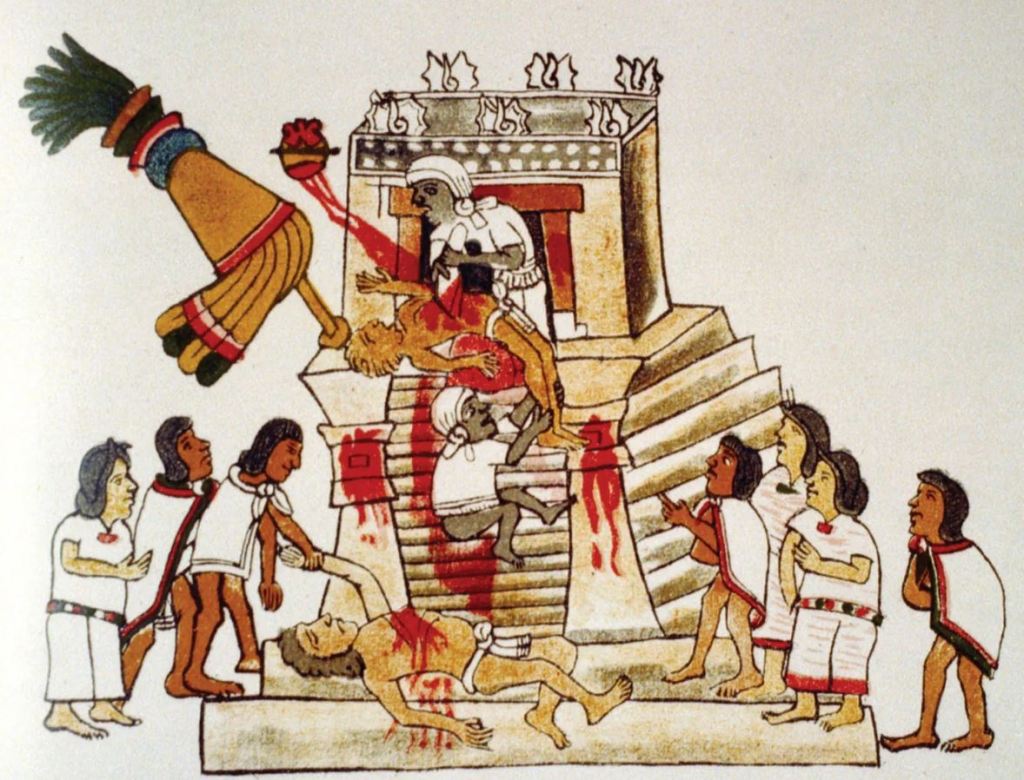
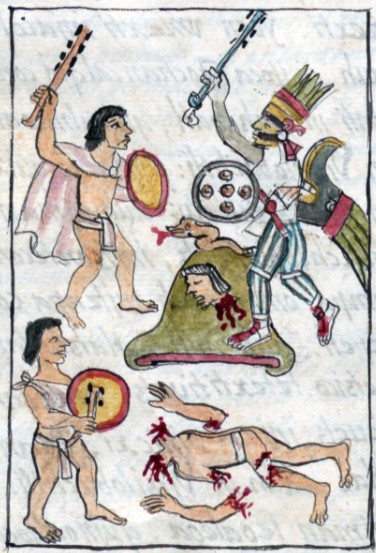
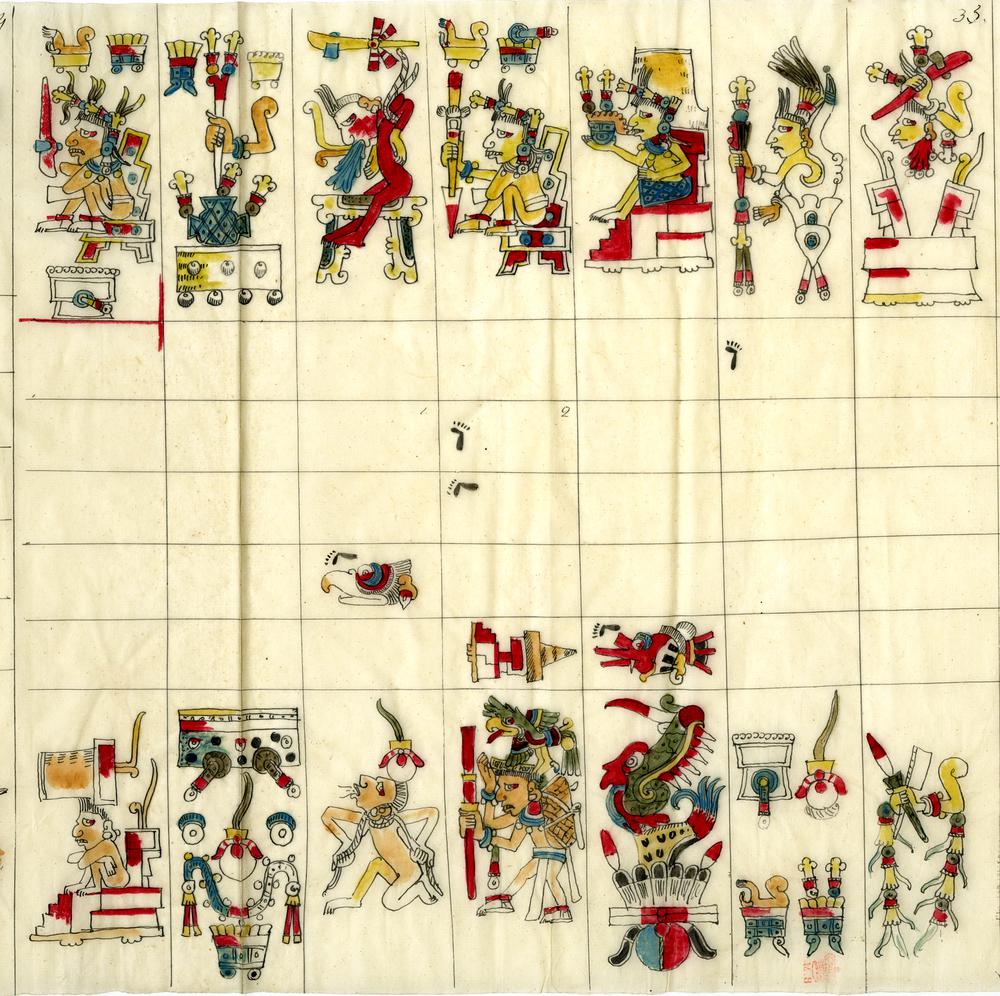
In constructing these interpretations of ritual human sacrifice, historians and anthropologists have used a variety of sources. These include pre-conquest (before the arrival of Europeans) and colonial (after the arrival of Europeans) indigenous sources. Many scholars conclude form examining these sources that sacrifice by beheading was a ritual practiced regularly by the Nahua. Why? These scholars explain that the Nahua believed that the head collected a divine force called tonalli. This has led many scholars to argue that “the decapitated head of enemy warriors were a supreme prize for the city [ Tenochtitlan ].” The Codex Borgia is believed by specialists to have been written shortly after the arrival of the Spanish and is a source regularly referred to for evidence of the practice of ritual human beheading. Above is a fragment from the 260-day ritual calendar recorded in the Codex Borgia used by scholars to support their interpretations about ritual human beheading.
The Florentine Codex, or The General History of the Things of New Spain, a post-Columbian source was written by Nahua scribes under the direction of the Franciscan monk Bernardino de Sahagún. This colonial composition consists of information about Nahua life before the arrival of the Spanish. It is a source used by scholars to learn about ritual human sacrifice and heart sacrifice. Below is a fragment from this work describing the ritual of the heart sacrifice.
| “Thus was performed the sacrificial slaying of men, when captives and slaves died, who were called Those who have died for the god. Thus they took [the captive] up [to the pyramid temple] before the devil. [the priests] going holding him by his hands. And he who was known as the arranger [of captives], this one laid him out upon the sacrificial stone. And when he had laid him upon it, four men stretched him out, [grasping] his arms and legs. And already in the hand of the fire priest lay the [sacrificial] knife, with which he was to slash open the breast of the ceremonially bathed [captive].” – Florentine Codex |
Scholars generally agree that some of the earliest recordings of Spanish accounts of ritual human sacrifice can be found in the second letter Hernán Cortés wrote to Charles V, and in Bernál Díaz del Castillo’s The True History of the Conquest of Mexico.
| “I forbade them moreover to make human sacrifice to the idols as was their wont, being an abomination in the sight of God it is prohibited by your Majesty’s laws which declare that he who kills shall be killed. From this time henceforth they departed from it, and during the whole time that I was in the city not a single living soul was known to be killed and sacrificed.” – Cortes to the King of Spain “. . . and we saw how our companions who were made prisoners were taken to be sacrificed . . . they later placed their backs [captured Spaniards] on top of stones which they used to sacrifice, and with large blades, they cut open their chests pulling our their hearts and offering them to their gods.” – Bernál Díaz del Castillo, The True History of the Conquest of Mexico |
Explanations for the practice of ritual human sacrifice have ranged from Michael Harner’s protein deficiency theory, which you will read (see “The Ecological Basis for Aztec Sacrifice” American Ethnologist 4, 1977), to theories that emphasize political motives behind these sacrifices. Most scholars, however, have focused their attention on the religious implications of ritual human sacrifice. The Life of Tolpitzin Quetzalcoatl and the
in the Codex Chimalpopoca, and the birth of Huitzilopochtli in the Florentine Codex are some of the sources used by scholars to link ritual human sacrifice with religious practices. Scholars argue that Topiltzin Quetzalcoatl’s story emphasizes “the sacrality of the human body and its potential to return its energy to the celestial forces that created it.” Based on the fragment to the right, would you agree or disagree with this statement?
| “Now, this year, 1 Reed, is when he got to the ocean, the seashore, so it is told and related. Then he halted and wept and gathered up his attire, putting on his head fan, his turquoise mask, and so forth. And as soon as he was dressed, he set himself on fire and cremated himself . . . And as soon as his ashes had been consumed, they saw the heart of a quetzal rising upward. And so, they knew he had gone to the sky, had entered the sky. The old people said he was changed into the star that appears at dawn. Therefore, they say it came forth when Quetzalcoatl died, and they called him Lord of the Dawn.” – Codex Chimalpopoca |
According to the Nahua creation myth, the gods put into motion the four different suns, or ages, before our present age. After the end of the Fourth Sun, the gods once again restored life through the use of blood. The selection below describes this restoration. How was life restored to the world? What role did the gods have in this? How might a historian/anthropologist use this source to explain why ritual human sacrifice was an important part of the Nahua belief system?
| “The male bones are in one pile, the female bones are in another pile . . . Then he (god Quetzalcoatl) carried them to Tamoanchan. And when he had brought them, the one named Quilaztii, Cihuacoatl, ground them up. Then she put them into a jade bowl, and Quetzalcoatl bled his penis on them. Then all the gods, who have been mentioned, did penance: Apanteuctli Huictlolinqui, Tepanquizqui, Tlallamanac, Tzontemoc, and number six is Quetzalcoatl. Then they said (the humans), “Holy ones, humans, have been born.” It’s because they did penance for us.” – Codex Chimalpopoca |
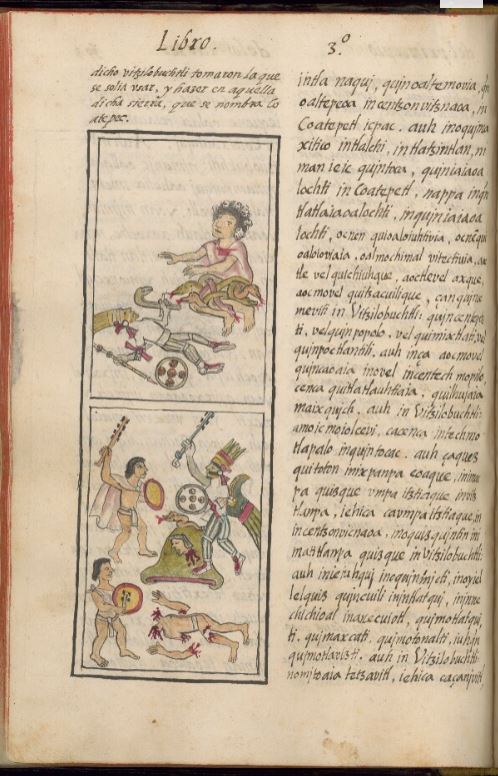
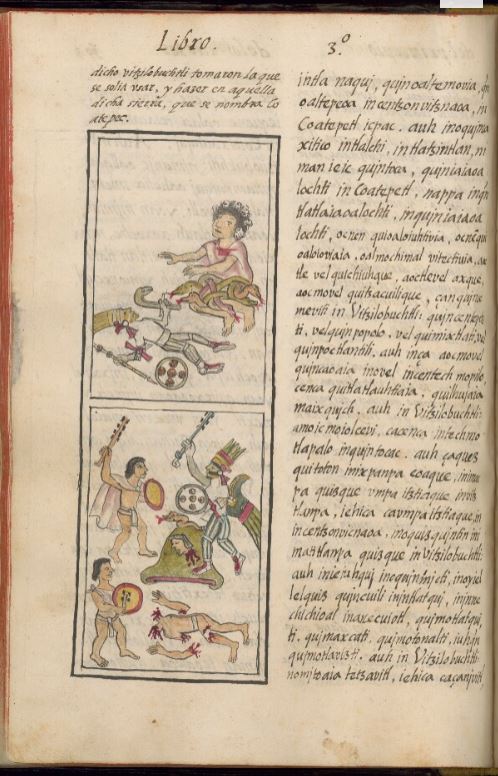
The main ceremonial center of the Mexica world was the Templo Mayor, or Coatepec/Coatepetl (Serpent Mountain). It supported the shrines of Tlaloc (god of rain and agriculture) and Huitzilopochtli (god of tribute and war). Huitzilopochtli was the supreme deity of the Mexica who encouraged their journey to the place that became Tenochtitlan (Mexico City today). Scholars argue that ritual human sacrifice took place throughout the year as Mexica re-enacted the victory of Huitzilopochtli over 400 gods. Below is a fragment describing what took place after the birth of Huitzilopochtli.
| “Then Huitzilopochtli was proud, he pursued the four hundred gods of the south, he chased them, drove them off the top of Coatepetl, the mountain of the snake. And when he followed them down to the foot of the mountain, he pursued them, he chased them like rabbits, all around the mountain. He made them run around it four times. In vain they tried to rally against him, in vain they turned to attack him, rattling their bells and clashing their shields. Nothing could they do, nothing could they gain, with nothing could they defend themselves. Huitzilopochtli chased them, he drove them away, he humbled them, he destroyed them, he annihilated them.” – – Codex Chimalpopoca |
Another interpretation of ritual human sacrifice is proposed by Peter Hassler, an ethnologist at the University of Zurich. I should note that like Harner’s view, Hassler’s is also what one would consider fringe interpretations with little if any support. However, they are still worth exploring. Hassler’s critique of “mainstream” views of ritual human sacrifice was published in Die Zeit, an article you will read. How has Hassler challenged the “mainstream” interpretation of ritual human sacrifice? Hassler believes “There are plenty of possible interpretations of the images of hearts and even killings . . . “ One is that these images “could present narrative images–allegories, symbols, and metaphors.” Let us briefly test this possibility by exploring the Eucharist performed in Christian masses. How might a non-Christian who does not fully understand the ceremony of the Eucharist perceive what takes place from reading the statements below?
| GOSPEL | TEXT |
| The Gospel according to Luke, xxii, 20 | This is the chalice, the New Testament in my blood, which shall be shed for you. |
| The Gospel according to Matthew, xxvi, 28 | For this is my blood of the New Testament, which shall be shed for many unto remission of sins. |
| The Gospel according to Mark, xiv, 24 | This is my blood of the New Testament which shall be shed for many. |
Let us probe this theme a little further by reading a fragment from Octavius by Marcus Minucius Felix (d. 250 CE). Octavius is a dialogue between Caecilius Natalis, who upholds the cause of paganism, and Octavius Januarius, who upholds the cause of Christianity.
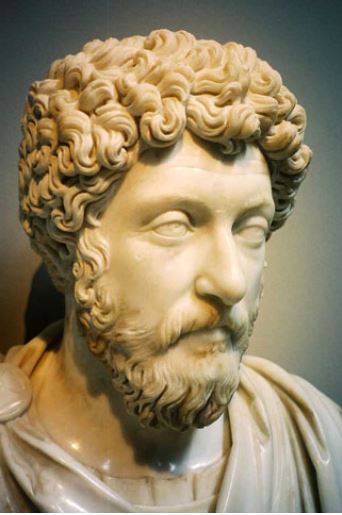
Historians argue that the non-Christian view of the initiation of novices during the Roman era recorded below was influenced by their misunderstanding of what took place during a Christian mass. Based on your reading of the fragment to the below, would you agree or disagree with this interpretation? Does evidence such as this support Hassler’s challenge that scholars have misinterpreted or misunderstood human sacrifice in the manner in which Romans misinterpreted Christianity?
| “I know not whether these things are false; certainly suspicion is applicable to secret and nocturnal rites; and he who explains their ceremonies by reference to a man punished by extreme suffering for his wickedness, and to the deadly wood of the cross, appropriates fitting altars for reprobate and wicked men, that they may worship what they deserve. Now the story about the initiation of young novices is as much to be detested as it is well-known. An infant covered over with meal, that it may deceive the unwary, is placed before him who is to be stained with their rites: this infant is slain by the young pupil, who has been urged on as if to harmless blows on the surface of the meal, with dark and secret wounds. Thirstily – O horror! they lick up its blood; eagerly they divide its limbs. By this victim they are pledged together; with this consciousness of wickedness they are covenanted to mutual silence.” – Octavius |
What about the symbol of the crucifixion? How might someone never exposed to Christianity interpret the display of the crucifixion in churches and cathedrals? According to Hassler, how should the image of the heart sacrifice be interpreted? Why?
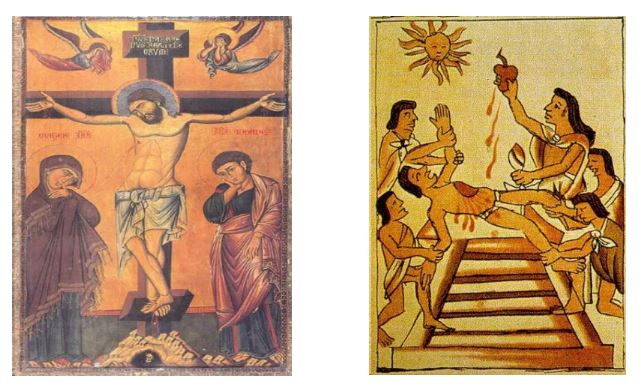
Recall Hassler’s statement that Spanish recordings of human sacrifice served as a “justification for their destructive acts.” If this was the ultimate end, then how effective was this propaganda? Perhaps an answer to this question can be found in Juan Ginés de Sepúlveda’s Democrates Alter, sive de justas belli causi apud Indos.
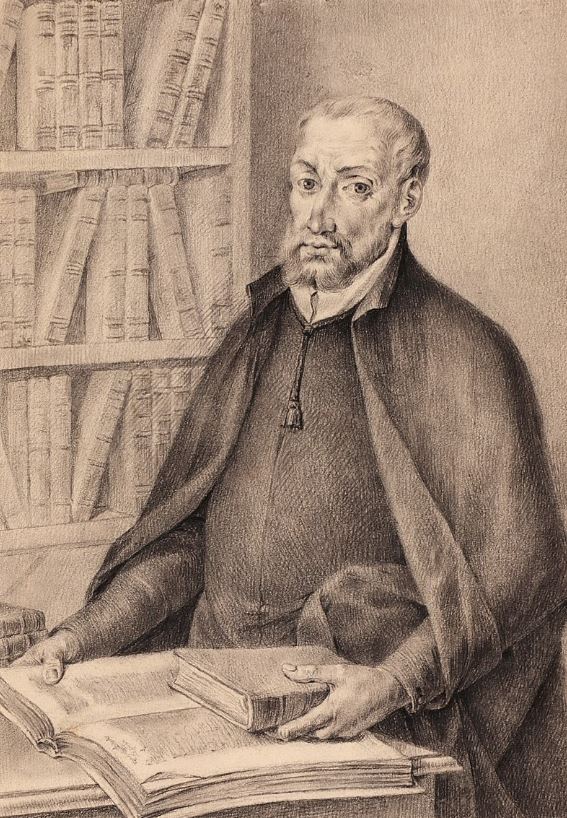
| “Interpreting their religion in an ignorant and barbarous manner, they sacrificed human victims by removing the hearts from the chests. They placed these hearts on their abominable altars. With this ritual they believed that they had appeased their gods. They also ate the flesh of the sacrificed men . . . . War against these barbarians can be justified not only on the basis of their paganism but even more so because of their abominable licentiousness, their prodigious sacrifice of human victims, the extreme harm that they inflicted on innocent persons, their horrible banquets of human flesh, and the impious cult of their idols”. – Democrates Alter, sive de justas belli causi apud Indos |
IN CLOSING
As you have learned, during the Postclassic period (1250–1519 C.E.), Mesoamerica witnessed Nahua migration into central Mexico, with the Mexica being the last to arrive. Settling on an island in Lake Texcoco, they founded Tenochtitlan, which became the center of the Empire of the Triple Alliance. Their rise to dominance was driven by military strength, strategic alliances, and economic growth, shaping one of Mesoamerica’s most influential civilizations. What happened to this empire? To begin addressing this question, our next topic, Conquest, Colonization, and Conversion, will explore Spain’s Medieval experience and how it prepared it to create a trans-Atlantic Empire by first establishing colonies in the Americas. The Empire of the Triple Alliance would be a victim of Spain’s maritime empire building.
As always, be sure to contact me or visit me during office hours should you have any questions about the content we have covered or the assignments that you need to complete.
 World History Portal
