THE ORDERING OF THE COLONIAL WORLD
| INTRODUCTION With the decisive defeat of the Empire of the Triple Alliance in 1521, the Spanish Crown swiftly undertook the process of consolidating its vast new territories. Drawing from administrative models previously tested in the Caribbean, as well as deeply ingrained Iberian governance traditions, the Spanish sought to impose a structured colonial system that would ensure political stability, economic exploitation, and religious conversion. A cornerstone of this transformation was the establishment of a highly hierarchical and urban-centered administrative framework. While Spanish rule introduced European governance principles, it also strategically incorporated and co-opted elements of indigenous political structures to maintain order and facilitate control. This hybrid approach allowed for the smoother integration of colonial rule, leveraging existing indigenous nobility and socio-political hierarchies while imposing Spanish legal and bureaucratic systems. Beyond administrative consolidation, the Spanish aggressively pursued cultural and religious transformation through widespread missionary activity. The Catholic Church became an essential institution in the colonial order, with mendicant orders such as the Franciscans, Dominicans, and Augustinians leading efforts to convert indigenous populations. Ultimately, the Spanish colonial project in Mexico represented both continuity and rupture—it dismantled the indigenous imperial system yet simultaneously adapted and repurposed pre-Hispanic governance structures to ensure the smooth functioning of Spanish rule. This complex fusion of European and indigenous institutions laid the foundation for the colonial society that would dominate Mexico for the next three centuries. LEARNING OBJECTIVES *Analyze the structure and function of the Spanish municipal system. *Evaluate the role of indigenous political structures in colonial governance. *Examine how colonial society was structured and ordered. *Assess the role and function of the Church in colonial society. |
The Role of the Iberian Municipal Model
A key component of Spanish colonial organization in the Americas was the municipio (municipal system), a governance model deeply rooted in medieval Castilian law. Spain had long relied on urban-centered administration, in which towns and cities functioned as the core units of governance, justice, and taxation. This system was successfully transplanted to the New World, where it was strategically adapted to accommodate existing indigenous political and social infrastructures.
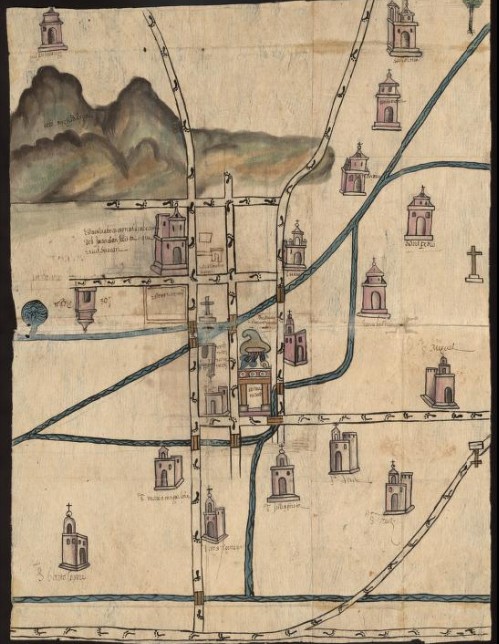
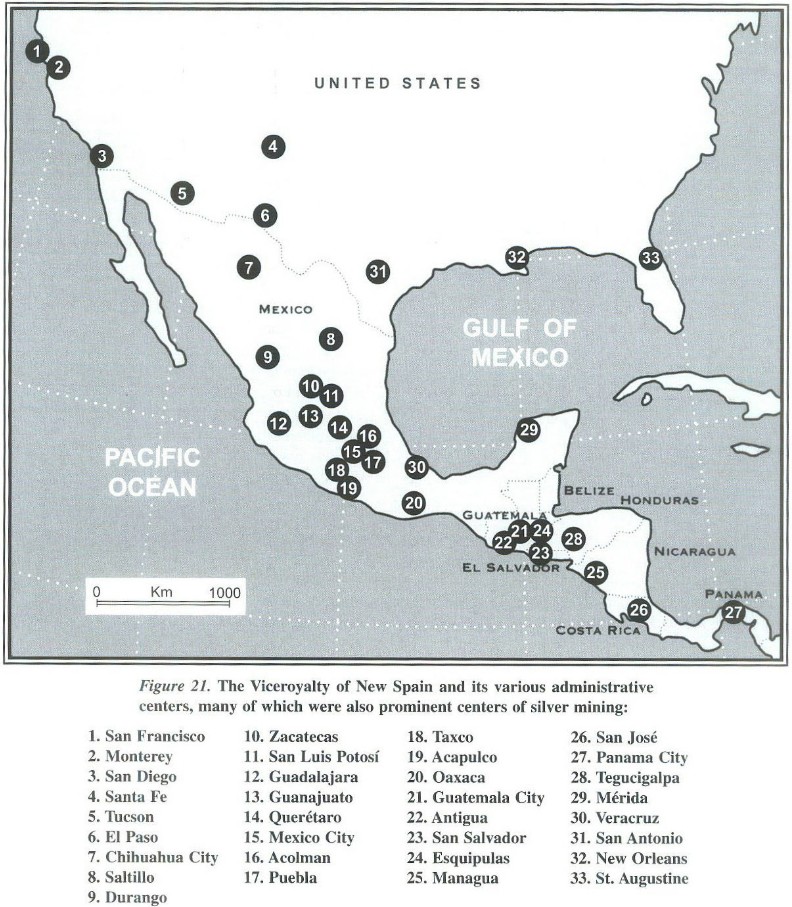
The cabildo (municipal council) was the primary institution overseeing local administration, justice, and public order, ensuring that Spanish royal directives were enforced effectively at the municipal level. These councils were established in major cities such as Mexico City (formerly Tenochtitlán), Puebla, and Guadalajara, which became key administrative centers of the colonial system.
Rather than completely dismantling indigenous political institutions, the Spanish repurposed existing structures such as the altepetl (city-state) system and its associated tribute networks to facilitate colonial administration. This strategic incorporation of pre-Hispanic governance mechanisms helped maintain order while extending Spanish rule. By incorporating indigenous elites into the Spanish colonial framework, the Crown ensured smoother governance and minimized resistance.

To ensure efficient administration and facilitate economic exploitation, the Spanish established a hierarchical urban network, structuring colonial settlements into a tiered system of governance and control. Mexico City became the colonial capital and the seat of the Viceroy of New Spain, serving as the political, economic, and religious center of Spanish rule in the region. Mexico City housed audiencias (high courts), military governors, and religious authorities who played essential roles in governance and law enforcement.
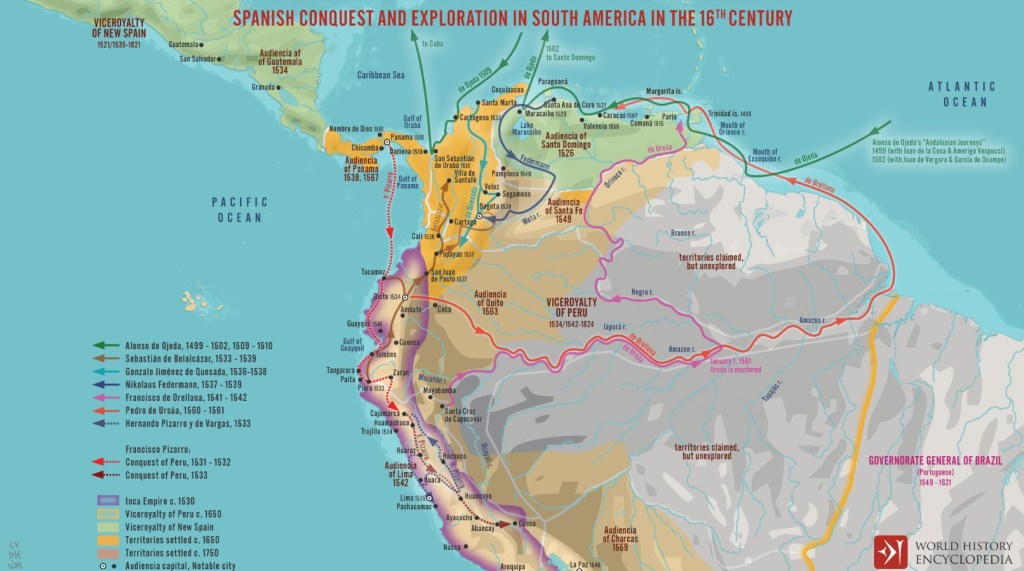
Below these primary centers were secondary administrative cities such as Puebla, Mérida, and Oaxaca, which acted as regional hubs for implementing royal policies. These cities were home to Spanish bureaucrats, merchants, and clergy, reinforcing colonial authority over trade, taxation, and religious conversion efforts. They served as economic and religious focal points, ensuring that Spanish interests extended beyond the capital.
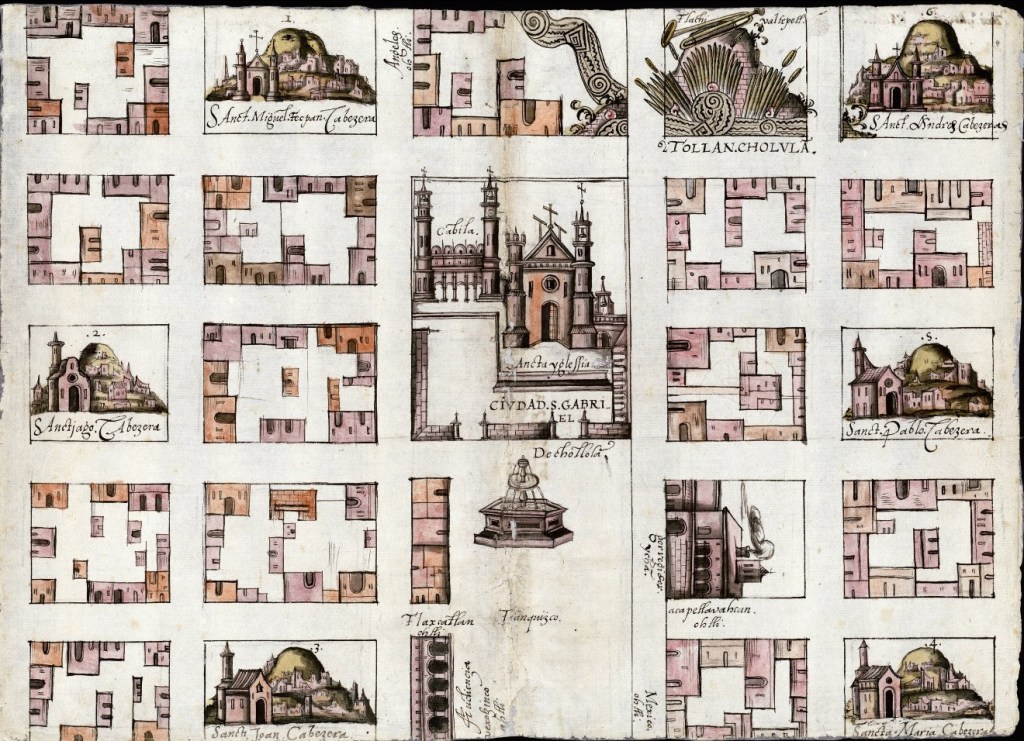
At the local level, tertiary centers encompassed smaller towns and indigenous settlements, which were integrated into the colonial framework under the supervision of Spanish-appointed corregidores (local magistrates). These officials were responsible for governing indigenous populations, overseeing labor allocation, and managing tribute collection, ensuring that colonial administration reached even the most remote communities. By structuring their settlements into this hierarchical urban network, the Spanish effectively maintained control over vast territories while maximizing economic and political stability.
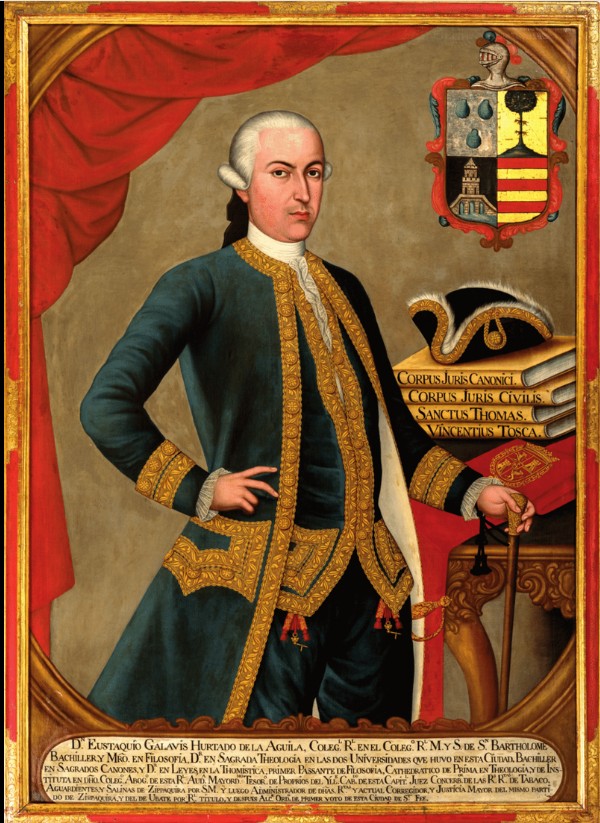
Rather than relying exclusively on Spanish officials to govern their newly acquired territories, the colonial administration strategically co-opted indigenous rulers to serve as intermediaries between the Spanish Crown and native populations. Recognizing the deep-rooted authority of indigenous elites, the Spanish incorporated them into the colonial system, ensuring local compliance and administrative efficiency. These indigenous leaders played a crucial role in managing their own communities under Spanish oversight, collecting tribute, enforcing labor policies, and promoting religious conversion efforts. Traditional regional political units, such as the altepetl, were incorporated into the Spanish municipal system, ensuring an efficient flow of resources while maintaining relative stability within indigenous communities.
Economically, the municipal system played a crucial role in controlling trade, taxation, and resource extraction. Urban centers became commercial hubs, where Spanish merchants, colonial officials, and indigenous traders converged. The Spanish integrated indigenous economies into the colonial system, using municipal regulations to control land distribution, agricultural production, and labor systems such as the encomienda and repartimiento. Cities became focal points for exporting valuable resources, including silver from Zacatecas, and agricultural goods from large haciendas (estates), ensuring the flow of wealth to the Spanish Crown.
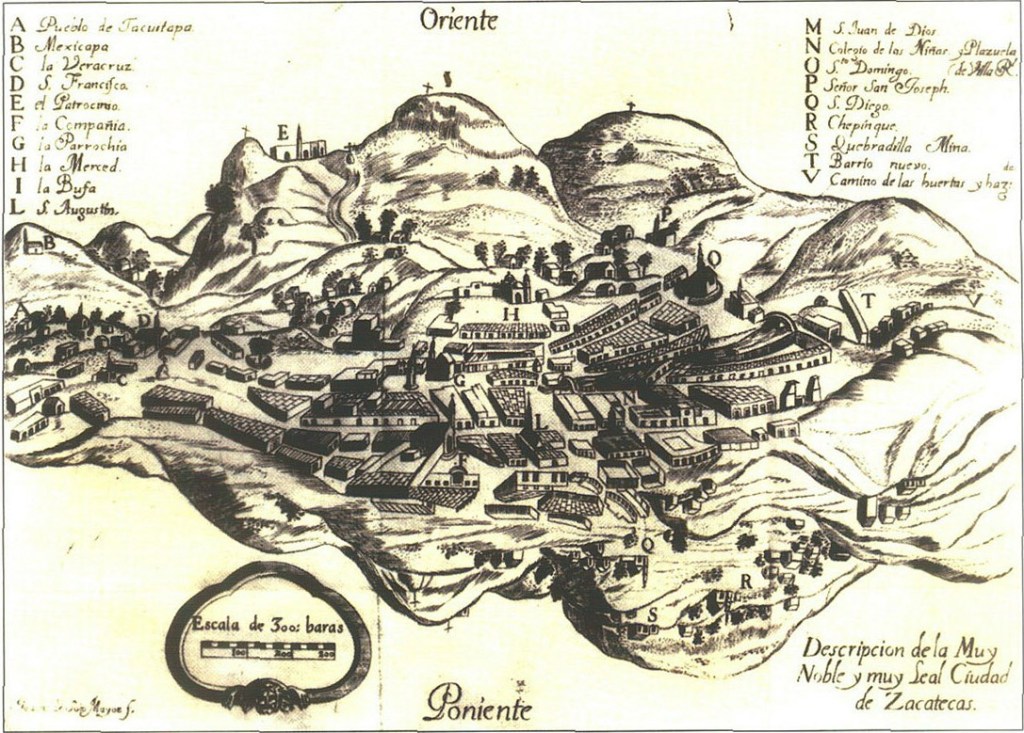
Religious conversion was another key function of the urban municipal system. Cities served as bases for missionary activity, where Catholic friars established churches, monasteries, and schools to convert and indoctrinate the indigenous population. Mendicant orders, such as the Franciscans, Dominicans, and Augustinians, played a vital role in organizing mass baptisms, religious instruction, and the construction of religious institutions. Municipalities helped reinforce Catholic orthodoxy, ensuring that indigenous belief systems were systematically replaced with Spanish religious and cultural norms.
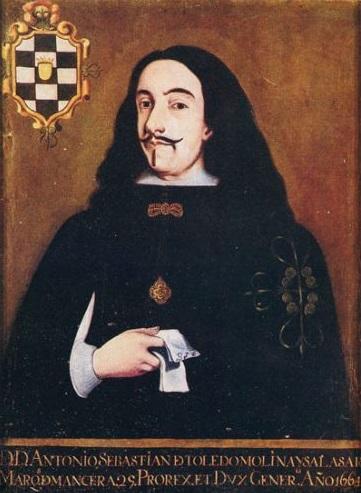
Socially, the municipal system reinforced Spanish racial and class hierarchies, shaping the caste-based society that characterized Spanish America. The peninsulares (Spanish-born officials) and criollos (American-born Spaniards) dominated municipal councils, holding the most powerful administrative and economic positions. Below them were mestizos (mixed-race individuals), indigenous people, and African slaves, who occupied lower rungs of the colonial social order. This structure institutionalized the casta system, a rigid racial and social classification system that dictated economic opportunities, legal rights, and access to political power.
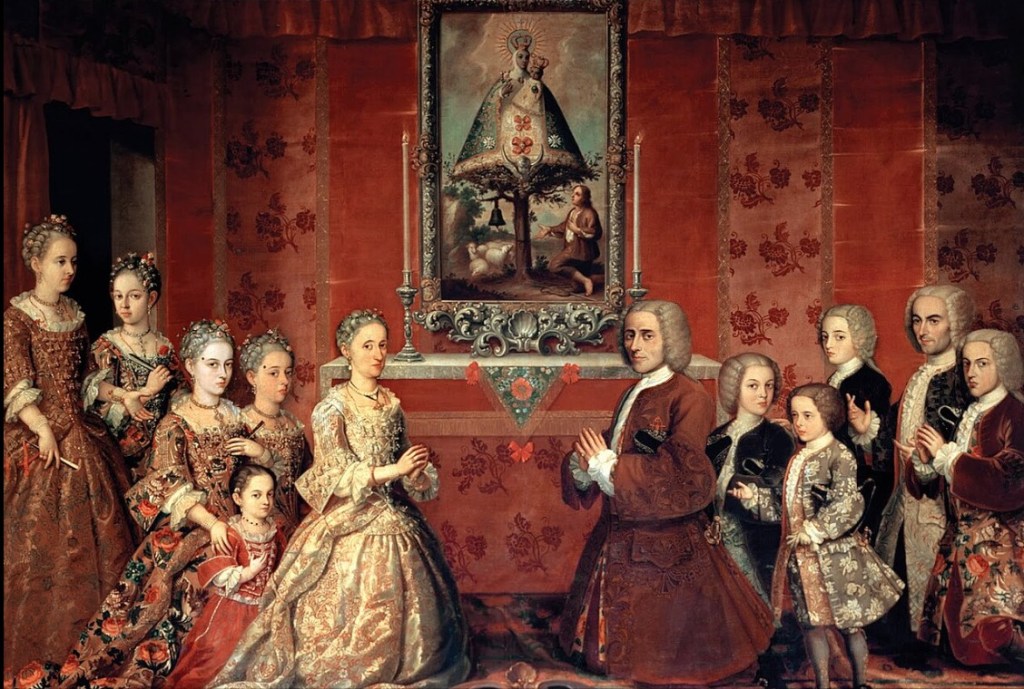
In the long term, the municipal system established during the Spanish colonial period left a lasting legacy on urban development, governance, and social structures in Latin America. Many of today’s major cities in the region retain elements of colonial-era urban planning, while the bureaucratic and social systems introduced by the Spanish continue to influence modern governance and societal organization.
The Bureaucratic Structure of Spanish Colonial Rule
At the heart of Spain’s colonial administration was the Council of the Indies (Consejo de Indias), established in 1524 and based in Madrid. This institution held supreme authority over Spanish America, drafting laws and regulations, appointing viceroys, governors, and high-ranking officials, overseeing trade and taxation, and managing judicial disputes. Although the Council of the Indies dictated policies for the colonies, its ability to directly enforce these policies was limited. As a result, it relied on a complex network of local governing institutions in Spanish America to implement its decisions.
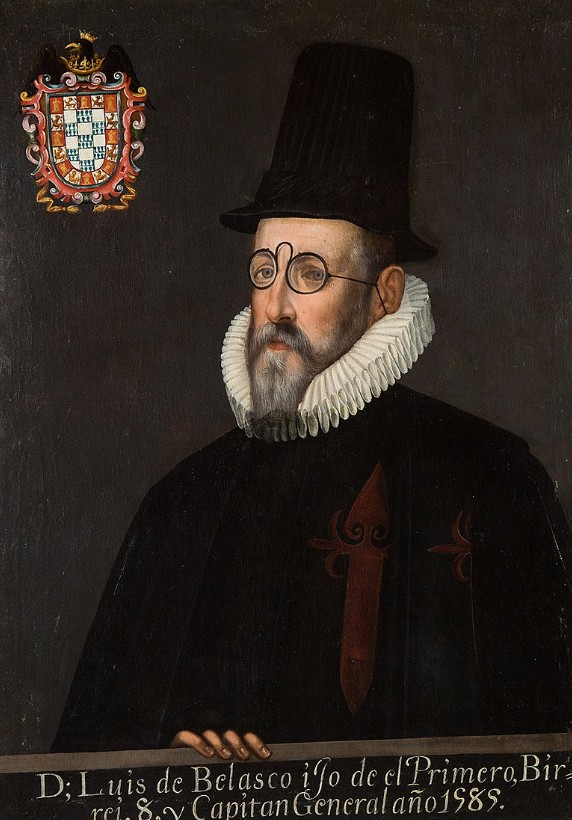
To strengthen royal authority, Spain introduced the viceroyalty system in 1535, appointing Viceroys as the highest-ranking colonial officials. The Viceroy of New Spain was the direct representative of the King of Spain. Antonio de Mendoza, appointed in 1539, became the first Viceroy of New Spain and wielded extensive executive, military, and judicial power. The viceroy enforced royal decrees, supervised economic affairs, managed colonial officials, and defended the colony against external threats.
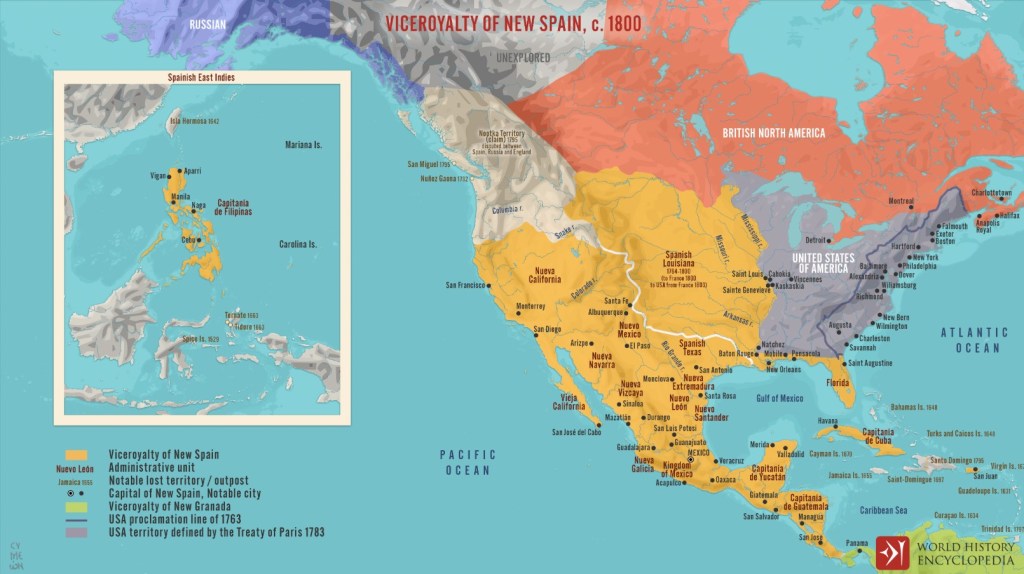
To assist the viceroy and provide judicial oversight, the Spanish established the Audiencia, a high court of law that functioned as both a legal and advisory body. The first Audiencia of New Spain was created in 1529 and was composed of a presidente (presiding officer), oidores (judges), and licenciados (legal experts). The Audiencia had the authority to review legal disputes, handle land claims, and resolve conflicts between settlers, indigenous communities, and colonial officials. Audiencias were strategically established in important colonial cities, typically in regions of high population density and economic significance. Although Audiencias were meant to limit the viceroy’s power, conflicts often arose between the two institutions as both sought to exercise political and economic influence over New Spain.
Below the viceroy and audiencia, the governance of Spanish America depended on a complex local administrative structure, which allowed the Crown to maintain order while efficiently managing indigenous populations and economic activities. Gobernadores (Governors) acted as regional administrators, overseeing larger provinces within New Spain. Corregidores (Royal Officials Over Indigenous Towns) were appointed directly by the Crown to oversee indigenous communities, ensuring the collection of tribute and labor quotas as part of the colonial economy. Cabildos (Town Councils) were responsible for managing local affairs in cities and towns. These municipal councils were composed of Spanish settlers, usually wealthy landowners or merchants, who regulated markets, land distribution, public works, and urban development. Spain’s ability to maintain control over New Spain and its other American colonies rested on this elaborate bureaucratic system, which combined legal institutions, military authority, and economic exploitation. However, over time, the inefficiencies and exploitative nature of this system would fuel criollo resentment, eventually leading to the independence movements of the 19th century.
The Role of the Encomenderos
During the early colonial period in Mexico, encomenderos—Spanish settlers who were granted control over indigenous labor—played a pivotal role in the economic expansion of New Spain. Under the encomienda system, these Spanish elites were entrusted with the labor and tribute of indigenous communities in exchange for a supposed commitment to protect, educate, and convert them to Christianity. However, in practice, the encomienda system became little more than a form of coerced labor, with indigenous peoples often subjected to harsh conditions, forced tribute payments, and exploitation.
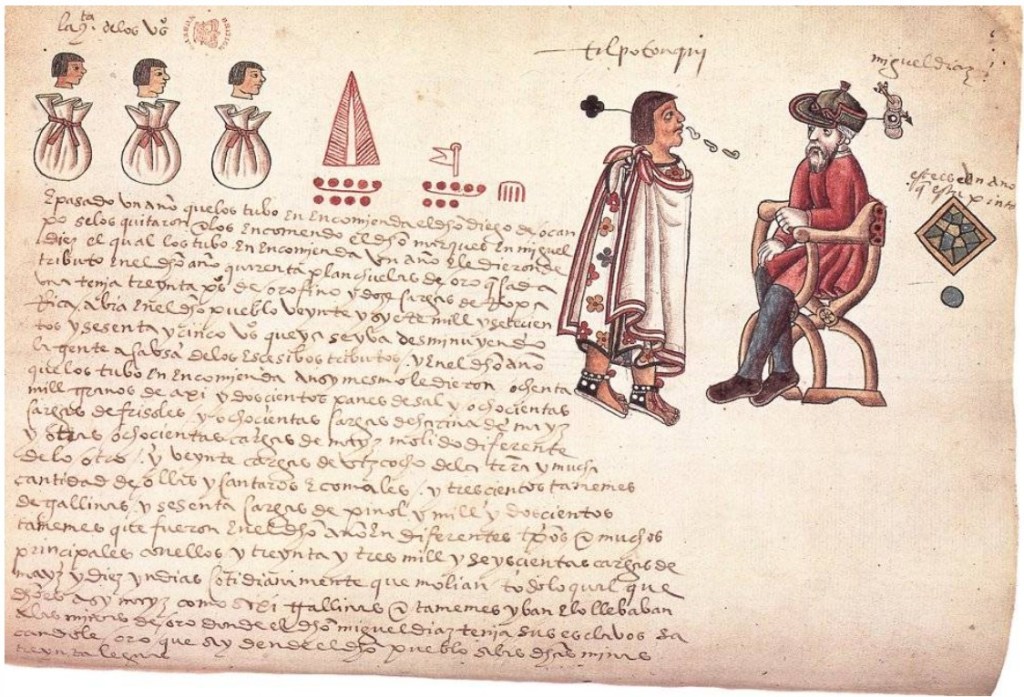
The economic activities of encomenderos were not limited to subsistence agriculture but instead encompassed a wide range of industries that fueled the Spanish colonial economy. The abundant availability of Mesoamerican indigenous labor—and later, enslaved African laborers—allowed encomenderos to expand their ventures into diverse economic sectors. One of the most lucrative industries established by encomenderos was sugar cultivation. Sugar plantations emerged in regions like Veracruz, Oaxaca, and Morelos, where the warm climate and fertile soil favored sugarcane growth. These plantations operated under brutal conditions, with indigenous workers and African slaves enduring long hours, harsh punishments, and dangerous milling processes to meet the increasing demand for sugar in European markets. Spanish settlers introduced silk farming to New Spain, particularly in Puebla, where the climate was conducive to silkworm cultivation. Indigenous laborers were tasked with tending silkworms, harvesting cocoons, and spinning silk fibers into textiles, which became an important export commodity. Encomenderos also invested in shipyards, especially in Veracruz, to support Spain’s transatlantic trade and naval needs. These shipyards produced vessels for transporting goods, military operations, and coastal defense, further integrating New Spain into the global Spanish empire. The establishment of large estancias (landed estates) dedicated to cattle ranching was another significant economic enterprise. Cattle ranching provided meat, leather, and tallow, which were essential for both local markets and exports. Over time, these estates grew into vast haciendas, further entrenching Spanish land ownership and indigenous labor exploitation.
The Columbian Exchange
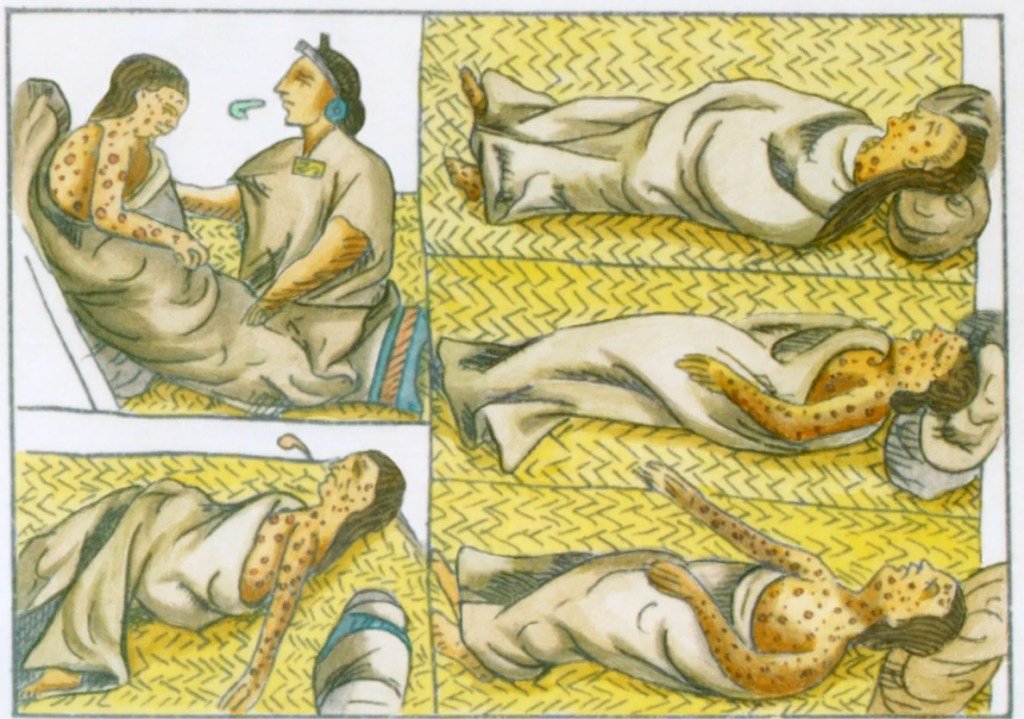
The arrival of the Spanish in the early 16th century triggered an unprecedented demographic collapse among indigenous populations in Mexico and throughout the Americas. One of the most devastating factors was the introduction of Old World diseases, against which the indigenous populations had no immunity. The most catastrophic of these was smallpox, which originated in the Caribbean before reaching Mexico. The disease arrived in 1520, during Hernán Cortés’s conquest of the Empire of the Triple Alliance, spreading rapidly through Tenochtitlán and killing tens of thousands, including the Mexica emperor Cuitláhuac. Smallpox left the Mexica weakened and demoralized, making it easier for the Spanish to seize control. Other highly contagious European diseases, including measles, typhus, and influenza, continued to devastate indigenous communities well into the colonial period. The rapid and repeated waves of epidemics led to an estimated 90% decline in Mexico’s indigenous population within the first century of Spanish rule, leaving many regions either severely depopulated or entirely abandoned.
Beyond disease, the Spanish introduction of domesticated animals had profound ecological consequences for Mexico’s environment and indigenous agricultural systems. The arrival of sheep and cattle, initially intended for food and wool production, significantly altered landscapes and disrupted traditional land use. Large herds of sheep, in particular, overgrazed vast areas, stripping grasslands bare and leading to severe soil erosion. This phenomenon was particularly destructive in Tlaxcala and the Bajío, where the loss of vegetation degraded agricultural lands and disrupted indigenous food sources. The introduction of European livestock also led to the decline of traditional indigenous crops, forcing many native farmers to alter their agricultural practices to accommodate the new colonial economy.
The environmental damage from silver mining extended beyond human health. Mining operations contaminated water sources, poisoned crops, and destroyed local ecosystems, further weakening already vulnerable indigenous communities. The combined effects of disease, forced labor, and environmental degradation left many indigenous populations drastically reduced and displaced. By the late 16th century, entire regions of New Spain faced severe depopulation, fundamentally reshaping the social, economic, and ecological landscape of colonial Mexico.
The Spanish conquest of Mexico not only brought disease, environmental destruction, and forced labor but also facilitated the Columbian Exchange, a vast transcontinental transfer of crops, animals, and cultural practices between the Americas and Europe. This exchange reshaped global agriculture, diets, economies, and ways of life, leaving an enduring legacy on both sides of the Atlantic.
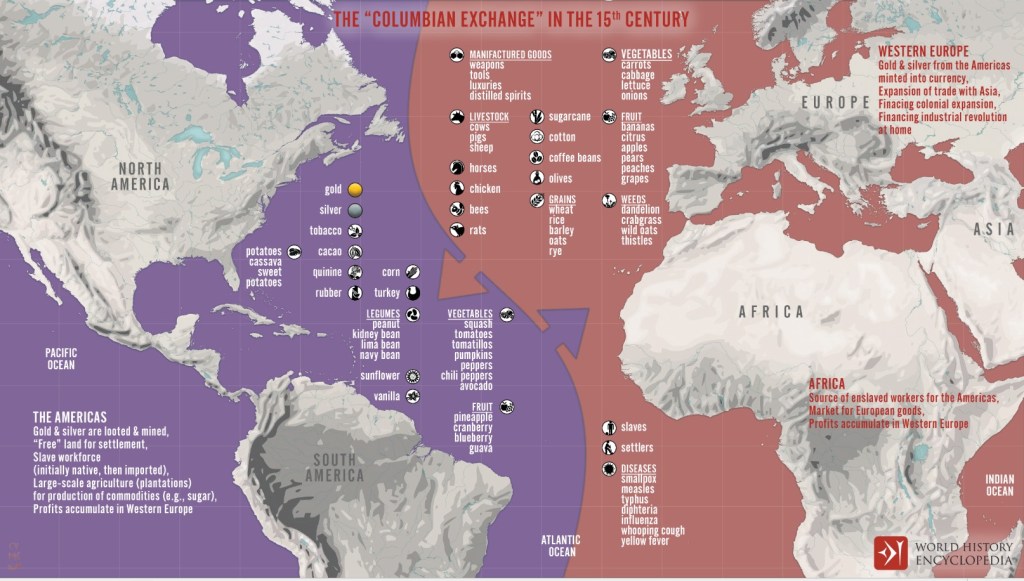
The Spanish introduced new crops and livestock, drastically transforming Mexico’s agricultural landscape and dietary habits. These additions fueled the development of plantation economies and created new sources of sustenance for the growing colonial population. One of the most significant cash crops introduced by the Spanish, sugarcane, was established in plantations, particularly in Veracruz. These plantations relied heavily on indigenous and African enslaved labor, mirroring the harsh conditions of the Caribbean sugar industry. While indigenous peoples primarily consumed corn (maize), wheat became a staple grain among Spaniards and eventually among mestizo populations, leading to the introduction of European-style bread into Mexican cuisine. Oranges, lemons, and limes were cultivated in Mexico’s warmer climates, adding new sources of vitamin C to local diets and influencing Mexican culinary traditions. The introduction of horses, pigs, cows, and chickens fundamentally changed transportation, diet, and agriculture.
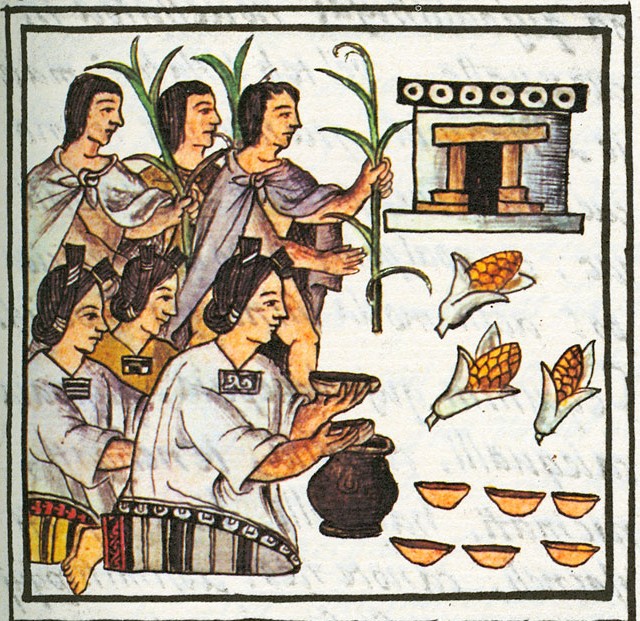
At the same time, Mexican agricultural products transformed European diets, economies, and farming practices, contributing significantly to population growth and economic expansion across Europe, Africa, and Asia. The introduction of nutrient-rich crops from New Spain helped sustain larger populations, improve food security, and fuel global trade networks. One of the most impactful crops was maize (corn), which quickly became a staple food in regions such as Spain, Italy, and sub-Saharan Africa. In Europe, maize was highly adaptable and could be cultivated in areas where wheat and rye struggled, making it an important alternative grain in countries like Italy, where it became the foundation of polenta. In Africa, maize spread rapidly due to its high yields and resilience, becoming an essential part of local diets, particularly in West and Central Africa. It supplemented traditional grains like millet and sorghum, helping to alleviate food shortages and support population growth in the region.
The Establishment of Iberian Social Values and Colonial Hierarchies in Mexico
Following the conquest, Spanish settlers sought to transplant Iberian social values and traditions to their newly acquired territories, shaping the development of a rigid and hierarchical colonial society. In New Spain, an individual’s ethnicity, birthplace, and social status determined their legal rights, economic opportunities, and social mobility. This stratification system, heavily influenced by Spanish customs, Catholicism, and legal traditions, became one of the defining features of colonial rule.
During the early colonial period, the elite sector of society was composed exclusively of Spanish immigrants (peninsulares) from the Iberian Peninsula. Regardless of their social standing before arriving in Mexico, these settlers considered themselves part of the colonial nobility, as simply being Spanish granted them privileged status. They occupied the highest ranks of colonial administration, the military, and the Church, reinforcing Spanish customs, governance, and religious authority across New Spain. To the Spanish Crown, New Spain was an extension of Spain, and its European-born subjects were entrusted with maintaining political and cultural continuity.

A strict racial and social hierarchy was quickly imposed, with Spaniards at the top, followed by indigenous people, Africans, and mixed-race individuals. This system was initially easy to enforce, as physical distinctions between Europeans, indigenous peoples, and enslaved Africans made social stratification highly visible. However, as Spanish settlers established families in New Spain, a new class of American-born Spaniards, known as criollos, emerged, leading to growing tensions between peninsulares and criollos.
As Spanish settlers established permanent roots in New Spain, their American-born descendants, the criollos (españoles criollos de la tierra), became a significant social and economic force. Although criollos were of full Spanish ancestry, they were often regarded as socially inferior to peninsulares. Many peninsulares viewed criollos as less cultured and less connected to Spain, believing that life in the colonies had made them weaker and less refined.
Despite these prejudices, criollos became economically dominant in New Spain. They controlled vast agricultural estates (haciendas) that supplied food and livestock for both local consumption and export. Additionally, criollos amassed wealth through commerce and silver mining, two of the most profitable industries in New Spain. The Catholic Church, one of the most powerful institutions in New Spain, also became a pathway to wealth and influence for criollos, many of whom entered religious orders and secured positions of economic and social importance. However, despite their economic success, criollos remained politically marginalized. The Spanish Crown reserved the highest government and church offices for peninsulares, excluding criollos from key positions of power. Over time, this political and social resentment fueled criollo discontent, which later became a major driving force behind the Mexican independence movement in the early 19th century.
Both peninsulares and criollos enjoyed privileges that were denied to indigenous people, enslaved Africans, and people of mixed ancestry. Unlike indigenous communities, who were forced to pay tributes and provide labor under the encomienda and repartimiento systems, Spaniards were exempt from these burdens. Additionally, Spanish elites were allowed to own vast haciendas and silver mines, while indigenous people were often confined to communal lands with restricted economic opportunities. Legal privileges further deepened social divisions. Spaniards had greater access to high courts and legal protections, while indigenous people were often subject to the authority of corregidores and local officials who acted with little oversight. These systemic inequalities reinforced the rigid caste system that defined Spanish colonial rule, institutionalizing racial and class disparities for centuries.
The social hierarchy established in New Spain had profound and lasting effects on Mexican society and politics. The tensions between peninsulares and criollos created deep political divisions, while the exploitation of indigenous and African populations entrenched economic and racial inequalities. Over time, these divisions fueled revolts, uprisings, and ultimately the struggle for independence, as criollos sought to break free from Spanish rule and claim their own political power. Even after independence in 1821, many of these colonial-era inequalities persisted, shaping New Spain’s social and economic landscape for generations to come.
The Evolution of the Casta System in Mexico
Over time, racial mixing between Spaniards, indigenous peoples, and Africans led to the emergence of a large mixed-ancestry population, known as the casta population. In an effort to maintain Spanish superiority and reinforce social hierarchies, the Spanish Crown developed an elaborate racial classification system that dictated social status, economic opportunities, and legal rights. This system, described by historians as “a racial hierarchy and a Eurocentric obsession with pure Spanish blood,” was designed to control and define social identity in colonial Mexico.
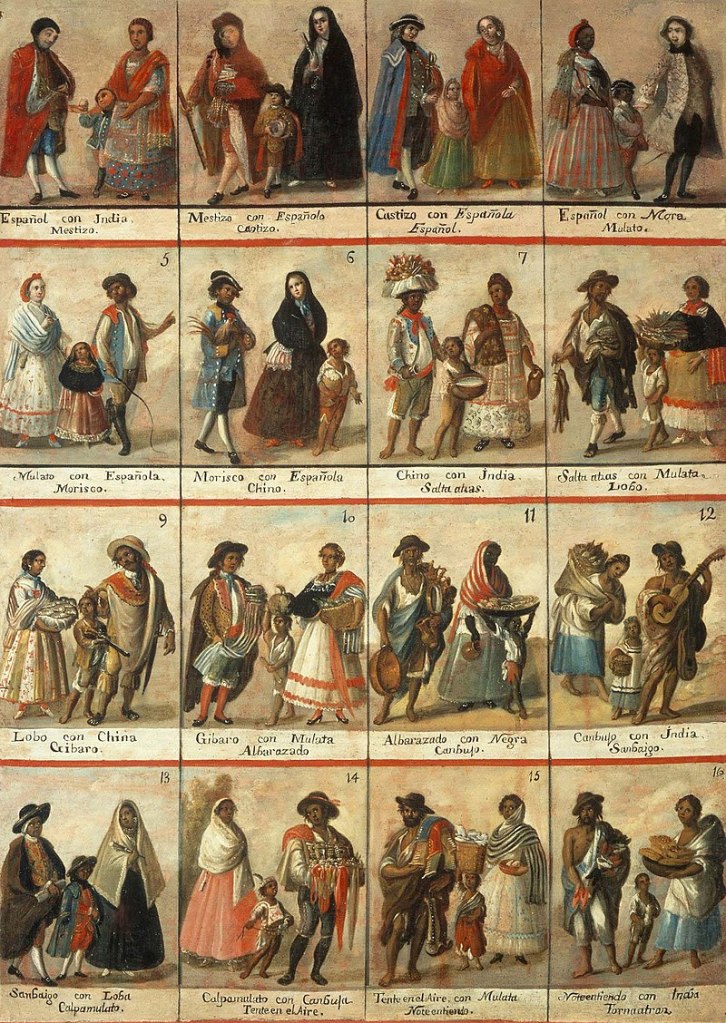
The Spanish colonial government categorized individuals based on their ancestry, placing those of Spanish descent at the top while limiting the rights and opportunities of those with indigenous, African, or mixed heritage. The most recognized casta categories included:
- Mestizos (Spanish + Indigenous): The largest and most influential mixed-race group in New Spain. Though they were marginalized, mestizos held a higher status than pure indigenous people and were often able to access skilled labor, military positions, and trade opportunities. Over time, they became a key demographic in Mexican society.
- Mulattos (Spanish + African): Considered lower in status than mestizos, mulattos were frequently forced into labor-intensive occupations, such as plantation work, mining, and domestic servitude. Some gained limited social mobility through military service.
- Zambos (Indigenous + African): One of the lowest social classes in the casta system, zambos were often enslaved or subjected to hard labor. Their African ancestry placed them at the bottom of the social hierarchy, as the Spanish viewed African heritage with the greatest stigma.
- Castizos (Spanish + Mestizo): With a higher social status than mestizos, castizos were sometimes legally considered Spanish and granted greater access to land, education, and government positions.
Each racial category determined access to jobs, property ownership, education, and legal privileges. By creating and enforcing this system, the Spanish elite ensured their continued dominance, preserving their privileged position while restricting the mobility of mixed-race individuals and indigenous people.
Although the colonial caste system formally ended after Mexico’s independence in 1821, its social and economic legacies persisted for centuries. Racial and class divisions remained deeply ingrained, influencing economic inequality, access to education, and social mobility well into modern Mexican history. The impact of these colonial hierarchies is still visible today in socioeconomic disparities and racial prejudices that continue to shape Mexico’s society.
The Role of Indigenous Elites, Language Shifts, and Cultural Adaptation in Post-Conquest Mexico
During the immediate post-conquest period, the Spanish relied heavily on indigenous elites as intermediaries to facilitate their rule over New Spain. Many of these elites—formerly nobles, rulers, or high-status figures within pre-Hispanic societies—helped maintain stability by ensuring that indigenous communities complied with Spanish authorities. By co-opting these local leaders, the Spanish reduced the likelihood of rebellion while also ensuring a more efficient collection of tribute, labor, and resources. In exchange for their loyalty and administrative support, indigenous elites were allowed to retain certain privileges within the colonial system. These included:
- The right to access labor and collect tribute from their communities, similar to the pre-Hispanic tribute system.
- The ability to preserve elements of their pre-conquest social status, which allowed them to maintain influence over their people.
- Protection under Spanish legal codes, enabling them to petition Spanish courts regarding disputes over land, labor, and governance.
However, as Spanish control solidified, these privileges began to erode. Over time, Spanish settlers and colonial administrators expanded their own landholdings, often at the expense of indigenous communities. This shift impoverished indigenous elites, forcing them to adapt to survive within the Spanish-dominated hierarchy. As indigenous elites lost economic power, many sought to preserve their social prestige by adopting Spanish cultural markers of nobility. One of the most significant shifts was the adoption of Spanish honorific titles, such as Don (for men) and Doña (for women). These titles were traditionally reserved for Spaniards of noble status, but some indigenous elites petitioned Spanish authorities to be recognized as nobles, hoping to secure legal and social privileges.
In addition to adopting Spanish titles, indigenous elites increasingly integrated into Catholic religious institutions. Some became local church leaders, scribes, and translators for colonial officials, helping to mediate between Spanish authorities and indigenous communities. This dual adaptation strategy—embracing Spanish symbols of status and participating in colonial administration—allowed them to retain some degree of influence, even as their traditional power waned.
One of the most immediate and lasting effects of the Spanish conquest was the introduction of the Latin alphabet to indigenous societies. Missionaries and colonial officials encouraged indigenous literacy for several reasons:
- Religious conversion – Missionaries promoted literacy to spread Christianity through religious texts.
- Administrative control – Spanish authorities needed literate scribes to maintain records of taxation, tribute collection, and legal disputes.
- Communication between indigenous leaders and Spanish officials – A bilingual bureaucratic culture developed, as many indigenous scribes and nobles became fluent in both Nahuatl and Spanish.
The adoption of the Latin alphabet occurred relatively quickly, and some of the earliest surviving indigenous documents written in Latin script date back to the mid-1500s. Indigenous communities used this new writing system to record their histories, document land disputes, and navigate the Spanish legal system, allowing them to preserve aspects of their identity and agency within New Spain.
By the mid-1500s, Mesoamerican language patterns began to shift as Spanish rule deepened. Nahuatl and other indigenous languages started incorporating an increasing number of Spanish loanwords, especially for European objects, concepts, and religious terms that had no pre-Hispanic equivalent.
Key areas where Spanish nouns infiltrated Nahuatl included:
- European Objects: mesa (table), silla (chair), puerta (door)
- Household Items: cuchillo (knife), tenedor (fork), plato (plate)
- Religious Terms: ángel (angel), iglesia (church), cruz (cross)
- Animals Introduced by the Spanish: caballo (horse), vaca (cow), oveja (sheep)
This linguistic transformation reflected broader cultural changes, as indigenous communities integrated European objects, animals, and religious concepts into their daily lives. While Nahuatl remained widely spoken, it gradually became hybridized, with speakers blending Nahuatl grammar and structure with Spanish vocabulary.
Despite their economic and political marginalization, indigenous elites played a critical role in shaping colonial society. Initially, they helped facilitate Spanish rule, preserving some privileges but ultimately losing power as the colonial system became more rigid. Many adopted Spanish cultural markers—such as titles, literacy, and religious roles—to maintain status within the new colonial order.
The Definition and Role of Women in Colonial Mexican Society
The role of women in New Spain was shaped by Christian theology, Greco-Roman philosophy, and deeply ingrained patriarchal social structures, all of which reinforced strict gender roles, social hierarchies, and family honor codes. These influences were transplanted from Spain during the colonial period, ensuring that women’s status and opportunities were largely dictated by obedience to male authority, sexual purity, and social class.
Christianity, particularly through Catholic doctrine, played a fundamental role in defining gender roles in Spanish society. The Bible and Church teachings emphasized that women should be submissive to their husbands, as the male-dominated social order was considered divinely ordained. A historian has observed that this belief “identifies patriarchal social order with the natural and divinely created order,” reinforcing male dominance in both the household and society. Women were expected to embody modesty, chastity, and submission, following the example of the Virgin Mary, the Catholic ideal of feminine virtue.
Additionally, Greek philosophical traditions, particularly the teachings of Aristotle, reinforced the notion of female inferiority. Aristotle argued that women were emotionally unstable, irrational, and incapable of self-governance, ideas that were embraced by Spanish male scholars and used to justify legal and social restrictions on women’s independence. These beliefs contributed to a legal system that limited women’s autonomy, ensuring that they remained under male guardianship throughout their lives.
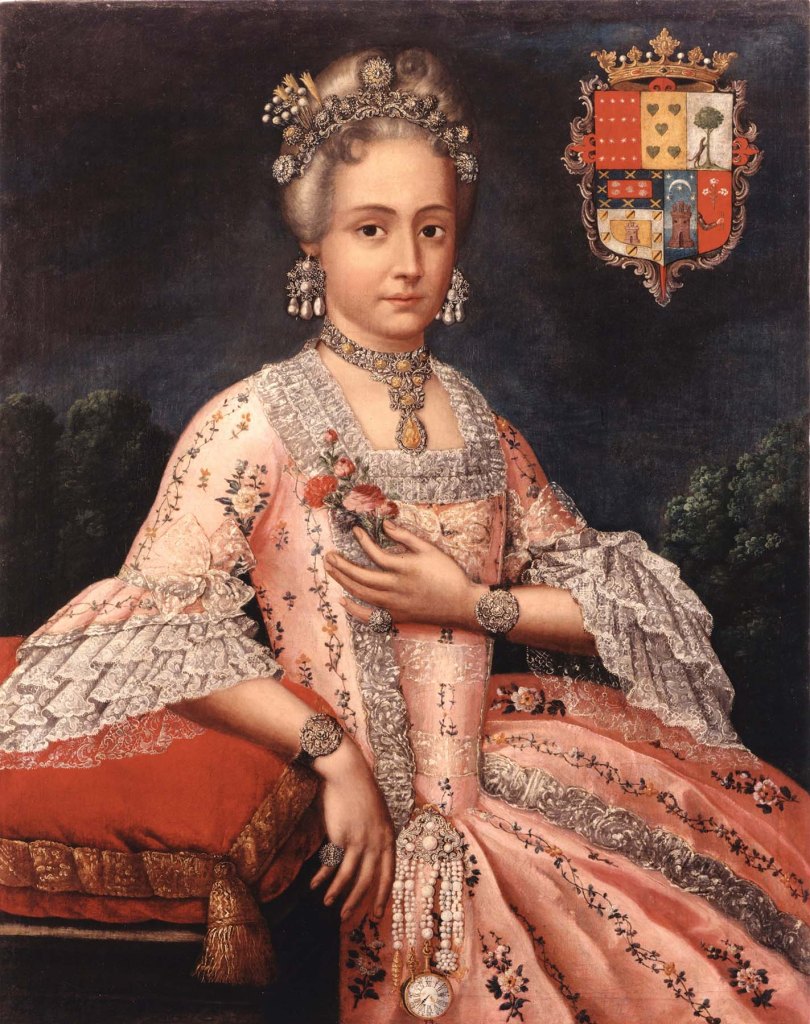
Spanish legal codes institutionalized patriarchal norms, ensuring that women had limited legal rights and were subordinate to male authority. Under colonial law. For example, women remained under their father’s legal control until the age of 25. Once married, a woman was legally subject to her husband, with no control over property or decision-making. A woman’s sexual purity was directly tied to family honor, and any deviation from societal expectations could result in public disgrace or rejection.
Marriage was one of the most important institutions in colonial society, as it helped preserve social order and reinforce racial hierarchy. A woman’s virtue and chastity were critical to her family’s reputation, and proper public behavior was expected at all times. Women were required to be modest, obedient, and deferential, ensuring that patriarchal values remained intact. In New Spain, marriage was not just a personal matter—it was a key tool for maintaining social and economic stability. Dowries played a crucial role in marriage negotiations, as they consisted of money, property, or goods given to a groom’s family to secure a marriage. A larger dowry increased the likelihood of a woman marrying into wealth and social prestige. Spanish and noble indigenous women often had substantial dowries, making them desirable marriage partners for conquistadors, colonial bureaucrats, merchants, and hacendados (landowners). Noble indigenous women who married Spanish men could achieve a higher status similar to Spanish women. Common indigenous and mixed-race women, however, had little economic opportunity and no chance of “marrying up”. For many lower-class women, economic survival often meant working as food vendors, domestic servants, or street peddlers, as they lacked the financial means to secure advantageous marriages.
Although most women’s lives were dictated by marriage and family, some sought alternatives through religious life. Convents served multiple roles in colonial society, offering some women an escape from marriage and domestic obligations. Elite women from wealthy families entered convents to pursue a life of prayer, education, and spiritual training. Convents became centers of education, where women could study reading, writing, and religious doctrine—opportunities largely unavailable to secular women. Some convents operated as “Recogimiento de Mujeres”, institutions dedicated to reforming marginalized women, such as those abandoned, mistreated, or living in poverty.
Nuns in these convents worked to “correct” the behavior of these women, preparing them for marriage, domestic service, or religious life. Despite their religious focus, nuns often held significant influence in colonial society, as convents played a role in charitable work, education, and even economic ventures. However, even within convents, patriarchal norms were reinforced, as women were still expected to submit to religious authority and male clerical leadership. However, there were exceptions.
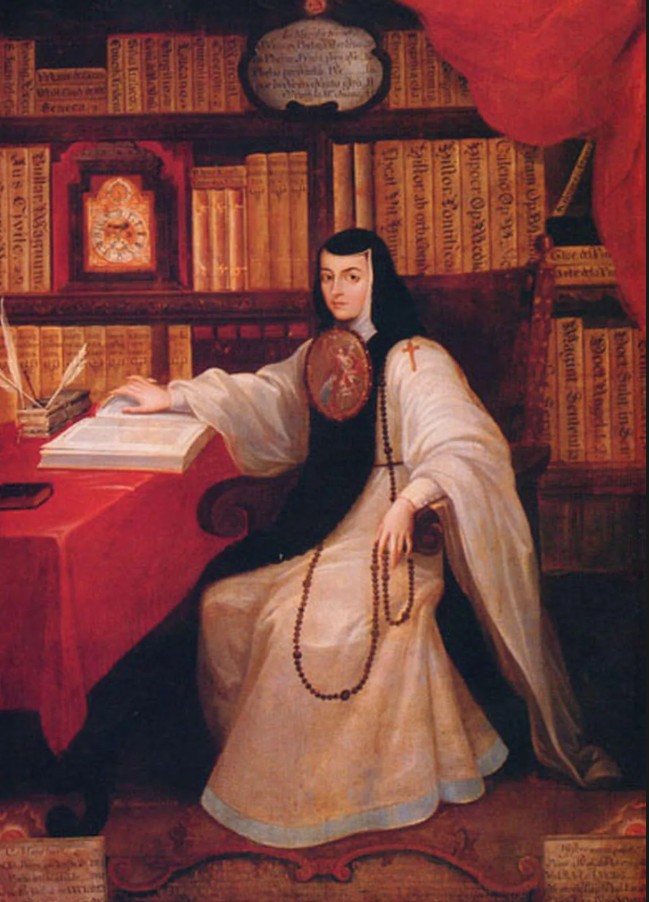
Sor Juana Inés de la Cruz (1648–1695) was one of the most important writers of colonial Mexico. She was a writer, poet, scholar, and nun of the Baroque period, often regarded as one of the earliest feminists in the Americas. Known for her sharp intellect and literary prowess, she championed women’s right to education and self-expression, despite societal and religious constraints. Her works include poetry, plays, and philosophical writings that explore themes of gender, love, and knowledge. Her famous essay Respuesta a Sor Filotea defends a woman’s right to intellectual freedom. Despite facing persecution from the Church, she remains an iconic figure in Latin American literature and feminist history.
For some women, convents provided an alternative path, either as safe havens for elite women or as institutions that sought to reform marginalized women. However, the colonial system ensured that women—especially indigenous and mixed-race women—remained subordinate within the social hierarchy of New Spain. This deeply entrenched gender order persisted long after colonial rule, shaping Mexican society for centuries to come.
The Colonial Church in New Spain: Evangelization, Conflicts, and Economic Power
The Catholic Church played a crucial role in shaping New Spain, not only as a spiritual institution but also as a political and economic powerhouse. From the moment the Spanish arrived in the Americas, they sought to establish a religious structure that would help consolidate their control. However, the secular clergy, who were meant to oversee the episcopal hierarchy under bishops, proved largely inadequate. Many lacked formal education, including the ability to read and write Latin, making them incapable of defending Catholic doctrine during the Protestant Reformation in Europe.
As a result, the Spanish Crown turned to the regular clergy—mendicant orders such as the Franciscans, Dominicans, Augustinians, and Jesuits—who were better trained in missionary work, religious education, and indigenous evangelization. These religious orders, particularly the Jesuits, were highly disciplined and well-versed in philosophy, theology, and education, making them more effective in spreading Christianity in New Spain.
The official missionary stage in Mexico began with a papal decree issued by Pope Adrian VI in 1522, known as the Omnimoda, which allowed Charles V to use regular clergy as the primary evangelization force in the Americas. This led to the rapid expansion of missionary activity, beginning with the arrival of the Franciscans in 1524, followed by the Dominicans in 1526, the Augustinians in 1533, and the Jesuits in 1568. By 1559, missionary efforts had resulted in the establishment of:
- 380 Franciscans
- 212 Dominicans
- 210 Augustinians
The Franciscans were known for their aggressive conversion methods, often baptizing large numbers of indigenous people before fully instructing them in Christian teachings. This “baptism-first, education-later” approach was criticized by the Dominicans, who believed that religious instruction should precede baptism. Despite these theological debates, the Franciscans played a pivotal role in indigenous education, setting up schools, convents, and missions throughout Mexico.
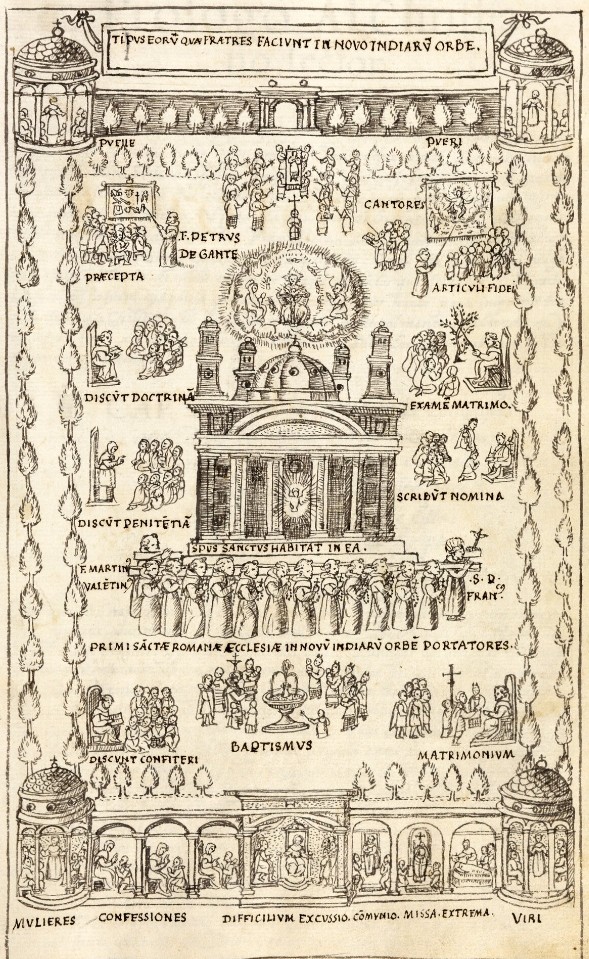
One of the most important figures in indigenous education was Fray Pedro de Gante, a Flemish Franciscan who arrived in New Spain in 1523. He founded a school in Texcoco, where he taught catechism, reading, and mathematics in Nahuatl, the language of the region’s indigenous people. This eventually led to the establishment of the Colegio de Santa Cruz Tlatelolco in 1536, one of the first institutions dedicated to indigenous education in the Americas.
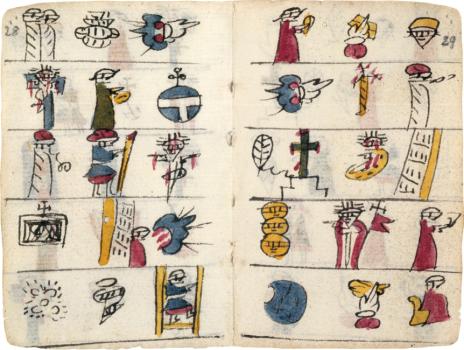
While the regular clergy played a dominant role in early evangelization, their growing influence often clashed with the encomenderos—Spanish settlers who controlled indigenous labor under the encomienda system. Encomenderos viewed themselves as the rightful administrators of indigenous people and their labor.
Missionaries argued that indigenous communities should be under the protection of the Church, not private landowners. The Franciscans were particularly vocal opponents of the encomienda system, calling for indigenous rights and directly challenging the authority of encomenderos. However, as the Spanish monarchy sought to consolidate its own power, the mendicant orders themselves became a threat to royal authority.
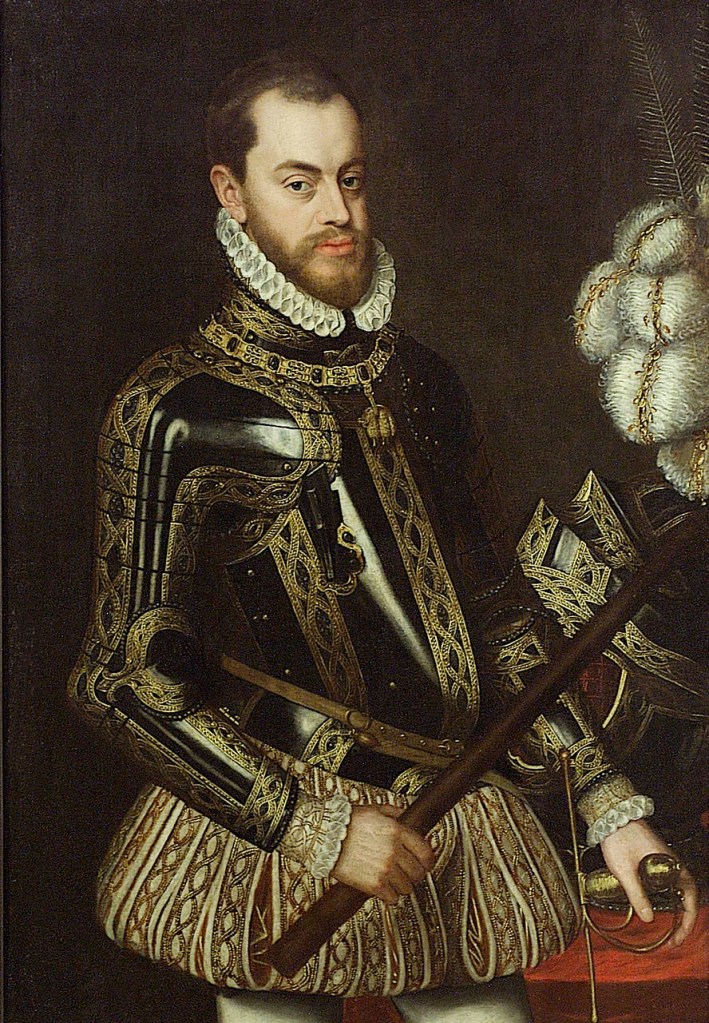
Although missionary orders played a crucial role in evangelization, the Spanish Crown did not want the Church to become too powerful. The Franciscans, for example, occasionally bypassed royal authority, appealing directly to the Pope in Rome. This undermined the Crown’s control over the Church, prompting Philip II to impose restrictions. In 1574, Philip II issued the Ordenanza del Patronazgo, which made the Spanish Crown the intermediary between the Pope and the clergy, reducing the independence of mendicant orders. It forced members of the regular clergy to return to urban monasteries, restricting their ability to operate in rural indigenous parishes. It also strengthened the episcopal hierarchy, ensuring that bishops and secular clergy—loyal to the Spanish Crown—held more authority.
Alongside the Ordenanza del Patronazgo, the Spanish monarchy introduced the Inquisition in New Spain in 1571. Originally created to combat heresy in Spain, the Holy Office of the Inquisition expanded in New Spain, regulating moral and religious behavior. While early efforts focused on screening Spanish emigrants for their Catholic orthodoxy, by 1650, the Inquisition had broadened its scope, targeting:
- Bigamy (marrying more than one person)
- Sorcery and witchcraft
- Solicitation of sexual favors by priests
- Blasphemy and deviations from Catholic doctrine
New Spain’s Inquisition records reveal that the Church played an active role in policing religious and secular life, ensuring that Catholic orthodoxy remained central to colonial society.
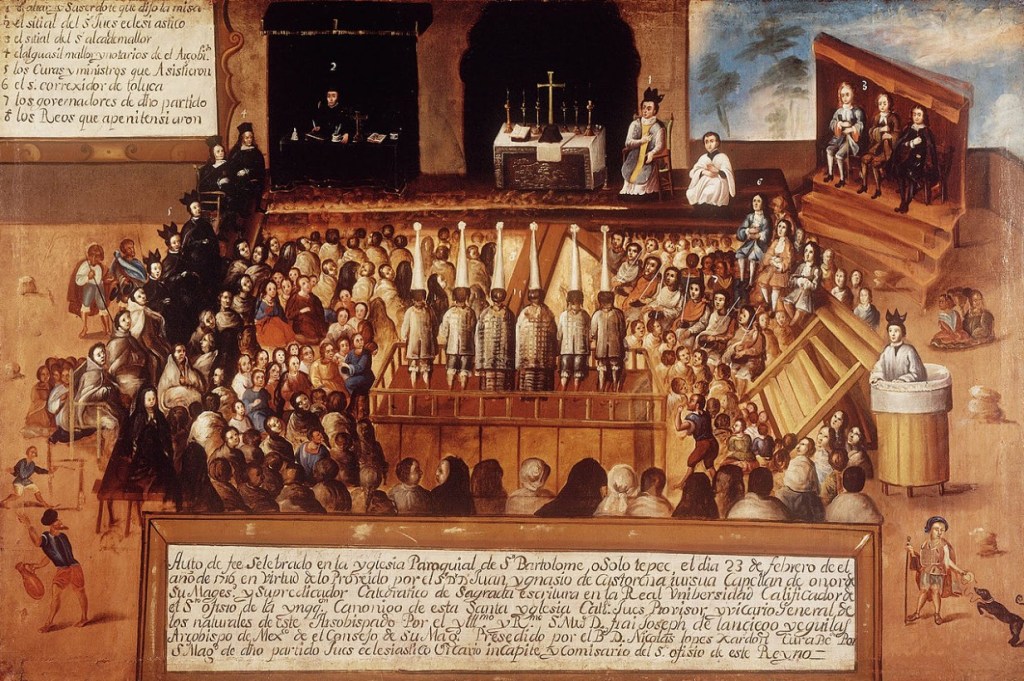
Over time, the Catholic Church in Mexico became one of the largest landowners and an economic powerhouse in New Spain. The Jesuits, in particular, controlled highly productive haciendas, amassing significant wealth through agricultural production. Additionally, elite criollo (Mexican-born Spanish) families formed strong ties with the secular clergy, ensuring that family members entered the priesthood to gain influence within the Church. The Church also became New Spain’s primary banking institution, financing landowners, merchants, and colonial enterprises.
The Church’s wealth came from multiple sources, including:
- Diezmos (tithes) – A 10% tax on agricultural production, paid by farmers and landowners.
- Primicias – A tax on the first harvest and firstborn farm animals.
- Fees for religious sacraments – Payments for baptisms, marriages, and funeral masses.
The growing power of the Church and its close connection to criollo elites would later fuel tensions between church, state, and colonial elites, playing a major role in Mexico’s independence movement in the 18th and 19th centuries.
One of the most enduring legacies of Catholicism in Mexico is the devotion to the Virgen de Guadalupe, which shaped Mexican spirituality, culture, and politics. The apparition of the Virgen de Guadalupe in 1529/1531 at Tepeyacac (modern-day Basilica of Guadalupe, north of Mexico City) to Juan Diego, a Nahua convert, played a pivotal role in Christianization. As a miraculous apparition of the Virgin Mary speaking in Nahuatl, she represented the blending of indigenous and Catholic traditions.
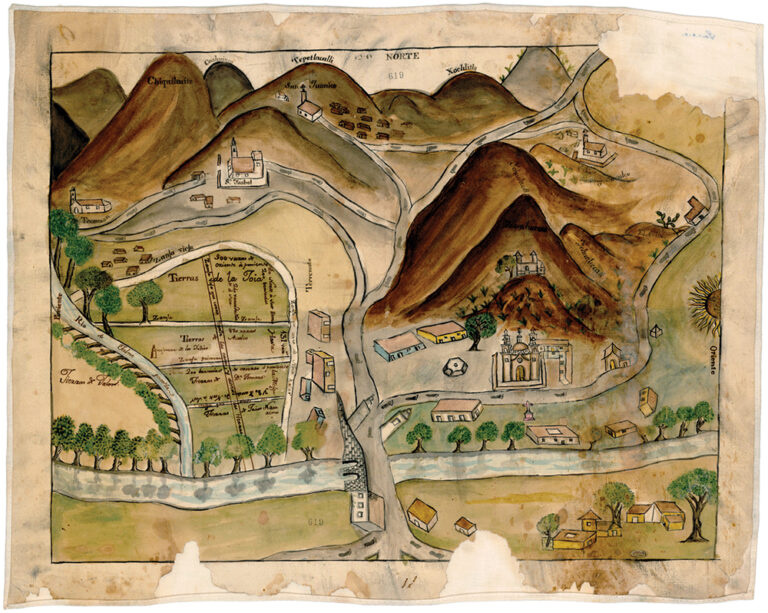
The Virgen de Guadalupe became a powerful symbol of unity, faith, and resistance, particularly during Mexico’s War of Independence in 1810. Father Miguel Hidalgo, the leader of the rebellion, carried a banner featuring the Virgen de Guadalupe, symbolizing indigenous and mestizo identity since she appeared to a Nahua, emphasizing that she was the Mother of all Mexicans, not just Spaniards. She also signified resistance against Spanish colonial rule. The Spanish authorities venerated Our Lady of the Immaculate Conception, a European figure. The Virgen de Guadalupe became a counter-symbol, representing a distinctly Mexican faith. Finally, she provided religious justification for rebellion. As the spiritual mother of Mexico, her image legitimized the independence movement.
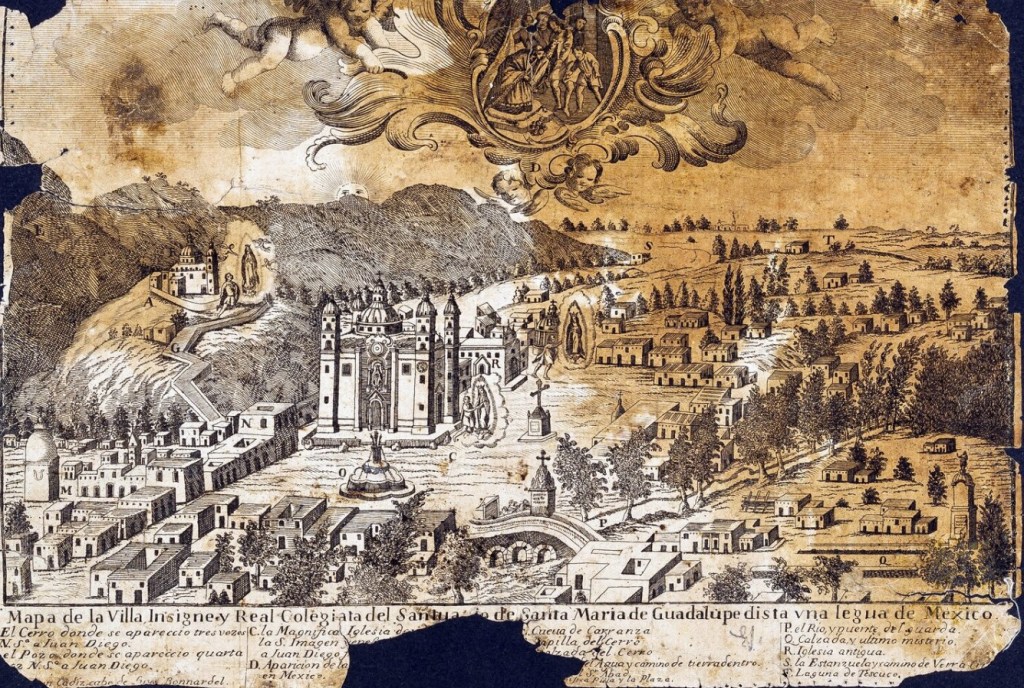
The Catholic Church in colonial Mexico was a dominant force in religious, political, and economic life. It led evangelization efforts, clashed with Spanish landowners and the Crown, and eventually became one of the most powerful institutions in New Spain. The Virgen de Guadalupe’s legacy transcended the colonial period, becoming a national symbol that continues to shape Mexican identity and social movements today.
Colonial Culture
New Spain’s culture was a dynamic fusion of European, indigenous, and African influences, resulting in unique artistic, literary, culinary, and musical traditions. Art and architecture blended Baroque grandeur with indigenous craftsmanship, literature flourished with works in Spanish and Nahuatl, cuisine combined native and foreign ingredients, and music and dance created lasting traditions that continue to shape modern Mexico. These cultural legacies remain central to Mexican national identity today.
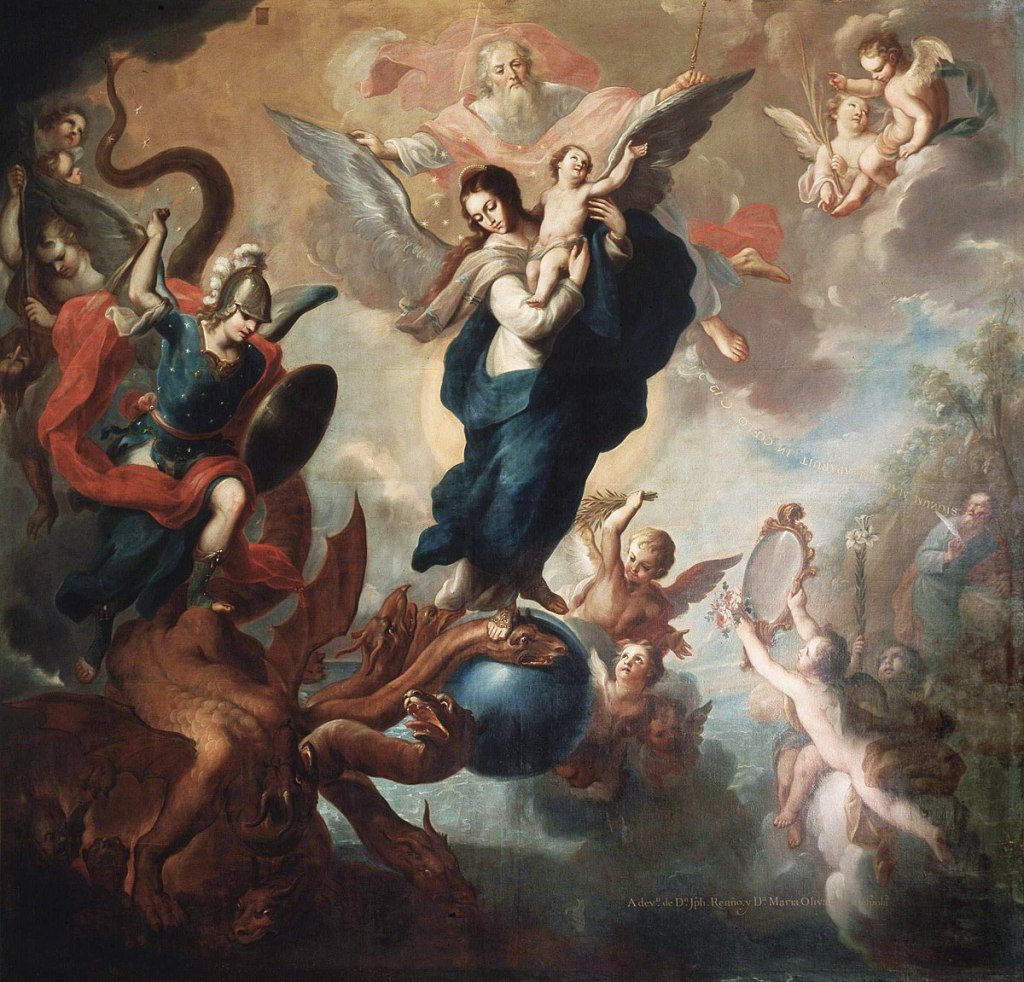
New Spain art blended European religious themes with indigenous symbolism and materials, producing visually stunning pieces that reflected the hybrid nature of New Spain’s culture. Spanish religious paintings were introduced by missionaries to educate indigenous people in Christian doctrine. Over time, indigenous artists created their own interpretations, using bright colors and local symbolism. Miguel Cabrera (1695–1768), a celebrated Mexican painter, created masterpieces like The Virgin of the Apocalypse and Sor Juana Inés de la Cruz’s Portrait.
Casta paintings, a unique genre, developed in New Spain, these paintings depicted the racial hierarchy of the colonial caste system, categorizing people based on their mixed racial backgrounds. The “Las Castas” series, commissioned by the Spanish elite, illustrated racial mixtures. Indigenous artisans used their pre-Hispanic skills to create stunning Christian artworks using feathers, gold leaf, and local materials.
The Spanish built grand cathedrals, monasteries, and civic buildings, incorporating Baroque, Mudejar (Moorish-Spanish), and indigenous elements. Baroque churches, characterized by ornate facades, gold-covered altars, and elaborate carvings, were centers of colonial religious life. The Metropolitan Cathedral of Mexico City (begun in 1573) is one of the largest and most magnificent Baroque structures in the Americas. Monasteries and missions were established by Franciscans, Dominicans, and Augustinians to evangelize indigenous people. The Monastery of San Agustín in Acolman, built in the 16th century, showcases Renaissance and indigenous influences in its frescoes and structure. Indigenous laborers incorporated Mesoamerican motifs into Spanish buildings. Many colonial churches feature indigenous stone carvings of local flora, fauna, and Aztec glyphs. This is exemplified by the Church of Tonantzintla (Puebla), where indigenous artists filled the interior with Nahuatl and Christian iconography.
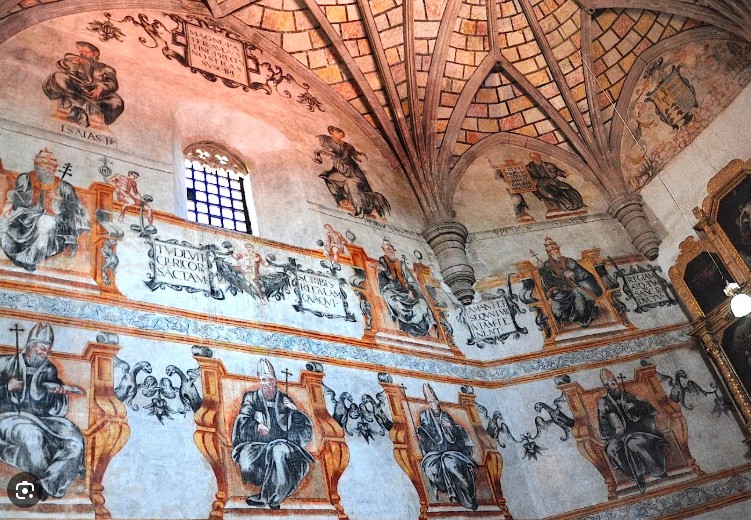
Colonial literature reflected the intellectual, religious, and political concerns of the time. It included poetry, historical chronicles, and philosophical works.Spanish friars documented indigenous cultures, languages, and history, creating some of the earliest ethnographic works. For example, Fray Bernardino de Sahagún’s Florentine Codex (1577) recorded Nahuatl history, customs, and the impact of Spanish conquest. With the introduction of the Latin alphabet, indigenous scribes began writing in Nahuatl, Zapotec, and other native languages using the Latin alphabet. The Huejotzingo Codex (1531), written in Nahuatl, was used in legal disputes to defend indigenous land rights. The first printing press in the Americas was established in Mexico City in 1539, allowing for the spread of religious texts, educational materials, and political documents.

The Columbian Exchange dramatically changed Mexican cuisine, as Spanish ingredients mixed with Mesoamerican staples, creating new flavors, dishes, and cooking techniques. Mesoamerican staples ingredients included corn, beans, chili peppers, tomatoes, cacao, vanilla. European imports were represented by wheat, sugarcane, beef, pork, dairy, rice, and various fruits. African contributions inncluded plantains, yams, and okra, introduced through the transatlantic slave trade. The mixing of these foods led to the creation of iconic dishes. For example, mole which is a rich sauce combining chocolate, chili peppers, nuts, and spices. Mole poblano, is believed to have been created by nuns in Puebla in the 17th century. Spanish meat and cheese were incorporated into traditional indigenous corn-based foods such as tamales. Thick maize-based drinks, such as atole and champurrado, were often flavored with cinnamon and chocolate.
New Spain’s music and dance fused Spanish, indigenous, and African rhythms, creating new musical traditions that influenced later Mexican music genres. Villancicos, Spanish-style religious hymns were performed in churches and convents. Nahuatl-speaking choirs performed Christian hymns with drums, flutes, and traditional instruments. Danza de los Voladores (Dance of the Flyers), a pre-Hispanic ritual dance where performers descend from a tall pole while playing flutes and drums, was Christianized by incorporating Catholic symbolism. The Jarabe Tapatío (Mexican Hat Dance), a dance that emerged from Spanish and mestizo traditions, eventually becoming Mexico’s national dance. Instruments Introduced by the Spanish would also find their integration. The guitar and violin became essential instruments in Mexican folk music. The harp was used in early mariachi and Jarocho music. Finally, percussion and syncopated rhythms from African were incorporated into Afro-Mexican musical traditions.
In Closing
As you have learned, Spain swiftly consolidated its new territories by implementing a structured colonial system rooted in Iberian governance traditions and Caribbean administrative models. To maintain control, Spanish authorities blended European governance with indigenous political structures, leveraging native elites while imposing Spanish legal and bureaucratic frameworks. Urban-centered administration and Catholic missionary efforts, led by Franciscans, Dominicans, and Augustinians, reinforced colonial stability through religious and cultural transformation. This hybrid approach dismantled the indigenous imperial system while repurposing its institutions, shaping a colonial society that would endure for three centuries.
 World History Portal


