ORDER AND PROGRESS AT A COST
| INTRODUCTION The rise of Porfirio Díaz brought control of Mexico to moderate liberals. Their political philosophy would center around positivism. The positivist motto was liberty and progress through peace and order. From the positivist perspective, only a strong government could prevent endemic revolutions and anarchy. Indigenous populations under Díaz and positivists were viewed as a cultural and social burden and an impediment to modernization. To move Mexico towards modernization, Díaz would rely extensively on foreign capital and technology. This investment in turn would help restore the silver mines, develop oil, and promote the commercialization of certain crops (cotton, rubber, henequen, and coffee). However, this project would come with a cost that would be burdened by the majority of Mexico’s population. LEARNING OBJECTIVES *Assess the political and economic reforms introduced by Porfirio Díaz, with particular focus on how modernization efforts under his rule favored elites while suppressing civil liberties. *Examine how authoritarian governance under Díaz, despite promoting industrial growth, contributed to deep social inequality and political unrest. *Trace the development of widespread public discontent under Díaz and explain how these tensions ultimately led to the eruption of the Mexican Revolution. |
El Porfiriato: Consolidating Power
In 1876, Lerdo ran for reelection against a resurgent Porfirio Díaz. Rallying behind the cry of “No Reelection”, Díaz launched a second rebellion against the government called the Rebellion of Tuxtepec. Unlike the Plan of La Noria, this new one was successful and won Díaz the presidency.
Lerdo eventually fled to the United States where he died in 1889. The authoritarian form of government developed under Díaz seemed like a practical solution to the chaos and disorder Mexico had experienced throughout the first two-thirds of the 19th century. Certainly, for the “Cientificos”, a group of officials who served Díaz’s regime as advisors, this was the solution. They advocated “the sacrifice of individual liberty on the altar of political stability.”
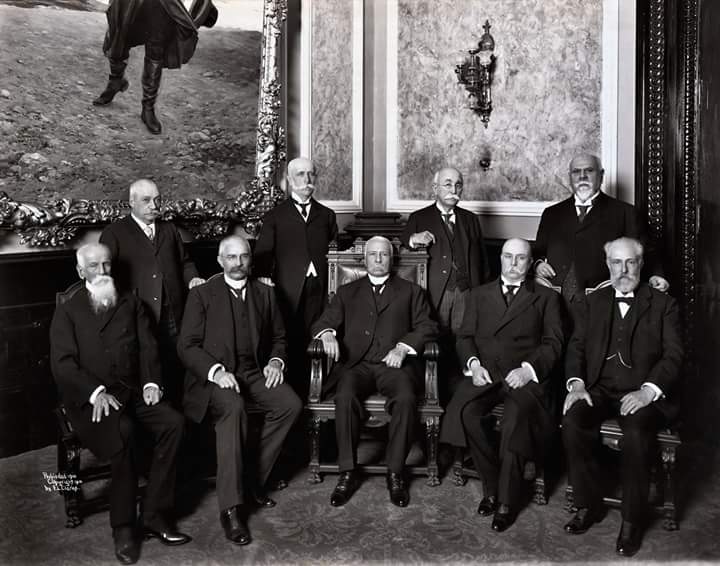
As president of Mexico, Diáz sought to consolidate his power by placing his supporters in key state and local political offices. Implementing a constitutional amendment that allowed for Mexico’s president to appoint provisional governors and to organize local elections, Díaz was able to place his political allies in these positions by influencing the outcome of elections. Díaz also negotiated political alliances with powerful governors creating political networks called camarillas.
Furthermore, he usurped traditional village autonomy by having his political allies appoint jefes politicos (municipal heads) and comisarios de policía (police chiefs). Díaz also influenced the election of congressional candidates handpicking them and ensuring their election. The federal judiciary did not escape Díaz’s grasp. Through his appointment or dismissal of federal judges Díaz secured its loyalty.
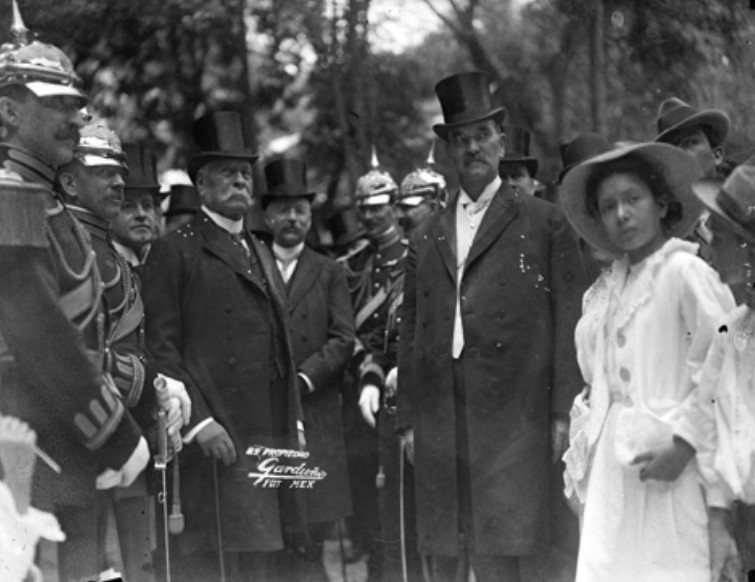
Díaz gained control of the countryside by enlarging the corps of the rurales, a rural police corps which had been created by Benito Juárez. They did little to bring peace to the countryside as rurales were used as strikebreakers and as protectors of foreign investments. Interestingly enough, Díaz chose to reduce the size of his military. On paper, Díaz commanded the loyalty of his generals. However, acting on the fear that at any point a coup might be delivered, Díaz reduced the military from 30,000 to 14,000. This reduction also meant Díaz could channel resources to other areas needed. Díaz believed that the Church could serve him as a powerful ally. Consequently, he curtailed the restrictions placed on the Mexican Church by previous liberal regimes. For example, Díaz allowed for the Church to once again, “stage public ceremonies, teach catechism in public schools, and administer a variety of social welfare programs.”
El Porfiriato: Toward Modernization
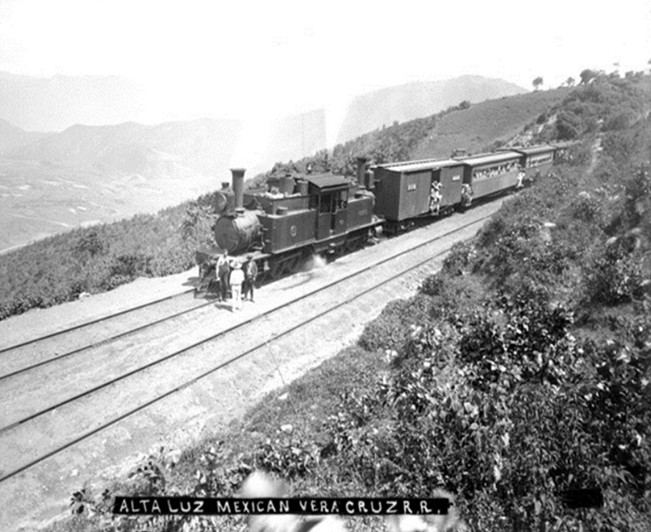
Díaz was fully aware that Mexico’s economy could only be stimulated with foreign capital. The political and economic instability that plagued Mexico since its independence from Spain had stagnated economic growth through most of the 19th century. Development and modernization, Díaz believed, would not only require foreign capital but equally important, the establishment of a communication network in the form of railroads. Díaz next signed a series of contracts with US firms which granted them the authority to begin constructing railroads across Mexico. Private contractors put down about 24,560 kilometers of railroad between the years 1880 and 1910. This fostered a transportation revolution, but at a cost. U.S. railroad magnates such as F.S. Pearson received vast amounts of land for their services. Pearson alone received 3.5 million acres in Chihuaha. Prior to the coming of railroads, goods in Mexico had been shipped via roads with carts and mules making transporting resources slow and expensive. The railroad network created in Mexico dropped shipping costs tremendously, by about 90%, and increased accessibility throughout Mexico. It also stimulated the rise of land values and facilitated the shipping of industrial minerals throughout Mexico.
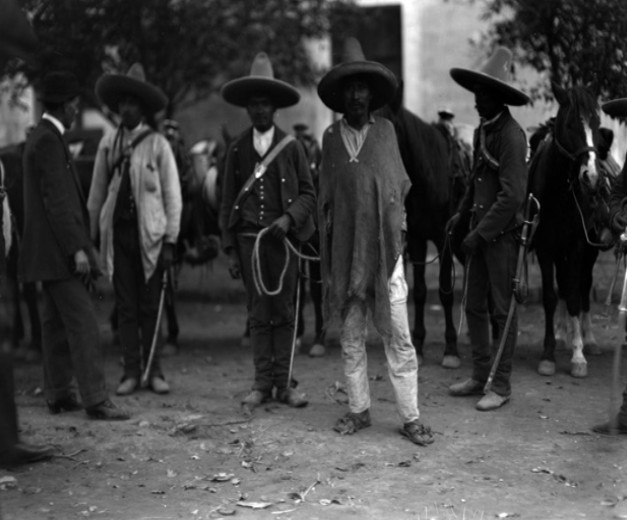
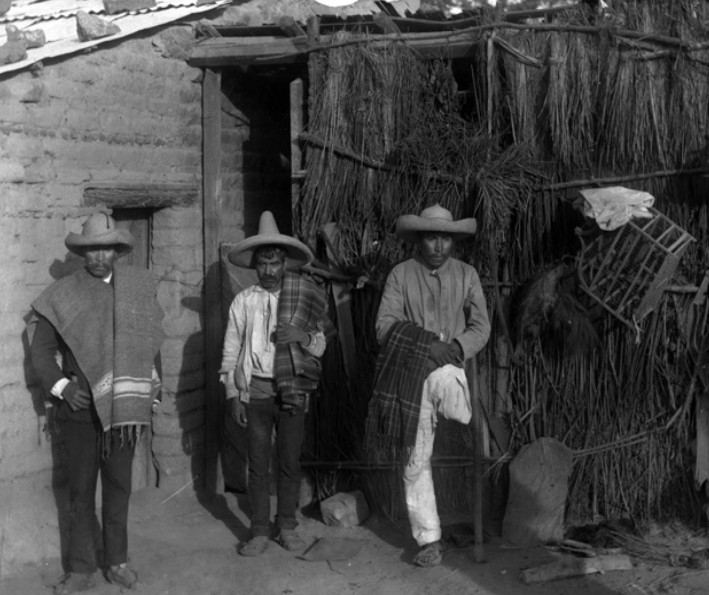
To improve Mexico’s foreign relations and attract foreign capital, Díaz paid off Mexico’s foreign debt. Foreign mining companies were also invited by Díaz to invest in Mexico. To attract these companies, concessions were granted which included the non-payment of federal and state taxes (for 20 years) or export taxes/customs duties (for 50 years). As a consequence of Mexico’s modernization program, agriculture became commercialized. Thus, land consolidation became a priority in Mexico. Idle public land once accessible to peasants was sold at auction. From1878 to 1908 a total of 45,000,000 hectares of public land once accessible to peasants were in private hands. This focus displaced many campesinos. Village communal landholding was also attacked which also displaced many village farmers. Mexico’s rural poor did not reap any benefits from the economic progress witnessed under Díaz’s leadership.
In 1908, the American journalist James Creelman published an interview with Porfirio Díaz in Pearson’s Magazine. During this interview, Díaz explained, “I have waited patiently for the day when the people of the Mexican Republic would be prepared to choose and change their government at every election without danger of armed revolutions and without injury to the national credit or interference with national progress. I believe that day has come.”
In this interview, Díaz gave the impression to its readers that he might be ready to step down from power at a time when grievances against the regime were mounting from all sectors of Mexican society. This, however, would not be the case.welfare programs.”
Growing Discontent
Mexico’s economy had witnessed unprecedented growth under the Díaz regime. However, this growth focused on the expansion of its export economy. Fueling this growth was a strong demand from overseas for minerals, cotton, and other commodities extracted or produced throughout Mexico’s territories. By the early 1900s, there was a general decline in demand for Mexico’s exports and this would have a devastating effect on the economy. Adding to Mexico’s economic woes was the declining price of silver, another major export. With the peso being devaluated, and commercialized agriculture dominating the Mexican countryside, peasants and workers were hit exceptionally hard by the rise in food prices. In large part, this was due to Mexico’s need to import food because of commercialized agriculture. In the end rising food prices combined with lowered salaries and layoffs began to fuel tension in work environments.
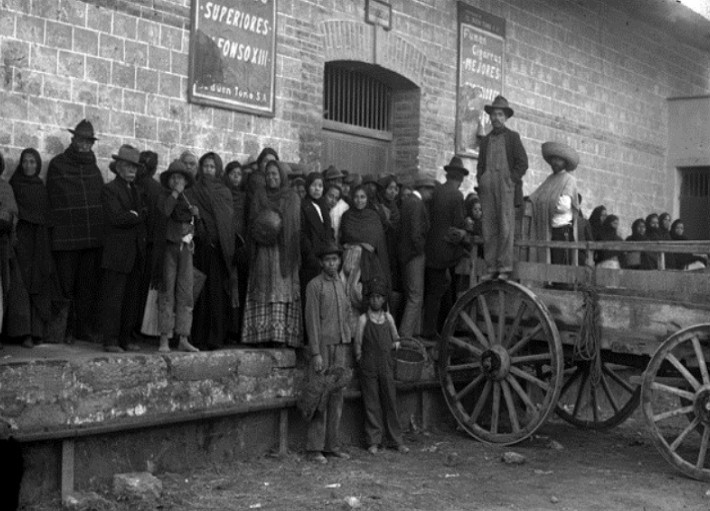
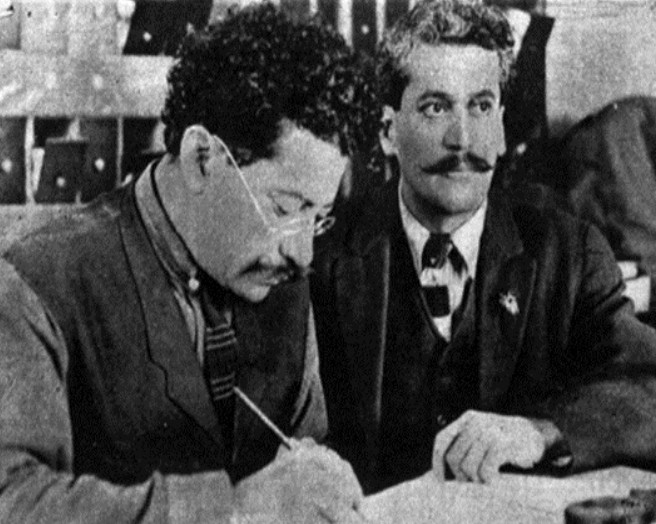
Labor organizations and unions were the response to these declining economic conditions. In 1905, for example, textile workers in Orizaba formed the Gran Circulo de Obreros Libres (GOCL) and pressed for a 5% increase in their wages. In 1906, textile workers at Rio Blanco joining with the GOCL went on strike. Díaz responded with military force as 70 workers were killed and six union leaders were executed. This violent suppression fueled new strikes, a total of sixty-five between the years 1907-1909. In 1906, the Partido Liberal de Mexico (PLM) was formed under the auspices of Ricardo Flores Magón and Antonio Díaz Soto y Gama. Magón was a journalist-politician from Oaxaca who regularly criticized Díaz’s regime. Forced to flee to the United States, Magon and his followers published a politically charged paper called Regeneración. The PLM issued a reform manifesto from the United States that pushed for “a four-year presidential term, a minimum wage, an eight-hour workday, and the end of child labor.” The pro-labor ideology of the PLM helped bring unity amongst miners and workers, and along with the Western Federation of Miners, helped fuel Cananea strike of 1906.
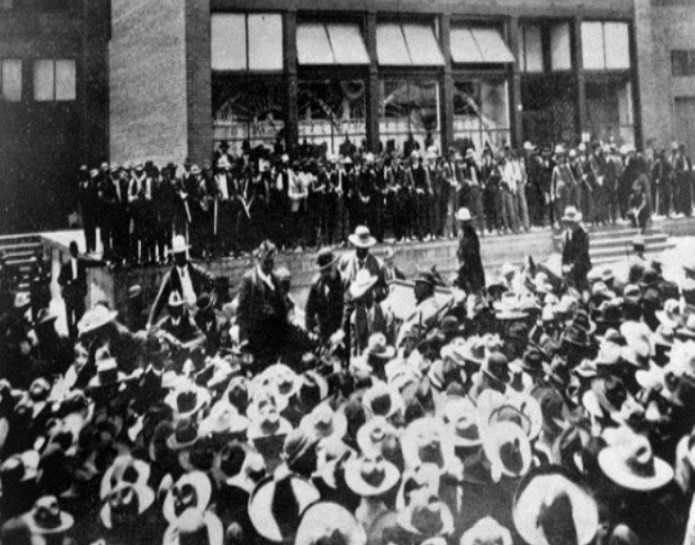
The outcome of the Cananea strike became a political scandal for Díaz. As tensions escalated into violence at Cananea, Colonel William C. Greene, the mine’s owner, requested the assistance of the Arizona Rangers. American forces, combined with Rurales and Mexican troops, broke the strike. The response throughout Mexico was public outcry and solidarity with the workers. Keeping a close eye on these events was the son of a wealthy landowner from Coahuila, Francisco Madero.
Women under El Porfiriato
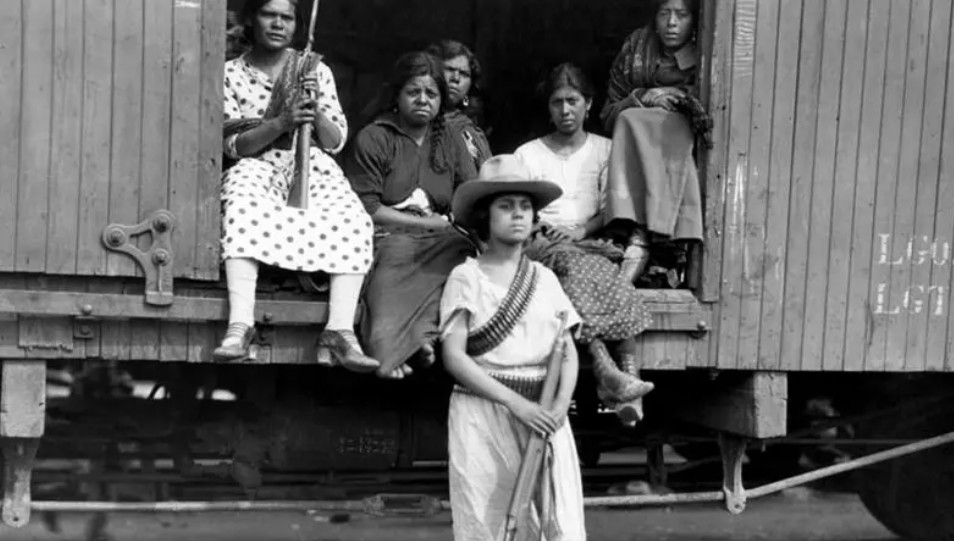
During the rule of Díaz, women in Mexico experienced a complex mix of restriction, reform, and emerging activism. The Díaz regime, heavily influenced by European ideals of modernization and patriarchy, promoted a vision of womanhood rooted in domesticity, morality, and obedience. Middle- and upper-class women were expected to be ideal wives and mothers, confined largely to the private sphere, while their education focused on religious instruction, etiquette, and household management. However, the economic and social changes brought on by rapid industrialization and foreign investment began to reshape the lives of many women, especially those from working-class and rural backgrounds. As factories, railways, and mines expanded, women increasingly entered the workforce as laborers, often enduring long hours, low wages, and dangerous conditions.
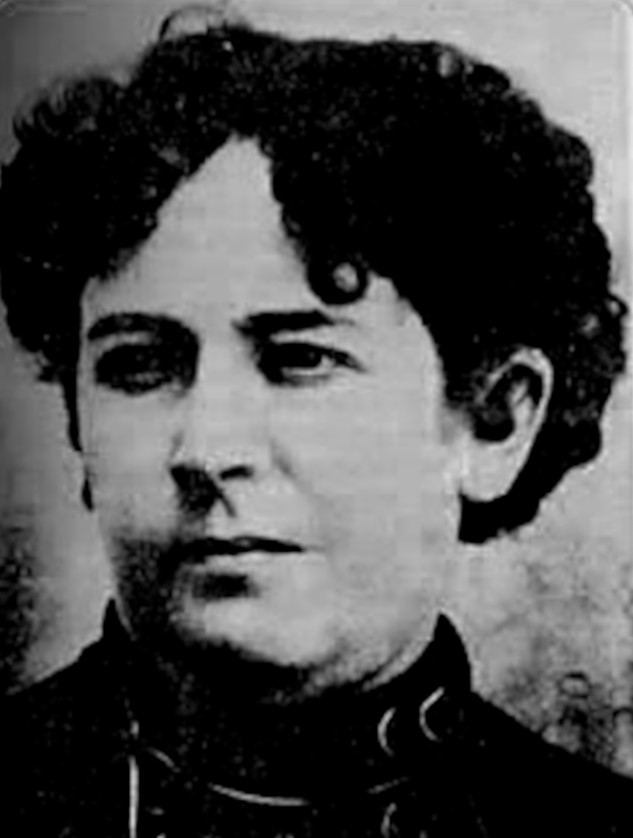
Despite these hardships, Díaz’s era also saw the rise of early feminist voices and social reform movements. Educated women such as Dolores Jiménez y Muro, Juana Belén Gutiérrez de Mendoza, and Hermila Galindo began advocating for women’s rights, education, and political participation, often through underground newspapers and intellectual circles. While they faced censorship and repression, their efforts laid the groundwork for feminist organizing that would gain momentum during and after the Mexican Revolution.

At the same time, rural and Indigenous women endured the harshest realities of the Porfirian regime, as land dispossession, debt peonage, and social inequality worsened their living conditions and deepened gender-based marginalization.
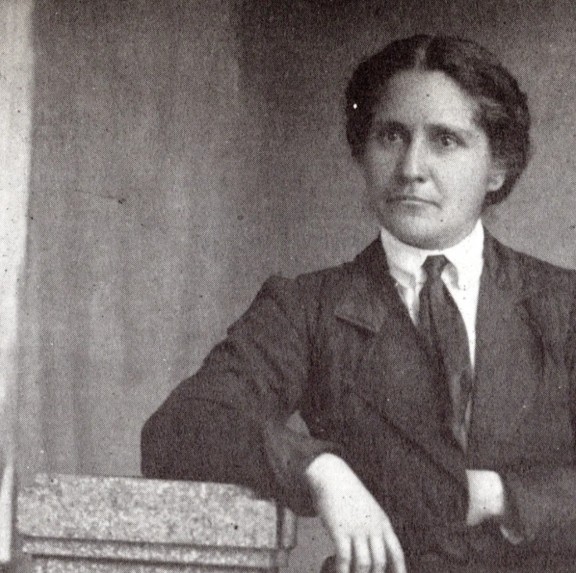
Overall, women during the Porfiriato were both confined by traditional roles and empowered by new opportunities to challenge them. The contradictions of this period—between domestic ideals and economic necessity, repression and resistance—gave rise to a growing consciousness among Mexican women, many of whom would later become active participants in the revolutionary movement that overthrew Díaz’s regime.
Culture during El Porfiriato
During Díaz’s rule, Mexican culture was marked by a deep contradiction: an elite-driven embrace of European modernity and refinement on one hand, and the marginalization of Indigenous and rural traditions on the other. Díaz’s regime prioritized order and progress, promoting industrialization, urban development, and foreign investment, all of which were reflected in the cultural tastes of the ruling class. Influenced heavily by French aesthetics and values, elite culture during this era mirrored European high society, evident in architecture, fashion, and intellectual life. Lavish opera houses, French-style boulevards, and academic institutions flourished in Mexico City and other urban centers, symbolizing the regime’s desire to present Mexico as a “civilized” and modern nation.
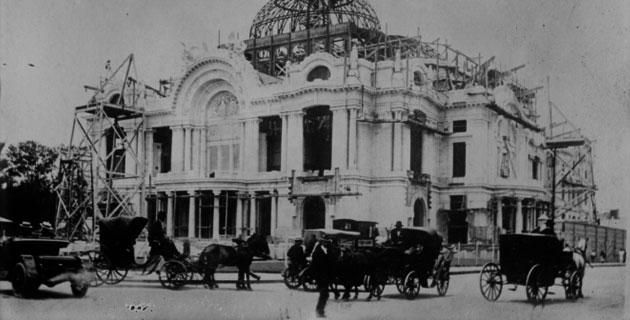
The arts and literature of the Porfiriato celebrated themes of nationalism and scientific progress, but often catered to upper-class audiences. The philosophy of Positivism, promoted by thinkers like Gabino Barreda and Justo Sierra, shaped education and governance, emphasizing rational thought, social hierarchy, and centralized authority. The regime used culture as a tool of legitimacy, sponsoring public works, monuments, and international exhibitions that glorified Díaz’s leadership and Mexico’s supposed ascent on the world stage.
However, beneath this polished surface, the vast majority of Mexicans—especially Indigenous peoples and peasants—were excluded from the cultural life of the nation. Their traditions, languages, and social realities were largely ignored or actively suppressed. Folklore, popular music, and Indigenous customs persisted in rural areas but were deemed backward by the regime’s urban elite. As a result, the cultural divide between the privileged and the marginalized widened, fueling the discontent that would eventually explode in the Mexican Revolution.
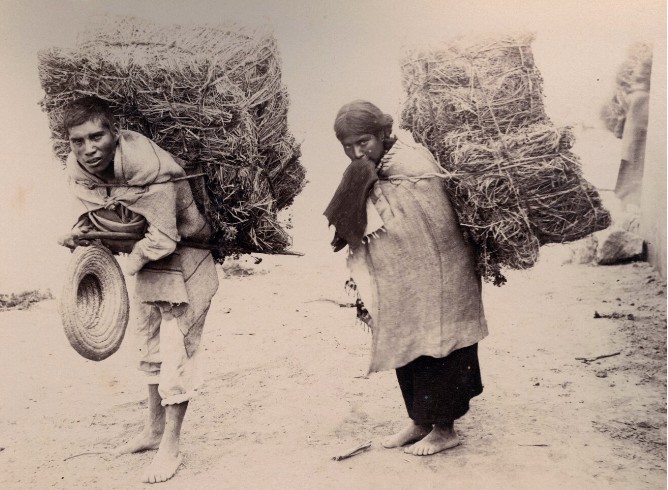
Thus, Mexican culture during the Porfiriato was one of dualities: cosmopolitanism vs. Indigenous heritage, elitism vs. popular tradition, and artistic expression vs. political propaganda. It was a period that sought to reshape Mexico’s identity in the image of Europe—while inadvertently sowing the seeds for cultural resistance and revolutionary change.
In Closing
One can argue that the Mexican Revolution, as the first major social and political upheaval of the 20th century, was fueled by long-standing inequalities that worsened during Porfirio Díaz’s 35-year authoritarian regime. Although Díaz pursued modernization through economic and political reforms, these efforts mainly benefited the elite, deepening class divisions. Guided by his technocratic advisors, the científicos, Díaz prioritized stability and industrial growth over civil liberties—ultimately triggering the widespread discontent that led to revolution.
 World History Portal