20th CENTURY CONCLUSIONS
| INTRODUCTION The conclusion of Lázaro Cárdenas’s presidency in 1940 signaled a pivotal turning point in Mexico’s political and economic trajectory. Many historians interpret this moment as the symbolic end of the Mexican Revolution, a period marked by sweeping land reforms, labor empowerment, and efforts to redistribute wealth and power. Cárdenas had embodied many of the Revolution’s most radical ideals, and his departure ushered in a more conservative and technocratic phase under his successor, President Miguel Alemán Valdés (1946–1952). This shift raises the enduring historical question: when did the Mexican Revolution truly end? Historian Thomas Benjamin offers a compelling answer, observing that “during the late 1940s, some of Mexico’s most prominent intellectuals pronounced la Revolución dead… no revolution, they argued, is immortal, and Mexico’s more conservative turn under President Miguel Alemán Valdés certainly marked the end of an era in modern Mexican history.” The Revolution, once a force of profound structural transformation, gradually gave way to institutional consolidation and the entrenchment of elite power within the framework of the post-revolutionary state. Yet, what did the Revolution ultimately achieve? In Mexico’s Once and Future Revolution, historians Gilbert Joseph and Jürgen Buchenau argue that although the Revolution redefined the state’s relationship with its citizens and introduced a new rhetoric of nationalism and inclusion, its promises remained largely unfulfilled for many. “The great majority of Mexicans remained in poverty,” they note, “and illiteracy remained high despite the educational crusades of the 1920s and 1930s… [nor] had the political revolution delivered liberty to all.” Thus, by the end of the 1940s, the revolutionary fervor that had once ignited hopes for social justice and equity had largely cooled. What remained was a powerful state apparatus that invoked revolutionary symbolism while gradually abandoning its transformative goals. The Revolution’s climax had been reached, and what followed were the embers of a movement whose ideals persisted more as political rhetoric than as lived reality. LEARNING OBJECTIVES *Analyze the political transition from revolutionary ideals to institutionalized governance. *Identify how the restructuring of the PRM into the PRI in 1946 marked a shift toward centralized power and technocratic governance. *Assess the economic impact and limitations of the Mexican Miracle. *Interpret the causes and consequences of the 1968 student movement. |
PRI – Partido Revolucionario Institucional
In 1940, Lázaro Cárdenas was succeeded by Manuel Ávila Camacho, who would serve as Mexico’s president until 1946. His presidency marked a critical transitional phase in the aftermath of the Mexican Revolution. Unlike his revolutionary predecessors, Ávila Camacho sought not to deepen the revolutionary agenda but to reconcile the divisions it had created. Presenting himself as a man of faith—a Catholic by upbringing—he began to dismantle the fiercely anti-clerical stance that had been a cornerstone of revolutionary policy since the 1917 Constitution. In doing so, Camacho initiated a symbolic and pragmatic rapprochement with the Catholic Church, aiming to stabilize a nation fatigued by decades of ideological and civil conflict.
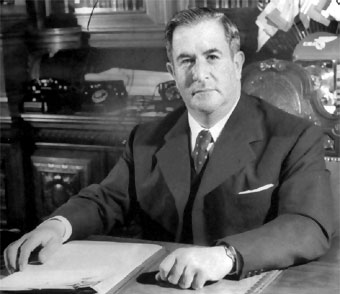
Camacho’s presidency also coincided with a significant external catalyst: World War II. The global conflict opened new economic avenues for Mexico, particularly in manufacturing and agricultural exports to the Allied powers. This wartime demand served as a stimulus for domestic production, giving rise to increased government revenue. Camacho strategically reinvested these funds into industrial development, laying the foundation for the Mexican Miracle—the period of rapid economic growth that would characterize the mid-20th century.
Beyond economic modernization, Camacho used the war as an opportunity to foster national unity. In a powerful display of political reconciliation, he succeeded in bringing together seven former Mexican presidents for the 1942 Independence Day celebrations. This event, rich in symbolism, emphasized the nation’s shift from revolutionary polarization to a centrist, institutionalized order. Gradually, Ávila Camacho moved the ideological framework of the Mexican Revolution away from its radical origins and toward a more moderate, centrist path. His leadership laid the groundwork for a post-revolutionary consensus, in which revolutionary rhetoric remained present, but governance increasingly prioritized stability, industrial growth, and political pragmatism over radical reform.
The shift toward the political center in post-revolutionary Mexico was institutionalized through a significant reorganization of the country’s dominant political party. In 1946, the Partido de la Revolución Mexicana (PRM) was restructured and renamed the Partido Revolucionario Institucional (PRI)—a change that was far more than symbolic. While the language of revolution was retained to preserve a sense of historical continuity and legitimacy, the internal organization of the party increasingly centralized power in the hands of a new generation of technocratic leaders. This emerging elite, known as the licenciados, differed sharply from the military strongmen who had dominated the revolutionary period. Rather than arising from the battlefields, these leaders came from universities, law schools, and bureaucratic institutions, signaling a profound transformation in the nature of political authority in Mexico.
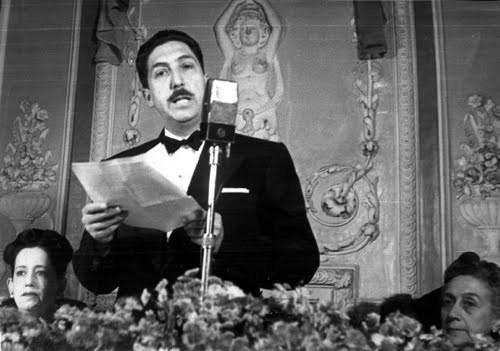
Among the most emblematic figures of this transformation was Miguel Alemán Valdés, who served as president from 1946 to 1952. His administration is widely regarded by historians as a watershed moment in modern Mexican political history. According to Gilbert Joseph and Jürgen Buchenau, “It was under Alemán that the PRI state acquired its well-known characteristics: presidential absolutism, one-party monopoly on power, manipulation of mass organizations, the promotion of a nationalist unifying ideology in place of class and ideological differences, the elimination of the political Left from the official coalition, and state domination of the labor movement.” The institutionalization of power under Alemán marked the consolidation of the so-called “perfect dictatorship”, a term later coined to describe Mexico’s unique blend of authoritarianism cloaked in democratic processes.
Economically, the Alemán administration and its successors were deeply influenced by the dependency theory advanced by Argentine economist Raúl Prebisch, who argued that Latin America’s economic underdevelopment stemmed from its structural dependence on industrialized nations, particularly the United States and Europe. In response, Mexican policymakers embraced Import Substitution Industrialization (ISI) as a pathway to economic autonomy. This model emphasized the development of domestic industry through high tariffs on foreign goods, state investment, and efforts to reduce reliance on imported manufactured products.
Additionally, Mexico sought to diversify its economy by developing tourism and exploiting its natural resources. The outbreak of the Korean War (1950–1953) created new demand from the United States for raw materials such as metals and oil, accelerating Mexico’s industrial and export sectors. This surge in foreign exchange further empowered the Mexican state to invest in infrastructure, education, and industry—hallmarks of what would later be known as the Mexican Miracle, the period of rapid economic growth lasting through the 1970s.
The Mexican Miracle
The period between 1950 and 1973 in Mexico is often referred to as the Mexican Miracle, a phase of sustained economic growth and modernization that transformed the country’s urban and industrial landscape. During these decades, industrial and agricultural productivity surged, accompanied by a rise in real wages, increased investment in education and healthcare, and notable improvements in public health indicators. Both the annual death rate and infant mortality rate declined dramatically, contributing to a demographic expansion that reflected the promise of developmental progress.
However, the “miracle” was far from universal in its effects. Despite the aggregate growth, deep structural inequalities persisted. The benefits of economic expansion were disproportionately concentrated in sectors such as manufacturing, export agriculture, and tourism, often located in urban centers and northern regions. In contrast, southern Mexico, home to many indigenous communities and campesinos, remained marginalized. These populations continued to rely on subsistence agriculture, receiving few of the benefits from state-led industrialization and national development projects.
Historian John W. Sherman, in his article “The Mexican Miracle and Its Collapse,” highlights the ideological and economic shifts initiated under Miguel Alemán Valdés that set the foundation for this period. He writes: “Alemán… profoundly changed the nation’s course by allying the state with moneyed interests, wooing foreign capital, accelerating industrialization, and undoing or mitigating many of the reforms promulgated by Cárdenas.” In this reorientation, the revolutionary legacy of agrarian reform and popular empowerment gave way to a developmentalist model anchored in foreign investment, technocratic governance, and urban industrialism.
Alemán’s pursuit of economic modernization also aligned with Cold War geopolitics. In an explicit effort to cultivate favorable relations with the United States, Alemán proclaimed that “there is no compatibility between communism and mexicanidad.” This ideological stance effectively placed Mexico within the framework of U.S. containment policy, distancing the state from leftist movements and reinforcing conservative political order domestically.
Despite initial successes, Alemán’s administration soon faced mounting criticism as the post-World War II global economy cooled. Sherman points to several interlinked factors: declining commodity prices, rising inflation due to the peso’s devaluation, and growing unemployment, exacerbated by the repatriation of thousands of Mexican braceros no longer needed in the U.S. labor market. Furthermore, as the United States prioritized European reconstruction through the Marshall Plan, Latin America was largely excluded from postwar recovery initiatives. This neglect deepened frustration across the region, revealing the limits of Mexico’s economic dependence on its northern neighbor.
Thus, while the Mexican Miracle symbolized a modernizing and industrializing nation, it also underscored the contradictions of a developmental model that privileged elite interests, marginalized rural and indigenous populations, and became increasingly vulnerable to external economic forces.
The 1968 Summer Olympics
As the Institutional Revolutionary Party (PRI) continued to emphasize modernization and economic development during the mid-20th century, the revolutionary ideals that had once defined early 20th-century Mexico became increasingly distant—more a part of national mythology than of policy. One notable exception to this ideological drift was the long-overdue recognition of women’s political rights. In 1953, the Mexican Congress formally granted women the right to vote, marking a significant milestone in Mexico’s democratization process. While this reform was a progressive step forward, it stood in sharp contrast to the PRI’s general trend of tightening its grip on power and stifling dissent.
The Cuban Revolution (1959), which saw Fulgencio Batista overthrown and Fidel Castro rise to power, triggered ideological tensions within Mexican politics. For a nation that had itself undergone revolutionary transformation, the Cuban experience resonated with many Mexicans—particularly those disillusioned with the increasingly authoritarian PRI regime.
Adolfo López Mateos, president from 1958 to 1964, walked a delicate political tightrope. He expressed solidarity with Cuba by acknowledging the shared revolutionary heritage, stating: “We, who have gone through similar historical stages, understand and value the Cuban effort at change. . . . We trust that the Cuban Revolution will be— just as ours has been— one more step toward the greatness of America.” Nevertheless, in an effort to maintain diplomatic balance, López Mateos refrained from endorsing communism outright, instead advocating for Cuba’s right to national self-determination. This rhetorical ambivalence reflected both domestic divisions and Mexico’s geopolitical position between the United States and Latin American leftist movements.
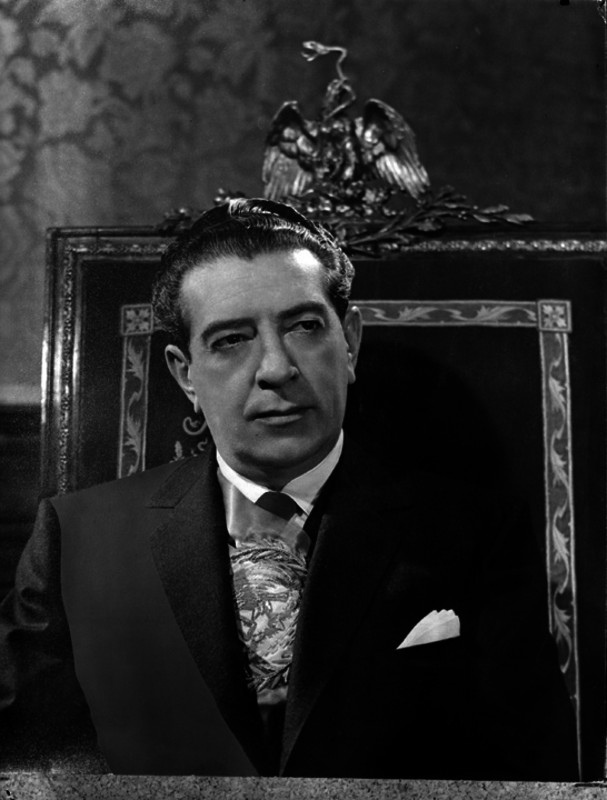
Despite Mexico’s outward embrace of modernization, authoritarianism simmered beneath the surface, particularly during the administrations of López Mateos and his successor, Gustavo Díaz Ordaz. Grassroots dissatisfaction, especially among students, intellectuals, and workers, grew in response to state repression, corruption, and the narrowing of democratic spaces. These frustrations culminated in the 1968 student movement, a watershed moment in modern Mexican history. Using the 1968 Summer Olympics in Mexico City as a global platform, students organized protests calling for substantive reforms. Their demands included the release of political prisoners, university autonomy, the removal of abusive police officials, and the disbandment of the paramilitary riot police (granaderos).
The government’s response was swift and brutal. On October 2, 1968, just days before the Olympics began, the Tlatelolco Massacre unfolded in Plaza de las Tres Culturas, where hundreds of protesters were killed or disappeared in a military-led crackdown. The massacre exposed the deep authoritarianism of the PRI regime and permanently altered its image, both domestically and internationally. For many, the violence marked the definitive rupture between the PRI and the revolutionary ideals from which it once drew legitimacy.
The aftermath of 1968 left Mexico at a crossroads. With public trust in the regime severely eroded, the question emerged: how could reform and democratization proceed in a state that had become increasingly disconnected from its own revolutionary legacy? The Tlatelolco Massacre did not immediately result in sweeping reform, but it planted the seeds of political resistance that would ultimately challenge the PRI’s monopoly in the decades to come.
The Shift
The slow and steady decline of the Institutional Revolutionary Party (PRI) began in earnest with the moral and political fallout from the 1968 Tlatelolco Massacre, which irreparably damaged the party’s revolutionary image and legitimacy. In the decades that followed, successive presidents—Luis Echeverría Álvarez (1970–1976), José López Portillo (1976–1982), Miguel de la Madrid (1982–1988), and Carlos Salinas de Gortari (1988–1994)—each confronted new economic crises and growing public distrust. These leaders attempted to revitalize the Mexican state through ambitious reforms, shifts toward neoliberal economic policies, and efforts to reassert centralized control. However, widespread corruption, ballooning external debt, and social inequality persisted—undermining public faith in the PRI’s governance.
The year 1994 emerged as a watershed moment in modern Mexican history. On January 1, as the North American Free Trade Agreement (NAFTA) was enacted, the Zapatista National Liberation Army (EZLN) launched an armed uprising in Chiapas, Mexico’s southernmost and one of its poorest states. Led by the enigmatic Subcomandante Marcos, the EZLN declared its struggle to be one for the fundamental rights of indigenous peoples, demanding “work, land, housing, food, healthcare, education, independence, freedom, democracy, justice, and peace.” The Zapatista uprising was a powerful indictment of both the neoliberal economic order ushered in by NAFTA and the ongoing marginalization of Mexico’s rural and indigenous populations.
While the rebellion was quickly militarily contained, its political consequences were profound. The movement forced the Mexican state to reckon with demands for indigenous autonomy, transparency, and social justice. Under public and international pressure, the government enacted constitutional reforms intended to expand local political participation and recognize indigenous rights, though the implementation of these reforms remains uneven and contested.
Simultaneously, NAFTA symbolized Mexico’s deeper integration into the global economy and marked a definitive shift away from protectionist policies. Intended to stimulate growth through free trade and economic liberalization with the United States and Canada, NAFTA eliminated tariffs and invited foreign investment. However, the treaty had polarizing effects. For many in Mexico, NAFTA represented a new form of economic colonization, one that exacerbated the divide between urban industrial centers and impoverished rural regions. The promises of prosperity remained elusive for millions, particularly small farmers and indigenous communities, whose livelihoods were undermined by the influx of subsidized agricultural imports. As critics have often noted, NAFTA created “two Mexicos”: one prosperous and modernized, and the other stagnant and marginalized.
The political consequences of these economic and social fractures were fully realized in the 2000 presidential election, when Vicente Fox of the National Action Party (PAN) defeated the PRI, ending its 71-year monopoly on the presidency. This historic election marked the beginning of Mexico’s democratic transition. The PRI’s defeat was driven by a convergence of factors: the economic instability of the 1980s and 1990s, growing public disillusionment with corruption, and a failure to curb violence and drug trafficking. The 1994 assassination of PRI candidate Luis Donaldo Colosio deeply shocked the nation and underscored the internal crises plaguing the party. In particular, the administration of Carlos Salinas was widely seen as emblematic of elite enrichment and political manipulation, contributing further to the PRI’s deteriorating image.
Upon taking office, Vicente Fox sought to modernize Mexico’s political institutions and improve transparency. His successor, Felipe Calderón (2006–2012), continued these efforts but became most closely associated with launching a militarized war on drug cartels. Though Calderón also expanded housing development and attempted to broaden healthcare coverage, his presidency was marred by escalating drug-related violence, human rights concerns, and continued economic inequality. As with his predecessors, Calderón struggled with the enduring challenge of the deep socioeconomic divide—a feature that has come to define modern Mexican governance.
A New Mexico
Mexican politics from the presidency of Felipe Calderón (2006–2012) to the upcoming 2024 elections has been marked by significant shifts in governance, party dominance, and democratic challenges. Calderón, of the conservative National Action Party (PAN), launched an aggressive military campaign against drug cartels, initiating a bloody drug war that led to a dramatic rise in violence and human rights abuses, with over 60,000 deaths during his tenure. Although Calderón maintained economic stability, inequality and public insecurity remained unresolved. In 2012, the Institutional Revolutionary Party (PRI) returned to power under Enrique Peña Nieto, promising reforms through the “Pacto por México,” including liberalization of the energy sector and education reform. However, his administration became synonymous with corruption and impunity, especially after the disappearance of 43 students from Ayotzinapa and multiple high-profile scandals, severely damaging public trust in the PRI.
This paved the way for the 2018 electoral victory of Andrés Manuel López Obrador (AMLO), a long-time opposition figure who won by a landslide under the MORENA party. Promising to end corruption and reduce inequality, AMLO launched his so-called “Fourth Transformation”, expanding social programs and undertaking major infrastructure projects such as the Maya Train and Dos Bocas refinery. However, critics argue his government has increasingly centralized power, weakened democratic institutions, and militarized public functions—including policing and infrastructure administration—despite his earlier opposition to such tactics. While AMLO remains popular among large segments of the population, especially the working class, concerns about democratic backsliding have grown.
The 2024 elections represent a pivotal moment in Mexican politics. Claudia Sheinbaum, former mayor of Mexico City and AMLO’s political heir, is the frontrunner representing MORENA and could become Mexico’s first female president. Running against her is Xóchitl Gálvez, representing a coalition of opposition parties (PAN, PRI, and PRD), who is seen as a defender of democratic norms and a critic of AMLO’s increasingly authoritarian tendencies. The election will not only determine the next president but will also renew all 500 seats in the Chamber of Deputies and 128 in the Senate, potentially reshaping legislative dynamics. Notably, the electoral process has been marred by unprecedented levels of political violence, with numerous local and regional candidates assassinated—highlighting the enduring influence of organized crime and challenges to electoral integrity.
Across this period, several critical themes have shaped Mexican politics: the balance between popular mandate and institutional erosion, the militarization of civil governance, persistent corruption, deep economic inequality, and chronic violence. While macroeconomic stability has largely endured, the divide between urban centers and rural, marginalized regions has deepened. As Mexico stands on the brink of another potential political transformation, the 2024 elections will serve as a referendum not only on AMLO’s legacy but on the future of Mexican democracy itself.
In Closing
In 1928, the literary author Martín Luis Guzmán wrote “The tragedy of the Revolution was the moral impossibility of not supporting it and the material impossibility of achieving through it the regeneration of Mexico that would justify so much violence and destruction.” The revolutionary legacy of early 20th century Mexico, one may argue, has spilled into this new millennium as it has “surfaced in a variety of political and cultural contests” that seek to address “violence, economic crisis, maldistribution of wealth, rebellious lious peasants, corruption and graft, narco-trafficking, autocratic elites hoarding political and economic power, ambivalent feelings about the United States, rural-urban conflict, left-right conflict, and north-south tensions.” It is this revolutionary tradition that undoubtedly will continue to shape the course of Mexican history in the present and in its future.
 World History Portal