LEARNING OBJECTIVES
By the time you complete this topic you should be able to do the following:
| Explain the impact purity of blood had in the ordering of the colonial world. Explain the factors that contributed to the creation of a patriarchal society of Colonial Latin America. Identify the characteristics that define centers and peripheries. |
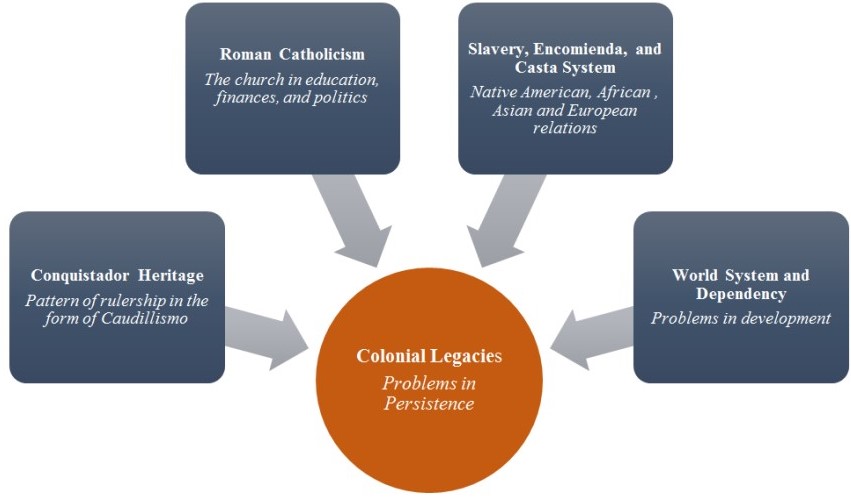
In today’s discussion I would like to explore with you some of the social, economic, and political characteristics that shaped the Latin American colonial world. More specifically, by analyzing the composition of Latin America’s mid-colonial order, it will be possible to identify the colonial vestiges that manifested themselves in a variety of forms throughout the 19th and 20th centuries. It is these vestiges that fueled many of the challenges and constraints Latin America has faced throughout its history. For example, the conqueror legacy which opened the door for patterns of rulership based on caudillismo. The impact of the Roman Catholic Church on education, finances, and politics. The ordering of society based on race/ethnicity. Economic problems and challenges that would be faced in post-independence Latin America as a result of the economic colonial heritage. All of these legacies, either individually or combined, would incapacitate Latin America’s ability to completely free itself from colonialism.
NOBILITY AND PURITY OF BLOOD
Before we begin this topic, I would like you to first analyze the following statements by Ben Vinson in his work entitled The Frontiers of Race and Caste in Colonial Mexico. Although written about colonial Mexico, they have application throughout colonial Latin America. Vinson writes:
From the dawn of Spain’s venture into the New World until the end of its colonial regime, Spanish America was gripped by an almost innate need to process, categorize, and label human differences in an effort to manage its vast empire. Whether it was conquistadors seeking to establish grades of difference between themselves and native rulers, or simple artisans striving to distinguish themselves from their peers, people paid careful attention to what others looked like, how they lived, what they wore, and how they behaved. Based loosely on the social principles of late medieval Spain where society was organized into an estate system according to hereditary landlord/serf relationships and borrowing the social stratification underlying the corporate arrangement of Spanish cities, the dual republic was the Spanish attempt to transplant the hierarchies of the Old World onto the racial landscape of the Americas. Indians were to become almost akin to the serfs of Europe, while whiteness stood as a marker of noble status.
Let us take a moment and explore Vinson’s observations about Iberia. With the closing of the Middle Ages, Spanish society had been polarized into two distinct sectors. On the one side, there were those who made up the privileged sector of society, the nobility. On the other side, there were those individuals who made up the masses, or the gente común. This division of society, originally defined by function in the Middle Ages, had come to be re-enforced juridically over the centuries in Spain. By the advent of the seventeenth century, Spanish society systematically excluded from its upper stratum the base born and racially suspect.
Furthermore, it was the members of the upper stratum of society who were favored by Spain’s political, legal, and educational institutions as many of these bodies required that its members possess social qualities that included nobility and purity of blood (limpieza de sangre). Clearly, in this social atmosphere one’s ability to substantiate one’s social qualities was critical for the pursuit of status, honor, and power in the Spanish world.

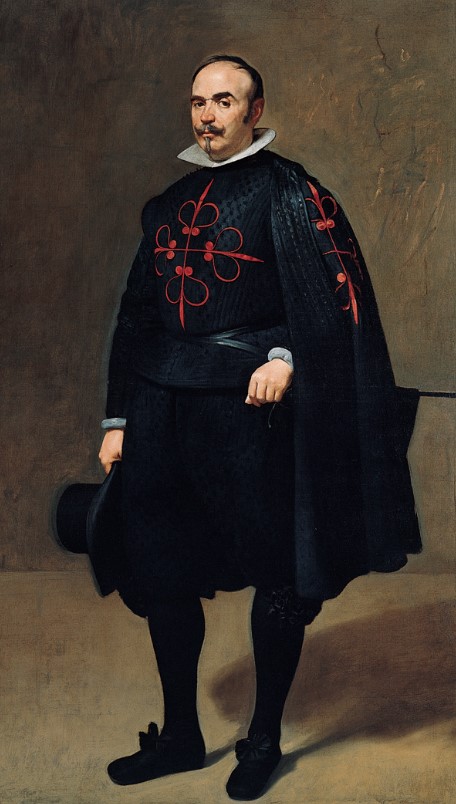
There were only two institutions that could substantiate a person’s social qualities through detailed background investigations. These institutions were the Holy Office of the Inquisition, and Spain’s clerico-military orders of Calatrava, Santiago, Alcántara, and Montesa. For individuals seeking public office, acceptance into universities, or membership into the Church, substantiating their social qualities was the first step that needed to be taken if their aspirations were to be fulfilled. The Spanish Inquisition regularly provided certificates of purity of blood that verified an aspirant’s social qualities through a background investigation. Like the Inquisition, Spain’s Military Orders also conducted background investigations (called pruebas) since they too used statutes of purity of blood and nobility, along with other entry requirements, to determine whether aspirants would be admitted among their ranks. Potentially, these background investigations could be time consuming, expensive, and in many cases, filled with unpleasant surprises as investigators gathered testimony from witnesses about a candidate’s social qualities and their family past. For those aspirants who passed this investigation, it meant that membership in Spain’s military orders in particular conferred upon them “unimpeachable honour, proof of racial purity and testof nobility.”
This function, at a time when, “the original nobleza de sangre (nobility of blood), were joined . . . by masses of hidalgos, who bought, earned, or proved their noble status”, moved one contemporary to write that the role of Spain’s Military Orders was, “to conserve the Spanish aristocracy, to keep unsullied the purity of the noble families, to give honour to persons who merit it, to distinguish the illustrious from the common herd, and the noble from the base.” It was for these reasons that membership in Spain’s military orders was so eagerly sought by Spain’s nobility and those aspiring after such status. For the former, membership within these institutions served as a means of solidifying their position within the privileged estate, for the latter, the possession of a knighthood from one of these military orders was a major step in the process of obtaining access to the upper stratum of Spanish society.
Why this obsession with purity of blood? Recall from your study of Iberian medieval history Spain’s historical dealings with Muslim and Jewish populations. Mary Elizabeth Perry, in a recent study on the politics of race, ethnicity and gender in early modern Spain, has argued that these marginalized populations served as “counter-identities” that contributed to Spain’s transition from a segmented society to a centralized state by identifying marginalized groups “that helped the ruling Christians to define their social, as well political, boundaries.” Thus, the emphasis placed on blood as a measure of exclusion was not just limited to distinguishing old Christians from new Christians in the Spanish world, or those who had pure blood as opposed to those whose blood was tainted. This emphasis on blood also played an important part in defining hidalguía itself, the basis of all nobility in Spain. This is the model that was transplanted to the Americas. As noted in a previous topic, the casta system that came to dominate the ordering of the colonial world thus drew upon the medieval Spanish tradition of purity of blood.
THE DUAL REPUBLICS
As we continue to explore colonial society, I believe it is important to once again emphasize that the colonial world that evolved America was influenced by Africans, Asians, indigenous cultures, and Iberians. As previously noted, enslaved Africans first arrived in the Caribbean during the early 1500s and were later brought to the mainland about mid 16th century. In addition, through the transpacific Manila Galleon trade, enslaved populations from a variety of Asian kingdoms were brought to mainland Spanish America to labor in obrajes (factories).
From the very beginning Iberians fixated on emphasizing the difference between themselves and indigenous people and other non-Europeans at many levels. Iberians identified themselves as gente de razón, which translates into people of reason. They designated themselves so not only because of Iberian cultural characteristics they adhered to, but also because of their commitment to Christianity.
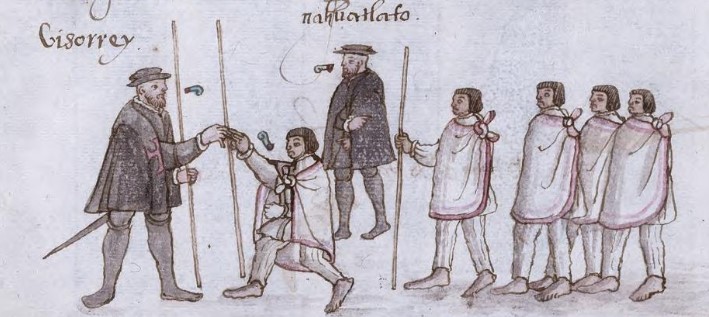
This mindset eventually transformed itself juridically into the dual republic, an ordering of both society and physical space that would divide the colonial world into a republica de españoles (republic of Spaniards) and a republica de indios (republic of Indians). The system of the dual republics was predicated on maintaining racial purity. However, several factors would put pressure the ability to maintain this system. For example, between 1509-1539 female migration from Spain only made up 5% of the population. Between 1560-1570 only 1/3 of the Spanish population was composed of women. Interestingly enough, it is during this time that historians believe that the term mestizo, designating someone as having and Iberian father and indigenous mother, appears with frequency. The use of this term was an outcome of the proliferation of ethno-racial mixture that was taking shape in the colonial world. The end result was an effort by the Spanish to redefine and order colonial society through a casta system based on an ethno-racial hierarchy.
In addition to skin color, “lineage, ethnicity, culture, place of residence, place of birth, geographic mobility” would also be taken into account in the creation of an ordered colonial society and would also dictate status and privilege. Again, Vinson explains:
Based loosely on the social principles of late medieval Spain where society was organized into an estate system according to hereditary landlord/ serf relationships and borrowing the social stratification underlying the corporate arrangement of Spanish cities, the dual republic was the Spanish attempt to transplant the hierarchies of the Old World onto the racial landscape of the Americas. Indians were to become almost akin to the serfs of Europe, while whiteness stood as a marker of noble status. The dual republic was not to be realized solely in a juridical sense – it had spatial implications. Early Spanish urban planners developed the concept of the traza, in which whites were to be physically separated from the masses of Indians.
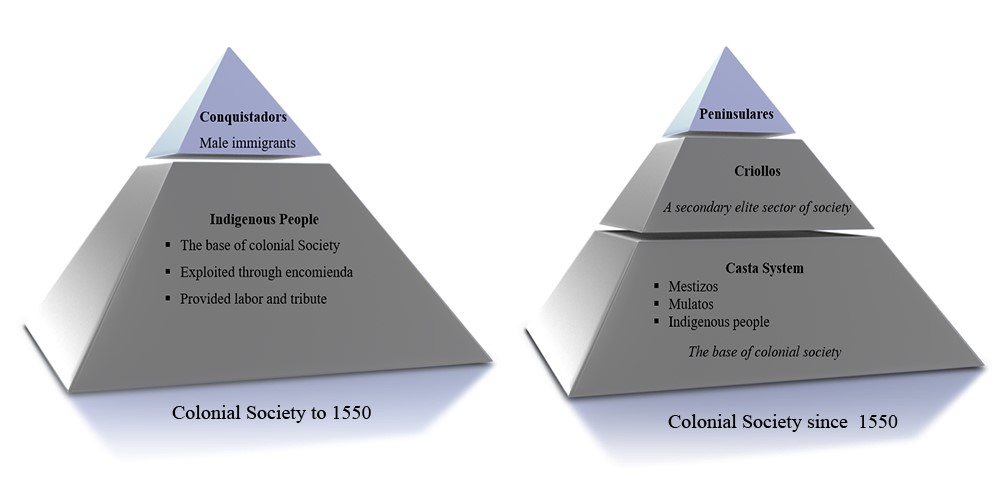
The elite sector of in post-conquest society was made up of Iberian immigrants. They viewed themselves as nobility, no matter from what station in life they originated from in before arriving to the Americas. At first, this ordering of the colonial world was not difficult to impose at first since it was easily re-enforced by the physical distinctions between Iberians, indigenous people, and Africans. Over the years, a second rank developed within the elite sector of post-conquest Latin America.

This second rank was formed by those of Spanish blood who were born in Latin America. These individuals, in Spanish America, were referred to as criollos (españoles criollos de la tierra). Peninsulares, Spaniards born in Spain, viewed the criollos as inferior. In part this was due to social and cultural limitations many believed life in a colonial world imposed on those generations that had not lived in Spain. As you compare the ordering of the colonial world in the charts below note the addition of criollos as a secondary elite after 1550. Criollos were members of society of Spanish descent who were born in Spanish America.
WOMEN IN COLONIAL SOCIETY
How the nature of women was defined in Iberian society was shaped by many sources. From Christianity, the Spanish inherited a theology of subordination. As one historian has noted, “this notion basically identifies patriarchal social order with the natural and divinely created order.” Social order, according to this view, demands the sovereign authority of men as husbands and fathers over women as wives and as children. Greek sources of authority also shaped the role of women in society. Recall Aristotle. Spanish males, having read a variety of Greek sources, concluded that women were unable to govern their passions and that women were inferior to men. Consequently, it was believed that the man should guide and control not only women but also the family unit. These attitudes manifested themselves in many ways throughout Iberian society and would appear in Spanish America as well. For example, legally women were under the control of their fathers in Latin until they reached the age of 25.
Marriage was very important in Iberian society and the honor of a family rested with the sexual purity of women. In Spanish America, a world where patriarchal structures and racial hierarchies were emphasized, marriage needed to be closely regulated if these social characteristics were to be maintained. Women manifested honor through private chastity and public conduct. Honor was also maintained by the proper groom choice. Dowries (money, property, goods) provided economic leverage to marry well in colonial society. Indigenous women who were of noble descent are believed to have held a socioeconomic status that was similar to that of Iberian women. Many even married conquistadors, bureaucrats, merchants, and hacendados.
In contrast, common indigenous women and women of mixed descent lived in on the margins of society with little opportunity for economic advancement and no opportunity for using marriage as an avenue for social mobility. These women held a variety of jobs that included food vendors, domestic servants, and street peddlers. Convents played multiple roles. They granted women an opportunity to lead a life of prayer and contemplation. They served as retreats for the daughters of wealthy families. They also functioned as Recogimiento de Mujeres, locations where nuns educated and reformed women on the margins of society.
CENTERS AND PERIPHERIES
Early in its colonial experience, the Spanish crown attempted to assert its authority in centers with the power of paper. Through bureaucracy the state’s interests could be represented and maintained. To deal with the administration of its colonies in the Americas the Spanish monarchy established the Council of Indies. Established in 1524 by King Charles I of Spain, the Council advised the monarch on colonial matters, drafted laws, supervised colonial officials, and served as a high court for colonial affairs. Based in Spain, it functioned as the central hub for managing overseas colonies, ensuring royal authority and Catholic influence were maintained throughout the Spanish Empire.
Added to the the administration of Spain’s colonies were viceroys, who served as the highest executive authorities in Spanish America. In 1535, New Spain (Mexico) received its first viceroy, Antonio de Mendoza, who governed on behalf of the Spanish crown. Below the viceroys in the civil hierarchy were the Audiencias, high courts of law and administrative bodies established to ensure justice and governance. The first Audiencia in the Americas was founded in Mexico in 1529. Each Audiencia was composed of a presidente, oidores (judges), and licenciados (legal experts). Their establishment and location depended on the region’s wealth, population, and strategic importance. At the local level, colonial administration was handled by gobernadores (provincial governors), who combined civil, judicial, and military authority; corregidores, royal officials who exercised authority particularly over indigenous populations; and cabildos, or municipal councils, which managed town affairs.
How much hegemony was exerted by Iberians throughout colonial Latin America? How effective were they at Europeanization the regions of Latin America they claimed? Historians approach these questions through cartographic representations of colonial Latin America divided into areas referred to as centers and peripheries. Depending on whether an area was center or a periphery dictated the effectiveness of creating a mirror image of Iberia in this topographical space. Centers were those areas where the mirroring of Iberia was most effective. Why?
- Centers had a large indigenous population to exploit as a labor source such as in the case of Mexico and Peru.
- Centers had the availability of important resources such as gold and silver.
- Centers experienced the immediate establishment of colonial institutions.
- Centers experienced the heavy migration of Iberians because of economic opportunity and access to labor.
Peripheries essentially lacked what centers had. In fact, one might state that peripheries were the opposite to centers. Thus, they never attracted a large Iberian population. Areas designated as centers would be dominated by Iberian settlers and their offsprings. Consequently, Iberians in centers focused on “transforming the cultural spaces they occupied by introducing and molding to local circumstances European systems of law, patterns of land occupation, and social, economic, political, and cultural institutions, practices, and forms.”

Thus, where Iberians most successfully created mirror images of a European world was in the centers. In contrast, peripheries lacked the local characteristics of centers and attracted few Iberians making these regions of Latin America almost to appear as the opposite of centers. Examples of peripheries would in include regions located in South America excluding areas dominated by the Empire of the Inca.

IN CLOSING
AS you have learned, Colonial Latin America was shaped by deep-rooted social, political, and economic systems inherited from Spain, many of which continued to affect the region into the 19th and 20th centuries. In our next topic, we will continue to explore the colonial and begin looking at Portuguese efforts in Brazil.
 World History Portal