| LEARNING OBJECTIVES 1. Explain the factors that gave rise to science in the Western tradition and identify the characteristics that defined the Aristotelian worldview. 2. Explain what gave rise to the Newtonian worldview and how it changed the course of science in the Western tradition. 3. Identify the thresholds of complexity that emerged and how they laid the foundations for the arrival humans. View Timeline: First 10 Billion Years |
IN THE BEGINNING
How did it all start? I think it’s fair to suggest that this is the question has plagued humanity has since the dawn of time, and it is a question that still lingers in our minds today. Across history, humans have sought answers to this question and others through myths, legends, and scientific theories. Each one of these striving to explain the creation of our solar system, the emergence of life on Earth, and the origin of us, humans. These stories are as diverse as the cultures that shaped them and reflect the imaginations of those who told them. Yet, when we compare their content, we often find recurring themes, universal threads one might say, weaving together a shared human longing to understand our beginnings and ultimate end.
Table 1: Table: Commonalities in Human Origin Stories
| Theme / Pattern | Description | What It Says About Humans |
|---|---|---|
| Creation from Earth/Nature | Humans are made from clay, soil, plants, or natural elements | Humans are seen as part of nature, not separate from it |
| Divine or Supernatural Creation | Gods or higher beings intentionally create humans | Humans derive meaning and purpose from higher powers |
| Imperfect Creation / Multiple Attempts | Early humans are flawed or destroyed before a final version | Human imperfection is fundamental and expected |
| Loss of Immortality | Humans were once immortal but lost it through error or trickery | Mortality is explained as a consequence, not original design |
| Golden Age → Decline | Humans begin in harmony but fall into suffering or moral decay | Human history is framed as decline from an ideal state |
| Connection to Animals | Humans and animals share origins or once communicated | Blurs boundary between humans and other life forms |
| Punishment or Transgression | Human suffering arises from disobedience or mistake | Moral rules are embedded in origin explanations |
| Gender Duality | Creation involves male and female principles or separation | Gender difference is foundational to human existence |
| Emergence from Another World | Humans emerge from underground, caves, or previous worlds | Humanity is part of a larger cosmic cycle |
| Purpose/Role Assignment | Humans are created to serve gods, maintain order, or steward earth | Human life has assigned duties or responsibilities |
The one thing all origin stories, past and present, seek to explain is the creation of the world and the unfolding of its history. In this course, we’ll ask the same timeless question: How did we come to be the way we are today? But rather than turning to the divine as the author of our story, we will turn to modern science as our storyteller. Why science? As the historian David Christian explains,
| “As much as possible, modern science bases its claims on evidence rather than authority. And, as in a court of law, science is always open to new forms of evidence, even if these require revisions to standard claims about reality.” |
Using this approach, our modern origin story will begin by exploring the “thresholds of complexity,” a series of pivotal moments identified by Christian and other historians who follow the Big History framework. Together, these thresholds serve as milestones in the grand story of how it all began and how our ancestors entered into this story.
THE RISE OF SCIENCE IN THE WESTERN TRADITION
Before we begin exploring what science can tell us about our origins, let’s take a moment to explore how science itself came to be specifically in the Western tradition. After all, it is our storyteller. First, it is important to understand that nearly all ancient civilizations practiced forms of science. This included, for example, the Egyptians’ mastery of engineering, the Babylonians’ detailed astronomical records, and the mathematical insights of the civilizations originating in the Indo-Pakistan subcontinent. But in the Western tradition, science’s first true birth came with the ancient Greeks.
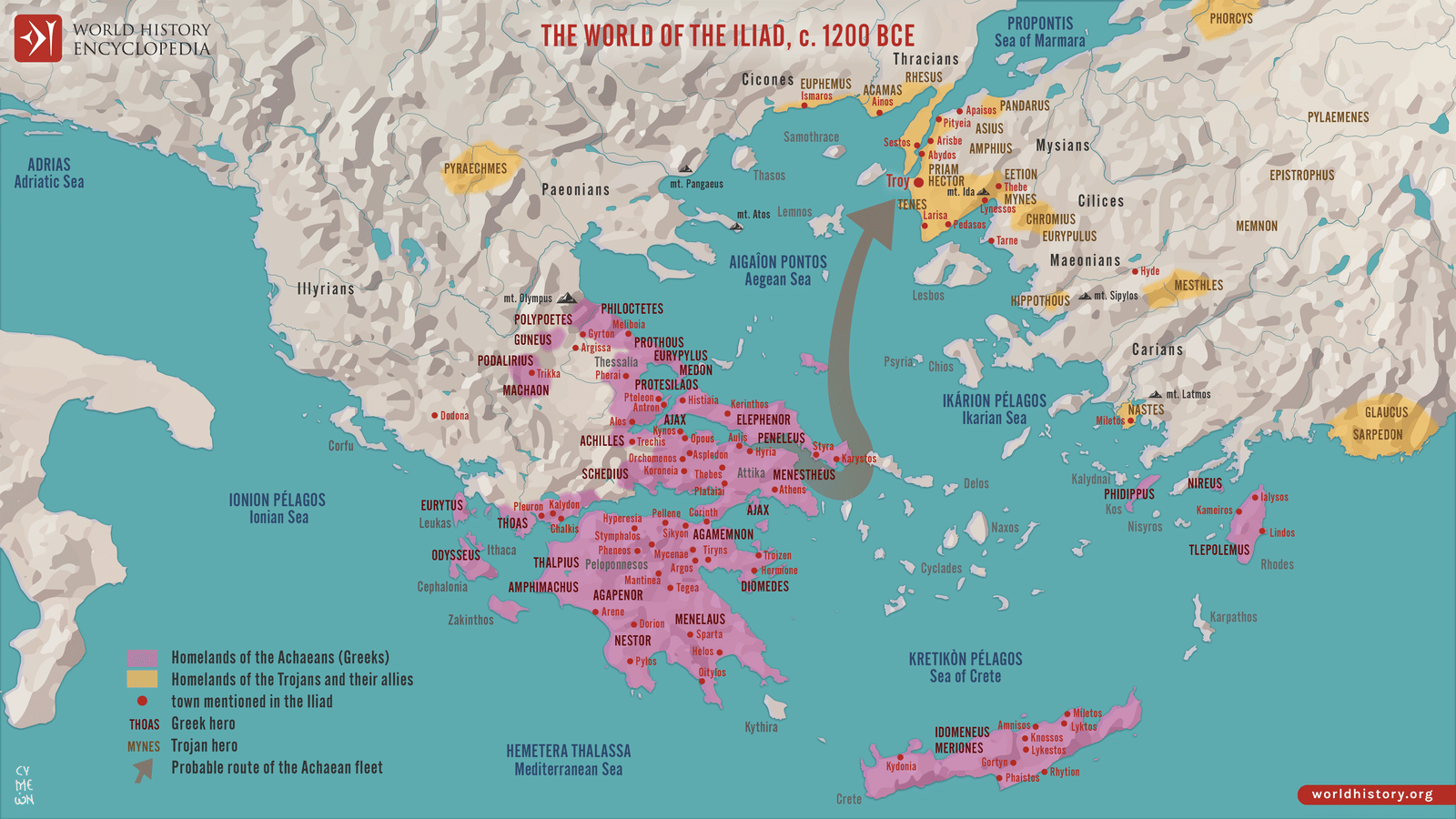
For reasons still debated by historians, the Greeks were uniquely preoccupied with the potential of human achievement, unbound by the will of gods. This emphasis on human greatness is reflected in Homer’s (c. 750 B.C.E.) epics, The Iliad and The Odyssey, where heroes lived for areté, the pursuit of excellence. For the Greeks, areté, combined with nike (victory), led to kleos (fame) and time (honor). These were the ultimate measures of a meaningful life not assigned by gods but achieved by human action. These cultural values placed extraordinary importance on mastery, competition, and the quest for greatness. They shaped Greek art, warfare, and intellectual pursuits. Driven by this human centered passion, the Greeks began to turn their minds toward understanding the natural world, not through divine revelation, but through reason, observation, and debate. In doing so, they laid the groundwork for the scientific tradition that would later define the Western world.
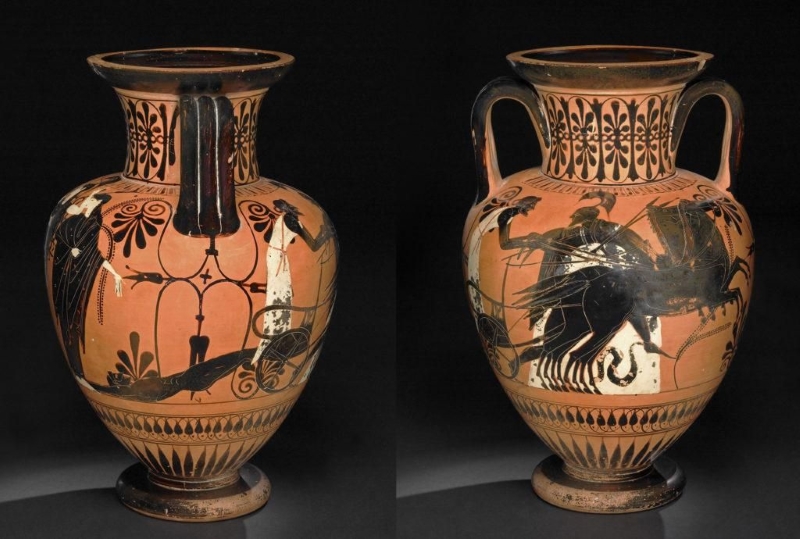
From the Homeric world that celebrated human potential and achievement emerged a revolutionary worldview that fused together two fundamental ideas. The first was the systematic use of reason to deepen humanity’s understanding of reality. The second was the belief that the world could be explained through natural principles rather than divine principles. This new way of thinking was rooted in observation and classification, a methodical approach to uncovering the workings of the natural world.
The first pioneers of this intellectual shift turned their gaze towards nature with the ultimate aim of uncovering its underlying truths. Thales of Miletus (c. 624–546 B.C.E.), for example, proposed that water was the material source of all things. Similarly, Pythagoras of Samos (c. 571–496 B.C.E.) founded a community in Croton that devoted itself to mathematics, believing that numbers and their relationships were the foundation of all existence. These early thinkers laid the groundwork for a new way of understanding the universe guided by reason, evidence, and the search for natural explanations. This was a bold departure from mythological based creation stories.
Table 2: Pre-Socratic Philosophers
| Philosopher | Primary Idea (Archê / Principle) | Key Concept | Contribution to Philosophy |
|---|---|---|---|
| Thales c. 624–546 BCE | Water | Everything originates from water | First to propose a natural (non-mythological) explanation of the universe |
| Anaximander c. 610–546 BCE | Apeiron (the infinite/indefinite) | Boundless origin beyond elements | Introduced abstract principle rather than concrete substance |
| Anaximenes c. 586–526 BCE | Air | Condensation & rarefaction | Early attempt at a physical process explaining change |
| Heraclitus c. 535–475 BCE | Fire (symbolic) | Constant change (“everything flows”) | Emphasized flux and unity of opposites |
| Parmenides c. 515–450 BCE | Being (unchanging reality) | Change is illusion | Founded metaphysics; argued reality is eternal and unchanging |
| Empedocles c. 494–434 BCE | Four elements (earth, air, fire, water) | Love & Strife forces | Combined plural elements with forces explaining change |
| Anaxagoras c. 500–428 BCE | Infinite particles (nous = mind) | Cosmic mind orders matter | Introduced intelligence (mind) as organizing principle |
| Democritus c. 460–370 BCE | Atoms & void | Mechanistic universe | Developed early atomic theory |
| Pythagoras c. 570–495 BCE | Numbers | Mathematical harmony | Linked mathematics to reality and cosmology |
| Xenophanes c. 570–475 BCE | One god (unity) | Critique of anthropomorphic gods | Early theological critique and move toward monotheism |
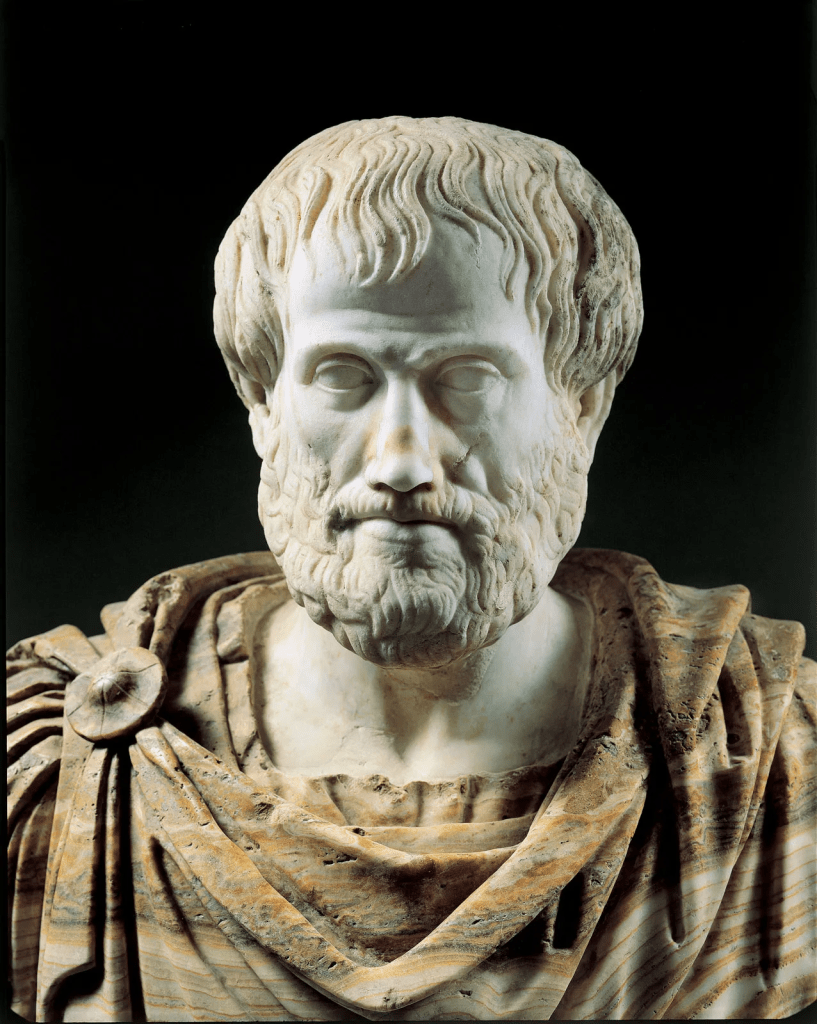
The Greeks also sought to unravel the mysteries of the heavens, striving to understand the motions of the stars and planets. One of the most influential figures in this pursuit was the philosopher Aristotle (384–322 B.C.E.), who proposed a geocentric model of the cosmos. He argued that Earth was the center of the solar system, that celestial motions were circular, and that the heavens were eternal and incorruptible. Aristotle’s ideas served as the foundation for later refinements by Hipparchus of Nicea (c. 190–127 B.C.E.), who applied mathematical rigor to chart the heavens with remarkable precision.
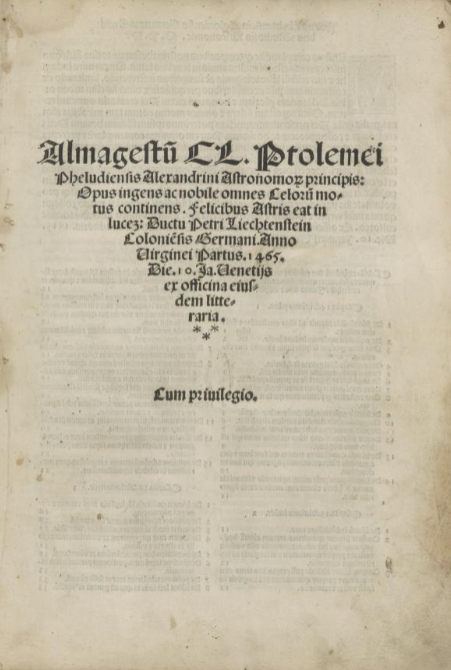
These early models of the cosmos were synthesized and expanded upon by the Roman-Egyptian astronomer Claudius Ptolemaeus (c. 100–175 C.E.), better known as Ptolemy. In his groundbreaking work Almagest (Megalé Syntaxis), Ptolemy compiled and refined centuries of astronomical knowledge into a systematic cosmography. His geocentric system, which combined observation and mathematical calculation, would dominate Western thought for over a millennium. Though these early ideas were later supplanted by heliocentric models, they stand as a testament to the Greeks’ relentless pursuit of knowledge and their desire to bring order to the celestial realm.
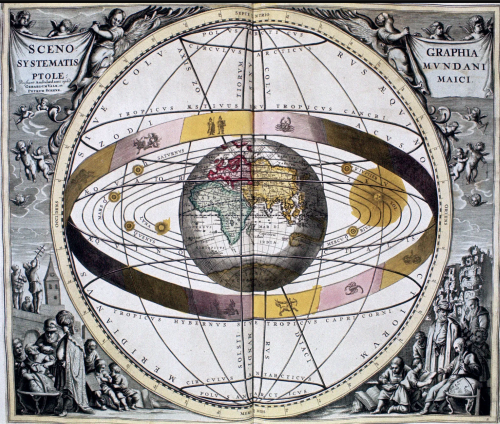
Ptolemy’s Almagest became a foundational text for medieval astronomers, serving as the definitive guide to the cosmos for centuries. Here is something else to keep in mind. Its geocentric model aligned with Christian theology, which added the belief that God had created the heavens and the Earth just 6,000 years ago. By the Middle Ages, cosmography in Europe was firmly dominated by an Earth-centered universe, a worldview that reinforced humanity’s central place in creation, and was upheld as divine truth. This synthesis of Greek scientific thought and Christian doctrine shaped Western understanding of the cosmos for over a millennium, influencing scholars, theologians, and astronomers. In this worldview, the heavens were not just celestial spheres but a reflection of God’s perfect design. They were immutable and eternal.
THE CONTRIBUTIONS OF THE ISLAMIC WORLD
The second birth of science in the Western tradition came in the 11th century, as Europe began to recover from centuries of economic and cultural collapse caused by the fall of the Western Roman Empire. This revival, however, owes much of its conception to the Islamic world, and particularly to the Abbasid Caliphate (750–1258 C.E.). It was the Abbasid leadership who led a translation movement that sought to preserve and expand upon the scientific legacy of ancient Greece, Persia, and India. They created a vast repository of intellectual treasures in what was known as Houses of Wisdom. These texts, enriched with new insights by Islamic scholars, flowed into Europe through cultural exchanges in Spain inspiring a new generation of natural philosophers. By 1200, for example, most of Aristotle’s works, once lost to the West, had been translated from Arabic into Latin and were making their way into European universities. The impact of this would be profound as it reshaped medieval philosophy and scientific inquiry.
Yet, the Islamic world’s contributions extended beyond philosophy. Among the most transformative contribution was the introduction of the Hindu-Arabic numeral system. It would revolutionize mathematics in the West. This decimal-based system, with its nine digits (1–9) and the concept of zero, was far more efficient than Roman numerals and would become the universal language of science. It enabled more complex calculations thus laying the foundation for advancements in fields such as astronomy, engineering, and commerce.
Together, these contributions sparked a scientific and intellectual awakening in Europe. By providing a flexible and efficient mathematical language, the Hindu-Arabic numeral system not only revolutionized trade and finance but also laid the groundwork for scientific advancements. It gave science a universal tool, one that would transform humanity’s ability to measure, calculate, and ultimately redefine the world.
Table 3: Impacts of the Hindu–Arabic Numeral System in Medieval Europe
| Area of Impact | What Changed | Specific Effects | Historical Significance |
|---|---|---|---|
| Commerce & Trade | Easier arithmetic for merchants | Faster calculations of prices, interest, exchange rates | Facilitated expansion of long-distance trade and early capitalism |
| Accounting & Finance | Improved bookkeeping methods | Development of more precise accounts, ledgers, and contracts | Foundation for modern accounting practices |
| Mathematics | Shift from Roman numerals to positional system | Enabled algebra, fractions, and complex calculations | Accelerated mathematical innovation and later scientific progress |
| Education | New teaching methods in arithmetic | Spread of “abbacus schools” teaching practical math | Broadened numeracy beyond elites |
| Science & Astronomy | More precise calculations | Better astronomical tables and measurements | Supported advances in navigation and natural science |
| Administration & Bureaucracy | More efficient record-keeping | Standardized taxation, inventories, and legal records | Strengthened state institutions and governance |
| Technology & Engineering | Improved measurement and design calculations | More accurate construction, architecture, and mechanics | Enabled more complex engineering projects |
| Everyday Life | Simplified numerical tasks | Use in bills, receipts, and daily transactions | Gradual normalization of numerical literacy |
| Monetary Systems | Better coinage calculations | More precise minting and currency valuation | Helped stabilize and regulate economies |
| Intellectual Culture | Shift toward abstract reasoning | Greater acceptance of symbolic representation (including zero) | Contributed to the rise of analytical thinking in Europe |
A NEW WORLDVIEW
The Western world throughout the Middle Ages was shaped by an Aristotelian worldview that was built on “the belief that the Earth was the center of the universe, that objects had essential natures and natural tendencies, that the sublunar region was a place of imperfection and the superlunar region a place of perfection.” These ideas formed the foundation of classical and medieval cosmography, creating a coherent vision of the cosmos that was widely accepted in Medieval Europe.
By the 1600s, however, cracks were beginning to appear in this intellectual edifice. New evidence, drawn from revolutionary tools like the telescope and inspired by the natural philosophers of the Middle Ages, challenged the Aristotelian model and set the stage for a new cosmography. This shift culminated in the Newtonian worldview, a radical reimagining of the universe driven by observation, experimentation, and mathematics. What changed, and what generated this seismic shift in understanding?
The answer lies in the mid-16th century, when the classical worldview began to crumble under the weight of discoveries that revealed the cosmos in unprecedented ways. Building on a foundation laid by medieval thinkers, a new generation of scholars questioned long-held assumptions, sparking what we now call the Scientific Revolution. This was the third birth of science in Europe. The intellectual upheaval created by the Scientific Revolution did not merely refine old ideas, it replaced them with a new way of understanding the natural world. Ultimately, it reshaped human thought and paved the way for modern science.
Table 4: How the Scientific Revolution Challenged Medieval Knowledge
| Area | Medieval View | Scientific Revolution Challenge | Resulting Change |
|---|---|---|---|
| Cosmology (Universe) | Geocentric (Earth at center, Ptolemy + Aristotle) | Heliocentric (Sun-centered system) | Redefined humanity’s place in the universe |
| Authority of Knowledge | Reliance on Aristotle & Church doctrine | Emphasis on observation and experimentation | Shift from authority → empirical science |
| Physics (Motion) | Objects move toward “natural place” (Aristotelian physics) | Laws of motion based on mathematics | Foundation of modern physics |
| Nature of the Heavens | Perfect, unchanging celestial spheres | Imperfect, dynamic heavens (e.g., sunspots, moon craters) | Broke idea of heavenly perfection |
| Method of Inquiry | Scholasticism (logic + tradition) | Scientific method (experiment, measurement) | Established modern scientific practice |
| Mathematics in Nature | Secondary to philosophy | Central tool for explaining nature | Rise of mathematical science |
| Role of Religion | Church as authority on natural truth | Increasing separation of science from theology | Gradual secularization of knowledge |
| Concept of Knowledge | Qualitative, purpose-driven (teleology) | Quantitative, mechanistic explanations | Universe seen as governed by laws |
| Human Perception | Senses sometimes unreliable; truth via authority | Instruments extend and validate observation | Expanded empirical evidence base |
| Natural Philosophy | Unified with theology and metaphysics | Differentiation into distinct sciences | Birth of modern disciplines |
The Scientific Revolution provided a template for investigating the natural world referred to as the scientific method which implemented the following guidelines:
- The collection of data (observing) by precise measurements and controlled repeatable experiments.
- The formulation of a testable hypothesis (proposing explanations) to explain regularities or anomalies in the data.
- The verification or falsification (testing explanations) of those hypotheses by comparing their predictions with the results of new measurements or experiments.
Table 5: How the Scientific Revolution Influenced Modern Science
| Area | Scientific Revolution Innovation | Impact on Modern Science | Long-Term Significance |
|---|---|---|---|
| Scientific Method | Development of experimentation + observation | Standardized hypothesis testing and reproducibility | Foundation of all modern scientific inquiry |
| Mathematization of Nature | Use of mathematics to describe natural laws | Core reliance on equations, models, and quantitative analysis | Enables precision in physics, engineering, and data science |
| Empiricism | Knowledge based on observation rather than authority | Evidence-based research practices | Basis for modern peer review and verification |
| Institutional Science | Creation of academies | Universities, labs, and research institutes | Science becomes organized and collaborative |
| Specialization of Disciplines | Separation from philosophy into distinct fields | Emergence of physics, chemistry, biology, etc. | Growth of specialized expertise and professions |
| Scientific Communication | Early journals and correspondence networks | Modern journals, conferences, and global collaboration | Rapid dissemination of knowledge |
| Technological Instruments | Telescope, microscope, precision tools | Advanced instruments (particle accelerators, satellites) | Expands observable universe and micro-world |
| Concept of Natural Laws | Universe governed by universal, consistent laws | Search for unified theories (e.g., relativity, quantum mechanics) | Drives theoretical physics and cosmology |
| Secularization of Knowledge | Reduced reliance on religious authority in science | Independence of scientific research | Encourages open inquiry and innovation |
| Experimental Culture | Repeated testing and controlled experiments | Lab-based science and applied research | Essential for medicine, engineering, and technology |
| Collaboration & Open Science | Early sharing of findings among scholars | Global research networks and open-access science | Accelerates innovation and interdisciplinary work |
| Application of Science | Link between theory and practical use | Modern technology, industry, and engineering | Foundation of industrial and technological revolutions |
The adoption of these new means and methods stimulated the development of some of the major branches of the sciences including chemistry, biology, and electromagnetic theory. These developments in turn would facilitate a shift from cosmographical view of the heavens focusing on mechanics to a cosmological one focusing on origins. But before we explore the origins of everything, let’s first highlight some of the key individuals who contributed to reorganizing our solar system into the heliocentric model.
Nicolas Copernicus (1473–1543), a Polish astronomer, was the first to turn geocentric cosmography on its head. In his groundbreaking work De revolutionibus orbium coelestium, Copernicus proposed a heliocentric model of the universe, arguing that the planets revolve around a stationary sun.
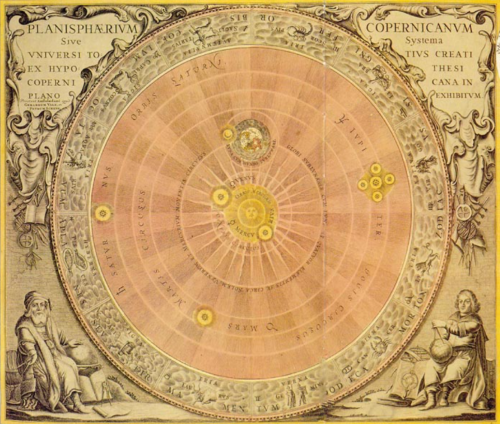
This radical idea challenged the long-standing Ptolemaic system and the theological notion that Earth occupied the center of God’s creation. Copernicus’s theory was the spark that lit the fuse of a cosmic revolution.
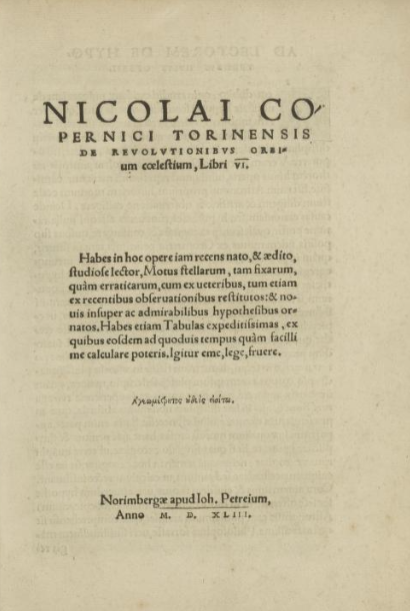
Building on this upheaval, the Danish astronomer Tycho Brahe (1546–1601) made significant contributions by charting the stars with unparalleled precision. Known as the greatest pre-telescopic astronomer, Brahe compiled detailed astronomical tables that served as an essential resource for future discoveries. Although he rejected Copernicus’s heliocentric model, Brahe devised the Tychonic System, a hybrid that combined features of both the Ptolemaic and Copernican frameworks. His meticulous observations provided the foundation for his assistant, Johannes Kepler (1571–1630), to take the next monumental step in understanding the cosmos.
Kepler, drawing on Brahe’s data and his own extended observations of Mars, revolutionized astronomy by uncovering the true nature of planetary motion. In 1609, he published his first law of planetary motion, which revealed that planets move in ellipses, not the perfect circles imagined by ancient and medieval thinkers. This shattered the centuries-old belief in celestial perfection and provided a more accurate understanding of the mechanics of the solar system. Together, the work of these three astronomers transformed the prevailing view of the universe and thus ushering in the age of modern science.
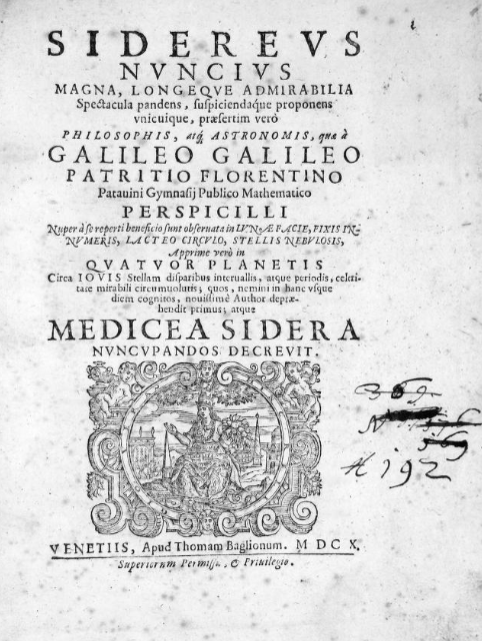
When Galileo di Vincenzo Bonaiuti de’ Galilei (1564–1642) first pointed his telescope toward the heavens, he exclaimed, “I give infinite thanks to God who has been pleased to make me the first observer of marvelous things.” With this simple instrument, Galileo transformed human understanding of the universe revealing discoveries that challenged long-standing Aristotelian and Ptolemaic beliefs and supported the Copernican heliocentric model. In his 1610 work Starry Messenger, he documented observations such as the moon’s rough, cratered surface, Jupiter’s orbiting moons, and the phases of Venus, evidence that undermined the idea that all celestial bodies revolved around Earth. These findings not only expanded knowledge of the cosmos but also directly contradicted the geocentric worldview deeply embedded in Church doctrine. As Galileo continued to promote heliocentrism, opposition from religious authorities intensified, culminating in accusations of heresy beginning in 1614. The conflict reached its peak with the publication of his 1632 Dialogue Concerning the Two Chief World Systems, which strongly favored the Copernican model and provoked the Church’s outrage, ultimately leading to his trial before the Roman Inquisition in 1633.
Referred to by many as the culminating figure of the Scientific Revolution, Isaac Newton (1642–1727) unified two centuries of observation, experimentation, and mathematical insight in his magnum opus, Philosophiae Naturalis Principia Mathematica (Mathematical Principles of Natural Philosophy), published in 1687. In this groundbreaking work, Newton revealed the universal force of gravity, a law that governs the motion of all objects, from falling apples on Earth to the orbits of planets in the heavens.
This discovery shattered the long-standing divide between terrestrial and celestial physics, uniting the cosmos under a single set of natural laws for the first time in human history. Newton’s Principia not only synthesized the discoveries of earlier scientists like Galileo, Kepler, and Descartes but also provided a mathematical framework that would become the foundation of classical mechanics. His laws of motion and universal gravitation revolutionized cosmography, offering a model of the universe that remains central to modern physics and astronomy.
Table 6: Aristotelian vs. Newtonian Worldview
| Category | Aristotelian Worldview | Newtonian Worldview | Key Shift |
|---|---|---|---|
| Structure of the Universe | Geocentric (Earth-centered cosmos) | Heliocentric-compatible, infinite or vast universe | From Earth-centered to universal cosmos |
| Nature of Motion | Motion requires a continuous cause; objects seek “natural place” | Objects move due to forces; inertia allows motion without force | From purpose-driven motion → laws of motion |
| Forces & Causes | Teleological (goal-oriented causes) | Mechanistic forces (e.g., gravity) | From “why” (purpose) → “how” (mechanism) |
| Physics of Objects | Heavier objects fall faster; qualitative descriptions | Laws of motion apply equally; quantitative analysis | From qualitative → mathematical physics |
| Heavens vs. Earth | Two separate realms (perfect heavens, imperfect Earth) | Same laws apply everywhere (unified physics) | From divided cosmos → unified universe |
| Mathematics | Secondary tool; not central to explaining nature | Central to understanding and predicting phenomena | Rise of mathematical modeling |
| Concept of Space | Finite, no vacuum (void impossible) | Infinite space; vacuum possible | Acceptance of empty space |
| Concept of Time | Linked to change and motion | Absolute, uniform time | Time becomes independent variable |
| Epistemology (Knowledge) | Based on logic, observation, and authority | Based on experiment, measurement, and laws | Emergence of scientific method |
| View of Nature | Organic, purpose-driven system | Machine-like, governed by universal laws | Mechanistic worldview replaces organic model |
| Role of God | Immanent purpose in nature (Prime Mover) | God as lawgiver (often external to system) | Shift in theological interpretation |
| Scientific Method | Philosophical reasoning (natural philosophy) | Experimentation + mathematical laws | Birth of modern science |
THE THRESHOLDS OF COMPLEXITY
With the Newtonian worldview displacing the Aristotelian one, science ushered in a set of developments between 1600 and 1900 that laid the foundations for new disciplines and remarkable achievements. The precise, mathematical approach introduced by Newton gave rise to revolutions in physics, biology, astronomy, and geology, reshaping how we understand the natural world and our place within it. These breakthroughs allow us to weave human history into the grand architecture of the cosmos and making the field of Big History possible.
Big History is essentially the story of everything, from the beginning of the universe to the present. It is organized around what we call “thresholds of complexity.” These thresholds are like major turning points where something entirely new appears, making the universe more complex than it was before. The story starts with the Big Bang about 13.8 billion years ago, when space, time, energy, and matter all came into existence. From there, gravity pulled matter together to form stars and galaxies, which are important because stars act like factories that produce energy and create new chemical elements. Over time, especially when stars exploded, they formed heavier elements like carbon and oxygen, which are essential for building planets and life.
About 4.5 billion years ago, our solar system and Earth formed under just the right conditions, what Big History calls “Goldilocks conditions,” including liquid water and a stable environment. These conditions made it possible for life to emerge around 3.8 billion years ago, marking another major threshold. Life introduced entirely new forms of complexity, with organisms that could reproduce, adapt, and evolve. Much later, humans appeared and brought something unique. This was collective learning. Unlike other species, humans can share knowledge through language, allowing information to accumulate over generations. This ability led to the agricultural revolution about 10,000 years ago, when humans began farming, settling in one place, and forming more complex societies with cities and governments.
Finally, in the last few hundred years, we entered the modern revolution, characterized by industrialization, scientific advancement, and global connections, which have dramatically accelerated the pace of change. The key idea tying all of this together is that each threshold depends on the ones before it. For example, without stars, there are no elements and without elements there are no planets. Taking this a step further, without planets there is no life and without life, there is no us, humans. Big History shows that complexity builds step by step, creating the world we live in today.
Table 7: The Thresholds of Complexity
| Threshold Name | What Emerges |
|---|---|
| Big Bang ~13.8 billion years ago | The universe begins with the emergence of space and time themselves, along with energy transforming into matter (subatomic particles like quarks and electrons). Fundamental forces (gravity, electromagnetism, nuclear forces) and physical laws form, creating the basic framework that governs everything that follows. |
| Stars & Galaxies Form ~13 billion years ago | Gravity organizes matter into large-scale structures—galaxies and stars. Within stars, stable nuclear fusion reactions begin, producing vast amounts of energy and light. Stars become long-lived energy systems, creating environments where increasing complexity can develop. |
| New Chemical Elements After first stars | Through stellar nucleosynthesis and supernova explosions, simple elements (hydrogen, helium) are transformed into heavier elements like carbon, oxygen, silicon, and iron. This introduces chemical diversity, enabling complex molecules, solid matter, and eventually the building blocks of planets and life. |
| Earth & Solar System ~4.5 billion years ago | A planetary system forms, including Earth with a layered structure (core, mantle, crust), an atmosphere, and oceans. Earth develops geochemical cycles (water cycle, carbon cycle) and a stable energy flow from the Sun, creating a dynamic but balanced environment capable of supporting complex chemistry. |
| Life on Earth ~3.8 billion years ago | The first self-replicating molecules and cells emerge. Living systems introduce metabolism (energy use), reproduction, and genetic information (DNA/RNA). Evolution by natural selection begins, allowing life to diversify and increase in complexity over time, forming ecosystems and eventually multicellular organisms. |
| Collective Learning (Humans) ~300,000 years ago | Humans develop symbolic language, abstract thinking, and shared memory systems. Unlike genetic evolution, knowledge can now be stored, improved, and transmitted culturally across generations. This leads to rapid innovation in tools, social organization, and belief systems. |
| Agriculture & Civilizations ~10,000 years ago | Humans begin domesticating plants and animals, creating food surpluses. This allows for permanent settlements, population growth, division of labor, social hierarchies, political systems, and written records. Complex societies emerge with economies, religions, and states. |
| Modern Revolution ~1800 CE–present | A dramatic increase in energy use (especially fossil fuels) leads to industrialization. Science becomes systematic, producing technological innovation, global communication networks, and interconnected economies. Humans now influence planetary systems (Anthropocene), and knowledge grows at an unprecedented rate. |
Clearly, to truly understand ourselves fully, we must uncover our origins in the deep past, placing the human story within the vast history of the cosmos itself. Before we start tracing our origin, take a moment to consider the following question: Does learning about the immense scale of the universe make human life feel less important or could it deepen our understanding of who we are and where we come from?
MAMMALS AND PRIMATES
I think it is safe to say that life on Earth has been a four-billion-year experiment. Shaped by natural selection, it has produced the immense diversity of organisms we see today. Paleontologists and biologists have made remarkable strides in understanding this, should we say, experiment. They have traced its origins to archaebacteria that may have thrived as early as 4 billion years ago. Some of these early organisms extracted energy by consuming other living organisms, while others harnessed sunlight through photosynthesis. From simpler molecules (amino acids, nucleic acids, sugars, and proteins) organic matter evolved and eventually giving rise to the building blocks of life as we know it.
The Proterozoic era, beginning about 2.5 billion years ago, marked a major turning point in the history of life. As free oxygen began transforming Earth’s atmosphere, this “oxygen revolution” unleashed the energy necessary for new and more complex life forms to emerge. Among these were the eukaryotes, single-celled organisms with a nucleus, dating to roughly 1.7 billion years ago. Over time, the fusion of single-celled organisms into larger, multicellular organisms revolutionized life on Earth. Multicellularity set the stage for astonishing evolutionary leaps, allowing for greater specialization and complexity in living systems.
The fossil record is rich with evidence of these milestones. Vertebrates made their first appearance 409 million years ago, followed by reptiles 363 million years ago. One of the most spectacular evolutionary stories unfolded during the Triassic period, 250 million years ago, when dinosaurs roamed the Earth and dominated its ecosystems. It was also during this time that the earliest mammals began to emerge.
Table 8: Eras, Periods, and Key Epochs
| Eon | Era | Period | Time Range (Million Years Ago) | Key Events |
|---|---|---|---|---|
| Precambrian | Hadean | — | 4600–4000 | Earth forms; no life |
| Archean | — | 4000–2500 | First prokaryotic life; early oceans | |
| Proterozoic | — | 2500–541 | Oxygen rise; first eukaryotes; multicellular organisms | |
| Phanerozoic | Paleozoic | Cambrian | 541–485 | Cambrian Explosion (rapid diversification of life) |
| Ordovician | 485–444 | Marine life diversifies; first vertebrates | ||
| Silurian | 444–419 | First land plants and arthropods | ||
| Devonian | 419–359 | “Age of Fishes”; first forests; early amphibians | ||
| Carboniferous | 359–299 | Coal swamps; giant insects; reptiles appear | ||
| Permian | 299–252 | Pangaea forms; ends with largest mass extinction | ||
| Mesozoic | Triassic | 252–201 | First dinosaurs and mammals | |
| Jurassic | 201–145 | Dinosaurs dominate; first birds | ||
| Cretaceous | 145–66 | Flowering plants appear; ends with dinosaur extinction | ||
| Cenozoic | Paleogene | 66–23 | Mammals diversify; early primates | |
| Neogene | 23–2.58 | Grasslands expand; early hominins | ||
| Quaternary | 2.58–Present | Ice ages; modern humans |
But the age of dinosaurs came to a dramatic end during the Cretaceous period, roughly 66 million years ago. A catastrophic asteroid impact plunged Earth into an ecological disaster, as massive dust clouds blocked sunlight, disrupted photosynthesis, and sent temperatures plummeting. The once-dominant dinosaurs were driven to extinction, paving the way for mammals to rise and diversify in the aftermath. This crisis was not just an end; it was also a new beginning. It reshaped life on Earth and set the stage for the evolution of modern species, including humans.
Yet it was in this harsh post-impact environment that mammals not only survived but adapted and flourished. Why? Early mammals had several key traits that gave them an edge in this new challenging world. Their small body size made them less reliant on large amounts of food, their warm-bloodedness allowed them to maintain body heat in fluctuating temperatures, and their fur provided insulation. They nourished their young internally, offering better survival rates, and their habit of living in underground burrows shielded them from the worst of the asteroid’s impact. These advantages enabled mammals to endure in an environment that wiped out larger, less adaptable species.

The devastation of the Cretaceous crisis redirected the course of evolution, creating new opportunities for the mammals that survived. From these survivors, a remarkable group of mammals known as primates began to evolve. Primates developed specialized traits that set them apart from other mammals. These included limbs with opposable thumbs for grasping, stereoscopic vision for accurately judging distances, and larger brains capable of controlling complex movements and processing detailed sensory information. These adaptations not only allowed primates to thrive in diverse environments but also laid the foundation for the eventual emergence of our human ancestors. This marked a profound turning point in the story of life on Earth.
The super-family of apes and humans, known as Hominidae, is divided into three families: Hominidae (great apes and humans), Pongidae (chimpanzees, gorillas, and orangutans), and Hylobatidae (lesser apes, such as gibbons). Molecular dating techniques, which analyze genetic differences to estimate evolutionary timelines, indicate that the Hominidae family began to diverge into two sub-families: Gorillinae (gorillas) and Homininae (humans and our closest extinct ancestors) about 5 to 7 million years ago. Modern humans, along with our immediate ancestors, belong to the Homininae sub-family. This moment of divergence marks the beginning of a remarkable evolutionary journey, one that would eventually lead to the emergence of Homo sapiens. It is this story that we will now explore.
THE GREAT LEAP FORWARD
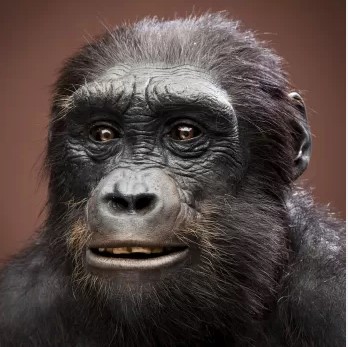
The story of human evolution begins in Africa, where the earliest members of the Homininae sub-family took their first steps in a long journey that would eventually lead to Homo sapiens. Among the most ancient of these ancestors is Sahelanthropus tchadensis, a species that lived around 7 million years ago and is one of the oldest known members of the Homininae lineage. Discovered in Chad in 2001, Sahelanthropus is notable for its mix of ape-like and human-like traits. Its small brain size, similar to that of a modern chimpanzee, suggests its kinship with earlier primates. However, the position of its foramen magnum (the hole where the spinal cord attaches to the skull) indicates that it may have walked upright. This was an early hallmark of human evolution.
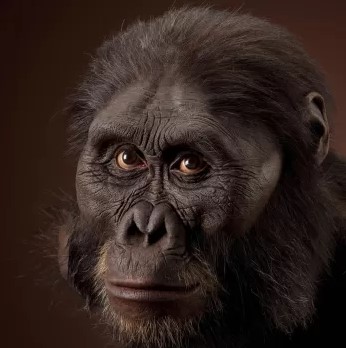
Around 4 million years ago, another key player in this evolutionary story emerged. It was the Australopithecus genus. Fossils of Australopithecus afarensis, most famously represented by “Lucy” who was discovered in Ethiopia in 1974, provide a clearer picture of how early hominins transitioned to bipedalism. Lucy’s pelvis, leg bones, and footprint evidence suggest that she was fully adapted to walking upright, even as her long arms and curved fingers retained adaptations for climbing trees. Australopithecus afarensis, which thrived from about 3.9 to 2.9 million years ago, marks a pivotal step toward the emergence of the genus Homo.
These early members of the Homininae lineage reveal how evolution worked slowly but steadily. These beings straddled two worlds, one in the trees and one on the ground. The discovery of species like Sahelanthropus and Australopithecus has deepened our understanding of human origins, providing a glimpse into the traits that would eventually define our species.
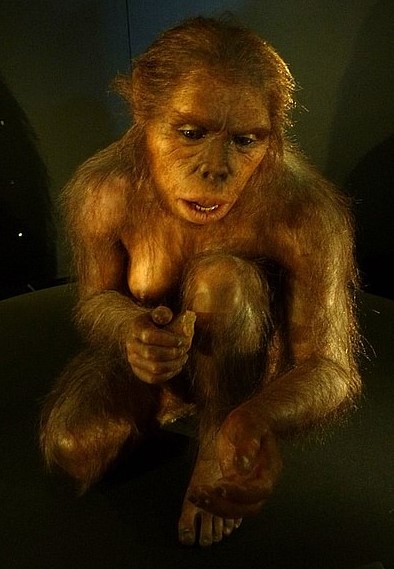
As the evolutionary path continued, the Homininae lineage gave rise to the genus Homo, which marked a dramatic shift in the story of human evolution. These early humans were defined by their increasing brain size, the development of more advanced tools, and their growing ability to adapt to and shape their environment. The first member of the Homo genus, Homo habilis, emerged around 2.4 million years ago. Nicknamed “Handy Man” for its association with stone tools, Homo habilis is considered one of the first species in the Homo genus. Fossils discovered in East Africa show that Homo habilis had a larger brain (about 600–700 cc) than its Australopithecus predecessors, signaling the start of significant cognitive development. This species is closely associated with Oldowan tools which are simple stone flakes and cores used for cutting, scraping, and processing food. These tools allowed early human ancestors to exploit a wider range of resources, such as meat, which became an important part of their diet.
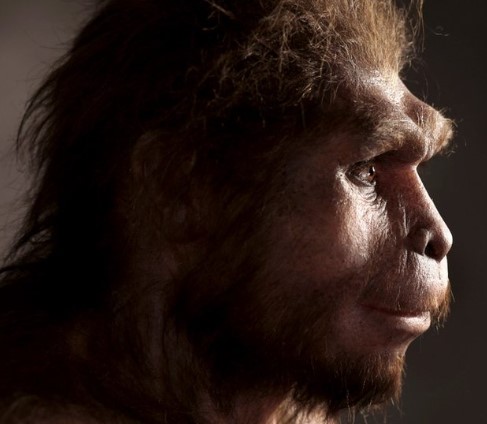
One of the most successful and long-lived species in human history, Homo erectus represents a major leap in the evolution of the genus Homo. Emerging around 1.9 million years ago, Homo erectus spread out of Africa into Asia and Europe, becoming the first human species to migrate across continents. Fossils of Homo erectus have been found in places as far-flung as Java, Indonesia (dubbed “Java Man”) and Dmanisi, Georgia, demonstrating this species’ remarkable adaptability to diverse climates and ecosystems.
With Homo erectus, we begin to see the early stages of human-like culture. The control of fire not only expanded dietary possibilities but also created opportunities for social interaction and cooperation, as groups likely gathered around fire for protection and warmth. The ability to migrate across continents reflects a level of planning, adaptability, and environmental mastery unseen in earlier species. These traits laid the foundation for even more complex social structures and innovations in later human species.
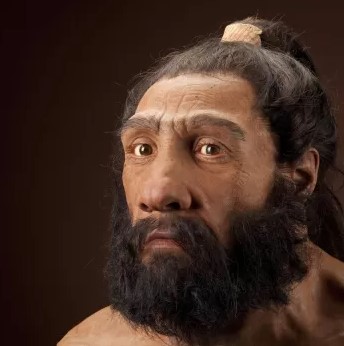
The story of human evolution takes another transformative turn with the emergence of species like Homo heidelbergensis, the ancestor of both Neanderthals (Homo neanderthalensis) and modern humans (Homo sapiens).
Around 700,000 years ago, Homo heidelbergensis began to display increasingly sophisticated behaviors, such as hunting large animals with spears and constructing shelters. These advancements laid the groundwork for the emergence of Homo sapiens, the species that would go on to dominate the planet.
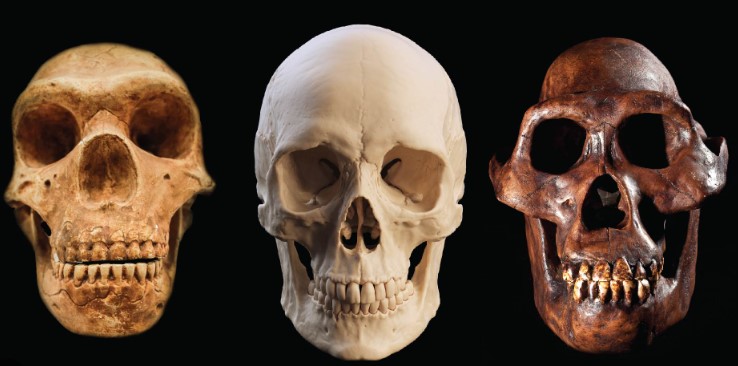
Around 300,000 years ago in Africa, Homo sapiens, us, emerged as the latest chapter in the story of human evolution. Distinguished by advanced cognitive abilities, complex social structures, and extraordinary adaptability, Homo sapiens would go on to shape the world in ways no other species had before. But the journey of modern humans was not immediate. Instead it unfolded over tens of thousands of years as Homo sapiens faced challenges, competed with other species, and eventually spread across the globe.
The earliest fossils of Homo sapiens were discovered in Jebel Irhoud, Morocco, dating to about 300,000 years ago. These fossils show a mix of archaic and modern features. For example, a braincase similar in size to modern humans (around 1,300–1,400 cc) but a more elongated skull shape, resembling earlier species. What sets Homo sapiens apart is not just physical features but the emergence of unprecedented cognitive abilities.
This cognitive development is often referred to as the “Great Leap Forward.” Early Homo sapiens developed sophisticated tools used fire extensively, and likely engaged in symbolic thought, as evidenced by the first known instances of art and personal adornment. The Blombos Cave in South Africa, dating back 100,000 years, contains engraved ochre and shell beads, providing some of the earliest evidence of abstract thinking and symbolic communication. The emergence of culture also marked a defining characteristic of Homo sapiens. Unlike earlier hominins, Homo sapiens demonstrated a capacity for creativity, collaboration, and innovation that transformed their way of life.
IN CLOSING
In summary, the Chronometric Revolution delves into the evolution of scientific thought in the Western tradition, tracing the shift from the Aristotelian to the Newtonian worldview. It begins with the Aristotelian perspective, rooted in ancient Greek philosophy, which emphasized reason and observation as tools for understanding natural phenomena, attributing events to natural causes rather than divine intervention. This approach eventually gave way to the Newtonian worldview during the Scientific Revolution, which introduced a mechanistic understanding of the universe governed by universal laws, such as motion and gravitation. The course also explores “thresholds of complexity,” pivotal moments in the history of the universe, such as the formation of stars and planets, the emergence of life, and the rise of human consciousness, to illuminate the foundations of human existence. Together, these themes highlight the progression of scientific inquiry and its profound impact on our understanding of the universe and humanity’s place within it.
Some final thought on worldview. Although the term “worldview” has been used widely for over a century, it does not carry a single, standard definition. Therefore, it is important to clarify how I will be using the term in this course. In short, I will use “worldview” to refer to “a system of beliefs that are interconnected like the pieces of a jigsaw puzzle that, when put together, form a larger, cohesive picture. A worldview is not merely a random collection of unrelated beliefs but an intertwined, interrelated system of ideas that work together to shape how we interpret the world around us.”