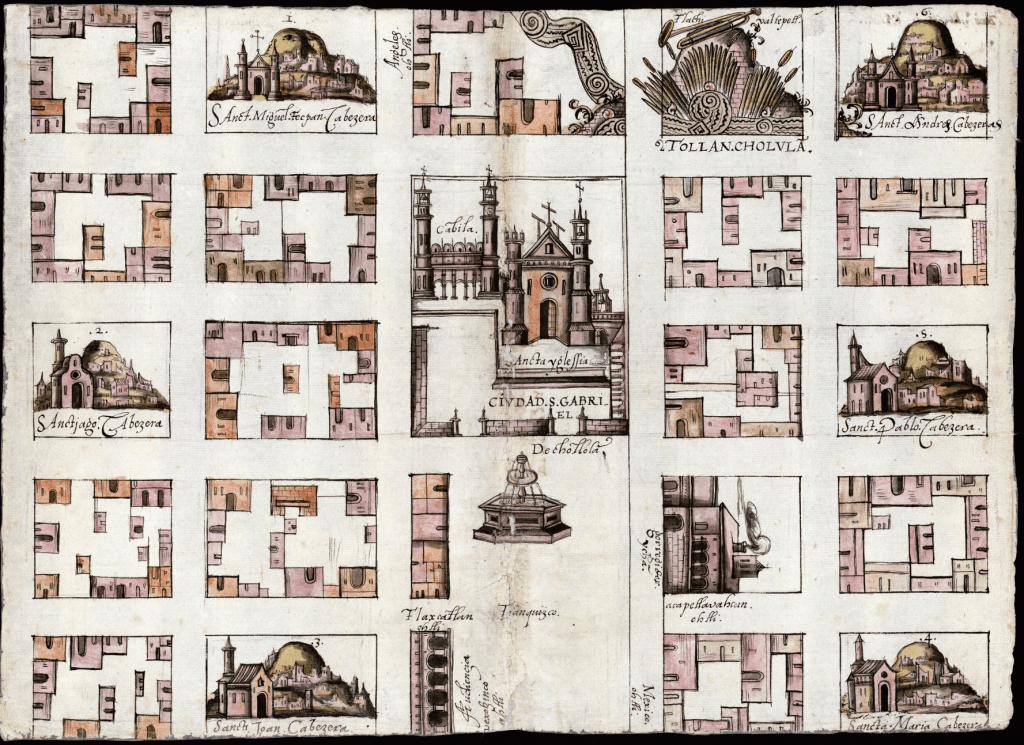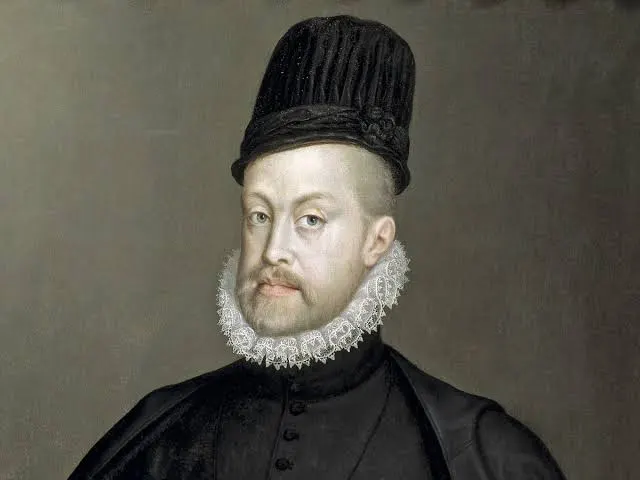
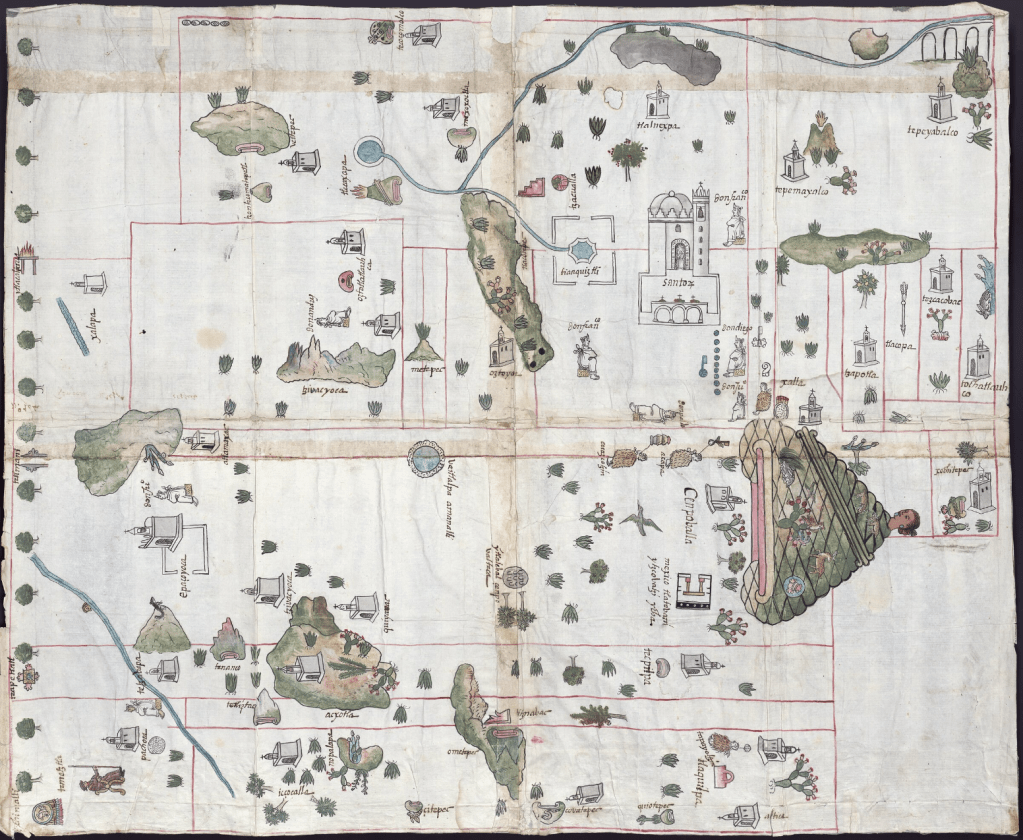
In 1577, the king of Spain, Philip II, sent out a detailed questionnaire to gather information about his colonies in the Americas. Officials in regions like New Spain were asked to describe their lands, peoples, and communities. The responses, known as the Relaciones Geográficas, were written by local Spanish officials along with Indigenous scribes and notaries, providing valuable insights into life both before and after Spanish colonization. Many of these reports included maps, called pinturas, created by Indigenous artists. These maps are especially important because they combine European mapping techniques with older Indigenous artistic and writing traditions. As a result, they offer a unique view of colonial society that reflects multiple perspectives. Consider the following as you analyze the maps below:
- As you examine the Town of Cempoala map, think about how it portrays both the landscape and the people who lived there. Consider what these details reveal about local geography, political relationships, and the importance of Indigenous knowledge in shaping how this region was represented.
- As you examine the Town of Cholula map, consider how these neighborhoods and landmarks are arranged and what they reveal about daily life, religion, and power in a colonial city. Think about why certain places are emphasized and how they reflect the priorities of the people who created the map
Complete the Primary Source Analysis Form when finished for your records.
The Town of Cempoala: Relaciones Geográficas
The Town of Cholula: Relaciones Geográficas