BECOMING HUMAN
| LEARNING OBJECTIVES 1. Understand the nature of history as an interpretive discipline by explaining how historians use evidence, analysis, and narrative to construct accounts of the past rather than simply recording facts. 2. Explain the concept of deep history and how it expands the study of the past beyond written records to include human evolution, environment, and long-term biological and cultural developments. 3. Analyze the significance of the cognitive revolution in Homo sapiens by identifying how advances in language, symbolic thinking, and social cooperation transformed human behavior and societies. |
WHAT IS HISTORY?
The study of history entails more than simply learning about past events. It involves the critical examination and interpretation of evidence in order to understand how and why events happened. Historians use sources such as documents, artifacts, and records to reconstruct the past and to formulate arguments and explanations of their views about the past. This means that history is not just about identifying sources of the past that have survived to the present, but also about interpreting those sources in historical context.
In addition, the study of history includes historiography. Historiography refers to the study of how history is written and interpreted. Instead of focusing directly on past events, it examines how historians have described and explained those events over time. This means looking at different interpretations, methods, and perspectives used by historians. This includes how they select evidence, how they form arguments, and how they present their conclusions. By examining these processes, historiography allows us to better evaluate historical accounts and understand their strengths and limitations.
What historiography shows is that history is not simply a fixed record of facts, but something that can change depending on who is writing it and what evidence they use. Different historians may interpret the same event in different ways, based on their context, ideas, or available sources. Because of this, historiography helps us understand that historical knowledge is constantly developing. Think about it this way. Imagine I placed a bottle filled with liquid in front of a classroom and asked all students present to write a paragraph of that bottle. Would all the paragraphs be identical? Why not?
Table: Specializations within the Discipline of History
| Specialization | Focus | Example Topics |
|---|---|---|
| Political History | Governments, leaders, laws, and power | Elections, revolutions, constitutions |
| Social History | Everyday life and experiences of ordinary people | Family life, class, work, migration |
| Cultural History | Beliefs, values, arts, and meaning-making | Religion, media, traditions, symbols |
| Economic History | Production, trade, labor, and wealth | Industrialization, capitalism, markets |
| Intellectual History | Ideas, philosophies, and knowledge systems | Enlightenment thought, political theory |
| Gender History | Roles and experiences of genders over time | Women’s rights, masculinity, feminism |
| Environmental History | Relationships between humans and nature | Climate change, agriculture, natural disasters |
| World/Global History | Connections across regions and countries | Trade networks, globalization, empires |
| Military History | Wars, conflicts, and military institutions | Battles, strategies, wartime societies |
| Public History | History presented to the public | Museums, archives, documentaries |
| History of Science & Technology | Development of scientific ideas and tools | Medical advances, inventions, digital age |
| Microhistory | In-depth study of a small unit (person, event, community) | A single village, trial, or individual life |
Let’s move on to historical thinking. What exactly is this? Historical thinking refers to the ability to analyze and interpret the past in a critical and structured way. Instead of simply memorizing facts or events, as many of us associate with the study of history, it involves understanding how historical knowledge is created and evaluated. This means asking questions about sources, evidence, and different interpretations.
A key part of historical thinking is working with sources. This includes considering who created a source, why it was created, and whether it is reliable. It also involves contextualization, which means understanding events within the time and circumstances in which they happened. In addition, historians use corroboration, which means comparing different sources to check for consistency and accuracy.
Table: Historical Thinking
| Concept | Explanation | Example |
|---|---|---|
| Sourcing | Looking at who created a source, when it was created, and why it was created. | A historian checks if a document was written by a witness or much later. |
| Contextualization | Understanding events based on the time, place, and situation they occurred in. | Judging past actions based on historical context, not modern values. |
| Corroboration | Comparing different sources to see if they agree or provide different views. | Using multiple accounts of an event to check accuracy. |
| Historical Significance | Deciding which events are important and why they matter. | Explaining why the Industrial Revolution had a major impact on society. |
| Cause and Consequence | Understanding why events happened and what effects they had. | Analyzing the causes of World War I and its global consequences. |
| Continuity and Change | Looking at what has changed over time and what has stayed the same. | Studying how governments have evolved but still keep some similar features. |
| Interpretation | Recognizing that different historians may explain events in different ways. | Two historians giving different views on the same historical event. |
Historical thinking also involves judging the significance of events and understanding cause and consequence. This helps explain not only what happened, but why it happened and what impact it had. Because of this, historical thinking goes beyond simple description and focuses on analysis and interpretation.
| Defining Terms: Postmodernism Postmodernism is a way of thinking that challenges the idea that there is one single, objective truth about the world. Instead, it suggests that what we consider “truth” is shaped by culture, language, and individual perspective. According to scholars like Jean-François Lyotard, postmodernism is marked by a skepticism toward “grand narratives,” which are big, overarching explanations such as the belief that science explains everything or that history always progresses in a clear direction. Postmodern thinkers argue that these large, universal stories are no longer reliable, and that reality is better understood through many smaller, diverse viewpoints rather than one dominant perspective. Overall, postmodernism shifts the focus away from certainty and toward complexity, diversity, and interpretation, making it an important framework for understanding contemporary culture and ideas. |
In recent years, postmodern historiography has challenged orthodox perspective on how to reconstruct the past. Case and point, the views of Alun Munslow. In his classic work entitled Deconstructing History, Munslow explains that what historians do is “translate historical evidence into facts” through the narrative they construct. Consequently, Munslow argues that when students study history, they are, in reality, engaging with narratives about the past constructed by historians as they believe it was. This perspective raises provocative questions about the role of interpretation and creativity in historical scholarship. If all history is narrative, how do we evaluate competing versions of the past? Munslow’s critique underscores the challenges inherent in representing the past ‘as it was,’ inviting us to reconsider how historical truth is both constructed and conveyed.
This is why Munslow takes great care to distinguish between the past as it was and how the writing of history portrays that past. This distinction lies at the heart of Munslow’s critique of traditional historiography. For Munslow, it is essential to recognize that history is not a direct account of the past but a narrative constructed by historians based on evidence, interpretation, and narrative choices. He writes, “We do not retrieve the past, we interpret it,” underscoring the idea that the past as it truly was is inaccessible.
History is also closely connected to the broader social sciences because it helps explain how the world we live in today came to be. For example, issues like inequality, political systems, cultural traditions, and even technology all have histories. By studying the past, we can see patterns, understand change, and better make sense of current problems. In that way, history is not just about “what happened before,” but about understanding the present and thinking critically about the future.
Table: Some Disciplines Historians Consult to Create Narratives of Early Human History
| Social Science | What It Studies | How It Helps Us Understand This Topic |
|---|---|---|
| Anthropology | Human origins, evolution, and cultures | Provides evidence about early humans, their behaviors, and how culture developed over time |
| Archaeology | Material remains of past societies (tools, fossils, sites) | Reconstructs how early humans lived, including tool use, art, and evidence of symbolic thinking |
| Biology (Evolutionary Biology) | Human anatomy, genetics, and evolution | Explains how the human brain developed and how traits like language and cognition evolved |
| Psychology | Human thinking, behavior, and cognition | Helps us understand the development of abstract thinking, memory, and social behavior in early humans |
| Sociology | Social relationships, groups, and institutions | Explains how cooperation, social structures, and group identity emerged and evolved |
| Linguistics | Language structure, origin, and use | Provides insight into how language developed and enabled communication, culture, and cooperation |
| Geography | Human interaction with environments | Shows how early humans adapted to different environments and spread across the globe |
| Economics | Production, resources, and exchange | Helps explain early trade, resource use, and the beginnings of cooperation and specialization |
| Political Science | Power, leadership, and governance | Offers insight into how early forms of leadership and social organization may have developed |
| Environmental Science | Relationships between humans and nature | Helps explain how environmental changes influenced human evolution and survival strategies |
The field of history is foundational in helping us understand how humans evolved biologically, cognitively, and socially over time. By studying fossils, artifacts, archaeological sites and working collaboratively with other disciplines, historians can reconstruct the development of early hominins, the emergence of Homo sapiens, and the major changes brought about by the cognitive revolution. This includes understanding how language, symbolic thinking, and cooperation developed and transformed human life. History also allows us to see how these changes connect to broader patterns, such as the growth of culture, technology, and social organization. Importantly, because history involves interpretation, it encourages us to think critically about how knowledge of the past is constructed and how different perspectives shape our understanding. In this way, history not only explains what happened in human evolution, but also helps us understand why these developments matter for the world we live in today.
| Defining Terms: Hominoidea vs. Hominins The difference between hominins and hominoidea is mainly about how broad the group is in biological classification. Hominoidea is a large category (a superfamily) that includes all apes, both living and extinct. This means it covers great apes (humans, chimpanzees, gorillas, orangutans) and also lesser apes (gibbons). In other words, Hominoidea = all apes as a big family group. Hominins, on the other hand, are a much smaller, more specific group within that larger category. Hominins include modern humans and our direct ancestors after we split from chimpanzees—for example, species like Australopithecus and Homo erectus. So, hominins are basically the branch of apes that leads specifically to humans. |
DEEP HISTORY
What is deep history? Deep history is a way of studying the human past that goes much further back than traditional history. Instead of starting with written records a few thousand years ago, deep history looks at the entire span of human existence, including prehistoric times using evidence from archaeology, anthropology, biology, and environmental science and other fields. In other words, it places humans within “deep time” rather than just the recent past. The key idea behind deep history for us is that to really understand what it means to be human, we can’t just look at civilizations, governments, or written documents. We also have to look at human evolution, early societies, and long-term interactions with the environment. For example, deep history explores how early humans developed language, social cooperation, tool use, and even emotional behaviors. These long-term developments help explain patterns we still see today, like social bonding or inequality. Ultimately, deep history helps us see that being human is not just about recent societies, it’s the result of long-term biological, cultural, environmental, and technological processes. It expands our perspective, showing that many aspects of human life today have roots that go back far deeper than we usually imagine.
Table: Deep History and What It Tells Us About Being Human
| Area of Human Life | What Deep History Shows | What This Means About Being Human Today |
|---|---|---|
| Social Behavior | Early humans survived through cooperation, group living, and social bonds | Humans are deeply social; relationships and communities are essential, not optional |
| Culture | Culture (language, tools, traditions) developed gradually and was passed down over generations | Culture is a core part of being human—we learn how to live from others |
| Environment | Humans have always adapted to changing environments (ice ages, migrations, resource shifts) | Our lives today are still shaped by environmental conditions and challenges like climate change |
| Technology | Tool use began millions of years ago and continuously evolved | Technology is not new—it’s a fundamental part of human survival and identity |
| Biology & Brain | Human brains and bodies evolved alongside social and environmental pressures | How we think and feel is partly shaped by long-term evolutionary processes |
| Inequality & Power | Social hierarchies emerged over time with agriculture and complex societies | Inequality is not “natural” it developed historically and can change |
| Adaptation & Flexibility | Humans have constantly adapted to new challenges and environments | Being human means being flexible and capable of change |
| Time Perspective | Human history stretches far beyond written records into “deep time” | Our current way of life is just a small moment in a much longer story |
| Human–Environment Relationship | Humans have always shaped and been shaped by nature | We are part of ecosystems, not separate from them |
| Innovation | Humans have consistently created new ways to solve problems | Creativity and problem-solving are defining human traits |
BECOMING HUMAN: WHAT DEEP HISTORY TELLS US
The story of human evolution begins in Africa, where the earliest members of the Homininae sub-family took their first steps in a long journey that would eventually lead to Homo sapiens. Among the most ancient of these ancestors is Sahelanthropus tchadensis, a species that lived around 7 million years ago and is one of the oldest known members of the Homininae lineage. Discovered in Chad in 2001, Sahelanthropus is notable for its mix of ape-like and human-like traits. Its small brain size, similar to that of a modern chimpanzee, suggests its kinship with earlier primates, but the position of its foramen magnum (the hole where the spinal cord attaches to the skull) indicates that it may have walked upright, an early hallmark of human evolution.
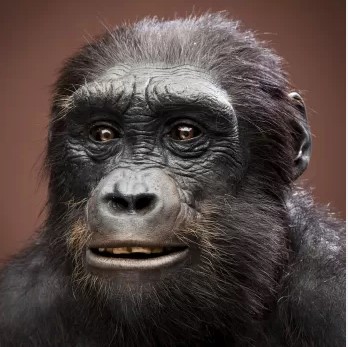
Around 4 million years ago, another key player in this evolutionary story emerged: the Australopithecus genus. Fossils of Australopithecus afarensis, most famously represented by “Lucy,” discovered in Ethiopia in 1974, provide a clearer picture of how early hominins transitioned to bipedalism. Lucy’s pelvis, leg bones, and footprint evidence suggest that she was fully adapted to walking upright, even as her long arms and curved fingers retained adaptations for climbing trees. Australopithecus afarensis, which thrived from about 3.9 to 2.9 million years ago, marks a pivotal step toward the emergence of the genus Homo.
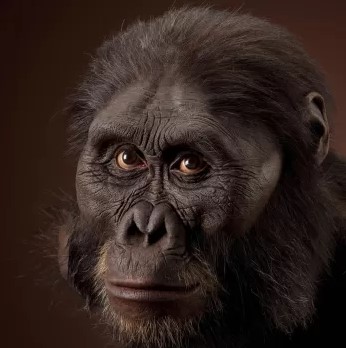
These early members of the Homininae lineage reveal how evolution worked slowly but steadily, shaping creatures that straddled two worlds—one in the trees and one on the ground. The discovery of species like Sahelanthropus and Australopithecus has deepened our understanding of human origins, providing a glimpse into the traits (upright walking, tool use, and social behavior) that would eventually define our species.
As the evolutionary path continued, the Homininae lineage gave rise to the genus Homo, which marked a dramatic shift in the story of human evolution. These early humans were defined by their increasing brain size, the development of more advanced tools, and their growing ability to adapt to and shape their environment. The first member of the Homo genus, Homo habilis, emerged around 2.4 million years ago, heralding a new era in evolutionary history. Nicknamed “Handy Man” for its association with stone tools, Homo habilis is considered one of the first species in the Homo genus. Fossils discovered in East Africa show that Homo habilis had a larger brain (about 600–700 cc) than its Australopithecus predecessors, signaling the start of significant cognitive development. This species is closely associated with Oldowan tools composed of simple stone flakes and cores used for cutting, scraping, and processing food. These tools allowed early humans to exploit a wider range of resources, such as meat, which became an important part of their diet.
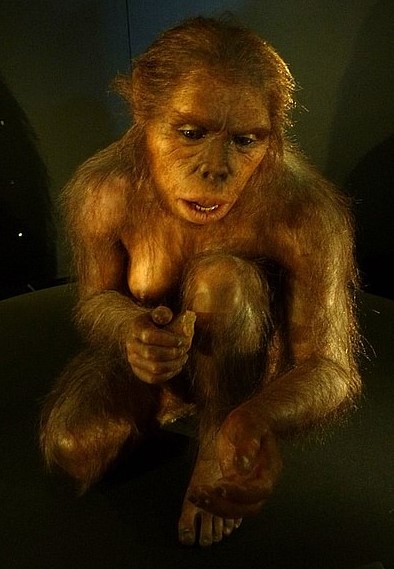
One of the most successful and long-lived species in human history, Homo erectus represents a major leap in the evolution of the genus Homo. Emerging around 1.9 million years ago, Homo erectus spread out of Africa into Asia and Europe, becoming the first human species to migrate across continents. Fossils of Homo erectus have been found in places as far-flung as Java, Indonesia (dubbed “Java Man”) and Dmanisi, Georgia, demonstrating this species’ remarkable adaptability to diverse climates and ecosystems.
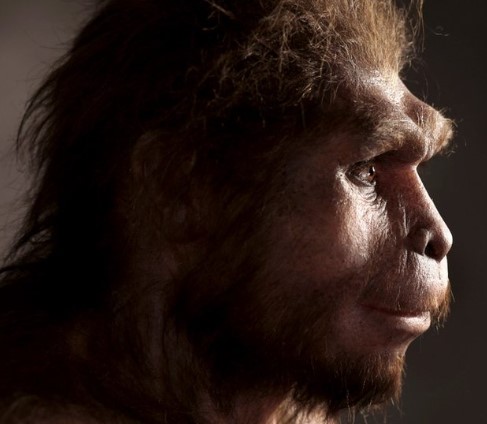
With Homo erectus, we begin to see the early stages of human-like culture. The control of fire not only expanded dietary possibilities but also created opportunities for social interaction and cooperation, as groups likely gathered around fire for protection and warmth. The ability to migrate across continents reflects a level of planning, adaptability, and environmental mastery unseen in earlier species. These traits laid the foundation for even more complex social structures and innovations in later human species.
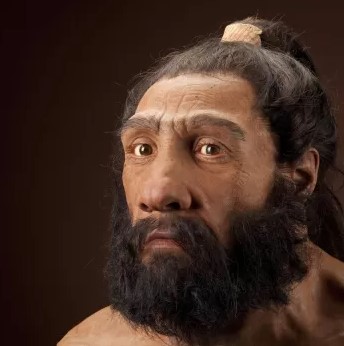
The story of human evolution takes another transformative turn with the emergence of species like Homo heidelbergensis, the ancestor of both Neanderthals (Homo neanderthalensis) and modern humans (Homo sapiens).
Around 700,000 years ago, Homo heidelbergensis began to display increasingly sophisticated behaviors, such as hunting large animals with spears and constructing shelters. These advancements laid the groundwork for the emergence of Homo sapiens, the species that would go on to dominate the planet.
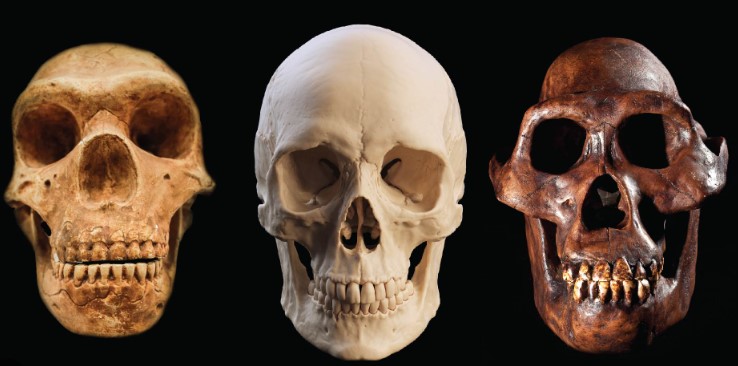
Around 300,000 years ago in Africa, Homo sapiens emerged as the latest chapter in the story of human evolution. Distinguished by advanced cognitive abilities, complex social structures, and extraordinary adaptability, Homo sapiens would go on to shape the world in ways no other species had before. But the journey of modern humans was not immediate. On the contrary, it unfolded over tens of thousands of years as Homo sapiens faced challenges, competed with other human species, and eventually spread across the globe.
Table: Human Species That Competed with Homo sapiens
| Species | Time Period | Region | Interaction with Homo sapiens |
|---|---|---|---|
| Neanderthals (H. neanderthalensis) | ~400,000 – 40,000 years ago | Europe and Western Asia | Competed for resources; also interbred with Homo sapiens |
| Denisovans | ~300,000 – 30,000 years ago | Asia (especially Siberia & SE Asia) | Interbred with Homo sapiens; possible competition in Asia |
| Homo floresiensis | ~100,000 – 50,000 years ago | Indonesia (Flores Island) | Likely isolated; possible indirect competition for resources |
| Homo erectus | ~1.9 million – 100,000 years ago | Africa and Asia | Overlapped with early Homo sapiens; possible competition in some areas |
| Homo heidelbergensis | ~700,000 – 200,000 years ago | Africa and Europe | Earlier competitor; less direct overlap |
| Homo naledi | ~300,000 years ago | Africa | Possibly coexisted with early Homo sapiens |
| Homo luzonensis | ~67,000 years ago | Philippines | Likely isolated but part of broader hominin diversity |
The earliest fossils of Homo sapiens were discovered in Jebel Irhoud, Morocco, dating to about 300,000 years ago. These fossils show a mix of archaic and modern features: a braincase similar in size to modern humans (around 1,300–1,400 cc) but a more elongated skull shape, resembling earlier species. What sets Homo sapiens apart is not just physical features but the emergence of unprecedented cognitive abilities.
This cognitive leap is often referred to as the “Great Leap Forward.” Early Homo sapiens developed sophisticated tools, used fire extensively, and likely engaged in symbolic thought, as evidenced by the first known instances of art and personal adornment. The Blombos Cave in South Africa, dating back 100,000 years, contains engraved ochre and shell beads, providing some of the earliest evidence of abstract thinking and symbolic communication. The emergence of culture also marked a defining characteristic of Homo sapiens. Unlike earlier hominins, Homo sapiens demonstrated a capacity for creativity, collaboration, and innovation that transformed their way of life.
BECOMING HUMAN: THE COGNIITIVE REVOLUTION
One of the most important leaps forward in human evolution was the development of advanced cognition, often called the “cognitive revolution”, The cognitive revolution of early Homo sapiens refers to a major shift in how humans thought and understood the world, happening roughly between 70,000 and 50,000 years ago (though scholars debate the exact timing). Before this, earlier human species could use tools and survive in their environments, but their thinking was likely more immediate and tied to the present. What changed with Homo sapiens was the development of symbolic thought, the ability to use language, images, and objects to represent things that aren’t physically there. This is why we start to see cave art, jewelry, rituals, and more complex tools in the archaeological record. These behaviors suggest that humans could now imagine, plan ahead, and share ideas in ways that weren’t possible before.
Table: Implications of the Cognitive Revolution on Early Homo sapiens
| Domain | Cognitive Change (Leap Forward) | Implications for Early Homo sapiens |
|---|---|---|
| Language & Communication | Development of symbolic and syntactic language | Enabled precise communication, storytelling, and transmission of complex ideas across generations |
| Social Cooperation | Emergence of shared intentionality and collective understanding | Allowed large-scale cooperation beyond kin groups, forming tribes and alliances |
| Symbolic Thinking | Ability to use symbols (art, ornaments, rituals) | Created shared meanings, identities, and cultural cohesion |
| Cultural Transmission | Development of cumulative culture | Knowledge could accumulate and improve over generations (tools, strategies, norms) |
| Abstract Thought | Capacity for imagination and hypothetical reasoning | Enabled planning, innovation, and creation of myths or belief systems |
| Technology & Innovation | Improved problem-solving and foresight | More sophisticated tools, hunting strategies, and environmental adaptation |
| Group Identity & Religion | Creation of shared myths and belief systems | Strengthened group cohesion and cooperation among strangers |
| Art & Expression | Development of visual art, music, and rituals | Reinforced social bonds and communication of abstract ideas |
| Ecological Impact | Strategic hunting and environmental manipulation | Rapid expansion across continents and dominance over ecosystems |
This shift had a huge impact on the idea of the self and identity. With symbolic thinking and language, humans could begin to reflect on themselves, remember the past in a structured way, and imagine the future. In other words, people could start to think of their lives as a kind of story. This is sometimes called the development of a “narrative self,” where identity is not just about being alive in the moment, but about having a past, present, and future that are connected. It also meant that identity became more social. As language improved, humans could share beliefs, create traditions, and form group identities based on shared symbols like rituals or myths.
The cognitive revolution also changed what it meant to be human in a broader sense. Humans became capable of creating and believing in things that don’t physically exist, such as gods, social rules, or even concepts like money and nations. These shared ideas allowed large groups of people to cooperate in complex ways. Another important development was the ability to understand that other people have their own thoughts and feelings, often called “theory of mind.” This made empathy, cooperation, and social relationships much more advanced.
BRAIN AND LANGUAGE EVOLUTION: THE FOUNDATIONS OF BEING HUMAN?
In studying the deep history of early humans, archaeologist Clive Gamble points out that two major patterns define our past: the growth of the brain (encephalization) and the spread of humans across the globe. Encephalization, the increase in brain size relative to body size, was a turning point in human evolution because it gave us the ability to think in more complex and abstract ways. This is what allowed humans to become, as Robert Boyd puts it, “a different kind of animal.” Instead of relying only on instinct or slow biological changes, humans developed culture and language, which became the real drivers of our success. Boyd explains that humans survive in many environments not just through individual intelligence, but through cumulative culture, where each generation builds on the knowledge of the previous one.
These ideas help explain what it means to be human because they show how closely our biology and social behavior are connected. Our larger brains made language possible, and language allowed us to communicate using symbols and share ideas far beyond basic survival needs. Over time, this led to the development of culture which transmits across generations shared traditions, tools, beliefs, and social rules. What makes humans unique is how these elements work together. Our brains make language possible, language spreads culture, and culture, in turn, shapes how our brains develop and how we think. In other words, being human is not just about having a big brain, but about how that brain interacts with language and culture to create meaning and shared ways of life.
New discoveries in archaeology, linguistics, geology, and genetics have helped us better understand this process. They show how humans went from small, scattered groups to a species that could live almost anywhere on Earth. A key part of this transformation was cognitive evolution and the development of language, which became one of humanity’s most powerful tools. Language allowed people to store and share knowledge over time, making it possible to adapt quickly to new environments like deserts, forests, and icy tundras. This ability to adapt culturally led to the global spread of humans and marked a major turning point in the history of life.
So what makes humans different from other species? Historian David Christian argues that the answer lies in “pre-adaptations,” traits that evolved for one purpose but later became essential to our success. These traits (like advanced cognition and communication) allowed humans to constantly adapt and find new ways to use resources in their environment. Unlike other species, humans don’t just adjust to the world; we actively reshape it. This constant ability to adapt, learn, and innovate is what has allowed our species to grow, spread, and play such a powerful role in shaping the planet.
Here are some final thoughts about this topic. Encephalization and language can be understood as the foundations of being human because they explain both where our abilities come from and how we use them. Encephalization, or the growth of the human brain, provided the biological capacity for advanced cognition, including memory, problem-solving, and abstract thinking. These skills are essential for imagination, planning, and innovation. Building on this, language allows humans to share those thoughts, transforming individual intelligence into collective knowledge through symbolic communication. This ability not only helps us express ideas and emotions but also reshapes how we think, reason, and collaborate.
Together, encephalization and language make culture possible by allowing knowledge to be preserved and expanded across generations. As a result, humans are able to develop complex societies, technologies, and belief systems that endure over time. In this way, encephalization serves as the biological foundation, while language acts as the system that turns that potential into meaningful human behavior and shared ways of life. Together, encephalization and language turn individual intelligence into collective power, allowing humans to build societies, transform environments, and continuously advance technology in ways no other species can.
Table: How Encephalization and Language Shape Society, Environment, and Technology
| Area | Role of Encephalization (Brain Growth) | Role of Language | Resulting Human Impact |
|---|---|---|---|
| Society | Enables complex thinking, social awareness, and understanding of relationships | Allows communication of ideas, rules, and shared meanings | Creation of large, organized societies with governments, laws, and institutions |
| Environment | Supports problem-solving and adaptability to different conditions | Spreads knowledge about survival strategies (e.g., farming, shelter, tools) | Humans adapt quickly to diverse environments and can reshape ecosystems |
| Technology | Enables planning, creativity, and innovation | Allows teaching, sharing, and improving techniques across generations | Development of increasingly complex tools, from stone tools to modern technology |
THE ORIGIN OF HUMAN LANGUAGE and FOXP2
The human brain is an incredibly intricate and complex organ, central to the evolution of one of humanity’s defining traits: language. Recent advances in neuroscience have revealed the roles of specific brain regions such as the olfactory bulb, cerebellum, visual cortex, temporal lobe, and the overall frontal cortex, including its primary motor, premotor, and prefrontal cortices—in shaping our cognitive and linguistic abilities. Because “the ability to speak and understand language requires the recruitment of several brain regions,” it is critical to understand the “anatomical and neural mechanisms underlying human spoken language.”
The origin of language, something uniquely human, must therefore be explored through the lens of brain evolution. But the brain does not act alone. Its organization is intricately linked to the human vocal apparatus the lungs, tongue, teeth, nasal passages, and other structures that enable the production of speech. Together, these components make possible the extraordinary “transformation between acoustic waveform and thought,” allowing humans to convey abstract ideas, emotions, and complex information.
Another crucial factor in this evolutionary story is the FOXP2 gene. Sometimes referred to as the “language gene,” FOXP2 has been linked to speech and language development, providing a genetic basis for our ability to produce and comprehend spoken language. Its discovery has shed light on the intricate interplay between brain evolution, vocal anatomy, and genetics, offering new insights into how language came to define what it means to be human.
Why did language evolve so quickly in modern humans? Recent discoveries in genetics may hold the key to this question, particularly the role of a gene known as FOXP2. This gene provides instructions for making “a protein called forkhead box P2 . . . [which] . . . appears to be essential for the normal development of speech and language.” While FOXP2 is not unique to humans, molecular biologists have discovered two key differences in the human version of this gene compared to that of chimpanzees. The proteins encoded by human and chimpanzee FOXP2 differ by just two amino acid substitutions, but these small changes likely enhanced the gene’s function, fine-tuning humans’ ability to produce and process speech.
Additionally, patterns of variation in the FOXP2 gene in human populations suggest that these changes underwent Darwinian selection within the past 200,000 years—a period corresponding to the emergence of anatomically modern humans. This strong selective pressure implies that these genetic changes conferred a significant adaptive advantage, likely improving communication and social coordination. The discovery of FOXP2 offers an essential piece of the puzzle in understanding how language, one of humanity’s most defining traits, evolved so rapidly and shaped the success of our species.
CULTURE, LANGUAGE AND HUMAN INNOVATION
It is important to recognize that “evolution did not create symbols or grammar . . . [but] . . . human creativity and intelligence did.” For this reason, the quest for the origins of human language must account for both the cognitive capacities provided by evolution and the cultural invention of language. Evolution equipped the human brain with the ability to think abstractly, solve problems, and innovate, but it was humans who transformed those capacities into realities. So, what exactly is language? According to linguist Daniel Everett, “Language is the interaction of meaning (semantics), sentence structure (syntax), sound properties (phonetics and phonology), cultural conditions on usage (pragmatics and discourse), and gestures.” While all animals communicate, Everett’s definition highlights the extraordinary complexity and cultural foundation of human language.
Language is believed to have evolved from culturally invented symbols. Everett argues that “Language gradually emerged from a culture, formed by people who communicated with one another via human brains.” This process relied on what Everett describes as a synergy between grammar, symbols, and culture—each shaping and reinforcing the other. Language became the mechanism for transmitting knowledge and facilitating collective learning, allowing humans to preserve, refine, and share their accumulated knowledge across generations. This extraordinary ability enabled humans not only to adapt to new environments but also to innovate and thrive in ways no other species could. Language, then, is more than a means of communication. It is the foundation of human civilization and the key to our success as a species.

In the following excerpt, evolutionary biologist Mark Pagel, renowned for his work on the evolution of communication, explores the extraordinary nature of human language. He delves into what language is, how it shapes our lives, and when it might have originated. By examining the roots of this uniquely human trait, Pagel provides valuable insight into the defining features of our species and the pivotal role language plays in our success.
| “Human language is distinct from all other known animal forms of communication in being compositional. Human language allows speakers to express thoughts in sentences comprising subjects, verbs and objects—such as ‘I kicked the ball’—and recognizing past, present and future tenses. Compositionality gives human language an endless capacity for generating new sentences as speakers combine and recombine sets of words into their subject, verb and object roles. For instance, with just 25 different words for each role, it is already possible to generate over 15,000 distinct sentences. Human language is also referential, meaning speakers use it to exchange specific information with each other about people or objects and their locations or actions. No one knows for sure when language evolved, but fossil and genetic data suggest that humanity can probably trace its ancestry back to populations of anatomically modern Homo sapiens (people who would have looked like you and me) who lived around 150,000 to 200,000 years ago in eastern or perhaps southern Africa [4,5,6]. Because all human groups have language, language itself, or at least the capacity for it, is probably at least 150,000 to 200,000 years old. This conclusion is backed up by evidence of abstract and symbolic behaviour in these early modern humans, taking the form of engravings on red-ochre.” – Mark Pagel |
The evolution of the human brain and the development of language “enabled humans to store considerable amounts of information on an unprecedented scale with great adaptive potential,” transforming our species into exceptional problem-solvers. This combination of cognitive abilities and cultural innovation allowed humans to adapt to new environments far more quickly than adaptation by natural selection, which relies on genetic changes over vast timescales. Equipped with these unique traits, humans were no longer bound by the slow pace of genetic evolution. Instead, language and culture became the tools through which they could share knowledge, solve problems, and innovate, enabling rapid adaptation to diverse ecosystems.
This ability had profound implications for human history. It allowed humans to spread across the globe, from the grasslands of Africa to the frozen tundras of Siberia and beyond, a process known as extensification. Unlike other species, humans didn’t just survive in new environments, they thrived by shaping their surroundings to meet their needs. This adaptability laid the foundation for agriculture, urban societies, trade networks, and the transmission of knowledge across generations. By combining biological evolution with cultural creativity, humans transcended the limitations of other species, becoming not just survivors but world-builders.
HUMAN CULTURE
What is culture? Culture is the information that is shared and acquired from other individuals through social transmission. Alex Mesoudi notes that humans are a cultural species in that “we acquire a multitude of beliefs, attitudes, preferences, knowledge, skills, customs, and norms from other members of our species culturally, through social learning processes such as imitation, teaching, and language.” Similarly, Steven J. Mithen emphasizes that “Cultural behavior derives from our capacity for learning, decision making, and problem-solving.” Culture shapes how humans interact with one another and the world, providing the framework for social structures, traditions, and innovations. Importantly, language is what makes humans a cultural species, as it allows us to transmit knowledge, beliefs, and practices across generations, fostering collective learning.
But is there a relationship between culture and human evolution? And when do the earliest examples of culture appear in human history? These are challenging questions, but some scholars believe the answers lie in a series of caves on the southern tip of Africa. One of the most fascinating examples comes from Blombos Cave, where artifacts dating back to approximately 70,000 B.C.E. provide some of the earliest evidence of material culture. Among these artifacts are engraved ochre pieces and shell beads, which suggest the presence of symbolic thought, social behaviors, and creativity. These tangible creations, what anthropologists call material culture, represent the earliest known attempts to create and share meaning within a community, offering a glimpse into the origins of human culture itself.
Culture “is a compendium of useful innovations that are preserved because individuals appreciate their value.” This ability to create, share, and adapt innovations to different environments is what has made our species so successful. But an intriguing question arises: Did human language and intelligence evolve primarily to enhance our foraging skills, or were they shaped by the need to build social networks that fostered collaboration and innovation? For archaeologist John Gowlett, the answer lies in both. He emphasizes what he calls the “eternal triangle” of human evolution, with its three points being diet change, detailed environmental knowledge, and social collaboration. These factors, Gowlett argues, are deeply interconnected: shifts in diet required knowledge of the environment to locate resources, while social collaboration allowed humans to hunt, gather, and share food in ways no other species could match.
This interplay of biology, culture, and environment raises another critical question. Should we focus solely on evolution to explain humanity’s ecological success? In the following excerpt, Robert Boyd challenges this perspective, inviting us to consider how culture and social learning shaped our unique trajectory:
| “Most accounts of human evolution explain our ecological success as the result of superior cognitive abilities. While it is probable that individual humans are smarter than other animals, we do not think this is the most important cause of our success. Think about what people have to know to survive and prosper in just one habitat where human foragers have flourished, the North American Arctic. They have to know how to make dozens of essential tools—kayaks, warm clothing, toggle harpoons, oil lamps, shelters built of skin and snow, goggles to prevent snow blindness, dog sleds and the tools to make these tools. They also have to know how to use all of this stuff, where and when to hunt and gather, what to seek, how to process it if you succeed, and so on and on. Then they have to decide how to organize their society: how to regulate exchange of resources, how to organize marriage, resolve conflicts and so on and on. If individual intelligence were the key, individuals could create all of this knowledge on their own.” – Robert Boyd |
IN CLOSING
Here is the key takeaway points from this topic.
- History is not just facts about the past. It involves analyzing evidence and constructing interpretations about human development.
- Human history extends far beyond written records and includes evolution, environment, and long-term biological and cultural processes. Deep history gives us a methodology to access detail of early human history.
- Understand the progression from early hominins to Homo sapiens, including key traits like bipedalism, tool use, and increasing brain size will help us better understand what it means to be human.
- The cognitive revolution was a major turning point where humans developed advanced thinking, including language, symbolic thought, and imagination.
- Language and symbolism allowed humans to communicate complex ideas, create culture, and share knowledge across generations.
- Humans evolved as highly social beings capable of large-scale cooperation and forming complex societies.
- Human success is based on the ability to pass down culture and build on knowledge over time.
- Humans both adapt to and transform their environments, shaping ecosystems and their own survival.
- Many aspects of modern life (identity, inequality, technology, and culture) have deep roots in early human history.
Where are we heading next? We will explore the disciplines of psychology, sociology and philosophy to help us understand how we form self and identity.

