Cornelius Tacitus was born .c 56 C.E. in Narbonese or Cisalpine Gaul and died around c. 120 C.E. He authored a series of important works include The Histories, Germania and The Annals. The latter of these works, The Annals, is devoted to the early history of imperial Rome. It explores the autocratic rule that has replaced the Roman Republic and the nature of absolute power. Consider the following questions as you read the selections below:
How successful have previous Romans been at writing the history of early imperial Rome?
What picture does he portray of Rome’s first emperor Augustus?
Rome at the beginning was ruled by kings. Freedom and the consulship were established by Lucius Brutus. Dictatorships were held for a temporary crisis. The power of the decemvirs did not last beyond two years, nor was the consular jurisdiction of the military tribunes of longduration. The despotisms of Cinna and Sulla were brief; the rule of Pompeius and of Crassus soon yielded before Caesar; the arms of Lepidus and Antonius before Augustus; who, when the world was wearied by civil strife, subjected it to empire under the title of “Prince.” But the successes and reverses of the old Roman people have been recorded by famous historians; and fine intellects were not wanting to describe the times of Augustus, till growing sycophancy scared them away. The histories of Tiberius, Caius, Claudius, and Nero, while they were in power, were falsified through terror, and after their death were written under the irritation of a recent hatred. Hence my purpose is to relate a few facts about Augustus- more particularly his last acts, then the reign of Tiberius, and all which follows, without either bitterness or partiality, from any motives to which I am far removed. When after the destruction of Brutus and Cassius there was no longer any army of the Commonwealth, when Pompeius was crushed in Sicily, and when, with Lepidus pushed aside and Antonius slain, even the Julian faction had only Caesar left to lead it, then, dropping the title of triumvir, and giving out that he was a Consul, and was satisfied with a tribune’s authority for the protection of the people, Augustus won over the soldiers with gifts, the populace with cheap corn, and all men with the sweets of repose, and so grew greater by degrees, while he concentrated in himself the functions of the Senate, the magistrates, and the laws. He was wholly unopposed, for the boldest spirits had fallen in battle, or in the proscription, while the remaining nobles, the readier they were to be slaves, were raised the higher by wealth and promotion, so that, aggrandised by revolution, they preferred the safety of the present to the dangerous past. Nor did the provinces dislike that condition of affairs, for they distrusted the government of the Senate and the people, because of the rivalries between the leading men and the rapacity of the officials, while the protection of the laws was unavailing, as they were continually deranged by violence, intrigue, and finally by corruption. Augustus meanwhile, as supports to his despotism, raised to the pontificate and curule aedileship Claudius Marcellus, his sister’s son, while a mere stripling, and Marcus Agrippa, of humble birth, a good soldier, and one who had shared his victory, to two consecutive consulships, and as Marcellus soon afterwards died, he also accepted him as his son-in-law. Tiberius Nero and Claudius Drusus, his stepsons, he honoured with imperial tides, although his own family was as yet undiminished. For he had admitted the children of Agrippa, Caius and Lucius, into the house of the Caesars; and before they had yet laid aside the dress of boyhood he had most fervently desired, with an outward show of reluctance, that they should be entitled “princes of the youth,” and be consuls-elect. When Agrippa died, and Lucius Caesar as he was on his way to our armies in Spain, and Caius while returning from Armenia, still suffering from a wound, were prematurely cut off by destiny, or by their step-mother Livia’s treachery, Drusus too having long been dead, Nero remained alone of the stepsons, and in him everything tended to centre. He was adopted as a son, as a colleague in empire and a partner in the tribunitian power, and paraded through all the armies, no longer through his mother’s secret intrigues, but at her open suggestion. For she had gained such a hold on the aged Augustus that he drove out as an exile into the island of Planasia, his only grandson, Agrippa Postumus, who, though devoid of worthy qualities, and having only the brute courage of physical strength, had not been convicted of any gross offence. And yet Augustus had appointed Germanicus, Drusus’s offspring, to the command of eight legions on the Rhine, and required Tiberius to adopt him, although Tiberius had a son, now a young man, in his house; but he did it that he might have several safeguards to rest on. He had no war at the time on his hands except against the Germans, which was rather to wipe out the disgrace of the loss of Quintilius Varus and his army than out of an ambition to extend the empire, or for any adequate recompense. At home all was tranquil, and there were magistrates with the same titles; there was a younger generation, sprung up since the victory of Actium, and even many of the older men had been born during the civil wars. How few were left who had seen the republic!
Thus the State had been revolutionised, and there was not a vestige left of the old sound morality. Stript of equality, all looked up to the commands of a sovereign without the least apprehension for the present, while Augustus in the vigour of life, could maintain his own position, that of his house, and the general tranquillity. When in advanced old age, he was worn out by a sickly frame, and the end was near and new prospects opened, a few spoke in vain of the blessings of freedom, but most people dreaded and some longed for war. The popular gossip of the large majority fastened itself variously on their future masters. “Agrippa was savage, and had been exasperated by insult, and neither from age nor experience in affairs was equal to so great a burden. Tiberius Nero was of mature years, and had established his fame in war, but he had the old arrogance inbred in the Claudian family, and many symptoms of a cruel temper, though they were repressed, now and then broke out. He had also from earliest infancy been reared in an imperial house; consulships and triumphs had been heaped on him in his younger days; even in the years which, on the pretext of seclusion he spent in exile at Rhodes, he had had no thoughts but of wrath, hypocrisy, and secret sensuality. There was his mother too with a woman caprice. They must, it seemed, be subject to a female and to two striplings besides, who for a while would burden, and some day rend asunder the State.
Aristotle (384–322 B.C.E.) was one of the most prolific Greek philosophers of his generation. His writings touch upon a wide range of topics that included logic, metaphysics, ethics and political theory. His theories greatly influenced a vast array of thinkers, particularly during the period spanning from Late Antiquity through the Renaissance. In his Metaphysics, one of Aristotle’s principle works, he described its subject matter as the “first philosophy” or the study of wisdom. Consider the following questions as you read the selections below:
“All these examples show, then, that recollection is caused by like things and also by unlike things, do they not?”
“Yes.”
“And when one has a recollection of anything caused by like things, will he not also inevitably consider whether this recollection offers a perfect likeness of the thing recollected, or not?”
“Inevitably,” he replied.
“Now see,” said he, “if this is true. We say there is such a thing as equality. I do not mean one piece of wood equal to another, or one stone to another, or anything of that sort, but something beyond that—equality in the abstract. Shall we say there is such a thing, or not?”
“We shall say that there is,” said Simmias, “most decidedly.”
“And do we know what it is?”
“Certainly,” said he.
“Whence did we derive the knowledge of it? Is it not from the things we were just speaking of? Did we not, by seeing equal pieces of wood or stones or other things, derive from them a knowledge of abstract equality, which is another thing? Or do you not think it is another thing? Look at the matter in this way. Do not equal stones and pieces of wood, though they remain the same, sometimes appear to us equal in one respect and unequal in another?”
“Certainly.”
“Well, then, did absolute equals ever appear to you unequal or equality inequality?”
“No, Socrates, never.”
“Then,” said he, “those equals are not the same as equality in the abstract.”
“Not at all, I should say, Socrates.”
“But from those equals,” said he, “which are not the same as abstract equality, you have nevertheless conceived and acquired knowledge of it?”
“Very true,” he replied.
“And it is either like them or unlike them?”
“Certainly.”
“It makes no difference,” said he. “Whenever the sight of one thing brings you a perception of another, whether they be like or unlike, that must necessarily be recollection.”
“Surely.”
“Now then,” said he, “do the equal pieces of wood and the equal things of which we were speaking just now affect us in this way: Do they seem to us to be equal as abstract equality is equal, or do they somehow fall short of being like abstract equality?”
“They fall very far short of it,” said he.
“Do we agree, then, that when anyone on seeing a thing thinks, ‘This thing that I see aims at being like some other thing that exists, but falls short and is unable to be like that thing, but is inferior to it, he who thinks thus must of necessity have previous knowledge of the thing which he says the other resembles but falls short of?”
“We must.”
“Well then, is this just what happened to us with regard to the equal things and equality in the abstract?”
“It certainly is.“
“Then we must have had knowledge of equality before the time when we first saw equal things and thought, ‘All these things are aiming to be like equality but fall short.’”
“That is true.”
“And we agree, also, that we have not gained knowledge of it, and that it is impossible to gain this knowledge, except by sight or touch or some other of the senses? I consider that all the senses are alike.”
“Yes, Socrates, they are all alike, for the purposes of our argument.”
“Then it is through the senses that we must learn that all sensible objects strive after absolute equality and fall short of it. Is that our view?”
“Yes.”
“Then before we began to see or hear or use the other senses we must somewhere have gained a knowledge of abstract or absolute equality, if we were to compare with it the equals which we perceive by the senses, and see that all such things yearn to be like abstract equality but fall short of it.”
“That follows necessarily from what we have said before, Socrates.”
“And we saw and heard and had the other senses as soon as we were born?”
“Certainly.”
“But, we say, we must have acquired a knowledge of equality before we had these senses?”
“Yes.
“Then it appears that we must have acquired it before we were born.”
“It does.”
“Now if we had acquired that knowledge before we were born, and were born with it, we knew before we were born and at the moment of birth not only the equal and the greater and the less, but all such abstractions? For our present argument is no more concerned with the equal than with absolute beauty and the absolute good and the just and the holy, and, in short, with all those things which we stamp with the seal of absolute in our dialectic process of questions and answers; so that we must necessarily have acquired knowledge of all these before our birth.”
“That is true.”
“And if after acquiring it we have not, in each case, forgotten it, we must always be born knowing these things, and must know them throughout our life; for to know is to have acquired knowledge and to have retained it without losing it, and the loss of knowledge is just what we mean when we speak of forgetting, is it not, Simmias?”
The Tanakh contains the most sacred canon for Judaism. Tanakh is an acronym for the tripartite division of this canon: the Torah (Law), the Neviim (Prophets), and the Ketuvim (Writings). The canon making up the Tanakh are believed to have been written and compiled between 1100 to 100 B.C.E. The five books of the Torah are considered to the some of the most sacred writings of the Tanakh and are central to Judaism. Themes covered in the Torah include creation, a historical record of the ancient Israelites, and the relationship between G-d and the followers of Judaism. Key to understanding this relationship is a series of covenants established by G-d and his followers. Consider the following questions as you read the selection below:
What relationship with G-d does each covenant establish?
What do these covenants articulate about the Israelites?
Is ethical and ritual behavior addressed in any of the covenants?
Source: Jewish Publication Society. JPS TANAKH: The Holy Scriptures: The New JPS Translation according to the Traditional Hebrew Text.
The Covenant with Noah (Selections)
God blessed Noah and his sons, and said to them, “Be fertile and increase, and fill the earth. The fear and the dread of you shall be upon all the beasts of the earth and upon all the birds of the sky— everything with which the earth is astir— and upon all the fish of the sea; they are given into your hand. Every creature that lives shall be yours to eat; as with the green grasses, I give you all these. You must not, however, eat flesh with its life-blood in it. But for your own life blood I will require a reckoning: I will require it of every beast; of man, too, will I require a reckoning for human life, of every man for that of his fellow man! Whoever sheds the blood of man, By man shall his blood be shed; For in His image Did God make man. Be fertile, then, and increase; abound on the earth and increase on it.” And God said to Noah and to his sons with him, “I now establish My covenant with you and your offspring to come, and with every living thing that is with you— birds, cattle, and every wild beast as well— all that have come out of the ark, every living thing on earth. I will maintain My covenant with you: never again shall all flesh be cut off by the waters of a flood, and never again shall there be a flood to destroy the earth.” God further said, “This is the sign that I set for the covenant between Me and you, and every living creature with you, for all ages to come. I have set My bow in the clouds, and it shall serve as a sign of the covenant between Me and the earth. When I bring clouds over the earth, and the bow appears in the clouds, I will remember My covenant between Me and you and every living creature among all flesh, so that the waters shall never again become a flood to destroy all flesh. When the bow is in the clouds, I will see it and remember the everlasting covenant between God and all living creatures, all flesh that is on earth. That,” God said to Noah, “shall be the sign of the covenant that I have established between Me and all flesh that is on earth.” The sons of Noah who came out of the ark were Shem, Ham, and Japheth— Ham being the father of Canaan. These three were the sons of Noah, and from these the whole world branched out.
The Covenant with Abraham (Selections)
When Abram was ninety-nine years old, the LORD appeared to Abram and said to him, “I am El Shaddai. Walk in My ways and be blameless. I will establish My covenant between Me and you, and I will make you exceedingly numerous.” Abram threw himself on his face; and God spoke to him further, “As for Me, this is My covenant with you: You shall be the father of a multitude of nations. And you shall no longer be called Abram, but your name shall be Abraham, for I make you the father of a multitude of nations. I will make you exceedingly fertile, and make nations of you; and kings shall come forth from you. I will maintain My covenant between Me and you, and your offspring to come, as an everlasting covenant throughout the ages, to be God to you and to your offspring to come. I assign the land you sojourn in to you and your offspring to come, all the land of Canaan, as an everlasting holding. I will be their God.” God further said to Abraham, “As for you, you and your offspring to come throughout the ages shall keep My covenant. Such shall be the covenant between Me and you and your offspring to follow which you shall keep: every male among you shall be circumcised. You shall circumcise the flesh of your foreskin, and that shall be the sign of the covenant between Me and you. And throughout the generations, every male among you shall be circumcised at the age of eight days. As for the homeborn slave and the one bought from an outsider who is not of your offspring, they must be circumcised, homeborn and purchased alike. Thus shall My covenant be marked in your flesh as an everlasting pact. And if any male who is uncircumcised fails to circumcise the flesh of his foreskin, that person shall be cut off from his kin; he has broken My covenant.” And God said to Abraham, “As for your wife Sarai, you shall not call her Sarai, but her name shall be Sarah. I will bless her; indeed, I will give you a son by her. I will bless her so that she shall give rise to nations; rulers of peoples shall issue from her.” Abraham threw himself on his face and laughed, as he said to himself, “Can a child be born to a man a hundred years old, or can Sarah bear a child at ninety?” And Abraham said to God, “O that Ishmael might live by Your favor!” God
said, “Nevertheless, Sarah your wife shall bear you a son, and you shall name him Isaac; d and I will maintain My covenant with him as an everlasting covenant for his offspring to come. As for Ishmael, I have heeded you. I hereby bless him. I will make him fertile and exceedingly numerous. He shall be the father of twelve chieftains, and I will make of him a great nation. But My covenant I will maintain with Isaac, whom Sarah shall bear to you at this season next year.” And when He was done speaking with him, God was gone from Abraham.
The Covenant with Moses (Selections)
On the third new moon after the Israelites had gone forth from the land of Egypt, on that very day, they entered the wilderness of Sinai. Having journeyed from Rephidim, they entered the wilderness of Sinai and encamped in the wilderness. Israel encamped there in front of the mountain, 3and Moses went up to God. The LORD called to him from the mountain, saying, “Thus shall you say to the house of Jacob and declare to the children of Israel: ‘You have seen what I did to the Egyptians, how I bore you on eagles’ wings and brought you to Me. Now then, if you will obey Me faithfully and keep My covenant, you shall be My treasured possession among all the peoples. Indeed, all the earth is Mine, but you shall be to Me a kingdom of priests and a holy nation.’ These are the words that you shall speak to the children of Israel.” God spoke all these words, a saying: I the LORD am your God who brought you out of the land of Egypt, the house of bondage: You shall have no other gods besides Me. You shall not make for yourself a sculptured image, or any likeness of what is in the heavens above, or on the earth below, or in the waters under the earth. You shall not bow down to them or serve them. For I the LORD your God am an impassioned God, visiting the guilt of the parents upon the children, upon the third and upon the fourth generations of those who reject Me, but showing kindness to the thousandth generation of those who love Me and keep My commandments. You shall not swear falsely by the name of the LORD your God; for the LORD will not clear one who swears falsely by His name. Remember the sabbath day and keep it holy. Six days you shall labor and do all your work, but the seventh day is a sabbath of the LORD your God: you shall not do any work— you, your son or daughter, your male or female slave, or your cattle, or the stranger who is within your settlements. For in six days the LORD made heaven and earth and sea, and all that is in them, and He rested on the seventh day; therefore the LORD blessed the sabbath day and hallowed it. Honor your father and your mother, that you may long endure on the land that the LORD your God is assigning to you. 13You shall not murder. You shall not commit adultery. You shall not steal. You shall not bear false witness against your neighbor. 14You shall not covet your neighbor’s house: you shall not covet your neighbor’s wife, or his male or female slave, or his ox or his ass, or anything that is your neighbor’s. 15All the people witnessed the thunder and lightning, the blare of the horn and the mountain smoking; and when the people saw it, they fell back and stood at a distance. “You speak to us,” they said to Moses, “and we will obey; but let not God speak to us, lest we die.” Moses answered the people, “Be not afraid; for God has come only in order to test you, and in order that the fear of Him may be ever with you, so that you do not go astray.” So the people remained at a distance, while Moses approached the thick cloud where God was. The LORD said to Moses: Thus shall you say to the Israelites: You yourselves saw that I spoke to you from the very heavens: With Me, Therefore, you shall not make any gods of silver, nor shall you make for yourselves any gods of gold. Make for Me an altar of earth and sacrifice on it your burnt offerings and your sacrifices of well-being, your sheep and your oxen; in every place where I cause My name to be mentioned I will come to you and bless you. And if you make for Me an altar of stones, do not build it of hewn stones; for by wielding your tool upon them you have profaned them. Do not ascend My altar by steps, that your nakedness may not be exposed upon it
he Analects of Confucius (551-479 B.C.E) is an anthology of brief statements made by Confucius. His disciples are believed to have compiled these statements after 479 B.C.E. Attempting to address the chaos and disorder that plagued China during his time, Confucius advocated a revival of Zhou traditions as a means of restoring order to his world. Throughout the Analects, Confucius discusses Zhou court conduct and ritual forms as the foundation for this restoration. There is also an emphasis placed in the Analects on the human capacity for improvement through education. Consider the following questions as your read the selection below:
What do the Analects state about government and how it should function?
What qualities should an effective ruler possess?
What do the Analects state about the qualities of a higher man?
What is the role of filiality and ren? Why is ritual (li) so important? Why are these qualities important to Confucius?
Source: The Project Gutenberg EBook of The Sayings of Confucius, by Confucius
On Past Sages
The Master said, “How grand was the rule of the Emperor Yao! Towering is the grandeur ofHeaven; only Yao could emulate it. So grand that the people could find no words to describe it. Towering were his achievements! Glimmering, they formed a paradigm of pattern.” (8.19)
“Towering were Shun and Yu! They possessed all the empire and appropriated nothing to themselves.” (8.18)
“The Zhou looked upon the two dynasties preceding – how rich were its patterns! And we follow the Zhou.” (3.14
“King Wen is dead, but his patterns live on here in me, do they not? If Heaven wished these patterns to perish, I would not have been able to partake of them!” (9.5)
The Master said, “Arise with the Book of Poetry, take your stand by means of ritual li, and be fulfilled in music.” (8.8)
“If you do not study the Poetry, how will you have words to speak . . . If you do not study ritual, how will you be able to take your stand?” (16.13)
On Ren (humane and goodness)
The disciple Yen Yuan asked the Master about humane goodness (ren). The Master said, “Conquer yourself and return to li: that is goodness. If one could for a single day conquer oneself and return to li, the entire world would respond to him with goodness. . . . If it is not li, don’t look at it; if it is not li, don’t listen to it; if it is not li, don’t say it; if it is not li, don’t do it.” (12.1)
The disciple Zhonggong asked about ren. The Master said, “Whenever you go out your front gate continue to treat all you encounter as if they were great guests in your home. Whenever you direct the actions of others, do so as though you were officiating at a great sacrifice. And never act towards others in a way that you would not wish others to act towards you.” (12.2)
On Filiality
The patrician Meng Yizi asked about filiality. The Master said, “Never disobey!” Later, the disciple Fan Chi was driving the Master in his chariot and the Master said to him, “Meng Yizi asked me about filiality and I answered, ‘Never disobey!’” “What did you mean by that,” asked Fan Chi. The Master replied, “In life, serve parents according to li. In death, inter them according to li and sacrifice to them according to li.” (2.5)
The patrician Meng Wubo asked about filiality. The Master said, “One’s parents should need to worry only about one’s health.” (2.6)
The disciple Ziyou asked about filiality. The Master said, “Those who speak of filiality nowadays mean by it merely supplying food and shelter to aged parents. Even dogs and horses receive as much. Without attentive respect, where is the difference?” (2.7)
The disciple Zixia asked about filiality. The Master said, “It is the outward demeanor that it difficult to maintain! That the youngest shall bear the burden at work or that the elders shall be served first of food and drink, is this all that filiality means?” (2.8)
On Li (court poetry and music, refined martial arts training, and the ritual codes)
The disciple Master You said, “In the action of li harmony is the key. In the Dao of the former kings this was principle of greatest beauty. Affairs large and small all proceeded from this. Yet there was a limit. When one knew that a course of action would yield harmony but it was not according to li, one would not pursue it.” (1.12)
The Master heard the Shao Music while in the state of Qi and for three months the succulent taste of meat dishes meant nothing to him. “I never imagined that music could reach this!” he said. (7.14)
On the Junzi (internalized ritual behavior and ethical accomplishment)
The Master said, “A junzi does not aim at stuffing himself when he eats, or at luxury in his home. He is quick about his affairs and careful in choosing his words. He cleaves to those who possess the Dao and rectifies himself by means of their example. Such a man may be said to be learned.” (1.14)
“The junzi associates with others with broad impartiality and does not join cliques; a small man joins cliques and is not impartial.” (2.14)
“The junzi values virtue; a small man values land. The junzi values the example men set; a small man values the favors they grant.” (4.11)
“The junzi understands according to righteousness; a small man understands according to profit.” (4.16)
“When a person’s plain qualities exceed his patterned behavior he is rude. When pattern exceeds plainness he is clerkish. When pattern and plainness are in perfect balance, that is a junzi!” (6.18)
“The junzi seeks for it within himself; a small man seeks for it in others.” (15.21)
The disciple Master You said, “The man who is filial and obedient to his elders will rarely be insubordinate to his superiors, and never has a man who was not insubordinate brought chaos to his state. The junzi applies himself to the roots of things, for once the roots are firm, the Way can grow. Filiality and obedience to elders are the roots of ren, are they not?” (1.2)
On Self-Cultivation
The Master said, “Do not be anxious that others do not recognize your abilities, be anxious that you do not recognize others’.” (1.16)
“When I walk in a group of three, my teachers are always there. I select what is good in my companions and follow it; I select what is not good and change it within me.” (7.22)
“I have spent whole days without eating, whole nights without sleeping in order to ponder. It was useless – not like study!” (15.31)
The Master ruled out four things: Have no set ideas, no absolute demands, no stubbornness, no self. (9.4)
On Government
“When a ruler loves li, the people are easy to rule.” (14.41)
“Can ritual and deference be employed to rule a state? Why, there is nothing to it!” (4.13)
The Master said, “Governing by means of virtue one is like the North Star: it sits in its place and the other stars do reverence to it.” (2.1)
“‘He took no action and all was ruled’; would this not describe the Emperor Shun? What action did he take? He honored himself and sat facing south, that is all.” (15.5)
“Virtue is never lonely; it always attracts neighbors.” (4.25)
The patrician Ji Kangzi asked, “How would one use persuasion to make one’s people respectful and loyal?”
The Master replied, “Approach them with seriousness and they will be respectful. Be filial towards your own parents and loving towards your children and the people will be loyal. Raise the good to positions of responsibility and instruct those who do not have abilities and they will be persuaded.” (2.20)
The Master said, “I am no better than another at passing judgment in disputes of law. What is needed is to end the need for lawsuits.” (12.13)
The patrician Ji Kangzi was troubled by banditry and asked Confucius about it. Confucius replied, “If you yourself were without desires others would not steal though you paid them to.” (12.18)
Ji Kangzi questioned Confucius about governing. “How would it be if I executed the immoral so as to push others towards the good? Confucius replied, “What need is there for executions in governance? If you yourself wish to be good, the people will be good. The virtue of the junzi is like wind and that of the people like grass. When the wind blows over the grass, it bends.” (12.19)
The Buddha’s first public sermon or teaching is referred to the Discourse of the Turning Wheel Doctrine. It received this title because it launched the Buddha’s commitment to public teaching. This sermon instructs listeners on the themes that are at the center of the Buddha’s thoughts. These themes include pursuing the middle way and the four noble truths. The aim of the Buddha was to help his followers achieve Nirvana, the cessation of suffering brought about by the cycles of death and rebirth. While fundamental to the teachings of the Buddha, few texts have survived that detail exactly what Nirvana is. Consider the following questions as you read the selection below:
What are the two extremes that the Buddha identifies?
What solution does the Buddha give so that one might achieve the middle path? What is the
purpose of the Four Noble Truths? How is Nirvana described?
What does the attainment of Nirvana bring an end to?
Source: James T Fieser,. Scriptures of the World’s Religion. McGraw-Hill Higher Education.
The Discourse of the Turning Wheel (Selections)
Thus have I heard: At one time, the Exalted One was living near Vārāṇasī, at Isipatana near the Deer Park. Then the Exalted One spoke to the group of five monks: These two extremes, O monks, should not be practiced by one who has gone forth [from the household life]. What arethe two? That which is linked with sensual desires, which is low, vulgar, common, unworthy, and useless, and that which is linked with self-torture, which is painful, unworthy, and useless. By avoiding these two extremes the Tathāgata [Buddha] has gained the knowledge of the middle path which gives vision and knowledge, and leads to calm, to clairvoyances, to awakening, to nirvana. O monks, what is the middle path, which gives vision . . . ? It is the noble eightfold path: right views, right intention, right speech, right action, right livelihood, right effort, right mindfulness, right concentration. This, O monks, is the middle path, which gives vision. . . .
Now this, O monks, is the noble truth of suffering: birth is suffering, old age is suffering, death is suffering, sorrow, grieving, dejection, and despair are suffering. Contact with unpleasant things is suffering, not getting what you want is also suffering. In short, the five aggregates of grasping are suffering.
Now this, O monks, is the noble truth of the arising of suffering: that craving which leads to rebirth, combined with longing and lust for this and that—craving for sensual pleasure, craving for rebirth, craving for cessation of birth. . . .
Now this, O monks, is the noble truth of the cessation of suffering: It is the complete cessation without remainder of that craving, the abandonment, release from, and non attachment to it.
Now this, O monks, is the noble truth of the path that leads to the cessation of suffering: This is the noble eightfold path. . . .
Now monks, as long as my threefold knowledge and insight regarding these noble truths . . . were not well purified, so long, O monks, I was not sure that in this world . . . I had attained the highest complete awakening. But when my threefold knowledge and insight in these noble truths with their twelve divisions were well purified, then, O monks, I was sure that in this world . . . I had attained the highest complete awakening. Now knowledge and insight have arisen in me, so that I know: My mind’s liberation is assured; this is my last existence; for me there is no rebirth.
Nirvana (Selections)
Monks, there exists something in which there is neither earth nor water, fire nor air. It is not the sphere of infinite space, nor the sphere of infinite consciousness, nor the sphere of nothingness, nor the sphere of neither perception nor non-perception [these are advanced meditative states]. It is neither this world nor another world, nor both, neither sun nor moon. Monks, I do not state that it comes nor that it goes. It neither abides nor passes away. It is not caused, established, arisen, supported. It is the end of suffering. . . . What I call the selfless is difficult to perceive, for it is not easy to perceive the truth. But one who knows it cuts through craving, and for one who knows it, there is nothing to hold onto. . . . Monks, there exists something that is unborn, unmade, uncreated, unconditioned. Monks, if there were not an unborn, unmade, uncreated, unconditioned, then there would be no way to indicate how to escape from the born, made, created, and conditioned. However, monks, since there exists something that is unborn, unmade, uncreated, and unconditioned, it is known that there is an escape from that which is born, made, created, and conditioned. . . . There is wandering for those who are attached, but there is no wandering for those who are unattached. There is serenity when there is no wandering, and when there is serenity, there is no desire. When there is no desire, there is neither coming nor going, and when there is no coming nor going there is neither death nor rebirth. When there is neither death nor rebirth, there is neither this life nor the next life, nor anything in between. It is the end of suffering.
Hammurabi (r. 1795-1750) was a ruler of Babylon’s Amorite Dynasty. He is best known for producing a law code that is presently located at the Louvre Museum, France. This code is fascinating to historians because of what it tells of the attitudes and daily lives of ancient Babylonians. Consider the following questions as you read the following selections below:
What insights can the Law Code of Hammurabi give historians about Babylon’s social, economic, and political characteristics?
What can we learn from these laws about social distinctions and the role of men and women in Babylonian society?
What can we learn about Hammurabi and Babylonian kingship from the prologue and epilogue of the code?
Does the Law Code of Hammurabi provide evidence that an urban revolution did in fact take place in Mesopotamia?
Source: This text is part of the Internet Ancient History Sourcebook. The Sourcebook is a collection of public domain and copy-permitted texts related to medieval and Byzantine history.
Law Code of Hammurabi – Selections
When Anu the Sublime, King of the Anunaki, and Bel, the lord of Heaven and earth, who decreed the fate of the land, assigned to Marduk, the over-ruling son of Ea, God of righteousness, dominion over earthly man, and made him great among the Igigi, they called Babylon by his illustrious name, made it great on earth, and founded an everlasting kingdom in it, whose foundations are laid so solidly as those of heaven and earth; then Anu and Bel called by name me, Hammurabi, the exalted prince, who feared God, to bring about the rule of righteousness in the land, to destroy the wicked and the evil-doers; so that the strong should not harm the weak; so that I should rule over the black-headed people like Shamash, and enlighten the land, to further the well-being of mankind.
Hammurabi, the prince, called of Bel am I, making riches and increase, enriching Nippur and Dur-ilu beyond compare, sublime patron of E-kur; who reestablished Eridu and purified the worship of E-apsu; who cconquered the four quarters of the world, made great the name of Babylon . . .
If any one steal the minor son of another, he shall be put to death.
If any one take a male or female slave of the court, or a male or female slave of a freed man, outside the city gates, he shall be put to death.
If any one receive into his house a runaway male or female slave of the court, or of a freedman, and does not bring it out at the public proclamation of the major domus, the master of the house shall be put to death.
If any one find runaway male or female slaves in the open country and bring them to their masters, the master of the slaves shall pay him two shekels of silver.
If the slave will not give the name of the master, the finder shall bring him to the palace; a further investigation must follow, and the slave shall be returned to his master.
If any one be too lazy to keep his dam in proper condition, and does not so keep it; if then the dam break and all the fields be flooded, then shall he in whose dam the break occurred be sold for money, and the money shall replace the corn which he has caused to be ruined.
If he be not able to replace the corn, then he and his possessions shall be divided among the farmers whose corn he has flooded.
If any one open his ditches to water his crop, but is careless, and the water flood the field of his neighbor, then he shall pay his neighbor corn for his loss.
If a man let in the water, and the water overflow the plantation of his neighbor, he shall pay ten gur of corn for every ten gan of land.
If a merchant entrust money to an agent (broker) for some in-vestment, and the broker suffer a loss in the place to which he goes, he shall make good the capital to the merchant.
If, while on the journey, an enemy take away from him anything that he had, the broker shall swear by God and be free of obligation.
If a merchant give an agent corn, wool, oil, or any other goods to transport, the agent shall give a receipt for the amount, and compensate the merchant therefor. Then he shall obtain a receipt form the merchant for the money that he gives the merchant.
If the agent is careless, and does not take a receipt for the money which he gave the merchant, he can not consider the unreceipted money as his own.
If the agent accept money from the merchant, but have a quarrel with the merchant (denying the receipt), then shall the merchant swear before God and witnesses that he has given this money to the agent, and the agent shall pay him three times the sum.
If the merchant cheat the agent, in that as the latter has returned to him all that had been given him, but the merchant denies the receipt of what had been returned to him, then shall this agent convict the merchant before God and the judges, and if he still deny receiving what the agent had given him shall pay six times the sum to the agent.
If a man’s wife be surprised (in flagrante delicto) with another man, both shall be tied andthrown into the water, but the husband may pardon his wife and the king his slaves.
If a man violate the wife (betrothed or child-wife) of another man, who has never known a man, and still lives in her father’s house, and sleep with her and be surprised, this man shall be put to death, but the wife is blameless.
If a man bring a charge against one’s wife, but she is not surprised with another man, she must take an oath and then may return to her house.
If the “finger is pointed” at a man’s wife about another man, but she is not caught sleeping with the other man, she shall jump into the river for her husband.
If a man is taken prisoner in war, and there is a sustenance in his house, but his wife leave house and court, and go to another house: because this wife did not keep her court, and went to another house, she shall be judicially condemned and thrown into the water.
If any one be captured in war and there is not sustenance in his house, if then his wife go to another house this woman shall be held blameless.
If a man be taken prisoner in war and there be no sustenance in his house and his wife go to another house and bear children; and if later her husband return and come to his home: then this wife shall return to her husband, but the children follow their father.
If any one leave his house, run away, and then his wife go to another house, if then he return, and wishes to take his wife back: because he fled from his home and ran away, the wife of this runaway shall not return to her husband.
If a man wish to separate from a woman who has borne him children, or from his wife who has borne him children: then he shall give that wife her dowry, and a part of the usufruct of field, garden, and property, so that she can rear her children. When she has brought up her children, a portion of all that is given to the children, equal as that of one son, shall be given to her. She may then marry the man of her heart.
If a man wishes to separate from his wife who has borne him no children, he shall give her the amount of her purchase money and the dowry which she brought from her father’s house, and let her go.
If a son strike his father, his hands shall be hewn off.
If a man put out the eye of another man, his eye shall be put out. [ An eye for an eye ]
If he break another man’s bone, his bone shall be broken.
If he put out the eye of a freed man, or break the bone of a freed man, he shall pay one gold mina.
If he put out the eye of a man’s slave, or break the bone of a man’s slave, he shall pay onehalf of its value.
If a man knock out the teeth of his equal, his teeth shall be knocked out. [ A tooth for a tooth ] If he knock out the teeth of a freed.
If any one strike the body of a man higher in rank than he, he shall receive sixty blows with an ox-whip in public.
LAWS of justice which Hammurabi, the wise king, established. A righteous law, and pious statute did he teach the land. Hammurabi, the protecting king am I. I have not withdrawn myself from the men, whom Bel gave to me, the rule over whom Marduk gave to me, I was not negligent, but I made them a peaceful abiding-place. I expounded all great difficulties, I made the light shine upon them. With the mighty weapons which Zamama and Ishtar entrusted to me, with the keen vision with which Ea endowed me, with the wisdom that Marduk gave me, I have uprooted the enemy above and below (in north and south), subdued the earth, brought prosperity to the land, guaranteed security to the inhabitants in their homes; a disturber was not permit-ted. The great gods have called me, I am the salvation-bearing shep-herd, whose staff is straight, the good shadow that is spread over my city; on my breast I cherish the inhabitants of the land of Sumer and Akkad; in my shelter I have let them repose in peace; in my deep wisdom have I enclosed them. That the strong might not injure the weak, in order to protect the widows and orphans, I have in Babylon the city where Anu and Bel raise high their head, in E-Sagil, the Temple, whose foundations stand firm as heaven and earth, in order to bespeak justice in the land, to settle all disputes, and heal all injuries, set up these my precious words, written upon my memorial stone, before the image of me, as king of righteousness.
The king who ruleth among the kings of the cities am I. My words are well considered; there is no wisdom like unto mine. By the command of Shamash, the great judge of heaven and earth, let righteousness go forth in the land: by the order of Marduk, my lord, let no destruction befall my monument. In E-Sagil, which I love, let my name be ever repeated; let the oppressed, who has a case at law, come and stand before this my image as king of righteousness; let him read the inscrip-tion, and understand my precious words: the inscription will explain his case to him; he will find out what is just, and his heart will be glad, so that he will say: Hammurabi is a ruler, who is as a father to his subjects, who holds the words of Marduk in reverence, who has achieved conquest for Marduk over the north and south, who rejoices the heart of Marduk, his lord, who has bestowed benefits for ever and ever on his subjects, and has established order in the land.
Uncovering what human life was like in the Paleolithic Age is a difficult task at best since writing had not yet been developed. Consequently, scholars rely on the archaeological record and present-day hunting and foraging societies in an effort to draw some conclusions about human lifeways during this period. In this activity your will have the opportunity to examine some of this archaeological evidence. The images that follow are photographs of cave paintings from Altamira, Spain (c. 15,000 BCE). Consider the following questions as you analyze the images below:
Why did the inhabitants paint these images?
What purpose did these cave paintings serve?
How are these images examples of reflective thinking?
The Neolithic site of Çatalhöyük was first discovered in the late 1950s and has become one of the most important archeological sites for this period because of its size, density, and the wealth of information its artifacts have revealed. First excavated by James Mellaart in the early 1960s, an international team of archaeologists led by Ian Hodder has been carrying out new excavations and research with the aim of uncovering new insights on the population that inhabited this early agricultural site. Although not a primary source in itself, this field report will grant you access to some of the information primary sources uncovered at this site have provided to aerchaeologists. Consider the following questions as you read the field report selection below:
What can we learn about the residents of Çatalhöyük by studying dimorphism?
What does the evidence suggest about the stature and how long residents at Çatalhöyük lived?
What did the diet of these residents consist of?
What appears to have been the cause of mortality rates in Çatalhöyük?
A total of at least 64 individuals must have been buried within Room 1. This number includes four neonates in the Fill. With 13 infants under two years and 15 sub adolescent juveniles more than half the sample is of immature individuals. Old adults, of which there are 11 are well represented.
The proportion of immature to adult skeletons is very high but is compatible with an expanding population based on an extended family (or possibly a polygamous family). If each of the areas, NW Platform, 71 and 110 was used by a different nuclear family within the extended family unit this could explain the distribution. The contemporaneous use of the three areas samples sibling (brothers) families at different stages. Thus the youngest family is buried in on the north west plat-form (B38) and their children who died in infancy are buried there in phase I; surviving children that subsequently died in phase II (B36) and phase III (B35).
We can postulate that the family that used area 71 for burial (B30, 40) was already older in phase I than the B38 family and most of the children aged five or more. B31 could contain the dead children of another sibling.
In each case B38, 30, 40, 31 the last burials include an adult female or male; the death of a spouse that ended the family unit. The surviving spouses could have been buried in phase II with the east platform group.
The above describes the demographic pattern of Room 1, its generality can only be confirmed by future work. If the pattern is real there must be a decision to occupy a Building possibly at a point in the segmentation of a family towards the development of a new extended family (cf. Bedouin family structure). The death of the senior member or over-population would mark the end of the life of one extended family, which is the end of the phase of a particular Building.
Evidence for relationships
Three instances of supracondylar fossa of the humerus were noted in individuals buried at different times in area 110. This provides reasonably strong evidence that individuals buried in this area were related and that they in turn were related to 2527 an adult female, who also displays this character and was buried in the Fill before Room I was fully inhabited. Enamel defects noted in two or three cases from area 71 may also indicate related individuals as well as cases of hypodontia or dental reduction.
Spondylothesis, a failure of the last lumbar or first sacral vertebra to unite, has a genetic predisposition in its etiology, and there are two cases of this.
Stature
The people had relatively long forearms and lower legs, a general finding for neolithic samples. Thus, in calculating stature, the formulae of Trotter and Gleser (1952, 1958) given in Brothwell (1981) for negroes were found to give the most consistent results, and have been used here to evaluate heights of females and males. Owing to the fragmented nature of most of the bones few estimates have been possible. The height given in the following Table is that derived from the most reliable bone, where possible a leg bone, rather than an average of different estimates (See Trotter and Gleser 1958, Brothwell 1981).
Dimorphism
Determination of Sex and sexual dimorphism in skeletal material Sex is determined from the manifestation of secondary sex characters which are developed to different degrees in different populations. The characteristics of the pelvis, sacrum and skull are the most distinctive of females; those of the skull, pelvis and sacrum of males. In general, males are more robust than females and measures of robusticity involving two or more diameters may be valuable in determining sex. Such measures should be established for each population since size and therefore robusticity varies between populations. the robusticity of the lower canine can be particularly diagnostic in homogeneous samples, but is of limited value in mixed or heterogeneous samples.
The use of absolute measurements to evaluate sex is to be avoided. It polarises the sexes, incorrectly attributing large women as males and small men as females. The size range given in many texts for attributing sex (Bass, Standards) will not necessarily apply to the sample under study, which may derive from a population that was taller or shorter than the reference; this being genetically and geographically determined.
Size, especially of males, may be an indicator of environmental conditions and nutritional health. Size of females may relate to envi-ronmental conditions and correlate with age of reproduction. Sexual dimorphism, the difference in size between the two sexes, can be particularly informative of the social structure of the population. In a uniform homogeneous sample there may be distinct differences between the sexes, particularly marked in late growing bones – bones of the jaw, foot, hands, clavicle, patella, and in measures of robusticity of these bones and cortical thickness of the long bones. It should be remembered that robusticity is also a measure of work load/force and may differentiate task specialization.
It is not good practice to use dimensions to infer age of juveniles. This is most reliably done by reference to dental development. The growth achievement of a child can be assessed by comparison of size with dental development. This can give information as to health and genetics. But for demographic purposes, with fragmented material, it may be necessary to resort to the use of dimensions to infer age of immature individuals where the dentition is lacking.
Posture and activity related bone morphology
It seems that a number of different postures were used habitually to rest or to carry out specific tasks: squatting on the heels, squatting or kneeling on toes, both energy efficient (Huard and Montaigne 197x), sitting cross legged, squatting both legs to one side, squatting knees together heels to buttocks, squatting weight on one foot purchase on the other.
Many of these postures may be idiosyncratic, others may be best suited to specific tasks. Pounding ochre with a pestle and mortar would be ergonomically most efficient if the mortar is held between the thighs and the pestle driven from the centre of gravity about the shoulders. Grinding of grain on a saddle quern is best undertaken from a kneeling position with the toes curled under to provide ‘push-off’ for the forward drive. Overshooting the quern and injury to the proximal articulation of the big toe was avoided by placing the quern on a plinth (see Mellaart Anatolian Studies 1962).
One, as yet unidentified, task led to injuries to the thumb. Osteoarthritic changes to the first metacarpal and trapezium of both hands is associated with morphological evidence for squatting on the toes, thighs spread apart.
Handed tasks, leading to arm asymmetry would include wall and floor plastering. These seem to have been onerous tasks especially when old plaster was re-used since it had to be thoroughly broken up (Wendy Mathews has evidence for this from her floor sections).
Diet
In comparison to other Neolithic sites wear on the teeth is very little and even old individuals do not have advanced dental abrasion. This suggests a diet of soft foods, such as those the remains of which have been found in the rooms, including lentils, peas, and acorns. Additionally tubers of water reeds, Scirpus, could have been consumed. Wheat, if eaten must have been in the form of ‘burgul’, not bread which has to be masticated and is abrasive.
There are few cases of dental caries, indicating that refined starch-es, cooked cereals, probably were not available. The few caries include several on the occlusal surface – a phenomenon related to the low abrasion rate.
Periodontal disease is uncommon and lateral abscesses were noted in only two individuals. The food seems to have been consumed in a self cleansing form – large particles and non-glutenous – fruit, nuts, lentils, meat. The generally low levels of calculus fit this impression that food was self cleansing.
A number of individuals with crowding of the anterior teeth would have developed this condition as a consequence of the generally soft food. Generally though there is a surprising lack of dental crowding given the presumed soft nature of the diet.
The diet appears to have been adequate and there are no cases of deficiency disease, although cortical thickness in some children was very thin. General undernutrition is not easy to detect except through evidence for failure to attain expected height at a given (dental) age.
Cause of death
The very high proportion of juveniles in the sample implies a high mortality rate even for young infants, presumably still being suckled.
Epidemics of infectious disease are a possibility, wiping out whole families or returning year after year. Plague, malaria, enteric dysentery are possibilities. The habitual cleanliness of the house would have controlled infection.
The large male, 1466, buried without a head, appears to have been hanged in such a way that he was decapitated, probably before death but possibly after death. It is important to note that the first cervical vertebra and the odontoid peg of the second cervical are missing, while the hyoid and one branch of the cricoid are present. The remaining cervical vertebrae are in full articulation.
It is probably safe to suggest that origin stories, or creation stories, have been around as long as humans have existed. These stories address one of the most fundamental concerns humans have had historically, how things came to be the way they are. Along with attempting to address this concern, origin stories have also influenced people’s world views and their relationship to the surroundings around them. Interestingly enough, if one compares all origin stories what immediately comes to mind is the many elements they share, this even though they are produced by different cultures spanning vast distances. Consider the following questions when reading the selections below:
How do these creation stories from different parts of the world explain the origin of nature and human existence?
Do they share any philosophical/theological elements in explaining these origins?
How does one explain the diversity of creation stories throughout the world?
Source origin: “The Samoan Story of Creation,” Journal of the Polynesian Society, Vol. 1 (1892), Jewish Publication Society. JPS TANAKH: The Holy Scriptures: The New JPS Translation according to the Traditional Hebrew Text. The Jewish Publication Society. León-Portilla, Miguel. Aztec Thought and Culture: A Study of the Ancient Nahuatl Mind (The Civilization of the American Indian Series) University of Oklahoma Press.
Samoan Story of Creation
The god Tangaloa dwelt in the Expanse; he made all things; he alone was [there]; not any sky, not any country; he only went to and fro in the Expanse; there was also no sea, and no earth; but, at the place where he stood there grew up a rock. Tangaloa-fa‘a-tutupu-nu‘u was his name; all things were about to be made, by him, for all things were not yet made; the sky was not made nor anything else; but there grew up a Rock on which he stood.
Then Tangaloa said to the Rock, ‘Be thou split up.’ Then was brought forth Papa-taoto; after that, Papa-sosolo; then Papa-lau-a‘au; then Papa-‘ano-‘ano; then Papa-‘ele; then Papa-tu; then Papa-‘amu-‘amu and his children.
But Tangaloa stood facing the west, and spoke to the Rock. Then Tangaloa struck the Rock with his right hand, and it split open towards the right side. Then the Earth was brought forth (that is the parent of all the people in the world), and the Sea was brought forth. Then the Sea covered the Papa-sosolo; and Papa-nofo [that is, Papa-taoto] said to Papa-sosolo, ‘Blessed are you in [the possession of] your sea.’ Then said Papa-sosolo ‘Don’t bless me; the sea will soon reach you too.’ All the rocks in like manner called him blessed.
Then Tangaloa turned to the right side, and the Fresh-water sprang up. Then Tangaloa spake again to the Rock, and the Sky was produced. He spake again to the Rock and Tui-te‘e-langi was brought forth; then came forth Ilu, ‘Immensity,’ and Mamao, ‘Space,’ came (that was a woman); then came Niuao.
Tangaloa spake again to the Rock; then Lua‘o, a boy, came forth. Tangaloa spake again to the Rock, and Lua-vai, a girl, came forth. Tangaloa appointed these two to the Sā-tua-langi.
Then Tangaloa spoke again, and Aoa-lālā, a boy was born, and [next] Ngao-ngao-le-tai, a girl; then came Man; then came the Spirit; then the Heart; then the Will; then Thought.
That is the end of Tangaloa’s creations which were produced from the Rock; they were only floating about on the sea*; there was was no fixedness there.
Then Tangaloa made an ordinance to the rock and said:
Let the Spirit and the Heart and Will and Thought go on and join together inside the Man; and they joined together there and man became intelligent. And this was joined to the earth (‘ele-ele’), and it was called Fatu-ma-le-‘Ele-‘ele, as a couple,† Fatu the man, and ‘Ele-‘ele, the woman. Then he said to Immensity and Space, ‘Come now; you two be united up above in the sky with your boy Niuao, then they went up; there was only a void, nothing for the sight to rest upon. Then he said to Lua-‘o and Lua-vai, ‘Come now, you two, that the region of fresh-water may be peopled. But he ordains Aoa-lālā and Ngao-ngao-le-tai to the sea, that they two may people the sea. And he ordains Le-Fatu and Le-‘Ele-‘ele, that they people this side; he points them to the left hand side, opposite to Tua-langi.
Then Tangaloa said to Tui-te‘e-langi, ‘Come here now; that you may prop up the sky.’ Then it was propped up; it reached up on high. But it fell down because he was not able for it. Then Tui-te‘e-langi went to Masoa and Teve; he brought them and used them as props; then he was able. (The masoa and the teve were the first plants that grew, and other plants came afterwards). Then the sky remained up above, but there was nothing for the sight to rest upon. There was only the far-receding sky, reaching to Immensity and Space.
Hebrew Creation Story
When God began to create a heaven and earth— the earth being un-formed and void, with darkness over the surface of the deep and a wind from God sweeping over the water— God said, “Let there be light”; and there was light. 4God saw that the light was good, and God separated the light from the darkness. 5God called the light Day, and the darkness He called Night. And there was evening and there was morning, a first day.
God said, “Let there be an expanse in the midst of the water, that it may separate water from water.” God made the expanse, and it separated the water which was below the expanse from the water which was above the expanse. And it was so. God called the expanse Sky. And there was evening and there was morning, a second day.
God said, “Let the water below the sky be gathered into one area, that the dry land may appear.” And it was so. God called the dry land Earth, and the gathering of waters He called Seas. And God saw that this was good. And God said, “Let the earth sprout vegetation: seed-bearing plants, fruit trees of every kind on earth that bear fruit with the seed in it.” And it was so. The earth brought forth vegetation: seed-bearing plants of every kind, and trees of every kind bearing fruit with the seed in it. And God saw that this was good. And there was evening and there was morning, a third day.
God said, “Let there be lights in the expanse of the sky to separate day from night; they shall serve as signs for the set times— the days and the years; and they shall serve as lights in the expanse of the sky to shine upon the earth.” And it was so. God made the two great lights, the greater light to dominate the day and the lesser light to dominate the night, and the stars. And God set them in the expanse of the sky to shine upon the earth, to dominate the day and the night, and to separate light from darkness. And God saw that this was good. And there was evening and there was morning, a fourth day.
God said, “Let the waters bring forth swarms of living creatures, and birds that fly above the earth across the expanse of the sky.” God created the great sea monsters, and all the living creatures of every kind that creep, which the waters brought forth in swarms, and all the winged birds of every kind. And God saw that this was good. God blessed them, saying, “Be fertile and increase, fill the waters in the seas, and let the birds increase on the earth.” And there was evening and there was morning, a fifth day.
God said, “Let the earth bring forth every kind of living creature: cattle, creeping things, and wild beasts of every kind.” And it was so. God made wild beasts of every kind and cattle of every kind, and all kinds of creeping things of the earth. And God saw that this was good. And God said, “Let us make man in our image, after our likeness. They shall rule the fish of the sea, the birds of the sky, the cattle, the whole earth, and all the creeping things that creep on earth.” And God created man in His image, in the image of God He created him; male and female He created them. God blessed them and God said to them, “Be fertile and increase, fill the earth and master it; and rule the fish of the sea, the birds of the sky, and all the living things that creep on earth.”
God said, “See, I give you every seed-bearing plant that is upon all the earth, and every tree that has seed-bearing fruit; they shall be yours for food. And to all the animals on land, to all the birds of the sky, and to everything that creeps on earth, in which there is the breath of life, [I give] all the green plants for food.” And it was so. And God saw all that He had made, and found it very good. And there was evening and there was morning, the sixth day.
The heaven and the earth were finished, and all their array. On the seventh day God finished the work that He had been doing, and He ceased on the seventh day from all the work that He had done. And God blessed the seventh day and declared it holy, because on it God ceased from all the work of creation that He had done. 4Such is the story of heaven and earth when they were created. When the LORD God made earth and heaven—when no shrub of the field was yet on earth and no grasses of the field had yet sprouted, because the LORD God had not sent rain upon the earth and there was no man to till the soil, but a flow would well up from the ground and water the whole surface of the earth— the LORD God formed man from the dust of the earth. He blew into his nostrils the breath of life, and man became a living being.
The LORD God planted a garden in Eden, in the east, and placed there the man whom He had formed. And from the ground the LORD God caused to grow every tree that was pleasing to the sight and good for food, with the tree of life in the middle of the garden, and the tree of knowledge of good and bad. A river issues from Eden to water the garden, and it then divides and becomes four branches. The name of the first is Pishon, the one that winds through the whole land of Havilah, where the gold is. The gold of
that land is good; bdellium is there, and lapis lazuli. The name of the second river is Gihon, the one that winds through the whole land of Cush. The name of the third river is Tigris, the one that flows east of Asshur. And the fourth river is the Euphrates.
The LORD God took the man and placed him in the garden of Eden, to till it and tend it. And the LORD God commanded the man, saying, “Of every tree of the garden you are free to eat; but as for the tree of knowledge of good and bad, you must not eat of it; for as soon as you eat of it, you shall die.” The LORD God said, “It is not good for man to be alone; I will make a fitting helper for him.” And the LORD God formed out of the earth all the wild beasts and all the birds of the sky, and brought them to the man to see what he would call them; and whatever the man called each living creature, that would be its name. And the man gave names to all the cattle and to the birds of the sky and to all the wild beasts; but for Adam no fitting helper was found. So the LORD God cast a deep sleep upon the man; and, while he slept, He took one of his ribs and closed up the flesh at that spot. And the LORD God fashioned the rib that He had taken from the man into a woman; and He brought her to the man. Then the man said, “This one at last Is bone of my bones And flesh of my flesh. This one shall be called Woman, For from man was she taken.”
Hence a man leaves his father and mother and clings to his wife, so that they become one flesh.
Mexica Creation Story
Creation of the Suns
Here is the oral account of what is known of how the earth was founded long ago. One by one, here are its various foundations [ages]. How it began, how the first Sun had its beginning 2513 years ago—thus it is known today, the 22 of May, 1558. This Sun, 4-Tiger, lasted 676 years. Those who lived in this first Sun were eaten by ocelots. It was the time of the Sun 4-Tiger. And what they used to eat was our nourishment, and they lived 676 years. And they were eaten in the year 13. Thus they perished and all ended. At this time the Sun was destroyed. It was on the year 1-Reed. They began to be devoured on a day [called] 4-Tiger. And so with this everything ended and all of them perished.
This Sun is known as 4-Wind. Those who lived under this second Sun were carried away by the wind. It was under the Sun 4-Wind that they all disappeared. They were carried away by the wind. They became monkeys. Their homes, their trees—everything was taken away by the wind.
And this Sun itself was also swept away by the wind. And what they used to eat was our nourishment. [The date was] 12-Serpent. They lived [under this Sun] 364 years. Thus they perished. In a single day they were carried off by the wind. They perished on a day 4-Wind. The year [of this Sun] was 1-Flint.
This Sun, 4-Rain, was the third. Those who lived under this third Sun, 4-Rain, also perished. It rained fire upon them. They became turkeys. This Sun was consumed by fire. All their homes burned. They lived under this Sun 312 years. They perished when it rained fire for a whole day. And what they used to eat was our nourishment. [The date was] 7-Flint. The year was 1-Flint and the day 4-Rain. They who perished were those who had become turkeys. The offspring of turkeys are now called pípil-pípil. This Sun is called 4-Water; for 52 years the water lasted. And those who lived under this fourth Sun, they existed in the time of the Sun 4-Water. It lasted 676 years. Thus they perished: they were swallowed by the waters and they became fish. The heavens collapsed upon them and in a single day they perished. And what they used to eat was our nourishment. [The date was] 4- Flower. The year was 1-House and the day 4-Water. They perished, all the mountains perished. The water lasted 52 years and with this ended their years.
This Sun, called 4-Movement, this is our Sun, the one in which we now live. And here is its sign, how the Sun fell into the fire, into the divine hearth, there at Teotihuacán. It was also the Sun of our Lord Quetzalcóatl in Tula. The fifth Sun, its sign 4-Movement is called the Sun of Movement because it moves and follows its path. 42. And as the elders continue to say, under this sun there will be earthquakes and hunger, and then our end shall come.
Creation of Humans
And then Quetzalcóatl went to Mictlan. He approached Mictlantecuhtli and Mictlancíhuatl [Lord and Lady of the region of the dead]; at once he spoke to them: “I come in search of the precious bones in your possession. I have come for them.” And Mictlantecuhtli asked of him, “What shall you do with them, Quetzalcóatl?” And once again Quetzalcóatl said, “The gods are anxious that someone should inhabit the earth.” And Mictlantecuhtli replied, “Very well, sound my shell horn and go around my circular realm four times.” But his shell horn had no holes. Quetzalcóatl therefore called the worms, who made the holes. And then the bees went inside the horn and it sounded. Upon hearing it sound, Mictlantecuhtli said anew, “Very well, take them.” But Mictlantecuhtli said to those in his service, “People of Mictlan! Gods, tell Quetzalcóatl that he must leave the bones.” Quetzalcóatl replied, “Indeed not; I shall take possession of them once
and for all.” And he said to his nahualli [double], “Go and tell them that I shall leave them.” And the nahualli said in a loud voice, “I shall leave them.” But then he went and took the precious bones. Next to the bones of man were the bones of woman; Quetzalcóatl took them. And again Mictlantecuhtli said to those in his service, “Gods, is Quetzalcóatl really carrying away the precious bones? Gods, go and make a pit.” The pit having been made, Quetzalcóatl fell in it; he stumbled and was frightened by the quail. He fell dead and the precious bones were scattered. The quail chewed and gnawed on them. Then Quetzalcóatl came back to life; he was grieved and he asked of his nahualli, “What shall I do now . . . ?” And the nahualli answered, “Since things have turned out badly, let them turn out as they may.” And he gathered them . . . and then he took them to Tamoanchan. And as soon as he arrived, the woman called Quilaztli, who is Cihuacóatl, took them to grind and put them in a precious vessel of clay. Upon them Quetzalcóatl bled his member. The other gods and Quetzalcóatl himself did penance. And they said, “People have been born, oh gods, the macehuales [those given life or “deserved” into life through penance].” Because, for our sake, the gods did penance!
Karl Heinrich Marx (1818-1883) and Friedrich Engels (1820-1895) viewed the past as a history of class struggle. They believed that the outcome of this class struggle led to the creation of new modes of production and new historical epochs. Marx and Engels also subscribed to the concept of historical materialism which contends that an economic base determines a society’s political and cultural superstructure. The following selection is taken from chapter one of the Communist Manifesto. It was first published in 1848 and has become one of the most widely read works not only because it houses Marx and Engels’s views on socialism, but also because it provides a particular way of interpreting the course of human history. Consider the following questions when reading the selection below:
What do Marx and Engels suggest when they argue that the history of all hitherto existing societies is the history of class struggles?
According to Marx and Engels, how has that history manifested itself over time? Did the rise of the bourgeoisie change this?
What impact did the discovery of America have on medieval feudal society?
What impact did modern industry have on the rise of the bourgeoisie?
What is the relationship between the bourgeoisie and the state?
Is there any evidence of the concept of historical materialism in this selection?
Source origin: The Project Gutenberg EBook of The Communist Manifesto by Karl Marx and Friedrich Engels
The Communist Manifesto
I. Bourgeois and Proletarians
The history of all hitherto existing societies is the history of class struggles.
Freeman and slave, patrician and plebeian, lord and serf, guild-master and journeyman, in a word, oppressor and oppressed, stood in constant opposition to one another, carried on an uninterrupted, now hidden, now open fight, a fight that each time ended, either in a revolutionary re-constitution of society at large, or in the common ruin of the con-tending classes.
In the earlier epochs of history, we find almost everywhere a complicated arrangement of society into various orders, a manifold gradation of social rank. In ancient Rome we have patricians, knights, plebeians, slaves; in the Middle Ages, feudal lords, vassals, guild-masters, journeymen, apprentices, serfs; in almost all of these classes, again, subordinate gradations.
The modern bourgeois society that has sprouted from the ruins of feudal society has not done away with class antagonisms. It has but established new classes, new conditions of oppression, new forms of struggle in place of the old ones. Our epoch, the epoch of the bourgeoisie, possesses, however, this distinctive feature: it has simplified the class antagonisms. Society as a whole is more and more splitting up into two great hostile camps, into two great classes, directly facing each other: Bourgeoisie and Proletariat.
From the serfs of the Middle Ages sprang the chartered burghers of the earliest towns. From these burgesses the first elements of the bourgeoisie were developed.
The discovery of America, the rounding of the Cape, opened up fresh ground for the rising bourgeoisie. The East-Indian and Chinese markets, the colonisation of America, trade with the colonies, the increase in the means of exchange and in commodities generally, gave to commerce, to navigation, to industry, an impulse never before known, and thereby, to the revolutionary element in the tottering feudal society, a rapid development.
The feudal system of industry, under which industrial production was monopolised by closed guilds, now no longer sufficed for the growing wants of the new markets. The manufacturing system took its place. The guild-masters were pushed on one side by the manufacturing middle class; division of labour between the different corporate guilds vanished in the face of division of labour in each single work-shop.
Meantime the markets kept ever growing, the demand ever rising. Even manufacture no longer sufficed. Thereupon, steam and machinery revolutionised industrial production. The place of manufacture was taken by the giant, Modern Industry, the place of the industrial middle class, by industrial millionaires, the leaders of whole industrial armies, the modern bourgeois. Modern industry has established the world-market, for which the discovery of America paved the way. This market has given an immense development to commerce, to navigation, to communication by land. This development has, in its time, reacted on the extension of industry; and in proportion as industry, commerce, navigation, railways extended, in the same proportion the bourgeoisie developed, increased its capital, and pushed into the background every class handed down from the Middle Ages.
We see, therefore, how the modern bourgeoisie is itself the product of a long course of development, of a series of revolutions in the modes of production and of exchange.
Each step in the development of the bourgeoisie was accompanied by a corresponding political advance of that class. An oppressed class under the sway of the feudal nobility, an armed and self-governing association in the mediaeval commune; here independent urban republic (as in Italy and Germany), there taxable “third estate” of the monarchy (as in France), afterwards, in the period of manufacture proper, serving either the semi-feudal or the absolute monarchy as a counterpoise against the nobility, and, in fact, corner-stone of the great monarchies in general, the bourgeoisie has at last, since the establishment of Modern Industry and of the world-market, conquered for itself, in the modern representative State, exclusive political sway. The executive of the modern State is but a committee for managing the common affairs of the whole bourgeoisie.
The bourgeoisie, historically, has played a most revolutionary part. The bourgeoisie, wherever it has got the upper hand, has put an end to all feudal, patriarchal, idyllic relations. It has pitilessly torn asunder the motley feudal ties that bound man to his “natural superiors,” and has left remaining no other nexus between man and man than naked self-interest, than callous “cash payment.” It has drowned the most heavenly ecstasies of religious fervour, of chivalrous enthusiasm, of philistine sentimentalism, in the icy water of egotistical calculation. It has resolved personal worth into exchange value, and in place of the numberless and indefeasible chartered freedoms, has set up that single, unconscionable freedom—Free Trade. In one word, for exploitation, veiled by religious and political illusions, naked, shameless, direct, brutal exploitation.
The bourgeoisie has stripped of its halo every occupation hitherto honoured and looked up to with reverent awe. It has converted the physician, the lawyer, the priest, the poet, the man of science, into its paid wage labourers.
The bourgeoisie has torn away from the family its sentimental veil, and has reduced the family relation to a mere money relation.
The bourgeoisie has disclosed how it came to pass that the brutal display of vigour in the Middle Ages, which Reactionists so much admire, found its fitting complement in the most slothful indolence. It has been the first to show what man’s activity can bring about. It has accomplished wonders far surpassing Egyptian pyramids, Roman aqueducts, and Gothic cathedrals; it has conducted expeditions that put in the shade all former Exoduses of nations and crusades.
The bourgeoisie cannot exist without constantly revolutionising the instruments of production, and thereby the relations of production, and with them the whole relations of society. Conservation of the old modes of production in unaltered form, was, on the contrary, the first condition of existence for all earlier industrial classes. Constant revolutionising of production, uninterrupted disturbance of all social conditions, everlasting uncertainty and agitation distinguish the bourgeois epoch from all earlier ones. All fixed, fast-frozen relations, with their train of ancient and venerable prejudices and opinions, are swept away, all new-formed ones become antiquated before they can ossify. All that is solid melts into air, all that is holy is profaned, and man is at last compelled to face with sober senses, his real conditions of life, and his relations with his kind.
The need of a constantly expanding market for its products chases the bourgeoisie over the whole surface of the globe. It must nestle every-where, settle everywhere, establish connexions everywhere.
The bourgeoisie has through its exploitation of the world-market given a cosmopolitan character to production and consumption in every country. To the great chagrin of Reactionists, it has drawn from under the feet of industry the national ground on which it stood. All old-established national industries have been destroyed or are daily being destroyed. They are dislodged by new industries, whose introduction becomes a life and death question for all civilised nations, by industries that no longer work up indigenous raw material, but raw material drawn from the remotest zones; industries whose products are consumed, not only at home, but in every quarter of the globe. In place of the old wants, satisfied by the productions of the country, we find new wants, requiring for their satisfaction the products of distant lands and climes. In place of the old local and national seclusion and self-sufficiency, we have intercourse in every direction, universal inter-dependence of nations. And as in material, so also in intellectual production. The intellectual creations of individual nations become common property. National one-sidedness and narrow-mindedness become more and more impossible, and from the numerous national and local literatures, there arises a world literature.
The bourgeoisie, by the rapid improvement of all instruments of production, by the immensely facilitated means of communication, draws all, even the most barbarian, nations into civilisation. The cheap prices of its commodities are the heavy artillery with which it batters down all
Chinese walls, with which it forces the barbarians’ intensely obstinate hatred of foreigners to capitulate. It compels all nations, on pain of extinction, to adopt the bourgeois mode of production; it compels them to introduce what it calls civilisation into their midst, i.e., to become bourgeois themselves. In one word, it creates a world after its own image.
The bourgeoisie has subjected the country to the rule of the towns. It has created enormous cities, has greatly increased the urban population as compared with the rural, and has thus rescued a considerable part of the population from the idiocy of rural life. Just as it has made the country dependent on the towns, so it has made barbarian and semi-barbarian countries dependent on the civilised ones, nations of peasants on nations of bourgeois, the East on the West.
The bourgeoisie keeps more and more doing away with the scattered state of the population, of the means of production, and of property. It has agglomerated production, and has concentrated property in a few hands. The necessary consequence of this was political centralisation. Independent, or but loosely connected provinces, with separate interests, laws, governments and systems of taxation, became lumped together into one nation, with one government, one code of laws, one national class-interest, one frontier and one customs-tariff. The bourgeoisie, during its rule of scarce one hundred years, has created more massive and more colossal productive forces than have all preceding generations together. Subjection of Nature’s forces to man, machinery, application of chemistry to industry and agriculture, steam-navigation, railways, electric telegraphs, clearing of whole continents for cultivation, canalisation of rivers, whole populations conjured out of the ground—what earlier century had even a presentiment that such productive forces slumbered in the lap of social labour?
We see then: the means of production and of exchange, on whose foundation the bourgeoisie built itself up, were generated in feudal society. At a certain stage in the development of these means of production and of exchange, the conditions under which feudal society produced and exchanged, the feudal organisation of agriculture and manufacturing industry, in one word, the feudal relations of property became no longer compatible with the already developed productive forces; they became so many fetters. They had to be burst asunder; they were burst asunder.
Into their place stepped free competition, accompanied by a social and political constitution adapted to it, and by the economical and political sway of the bourgeois class.
A similar movement is going on before our own eyes. Modern bourgeois society with its relations of production, of exchange and of property, a society that has conjured up such gigantic means of production and of exchange, is like the sorcerer, who is no longer able to control the
powers of the nether world whom he has called up by his spells. For many a decade past the history of industry and commerce is but the history of the revolt of modern productive forces against modern conditions of production, against the property relations that are the conditions for the existence of the bourgeoisie and of its rule. It is enough to mention the commercial crises that by their periodical return put on its trial, each time more threateningly, the existence of the entire bourgeois society. In these crises a great part not only of the existing products, but also of the previously created productive forces, are periodically destroyed. In these crises there breaks out an epidemic that, in all earlier epochs, would have seemed an absurdity—the epidemic of over-production. Society suddenly finds itself put back into a state of momentary barbarism; it appears as if a famine, a universal war of devastation had cut off the supply of every means of subsistence; industry and commerce seem to be destroyed; and why? Because there is too much civilisation, too much means of subsistence, too much industry, too much commerce. The productive forces at the disposal of society no longer tend to further the development of the conditions of bourgeois property; on the contrary, they have become too powerful for these conditions, by which they are fettered, and so soon as they overcome these fetters, they bring disorder into the whole of bourgeois society, endanger the existence of bourgeois property. The conditions of bourgeois society are too narrow to comprise the wealth created by them. And how does the bourgeoisie get over these crises? On the one hand inforced destruction of a mass of productive forces; on the other, by the conquest of new markets, and by the more thorough exploitation of the old ones. That is to say, by paving the way for more extensive and more destructive crises, and by diminishing the means whereby crises are prevented.
The weapons with which the bourgeoisie felled feudalism to the ground are now turned against the bourgeoisie itself.
But not only has the bourgeoisie forged the weapons that bring death to itself; it has also called into existence the men who are to wield those weapons—the modern working class—the proletarians.
In proportion as the bourgeoisie, i.e., capital, is developed, in the same proportion is the proletariat, the modern working class, developed—a class of labourers, who live only so long as they find work, and who find work only so long as their labour increases capital. These labourers, who must sell themselves piece-meal, are a commodity, like every other article of commerce, and are consequently exposed to all the vicissitudes of competition, to all the fluctuations of the market.
Owing to the extensive use of machinery and to division of labour, the work of the proletarians has lost all individual character, and consequently, all charm for the workman. He becomes an appendage of the machine, and it is only the most simple, most monotonous, and most easily acquired knack, that is required of him. Hence, the cost of production of a workman is restricted, almost entirely, to the means of subsistence that he requires for his maintenance, and for the propagation of his race. But the price of a commodity, and therefore also of labour, is equal to its cost of production. In proportion therefore, as the repulsiveness of the work increases, the wage decreases. Nay more, in proportion as the use of machinery and division of labour increases, in the same proportion the burden of toil also increases, whether by prolongation of the working hours, by increase of the work exacted in a given time or by increased speed of the machinery, etc.
Modern industry has converted the little workshop of the patriarchal master into the great factory of the industrial capitalist. Masses of labourers, crowded into the factory, are organised like soldiers. As privates of the industrial army they are placed under the command of a perfect hierarchy of officers and sergeants. Not only are they slaves of the bourgeois class, and of the bourgeois State; they are daily and hourly enslaved by the machine, by the over-looker, and, above all, by the individual bourgeois manufacturer himself. The more openly this despotism proclaims gain to be its end and aim, the more petty, the more hateful and the more embittering it is.
The less the skill and exertion of strength implied in manual labour, in other words, the more modern industry becomes developed, the more is the labour of men superseded by that of women. Differences of age and sex have no longer any distinctive social validity for the working class. All are instruments of labour, more or less expensive to use, according to their age and sex.
No sooner is the exploitation of the labourer by the manufacturer, so far at an end, that he receives his wages in cash, than he is set upon by the other portions of the bourgeoisie, the landlord, the shopkeeper, the pawnbroker, etc.
The lower strata of the middle class—the small tradespeople, shop-keepers, retired tradesmen generally, the handicraftsmen and peas-ants—all these sink gradually into the proletariat, partly because their diminutive capital does not suffice for the scale on which Modern Industry is carried on, and is swamped in the competition with the large capitalists, partly because their specialized skill is rendered worthless by the new methods of production. Thus the proletariat is recruited from all classes of the population.
The proletariat goes through various stages of development. With its birth begins its struggle with the bourgeoisie. At first the contest is carried on by individual labourers, then by the workpeople of a facto-ry, then by the operatives of one trade, in one locality, against the individual bourgeois who directly exploits them. They direct their attacks not against the bourgeois conditions of production, but against the instruments of production themselves; they destroy imported wares that compete with their labour, they smash to pieces machinery, they set factories ablaze, they seek to restore by force the vanished status of the workman of the Middle Ages.
At this stage the labourers still form an incoherent mass scattered over the whole country, and broken up by their mutual competition. If anywhere they unite to form more compact bodies, this is not yet the consequence of their own active union, but of the union of the bour-geoisie, which class, in order to attain its own political ends, is compelled to set the whole proletariat in motion, and is moreover yet, for a time, able to do so. At this stage, therefore, the proletarians do not fight their enemies, but the enemies of their enemies, the remnants of absolute monarchy, the landowners, the non-industrial bourgeois, the petty bourgeoisie. Thus the whole historical movement is concentrated in the hands of the bourgeoisie; every victory so obtained is a victory for the bourgeoisie.
But with the development of industry the proletariat not only in-creases in number; it becomes concentrated in greater masses, its strength grows, and it feels that strength more. The various interests and conditions of life within the ranks of the proletariat are more and more equalised, in proportion as machinery obliterates all distinctions of labour, and nearly everywhere reduces wages to the same low level. The growing competition among the bourgeois, and the resulting commercial crises, make the wages of the workers ever more fluctuating. The unceasing improvement of machinery, ever more rapidly developing, makes their livelihood more and more precarious; the collisions between individual workmen and individual bourgeois take more and more the character of collisions between two classes. There-upon the workers begin to form combinations (Trades Unions) against the bourgeois; they club together in order to keep up the rate of wages; they found permanent associations in order to make provision before-hand for these occasional revolts. Here and there the contest breaks out into riots. Now and then the workers are victorious, but only for a time. The real fruit of their battles lies, not in the immediate result, but in the ever-expanding union of the workers. This union is helped on by the improved means of communication that are created by modern industry and that place the workers of different localities in contact with one another. It was just this contact that was needed to centralise the numerous local struggles, all of the same character, into one national
struggle between classes. But every class struggle is a political struggle. And that union, to attain which the burghers of the Middle Ages, with their miserable highways, required centuries, the modern proletarians, thanks to railways, achieve in a few years.
This organisation of the proletarians into a class, and consequently into a political party, is continually being upset again by the competi-tion between the workers themselves. But it ever rises up again, stronger, firmer, mightier. It compels legislative recognition of particu-lar interests of the workers, by taking advantage of the divisions among the bourgeoisie itself. Thus the ten-hours’ bill in England was carried.
Altogether collisions between the classes of the old society further, in many ways, the course of development of the proletariat. The bourgeoisie finds itself involved in a constant battle. At first with the aristocracy; later on, with those portions of the bourgeoisie itself, whose interests have become antagonistic to the progress of industry; at all times, with the bourgeoisie of foreign countries. In all these battles it sees itself compelled to appeal to the proletariat, to ask for its help, and thus, to drag it into the political arena. The bourgeoisie itself, therefore, supplies the proletariat with its own instruments of political and general education, in other words, it furnishes the proletariat with weapons for fighting the bourgeoisie.
Further, as we have already seen, entire sections of the ruling classes are, by the advance of industry, precipitated into the proletariat, or are at least threatened in their conditions of existence. These also supply the proletariat with fresh elements of enlightenment and progress.
Finally, in times when the class struggle nears the decisive hour, the process of dissolution going on within the ruling class, in fact within the whole range of society, assumes such a violent, glaring character, that a small section of the ruling class cuts itself adrift, and joins the revolutionary class, the class that holds the future in its hands. Just as, therefore, at an earlier period, a section of the nobility went over to the bourgeoisie, so now a portion of the bourgeoisie goes over to the proletariat, and in particular, a portion of the bourgeois ideologists, who have raised themselves to the level of comprehending theoretically the historical movement as a whole. Of all the classes that stand face to face with the bourgeoisie today, the proletariat alone is a really revolutionary class. The other classes decay and finally disappear in the face of Modern Industry; the proletariat is its special and essential product. The lower middle class, the small manufacturer, the shopkeeper, the artisan, the peasant, all these fight against the bourgeoisie, to save from extinction their existence as fractions of the middle class. They are therefore not
revolutionary, but conservative. Nay more, they are reactionary, for they try to roll back the wheel of history. If by chance they are revolutionary, they are so only in view of their impending transfer into the proletariat, they thus defend not their present, but their future interests, they desert their own standpoint to place themselves at that of the proletariat.
The “dangerous class,” the social scum, that passively rotting mass thrown off by the lowest layers of old society, may, here and there, be swept into the movement by a proletarian revolution; its conditions of life, however, prepare it far more for the part of a bribed tool of reactionary intrigue.
In the conditions of the proletariat, those of old society at large are already virtually swamped. The proletarian is without property; his relation to his wife and children has no longer anything in common with the bourgeois family-relations; modern industrial labour, modern subjection to capital, the same in England as in France, in America as in Germany, has stripped him of every trace of national character. Law, morality, religion, are to him so many bourgeois prejudices, behind which lurk in ambush just as many bourgeois interests.
All the preceding classes that got the upper hand, sought to fortify their already acquired status by subjecting society at large to their conditions of appropriation. The proletarians cannot become masters of the productive forces of society, except by abolishing their own previous mode of appropriation, and thereby also every other previous mode of appropriation. They have nothing of their own to secure and to fortify; their mission is to destroy all previous securities for, and insurances of, individual property.
All previous historical movements were movements of minorities, or in the interests of minorities. The proletarian movement is the self-conscious, independent movement of the immense majority, in the interests of the immense majority. The proletariat, the lowest stratum of our present society, cannot stir, cannot raise itself up, without the whole superincumbent strata of official society being sprung into the air.
Though not in substance, yet in form, the struggle of the proletariat with the bourgeoisie is at first a national struggle. The proletariat of each country must, of course, first of all settle matters with its own bourgeoisie. In depicting the most general phases of the development of the proletariat, we traced the more or less veiled civil war, raging within existing society, up to the point where that war breaks out
into open revolution, and where the violent overthrow of the bourgeoisie lays the foundation for the sway of the proletariat.
Hitherto, every form of society has been based, as we have already seen, on the antagonism of oppressing and oppressed classes. But in order to oppress a class, certain conditions must be assured to it under which it can, at least, continue its slavish existence. The serf, in the period of serfdom, raised himself to membership in the commune, just as the petty bourgeois, under the yoke of feudal absolutism, managed to develop into a bourgeois. The modern laborer, on the contrary, instead of rising with the progress of industry, sinks deeper and deeper below the conditions of existence of his own class. He becomes a pauper, and pauperism develops more rapidly than population and wealth. And here it becomes evident, that the bourgeoisie is unfit any longer to be the ruling class in society, and to impose its conditions of existence upon society as an over-riding law. It is unfit to rule because it is incompetent to assure an existence to its slave within his slavery, because it cannot help letting him sink into such a state, that it has to feed him, instead of being fed by him. Society can no longer live under this bourgeoisie, in other words, its existence is no longer compatible with society.
The essential condition for the existence, and for the sway of the bourgeois class, is the formation and augmentation of capital; the condition for capital is wage-labour. Wage-labour rests exclusively on competition between the laborers. The advance of industry, whose involuntary promoter is the bourgeoisie, replaces the isolation of the labourers, due to competition, by their revolutionary combination, due to association. The development of Modern Industry, therefore, cuts from under its feet the very foundation on which the bourgeoisie produces and appropriates products. What the bourgeoisie, therefore, produces, above all, is its own grave-diggers. Its fall and the victory of the proletariat are equally inevitable.
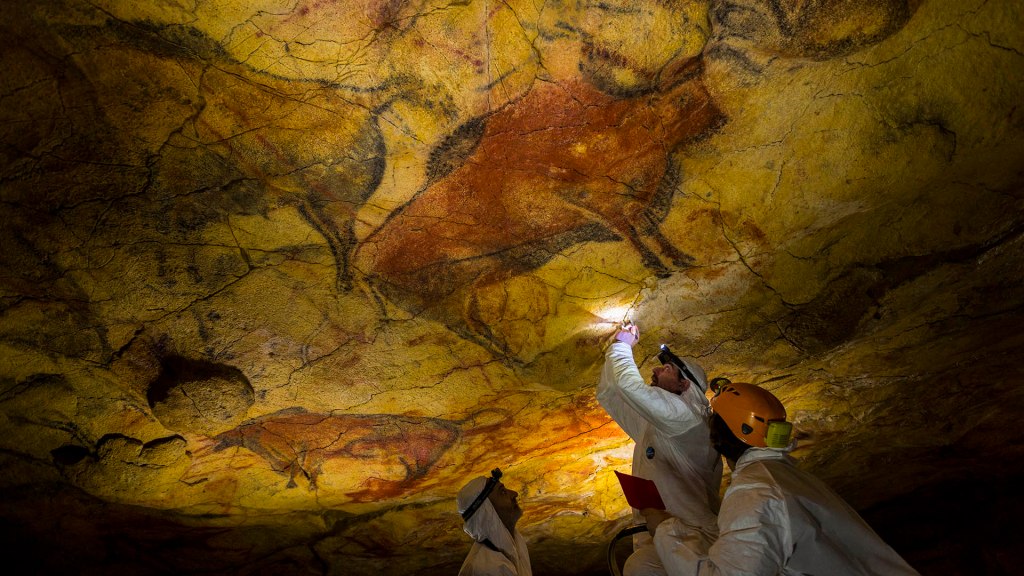
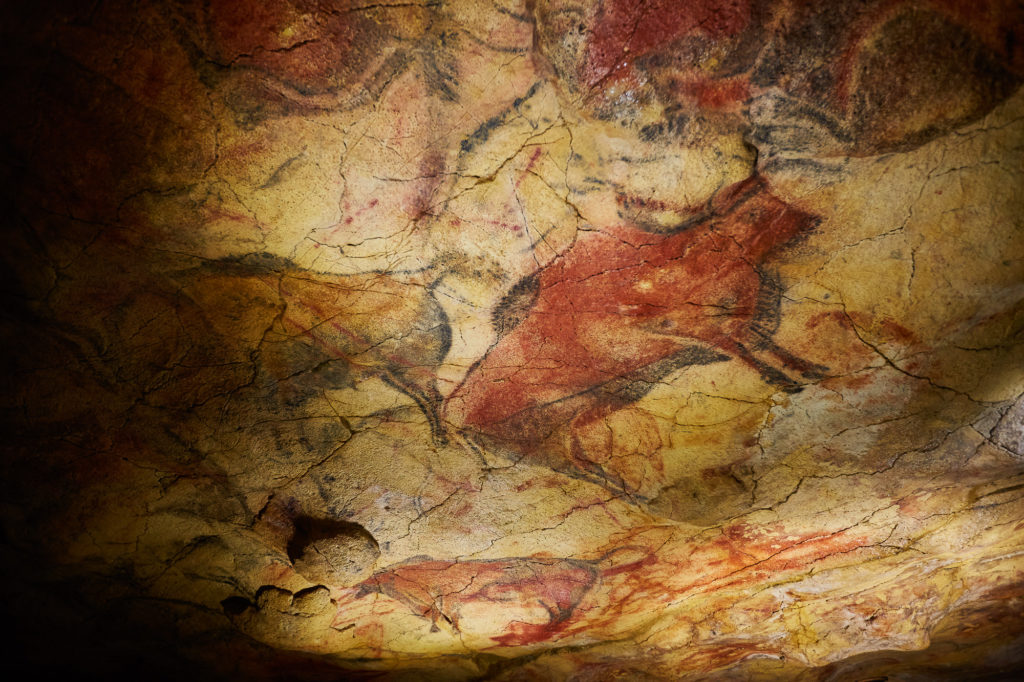
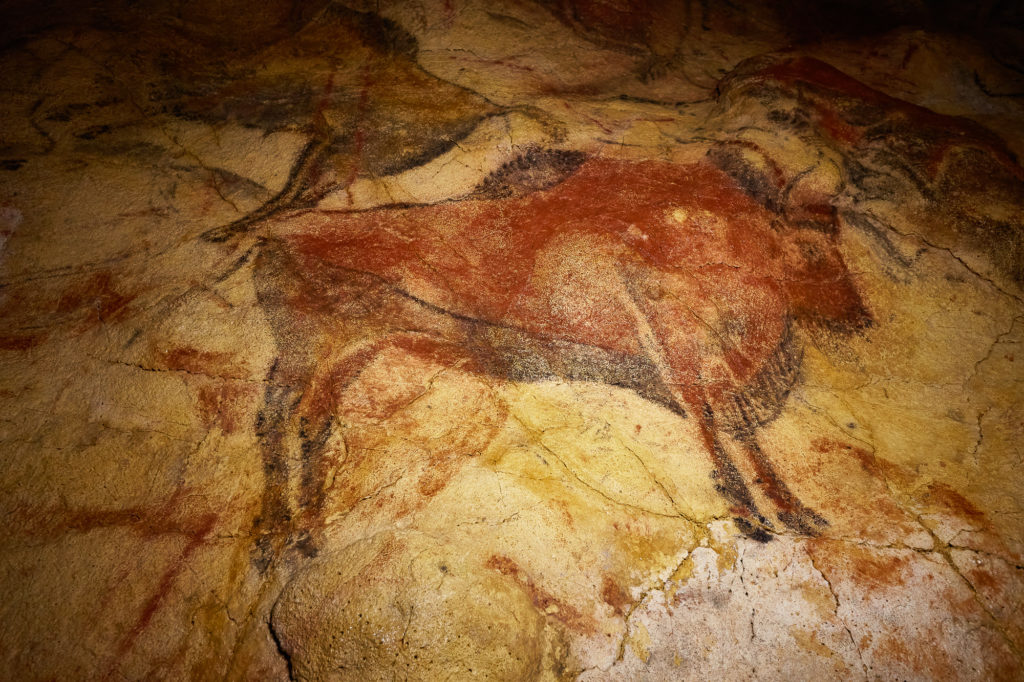
 World History Portal