• The Church and the Second Wave of Liberalism

    November 11th, 2024
    The Church and Education

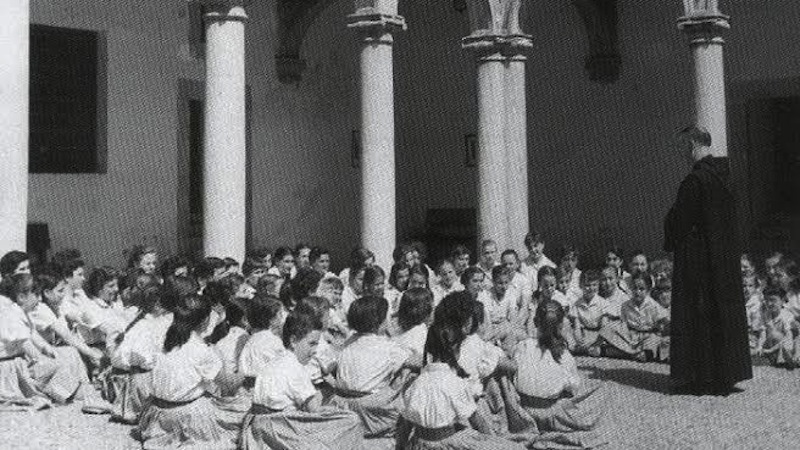
    For liberals, the Church in post-independence Latin America was problematic at all levels. Its immense wealth and influence were seen as roadblocks to the creation of a modern, free-market economy. Liberal thinkers also viewed the Church’s control of education as an obstacle to progress, claiming it prevented the state from providing the rational, scientific, and utilitarian education they believed essential for societal advancement. However, defenders of the Church in Mexico presented counterarguments, portraying it as a stabilizing force in the nation’s social and cultural life. These perspectives reveal the complexity of the Church’s role during this period, as well as the ideological battle lines between liberal reformers and religious institutions.

    Consider the following as you analyze these sources:

    • What does Lucas Aleman’s argument that Catholicism serves as the “only common bond” uniting Mexicans suggest about the role of religion in national identity and stability?
    • How does Francisco Bilbao distinguish between the teachings of Jesus and the practices of Catholicism, and what implications does this distinction have for understanding the role of religion in the subordination of women and citizens?
    • In what ways does Bilbao argue that the union between the clergy and monarchy perpetuates systems of control and subjugation, and how does this connect to the broader critique of tradition versus free thought?

    Complete the Primary Source Analysis Form when finished for your records.


    Lucas Aleman (1853)

    First and foremost is the need to preserve the Catholic religion, because we believe in it and because even if we did not hold it to be divine, we consider it to be the only common bond that links all Mexicans when all the others have been broken; it is the only thing capable of sustaining the Spanish-American race and of delivering it from the great dangers to which it is exposed. We also consider it necessary to maintain the ceremonial splendour of the Church, as well as its temporal properties, and to settle everything relating to ecclesiastical administration with the Pope.

    Francisco Bilbao, Chilean Sociability (1844)

    America came from Spain and carries her stamp; the Spanish past on American soil brings us to Chile. Let us quickly review the relations that the Catholic Church sanctions with regard to the state, the customs, and the philosophy of the time in which we live. There is no doubt that
    Christianity was a major advance in the religious rehabilitation of men; but Catholicism . . . reacted with hostility to the primitive purity of the doctrine of Jesus. Under Catholicism, women are subordinated to their husbands. The result is the slavery of women. Paul, the primary founder of Catholicism, did not follow the moral religion of Jesus Christ. Jesus emancipated women. Paul subordinated them. Jesus was Western in his spirit, that is to say, liberal. Paul was oriental and authoritarian. Jesus founded a democratic religion, Paul an ecclesiastical aristocracy. From there originates the logical consequence of the slavery of women.

    When individuals are subordinated to authority, the result is the slavery of citizens. “Obey the
    authorities,” says Saint Paul. A diplomatic principle in origin, it began so as to avoid the persecution of pagan authorities and was converted later into an active instrument of subjugation. This also explains the union that has almost always existed between the clergy and the Catholic monarchies. Monarchy is a government of divine or heroic tradition, of privilege or authority; of course it needs the aid of religion. The clergy dominate individual citizens and obstruct free analysis and free thought, which are the enemies of tradition. The clergy, for its part, needs the aid of earthly power for the creation and maintenance of its private interests, for the persecution of heresy. How clearly the logic of the French Revolution appears now. The people, free individuals, free analysis, the present cut loose from the past. Bury the monarchy, the clergy, and the nobility; bury the Catholic synthesis of the past. When thought is chained to the text and intelligence molded by beliefs the result is slavery of the mind. Education, logically, was entrusted to the convents. This also explains the predominance of Aristotle in the Middle Ages. Aristotle was logic then. One could only deduce from given principles.

  • The Words of Simón Bolívar

    November 3rd, 2024
    Simón Bolívar

    Simón Bolivar (1783-1830) is considered to be one of the greatest leaders of Latin American
    independence movements. Even so, Bolívar faced numerous challenges to consolidate
    independence and the aftermath of creating a strong nation-state. Although influenced by
    the Enlightenment and the age of Atlantic Revolutions, in the end Bolívar believed that an
    authoritarian government was the only way possible to bring success to the newly formed states of Latin America. Consider the following questions as you read the selections below taken from Bolívar’s writings.

    • What solutions did Bolívar provide to address these challenges?
    • What challenges did post-independence Latin America (Venezuela) face?
    • What kept leaders from achieving the goals of independence?
    • What caused these challenges?

      Complete the Primary Source Analysis Form when finished for your records.


      The Cartagena Manifesto: Memorial Addressed to the Citizens of New Granada by a
      Citizen from Caracas (1812)

      The doctrine behind this conduct had its origin in the philanthropic maxims of certain writers
      who defend the idea that no one has the right to take the life of a human being, even one who has committed the crime of treason against the State. Shielded by this pious doctrine, each
      conspiracy was followed by a pardon, and each pardon by another conspiracy, subsequently
      pardoned, because, you know, liberal governments feel obliged to distinguish themselves by the quality of mercy. But this is a criminal mercy that contributed more than anything else to the destruction of the machine we had not yet finished building! This was the source of the
      determined opposition to the practice of calling up veteran troops, disciplined and capable of
      appearing on the field of battle, fully trained and ready to defend freedom with success and
      glory. Instead, countless poorly disciplined militias were established, which had the effect not
      only of exhausting the national treasury with exorbitant salaries but also of destroying
      agriculture, tearing the farm workers away from their farms, and turning the government into an object of hatred, because it forced them to take up arms and abandon their families. But what most weakened the government of Venezuela was the federalist structure it adopted, embodying the exaggerated notion of the rights of man. By stipulating that each man should rule himself, this idea undermines social pacts and constitutes nations in a state of anarchy. Such was the true state of the confederation. Each province governed itself independently, and following this example, each city claimed equal privilege, citing the practice of the provinces and the theory that all men and all peoples have the right to institute whatever form of government they choose. The federal system, although it is the most perfect and the most suitable for guaranteeing human happiness in society, is, notwithstanding, the form most inimical to the interests of our emerging states. Generally speaking, our fellow citizens are not yet ready to take on the full and independent exercise of their rights, because they lack the political virtues marking the true citizen of a republic. Such virtues are impossible to attain in absolutist governments, where there is no training in the rights or duties of citizenship.

      “Letter from Jamaica,” Simón Bolívar (1815)

      The role of the inhabitants of the American hemisphere has for centuries been purely passive. Politically they were nonexistent. We have been harassed by a conduct which has not only deprived us of our rights but has kept us in a sort of permanent infancy with regard to public affairs. If we could at least have managed our domestic affairs and our internal administration, we could have acquainted ourselves with the processes and mechanics of public affairs. More than anyone, I desire to see America fashioned into the greatest nation in the world, greatest not so much by virtue of her area and wealth as by her freedom and glory. Although I seek perfection for the government of my country, I cannot persuade myself that the New World can, at the moment, be organized as a great republic. . . . The American states need the care of paternal governments to heal the sores and wounds of despotism and war. It is a grandiose idea to think of consolidating the New World into a single nation, united by pacts into a single bond. It is reasoned that, as these parts have a common origin, language, customs, and religion, they ought to have a single government to permit the newly formed states to unite in a confederation. But this is not possible. Actually, climatic differences, geographic diversity, conflicting interests, and dissimilar characteristics separate America. Undoubtedly, unity is what we need to complete our project of regeneration. However, our division is not surprising, for such is the nature of civil wars, usually fought between two factions: conservatives and reformers. Generally, the former are more numerous, because the rule of custom inclines us to obedience to established powers; the latter are always less numerous but more passionate and enlightened. In this way physical mass is balanced by moral force, so that the conflict is prolonged, and the results are uncertain.

      “Address at the Congress of Angostura,” Simón Bolívar (1819)

      We are not Europeans; we are not Indians; we are but a mixed species of aborigines and
      Spaniards. Americans by birth and Europeans by law, we find ourselves engaged in a dual
      conflict: we are disputing with the natives for titles of ownership, and at the same time we are
      struggling to maintain ourselves in the country that gave us birth against the opposition of the invaders. Thus our position is most extraordinary and complicated. But there is more. As our role has always been strictly passive and political existence nil, we find that our quest for liberty is now even more difficult of accomplishment; for we, having been placed in a state lower than slavery, had been robbed not only of our freedom but also of the right to exercise an active domestic tyranny. . . . We have been ruled more by deceit than by force, and we have been degraded more by vice than by superstition. Slavery is the daughter of darkness: an ignorant people is a blind instrument of its own destruction. Ambition and intrigue abuses the credulity and experience of men lacking all political, economic, and civic knowledge; they adopt pure illusion as reality; they take license for liberty, treachery for patriotism, and vengeance for justice. If a people, perverted by their training, succeed in achieving their liberty, they will soon lose it, for it would be of no avail to endeavor to explain to them that happiness consists in the practice of virtue; that the rule of law is more powerful than the rule of tyrants, because, as the laws are more inflexible, everyone should submit to their beneficent austerity; that proper morals, and not force, are the bases of law; and that to practice justice is to practice liberty. Therefore, let the entire system of government be strengthened, and let the balance of power be drawn up in such a manner that it will be permanent and incapable of decay because of its own tenuity. Precisely because no form of government is so weak as the democratic, its framework must be firmer, and its institutions must be studied to determine their degree of stability…unless this is done, we will have to reckon with an ungovernable, tumultuous, and anarchic society, not with a social order where happiness, peace, and justice prevail.

    • The Autobiography of Manuel Belgrano II (1770-1820)

      October 28th, 2024
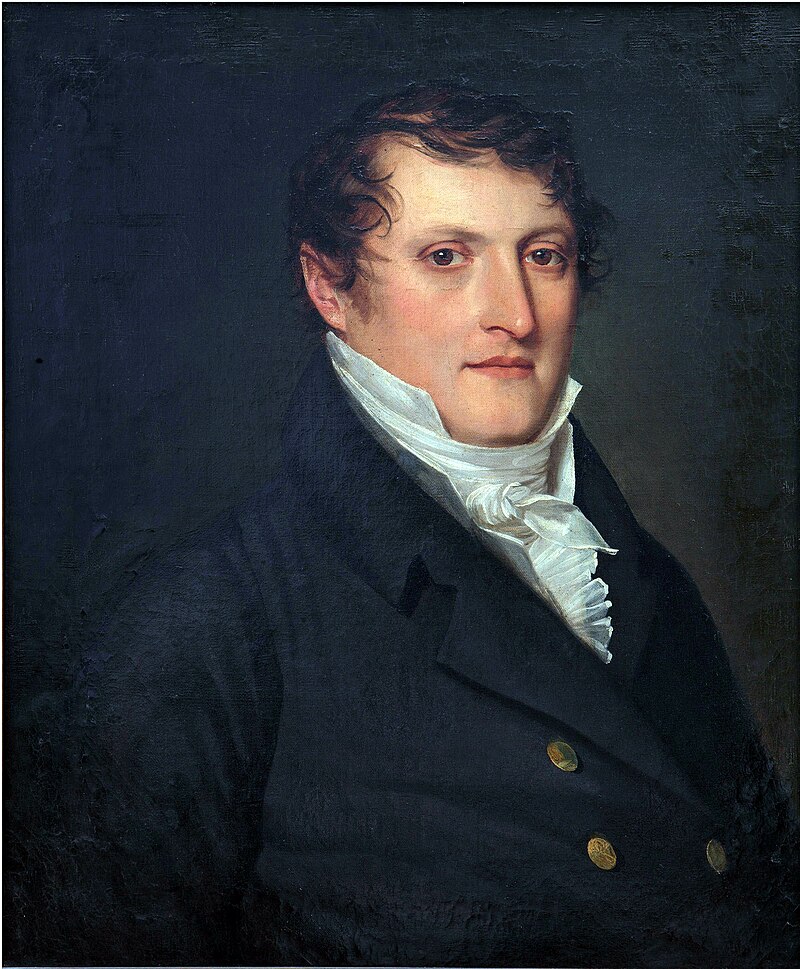
      Manuel Belgrano (1770-1820)

      In this topic’s primary source, you will have the opportunity to once again read about Manuel Belgrano, but with more detail. Recall that Manuel Belgrano (1770– 1820) was born in Buenos Aires, Viceroyalty of Río de la Plata. During his lifetime, Belgrano served in a many of capacities which included being an economist, a lawyer and eventually a leader of the Argentine independence movement. In his autobiography, Belgrano provides insights into what “influences and events that transformed a young Creole of wealth and high social position into an ardent revolutionary.” Consider the following questions as you read the selections below:

      • Why was Belgrano sent to Spain by his father?
      • What influenced his political ideas while in Spain?
      • Why did Belgrano’s spirits start to fall?
      • How is Belgrano reflective of colonial dissatisfaction with Spanish rule?

      Complete the Primary Source Analysis Form when finished for your records.


      The place of my birth was Buenos Aires; my parents were Don Domingo Belgrano y Peri, known as Pérez, a native of Onella in Spain, and Doña María Josefa González Casero, a native of Buenos Aires. My father was a merchant, and since he lived in the days of monopoly he acquired sufficient wealth to live comfortably and to give his children the best education to be had in those days. I studied my first letters, Latin grammar, philosophy, and a smattering of theology in Buenos Aires. My father then sent me to Spain to study law, and I began my preparation at Salamanca; I was graduated at Valladolid, continued my training at Madrid, and was admitted to the bar at Valladolid. . . . Since I was in Spain in 1789, and the French Revolution was then causing a change in ideas, especially among the men of letters with whom I associated, the ideals of liberty, equality, security, and property took a firm hold on me, and I saw only tyrants in those who would restrain a man, wherever he might be, from enjoying the rights with which God and Nature had endowed him. . . . When I completed my studies in 1793 political economy enjoyed great popularity in Spain; I believe this was why I was appointed secretary of the consulado of Buenos Aires, established when Gardoqui was minister. The official of the department in charge of these matters even asked me to suggest some other well-informed persons who could be appointed to similar bodies to be established in the principal American ports. When I learned that these consulados were to be so many Economic Societies that would discuss the state of agriculture, industry, and commerce in their sessions, my imagination pictured a vast field of activity, for I was ignorant of Spanish colonial policy. I had heard some muffled murmuring among the Americans, but I attributed this to their failure to gain their ends, never to evil designs of the Spaniards that had been systematically pursued since the conquest.

      On receiving my appointment I was infatuated with the brilliant prospects for America. I had
      visions of myself writing memorials concerning the provinces so that the authorities might be informed and provide for their well-being. It may be that an enlightened minister like Gardoqui, who had resided in the United States, had the best of intentions in all this. . . . I finally departed from Spain for Buenos Aires; I cannot sufficiently express the surprise I felt when I met the men named by the king to the council that was to deal with agriculture, industry, and commerce and work for the happiness of the provinces composing the viceroyalty of Buenos Aires. All were Spanish merchants. With the exception of one or two they knew nothing but their monopolistic business, namely, to buy at four dollars and sell for eight. . . . My spirits fell, and I began to understand that the colonies could expect nothing from men who placed their private interests above those of the community. But since my position gave me an opportunity to write and speak about some useful topics, I decided at least to plant a few seeds that someday might bear fruit. . . . I wrote various memorials about the establishment of schools. The scarcity of pilots and the direct interest of the merchants in the project presented favorable circumstances for the establishment of a school of mathematics, which I obtained on condition of getting the approval of the Court. This, however, was never secured; in fact, the government was not satisfied until the school had been abolished, because although the peninsulars [European-born Spaniards] recognized the justice and utility of such establishments, they were opposed to them because of a mistaken view of how the colonies might best be retained. The same happened to a drawing school, which I managed to establish without spending even half a real for the teacher. The fact is that neither these nor other proposals to the government for the development of agriculture, industry, and commerce, the three important concerns of the consulado, won its official approval; the sole concern of the Court was with the revenue that it derived from each of these branches. They said that all the proposed establishments were luxuries, and that Buenos Aires was not yet in a condition to support them. I promoted various other useful and necessary projects, which had more or less the same fate, but it will be the business of the future historian of the consulado to give an account of them; I shall simply say that from the beginning of 1794 to July 1806, I passed my time in futile efforts to serve my country. They all foundered on the rock of the opposition of the government of Buenos Aires, or that of Madrid, or that of the merchants who composed the consulado, for whom there was no other reason, justice, utility, or necessity than their commercial interest. Anything that came into conflict with that interest encountered a veto, and there was nothing to be done about it.


      Source: Robert M. Buffington and Lila Caimari, editors. Keen’s Latin American Civilization: Volume Two: The Modern Era. Routledge, 2018.

    • The Transfer Process

      October 14th, 2024

      Introduction

      Transferring from a community college to a four-year institution is a straightforward process, but many students encounter difficulties for a variety of reasons. What do you think are the most common obstacles? Below are some examples of common challenges that can hinder a successful transfer:

      • Lack of information about the transfer process: Students may not fully understand the requirements or steps involved.
      • Not working with an academic counselor: Failing to seek guidance from a counselor can result in missed deadlines or inappropriate course selections.
      • Relying on advice from friends: Listening to well-meaning but uninformed peers can lead to misconceptions.
      • Poor academic performance: Struggling in classes can jeopardize eligibility for transfer.

      To help you avoid these pitfalls, myPATH counselors and faculty are committed to ensuring you are well-informed about the transfer process. Our goal is to help you achieve your academic and career aspirations. myPATH counselors visit classrooms to assist with preparing or updating your individual education plan. To take full advantage of this support, please review the following details about the transfer process and ensure you are on the right track.your options. In this manner you can make sound informed decisions about your transfer choices. When you finish reading this information take the following assessment:

      The Transfer Process Quiz

      College or University? Public or Private ?

      Are you planning to transfer to a college or university? Will it be a public or private institution? Before making your decision, it’s important to understand the differences between a college and a university. To help clarify, take a moment to review the definitions below.

      • College: “An institution of higher learning that offers undergraduate programs, usually of a four-year duration, that lead to the bachelor’s degree in the arts or sciences (B.A. or B.S.).”
      • University: “An educational institution that usually maintains one or more four-year undergraduate colleges (or schools) with programs leading to a bachelor’s degree, a graduate school of arts and sciences awarding master’s degrees and doctorates (Ph.D.’s), and graduate professional schools.”

      Here are some other things to consider:

      • Public: “Public colleges and universities receive funding from tuition and endowments, but the larger part of their funding comes from state or local taxes. Most public postsecondary schools are state-run, which lowers the tuition for in-state students” For example the University of California Los Angeles and California State University Long Beach.
      • Private/Non-Profit: “Private, non-profit colleges and universities receive funding primarily from student tuition and endowments. These institutions function as non-profit organizations that usually follow the leadership of a board of trustees. Private colleges and universities may receive some governmental support in the form of tax breaks and student loans, but operating mostly on private support allows them to develop their own institutional plan.” For example the University of Southern California and Loyola Marymount University
      • Private/For Profit: “For-profit colleges are run by companies that operate under the demands of investors and stockholders. These institutions are privately run and exist, at least in part, to earn money for their owners. Nevertheless, for-profit colleges can receive up to 90 percent of their revenue from federal student aid.” For example the University of Phoenix.

      Explore your Transfer Institution Options

      • University of California
      • California State University
      • California Private/Independent College and Universities

      Transfer Steps

      What are the exact steps to begin your transfer journey? First and foremost, consult with an academic counselor as early as possible to set yourself up for transfer success. Additionally, work towards completing the following steps:

      • Be sure to submit your high school transcripts or college transcripts if you have attended other community colleges or four-year institutions to ECC’s admission office.
      • Identify a major and career choice you wish to pursue both at ECC and at your four-year transfer target. Also identify possible transfer targets. Know the minimum eligibility and selection criteria for you transfer targets.
      • Visit the Transfer Center and attend their workshops.
      • Work with an academic counselor to develop a transfer plan. If you are STEM major (Science, Technology, Engineering, Math) it is critical that you work with a counselor as soon as possible!
      • Visit Career Services to to receive career counseling.
      • Become familiar with your General Education options and be familiar with articulation agreements for your major.
      • Learn if you qualify for a Transfer Admission Guarantee from the University of California or a Associate Degree for Transfer from the California State University.
      • Identify transfer application filing periods. Apply to be certified for General Education.

      Transfer Requirements

      Transfer admission requirements can vary significantly between campuses. Some institutions have very strict, clearly outlined criteria, while others are more flexible. This variability makes it essential to work closely with a counselor to ensure your transfer success.

      Below are some key terms to familiarize yourself with. Most colleges and universities have three primary types of requirements that must be met for admission:

      • Course Requirements: Specific courses that must be completed before transfer.
      • GPA Requirements: A minimum grade point average needed to qualify.
      • Unit Requirements: A set number of transferable units that must be completed.

      Understanding these requirements early on is critical to planning a successful transfer.

      Two other things to consider:

      • Minimum Eligibility: “Minimum eligibility means that you have completed the minimum requirements to apply, in short you are eligible. Just because you are eligible to apply to a university does not mean you will be admitted.” For example, the UC Transfer-Basic Admissions website states that student must have at least a 2.4 GPA in UC-transferable courses (2.8 if you’re a nonresident) for admission.
      • Selection Criteria: “Selection Criteria refers to the set of criteria a university or college is looking for in the students they select. For example, if a student has the minimum GPA for eligibility but the campus selection GPA is higher, the student would most likely not be admitted.” In contrast, the average GPA selection criteria for admission to UCLA’s College of Letters and Science as a pre-History major in Fall 2020 was 3.93.

      Transfer Units

      o transfer to a University of California (UC) or California State University (CSU) campus, you must complete a minimum of 60 transferable units. In contrast, California independent and private colleges or universities may require fewer units for transfer.

      So, how do you earn these transferable units? Read below to find out.

      • Pre-Major Units: Most majors at four-year colleges and universities require completion of lower division major specific courses as preparation for the upper division. The number of pre-major courses may vary.
      • General Education Units: G.E. is a group of courses in varied areas of the arts and sciences, designate as one of the requirements for a degree. G.E. can satisfied by completing IGETC for the UC and CSU or the CSU G.E. applicable only to the CSU.
      • Elective Units: Courses not required for the major or general education but are acceptable for credit. An elective course may be in the student’s major area of study or any department of a college.

      Identifying Pre-Major Units

      All articulation agreements for pre-major requirements (units) for the UC and CSU systems can be found on ASSIST.org. What is ASSIST.org? It is the official repository of articulation agreements for California’s public colleges and universities, providing the most accurate and up-to-date information about student transfer in the state.

      Articulation agreements detail how courses completed at one college or university can satisfy requirements at another. On ASSIST, students can find courses that fulfill:

      • University admission requirements,
      • Major and general education requirements,
      • University graduation requirements, and
      • Transferable elective courses to meet the required unit total for transfer.

      It’s important to note that ASSIST only contains information for California public colleges and universities; it does not include details about private, out-of-state, or international institutions. While ASSIST is an invaluable tool, it is not a substitute for working with a counselor. Instead, it is designed to help students and counselors collaborate to create an effective transfer plan to a California public university.

      General Education

      If you plan to transfer to a UC or CSU, there are two General Education (GE) options to consider based on your campus or system choice:

      • Intersegmental General Education Transfer Curriculum (IGETC)
      • CSU GE Breadth Pattern

      General Education courses are graduation requirements, not admission requirements. However, at some schools, completing the GE pattern—or specific portions of it—may be used as a criterion to screen transfer applicants.

      Most students follow the IGETC pathway because it is accepted by both the UC and CSU systems. However, selecting the best option for you depends on your individual academic and transfer goals, which is why it’s crucial to consult with a counselor. Students pursuing STEM majors should speak with a counselor immediately to ensure their focus aligns with major-specific requirements.

      Below are the details of the two GE options.

      • IGETC: “The Intersegmental General Education Transfer Curriculum (IGETC) is a series of courses that satisfy the lower division general education requirements at the University of California (UC), the California State University (CSU), some private and out-of-state institutions.” IGETC must be certified at your community college. Students must request this certification, which is sent to the transfer institution.
      • CSU General Education-Breadth: “Completion of the CSU General Education-Breadth pattern will permit a student to transfer from a community college to a campus in the California State University system without being held, after transfer, to additional lower-division general education courses to satisfy campus G.E. requirements.” CSU G.E. must be certified at your community college. Students must request this certification which is sent to the transfer institution.

      UC TAG

      Six UC campuses offer the Transfer Admission Guarantee (TAG) program for California community college students who meet specific eligibility requirements. TAG provides students with several benefits, including:

      • Early review of their academic records,
      • Early admission notification.
      • Specific guidance about their chosen major.

      To participate in the TAG program, it’s essential to work closely with your counselor, who will guide you through the exploration and application process to ensure you meet the necessary criteria.

      CSU ADT

      The Associate Degree for Transfer (ADT) was created through a partnership between California Community Colleges and participating four-year institutions to simplify the transfer process. This program allows students to:

      • Begin their education at a community college,
      • Transfer to a participating four-year university with a guaranteed saved spot.
      • Earn a bachelor’s degree.

      Your counselor will guide you in exploring and identifying an Associate Degree for Transfer that aligns with your academic and career goals, ensuring a smooth transition to a four-year university.

      Again, it cannot be stressed enough that you must work with a counselor as soon as possible to ensure your transfer success.

    • The Last Will and Testament of María de Huancavelica (c. 1661)

      October 13th, 2024

      The following source focuses on María de Huancavelica, a free black woman living in
      Lima, Peru. Believing her life was coming to an end, she had a public notary draw up a will
      specifying how here possessions were to be distributed. Quantitative data has shown that
      free black women such as María vastly outnumbered free black men in Lima. As a result of this, women such as María participated in many economic facets of Lima and were able to amass wealth. Documentation such as this will allows historians to gain a glimpse of life, death, and gender in colonial Lima. Consider the following questions as you analyze this source:

      • Does the testament indicate that María de Huancavelica committed to Christianity?
      • How did María de Huancavelica secure her personal wealth?
      • How does María de Huancavelica wish her wealth to be distributed?
      • What insights does this testament give of the lives of free black women in colonial Lima?

        Complete the Primary Source Analysis Form when finished for your records.

        Source: McKnight, Kathryn Joy; Garofalo, Leo J.. Afro-Latino Voices: Narratives from the Early Modern Ibero-Atlantic World, 1550-1812. Hackett Publishing.


        Free Black Woman of the Folupa Nation, Lima, 1666] In the name of God, amen, in whose
        beginning all things have their just, praiseworthy, and fortunate end: Know, those who read this last will and testament, that I, María de Huancavelica, a free black woman of the Folupa nation, native of Ethiopia in Guinea, resident of the City of Kings [Lima] in Peru, daughter of unknown parents, being sick in bed of an illness that Our Lord God has seen fit to give me and believing as I firmly and truly believe in the mystery of the most Holy Trinity, the Father, the Son, and the Holy Spirit, three distinct persons in one true God, and in all the rest that the Holy Mother Roman Catholic Church believes, confesses, and teaches, under whose faith and belief I have lived and I profess to live and die as a Catholic Christian, and fearful of death, which is consubstantial to all human creatures, I hereby make and declare my last will and testament in the following way and form:

        First of all, I entrust my soul to Our Lord God, who created it and redeemed it with the infinite
        price of his blood, and my body shall return to the dust from which it was formed. Item. I want
        and it is my will that, once Our Lord sees fit to take me from this present life, my body be buried in the Convent of Saint Francis in this city or in the place that my executors deem most appropriate, and that my body be shrouded with the habit of Saint Francis to earn the graces and indulgences that it brings, and a presiding cross, priest, and sacristan from my parish accompany my burial. And with regard to the rest of the retinue and details of my burial, I leave them to the discretion of my executors, and I order that the day of my burial, or if not, the day deemed appropriate by my executors, a funeral Mass be celebrated with my body present that includes offerings of bread and wine, and it must be done as is customary and paid for from my estate. Item. I set aside from my estate two pesos to pay for the customary and obligatory alms. Item. I order ten pesos of eight reales to pay the ransom of captive children in Moorish lands, and it must come from a legitimate part of my estate. Item. I order another ten pesos to be sent to the Holy Sites of Jerusalem where our Holy Redemption took place and to be given to the priest who asks for these alms. Item. I declare that I do not owe anything. I declare it so that there is no doubt. Item. I declare as my assets the following: Item. I declare that the laborer Juan de Villegas Álvarez owes me two thousand pesos of eight reales according to a notarized document that I have among my papers. I declare it so that there may be no doubt. Item. I declare that Antonio Carabalí owes me 350 pesos of eight reales that I lent him for his manumission. I pardon and forgive what I lent him for his freedom so that nothing more is asked of him, and in the same way, I implore my executors not to ask anything more of him because such is my will. Item. I declare that Jacinta of the Folupa nation owes me four hundred pesos of eight reales of the eight hundred pesos that I lent her for her manumission.

        I order that the four hundred still owed be collected, and nothing additional. Item. I declare as my slave María, of the Folupa nation, and I order and it is my will that after my death she be
        manumitted, and she needs only this clause and my death to obtain her freedom, without
        collection of any payment nor the writing of any other document, and this is my will because of how well she has served me. [I declare as my slave] María, of the Mandinga nation, and I order and it is my will that she be freed and my executors give her the deed of manumission upon payment by her or by any other person of three hundred pesos of eight reales, and that she must not be sold for more than the said amount and, in the meantime until she can pay the full amount of three hundred pesos for her freedom, I want her to pay only four pesos of eight reales of wages each month to my executors, and this I order. [I declare as my slave] Ambrosio Folupo, and I order and it is my will that upon his payment of three hundred pesos of eight reales, he be freed and my executors give him the deed of manumission and that he must not be sold for more than the said amount, and, in the meantime, until he can pay the full amount, he will be obligated to pay to my executors four pesos of eight reales of wages each month. [I declare as my slave] Antón Folupo, and I order and it is my will that upon his payment of two hundred fifty pesos of eight reales, he be freed and my executors give him the deed of manumission, and he cannot be sold for an amount above the stated two hundred fifty pesos, and, in the meantime until he can pay the full amount, he will be obligated to pay four pesos of eight reales of wages each month. [I declare as my slave] Susana Folupa, and I order and it is my will that upon her payment of two hundred pesos of eight reales for my burial she be freed and that my executors give her the deed of manumission and that she should not be sold for more. Item. I declare two small double-handled bowls [or cups] of silver, a box from Panamá, a trunk, and the clothing that will be made clear in the inventory. Item. I declare that [I have] a skirt and a shawl of black flannel, a skirt of silk, and a bodice of [illegible] that belongs to Rafaela Zapata and one hundred and five pesos of eight reales that also belong to her. I want my executors to return all these things to her and that she give them either a written receipt or that the transaction be done in front of a notary. Item. I declare that María of the Congo nation is indebted to me in a certain amount of pesos. I order that only fifty pesos of eight reales be collected from her, and I forgive her the rest on the condition that she pray for me to God. Item. I declare that I owe Manuel Espadero, a black man, a total of thirty-five pesos of eight reales, the remainder of some reales that his deceased wife, María Folupa, gave to me. I order that he be paid this amount and also that he be given some bracelets made of coral and a small box, and he must give a receipt for it. And to fulfill and pay for this testament and the bequests and legacies in it, I leave and name as my executors my confessor, the licentiate Juan [Zapata de Henao?], presbyter, and Gracia de la Paz, of the Folupa nation, [and] as the trustee, the said Gracia Folupa. And I grant them power as executors to organize, sell, and resolve my estate at public auction or otherwise, in order to fulfill and pay for this last will and testament and its bequests, and I also grant them all the time they may require to do so even if it exceeds the year that the law concedes. Item. I declare that Miguel Folupo gave to me thirty-three pesos to safeguard. I order that it be paid back to him from my assets. Item. I declare that Simón Folupa gave me twenty pesos to safeguard, and I order that it be paid back to him from my assets. Item. I declare that I bought a black woman, María Folupa, at a price of 350 pesos as certified in writing by Francisco de Acuña, royal notary, from a parda woman named María de Bilbao who assists at the hospital of Saint Bartholomew, and I declare that the said slave belongs to Juliana Folupa, who gave me the money for this transaction, and I declare it for the unburdening of my conscience. Item. I declare that I have in my possession a double-handled bowl [or cup] and a silver spoon belonging to Susana Folupa that she gave me to safeguard. I order that it be returned to her. And I leave and name my soul as heir of whatever assets, debts, rights, and actions might remain from the liquidation of my estate, and it is my wish that this money be used to establish a chaplaincy, which should be founded by the licentiate Juan [Zapata de Henao?], my executor and confessor, whom I leave as its patron and chaplain. And he is allowed to name his successor after he dies, and he can establish the alms to be given for each Mass according to what I have communicated to him, and this chaplaincy must be established after I die, and no judge should interfere because this is my will, and he can establish all the necessary clauses according to his judgment because I do not have any heirs who can inherit my estate. Item. I order that twelve pesos of eight reales be sent to the Hospital of Saint Bartholomew. Item. I order that six pesos of eight reales be sent to the Sweet Name of Jesus against Blasphemies. Item. I order that twelve pesos of eight reales be sent for the rearing of the orphan children on the condition that they accompany my body the day of my burial. Item. I declare that I have in reales a total of nine hundred pesos of eight reales, more or less, and the exact amount will be determined in the inventory. I hereby revoke all former wills and testamentary dispositions of every nature and kind heretofore made by me in word or in writing or in any other way and I do not want them to be valid nor can they be used in or outside court, except for this one that I now declare as my testament, and I want it to be carried out and executed as my last will in the way that best follows the law. And I testify that this testament is done in the City of Kings [Lima] of Peru, the sixth day of the month of January of the year 1666. And the testator, whom, I, the notary, certify that I know, seemed to be in complete possession of her judgment and natural memory, judging from her answer to the questions that I asked her, and this is what she ordered, and she did not sign it because she said that she did not know how to write, and at her request a witness signed it.

      1. On the Exploits of Duarte Coelho

        September 29th, 2024
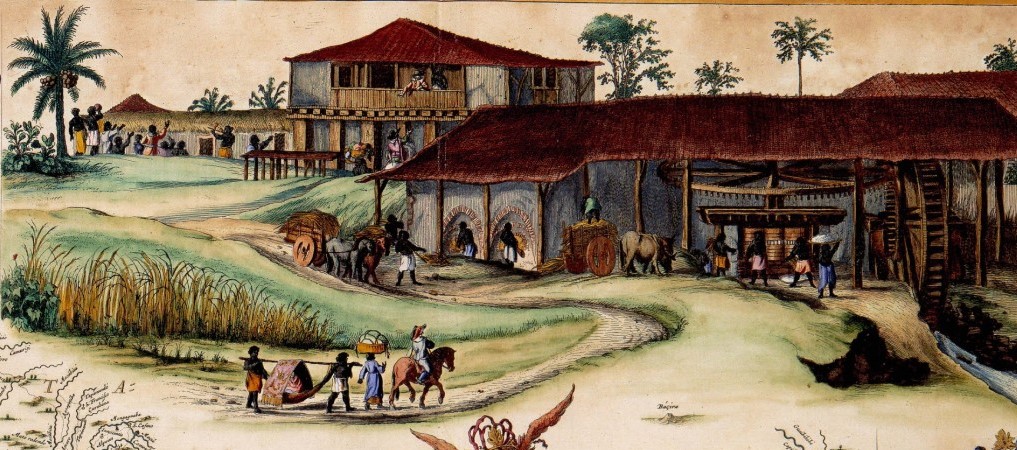
        Sugar Plantation Pernambuco – Willem J. Blaeu (1635)

        The Portuguese focused their early economic efforts in Brazil in the northeast coastland. It was extremely fertile and conducive to the growing of sugarcane. A plantation economy would dominate this region. Individuals appointed to settle early Brazil did so with an iron fist. Once such a person was Duarte Coelho who established the captaincy of Pernambuco. Consider the following questions as your read the selections below:

        • What was the population composition like under Coelho’s leadership?
        • Who posed a threat to the colonization efforts of Coelho?
        • How did Coelho secure his personal wealth?
        • What was the outcome for many of the colonizers that migrated to Pernambuco?

        Complete the Primary Source Analysis Form when finished for your records.


        Gabriel Soares de Souza, On the Exploits of Duarte de Coelho (1587)

        The town of Olinda is the capital of the captaincy of Pernambuco, which was settled by Duarte Coelho, a gentleman of whose courage and chivalry I shall not speak here in detail, for the books that deal with India are full of his deeds. After Duarte Coelho returned from India to Portugal to seek a reward for his services, he sought and obtained from His Highness the grant of a captaincy on this coast; this grant began at the mouth of the São Francisco River in the northwest and ran fifty leagues up the coast toward the captaincy of Tamaracá, ending at the Igaruçu River. . . . Since this brave captain was always disposed to perform great feats, he determined to come in person to settle and conquer this, his captaincy. He arrived there with a fleet of ships that he had armed at his own cost, in which he brought his wife and children and many of their kinsmen, and other settlers. With this fleet he made port at the place called Pernambuco, which in the native language means “hidden sea,” because of a rock nearby that is hidden in the sea. Arriving at this port, Duarte Coelho disembarked and fortified himself as well as he could on a high point free of any dominating peaks, where the town is today. There he built a strong tower, which still stands in the town square, and for many years he waged war against the natives and the French who fought at their side. Frequently he was besieged and badly wounded, with the loss of many of his people, but he courageously persisted in his aim, and not only defended himself bravely but attacked his enemies so effectively that they abandoned the neighboring lands. Later his son, of the same name, continued to wage war on them, harassing and capturing these people, called Cayté, until they had abandoned the whole coast and more than fifty leagues in the interior. In these labors Duarte spent many thousands of cruzados that he had acquired in India, and this money was really well spent, for today his son Jorge de Albuquerque Coelho enjoys an income of ten thousand cruzados, which he obtains from the retithe, from his tithe of the fishing catch, and from the quit rent paid him by the sugar-mills (fifty of these have been established in Pernambuco, and they produce so much sugar that the tithes on it yield nineteen thousand cruzados a year). This town of Olinda must have about seven hundred householders, but there are many more within the limits of the town, since from twenty to thirty people live on each of these plantations, aside from the many who live on farms. Hence if it were necessary to assemble these people with arms, they could place in the field more than three thousand fighting men, together with the inhabitants of the town of Cosmos, which must have four hundred mounted men. These people could bring from their estates four or five thousand Negro slaves and many Italians. This captaincy is so prosperous that there are more than a hundred men in it who have an income of from one to five thousand cruzados, and some have incomes of eight to ten thousand cruzados. From this land many men have returned rich to Portugal who came here poor, and every year this captaincy sends forty to fifty ships loaded with sugar and brazilwood; this wood is so profitable to His Majesty that he has lately farmed out the concession for a period of ten years at twenty thousand cruzados a year. It seems to me that such a powerful captaincy, which yields this kingdom such a great store of provisions, should be better fortified, and should not be exposed for a corsair to sack and destroy—which could be prevented with little expense and less labor.

      2. The Chronicle of the Discovery and Conquest of Guinea

        September 16th, 2024

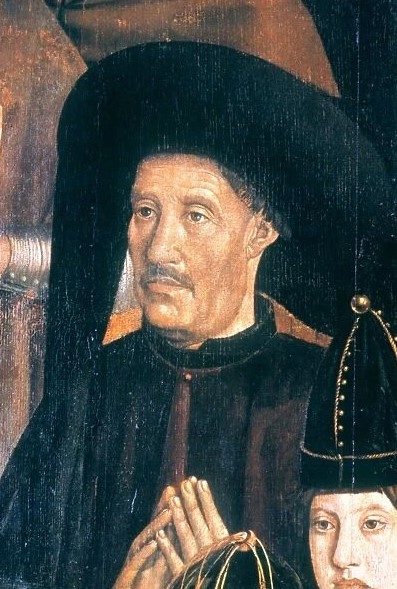
        Prince Henry the Navigator (1394-1460)

        Gomes Eannes de Azurara (died 1474) was a prominent Portuguese historian, chronicler, and archivist, serving as the chief keeper of the royal archives and the official chronicler to King Afonso V of Portugal. His historical writings played a crucial role in documenting Portugal’s early maritime explorations during the Age of Discovery. Azurara was an ardent admirer of Prince Henry the Navigator (1394–1460), the driving force behind Portugal’s pioneering voyages along the West African coast. His most significant work, Chronicle of the Discovery and Conquest of Guinea (Crónica da Descoberta e Conquista da Guiné), provides a detailed and vivid account of the early Portuguese expeditions into the Atlantic Ocean and their systematic exploration of the western coast of Africa. This work not only records the voyages undertaken by Portuguese navigators but also highlights the broader geopolitical, economic, and religious motivations behind these expeditions. Consider the following questions as you read the selections below:

        • What moved Prince Henry the Navigator to support Portuguese maritime expedition down the coast of Africa?
        • What difficulties were encountered by those participating in these expeditions? Why did they fear going beyond Cape Bojador?
        • How and when did the Portuguese venture around Cape of Bojador?
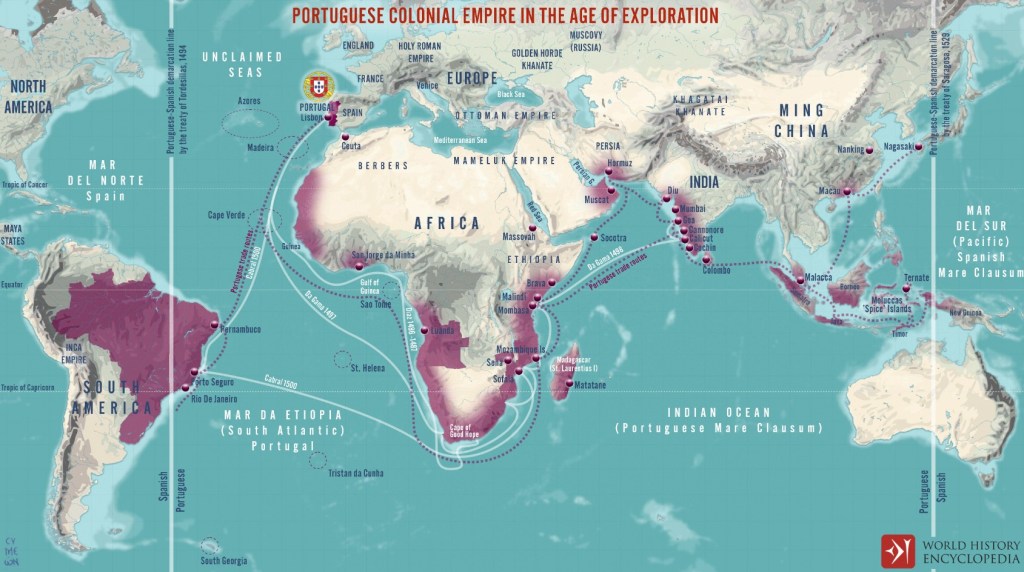
        Enlarge Image

        Complete the Primary Source Analysis Form when finished for your records.


        Chapter VII: In which five reasons appear why the Lord Infant was moved to command the search for the lands of Guinea.

        We imagine that we know a matter when we are acquainted with the doer of it and the end for which he did it. And since in former chapters we have set forth the Lord Infant as the chief actor in these things, giving as clear an understanding of him as we could, it is meet that in this present chapter we should know his purpose in doing them. And you should note well that the noble spirit of this Prince, by a sort of natural constraint, was ever urging him both to begin and to carry out very great deeds. For which reason, after the taking of Ceuta he always kept ships well armed against the Infidel, both for war, and because he had also a wish to know the land that lay beyond the isles of Canary and that Cape called Bojador, for that up to his time, neither by writings, nor by the memory of man, was known with any certainty the nature of the land beyond that Cape. Some said indeed that Saint Brandan had passed that way; and there was another tale of two galleys rounding the Cape, which never returned. But this doth not appear at all likely to be true, for it is not to be presumed that if the said galleys went there, some other ships would not have endeavoured to learn what voyage they had made. And because the said Lord Infant wished to know the truth of this,—since it seemed to him that if he or some other lord did not endeavour to gain that knowledge, no mariners or merchants would ever dare to attempt it—(for it is clear that none of them ever trouble themselves to sail to a place where there is not a sure and certain hope of profit)—and seeing also that no other prince took any pains in this matter, he sent out his own ships against those parts, to have manifest certainty of them all. And to this he was stirred up by his zeal for the service of God and of the King Edward his Lord and brother, who then reigned. And this was the first reason of his action.

        The second reason was that if there chanced to be in those lands some population of Christians, or some havens, into which it would be possible to sail without peril, many kinds of merchandise might be brought to this realm, which would find a ready market, and reasonably so, because no other people of these parts traded with them, nor yet people of any other that were known; and also the products of this realm might be taken there, which traffic would bring great profit to our countrymen.

        The third reason was that, as it was said that the power of the Moors in that land of Africa was very much greater than was commonly supposed, and that there were no Christians among them, nor any other race of men; and because every wise man is obliged by natural prudence to wish for a knowledge of the power of his enemy; therefore the said Lord Infant exerted himself to cause this to be fully discovered, and to make it known determinately how far the power of those infidels extended.

        The fourth reason was because during the one and thirty years that he had warred against the Moors, he had never found a Christian king, nor a lord outside this land, who for the love of our Lord Jesus Christ would aid him in the said war. Therefore he sought to know if there were in those parts any Christian princes, in whom the charity and the love of Christ was so ingrained that they would aid him against those enemies of the faith.

        The fifth reason was his great desire to make increase in the faith of our Lord Jesus Christ and to bring to him all the souls that should be saved,—understanding that all the mystery of the Incarnation, Death, and Passion of our Lord Jesus Christ was for this sole end—namely the salvation of lost souls—whom the said Lord Infant by his travail and spending would fain bring into the true path. For he perceived that no better offering could be made unto the Lord than this; for if God promised to return one hundred goods for one, we may justly believe that for such great benefits, that is to say for so many souls as were saved by the efforts of this Lord, he will have so many hundreds of guerdons in the kingdom of God, by which his spirit may be glorified after this life in the celestial realm. For I that wrote this history saw so many men and women of those parts turned to the holy faith, that even if the Infant had been a heathen, their prayers would have been enough to have obtained his salvation. And not only did I see the first captives, but their children and grandchildren as true Christians as if the Divine grace breathed in them and imparted to them a clear knowledge of itself

      3. The Autobiography of Manuel Belgrano (1770-1820)

        September 1st, 2024
        Manuel Belgrano (1770-1820)

        The place of my birth was Buenos Aires; my parents were Don Domingo Belgrano y Peri, known as Pérez, a native of Onella in Spain, and Doña María Josefa González Casero, a native of Buenos Aires. . . . My father then sent me to Spain to study law, and I began my preparation at Salamanca; I was graduated at Valladolid, continued my training at Madrid, and was admitted to
        the bar at Valladolid. . . .

        Since I was in Spain in 1789, and the French Revolution was then causing a change in ideas, especially among the men of letters with whom I associated, the ideals of liberty, equality, security, and property took a firm hold on me, and I saw only tyrants in those who would restrain a man, wherever he might be, from enjoying the rights with which God and Nature had endowed
        him. . . .

        When I completed my studies in 1793 political economy enjoyed great popularity in Spain; I believe this was why I was appointed secretary of the consulado (consulate) of Buenos Aires . . . . When I learned that these consulados were to be so many Economic Societies that would discuss the state of agriculture, industry, and commerce in their sessions, my imagination pictured a vast field of activity, for I was ignorant of Spanish colonial policy. I had heard some muffled murmuring among the Americans, but I attributed this to their failure to gain their ends, never to evil designs of the Spaniards that had been systematically pursued since the conquest.

        I finally departed from Spain for Buenos Aires; I cannot sufficiently express the surprise I felt when I met the men named by the king to the council that was to deal with agriculture, industry, and commerce and work for the happiness of the provinces composing the viceroyalty of Buenos Aires. All were Spanish merchants. With the exception of one or two they knew nothing but their monopolistic business, namely, to buy at four dollars and sell for eight. . . . My spirits fell, and I began to understand that the colonies could expect nothing from men who placed their private interests above those of the community.


        Source: Robert M. Buffington and Lila Caimari, editors. Keen’s Latin American Civilization: Volume Two: The Modern Era. Routledge, 2018.

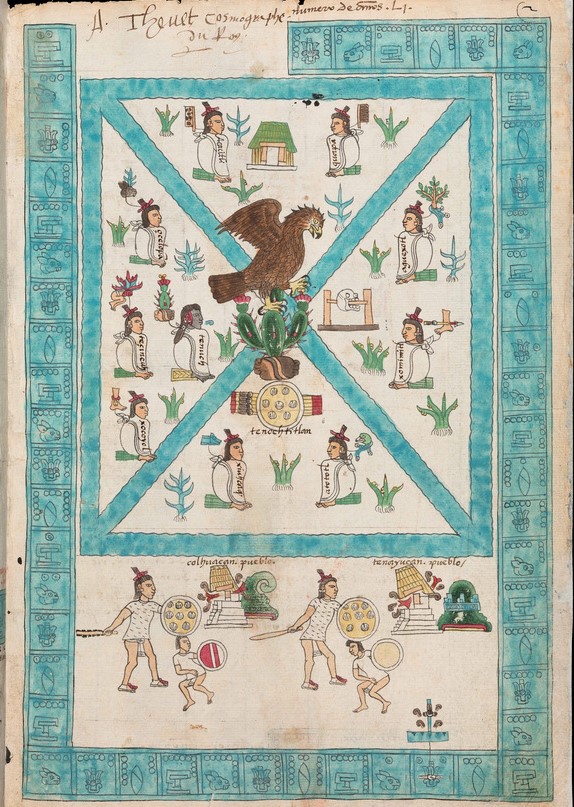
      4. Codex Mendoza Folio 2r

        July 12th, 2024

        The Codex Mendoza was compiled for Charles V (r. 1516-1556) to aid the Spanish monarch in learning more about the Mexica and their Empire. It was named after Antonio de Mendoza, the first Spanish Viceroy of New Spain (1535-1550). It is believed by many specialists that it was the master painter Francisco Gualpuyogualcal who produced this work. As it made its way to Spain on the Carrera de Indias, it first fell into French hands and eventually made its way to the Bodleian Library in Oxford, England. The Codex Mendoza is painted on European paper with 71 folios bound at the spine in book style and is semasiographic. It combines pictorial representations with Náhuatl and Spanish commentary. It is divided into three sections. The first section covers the pre-Conquest history of the Mexica. The second section documents the tributes extracted by the Mexica from subjugated altepetls. The third section records an ethnographic account of the Mexica. Consider the following questions as you analyze the Folio 2r from the Codex Mendoza: 

        • What do you believe Folio 2r is recording in the top panel?
        • What do you believe Folio 2r is recording in the bottom panel?
        • What does the pattern on the folio’s border record?

        Complete the Primary Source Analysis Form when finished for your records.

        View the following video for further details about the Codex Mendoza.


        Folio 2r

      5. On the Harmony of Religion and Philosophy

        July 12th, 2024

        ike Christianity in the West, Islam also struggled with how to deal with the conflict between revealed truth (revelation) and reason (philosophy). Abu al-Walid Muhammad ibn Ahmad ibn Rushd (1126-1198 C.E.), was known as the commentator because of his extensive glosses aimed at helping individuals understand the writings of Aristotle, tackled this challenged in his treatise entitled On the Harmony of Religions and Philosophy. Ibn Rushd focused his effort in this treatise on demonstrating that religion and the study of philosophy were in fact compatible and not diametrically opposed. He also wrote extensively on a variety of subjects which included jurisprudence and medicine. His writings would impact Europe as they were widely read by western philosophers and eventually made their way to universities. Consider the following questions as you read the selection below:

        • Why and how does philosophy bring its student to a closer understanding of the Creator?
        • Why does Ibn Rushed conclude that the Law makes the observation and consideration of creation by reason obligatory?
        • Does Ibn Rushd use the content of the Qur’an to support his position that philosophy and religion can be both studied?

        Complete the Primary Source Analysis Form when finished.

        Source: This text is part of the Internet Medieval Source Book.


        On the Harmony of Religions and Philosophy (Excerpts)

        Introduction

        We maintain that the business of philosophy is nothing other than to look into creation and to ponder over it in order to be guided to the Creator — in other words, to look into the meaning of existence. For the knowledge of creation leads to the cognizance of the Creator, through the knowledge of the created. The more perfect becomes the knowledge of creation, the more perfect becomes the knowledge of the Creator. The Law encourages and exhorts us to observe creation. Thus, it is clear that this is to be taken either as a religious injunction or as something approved by the Law. But the Law urges us to observe creation by means of reason and demands theknowledge thereof through reason. This is evident from different verses of the Qur’an. Forexample, the Qur’an says: “Wherefore take example from them, you who have eyes” [Qur’an49.2]. That is a clear indication of the necessi-ty of using the reasoning faculty, or rather both reason and religion, in the interpretation of things. Again it says: “Or do they not contemplate the kingdom of heaven and earth and the things which God has created” [Qur’an 7.184]. This is in plain exhortation to encourage the use of observation of creation. And remember that one whom God especially distinguishes in this respect, Abraham, the prophet. For He says: “And this did we show unto Abraham: the kingdom of heaven and earth” [Qur’an 6.75]. Further, He says: “Do they not consider the camels, how they are created; and the heaven, how it is raised” [Qur’an 88.17]. Or, still again: “And (who) meditate on the creation of heaven and earth, saying, O Lord you have not created this in vain” [Qur’an 3.176]. There are many other verses on this subject: too numerous to be enumerated.

        Now, it being established that the Law makes the observation and consideration of creation by reason obligatory — and consideration is nothing but to make explicit the implicit — this can only be done through reason. Thus we must look into creation with the reason. Moreover, it is obvious that the observation which the Law approves and encourages must be of the most perfect type, performed with the most perfect kind of reasoning. As the Law emphasizes the knowledge of God and His creation by inference, it is incumbent on any who wish to know God and His whole creation by inference, to learn the kinds of inference, their conditions and that which distinguishes philosophy from dialectic and exhortation from syllogism. This is impossible unless one possesses knowledge beforehand of the various kinds of reasoning and learns to
        distinguish between reasoning and what is not reasoning. This cannot be done except one knows its different parts, that is, the different kinds of premises.

        Hence, for a believer in the Law and a follower of it, it is necessary to know these things before he begins to look into creation, for they are like instruments for observation. For, just as a student discovers by the study of the law, the necessity of knowledge of legal reasoning with all its kinds and distinctions, a student will find out by observing the creation the necessity of metaphysical reasoning. Indeed, he has a greater claim on it than the jurist. For if a jurist argues the necessity of legal reasoning from the saying of God: “Wherefore take example from them O you who have eyes” [Qur’an 59.2], a student of divinity has a better right to establish the same from it on behalf of metaphysical reasoning.

        One cannot maintain that this kind of reasoning is an innovation in religion because it did not exist in the early days of Islam. For legal reasoning and its kinds are things which were invented also in later ages, and no one thinks they are innovations. Such should also be our attitude towards philosophical reasoning. There is another reason why it should be so, but this is not the proper place to mention it. A large number of the followers of this religion confirm philosophical reasoning, all except a small worthless minority, who argue from religious ordinances. Now, as it is established that the Law makes the consideration of philosophical reasoning and its kinds as necessary as legal reasoning, if none of our predecessors has made an effort to enquire into it, we should begin to do it, and so help them, until the knowledge is complete. For if it is difficult or rather impossible for one person to acquaint himself single-handed with all things which it is necessary to know in legal matters, it is still more difficult in the case of philosophical
        reasoning. And, if before us, somebody has enquired into it, we should derive help from what he
        has said. It is quite immaterial whether that man is our co-religionist or not; for the instrument by
        which purification is perfected is not made uncertain in its usefulness by its being in the hands of
        one of our own party, or of a foreigner, if it possesses the attributes of truth. By these latter we
        mean those Ancients who investigated these things before the advent of Islam.
        Now, such is the case. All that is wanted in an enquiry into philosophi-cal reasoning has already
        been perfectly examined by the Ancients. All that is required of us is that we should go back to
        their books and see what they have said in this connection. If all that they say be true, we should
        accept it and if there be something wrong, we should be warned by it. Thus, when we have
        finished this kind of research we shall have acquired instruments by which we can observe the
        universe, and consider its general character. For so long as one does not know its general
        character one cannot know the created, and so long as he does not know the created, he cannot
        know its nature.

        All things have been made and created. This is quite clear in itself, in the case of animals and plants, as God has said “Verily the idols which you invoke, beside God, can never create a single fly, though they may all assemble for that purpose” [Qur’an 22.72]. We see an inorganic substance and then there is life in it. So we know for certain that there is an inventor and bestower of life, and He is God. Of the heavens we know by their movements, which never become slackened, that they work for our benefit by divine solicitude, and are subordinate to our welfare. Such an appointed and subordinate object is always created for some purpose. The second principle is that for every created thing there is a creator. So it is right to say from the two foregoing principles that for every existent thing there is an inventor. There are many arguments, according to the number of the created things, which can be advanced to prove this premise. Thus, it is necessary for one who wants to know God as He ought to be known to acquaint himself with the essence of things, so that he may get information about the creation of all things. For who cannot understand the real substance and purpose of a thing, cannot understand the minor meaning of its creation. It is to this that God refers in the following verse “Or do they not contemplate the heaven and the earth, and the things which God has created?” [Qur’an 7.184]. And so a man who would follow the purpose of philosophy in investigating the existence of things, that is, would try to know the cause which led to its creation, and the purpose of it would know the argument of kindness most perfectly. These two arguments are those adopted by Law.

        The verses of the Qur’an leading to a knowledge of the existence of God are dependent only on the two foregoing arguments. It will be quite clear to anyone who will examine closely the verses, which occur in the Divine Book in this connection. These, when investigated, will be found to be of three kinds: either they are verses showing the “arguments of kindness,” or those mentioning the “arguments of creation, ” or those which include both the kinds of arguments. The following verses may be taken as illustrating the argument of kindness. “Have we not made the earth for a bed, and the mountains for stakes to find the same? And have we not created you of two sexes; and appointed your sleep for rest; and made the night a garment to cover you; and destined the day to the gaining of your livelihood and built over you seven solid heavens; and placed therein a burning lamp? And do we not send down from the clouds pressing forth rain,
        water pouring down in abundance, that we may thereby produce corn, and herbs, and gardens planted thick with trees?” [Qur’an 77.6-16] and, “Blessed be He Who has placed the twelve signs in the heavens; has placed therein a lamp by day, and the moon which shines by night” [Qur’an 25.62] and again, “Let man consider his food” [Qur’an 80.24].

        The following verses refer to the argument of invention, “Let man consider, therefore of what he is created. He is created of the seed poured forth, issuing from the loins, and the breast bones” [Qur’an 86.6]; and, “Do they not consider the camels, how they are created; the heaven, how it is raised; the mountains, how they are fixed; the earth how it is extended” [Qur’an 88.17]; and again “O man, a parable is propounded unto you; wherefore hearken unto it. Verily the idols which they invoke, besides God, can never create a single fly, though they may all assemble for the purpose” [Qur’an 22.72]. Then we may point to the story of Abraham, referred to in the following verse, “I direct my face unto Him Who has created heaven and earth; I am orthodox, and not of the idolaters” [Qur’an 6.79]. There may be quoted many verses referring to this argument. The verses comprising both the arguments are also many, for instance, “O men, of
        Mecca, serve your Lord, Who has created you, and those who have been before you: peradventure you will fear Him; Who has spread the earth as a bed for you, and the heaven as a covering, and has caused water to descend from heaven, and thereby produced fruits for your sustenance. Set not up, therefore, any equals unto God, against your own knowledge [Qur’an 2.19]. His words, “Who has created you, and those who have been before you,” lead us to the argument of creation; while the words, “who has spread the earth” refer to the argument of divine solicitude for man. Of this kind also are the following verses of the Qur’an, “One sign of the resurrection unto them is the dead earth; We quicken the same by rain, and produce therefrom various sorts of grain, of which they eat” [Qur’an 36.32]; and, “Now in the creation of heaven and earth, and the vicissitudes of night and day are signs unto those who are endowed with understanding, who remember God standing, and sitting, and lying on their sides; and meditate on the creation of heaven and earth, saying O Lord, far be it from You, therefore deliver us from the torment of hellfire” [Qur’an 3.188]. Many verses of this kind comprise both the kinds of arguments.

        This method is the right path by which God has invited men to a knowledge of His existence, and informed them of it through the intelligence which He has implanted in their nature. The following verse refers to this fixed and innate nature of man, “And when the Lord drew forth their posterity from the loins of the sons of Adam, and took them witness against themselves, Am I not your Lord? They answered, Yes, we do bear witness” [Qur’an 7.171]. So it is incumbent for one who intends to obey God, and follow the injunction of His Prophet, that he should adopt this method, thus making himself one of those learned men who bear witness to the divinity of God, with His own witness, and that of His angels, as He says, “God has borne
        witness, that there is no God but He, and the angels, and those who are endowed with wisdom profess the same; who execute righteousness; there is no God but He; the Mighty, the Wise” [Qur’an 3.16]. Among the arguments for both of themselves is the praise which God refers to in the following verse, “Neither is there anything which does not celebrate his praise; but you understand not their celebration thereof” [Qur’an 17.46].

        It is evident from the above arguments for the existence of God that they are dependent upon two categories of reasoning. It is also clear that both of these methods are meant for particular people; that is, the learned. Now as to the method for the masses. The difference between the two lies only in details. The masses cannot understand the two above-mentioned arguments but only what they can grasp by their senses; while the learned men can go further and learn by reasoning also, besides learning by sense. They have gone so far that a learned man has said, that the benefits the learned men derive from the knowledge of the members of human and animal body are a thousand and one. If this be so, then this is the method which is taught both by Law and by Nature. It is the method which was preached by the Prophet and the divine books. The learned men do not mention these two lines of reasoning to the masses, not because of their number, but because of a want of depth of learning on their part about the knowledge of a single thing only. The example of the common people, considering and pondering over the universe, is like a man
        who looks into a thing, the manufacture of which he does not know. For all that such a man can know about it is that it has been made, and that there must be a maker of it. But, on the other hand, the learned look into the universe, just as a man knowing the art would do; try to understand the real purpose of it. So it is quite clear that their knowledge about the Maker, as the maker of the universe, would be far better than that of the man who only knows it as made. The atheists, who deny the Creator altogether, are like men who can see and feel the created things, but would not acknowledge any Creator for them, but would attribute all to chance alone, and that they come into being by themselves.

        Now, then, if this is the method adopted by the Law, it may be asked: What is the way of proving the unity of God by means of the Law; that is, the knowledge of the religious formula that “there is no god, but God. ” The negation contained in it is an addition to the affirmative, which the formula contains, while the affirmative has already been proved. What is the purpose of this negation? We would say that the method, adopted by the Law, of denying divinity to all but God is according to the ordinance of God in the Qur’an. . .
        If you look a little intently it will become clear to you, that in spite of the fact that the Law has not given illustration of those things for the common people, beyond which their imagination cannot go, it has also informed the learned men of the underlying meanings of those illustrations. So it is necessary to bear in mind the limits which the Law has set about the instruction of every class of men, and not to mix them together. For in this manner the purpose of the Law is multiplied. Hence it is that the Prophet has said, “We, the prophets, have been commanded to adapt ourselves to the conditions of the people, and address them according to their intelligence.” He who tries to instruct all the people in the matter of religion, in one and the same way, is like a man who wants to make them alike in actions too, which is quite against apparent laws and reason.

        From the foregoing it must have become clear to you that the divine vision has an esoteric meaning in which there is no doubt, if we take the words of the Qur’an about God as they stand, that is, without proving or disproving the anthropomorphic attribute of God. Now since the first part of the Law has been made quite clear as to God’s purity, and the quantity of the teaching fit for the common people; it is time to begin the discussion about the actions of God, after which our purpose in writing this treatise will be over. In this section we will take up five questions around which all others in this connection revolve. In the first place a proof of the creation of the universe; secondly, the advent of the prophets; thirdly, predestination and fate; fourthly, Divine justice and injustice; and fifthly, the Day of Judgment

      ←Previous Page
      1 2 3
      Next Page→

      Blog at WordPress.com.


      Loading Comments...
       

        • Subscribe Subscribed
          • World History Portal
          • Already have a WordPress.com account? Log in now.
          • World History Portal
          • Subscribe Subscribed
          • Sign up
          • Log in
          • Report this content
          • View site in Reader
          • Manage subscriptions
          • Collapse this bar