• Prince Henry the Navigator (1394-1460)

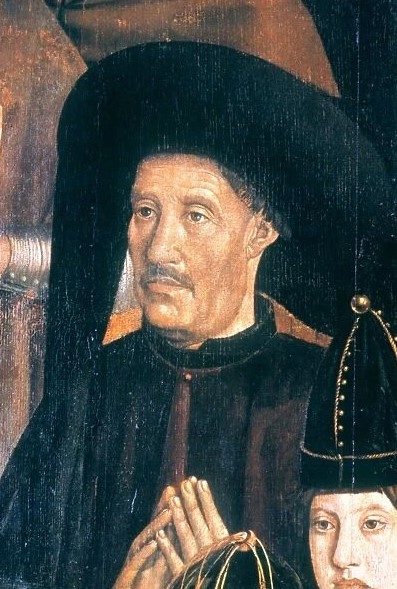
    Gomes Eannes de Azurara (died 1474) was a prominent Portuguese historian, chronicler, and archivist, serving as the chief keeper of the royal archives and the official chronicler to King Afonso V of Portugal. His historical writings played a crucial role in documenting Portugal’s early maritime explorations during the Age of Discovery. Azurara was an ardent admirer of Prince Henry the Navigator (1394–1460), the driving force behind Portugal’s pioneering voyages along the West African coast. His most significant work, Chronicle of the Discovery and Conquest of Guinea (Crónica da Descoberta e Conquista da Guiné), provides a detailed and vivid account of the early Portuguese expeditions into the Atlantic Ocean and their systematic exploration of the western coast of Africa. This work not only records the voyages undertaken by Portuguese navigators but also highlights the broader geopolitical, economic, and religious motivations behind these expeditions. Consider the following questions as you read the selections below:

    • What moved Prince Henry the Navigator to support Portuguese maritime expedition down the coast of Africa?
    • What difficulties were encountered by those participating in these expeditions? Why did they fear going beyond Cape Bojador?
    • How and when did the Portuguese venture around Cape of Bojador?
    Enlarge Image

    Complete the Primary Source Analysis Form when finished for your records.


    Chapter VII: In which five reasons appear why the Lord Infant was moved to command the search for the lands of Guinea.

    We imagine that we know a matter when we are acquainted with the doer of it and the end for which he did it. And since in former chapters we have set forth the Lord Infant as the chief actor in these things, giving as clear an understanding of him as we could, it is meet that in this present chapter we should know his purpose in doing them. And you should note well that the noble spirit of this Prince, by a sort of natural constraint, was ever urging him both to begin and to carry out very great deeds. For which reason, after the taking of Ceuta he always kept ships well armed against the Infidel, both for war, and because he had also a wish to know the land that lay beyond the isles of Canary and that Cape called Bojador, for that up to his time, neither by writings, nor by the memory of man, was known with any certainty the nature of the land beyond that Cape. Some said indeed that Saint Brandan had passed that way; and there was another tale of two galleys rounding the Cape, which never returned. But this doth not appear at all likely to be true, for it is not to be presumed that if the said galleys went there, some other ships would not have endeavoured to learn what voyage they had made. And because the said Lord Infant wished to know the truth of this,—since it seemed to him that if he or some other lord did not endeavour to gain that knowledge, no mariners or merchants would ever dare to attempt it—(for it is clear that none of them ever trouble themselves to sail to a place where there is not a sure and certain hope of profit)—and seeing also that no other prince took any pains in this matter, he sent out his own ships against those parts, to have manifest certainty of them all. And to this he was stirred up by his zeal for the service of God and of the King Edward his Lord and brother, who then reigned. And this was the first reason of his action.

    The second reason was that if there chanced to be in those lands some population of Christians, or some havens, into which it would be possible to sail without peril, many kinds of merchandise might be brought to this realm, which would find a ready market, and reasonably so, because no other people of these parts traded with them, nor yet people of any other that were known; and also the products of this realm might be taken there, which traffic would bring great profit to our countrymen.

    The third reason was that, as it was said that the power of the Moors in that land of Africa was very much greater than was commonly supposed, and that there were no Christians among them, nor any other race of men; and because every wise man is obliged by natural prudence to wish for a knowledge of the power of his enemy; therefore the said Lord Infant exerted himself to cause this to be fully discovered, and to make it known determinately how far the power of those infidels extended.

    The fourth reason was because during the one and thirty years that he had warred against the Moors, he had never found a Christian king, nor a lord outside this land, who for the love of our Lord Jesus Christ would aid him in the said war. Therefore he sought to know if there were in those parts any Christian princes, in whom the charity and the love of Christ was so ingrained that they would aid him against those enemies of the faith.

    The fifth reason was his great desire to make increase in the faith of our Lord Jesus Christ and to bring to him all the souls that should be saved,—understanding that all the mystery of the Incarnation, Death, and Passion of our Lord Jesus Christ was for this sole end—namely the salvation of lost souls—whom the said Lord Infant by his travail and spending would fain bring into the true path. For he perceived that no better offering could be made unto the Lord than this; for if God promised to return one hundred goods for one, we may justly believe that for such great benefits, that is to say for so many souls as were saved by the efforts of this Lord, he will have so many hundreds of guerdons in the kingdom of God, by which his spirit may be glorified after this life in the celestial realm. For I that wrote this history saw so many men and women of those parts turned to the holy faith, that even if the Infant had been a heathen, their prayers would have been enough to have obtained his salvation. And not only did I see the first captives, but their children and grandchildren as true Christians as if the Divine grace breathed in them and imparted to them a clear knowledge of itself

  • Manuel Belgrano (1770-1820)

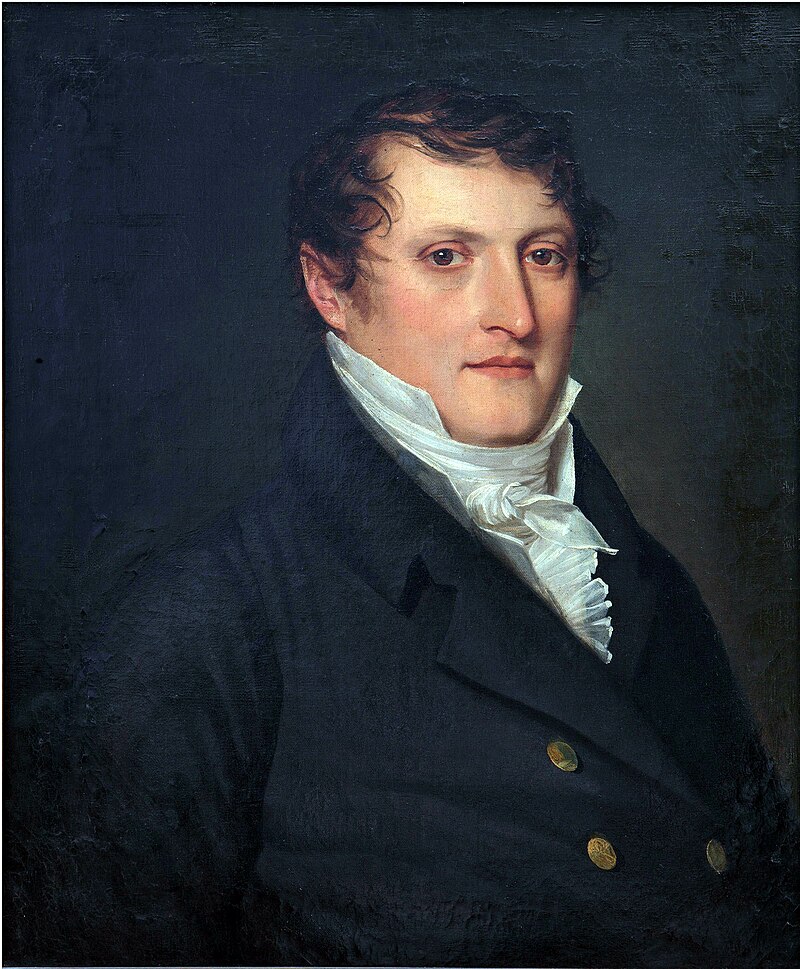
    The place of my birth was Buenos Aires; my parents were Don Domingo Belgrano y Peri, known as Pérez, a native of Onella in Spain, and Doña María Josefa González Casero, a native of Buenos Aires. . . . My father then sent me to Spain to study law, and I began my preparation at Salamanca; I was graduated at Valladolid, continued my training at Madrid, and was admitted to
    the bar at Valladolid. . . .

    Since I was in Spain in 1789, and the French Revolution was then causing a change in ideas, especially among the men of letters with whom I associated, the ideals of liberty, equality, security, and property took a firm hold on me, and I saw only tyrants in those who would restrain a man, wherever he might be, from enjoying the rights with which God and Nature had endowed
    him. . . .

    When I completed my studies in 1793 political economy enjoyed great popularity in Spain; I believe this was why I was appointed secretary of the consulado (consulate) of Buenos Aires . . . . When I learned that these consulados were to be so many Economic Societies that would discuss the state of agriculture, industry, and commerce in their sessions, my imagination pictured a vast field of activity, for I was ignorant of Spanish colonial policy. I had heard some muffled murmuring among the Americans, but I attributed this to their failure to gain their ends, never to evil designs of the Spaniards that had been systematically pursued since the conquest.

    I finally departed from Spain for Buenos Aires; I cannot sufficiently express the surprise I felt when I met the men named by the king to the council that was to deal with agriculture, industry, and commerce and work for the happiness of the provinces composing the viceroyalty of Buenos Aires. All were Spanish merchants. With the exception of one or two they knew nothing but their monopolistic business, namely, to buy at four dollars and sell for eight. . . . My spirits fell, and I began to understand that the colonies could expect nothing from men who placed their private interests above those of the community.


    Source: Robert M. Buffington and Lila Caimari, editors. Keen’s Latin American Civilization: Volume Two: The Modern Era. Routledge, 2018.

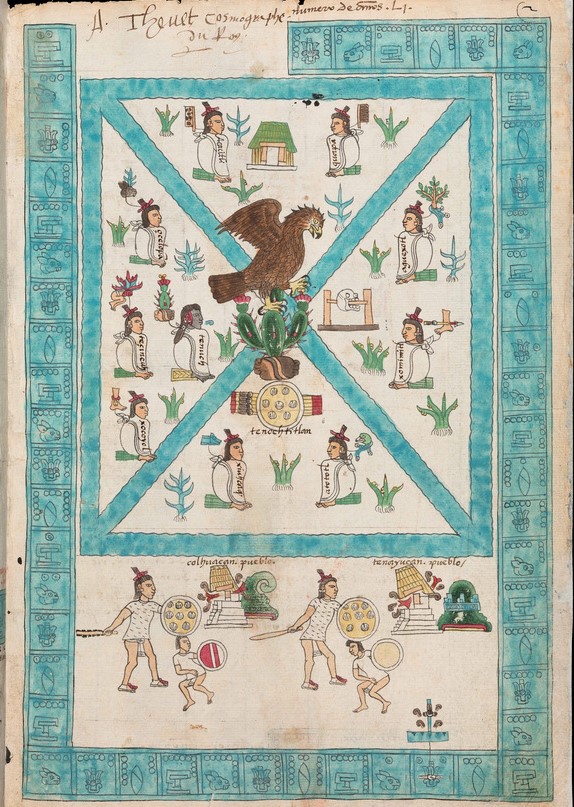
  • The Codex Mendoza was compiled for Charles V (r. 1516-1556) to aid the Spanish monarch in learning more about the Mexica and their Empire. It was named after Antonio de Mendoza, the first Spanish Viceroy of New Spain (1535-1550). It is believed by many specialists that it was the master painter Francisco Gualpuyogualcal who produced this work. As it made its way to Spain on the Carrera de Indias, it first fell into French hands and eventually made its way to the Bodleian Library in Oxford, England. The Codex Mendoza is painted on European paper with 71 folios bound at the spine in book style and is semasiographic. It combines pictorial representations with Náhuatl and Spanish commentary. It is divided into three sections. The first section covers the pre-Conquest history of the Mexica. The second section documents the tributes extracted by the Mexica from subjugated altepetls. The third section records an ethnographic account of the Mexica. Consider the following questions as you analyze the Folio 2r from the Codex Mendoza

    When analyzing Folio 2r from the Codex Mendoza, consider the following question:

    • What do you believe Folio 2R is recording in the top panel?
    • What do you believe Folio 2R is recording in the bottom panel?
    • What does the pattern on the folio’s border record?

    Complete the Primary Source Analysis Form when finished.


    Folio 2R
  • Like Christianity in the West, Islam grappled with the conflict between revealed truth (revelation) and reason (philosophy). Abu al-Walid Muhammad ibn Ahmad ibn Rushd (1126–1198 CE), known in the West as Averroes and referred to as ‘the Commentator’ for his extensive glosses on Aristotle’s works, addressed this challenge in his treatise On the Harmony of Religions and Philosophy. In this work, Ibn Rushd argued that religion and philosophy were not inherently in conflict but were, in fact, compatible and complementary. Beyond philosophy, Ibn Rushd wrote extensively on a range of subjects, including jurisprudence and medicine, showcasing his intellectual versatility. His writings had a profound impact on Europe, where they were widely read by medieval philosophers and eventually integrated into university curricula.

    As you read the selection below, consider the following questions:

    • Why and how does philosophy bring its student to a closer understanding of the Creator?
    • Why does Ibn Rushed conclude that the Law makes the observation and consideration of creation by reason obligatory?
    • Does Ibn Rushd use the content of the Qur’an to support his position that philosophy and religion can be both studied?

    Complete the Primary Source Analysis Form when finished.

    Source: This text is part of the Internet Medieval Source Book.


    On the Harmony of Religions and Philosophy (Excerpts)

    Introduction

    We maintain that the business of philosophy is nothing other than to look into creation and to ponder over it in order to be guided to the Creator — in other words, to look into the meaning of existence. For the knowledge of creation leads to the cognizance of the Creator, through the knowledge of the created. The more perfect becomes the knowledge of creation, the more perfect becomes the knowledge of the Creator. The Law encourages and exhorts us to observe creation. Thus, it is clear that this is to be taken either as a religious injunction or as something approved by the Law. But the Law urges us to observe creation by means of reason and demands theknowledge thereof through reason. This is evident from different verses of the Qur’an. Forexample, the Qur’an says: “Wherefore take example from them, you who have eyes” [Qur’an49.2]. That is a clear indication of the necessi-ty of using the reasoning faculty, or rather both reason and religion, in the interpretation of things. Again it says: “Or do they not contemplate the kingdom of heaven and earth and the things which God has created” [Qur’an 7.184]. This is in plain exhortation to encourage the use of observation of creation. And remember that one whom God especially distinguishes in this respect, Abraham, the prophet. For He says: “And this did we show unto Abraham: the kingdom of heaven and earth” [Qur’an 6.75]. Further, He says: “Do they not consider the camels, how they are created; and the heaven, how it is raised” [Qur’an 88.17]. Or, still again: “And (who) meditate on the creation of heaven and earth, saying, O Lord you have not created this in vain” [Qur’an 3.176]. There are many other verses on this subject: too numerous to be enumerated.

    Now, it being established that the Law makes the observation and consideration of creation by reason obligatory — and consideration is nothing but to make explicit the implicit — this can only be done through reason. Thus we must look into creation with the reason. Moreover, it is obvious that the observation which the Law approves and encourages must be of the most perfect type, performed with the most perfect kind of reasoning. As the Law emphasizes the knowledge of God and His creation by inference, it is incumbent on any who wish to know God and His whole creation by inference, to learn the kinds of inference, their conditions and that which distinguishes philosophy from dialectic and exhortation from syllogism. This is impossible unless one possesses knowledge beforehand of the various kinds of reasoning and learns to
    distinguish between reasoning and what is not reasoning. This cannot be done except one knows its different parts, that is, the different kinds of premises.

    Hence, for a believer in the Law and a follower of it, it is necessary to know these things before he begins to look into creation, for they are like instruments for observation. For, just as a student discovers by the study of the law, the necessity of knowledge of legal reasoning with all its kinds and distinctions, a student will find out by observing the creation the necessity of metaphysical reasoning. Indeed, he has a greater claim on it than the jurist. For if a jurist argues the necessity of legal reasoning from the saying of God: “Wherefore take example from them O you who have eyes” [Qur’an 59.2], a student of divinity has a better right to establish the same from it on behalf of metaphysical reasoning.

    One cannot maintain that this kind of reasoning is an innovation in religion because it did not exist in the early days of Islam. For legal reasoning and its kinds are things which were invented also in later ages, and no one thinks they are innovations. Such should also be our attitude towards philosophical reasoning. There is another reason why it should be so, but this is not the proper place to mention it. A large number of the followers of this religion confirm philosophical reasoning, all except a small worthless minority, who argue from religious ordinances. Now, as it is established that the Law makes the consideration of philosophical reasoning and its kinds as necessary as legal reasoning, if none of our predecessors has made an effort to enquire into it, we should begin to do it, and so help them, until the knowledge is complete. For if it is difficult or rather impossible for one person to acquaint himself single-handed with all things which it is necessary to know in legal matters, it is still more difficult in the case of philosophical
    reasoning. And, if before us, somebody has enquired into it, we should derive help from what he
    has said. It is quite immaterial whether that man is our co-religionist or not; for the instrument by
    which purification is perfected is not made uncertain in its usefulness by its being in the hands of
    one of our own party, or of a foreigner, if it possesses the attributes of truth. By these latter we
    mean those Ancients who investigated these things before the advent of Islam.
    Now, such is the case. All that is wanted in an enquiry into philosophi-cal reasoning has already
    been perfectly examined by the Ancients. All that is required of us is that we should go back to
    their books and see what they have said in this connection. If all that they say be true, we should
    accept it and if there be something wrong, we should be warned by it. Thus, when we have
    finished this kind of research we shall have acquired instruments by which we can observe the
    universe, and consider its general character. For so long as one does not know its general
    character one cannot know the created, and so long as he does not know the created, he cannot
    know its nature.

    All things have been made and created. This is quite clear in itself, in the case of animals and plants, as God has said “Verily the idols which you invoke, beside God, can never create a single fly, though they may all assemble for that purpose” [Qur’an 22.72]. We see an inorganic substance and then there is life in it. So we know for certain that there is an inventor and bestower of life, and He is God. Of the heavens we know by their movements, which never become slackened, that they work for our benefit by divine solicitude, and are subordinate to our welfare. Such an appointed and subordinate object is always created for some purpose. The second principle is that for every created thing there is a creator. So it is right to say from the two foregoing principles that for every existent thing there is an inventor. There are many arguments, according to the number of the created things, which can be advanced to prove this premise. Thus, it is necessary for one who wants to know God as He ought to be known to acquaint himself with the essence of things, so that he may get information about the creation of all things. For who cannot understand the real substance and purpose of a thing, cannot understand the minor meaning of its creation. It is to this that God refers in the following verse “Or do they not contemplate the heaven and the earth, and the things which God has created?” [Qur’an 7.184]. And so a man who would follow the purpose of philosophy in investigating the existence of things, that is, would try to know the cause which led to its creation, and the purpose of it would know the argument of kindness most perfectly. These two arguments are those adopted by Law.

    The verses of the Qur’an leading to a knowledge of the existence of God are dependent only on the two foregoing arguments. It will be quite clear to anyone who will examine closely the verses, which occur in the Divine Book in this connection. These, when investigated, will be found to be of three kinds: either they are verses showing the “arguments of kindness,” or those mentioning the “arguments of creation, ” or those which include both the kinds of arguments. The following verses may be taken as illustrating the argument of kindness. “Have we not made the earth for a bed, and the mountains for stakes to find the same? And have we not created you of two sexes; and appointed your sleep for rest; and made the night a garment to cover you; and destined the day to the gaining of your livelihood and built over you seven solid heavens; and placed therein a burning lamp? And do we not send down from the clouds pressing forth rain,
    water pouring down in abundance, that we may thereby produce corn, and herbs, and gardens planted thick with trees?” [Qur’an 77.6-16] and, “Blessed be He Who has placed the twelve signs in the heavens; has placed therein a lamp by day, and the moon which shines by night” [Qur’an 25.62] and again, “Let man consider his food” [Qur’an 80.24].

    The following verses refer to the argument of invention, “Let man consider, therefore of what he is created. He is created of the seed poured forth, issuing from the loins, and the breast bones” [Qur’an 86.6]; and, “Do they not consider the camels, how they are created; the heaven, how it is raised; the mountains, how they are fixed; the earth how it is extended” [Qur’an 88.17]; and again “O man, a parable is propounded unto you; wherefore hearken unto it. Verily the idols which they invoke, besides God, can never create a single fly, though they may all assemble for the purpose” [Qur’an 22.72]. Then we may point to the story of Abraham, referred to in the following verse, “I direct my face unto Him Who has created heaven and earth; I am orthodox, and not of the idolaters” [Qur’an 6.79]. There may be quoted many verses referring to this argument. The verses comprising both the arguments are also many, for instance, “O men, of
    Mecca, serve your Lord, Who has created you, and those who have been before you: peradventure you will fear Him; Who has spread the earth as a bed for you, and the heaven as a covering, and has caused water to descend from heaven, and thereby produced fruits for your sustenance. Set not up, therefore, any equals unto God, against your own knowledge [Qur’an 2.19]. His words, “Who has created you, and those who have been before you,” lead us to the argument of creation; while the words, “who has spread the earth” refer to the argument of divine solicitude for man. Of this kind also are the following verses of the Qur’an, “One sign of the resurrection unto them is the dead earth; We quicken the same by rain, and produce therefrom various sorts of grain, of which they eat” [Qur’an 36.32]; and, “Now in the creation of heaven and earth, and the vicissitudes of night and day are signs unto those who are endowed with understanding, who remember God standing, and sitting, and lying on their sides; and meditate on the creation of heaven and earth, saying O Lord, far be it from You, therefore deliver us from the torment of hellfire” [Qur’an 3.188]. Many verses of this kind comprise both the kinds of arguments.

    This method is the right path by which God has invited men to a knowledge of His existence, and informed them of it through the intelligence which He has implanted in their nature. The following verse refers to this fixed and innate nature of man, “And when the Lord drew forth their posterity from the loins of the sons of Adam, and took them witness against themselves, Am I not your Lord? They answered, Yes, we do bear witness” [Qur’an 7.171]. So it is incumbent for one who intends to obey God, and follow the injunction of His Prophet, that he should adopt this method, thus making himself one of those learned men who bear witness to the divinity of God, with His own witness, and that of His angels, as He says, “God has borne
    witness, that there is no God but He, and the angels, and those who are endowed with wisdom profess the same; who execute righteousness; there is no God but He; the Mighty, the Wise” [Qur’an 3.16]. Among the arguments for both of themselves is the praise which God refers to in the following verse, “Neither is there anything which does not celebrate his praise; but you understand not their celebration thereof” [Qur’an 17.46].

    It is evident from the above arguments for the existence of God that they are dependent upon two categories of reasoning. It is also clear that both of these methods are meant for particular people; that is, the learned. Now as to the method for the masses. The difference between the two lies only in details. The masses cannot understand the two above-mentioned arguments but only what they can grasp by their senses; while the learned men can go further and learn by reasoning also, besides learning by sense. They have gone so far that a learned man has said, that the benefits the learned men derive from the knowledge of the members of human and animal body are a thousand and one. If this be so, then this is the method which is taught both by Law and by Nature. It is the method which was preached by the Prophet and the divine books. The learned men do not mention these two lines of reasoning to the masses, not because of their number, but because of a want of depth of learning on their part about the knowledge of a single thing only. The example of the common people, considering and pondering over the universe, is like a man
    who looks into a thing, the manufacture of which he does not know. For all that such a man can know about it is that it has been made, and that there must be a maker of it. But, on the other hand, the learned look into the universe, just as a man knowing the art would do; try to understand the real purpose of it. So it is quite clear that their knowledge about the Maker, as the maker of the universe, would be far better than that of the man who only knows it as made. The atheists, who deny the Creator altogether, are like men who can see and feel the created things, but would not acknowledge any Creator for them, but would attribute all to chance alone, and that they come into being by themselves.

    Now, then, if this is the method adopted by the Law, it may be asked: What is the way of proving the unity of God by means of the Law; that is, the knowledge of the religious formula that “there is no god, but God. ” The negation contained in it is an addition to the affirmative, which the formula contains, while the affirmative has already been proved. What is the purpose of this negation? We would say that the method, adopted by the Law, of denying divinity to all but God is according to the ordinance of God in the Qur’an. . .
    If you look a little intently it will become clear to you, that in spite of the fact that the Law has not given illustration of those things for the common people, beyond which their imagination cannot go, it has also informed the learned men of the underlying meanings of those illustrations. So it is necessary to bear in mind the limits which the Law has set about the instruction of every class of men, and not to mix them together. For in this manner the purpose of the Law is multiplied. Hence it is that the Prophet has said, “We, the prophets, have been commanded to adapt ourselves to the conditions of the people, and address them according to their intelligence.” He who tries to instruct all the people in the matter of religion, in one and the same way, is like a man who wants to make them alike in actions too, which is quite against apparent laws and reason.

    From the foregoing it must have become clear to you that the divine vision has an esoteric meaning in which there is no doubt, if we take the words of the Qur’an about God as they stand, that is, without proving or disproving the anthropomorphic attribute of God. Now since the first part of the Law has been made quite clear as to God’s purity, and the quantity of the teaching fit for the common people; it is time to begin the discussion about the actions of God, after which our purpose in writing this treatise will be over. In this section we will take up five questions around which all others in this connection revolve. In the first place a proof of the creation of the universe; secondly, the advent of the prophets; thirdly, predestination and fate; fourthly, Divine justice and injustice; and fifthly, the Day of Judgment

  • Cornelius Tacitus, born c. 56 CE in either Narbonese or Cisalpine Gaul, and active until his death around c. 120 CE, was one of Rome’s most significant historians. Among his key works are The Histories, Germania, and The Annals. The Annals focuses on the early history of imperial Rome, examining the autocratic rule that supplanted the Roman Republic and exploring the dynamics and consequences of absolute power. Tacitus provides a critical analysis of the political, social, and moral implications of this transformation.

    As you read the selections below, consider the following questions:

    • How successful have previous Romans been at writing the history of early imperial Rome?
    • What picture does he portray of Rome’s first emperor Augustus?
    • How had the Roman state been revolutionized?

    Complete the Primary Source Analysis Form when finished.


    The Annals Book I (Selections)

    Rome at the beginning was ruled by kings. Freedom and the consulship were established by Lucius Brutus. Dictatorships were held for a temporary crisis. The power of the decemvirs did not last beyond two years, nor was the consular jurisdiction of the military tribunes of longduration. The despotisms of Cinna and Sulla were brief; the rule of Pompeius and of Crassus soon yielded before Caesar; the arms of Lepidus and Antonius before Augustus; who, when the world was wearied by civil strife, subjected it to empire under the title of “Prince.” But the successes and reverses of the old Roman people have been recorded by famous historians; and fine intellects were not wanting to describe the times of Augustus, till growing sycophancy scared them away. The histories of Tiberius, Caius, Claudius, and Nero, while they were in power, were falsified through terror, and after their death were written under the irritation of a recent hatred. Hence my purpose is to relate a few facts about Augustus- more particularly his last acts, then the reign of Tiberius, and all which follows, without either bitterness or partiality, from any motives to which I am far removed.

    When after the destruction of Brutus and Cassius there was no longer any army of the Commonwealth, when Pompeius was crushed in Sicily, and when, with Lepidus pushed aside and Antonius slain, even the Julian faction had only Caesar left to lead it, then, dropping the title of triumvir, and giving out that he was a Consul, and was satisfied with a tribune’s authority for the protection of the people, Augustus won over the soldiers with gifts, the populace with cheap corn, and all men with the sweets of repose, and so grew greater by degrees, while he concentrated in himself the functions of the Senate, the magistrates, and the laws. He was wholly unopposed, for the boldest spirits had fallen in battle, or in the proscription, while the remaining nobles, the readier they were to be slaves, were raised the higher by wealth and promotion, so
    that, aggrandised by revolution, they preferred the safety of the present to the dangerous past. Nor did the provinces dislike that condition of affairs, for they distrusted the government of the Senate and the people, because of the rivalries between the leading men and the rapacity of the officials, while the protection of the laws was unavailing, as they were continually deranged by violence, intrigue, and finally by corruption.

    Augustus meanwhile, as supports to his despotism, raised to the pontificate and curule aedileship Claudius Marcellus, his sister’s son, while a mere stripling, and Marcus Agrippa, of humble birth, a good soldier, and one who had shared his victory, to two consecutive consulships, and as Marcellus soon afterwards died, he also accepted him as his son-in-law. Tiberius Nero and Claudius Drusus, his stepsons, he honoured with imperial tides, although his own family was as yet undiminished. For he had admitted the children of Agrippa, Caius and Lucius, into the house of the Caesars; and before they had yet laid aside the dress of boyhood he had most fervently desired, with an outward show of reluctance, that they should be entitled “princes of the youth,” and be consuls-elect. When Agrippa died, and Lucius Caesar as he was on his way to our armies in Spain, and Caius while returning from Armenia, still suffering from a wound, were prematurely cut off by destiny, or by their step-mother Livia’s treachery, Drusus too having long been dead, Nero remained alone of the stepsons, and in him everything tended to centre. He was adopted as a son, as a colleague in empire and a partner in the tribunitian power, and paraded through all the armies, no longer through his mother’s secret intrigues, but at her open suggestion. For she had gained such a hold on the aged Augustus that he drove out as an exile into the island of Planasia, his only grandson, Agrippa Postumus, who, though devoid of worthy qualities, and having only the brute courage of physical strength, had not been convicted of any gross offence. And yet Augustus had appointed Germanicus, Drusus’s offspring, to the command of eight legions on the Rhine, and required Tiberius to adopt him, although Tiberius had a son, now a young man, in his house; but he did it that he might have several safeguards to rest on. He had no war at the time on his hands except against the Germans, which was rather to wipe out the disgrace of the loss of Quintilius Varus and his army than out of an ambition to extend the empire, or for any adequate recompense. At home all was tranquil, and there were magistrates with the same titles; there was a younger generation, sprung up since the victory of Actium, and even many of the older men had been born during the civil wars. How few were left who had seen the republic!

    Thus the State had been revolutionised, and there was not a vestige left of the old sound morality. Stript of equality, all looked up to the commands of a sovereign without the least apprehension for the present, while Augustus in the vigour of life, could maintain his own position, that of his house, and the general tranquillity. When in advanced old age, he was worn out by a sickly frame, and the end was near and new prospects opened, a few spoke in vain of the blessings of freedom, but most people dreaded and some longed for war. The popular gossip of the large majority fastened itself variously on their future masters. “Agrippa was savage, and had been exasperated by insult, and neither from age nor experience in affairs was equal to so great a burden. Tiberius Nero was of mature years, and had established his fame in war, but he had the old arrogance inbred in the Claudian family, and many symptoms of a cruel temper, though they were repressed, now and then broke out. He had also from earliest infancy been reared in an imperial house; consulships and triumphs had been heaped on him in his younger days; even in the years which, on the pretext of seclusion he spent in exile at Rhodes, he had had no thoughts but of wrath, hypocrisy, and secret sensuality. There was his mother too with a woman caprice. They must, it seemed, be subject to a female and to two striplings besides, who for a while would burden, and some day rend asunder the State.

  • Aristotle (384–322 BCE) was one of the most influential and prolific Greek philosophers of his time. His extensive writings covered a wide range of topics, including logic, metaphysics, ethics, and political theory, leaving an enduring impact on thinkers from Late Antiquity through the Renaissance. In his Metaphysics, one of his principal works, Aristotle described its subject matter as ‘first philosophy,’ or the study of wisdom. This foundational text explores fundamental questions about existence, causality, and the nature of being.

    As you read the selections below, consider the following questions:

    • What is wisdom?
    • What purpose does wisdom serve?
    • How does he define a wise man?

    Complete the Primary Source Analysis Form when finished.

    Source: http://classics.mit.edu/Aristotle/metaphysics.1.i.html


    Metaphysics Book I (Selections)

    “All these examples show, then, that recollection is caused by like things and also by unlike things, do they not?”

    “Yes.”

    “And when one has a recollection of anything caused by like things, will he not also inevitably consider whether this recollection offers a perfect likeness of the thing recollected, or not?”

    “Inevitably,” he replied.

    “Now see,” said he, “if this is true. We say there is such a thing as equality. I do not mean one piece of wood equal to another, or one stone to another, or anything of that sort, but something beyond that—equality in the abstract. Shall we say there is such a thing, or not?”

    “We shall say that there is,” said Simmias, “most decidedly.”

    “And do we know what it is?”

    “Certainly,” said he.

    “Whence did we derive the knowledge of it? Is it not from the things we were just speaking of? Did we not, by seeing equal pieces of wood or stones or other things, derive from them a knowledge of abstract equality, which is another thing? Or do you not think it is another thing? Look at the matter in this way. Do not equal stones and pieces of wood, though they remain the same, sometimes appear to us equal in one respect and unequal in another?”

    “Certainly.”

    “Well, then, did absolute equals ever appear to you unequal or equality inequality?”

    “No, Socrates, never.”

    “Then,” said he, “those equals are not the same as equality in the abstract.”

    “Not at all, I should say, Socrates.”

    “But from those equals,” said he, “which are not the same as abstract equality, you have nevertheless conceived and acquired knowledge of it?”

    “Very true,” he replied.

    “And it is either like them or unlike them?”

    “Certainly.”

    “It makes no difference,” said he. “Whenever the sight of one thing brings you a perception of another, whether they be like or unlike, that must necessarily be recollection.”

    “Surely.”

    “Now then,” said he, “do the equal pieces of wood and the equal things of which we were speaking just now affect us in this way: Do they seem to us to be equal as abstract equality is equal, or do they somehow fall short of being like abstract equality?”

    “They fall very far short of it,” said he.

    “Do we agree, then, that when anyone on seeing a thing thinks, ‘This thing that I see aims at being like some other thing that exists, but falls short and is unable to be like that thing, but is inferior to it, he who thinks thus must of necessity have previous knowledge of the thing which he says the other resembles but falls short of?”

    “We must.”

    “Well then, is this just what happened to us with regard to the equal things and equality in the abstract?”

    “It certainly is.“

    “Then we must have had knowledge of equality before the time when we first saw equal things and thought, ‘All these things are aiming to be like equality but fall short.’”

    “That is true.”

    “And we agree, also, that we have not gained knowledge of it, and that it is impossible to gain this knowledge, except by sight or touch or some other of the senses? I consider that all the senses are alike.”

    “Yes, Socrates, they are all alike, for the purposes of our argument.”

    “Then it is through the senses that we must learn that all sensible objects strive after absolute equality and fall short of it. Is that our view?”

    “Yes.”

    “Then before we began to see or hear or use the other senses we must somewhere have gained a knowledge of abstract or absolute equality, if we were to compare with it the equals which we perceive by the senses, and see that all such things yearn to be like abstract equality but fall short of it.”

    “That follows necessarily from what we have said before, Socrates.”

    “And we saw and heard and had the other senses as soon as we were born?”

    “Certainly.”

    “But, we say, we must have acquired a knowledge of equality before we had these senses?”

    “Yes.

    “Then it appears that we must have acquired it before we were born.”

    “It does.”

    “Now if we had acquired that knowledge before we were born, and were born with it, we knew before we were born and at the moment of birth not only the equal and the greater and the less, but all such abstractions? For our present argument is no more concerned with the equal than with absolute beauty and the absolute good and the just and the holy, and, in short, with all those things which we stamp with the seal of absolute in our dialectic process of questions and answers; so that we must necessarily have acquired knowledge of all these before our birth.”

    “That is true.”

    “And if after acquiring it we have not, in each case, forgotten it, we must always be born knowing these things, and must know them throughout our life; for to know is to have acquired knowledge and to have retained it without losing it, and the loss of knowledge is just what we mean when we speak of forgetting, is it not, Simmias?”

    “Certainly,“

  • The Tanakh represents the sacred canon of writings in Judaism, its name serving as an acronym for the tripartite division of this collection: the Torah (Law), the Nevi’im (Prophets), and the Ketuvim (Writings). These texts, believed to have been written and compiled between 1100 and 100 BCE, form the foundation of Jewish faith and practice.The five books of the Torah are considered the most sacred writings within the Tanakh. They address fundamental themes such as creation, the history of the ancient Israelites, and the covenantal relationship between G-d and the Jewish people. The covenants with Abraham and Moses are central to understanding this divine relationship, illustrating G-d’s promises and expectations of His people.

    As you read the selection below, consider the following:

    • What relationship with G-d does each covenant
      establish?
    • What do these covenants articulate about the Israelites?
    • Is ethical and ritual behavior
      addressed in any of the covenants?

    Complete the Primary Source Analysis Form when finished.

    Source: Jewish Publication Society. JPS TANAKH: The Holy Scriptures: The New JPS Translation according to the Traditional Hebrew Text.


    The Covenant with Noah (Selections)

    God blessed Noah and his sons, and said to them, “Be fertile and increase, and fill the earth. The fear and the dread of you shall be upon all the beasts of the earth and upon all the birds of the sky— everything with which the earth is astir— and upon all the fish of the sea; they are given into your hand. Every creature that lives shall be yours to eat; as with the green grasses, I give you all these. You must not, however, eat flesh with its life-blood in it. But for your own life blood I will require a reckoning: I will require it of every beast; of man, too, will I require a reckoning for human life, of every man for that of his fellow man! Whoever sheds the blood of man, By man shall his blood be shed; For in His image Did God make man. Be fertile, then, and increase; abound on the earth and increase on it.” And God said to Noah and to his sons with him, “I now establish My covenant with you and your offspring to come, and with every living thing that is with you— birds, cattle, and every wild beast as well— all that have come out of the ark, every living thing on earth. I will maintain My covenant with you: never again shall all flesh be cut off by the waters of a flood, and never again shall there be a flood to destroy the earth.” God further said, “This is the sign that I set for the covenant between Me and you, and every living creature with you, for all ages to come. I have set My bow in the clouds, and it shall serve as a sign of the covenant between Me and the earth. When I bring clouds over the earth, and the bow appears in the clouds, I will remember My covenant between Me and you and every living creature among all flesh, so that the waters shall never again become a flood to destroy all flesh. When the bow is in the clouds, I will see it and remember the everlasting covenant between God and all living creatures, all flesh that is on earth. That,” God said to Noah, “shall be the sign of the covenant that I have established between Me and all flesh that is on earth.” The sons of Noah who came out of the ark were Shem, Ham, and Japheth— Ham being the father of Canaan. These three were the sons of Noah, and from these the whole world branched out.

    The Covenant with Abraham (Selections)

    When Abram was ninety-nine years old, the LORD appeared to Abram and said to him, “I am El Shaddai. Walk in My ways and be blameless. I will establish My covenant between Me and you, and I will make you exceedingly numerous.” Abram threw himself on his face; and God spoke to him further, “As for Me, this is My covenant with you: You shall be the father of a multitude of nations. And you shall no longer be called Abram, but your name shall be Abraham, for I make you the father of a multitude of nations. I will make you exceedingly fertile, and make nations of you; and kings shall come forth from you. I will maintain My covenant between Me and you, and your offspring to come, as an everlasting covenant throughout the ages, to be God to you and to your offspring to come. I assign the land you sojourn in to you and your offspring to come, all the land of Canaan, as an everlasting holding. I will be their God.” God further said to Abraham, “As for you, you and your offspring to come throughout the ages shall keep My covenant. Such shall be the covenant between Me and you and your offspring to follow which you shall keep: every male among you shall be circumcised. You shall circumcise the flesh of your foreskin, and that shall be the sign of the covenant between Me and you. And throughout the generations, every male among you shall be circumcised at the age of eight days. As for the homeborn slave and the one bought from an outsider who is not of your offspring, they must be circumcised, homeborn and purchased alike. Thus shall My covenant be marked in your flesh as an everlasting pact. And if any male who is uncircumcised fails to circumcise the flesh of his foreskin, that person shall be cut off from his kin; he has broken My covenant.” And God said to Abraham, “As for your wife Sarai, you shall not call her Sarai, but her name shall be Sarah. I will bless her; indeed, I will give you a son by her. I will bless her so that she shall give rise to nations; rulers of peoples shall issue from her.” Abraham threw himself on his face and laughed, as he said to himself, “Can a child be born to a man a hundred years old, or can Sarah bear a child at ninety?” And Abraham said to God, “O that Ishmael might live by Your favor!” God said, “Nevertheless, Sarah your wife shall bear you a son, and you shall name him Isaac; d and I will maintain My covenant with him as an everlasting covenant for his offspring to come. As for Ishmael, I have heeded you. I hereby bless him. I will make him fertile and exceedingly
    numerous. He shall be the father of twelve chieftains, and I will make of him a great nation. But My covenant I will maintain with Isaac, whom Sarah shall bear to you at this season next year.” And when He was done speaking with him, God was gone from Abraham.

    The Covenant with Moses (Selections)

    On the third new moon after the Israelites had gone forth from the land of Egypt, on that very day, they entered the wilderness of Sinai. Having journeyed from Rephidim, they entered the wilderness of Sinai and encamped in the wilderness. Israel encamped there in front of the mountain, 3and Moses went up to God. The LORD called to him from the mountain, saying, “Thus shall you say to the house of Jacob and declare to the children of Israel: ‘You have seen what I did to the Egyptians, how I bore you on eagles’ wings and brought you to Me. Now then, if you will obey Me faithfully and keep My covenant, you shall be My treasured possession among all the peoples. Indeed, all the earth is Mine, but you shall be to Me a kingdom of priests and a holy nation.’ These are the words that you shall speak to the children of Israel.” God spoke all these words, a saying: I the LORD am your God who brought you out of the land of Egypt, the house of bondage: You shall have no other gods besides Me. You shall not make for yourself a sculptured image, or any likeness of what is in the heavens above, or on the earth below, or in the waters under the earth. You shall not bow down to them or serve them. For I the LORD your God am an impassioned God, visiting the guilt of the parents upon the children, upon the third and upon the fourth generations of those who reject Me, but showing kindness to the thousandth generation of those who love Me and keep My commandments. You shall not swear falsely by the name of the LORD your God; for the LORD will not clear one who swears falsely by His name. Remember the sabbath day and keep it holy. Six days you shall labor and do all your work, but the seventh day is a sabbath of the LORD your God: you shall not do any work— you, your son or daughter, your male or female slave, or your cattle, or the stranger who is within your settlements. For in six days the LORD made heaven and earth and sea, and all that is in them, and He rested on the seventh day; therefore the LORD blessed the sabbath day and hallowed it. Honor your father and your mother, that you may long endure on the land that the LORD your God is assigning to you. 13You shall not murder. You shall not commit adultery. You shall not steal. You shall not bear false witness against your neighbor. 14You shall not covet your neighbor’s house: you shall not covet your neighbor’s wife, or his male or female slave, or his ox or his ass, or anything that is your neighbor’s. 15All the people witnessed the thunder and lightning, the blare of the horn and the mountain smoking; and when the people saw it, they fell back and stood at a distance. “You speak to us,” they said to Moses, “and we will obey; but let not God speak to us, lest we die.” Moses answered the people, “Be not afraid; for God has come only in order to test you, and in order that the fear of Him may be ever with you, so that you do not go astray.” So the people remained at a distance, while Moses approached the thick cloud where God was. The LORD said to Moses: Thus shall you say to the Israelites: You yourselves saw that I spoke to you from the very heavens: With Me, Therefore, you shall not make any gods of silver, nor shall you make for yourselves any gods of gold. Make for Me an altar of earth and sacrifice on it your burnt offerings and your sacrifices of well-being, your sheep and your oxen; in every place where I cause My name to be mentioned I will come to you and bless you. And if you make for Me an altar of stones, do not build it of hewn stones; for by wielding your tool upon them you have profaned them. Do not ascend My altar by steps, that your nakedness may not be exposed upon it

  • The Analects of Confucius, a timeless collection of wisdom, encapsulates the teachings of Confucius (551–479 BCE), one of China’s most influential philosophers. Compiled by his disciples after his death, this anthology addresses the social and political upheavals of his time. Confucius aimed to restore order by reviving the traditions of the Zhou dynasty, emphasizing court conduct and ritual forms as essential foundations for a harmonious society. Beyond rituals, The Analects reflects Confucius’ belief in humanity’s potential for self-improvement through education and moral cultivation. By fostering virtues such as ren (benevolence) and li (ritual propriety), individuals could achieve both personal excellence and societal harmony.

    As you read the selection below, consider the following:

    • What do the Analects state about government and how it should function?
    • What qualities should an effective ruler possess?
    • What do the Analects state about the qualities of a higher man?
    • What is the role of filiality and ren? Why is ritual (li) so important? Why are these qualities important to Confucius?

    Complete the Primary Source Analysis Form when finished.

    Source: The Project Gutenberg EBook of The Sayings of Confucius, by Confucius


    On Past Sages

    The Master said, “How grand was the rule of the Emperor Yao! Towering is the grandeur ofHeaven; only Yao could emulate it. So grand that the people could find no words to describe it. Towering were his achievements! Glimmering, they formed a paradigm of pattern.” (8.19)

    “Towering were Shun and Yu! They possessed all the empire and appropriated nothing to themselves.” (8.18)

    “The Zhou looked upon the two dynasties preceding – how rich were its patterns! And we follow the Zhou.” (3.14

    “King Wen is dead, but his patterns live on here in me, do they not? If Heaven wished these patterns to perish, I would not have been able to partake of them!” (9.5)

    The Master said, “Arise with the Book of Poetry, take your stand by means of ritual li, and be fulfilled in music.” (8.8)

    “If you do not study the Poetry, how will you have words to speak . . . If you do not study ritual, how will you be able to take your stand?” (16.13)

    On Ren (humane and goodness)

    The disciple Yen Yuan asked the Master about humane goodness (ren). The Master said, “Conquer yourself and return to li: that is goodness. If one could for a single day conquer oneself and return to li, the entire world would respond to him with goodness. . . . If it is not li, don’t look at it; if it is not li, don’t listen to it; if it is not li, don’t say it; if it is not li, don’t do it.” (12.1)

    The disciple Zhonggong asked about ren. The Master said, “Whenever you go out your front gate continue to treat all you encounter as if they were great guests in your home. Whenever you direct the actions of others, do so as though you were officiating at a great sacrifice. And never act towards others in a way that you would not wish others to act towards you.” (12.2)

    On Filiality

    The patrician Meng Yizi asked about filiality. The Master said, “Never disobey!” Later, the disciple Fan Chi was driving the Master in his chariot and the Master said to him, “Meng Yizi asked me about filiality and I answered, ‘Never disobey!’” “What did you mean by that,” asked Fan Chi. The Master replied, “In life, serve parents according to li. In death, inter them according to li and sacrifice to them according to li.” (2.5)

    The patrician Meng Wubo asked about filiality. The Master said, “One’s parents should need to
    worry only about one’s health.” (2.6)

    The disciple Ziyou asked about filiality. The Master said, “Those who speak of filiality nowadays mean by it merely supplying food and shelter to aged parents. Even dogs and horses receive as much. Without attentive respect, where is the difference?” (2.7)

    The disciple Zixia asked about filiality. The Master said, “It is the outward demeanor that it difficult to maintain! That the youngest shall bear the burden at work or that the elders shall be served first of
    food and drink, is this all that filiality means?” (2.8)

    On Li (court poetry and music, refined martial arts training, and the ritual codes)

    The disciple Master You said, “In the action of li harmony is the key. In the Dao of the former kings this was principle of greatest beauty. Affairs large and small all proceeded from this. Yet there was a limit. When one knew that a course of action would yield harmony but it was not according to li, one would not pursue it.” (1.12)

    The Master heard the Shao Music while in the state of Qi and for three months the succulent taste of meat dishes meant nothing to him. “I never imagined that music could reach this!” he said. (7.14)

    On the Junzi (internalized ritual behavior and ethical accomplishment)

    The Master said, “A junzi does not aim at stuffing himself when he eats, or at luxury in his home. He is quick about his affairs and careful in choosing his words. He cleaves to those who possess the Dao and rectifies himself by means of their example. Such a man may be said to be learned.” (1.14)

    “The junzi associates with others with broad impartiality and does not join cliques; a small man joins cliques and is not impartial.” (2.14)

    “The junzi values virtue; a small man values land. The junzi values the example men set; a small man values the favors they grant.” (4.11)

    “The junzi understands according to righteousness; a small man understands according to profit.” (4.16)

    “When a person’s plain qualities exceed his patterned behavior he is rude. When pattern exceeds plainness he is clerkish. When pattern and plainness are in perfect balance, that is a junzi!” (6.18)

    “The junzi seeks for it within himself; a small man seeks for it in others.” (15.21)

    The disciple Master You said, “The man who is filial and obedient to his elders will rarely be insubordinate to his superiors, and never has a man who was not insubordinate brought chaos to his state. The junzi applies himself to the roots of things, for once the roots are firm, the Way can grow. Filiality and obedience to elders are the roots of ren, are they not?” (1.2)

    On Self-Cultivation

    The Master said, “Do not be anxious that others do not recognize your abilities, be anxious that you do not recognize others’.” (1.16)

    “When I walk in a group of three, my teachers are always there. I select what is good in my companions and follow it; I select what is not good and change it within me.” (7.22)

    “I have spent whole days without eating, whole nights without sleeping in order to ponder. It was useless – not like study!” (15.31)

    The Master ruled out four things: Have no set ideas, no absolute demands, no stubbornness, no self. (9.4)

    On Government

    “When a ruler loves li, the people are easy to rule.” (14.41)

    “Can ritual and deference be employed to rule a state? Why, there is nothing to it!” (4.13)

    The Master said, “Governing by means of virtue one is like the North Star: it sits in its place and the other stars do reverence to it.” (2.1)

    “‘He took no action and all was ruled’; would this not describe the Emperor Shun? What action did he take? He honored himself and sat facing south, that is all.” (15.5)

    “Virtue is never lonely; it always attracts neighbors.” (4.25)

    The patrician Ji Kangzi asked, “How would one use persuasion to make one’s people respectful and
    loyal?”

    The Master replied, “Approach them with seriousness and they will be respectful. Be filial towards your own parents and loving towards your children and the people will be loyal. Raise the good to positions of responsibility and instruct those who do not have abilities and they will be persuaded.” (2.20)

    The Master said, “I am no better than another at passing judgment in disputes of law. What is needed is to end the need for lawsuits.” (12.13)

    The patrician Ji Kangzi was troubled by banditry and asked Confucius about it. Confucius replied, “If you yourself were without desires others would not steal though you paid them to.” (12.18)

    Ji Kangzi questioned Confucius about governing. “How would it be if I executed the immoral so as to push others towards the good? Confucius replied, “What need is there for executions in governance? If you yourself wish to be good, the people will be good. The virtue of the junzi is like wind and that of the people like grass. When the wind blows over the grass, it bends.” (12.19)

  • The Buddha’s first public sermon, commonly known as the Discourse of the Turning of the Wheel of Dharma, marks the beginning of his mission to share his teachings with the world. The title reflects the sermon’s pivotal role in inaugurating the Buddha’s public teaching journey. In this foundational discourse, the Buddha introduces key elements of his philosophy, including the Middle Way and the Four Noble Truths. The ultimate goal of the Buddha’s teachings is to guide followers toward achieving Nirvana—the cessation of suffering and liberation from the cycles of death and rebirth (samsara). While Nirvana is a cornerstone of Buddhist philosophy, few surviving texts offer a precise description of its nature, leaving it open to interpretation and personal realization.

    As you read the selection below, consider the following questions:

    • What are the two extremes that the Buddha identifies?
    • What solution does the Buddha propose to help one follow the Middle Path?
    • What is the purpose of the Four Noble Truths?
    • How is Nirvana described?
    • What does the attainment of Nirvana bring an end to?
    • Reflect on how the Buddha’s teachings seek to address the human experience of suffering and provide a pathway to spiritual liberation.

    Complete the Primary Source Analysis Form when finished.

    Source: James T Fieser,. Scriptures of the World’s Religion. McGraw-Hill Higher Education.


    The Discourse of the Turning Wheel (Selections)

    Thus have I heard: At one time, the Exalted One was living near Vārāṇasī, at Isipatana near the Deer Park. Then the Exalted One spoke to the group of five monks: These two extremes, O monks, should not be practiced by one who has gone forth [from the household life]. What arethe two? That which is linked with sensual desires, which is low, vulgar, common, unworthy, and useless, and that which is linked with self-torture, which is painful, unworthy, and useless. By avoiding these two extremes the Tathāgata [Buddha] has gained the knowledge of the middle path which gives vision and knowledge, and leads to calm, to clairvoyances, to awakening, to nirvana. O monks, what is the middle path, which gives vision . . . ? It is the noble eightfold path: right views, right intention, right speech, right action, right livelihood, right effort, right
    mindfulness, right concentration. This, O monks, is the middle path, which gives vision. . . .

    1. Now this, O monks, is the noble truth of suffering: birth is suffering, old age is suffering, death is suffering, sorrow, grieving, dejection, and despair are suffering. Contact with unpleasant things is suffering, not getting what you want is also suffering. In short, the five aggregates of grasping are suffering.
    2. Now this, O monks, is the noble truth of the arising of suffering: that craving which leads to rebirth, combined with longing and lust for this and that—craving for sensual pleasure, craving for rebirth, craving for cessation of birth. . . .
    3. Now this, O monks, is the noble truth of the cessation of suffering: It is the complete cessation without remainder of that craving, the abandonment, release from, and non attachment to it.
    4. Now this, O monks, is the noble truth of the path that leads to the cessation of suffering: This is the noble eightfold path. . . .

    Now monks, as long as my threefold knowledge and insight regarding these noble truths . . . were not well purified, so long, O monks, I was not sure that in this world . . . I had attained the highest complete awakening. But when my threefold knowledge and insight in these noble truths with their twelve divisions were well purified, then, O monks, I was sure that in this world . . . I had attained the highest complete awakening. Now knowledge and insight have arisen in me, so that I know: My mind’s liberation is assured; this is my last existence; for me there is no rebirth.

    Nirvana (Selections)

    Monks, there exists something in which there is neither earth nor water, fire nor air. It is not the sphere of infinite space, nor the sphere of infinite consciousness, nor the sphere of nothingness, nor the sphere of neither perception nor non-perception [these are advanced meditative states]. It is neither this world nor another world, nor both, neither sun nor moon. Monks, I do not state that it comes nor that it goes. It neither abides nor passes away. It is not caused, established, arisen, supported. It is the end of suffering. . . . What I call the selfless is difficult to perceive, for it is not easy to perceive the truth. But one who knows it cuts through craving, and for one who knows it, there is nothing to hold onto. . . . Monks, there exists something that is unborn, unmade, uncreated, unconditioned. Monks, if there were not an unborn, unmade, uncreated,
    unconditioned, then there would be no way to indicate how to escape from the born, made, created, and conditioned. However, monks, since there exists something that is unborn, unmade, uncreated, and unconditioned, it is known that there is an escape from that which is born, made, created, and conditioned. . . . There is wandering for those who are attached, but there is no wandering for those who are unattached. There is serenity when there is no wandering, and when there is serenity, there is no desire. When there is no desire, there is neither coming nor going, and when there is no coming nor going there is neither death nor rebirth. When there is neither death nor rebirth, there is neither this life nor the next life, nor anything in between. It is the end of suffering.

  • Hammurabi (r. 1795–1750 BCE) was a ruler of Babylon’s Amorite Dynasty, renowned for creating a comprehensive law code that remains one of the most significant legal documents of the ancient world. This code, now housed at the Louvre Museum in France, provides historians with invaluable insights into the social attitudes, legal principles, and daily lives of ancient Babylonians.

    As you read the selections below, consider the following questions:

    • What insights can the Law Code of Hammurabi give historians about Babylon’s social, economic, and political characteristics?
    • What can we learn from these laws about social distinctions and the role of men and women in Babylonian society?
    • What can we learn about Hammurabi and Babylonian kingship from the prologue and epilogue of the code?
    • Does the Law Code of Hammurabi provide evidence that an urban revolution did in fact take place in Mesopotamia?

    Complete the Primary Source Analysis Form when finished.

    Source: This text is part of the Internet Ancient History Sourcebook. The Sourcebook is a collection of public domain and copy-permitted texts related to medieval and Byzantine history.


    Law Code of Hammurabi – Selections

    When Anu the Sublime, King of the Anunaki, and Bel, the lord of Heaven and earth, who decreed the fate of the land, assigned to Marduk, the over-ruling son of Ea, God of righteousness, dominion over earthly man, and made him great among the Igigi, they called Babylon by his illustrious name, made it great on earth, and founded an everlasting kingdom in it, whose foundations are laid so solidly as those of heaven and earth; then Anu and Bel called by name me, Hammurabi, the exalted prince, who feared God, to bring about the rule of righteousness in the land, to destroy the wicked and the evil-doers; so that the strong should not harm the weak; so that I should rule over the black-headed people like Shamash, and enlighten the land, to further the well-being of mankind.

    Hammurabi, the prince, called of Bel am I, making riches and increase, enriching Nippur and Dur-ilu beyond compare, sublime patron of E-kur; who reestablished Eridu and purified the worship of E-apsu; who cconquered the four quarters of the world, made great the name of Babylon . . .

    If any one steal the minor son of another, he shall be put to death.

    If any one take a male or female slave of the court, or a male or female slave of a freed man, outside the city gates, he shall be put to death.

    If any one receive into his house a runaway male or female slave of the court, or of a freedman, and does not bring it out at the public proclamation of the major domus, the master of the house shall be put to death.

    If any one find runaway male or female slaves in the open country and bring them to their masters, the master of the slaves shall pay him two shekels of silver.

    If the slave will not give the name of the master, the finder shall bring him to the palace; a further investigation must follow, and the slave shall be returned to his master.

    If any one be too lazy to keep his dam in proper condition, and does not so keep it; if then the dam break and all the fields be flooded, then shall he in whose dam the break occurred be sold for money, and the money shall replace the corn which he has caused to be ruined.

    If he be not able to replace the corn, then he and his possessions shall be divided among the farmers whose corn he has flooded.

    If any one open his ditches to water his crop, but is careless, and the water flood the field of his neighbor, then he shall pay his neighbor corn for his loss.

    If a man let in the water, and the water overflow the plantation of his neighbor, he shall pay ten gur of corn for every ten gan of land.

    If a merchant entrust money to an agent (broker) for some in-vestment, and the broker suffer a loss in the place to which he goes, he shall make good the capital to the merchant.

    If, while on the journey, an enemy take away from him anything that he had, the broker shall swear by God and be free of obligation.

    If a merchant give an agent corn, wool, oil, or any other goods to transport, the agent shall give a receipt for the amount, and compensate the merchant therefor. Then he shall obtain a receipt form the merchant for the money that he gives the merchant.

    If the agent is careless, and does not take a receipt for the money which he gave the merchant, he can not consider the unreceipted money as his own.

    If the agent accept money from the merchant, but have a quarrel with the merchant (denying the receipt), then shall the merchant swear before God and witnesses that he has given this money to the agent, and the agent shall pay him three times the sum.

    If the merchant cheat the agent, in that as the latter has returned to him all that had been given him, but the merchant denies the receipt of what had been returned to him, then shall this agent convict the merchant before God and the judges, and if he still deny receiving what the agent had given him shall pay six times the sum to the agent.

    If a man’s wife be surprised (in flagrante delicto) with another man, both shall be tied andthrown into the water, but the husband may pardon his wife and the king his slaves.

    If a man violate the wife (betrothed or child-wife) of another man, who has never known a man, and still lives in her father’s house, and sleep with her and be surprised, this man shall be put to death, but the wife is blameless.

    If a man bring a charge against one’s wife, but she is not surprised with another man, she must take an oath and then may return to her house.

    If the “finger is pointed” at a man’s wife about another man, but she is not caught sleeping with the other man, she shall jump into the river for her husband.

    If a man is taken prisoner in war, and there is a sustenance in his house, but his wife leave house and court, and go to another house: because this wife did not keep her court, and went to another house, she shall be judicially condemned and thrown into the water.

    If any one be captured in war and there is not sustenance in his house, if then his wife go to another house this woman shall be held blameless.

    If a man be taken prisoner in war and there be no sustenance in his house and his wife go to another house and bear children; and if later her husband return and come to his home: then this wife shall return to her husband, but the children follow their father.

    If any one leave his house, run away, and then his wife go to another house, if then he return, and wishes to take his wife back: because he fled from his home and ran away, the wife of this runaway shall not return to her husband.

    If a man wish to separate from a woman who has borne him children, or from his wife who has borne him children: then he shall give that wife her dowry, and a part of the usufruct of field, garden, and property, so that she can rear her children. When she has brought up her children, a portion of all that is given to the children, equal as that of one son, shall be given to her. She may then marry the man of her heart.

    If a man wishes to separate from his wife who has borne him no children, he shall give her the amount of her purchase money and the dowry which she brought from her father’s house, and let her go.

    If a son strike his father, his hands shall be hewn off.

    If a man put out the eye of another man, his eye shall be put out. [ An eye for an eye ]

    If he break another man’s bone, his bone shall be broken.

    If he put out the eye of a freed man, or break the bone of a freed man, he shall pay one gold
    mina.

    If he put out the eye of a man’s slave, or break the bone of a man’s slave, he shall pay onehalf of its value.

    If a man knock out the teeth of his equal, his teeth shall be knocked out. [ A tooth for a tooth ] If he knock out the teeth of a freed.

    If any one strike the body of a man higher in rank than he, he shall receive sixty blows with an ox-whip in public.

    LAWS of justice which Hammurabi, the wise king, established. A righteous law, and pious statute did he teach the land. Hammurabi, the protecting king am I. I have not withdrawn myself from the men, whom Bel gave to me, the rule over whom Marduk gave to me, I was not negligent, but I made them a peaceful abiding-place. I expounded all great difficulties, I made the light shine upon them. With the mighty weapons which Zamama and Ishtar entrusted to me, with the keen vision with which Ea endowed me, with the wisdom that Marduk gave me, I have uprooted the enemy above and below (in north and south), subdued the earth, brought prosperity to the land, guaranteed security to the inhabitants in their homes; a disturber was not permit-ted. The great gods have called me, I am the salvation-bearing shep-herd, whose staff is straight, the good shadow that is spread over my city; on my breast I cherish the inhabitants of the land of Sumer and Akkad; in my shelter I have let them repose in peace; in my deep wisdom have I
    enclosed them. That the strong might not injure the weak, in order to protect the widows and orphans, I have in Babylon the city where Anu and Bel raise high their head, in E-Sagil, the Temple, whose foundations stand firm as heaven and earth, in order to bespeak justice in the land, to settle all disputes, and heal all injuries, set up these my precious words, written upon my memorial stone, before the image of me, as king of righteousness.

    The king who ruleth among the kings of the cities am I. My words are well considered; there is no wisdom like unto mine. By the command of Shamash, the great judge of heaven and earth, let righteousness go forth in the land: by the order of Marduk, my lord, let no destruction befall my monument. In E-Sagil, which I love, let my name be ever repeated; let the oppressed, who has a case at law, come and stand before this my image as king of righteousness; let him read the inscrip-tion, and understand my precious words: the inscription will explain his case to him; he will find out what is just, and his heart will be glad, so that he will say: Hammurabi is a ruler, who is as a father to his subjects, who holds the words of Marduk in reverence, who has achieved conquest for Marduk over the north and south, who rejoices the heart of Marduk, his lord, who has bestowed benefits for ever and ever on his subjects, and has established order in the land.